
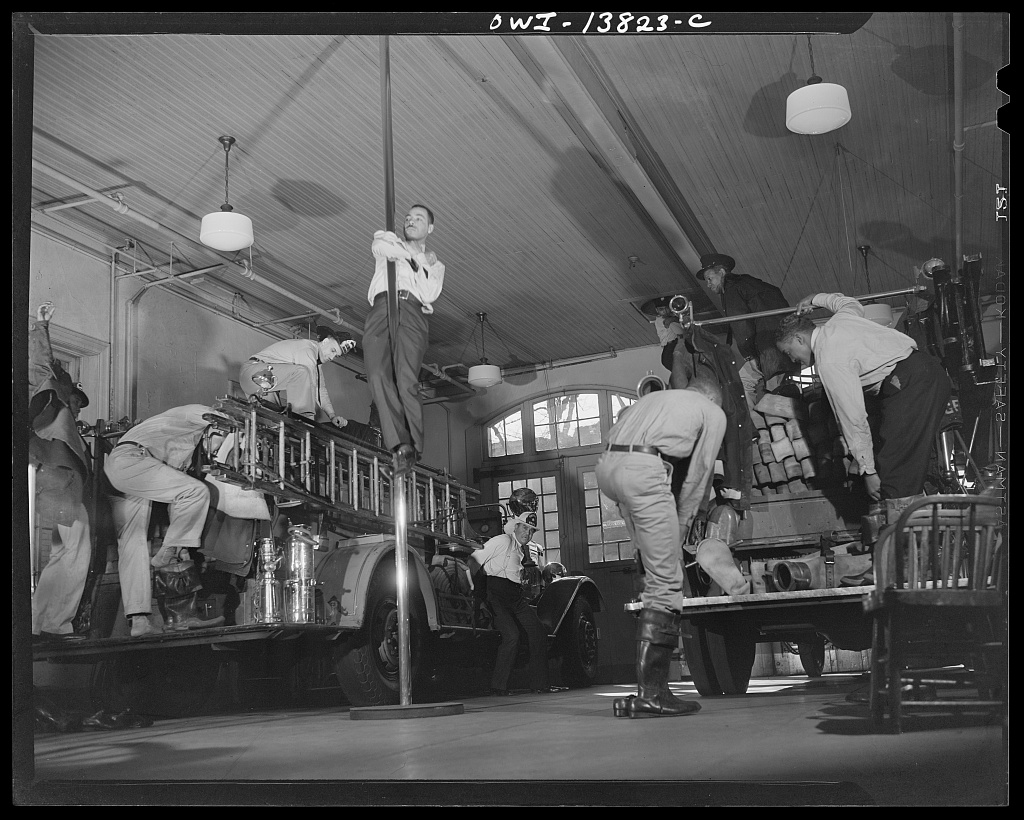
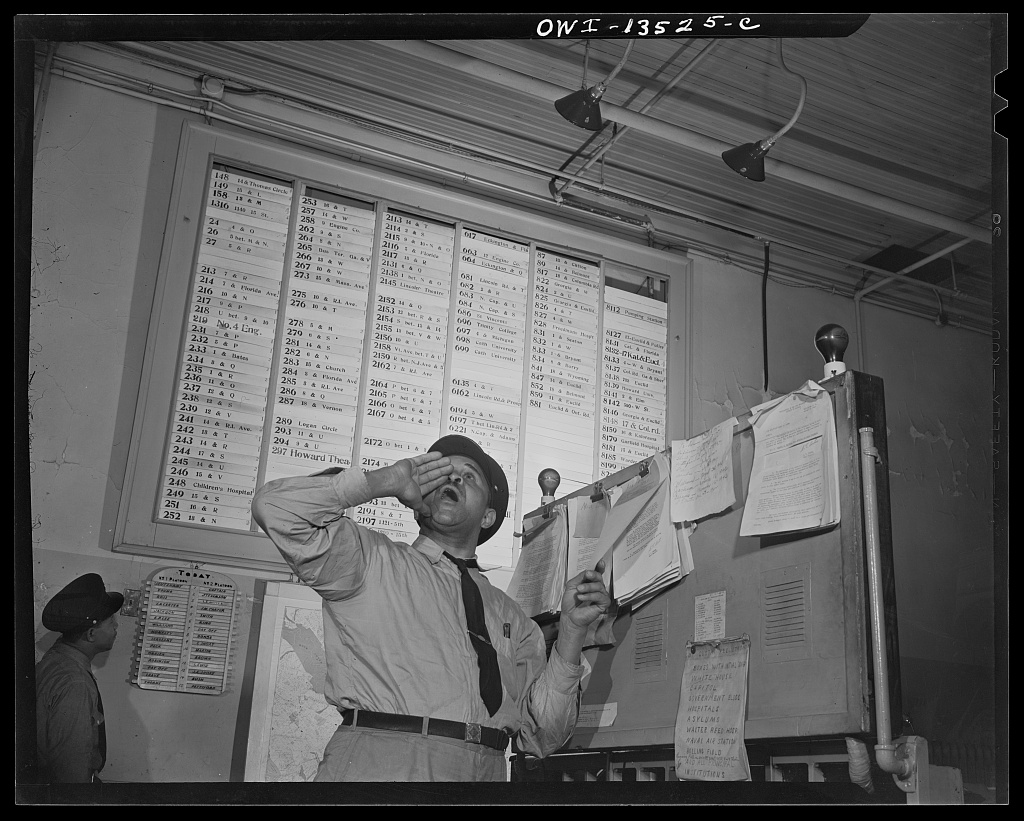
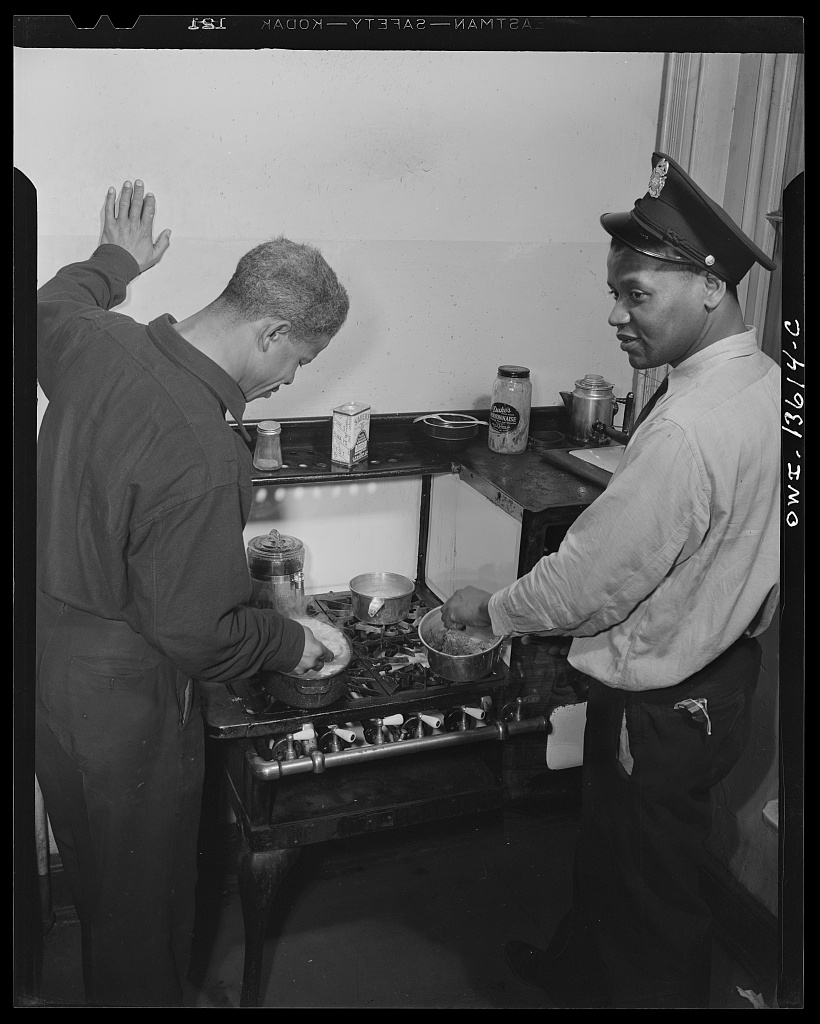
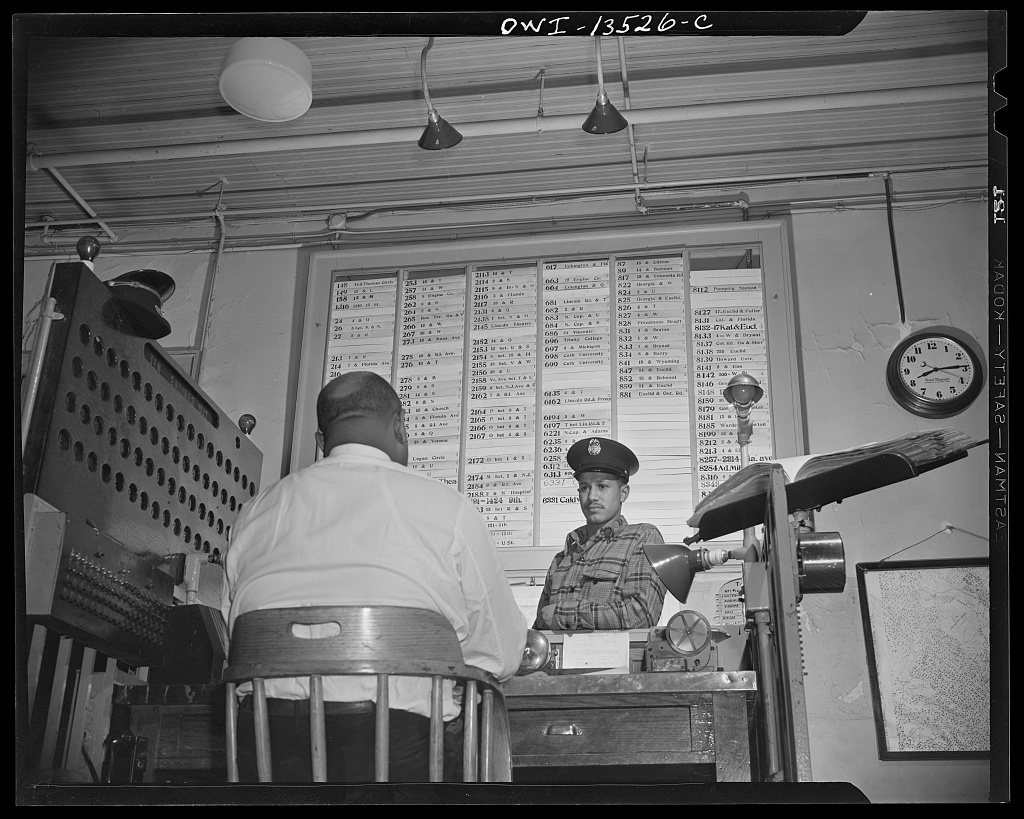
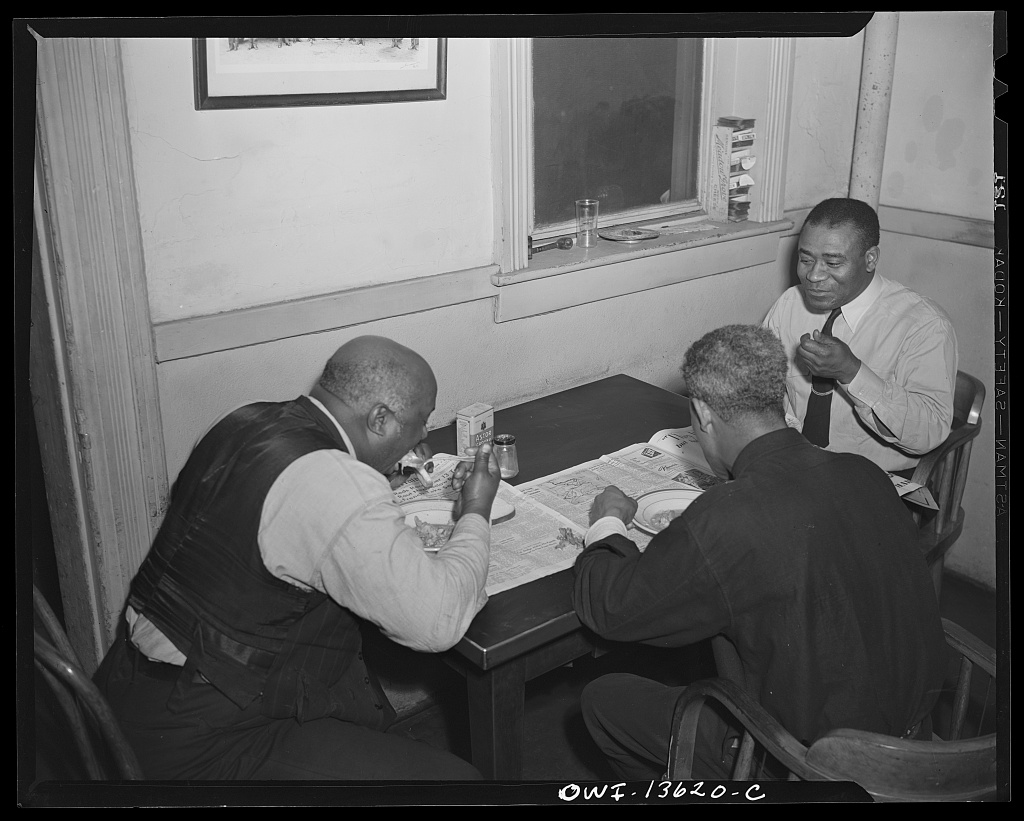
In January 1943, a young photographer named Gordon Parks spent time inside a Shaw firehouse at 931 R Street NW. He did not come away with a snapshot. He came away with a whole photo essay, dozens of frames of men at the alarm desk, men diving into their boots, men hauling hose, men eating lunch.
One caption tells you exactly what he had walked into. The Library of Congress still files the picture under Parks’s own 1943 words: “Fire Engine House No. 4, one of the separate Negro units in the District.”
The men of Engine Company No. 4 had a reputation for speed. Parks timed them.
When the gong sounds the alarm, the firemen jump into their boots and get into their helmets and coats while the truck is on its way to the fire. Once the alarm is sounded the complete operation of getting dressed and leaving the building takes about seven seconds.
Seven seconds. The same city that clocked these men at seven seconds also made them sleep on assigned cots and eat off assigned plates.
The man behind the camera
This was not yet Gordon Parks the legend. The books, the camera he called his choice of weapons, Shaft, all of that came later. In 1943 he was a staff photographer for the federal Office of War Information, and he turned his lens on a single Black fire company in the heart of Black Washington.
The captain who ran the house was J.B. Key. (Parks’s negatives spell it Key, Keys, and Keye on different frames, which is its own small lesson in how carefully Black institutions got recorded.) The Library’s caption on one of the relaxing-firemen shots is almost proud of them: an all-Negro station that “has a reputation for speed and has received citations for rescue work.”
A petition for the only promotion they could get
Washington had Black firemen long before it had Engine 4. John S. Brent was hired in August 1868 and assigned to Union Engine Company No. 1, three years before the city folded its scattered companies into one paid department in 1871.
The catch was the ceiling. A Black man could carry hose for decades and never make rank. The story handed down is that Private Charles E. Gibson, a driver with years on the job, was refused command of his own company one day when all the white officers happened to be out.
So in the spring of 1919 (the records can’t agree whether it was April 3rd or the 13th), Gibson and two fellow privates, Frank Hall and Richard J. Holmes, petitioned the chief fire engineer and the fire commissioner for a company of their own.
The logic was brutal and clear. An all-Black company meant Black officers, Black promotions, a ladder a Black fireman could finally climb. The only path up ran through a house where every man was Black.
The city agreed, and Engine Company No. 4 became the District’s first all-Black unit. The favor came with a price tag that lasted forty years: every Black fireman in Washington would now be funneled into that one company, and out of all the others.
Separate cots, separate plates
What the bargain bought, in daily life, was a firehouse inside a firehouse. Black firefighters were required to sleep in designated cots and eat off designated plates and cutlery. Over the years the department ran five all-Black companies in all: Engines 4, 13, 19, and 27, plus Truck 10.
Theodore Coleman, who joined in 1953 and eventually became fire chief, remembered it plainly in his memoir. The dishes Black firemen ate off were thrown in the trash. Bunks in some houses were labeled for Black use only.
None of this tracked with the city outside the firehouse doors. Washington was 54 percent Black by 1960 and 70 percent Black by 1970, a majority-Black city running a majority-white fire department that often did not want the men it did have.
The firehouse that used to be white
The building Parks photographed had its own quiet history of the color line. 931 R Street went up in 1884 and opened in January 1885 as Engine House No. 7, home to a white company.
The horse-drawn era it was built for didn’t last forever, and neither did its old crew. (For the last days of those engines, we’ve written about the final fire horses of the DC Fire Department.)
When the department reorganized in 1940, a Senate committee had a choice to make about consolidating companies in Southwest. It chose to redraw the map along color lines instead.
The Committee believes this merger can better be accomplished… by transferring Engine Company No. 7 (931 R Street, N.W.) to Truck No. 10, and by transferring Engine Company No. 4 to Engine House No. 7.
In plainer words, the white company moved out and the Black company moved in, and the committee recommended improvements only for the new all-white house, not the Black one. Parks’s camera caught the leftover detail three years later in a single caption: “This station was formerly number seven.”
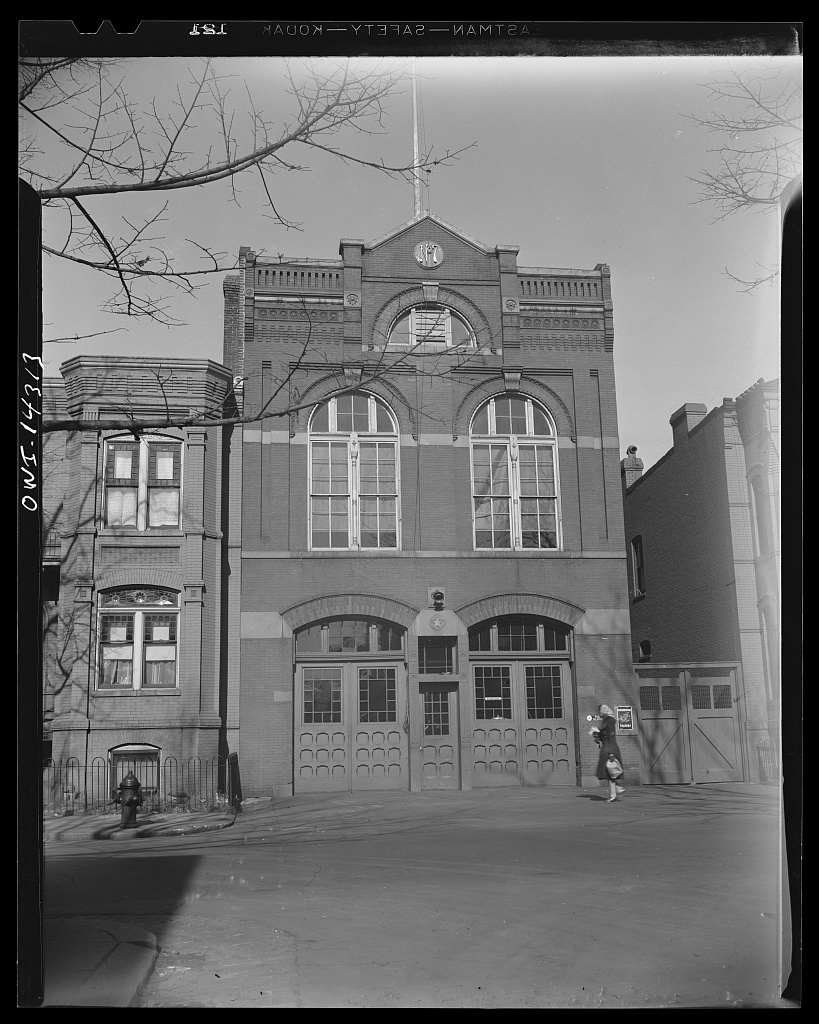
Engine 4 had already earned the right to be anywhere it pleased. The company answered the Knickerbocker Theater roof collapse in January 1922, the deadliest disaster in the city’s history, and several of its men were decorated for what they did digging people out of the snow and steel.
Guarding Black Broadway
From 931 R Street, Engine 4 covered U Street, then known as Black Broadway, the beating heart of Black Washington in the years Louis Armstrong and Billie Holiday came through. It was the kind of neighborhood where a Black-run institution could hold its head up in a city built on Jim Crow, the same stretch that gave us places like the Whitelaw Hotel.
The men ran their calls, won their citations, and went home to a job that still labeled their plates.
Integration, the hard way
In 1962 an executive order finally desegregated the department, and the all-Black houses were broken up and their men scattered into white companies. On paper, that was the happy ending. In the firehouses, it was not.
Just after they decided to integrate I was sent over to 28 Engine and the officer there wasn’t too pleased at having blacks in his company and he let me know right away. I had been the pumper driver over at 4 Engine and had eighteen years on the job at the time; so I put in for second driver on my shift because I knew that I’d never become first driver over the white guy who had the job.
The white commanding officer’s answer, the firefighter remembered, was to abolish the second-driver job entirely rather than give it to him. Integration took a lot longer than the order did.
What’s there now
The firehouse at 931 R Street passed into private hands, a studio and residence, after a stretch as a harpsichord workshop. The brick face, the double doors, and the old switchboard are said to be in there still.
Engine Company No. 4 itself never went away. It moved to 2531 Sherman Avenue NW in 1976. In 2009 the city named that house for Burton W. Johnson, who had joined Engine 4 that very January of 1943, while Parks was working the building. He shipped off to the war that fall and came home to become Washington’s first Black fire chief in 1973.
The department he climbed looks almost nothing like the one that labeled the plates. DC Fire and EMS today is about 48 percent African American, against roughly 8 percent nationally, one of the highest shares of any department in the country.
And the last word goes to a name from the 1919 petition. Richard J. Holmes, one of the three privates who asked the city for a house where a Black man could finally make rank, was the grandfather of Eleanor Holmes Norton. In 2023, more than a century after he signed, the department made his granddaughter an honorary fire chief.