
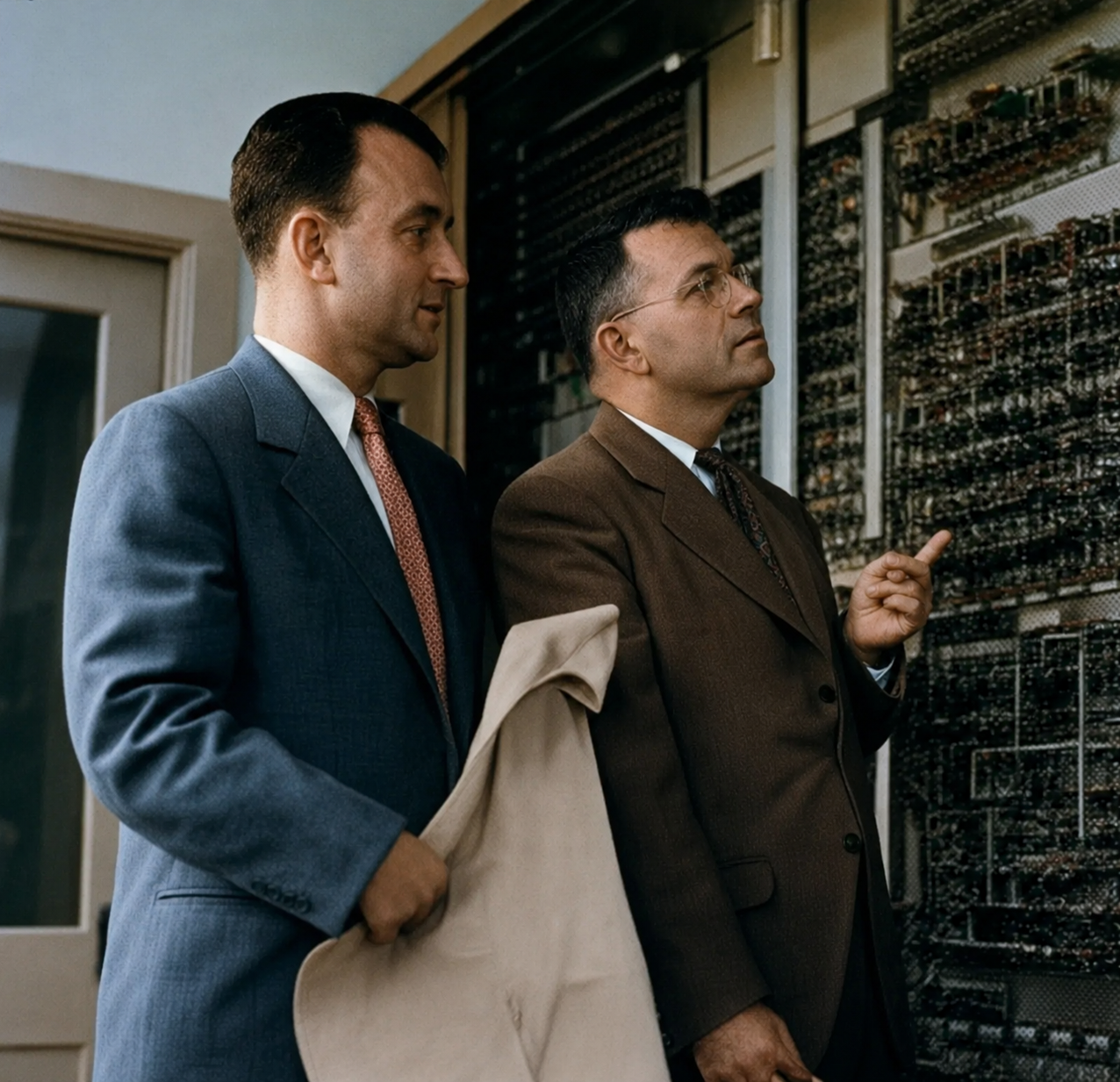
Drive up Connecticut Avenue past Van Ness Street today and you’ll see the University of the District of Columbia. What you won’t see is what stood there in June 1950: a 70-acre federal campus of 89 buildings, and inside one of them, what the U.S. Air Force was calling the fastest computer on Earth.
They called it an “electronic cerebrum.”
We’ve been having this conversation before.
“Mechanical Brains” Come to Town
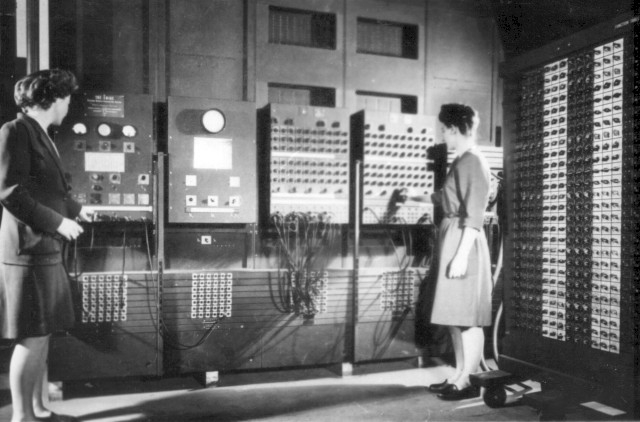
It started in February 1946, when the Army unveiled ENIAC at the University of Pennsylvania. Thirty tons of machine. 18,000 vacuum tubes. The press immediately lost its mind.
Headlines called it a “Giant Brain.” A “mathematical Frankenstein.” A “mechanical Einstein.” The Washington News tried to calm things down in April of that year: “Electronic Super-Brain Has One Limitation… these electronic ‘super-brains’ are, of course, unable to do any actual thinking.”
Sure. That’s what they said.
The business-machine industry was so spooked by the job-destroyer narrative that it launched a full-scale PR campaign, including testimony before Congress, to push back. It did not work.
By November of 1946, the Washington Post was running headlines like “Electronic Brain Virtual Reality, Mountbatten Says.” The phrase was in the water. It wasn’t going anywhere.
The Scientist Who Walked Away
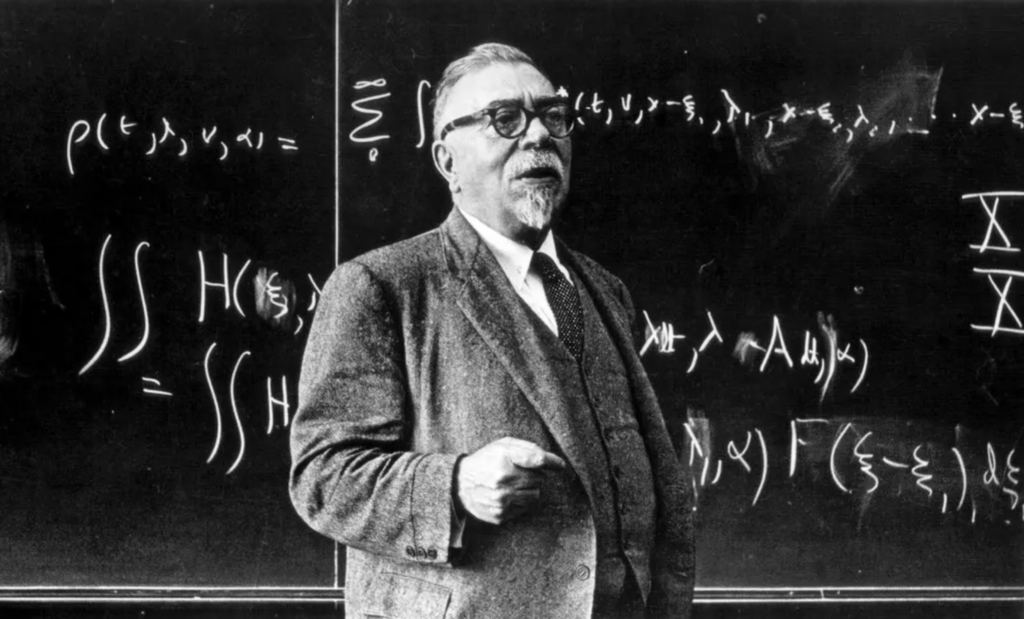
On August 13, 1949, a professor at MIT named Norbert Wiener sat down and wrote a letter to Walter Reuther, president of the United Auto Workers. He had been approached by a major industrial corporation to help build these machines.
He turned them down.
He wrote to explain why:
“This apparatus is extremely flexible, and susceptible to mass production, and will undoubtedly lead to the factory without employees… In the hands of the present industrial set-up, the unemployment produced by such plants can only be disastrous. I would give a guess that a critical situation is bound to arise under any condition in some ten to twenty years.”
Wiener wasn’t worried about machines replacing muscles. He was worried about machines replacing judgment.
“I do not wish personally to be responsible for any such state of affairs. I have, therefore, turned down unconditionally the request of the industrial company which has tried to consult me.”
An AI researcher turning down a corporate contract because he was afraid of what he’d been asked to build.
In 1949.
He proposed something he called a Council of Labor and Science, a body of leading figures from both worlds who could study what was coming. Nobody convened it.
The Brain on Connecticut Avenue
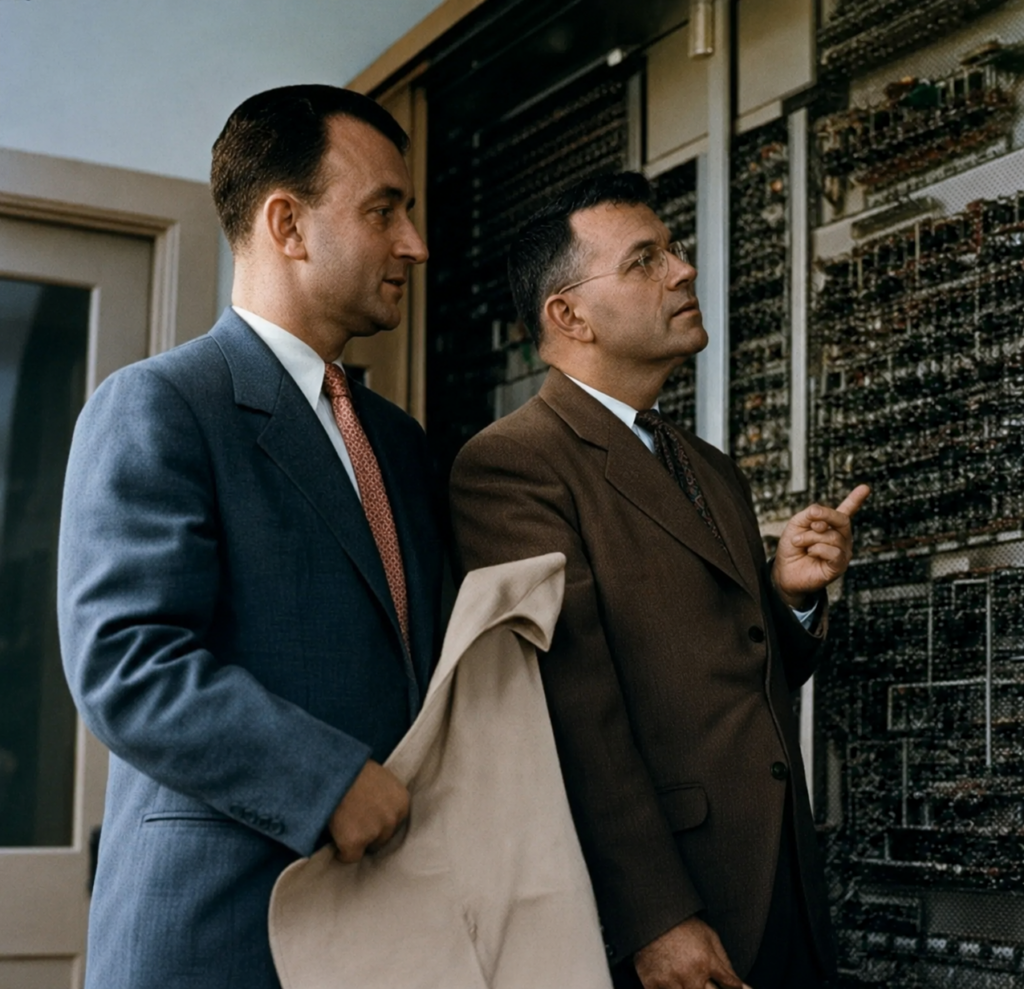
The New York Times Washington Bureau correspondent Austin Stevens was in DC on June 20, 1950. Here’s how he opened his dispatch:
“WASHINGTON, June 20 — The astronomical figures of military budgets were introduced to their master today — a huge, superspeed electronic computer devised for the Air Force by the National Bureau of Standards. It multiplies or divides eleven-digit numbers in 250 one-millionths of a second and is described by its inventors as the fastest computer in operation.”
The machine was SEAC: Standards Eastern Automatic Computer. It sat on the NBS campus at what is now 4250 Connecticut Avenue NW. Built at a reported cost of around $250,000, it was put to work immediately on the Air Force’s SCOOP project, which stood for Scientific Computation of Optimal Programs.
General Edwin Rawlings, Air Comptroller of the Air Force, explained what SEAC could now do with military budget planning: programs and requirements data that “formerly required years to develop by normal staff procedures” could be completed “in days.”
Years to days.
Dr. Edward Condon, director of the Bureau of Standards, called it “a new dimension of freedom to mankind.”
The Times called it an “electronic cerebrum.” The subheadline on the story read: “SEAC Does Vast Mathematical Chores Instantly and Can Remember and Decide.”
Remember and Decide. In 1950. On Connecticut Avenue.
SEAC was, at that moment, the first fully operational stored-program computer in the United States. It ran on 747 vacuum tubes and 10,500 germanium diodes. In 1957, a researcher named Russell Kirsch fed his infant son’s photograph into SEAC’s scanner. It produced the world’s first digital image. That happened in those buildings, on that hill, off that stretch of Connecticut Avenue.
NBS moved to Gaithersburg in 1966. The old campus buildings were gradually cleared. UDC is there now. No marker. Nothing.
The Machine in the Basement
One year after SEAC went online, the Census Bureau in Suitland, Maryland signed a contract for a UNIVAC.
By 1951 it was installed in the basement of Federal Office Building 3. The New York Times described it as “an eight-foot-tall mathematical genius” that could classify any American citizen by sex, marital status, education, income, birthplace, and a dozen other categories in one-sixth of a second.
Think about that for a second.
Of the roughly ten UNIVACs operating in the entire country by 1954, the vast majority were run by the government. Washington was not watching the electronic brain from a distance. Washington was its biggest customer.
Election Night
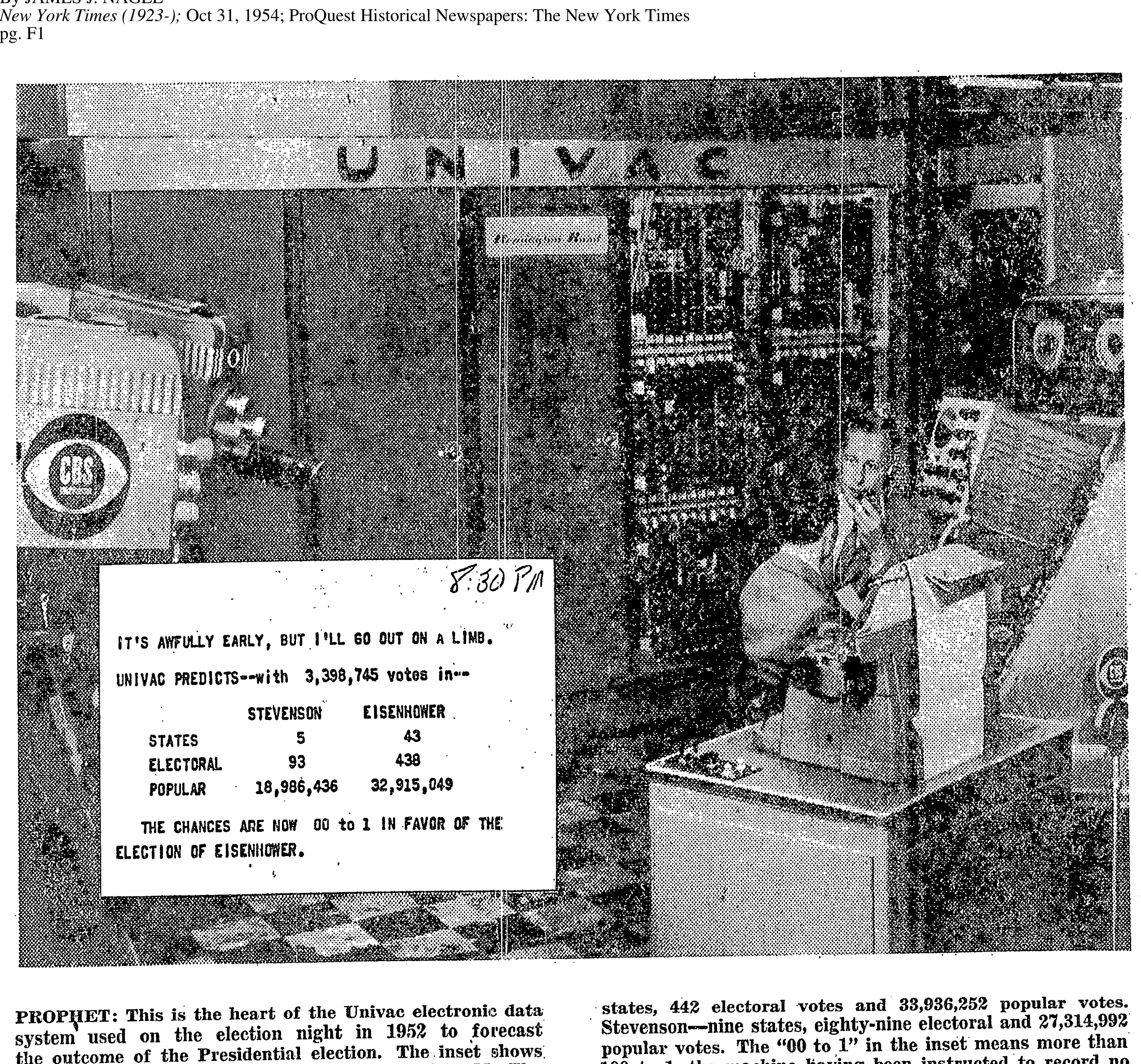
CBS put a UNIVAC on television for election night 1952. Early in the count, with a fraction of votes tallied, the machine produced its prediction: Eisenhower, 438 electoral votes. The odds in his favor were so lopsided the machine could not meaningfully express them.
UNIVAC’s operators didn’t believe it. Every human survey said the race was uncertain. They softened the numbers before putting them on air.
UNIVAC was right. The humans were wrong. Eisenhower was inaugurated on January 20, 1953.
CBS used UNIVAC again in 1954. Around this time, at a gathering of nearly 5,000 business executives who spent two weeks watching computer demonstrations, one executive stood up and told the crowd that machines would soon “do everything in the office except sit on the boss’s lap.”
The room laughed.
Congress Asks What to Do
On October 14, 1955, the Joint Economic Committee’s Subcommittee on Economic Stabilization opened nine days of hearings on Capitol Hill. The subject: automation and technological change.
Norbert Wiener’s 1949 predictions were cited in testimony.
The same questions he had put to Walter Reuther six years earlier were now being asked in a congressional hearing room: who controls the machine, who loses their job, what does the government do about it?
No consensus emerged from nine days of testimony. The subcommittee issued a report. Washington moved on.
Same Questions, Different Machine
The NBS campus is gone. The Census Bureau’s UNIVAC was retired long ago. The congressional hearings produced documents that sit in archives.
But look at what Wiener wrote in 1949: machines replacing labor “not of energy, but of judgment.” Look at what the Times wrote in 1950: a computer that can “remember and decide.” Look at what the executives were laughing about in 1954.
These are not old questions dressed up in old language. They are the same questions, word for word, that are on the front page today.
Someone should put a marker on that corner of Connecticut Avenue. The first computer in Washington was there. And so was the first argument about what it meant.