
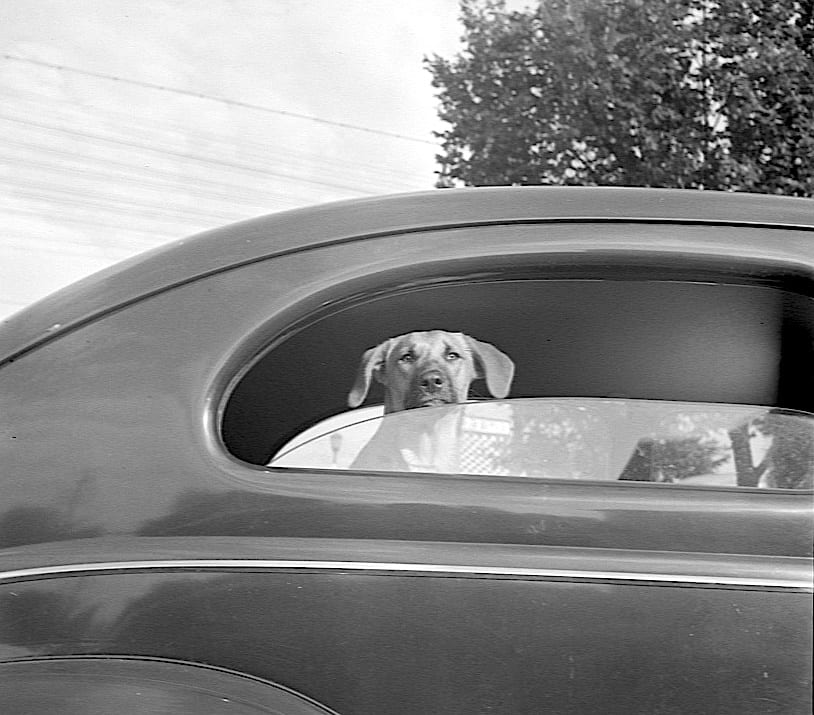
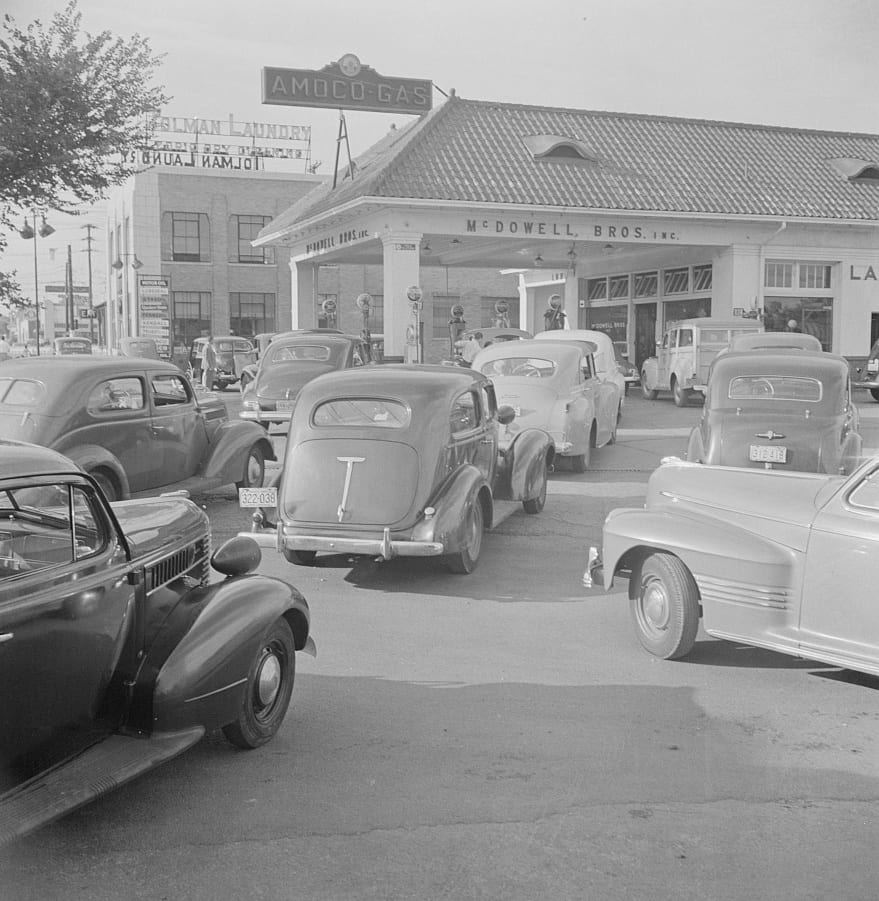
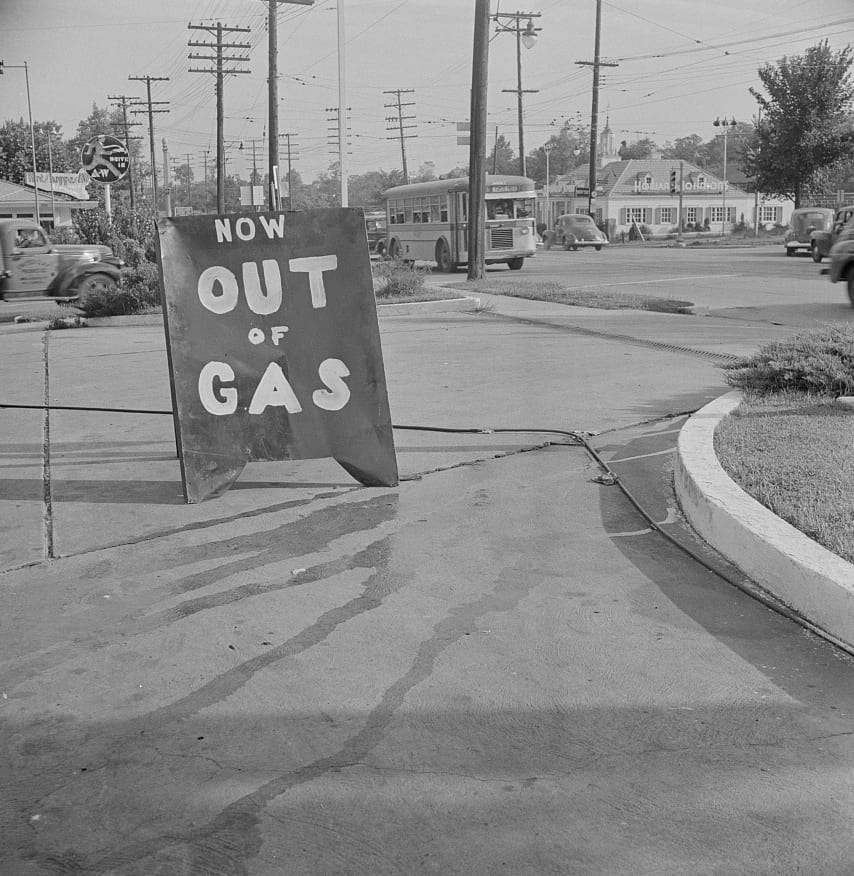
By 8:30 in the morning on June 21st, 1942, at least one gas station on upper Wisconsin Avenue had already posted a sold-out sign. The pumps had been open barely ninety minutes.
It was the day before stricter federal gasoline rationing went into effect, and Washingtonians had been lining up since before dawn to fill every tank they could.
Why Washington Ran Out of Gas
The short answer is the Atlantic Ocean. German U-boats had been targeting oil tankers along the East Coast at a staggering rate, cutting off the fuel supply that normally moved up from Gulf of Mexico refineries. In May 1942, the federal Office of Price Administration put seventeen Eastern states under mandatory gasoline rationing. Washington was right in the middle of it.
But fuel wasn’t the only concern. The real target was rubber. Japan’s seizure of the Dutch East Indies had cut off natural rubber from Southeast Asia, and a single battleship required over 75 tons of it. Every mile driven wore down tires the country couldn’t replace, so the government rationed the fuel that wore them down.
The Sticker System
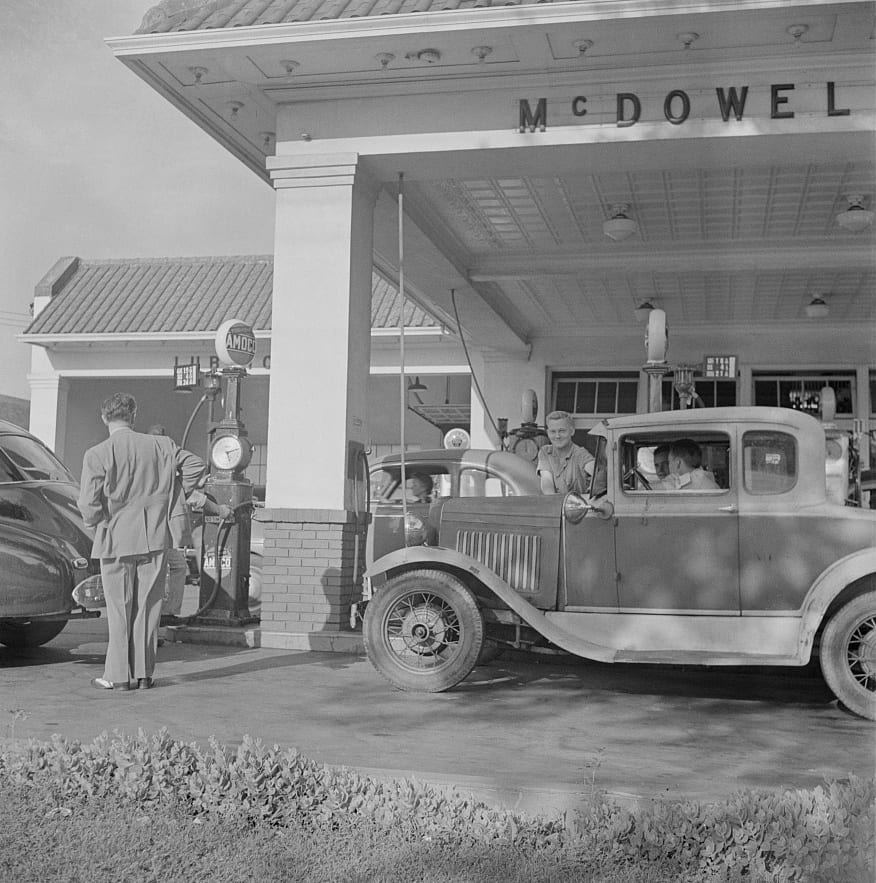
Every car had to display a windshield sticker matching the driver’s approved ration level. Most people got the “A” sticker: 2 to 4 gallons a week for nonessential driving. “B” holders, those commuting long distances with three or more passengers, received 8 to 10 gallons a week. “C” stickers went to critical workers like doctors and mail carriers with unlimited fuel access. Then there was the “X” sticker, reserved for VIPs, with no purchase limit at all. Congress members received them too. That did not go over well.
Gas station attendants checked the windshield sticker, verified it against the license plate, and detached the correct coupons before accepting payment. You could lose your ration entirely if caught speeding, joy riding, or holding more than the five tires the government permitted per vehicle. Night courts in several cities ran specifically to handle ration violations.
The Streetcar Tower at 14th and New York Avenue
Also in 1942, a photographer named Albert Freeman shot this image for the Office of War Information. The caption he filed reads: “Effect of gasoline shortage in Washington, D.C.”
The subject is a streetcar control tower.
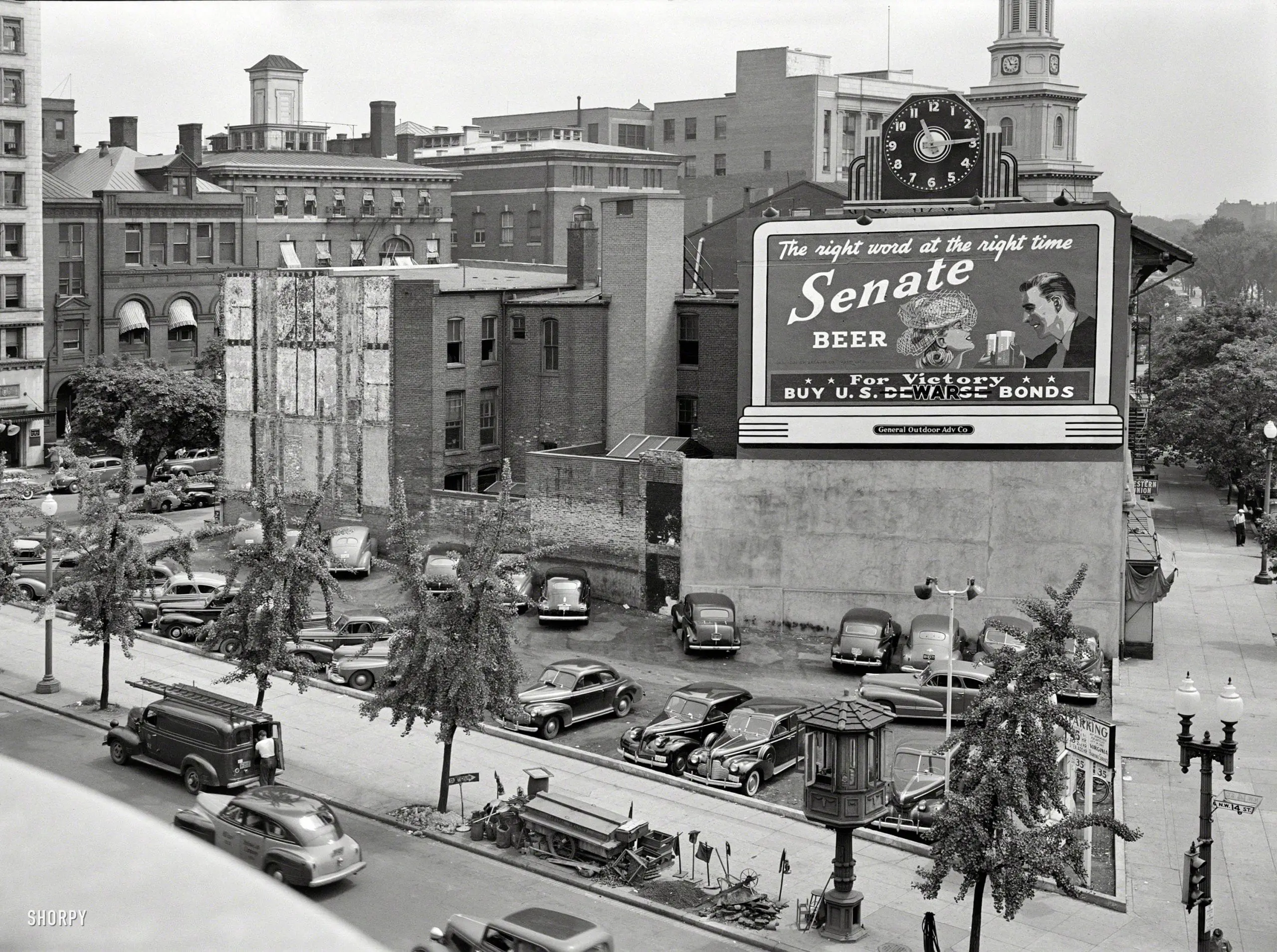
Readers who know the area have placed this at 14th Street and New York Avenue NW, where the steeple of New York Avenue Presbyterian Church is visible in the background. Freeman wasn’t documenting the scramble for gas. He was documenting what replaced it. With “A” sticker holders limited to a few gallons a week, Washington’s streetcar network absorbed the city’s daily movement. That control tower managed the flow of people who had traded their cars for transit.
Washington in 1942 still had a real, working streetcar system. Not a historical curiosity, but the way hundreds of thousands of people actually got around. This series of 1943 photos captures streetcar life a year into rationing. And a 1942 photo from 7th Street and Florida Avenue NW shows a woman waiting at a stop, probably right around the same weeks these gas lines were forming.
The City Slows Down
The government also imposed a national “Victory Speed” limit of 35 miles per hour. Tires wore out twice as fast at 60 mph as at 35, so slowing the whole country down extended the rubber supply. Employers checked workers’ tire pressure twice weekly. By 1945, the share of American households with a car had dropped from roughly 88 percent in 1941 to 73 percent. People had stopped driving, or stopped having cars at all.
This stretch of 14th Street was shifting in other ways too. A 1942 photo of a car dealership near Logan Circle shows what that block looked like in the same era. And if you want to understand the moment that set all of this in motion, three Washington houses were listed for sale on the morning of December 7th, 1941, before anyone knew what the day would bring.
Gas rationing on the East Coast lasted until August 1945.
Some of our stories are researched and written with help from AI, and checked by a person before they run. Here’s how we use AI.