
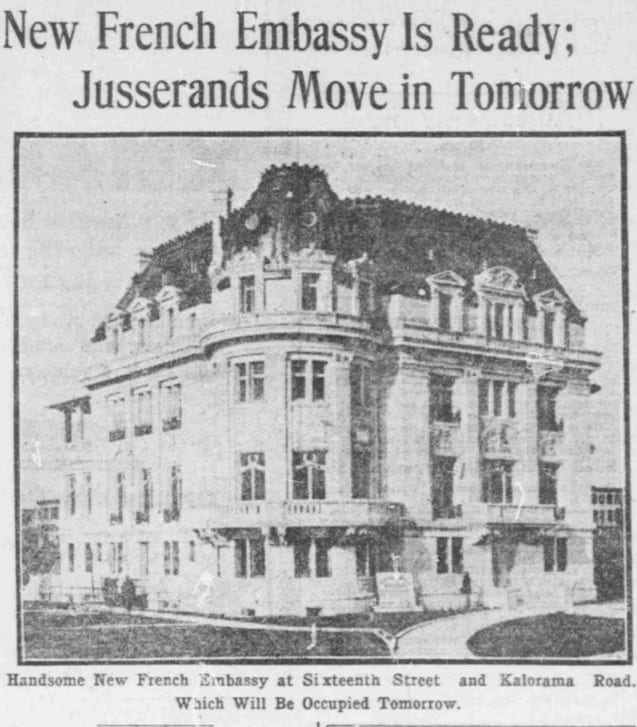
Thousands of people drive up 16th Street every day without giving the limestone mansion at the corner of Kalorama Road a second look. They have no idea they are passing one of the most glamorous addresses in Washington’s history, or that the man who once lived there may be the most remarkable diplomat the city ever hosted.
From 1907 into the 1930s, this was the Embassy of France. And for most of that stretch its star tenant was Ambassador Jean Jules Jusserand, a slight, bearded scholar who could out-walk a sitting president, won the very first Pulitzer Prize ever awarded for history, and helped pull the United States into World War I.
Let’s start with the man, then get to the house.
The ambassador who out-hiked Teddy Roosevelt
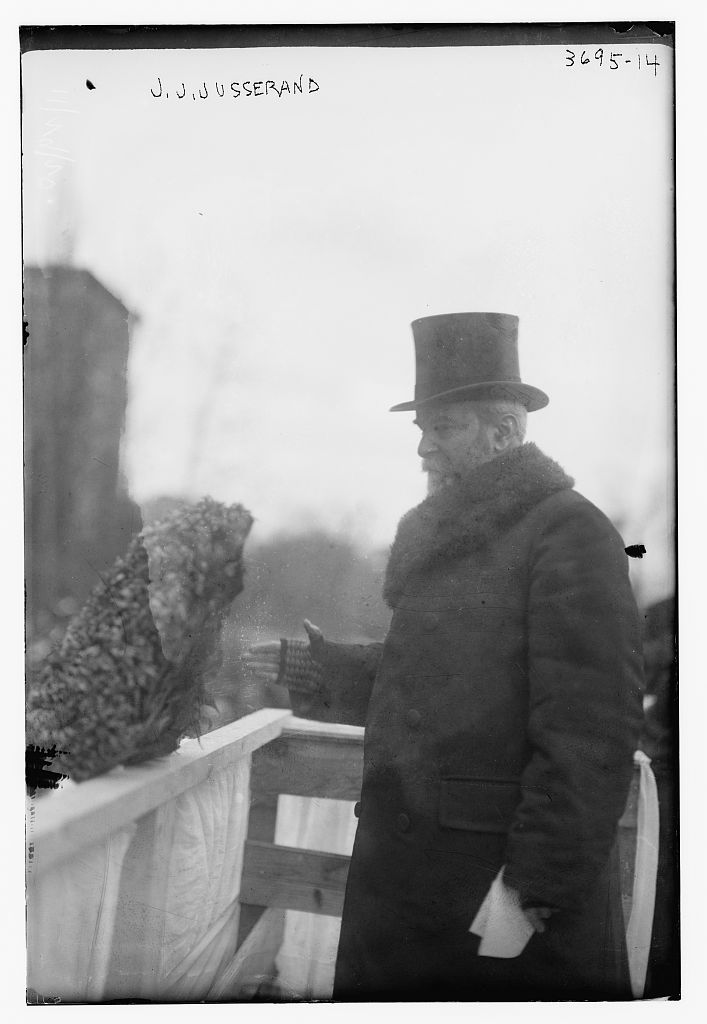
Jusserand arrived in Washington in 1902 and formally presented his credentials in February 1903. He would stay for 22 years, serving alongside five presidents (Roosevelt, Taft, Wilson, Harding, and Coolidge) and holding the post of Dean of the Diplomatic Corps from 1913 to 1925. No foreign ambassador of his era was more admired in the capital.
He was also, improbably, Theodore Roosevelt’s hiking partner. Roosevelt liked to lead “point to point” treks through Rock Creek Park, charging in a straight line over rocks, brush, and the creek itself rather than going around anything in his way. Few guests could keep pace. Jusserand could. He loved to tell the story of one outing that ended at the edge of the cold creek, where the president announced they would swim across. The dignified ambassador stripped down like everyone else, but kept his gloves on, explaining that they might just meet ladies on the far bank.
Jusserand was a serious man of letters, too. A respected scholar of medieval English literature, he published a long shelf of books, and in 1917 his “With Americans of Past and Present Days” earned the first Pulitzer Prize for History ever given. He spent the war years using every bit of his standing to nudge a neutral America toward the Allies, and when the United States finally entered the war in 1917, President Wilson trusted him enough to bring him along to the Paris Peace Conference.
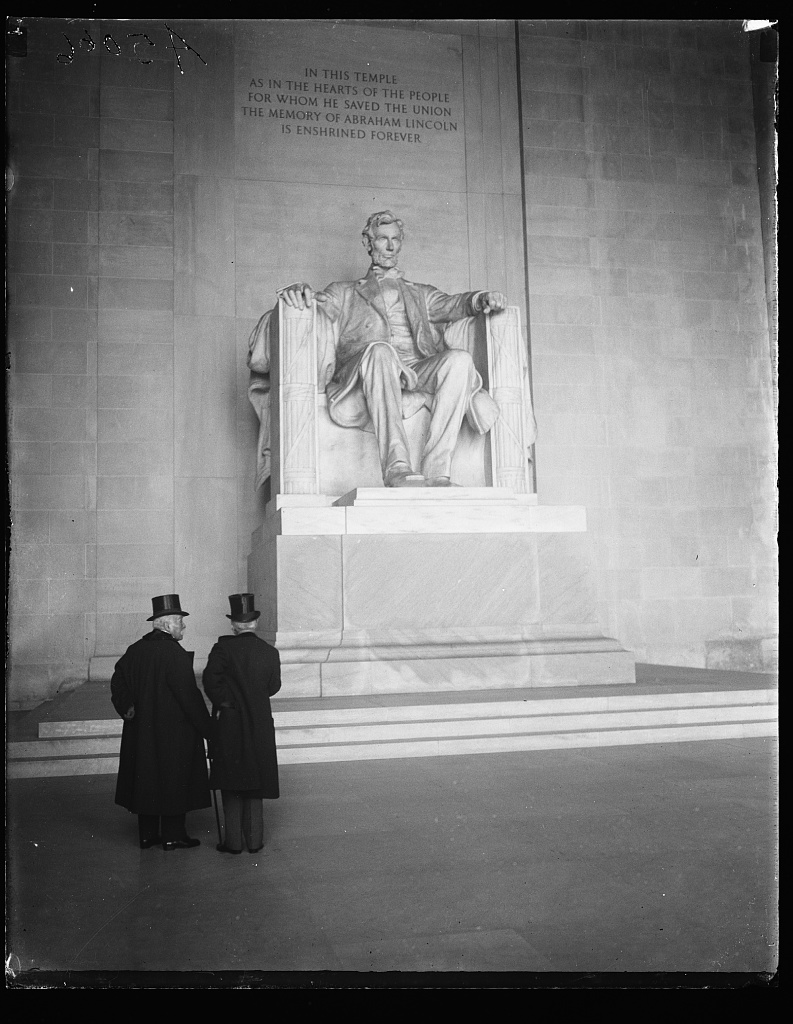
When Jusserand died in 1932, Congress authorized a pink granite memorial bench in his beloved Rock Creek Park. It was dedicated in 1936 with Franklin and Eleanor Roosevelt and the ambassador’s widow looking on, and President Roosevelt told the crowd the country would link Jusserand’s name “forever with the names of Lafayette and Rochambeau.” The bench is still there, a quiet tribute to a Frenchman who became, in FDR’s words, almost a great American.
Moving day, December 1907
So how did Jusserand come to live at 16th and Kalorama Road? On Sunday, December 15th, 1907, the Washington Times described the brand new embassy as the Jusserands prepared to move in. We will let the original article do the talking.
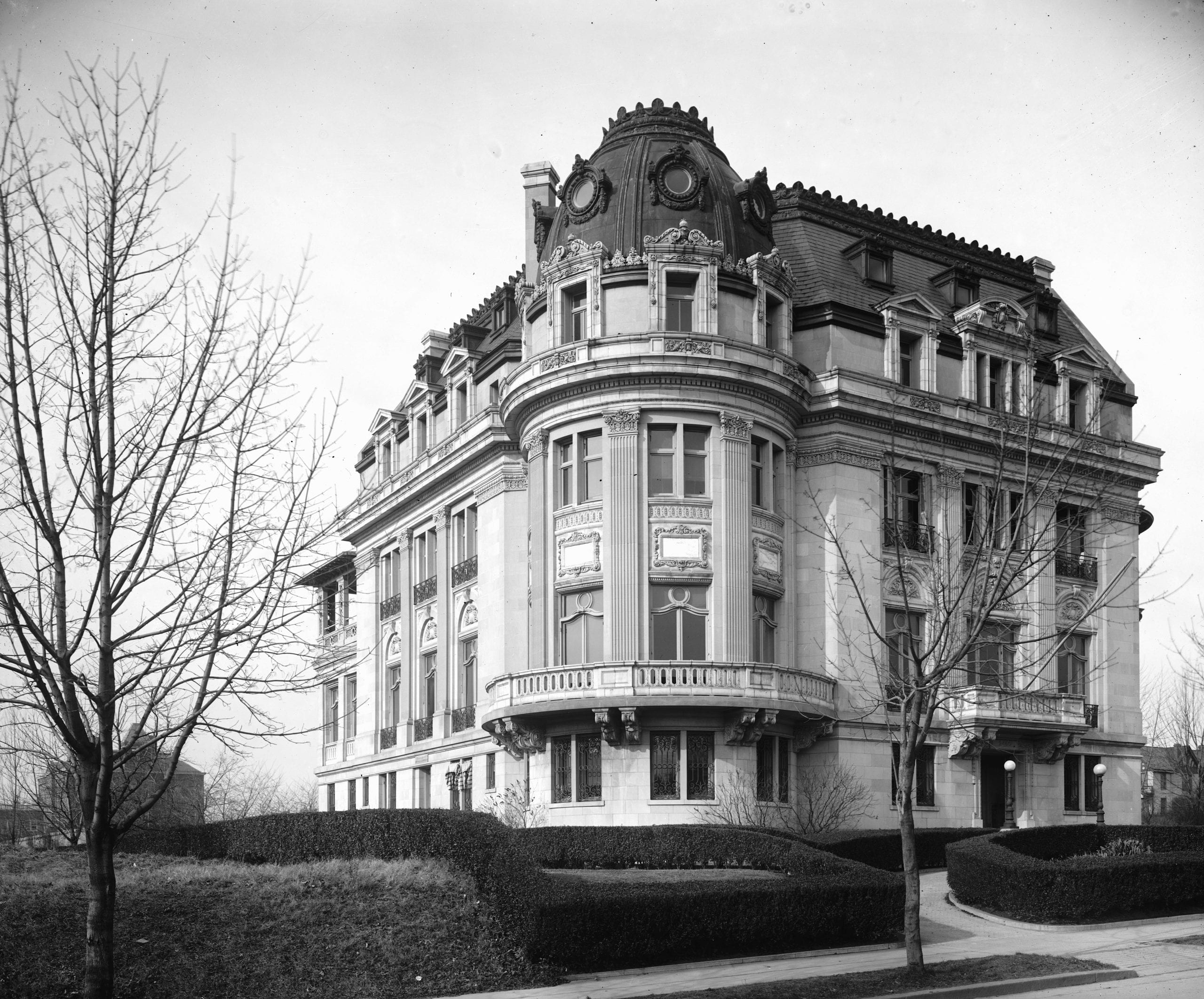
Ambassador and Mme. Jusserand will move into the new French embassy building, at the corner of Sixteenth street and Kalorama road, tomorrow. The new home of the embassy received the finishing touch last night, It is an imposing structure, four stories in height, with a frontage of sixty-five feet on Sixteenth street and a depth of eighty-five feet on Kalorama road. It was built after the modern French style of architecture by Oakley Totten, jr. The exterior is of carved Indiana limestone, with slate roof, and copper cresting.
Former Senator John B. Henderson constructed the building, as well as the Venetian mansion on the adjoining square, now occupied by Secretary Straus, of the Department of Commerce and Labor. It has been leased for a number of years by the French republic, and it is now extremely doubtful if the French government will erect a permanent building on its property on Kalorama Heights, which was recently purchased for that purpose.
The main entrance of the building is on Sixteenth street through ornamental doors of wrought iron. The hall is of white caen stone and marble mosaic floors. There is also an entrance on Kalorama road.
The office rooms of the embassy, kitchen, and several other rooms will be located on the first floor. A marble stairway with balustrades of wrought iron leads to the second floor, where the drawing room, large ante room, breakfast room, and dining rooms are located.
The embassy was constructed by the George A. Fuller Company.
Mary Foote Henderson’s Avenue of the Presidents
A few of those details deserve a closer look. The “Oakley Totten, jr.” in the article was George Oakley Totten Jr., one of the busiest architects of Gilded Age Washington. The “Former Senator John B. Henderson” was the Missouri senator who helped author the Thirteenth Amendment. But the real force behind this building was Henderson’s wife, Mary Foote Henderson, who nursed a grand ambition: to remake 16th Street into a stately “Avenue of the Presidents” lined with embassies, mansions, and monuments.
The French Embassy, finished in 1907, was her first big win, the first foreign mission she managed to lure onto 16th Street. Totten designed nearly a dozen Beaux-Arts mansions for her along the corridor, and the old French Embassy is widely counted among his finest. He drew plans for ten legations and embassies in all, including the Turkish, Polish, Belgian, Norwegian, Spanish, Swedish, and Danish missions. The structure itself went up under the George A. Fuller Company, the firm that had practically invented the modern steel skyscraper.
The Hendersons thought big. Mary Foote Henderson even lobbied to move the White House up to Meridian Hill, and the couple held court from their own turreted Boundary Castle a few blocks north. Totten’s imagination ran just as wide. He once drew a sculpture-encrusted grand design for the Calvert Street bridge that never got built.
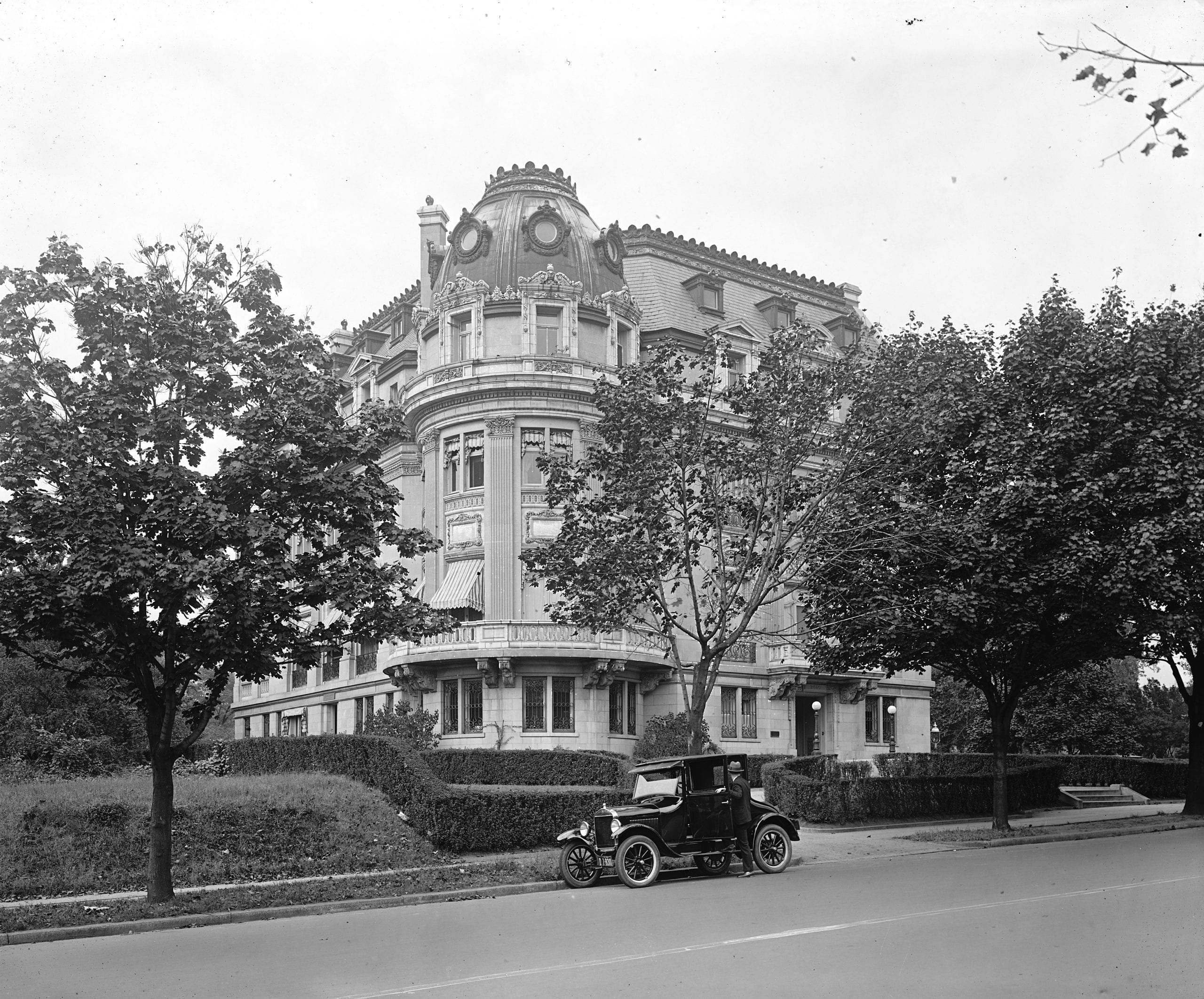
From embassy to hotel to today
Jusserand retired in 1925, and France’s long flirtation with 16th Street eventually wound down. In 1936 the French government bought a different mansion, a 1910 Tudor Revival house at 2221 Kalorama Road, which still serves as the French ambassador’s residence today. The embassy’s sprawling modern chancery, off Reservoir Road near Georgetown, did not open until 1984.
The old 16th Street building lived quieter decades after the French left. It was carved up into apartments, ran for a time as the Graystone Manor hotel, and in 1961 became the chancery of newly independent Ghana, which stayed until 1988. Today it houses the Council for Professional Recognition, and it remains beautifully kept.
It is a beautiful building, and thankfully, it still stands.
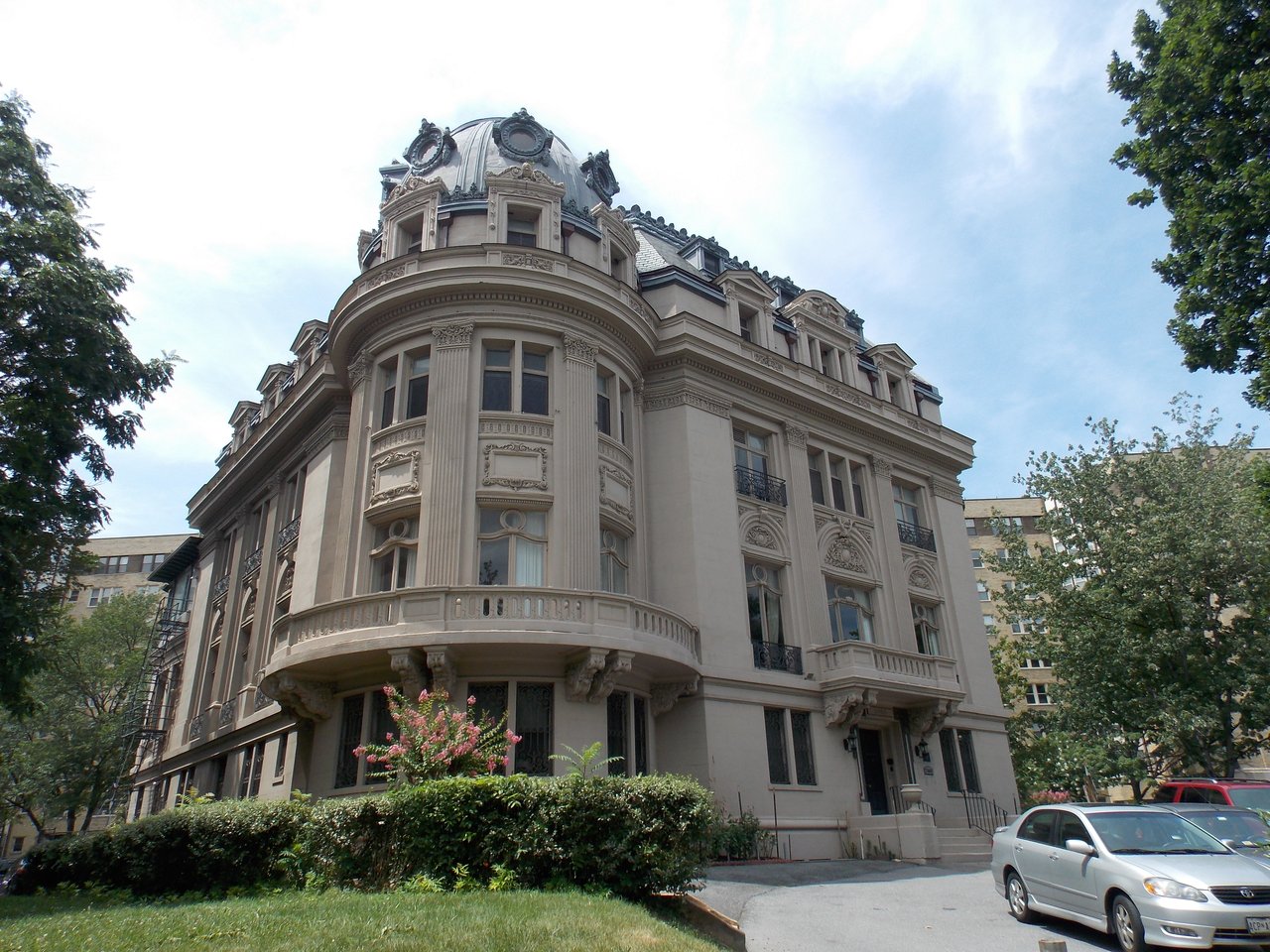
The 16th Street corridor that Mary Foote Henderson dreamed up kept growing through the 20th century. A few blocks south, Dorchester House opened at 2480 16th St. NW in 1941, one of the three largest apartment buildings in Washington at the time. And directly across the street sits Meridian Hill Park, where Ambassador Jusserand and his wife once presided over the dedication of the Joan of Arc statue alongside President and Mrs. Harding.
Next time you head up 16th Street, slow down at Kalorama Road and give the old place a nod. A Pulitzer winner who could out-walk Teddy Roosevelt used to call it home.