On September 23, 1940, a Chicago-based amateur photographer named Charles Cushman walked the streets of Old Town Alexandria with his 35mm camera and made four color photographs. The Pentagon would not break ground for almost a year. The Torpedo Station up the waterfront was ramping up but had not yet swallowed the city whole. Cushman shot four frames, ran out of light or interest, packed up, and drove away.
The photos sat in a slide box for the next 32 years.
That box, along with about 14,500 others, ended up at the Indiana University Archives when Cushman, an IU alumnus, died in 1972. They sat there for another three decades. IU did not publish the Cushman collection online until late 2003. When it finally went up, photography people lost their minds. Cushman had been shooting Kodachrome since 1938, when 35mm color slide film was still a new thing, and he had pointed his camera at subjects almost nobody else was bothering to shoot in color: side streets, gas stations, factory yards, dock workers, the small unfamous parts of American cities in the middle of the century.
His Alexandria visit was four frames out of fourteen thousand. But it caught the city at a hinge moment, and it caught it in color, which almost nothing else from that fall did.
The spire at Royal and Cameron
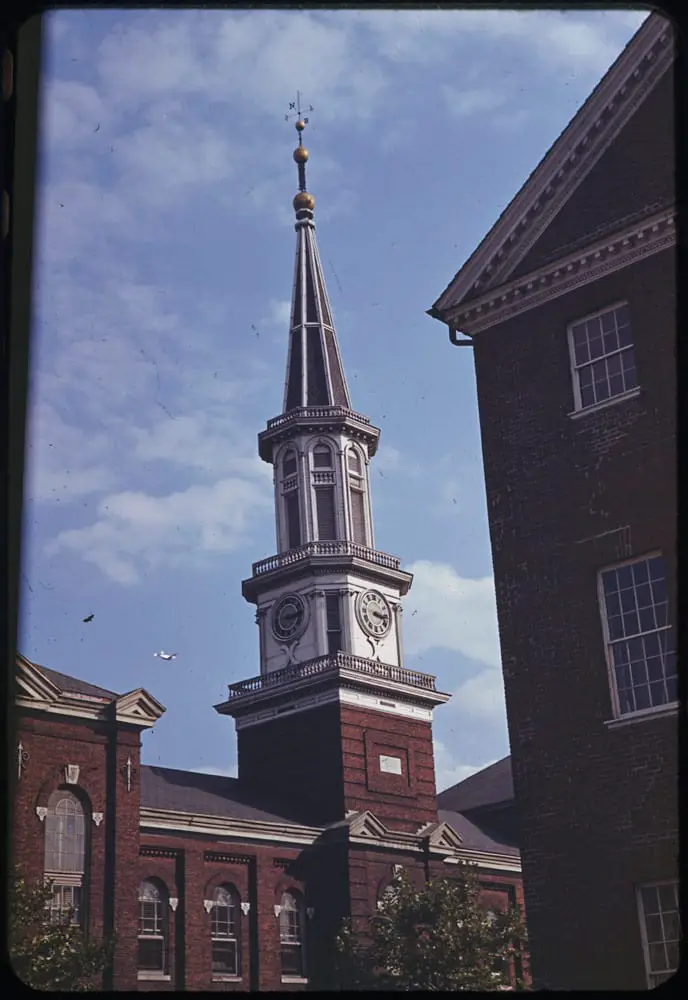
The hero image above (Cushman frame 1640.19, slide P02068 in the IU Archives) is the corner of North Royal and Cameron, looking south. The spire belongs to Alexandria City Hall, rebuilt in 1871 to a design by Adolph Cluss after fire took the previous market house. The clock tower is a replica of an earlier 1817 steeple by Benjamin Henry Latrobe, so even in 1940 it was already a copy of a thing that no longer existed.
The brick building on the left is the Gadsby’s Tavern complex at 134 and 138 North Royal, a working tavern since around 1785. Cushman’s notebook calls it “Gabby’s.” He was writing down what he heard. The tavern dining room served George Washington, John Adams, and Thomas Jefferson in its day, and it is still pouring drinks today. We’ve written about the time Mark Twain put Gadsby’s into a parable, which gives some idea of the cultural weight the building carried even by Cushman’s afternoon.
“Old tavern”
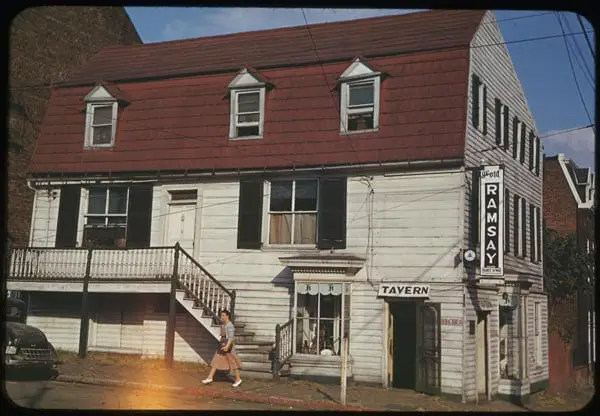
Cushman did not name the building. He never came back to identify it. The Cushman finding aid is full of these one-line notebook entries: a roof, a hill, a dog, an old tavern. He shot what caught his eye and moved on.
Lower Prince Street
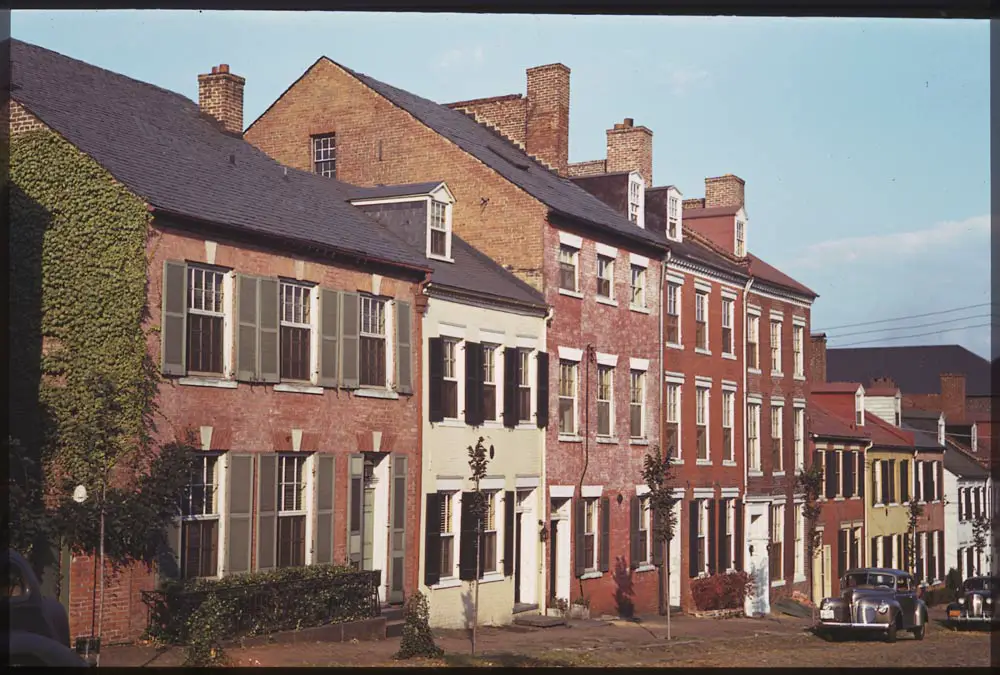
Lower Prince Street, the block below Lee, is one of the last cobblestone streets in the region. The stones in Cushman’s photograph are the same stones a tourist will walk on this weekend. Captain’s Row, as the locals call it, runs another half block down to the water.
In 1940 this was a working block in a working port. The brick rowhouses Cushman pointed his camera at were not historic real estate. They were just where people lived.
The dock
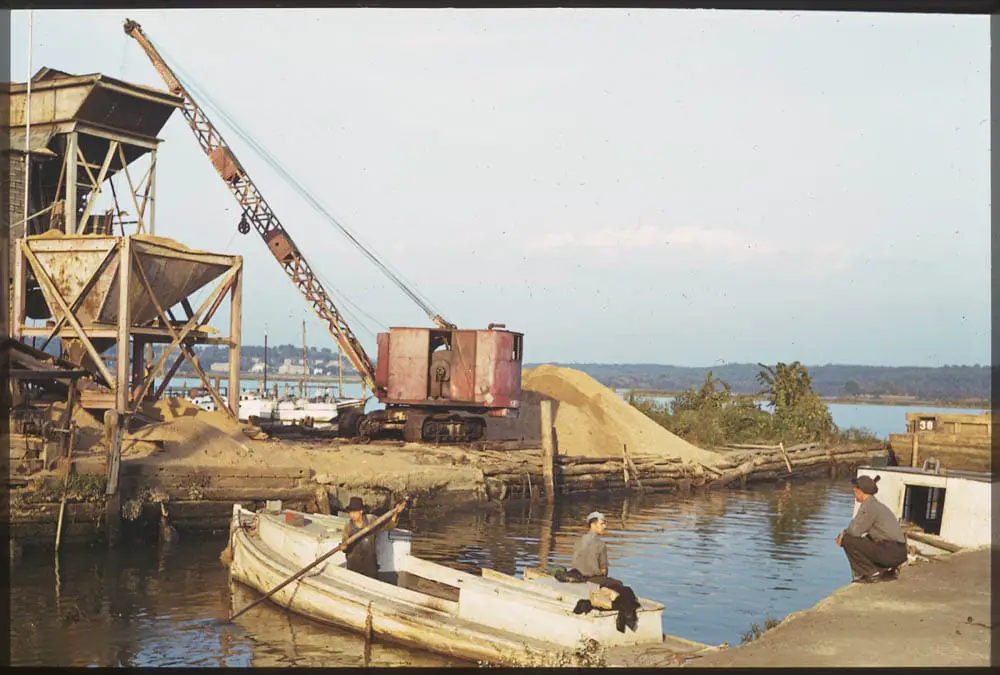
This is the part of Alexandria that was about to change the most. The Torpedo Station sat a few blocks north along the river. Its production lines had been idle since 1923 and were ramping back up by the late 1930s for the Mark 14 submarine torpedo, a war the U.S. had not yet entered. By 1945 the station would employ thousands of workers across more than a dozen buildings and run on shifts around the clock.
Eleven months later
Cushman packed up his camera on September 23, 1940. On September 11, 1941, ground broke for the Pentagon across the river in Arlington. (We’ve written about why the building has five sides, which is its own minor scandal.) The federal government’s wartime workforce showed up in Northern Virginia ahead of the buildings to hold them, and the housing collapsed under the demand almost immediately.
Some of the overflow ended up in trailer camps along U.S. 1 and Mount Vernon Highway, rows of small towable trailers set up by the Farm Security Administration for defense workers and their families. Six months after Cushman’s visit, the FSA photographer Martha McMillan Roberts went down to one of those camps and shot the people living in them.
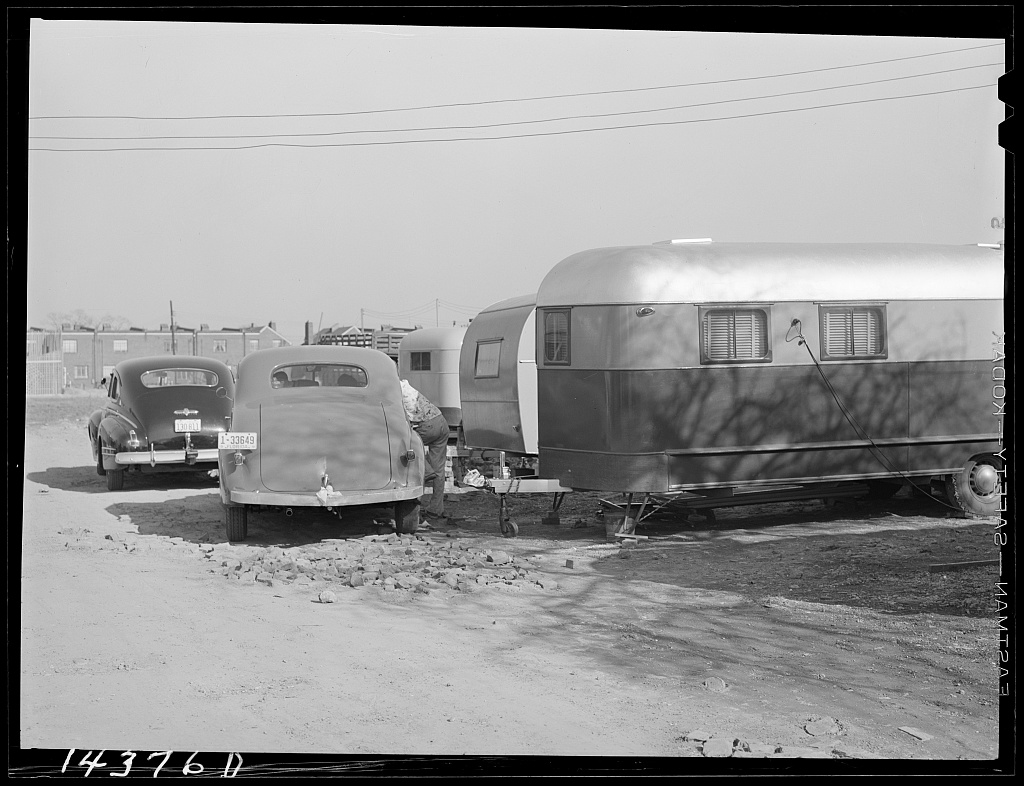
The trailers came and the workers came and Chinquapin Village (150 wooden duplexes thrown up in 1941 for Torpedo Station families) came, and then everything came: the buses, the second shift, the air-raid drills, the rationing, the V-mail. The Old Town Cushman walked through that September afternoon was the last quiet version of it.
The Torpedo Station shut down for good in 1946. The buildings became, eventually, the Torpedo Factory Art Center, which is still there. Gadsby’s Tavern still serves dinner. The cobblestones on Lower Prince Street are still loose. The spire of the old City Hall is still a copy of a copy.
Cushman never went back, as far as the notebook records show. He had four frames. That was enough.
I do believe that “old tavern” in the last photo is now the Visitor Center on the corner of King and Fairfax.