
![Capital Transit demonstration run of a Twin Coach articulated bus (a model they did not end up using), April 3, 1948. This turnaround is still used by buses today [photo by Robert S. Crockett].](https://ghostsofdc.org/wp-content/uploads/sites/7/2015/12/10896004463_3f7d28bb16_o.jpg)
On September 23rd, 1941, a man named Wilton Wright walked into the Toddle House diner at 1971 Calvert Street NW in Adams Morgan and complained about the coffee. According to the lawsuit he filed a few months later, the counterman flew into a rage, argued about the quality of the beverage, and slashed him across the left wrist with a carving knife. Twelve stitches closed the wound.
Wright sued for $25,000. That is the address story we are here to tell.
For years, this post said the little diner in the 1948 bus turnaround photo was where Mama Ayesha’s stands today. That is wrong. Mama Ayesha’s is next door, at 1967 Calvert Street NW, in a different building. The Toddle House was at 1971 Calvert, in a small brick and cinder block box that is still standing at the mouth of the bus loop, painted white, with a red sign on the door. That little building has a much better story than the one we told the first time.
Credit for the correction and the initial research goes to Mike, who dug up the Evening Star’s building permit for us. What follows is a full rewrite.
The Address
The building permit is the anchor. On July 20th, 1940, the Evening Star ran its daily building column and listed a modest project on the north side of Calvert Street, at the mouth of the bus loop above Rock Creek.
National Toddle House Corp., owners; D. B. Johannes, jr., 927 Fifteenth street N.W., designer; to erect one 1-story brick and cinder block restaurant, 1971 Calvert street N.W.; to cost $5,000.
Five thousand dollars in 1940 bought a small, single-story counter-service diner of the kind that had spread out of Memphis across the country. National Toddle House Corp. was organized in Memphis in 1935. Its president, Frederick Smith, was already running the Dixie Greyhound bus lines and knew something about pulling motorists off the highway for coffee and pie. The Toddle House model was a squat, cottage-style prefab, roughly the size of a boxcar, with a counter, ten or twelve stools, and a menu that ran to steaks, hamburgers, and pancakes at all hours.
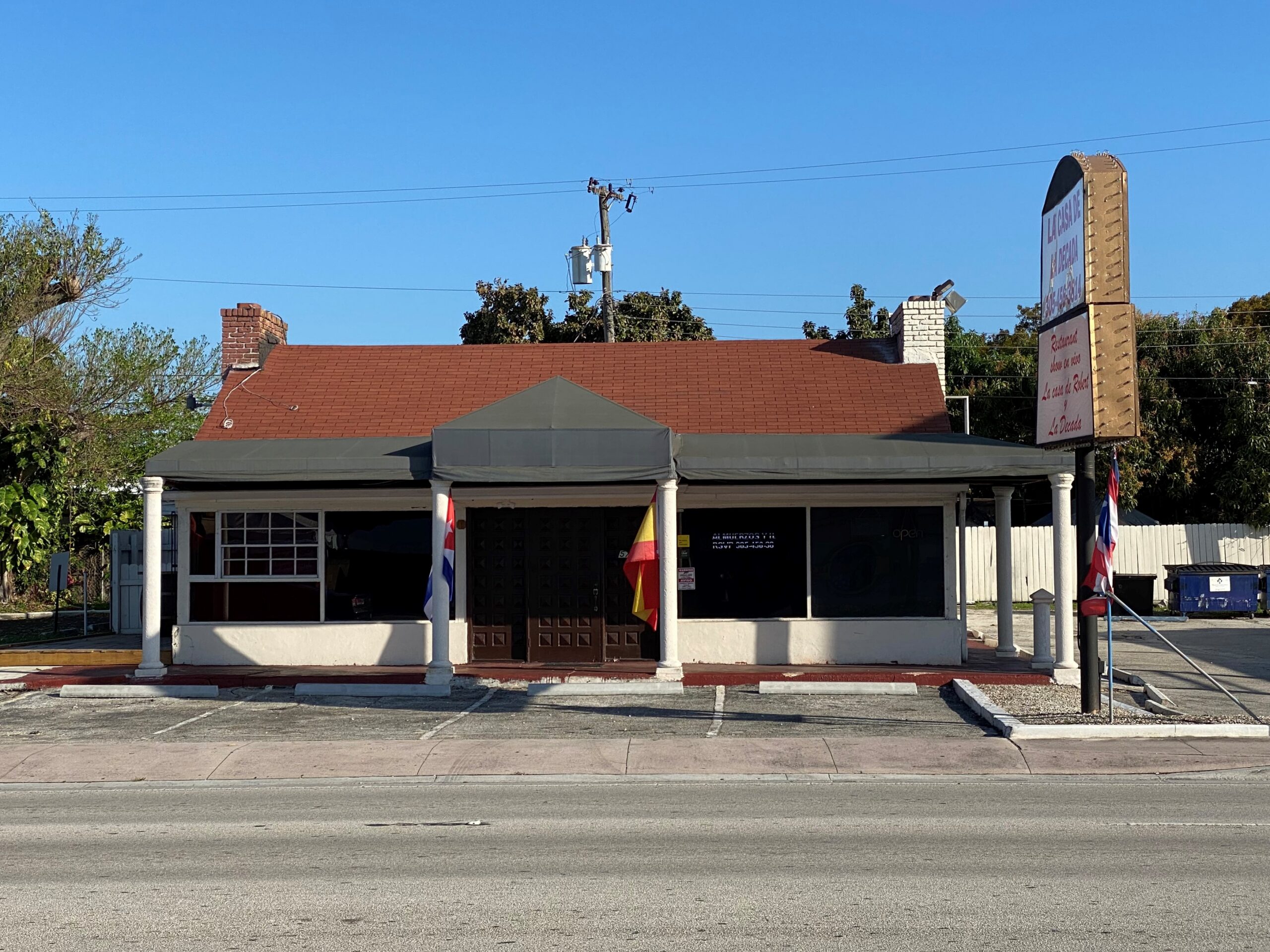
By early 1941, the Calvert Street location was open and part of the daily circuit of the surrounding buildings. A March 3rd, 1941 lost-and-found ad in the Washington Daily News offered a reward for a “yellow gold, dragon head” bracelet with a diamond in its mouth, lost somewhere “between Shoreham Hotel, Toddle House on Calvert St., Chalfonte Apt.” The diner had become a small local landmark, sitting between two big residential ones.
Coffee and a Knife
Which brings us back to Wilton Wright of 1951 Biltmore Street NW, a block away, and his complaint about the coffee.
The Evening Star of April 22nd, 1942 carried the story on page 25 under the headline “Suit Charges Knifing After Rap at Coffee.” Wright had filed at District Court, alleging that when he criticized the coffee at the 1971 Calvert restaurant on September 23rd, 1941, one of the employees “flew into a rage.” An argument ensued about the quality of the beverage. Then, according to Wright, the counterman slashed him on the left wrist with a carving knife. The paper reported that twelve stitches were required to close the wound.
We do not know how the suit came out. What we know is that a District Court complaint from a Biltmore Street neighbor left a permanent record of the Toddle House on Calvert as a specific room, with a specific counter, with a knife under the counter, in the fall of 1941. That is not the story anyone tells in a chain diner’s press release, and it is a much better story than “then and now.”
A Chain in Fast Trouble
Trouble followed the chain through the war and after. Frederick Smith, the president, died at Baptist Hospital in Memphis on November 20th, 1948, at 53. The Evening Star obituary noted he had also chaired Dixie Greyhound, which by then ran into nine states. He was the kind of Memphis businessman who saw a highway and a bus and a lunch counter as a single system.
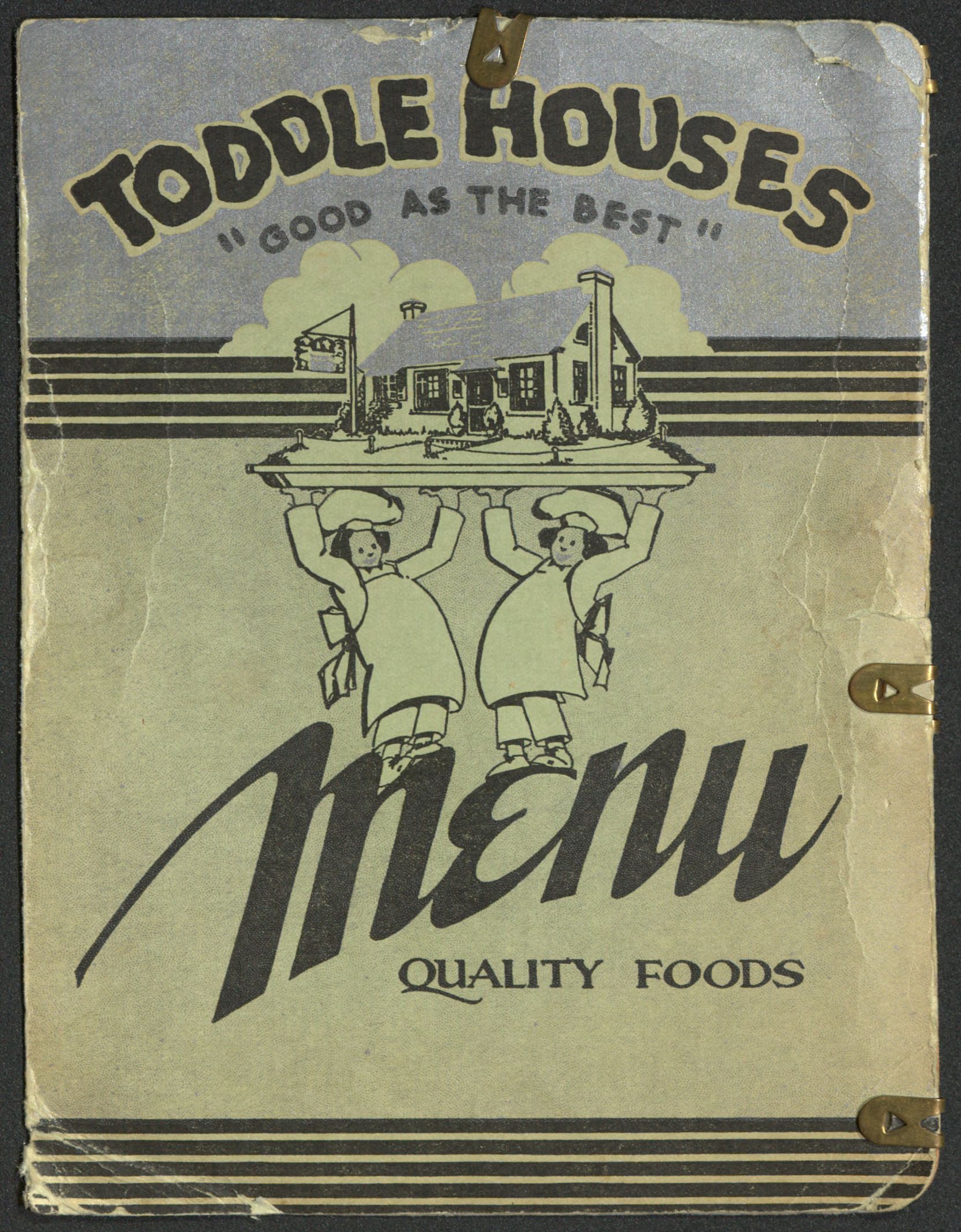
Three years later, on April 12th, 1951, the Evening Star reported that a watchman named Walter Johnson was beaten inside a different DC Toddle House at 5341 Georgia Avenue NW. Three men came through a side door after the store had closed, hit him with a blunt instrument, and took a $35 pay envelope. Johnson was 41 years old. The paper described him as “colored.” That word marks him as a Black employee working the overnight shift at a chain whose Bethesda outlet, four miles up Wisconsin Avenue, would refuse to seat Black customers a few years later.
Then on January 30th, 1952, the Office of Price Stabilization filed a civil suit in Memphis. The Star ran the story on page 21 under “‘Toddle House’ Food Chain Charged in OPS Action.” OPS sought treble damages of about $88,000, alleging the chain had raised prices and shrunk portions of pie and hamburgers. The Star noted that the company had 159 units nationally and four branches in Washington. The Calvert Street diner was one of the four.
Two Toddle Houses, One Metro Area, Two Legal Regimes
This is the part that is easy to miss.
On June 8th, 1953, the Supreme Court decided District of Columbia v. John R. Thompson Co., holding that the Reconstruction-era Washington “lost laws” of 1872 and 1873 were still valid. From that day on, a restaurant in the District could not lawfully refuse to serve a customer on the basis of race. The Calvert Street Toddle House, along with the three other DC Toddle Houses, was now legally bound to seat any customer who walked in.
Four years later, four miles up the road, a Toddle House with the same signage was not.
On August 26th, 1957, the Evening Star reported that the NAACP had sent survey teams of Black customers to eighteen Montgomery County restaurants. Six turned them away. Among the six was the Toddle House at 8017 Wisconsin Avenue in Bethesda, along with the Hot Shoppe at Wisconsin and East-West Highway, the Little Tavern at 7317 Wisconsin, the Drug Fair at 7100 Arlington Road, and the Woodward & Lothrop tearoom at Wisconsin and Western.
The manager of the Bethesda Toddle House, Larry McBride, told the Star his restaurant “never practices racial discrimination.” He allowed that if service had been refused, it was on someone else’s shift, and would be corrected.
The two Toddle Houses were the same brand, run out of the same Memphis headquarters, four miles apart, and operating under two different laws. A Black customer stepping through the door at 1971 Calvert Street NW in DC had a legal right to be seated. The same customer stepping through the door at 8017 Wisconsin Avenue in Bethesda did not. The difference was not the chain. It was the jurisdictional line.
DC papers of the period do not appear to record any picket, sit-in, or refusal-of-service complaint at a Washington Toddle House. We have looked, and we will keep looking. If you know of one, we would like to see the citation.
The famous Toddle House sit-ins came later, and elsewhere. On December 21st, 1963, SNCC members sat in at a Toddle House next to the Peachtree Manor hotel in Atlanta. John Lewis was arrested the next day and held on a $100 bond. Lillian Gregory, comedian Dick Gregory’s wife, was arrested at the same Toddle House on Christmas Eve while pregnant. The demonstrators bought stock in Dobbs Houses, Toddle House’s parent, and pressed the case as shareholders. Within weeks, northern SNCC pickets closed roughly a dozen Dobbs and Toddle House locations, and Dobbs agreed to desegregate nationwide.
By that point, the DC Toddle Houses had been serving all customers for a decade. Thompson had already done that work.
The Chain Peaks, Then Sells
The Calvert Street diner kept going. On October 18th, 1961, the Evening Star reported that the parent chain would sell to Dobbs Houses for a stock swap, contingent on IRS and SEC clearance. National Toddle House at the time ran six Toddle Houses in the Washington area, plus a commissary at 5050 Lee Highway in Arlington. The deal closed the following spring. On May 2nd, 1962, the Star reported that Dobbs had acquired the company for stock worth about $18 million. The combined chain, the paper wrote, ran 252 restaurants in 30 states and the District of Columbia.
Then the chain began the long fade that overtook so many mid-century diner brands. By 1971, thirty-one years after the permit, the Toddle House at 1971 Calvert closed for good.
What’s There Now
The 1948 photograph at the top of this post shows two buildings inside the Calvert Street turnaround. On the left is the 1899 Rock Creek Streetcar Terminal pavilion, designed by DC architect Waddy Wood and built as the end-of-line stop for the streetcar that crossed the original 1891 iron truss bridge over Rock Creek.
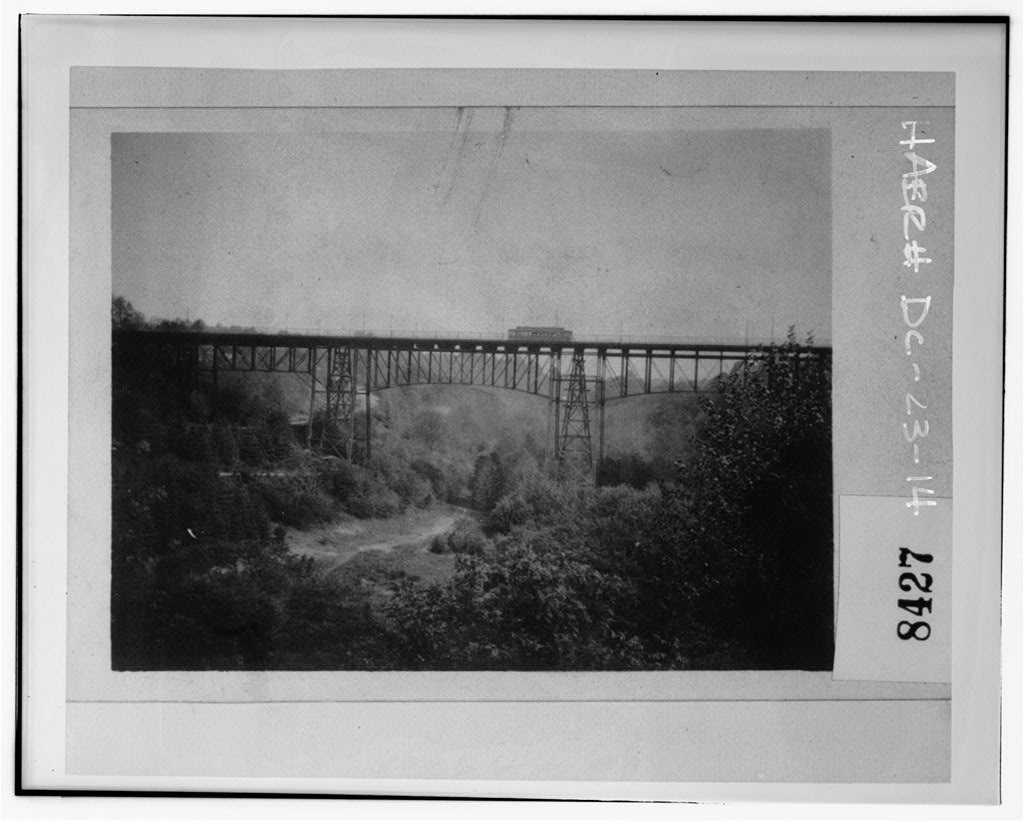
In 1935, when the new Calvert Street Bridge opened and buses replaced the streetcar, that pavilion was renamed the Calvert Street Waiting Station and pressed into service as a bus shelter. On the right side of the frame is the Toddle House.
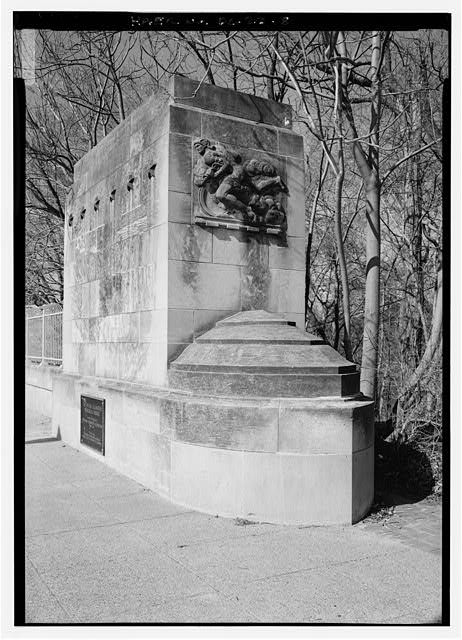
The current bridge, built between 1930 and 1935, honors the streetcar it replaced. Four abutment reliefs by the Chicago sculptor Leon Hermant celebrate transportation by automobile, rail, water, and air. The rail relief is the one that ties this address to its streetcar past.
The Waddy Wood pavilion is gone. According to WMATA, it was demolished in 1990.
The Toddle House is not gone. Look at the same corner today and you see a small, one-story, brick and cinder block box on the north edge of the bus turnaround, now painted white, a bus shelter directly in front of it and a red-and-white sign on the door. That is the same building the Evening Star described in 1940.
The diner space is boarded off. The rear was renovated in the 1970s and 1980s into a small restroom and break room for bus drivers. WMATA runs it today as one of three ex-Capital Transit bus loop facilities, along with the ones at 5720 Connecticut Avenue in Chevy Chase and 5409 Colorado Avenue.
At an Advisory Neighborhood Commission briefing in February 2019, WMATA staff described a Federal Highway Administration grant to rehabilitate all three buildings under Interior Department historic preservation standards. The Calvert Street building has been determined eligible for the National Register of Historic Places and sits inside the Kalorama Triangle National Register Historic District.
So the answer to the original then-and-now question is that the Toddle House is not Mama Ayesha’s, and never was. It is the little white bathroom for the bus drivers. Which is a much better ending than we gave it the first time.
We dug this one up with help from AI and checked it against the original records below. Here’s how we use AI.