
A reader named PD sent us a tip about a quiet stub of road off Kirby Road in McLean. We went digging. What we found is one of the more remarkable pieces of ground in Fairfax County.
Cottonwood Street is a short residential street beside Linway Terrace Park. Modern houses line it now. Nothing about the street tells you what it is.
What it is: the surviving trace of a 26-acre farm a Black farmer named Christopher Columbus Hall bought here in 1865, the year the war ended. He divided it among his 11 children. Generations later, his descendants were still living on Cottonwood Street.
Check out how Patricia Davis opened her front-page story in the Washington Post on April 8, 1996: “The children of Cottonwood Street still climb the big rock at the top of the hill, just as their fathers and grandfathers and great-grandfathers did before them.”
A community called Lincolnville
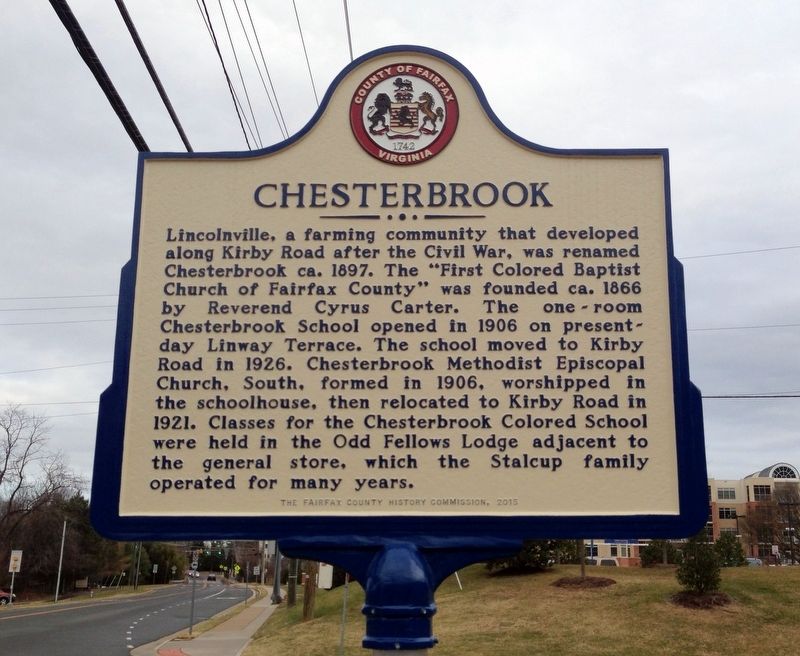
Before it was Chesterbrook, this stretch along Kirby Road was called Lincolnville. It grew up as a farming community after the Civil War, and it was a free Black settlement from the start.
The first person to buy land here was Cyrus Carter. The Post’s 1985 history of his church says he was born in Port-au-Prince, Haiti, in February 1815 and brought to the United States as an enslaved child. Emancipated before the war ended, he landed with his family at Mason’s Island, now Roosevelt Island, in 1863 and served in the Union ambulance corps.
The county’s 2022 survey tells it differently, calling Carter a free Black man from Haiti who arrived in the area in the 1850s. Both accounts agree on what came next. Carter bought nine acres from the Crockers and, around 1866, founded the First Colored Baptist Church of Fairfax County. Today it is the First Baptist Church of Chesterbrook, on Kirby Road.
Christopher Columbus Hall was one of the settlers who followed. He came, according to Fairfax County’s African American Historic Resources Survey, from New Orleans. The survey notes a pattern among Lincolnville’s early landowners: many came from outside the area and bought unimproved land in the years after the war.
The Crocker land
The land came out of a Union family’s estate. Francis P. Crocker had moved south from New York in the late 1840s and owned a farm that covered what is now the Cottonwood Street enclave.
He didn’t live to sell it to the Halls. Crocker died on October 11, 1861, a prisoner of war at Culpeper Court House.
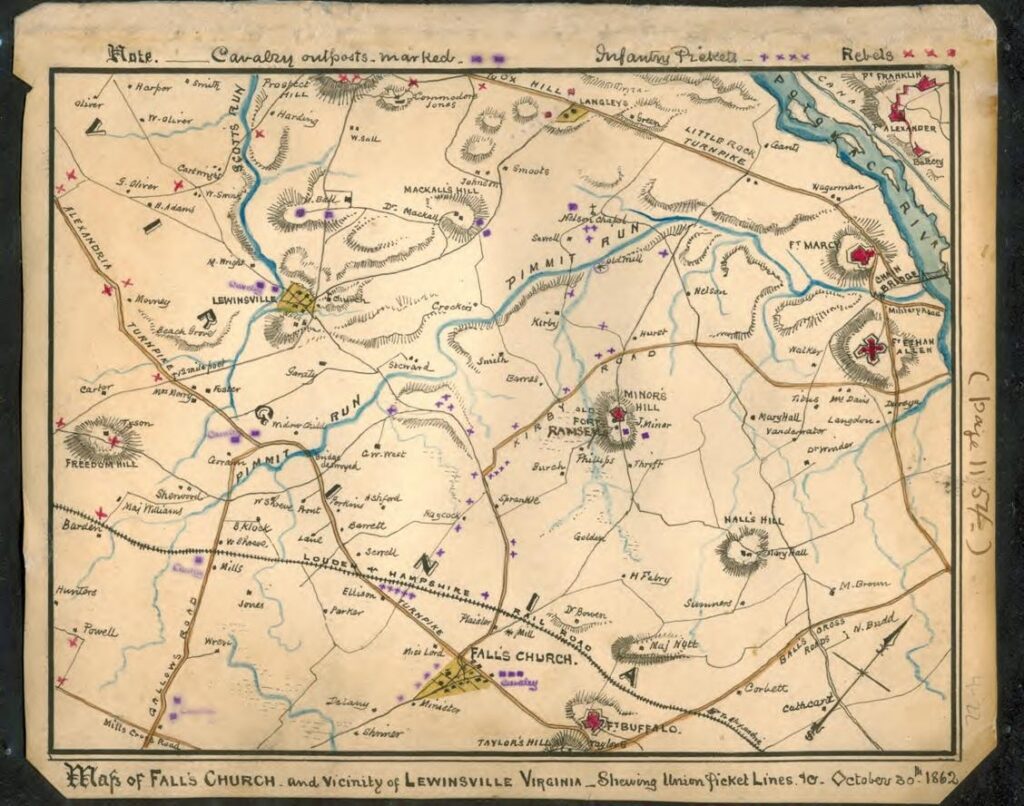
Fairfax County deed books record the transfer from the Crockers to the Halls in 1865. After the war, Francis’s sons, John Simpson Crocker and James Crocker, took over selling the family’s Fairfax land, and they offered small lots on credit to freedpeople. A Freedmen’s Bureau agent, O.S.B. Wall, mentioned the arrangement in a November 27, 1868 report on the school at “Lincoln Village.”
This is how a Black farmer from New Orleans came to hold a deed to 26 acres of Fairfax farmland the year Lee surrendered. Francis Crocker had died in Confederate custody. His Union-sympathizing New York heirs were willing to write the paper.
The 1996 Post piece puts the family here in 1860. The county’s deed says 1865. Both can be right, if the Halls were on the land before the deed was recorded. The open record doesn’t say.
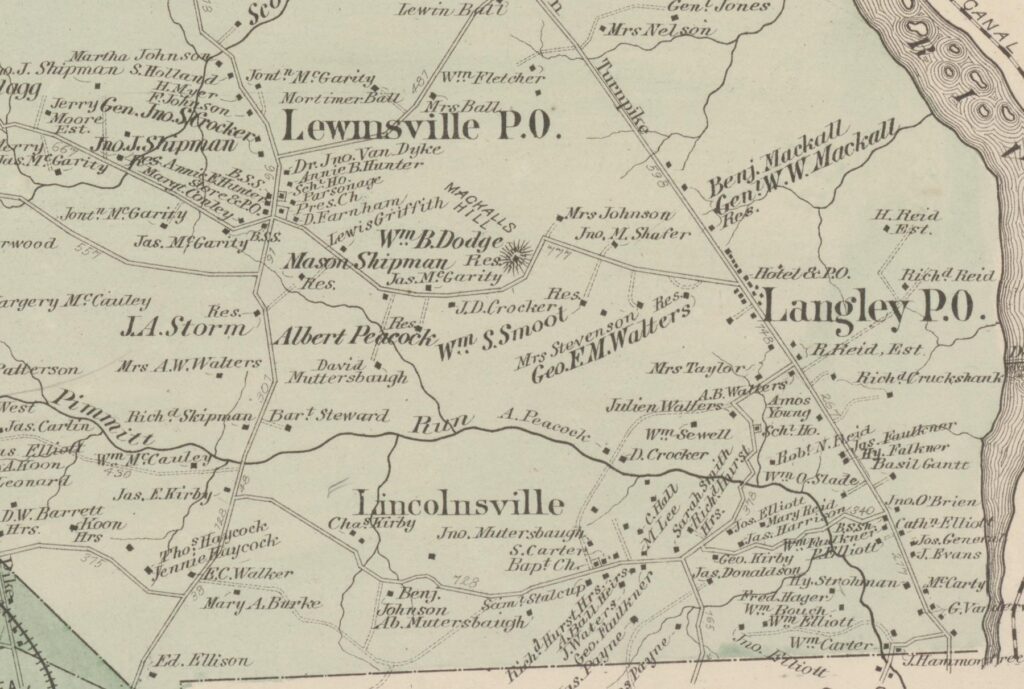
Check this out. Fourteen years after the deed, G.M. Hopkins mapped every landowner in Fairfax County. Right next to “Lincolnsville” on his Providence District sheet is a small square marked “C. Hall.”
A dairy farm and a store in the city
Christopher and his wife Louisa raised 11 children on the farm. The animals were dairy cows. Fairfax County’s African American History Inventory notes that Hall later opened a store in Washington, D.C.
The land was subdivided among the 11 as the family grew. The road that led into the property from Kirby Road was later named Cottonwood Street.
The full Hall genealogy, including the family’s own account of where Christopher was born, is not on the open record. PD passed along a family tradition that Christopher’s mother had been enslaved and his father was Irish.
No published source we could find confirms either detail. That’s a job for the deed books and the 1870 census. The New Orleans origin is the piece the county historians will vouch for.
Lincolnville becomes Chesterbrook
Around 1897, the name Lincolnville dropped out of use. The wider neighborhood took the name Chesterbrook. The church kept going. So did the Halls.
The Fairfax County History Commission put a roadside marker up at the corner of Kirby and Park Road in 2015 to explain the community to people who now drive past it every day and think of it as McLean. Four longtime residents spoke at the dedication on September 19, 2015. One of them was Virese Hall Thornton, a Hall descendant.
Thornton also appears in Carole Herrick’s oral history collection, 100 Recollections of McLean and Great Falls, Virginia, describing her ancestor Christopher Columbus Hall and the Black community on Cottonwood Street. A relative, Robert Hall, contributed his own recollections of the family and the street.
The sewer fight
The neighborhood shows up in the Post again on June 17, 1986. John F. Harris wrote a story from Cottonwood Street about homeowners who had been promised sewer service and were still waiting. His lead: “The residents of Cottonwood Street, after years of waiting, hoped to have sewer service this summer in their small, mostly black neighborhood in McLean.”
The subhead said the rest: homeowners in a mostly Black area said the county was reneging on its vows. This was McLean, home of Hickory Hill and the estates along Chain Bridge Road, and one of its oldest Black families was still waiting on a sewer line.
The memorial
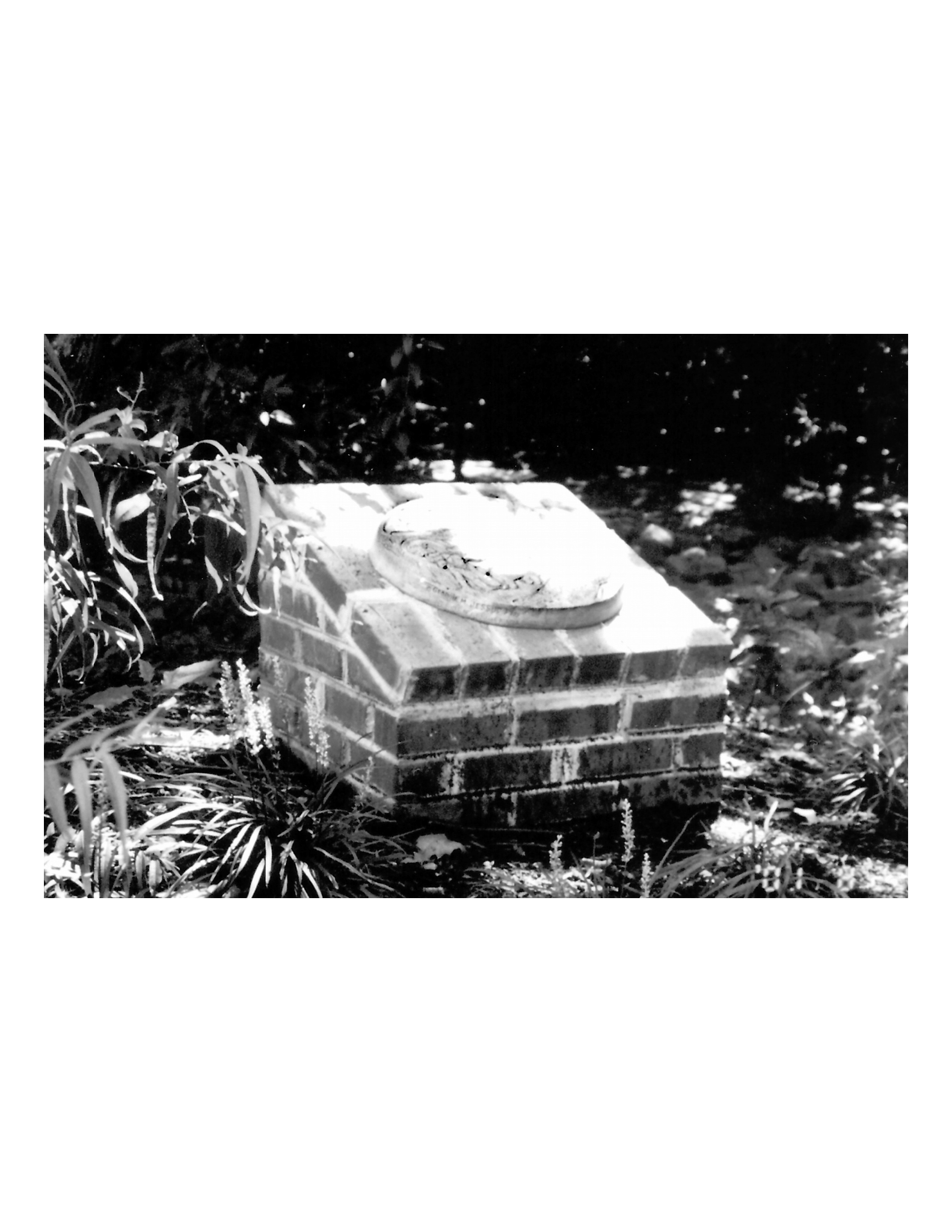
In 1990, a Hall descendant built the family’s own historical marker. Her name was Georgia Mills Jessup, and her mother was Margaret Hall Mills.
Jessup was born in Washington in 1926. She earned her BFA at Howard, where she studied under Loïs Mailou Jones, and took an MFA at Catholic University. She rose to supervisor of art education in the D.C. public schools and became the first artist-in-residence at the Smithsonian’s Anacostia Community Museum.
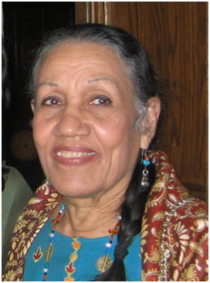
The memorial she made is a small brick monument, set behind Linway Terrace Park in the ravine that separates the park from Cottonwood Street. It honors two of her ancestors. Christopher Columbus is one. The other is Maria Hall.
Who was Maria? The county’s inventory names Louisa as Christopher’s wife on the farm. His mother is one possibility. An earlier wife is another.
Jessup knew which Maria she meant. The rest of us have the deed books and the 1870 census to go on.
The 2001 stories
By the early 2000s, the Northern Virginia land boom had reached Cottonwood Street. Peter Whoriskey wrote about it twice in 10 days for the Post.
His January 25, 2001 piece ran under the headline “Real Estate Gain Is Family’s Loss.” The February 4 follow-up went wider: “Family Ties Loosened By Booming Land Market.” Cottonwood Street was the anchor case both times.
Inherited land holds a family together when everyone lives on it. Once a developer will pay far more than a cousin can, the math runs the other way.
Plenty of old Northern Virginia families lived that story. Frederick Foote’s heirs at Seven Corners held their 33 acres for 88 years, until a court let them sell in 1953. The Halls held on even longer.
Walking it
You can go stand at the top of the hill on Cottonwood Street today and look for the big rock Davis wrote about. Linway Terrace Park is a small Fairfax County park with a playground. In the ravine between the park and the street sits the little brick monument Georgia Jessup made.
A Black farmer bought 26 acres here the year the war ended. Nearly 140 years later, the Washington Post was still writing about his family on the same land.
Thanks to PD for the tip.