
It is a Wednesday evening, December 28, 1938, and Ruth McDonald is at home in a small alley off 6th Street NW.
She is 31 years old. The address is 600 Freeman’s Court Northwest, a narrow inhabited alley behind the storefronts of the old downtown. Inside the house, four other women are with her. A young man has arrived with a bottle of whiskey in his coat pocket.
He pours six glasses. He proposes a toast. He lays his wallet on the table and offers a money reward to whichever woman drinks her whiskey “right down.” Ruth McDonald, the only one to drink all of hers, dies of cyanide poisoning less than an hour later.
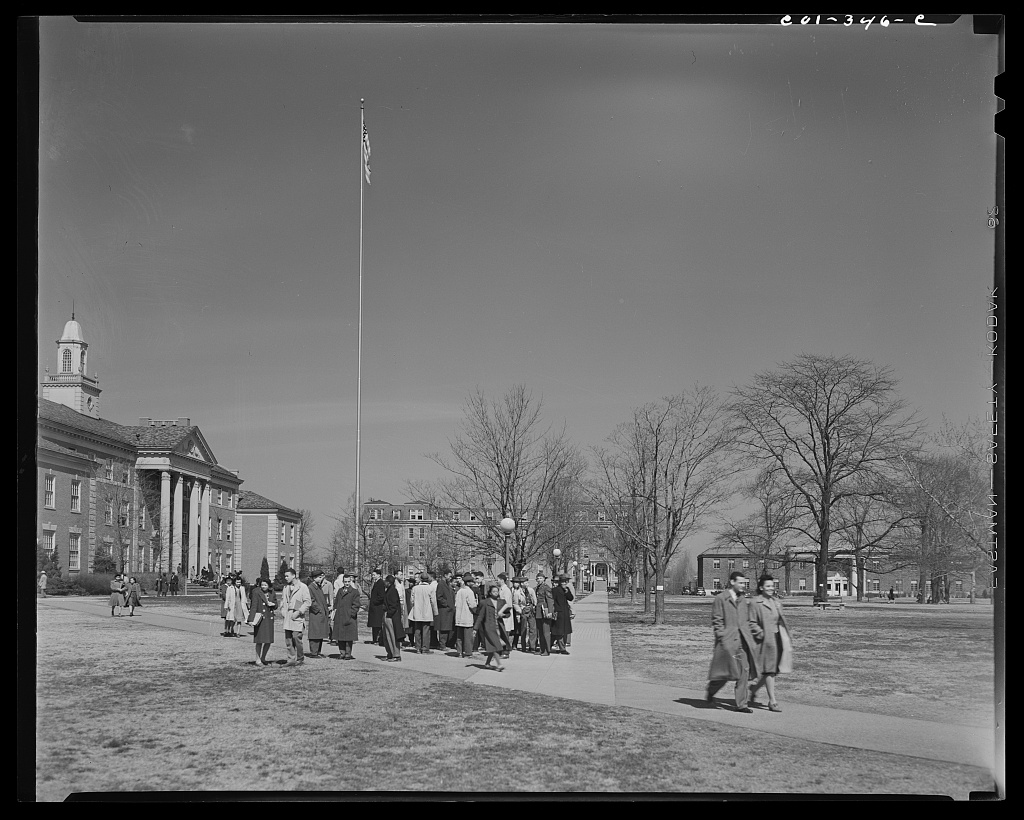
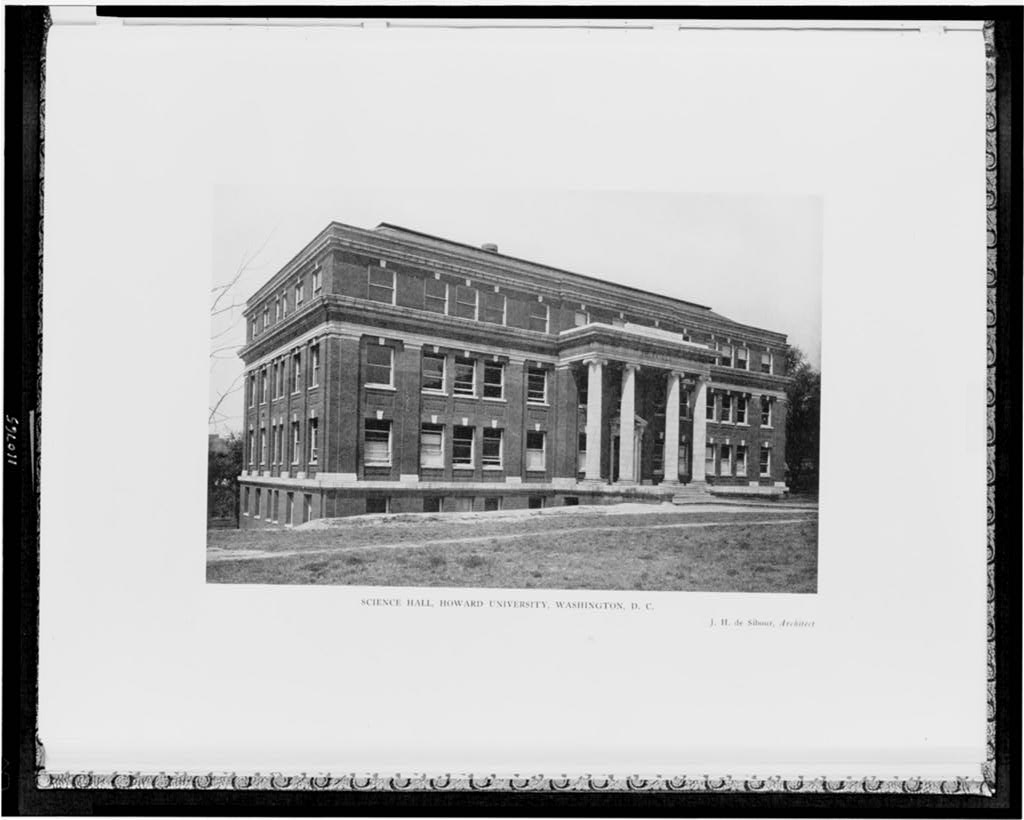
The man is Robert Elwood Askins. He is 19 years old and a junior in the chemistry program at Howard University. The next 71 years of his life will unfold in and out of confinement.
Thirteen years at St. Elizabeths Hospital. A federal murder trial before Judge Edward M. Curran in 1955. Two appeals before the DC Circuit. A release on a statute of limitations technicality in 1958. The long gap of the 1960s and early 1970s. A 1977 abduction-and-rape arrest. A 1978 search of his rowhouse in connection with the Freeway Phantom killings. A federal prison cell at FCI Cumberland in western Maryland where he will die in 2010 at the age of 91.
This is that arc. It begins with Ruth McDonald.
The arrest, December 29 and 30, 1938
The first Washington Post account ran on January 1, 1939, on page X5 under the headline “Colored Student Seized in Deaths Of 2 D.C. Women.”
The lede is precise. “Two charges of murder were lodged yesterday against Robert E. Askins, 19-year-old colored chemistry student at Howard University. He was arrested at his home, 1814 First street northwest, shortly after the death of Ruth McDonald, colored, 31, of the 600 block Freemans court northwest.”
That single sentence corrects two facts that have wandered in later retellings. Askins was a chemistry student at Howard University. He was not, as the Wikipedia summary has it, a member of “the science club at Miner Teachers College.” Miner Teachers was a different institution, the city’s historically Black teacher-training school. Howard is the HBCU at the center of this story, and chemistry is the field.
The address detail also matters. 1814 First Street NW was Askins’s home, where the police found him. 600 Freeman’s Court NW was Ruth McDonald’s address, where she died. Freeman’s Court is the geography of the killing.
What Freeman’s Court was
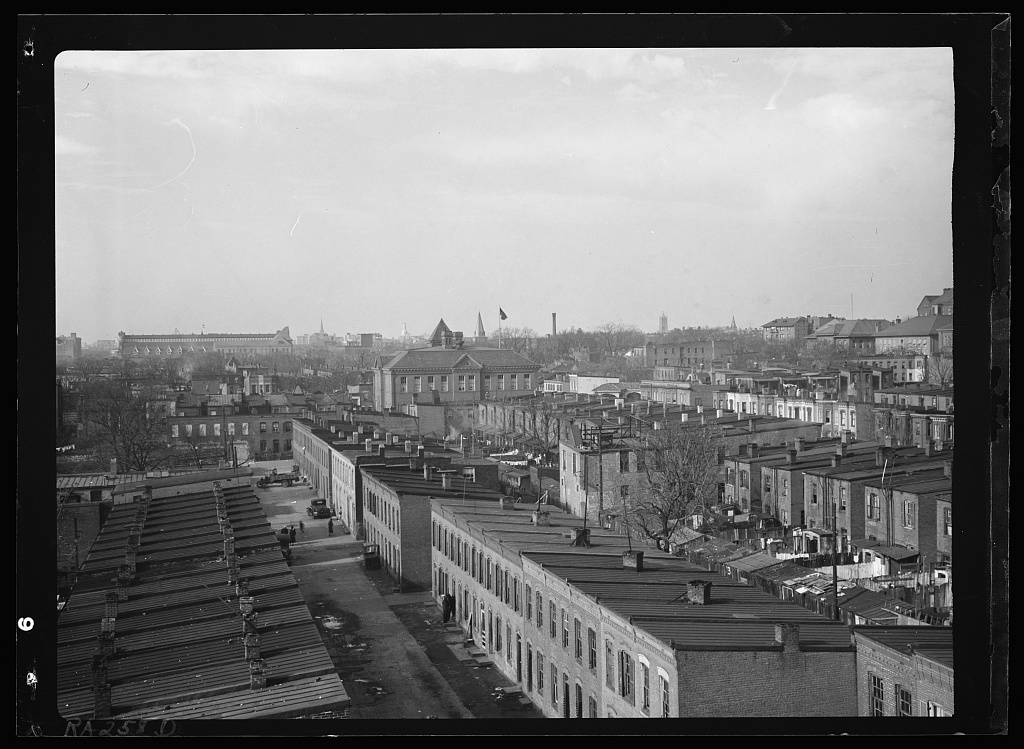
Freeman’s Court was one of the many inhabited alleys behind the avenues of downtown DC, in the area now buried under Mount Vernon Place and the convention-center superblock.
By 1900 the city had something like 3,500 alley houses across 250 alley blocks, with a population of around 19,000 people in them, the vast majority of them Black. These alleys had names like Bell Court, Naylor Court, Blagden Alley, and Freeman’s Court. Most were demolished in waves of mid-century clearance under the Alley Dwelling Authority and successor programs.
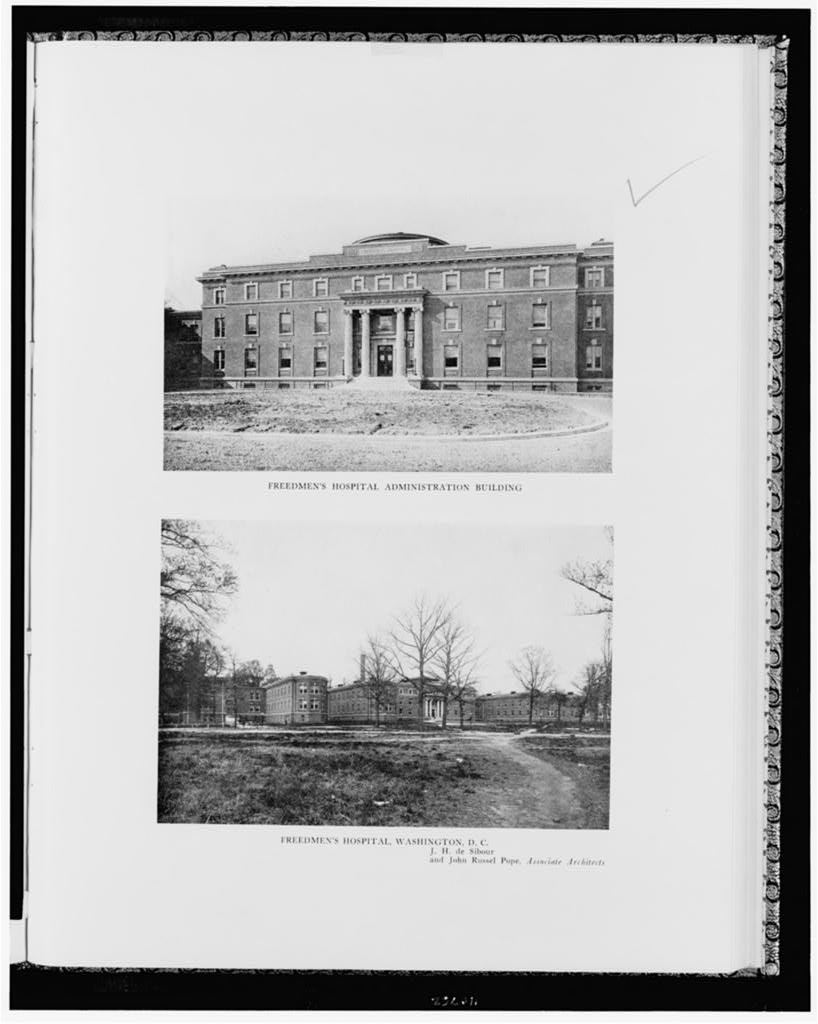
The 600 block of Freeman’s Court was a small Black neighborhood within walking distance of Freedmen’s Hospital, the federally-run teaching hospital tied to Howard. The hospital sits at 6th and W Streets NW. It is where the four surviving women would soon be taken.
What the women drank
The chemistry of it is documented. Askins’s confession, quoted at length in the federal appellate decision in his case, describes how he took two drinks from a bottle of whiskey and then refilled the bottle with potassium cyanide.
He then walked the downtown streets. He met a woman, accompanied her back to the house on Freeman’s Court, and at her request poured drinks for the women there.
The Washington Post article carries the rest of the evening’s arc. “An autopsy disclosed she died of cyanide poisoning less than an hour after accepting a drink from a colored man. With four other women, the McDonald woman took a drink from an ‘unidentified’ man Wednesday. The other women were taken ill after sipping of the drink and identified Askin from their beds at Freedmen’s Hospital, where they are recuperating.”
So the survival of the four other women came down to the smallest of margins. Ruth McDonald drank all of hers. The others sipped, noticed the taste was wrong, spat it out. One of them, Ethel Prince, was self-possessed enough afterward to pour the residue from the glasses back into the bottle for the police chemist to analyze. The chemist measured the contents at 2.9 percent potassium cyanide. That is the figure that turns up in the federal appellate opinion.
What he told police
Askins gave a confession. The version the DC Circuit Court of Appeals quoted at length in 1956 has his stated motive plainly. He had contracted a disease, he said, and blamed it on a streetwalker. He told an officer that his “intention was to kill all the prostitutes in town if possible.”
There is also a competing line in the same confession. He claimed his original purpose, before any of this, had been to kill himself with the poisoned whiskey. He drank some of it first, he said, to steel himself, and then ran into the woman on the street.
Those two motives, suicide and a campaign against sex workers, sit next to each other in the confession and never quite resolve. The prosecution would later argue the second one. The defense would argue the first one. The jury, in 1955, would find a middle.
The second woman
The original 1939 Washington Post article also names a second victim, and the popular retellings have gotten her wrong.
The Post: “Investigation by Detective Sergt. William J. Liverman of the murder of Elizabeth Brown, 26, colored, who was stabbed in the abdomen December 21, while walking in the 600 block Freemans court, brought about the second charge of murder against Askin.”
The name is Elizabeth Brown, not Elizabeth Johnson. The date is December 21, 1938, not December 30. That is a week before the cyanide poisoning, not two days after it. She was walking on the alley, not inside a building.
Wikipedia and several true-crime writeups have all three of these facts inverted. The 1939 Washington Post account, written by reporters working the case as it broke, is the primary source on what happened on Freeman’s Court that month.
The two women, killed inside seven days of each other on the same alley, were the reason police lodged two charges against Askins. He was 19 years old, a Howard chemistry student, with a wallet full of money for a toast and a bottle full of cyanide for a contest, in a neighborhood the city would soon raze.
Ruth McDonald
We do not know much about Ruth McDonald’s life. The 1939 Washington Post account gives her age, her race, her address, and her cause of death. The 1955 trial coverage repeats those four facts and adds nothing. She has no obituary in the searchable runs of the Post or the Evening Star. She has no portrait in any archive I have been able to locate.
What we know about her is fragmentary. She was 31 years old in December 1938. She lived in a Black alley neighborhood in central Washington that is now gone. She was in a house with four other women on a Wednesday evening at the end of the year. A young man she had not chosen and had not invited was pouring drinks. She drank one and died.
The other women in the house were Ethel Prince and three others whose names the Post did not carry into print. They sipped, caught the taste, stopped. They identified Askins from their beds at Freedmen’s Hospital. They survived.
Whatever else can be said about that house on Freeman’s Court, the women in it were not characters in a chemistry student’s experiment. They were the people who actually figured out, in the seconds after the first sip, that something was wrong with the whiskey. They were the people who got Askins arrested.
Eighty-seven years later, in a city whose alleys have been paved over and whose Black population has been displaced repeatedly, the part of this story that has held up under scrutiny is theirs. Ruth McDonald died. Four other women in that house lived because they trusted what their mouths were telling them and got out of a room with a wallet on the table. Their names go on the record now.
St. Elizabeths Hospital, 1939 to 1953
The day after Ruth McDonald’s death, Askins was charged with two murders and held at the DC jail. The case did not move the way the police expected.
On February 3, 1939, he was admitted to Gallinger Hospital, the city-run psychiatric facility on the grounds of what is now DC General. On March 15, 1939, a lunacy commission found him to be suffering from “dementia praecox of the catatonic type,” the period diagnosis for what would later be called catatonic schizophrenia.
On April 12, 1939, he was admitted to St. Elizabeths Hospital, the federal psychiatric facility on the bluffs of Anacostia. The murder indictment was held in abeyance and eventually nolle prossed in 1943. He spent the next thirteen years at St. Elizabeths as a committed mental patient, not a prisoner.
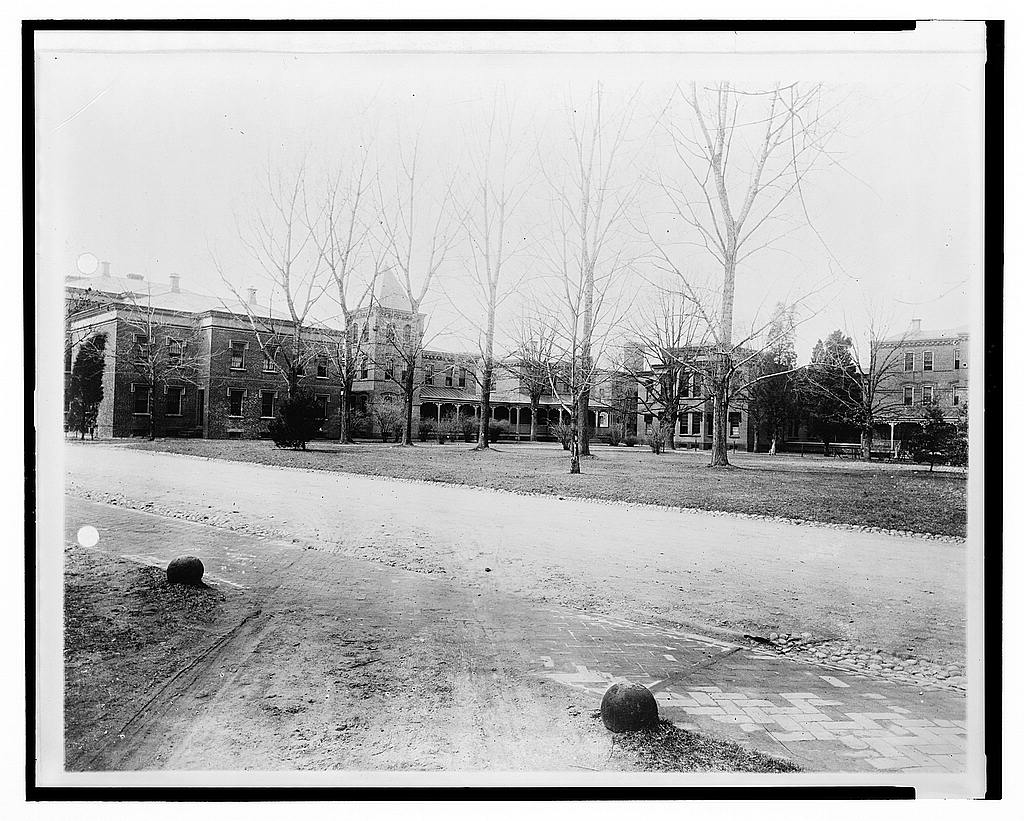
St. Elizabeths in those years was one of the largest mental institutions in the country. At its mid-century peak it held about 7,000 patients across a 350-acre Anacostia campus with a staff of 4,000. Patients there included the would-be Garfield assassin Charles Guiteau and the poet Ezra Pound. The treatment regimes of the period included insulin shock, electroconvulsive therapy, and the prefrontal lobotomies that Walter Freeman was performing in Washington in the 1940s.
The hospital records of what was done to Askins specifically during those years are not in the public record. What is documented is the long arc. He arrived at St. Elizabeths in the spring of 1939, age 20. He was released in 1953, age 34, after the staff at St. Elizabeths and a court-appointed commission concluded that the dementia praecox diagnosis no longer applied and that he was now competent to stand trial.
The 1955 trial before Judge Curran
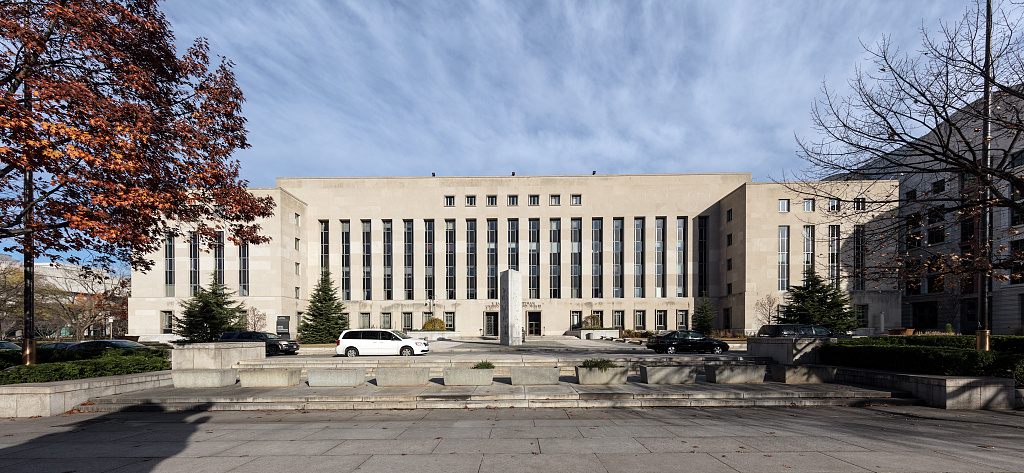
On August 20, 1954, a federal court formally found Askins competent to stand trial. In November 1954, a new grand jury reindicted him for the murder of Ruth McDonald, 16 years after the killing. The trial opened on January 31, 1955, before US District Judge Edward M. Curran in the new E. Barrett Prettyman Federal Courthouse on Constitution Avenue NW.
Curran was a Truman appointee who had taken the bench in 1947. He would later serve as the District Court’s chief judge from 1966 to 1971. The Askins case was an unusual one to land on his docket: a federal first-degree murder prosecution turning on the defendant’s mental state more than a decade and a half earlier.
The defense lawyers were George E. C. Hayes and Leonard S. Hayes of Washington, with John A. Shorter Jr. on the brief. George E. C. Hayes was by then one of the city’s best-known Black attorneys; he had argued Bolling v. Sharpe, the DC companion case to Brown v. Board, before the Supreme Court the year before. The prosecutor of record was Assistant US Attorney Thomas A. Flannery, who would himself be appointed to the federal bench in 1971.
The defense was insanity at the time of the act. Much of the trial turned on a question psychiatrists could not fully answer: had Askins been insane on December 28, 1938, or had he developed his mental illness afterward, inside the walls of St. Elizabeths? There was conflicting expert testimony for each position.
The jury deliberated about four hours and on February 8, 1955, returned a verdict of guilty of murder in the second degree. Curran sentenced Askins to imprisonment for a term of 15 years to life on February 18.
The 1956 appeal and what the DC Circuit affirmed
Askins appealed. The case was argued before the US Court of Appeals for the DC Circuit on October 5, 1955, and decided on February 14, 1956, as Askins v. United States, 231 F.2d 741.
The panel was Judges Prettyman, Fahy, and Danaher, with Danaher writing for the court. The appeal focused on a technical question about jury instructions: had Curran erred by instructing the jury on second-degree murder, after first having told them this was “a case of first degree murder or nothing”?
The DC Circuit said no. The trial judge had been entitled, on reconsideration of certain statements in Askins’s own confession, to let the jury consider whether the act was unlawful killing with malice but without an intent to kill. The conviction stood.
The 1956 opinion is also the document where the most exact reconstruction of the 1938 killing now lives in the public record. The two drinks from the bottle, the cyanide refill, the wallet on the table, the toast, the 2.9 percent measurement, the confession’s two motives: all of it is in Danaher’s opinion.
The 1958 reversal on a statute of limitations
Two years later the same court reversed itself, on a ground neither side had raised at trial.
The argument went like this. Federal law in 1938 imposed a three-year statute of limitations on non-capital felony prosecutions, under what is now 18 U.S.C. § 3282. First-degree murder, a capital offense, carried no limitations period. Second-degree murder, which is not a capital offense, fell under the three-year rule.
The 1954 indictment of Askins was for first-degree murder, brought 16 years after the killing. That was permissible because first-degree murder had no time limit. But the jury had convicted him only of second-degree murder, which did. The court of appeals, in Askins v. United States, 251 F.2d 909, decided January 16, 1958, held that he could not be punished on a second-degree conviction obtained from an indictment that was 13 years out of time.
The court did not vacate the conviction itself. It held that the District Court “cannot send Robert E. Askins to prison even though he has been convicted of second degree murder,” in the formulation Post reporter James Clayton used the next day under the headline “Time Limit Frees Convicted Slayer.”
The 1958 opinion is also, in retrospect, a candid one. Writing for the court, Judge Charles Fahy noted “the handicap in ascertaining the truth after the lapse of years from the events in question,” and called the Askins case an “impressive illustration of the wisdom” of having a statute of limitations at all. The principal factual issue at the 1955 trial, the court observed, had been Askins’s mental condition 16 years earlier, “the difficulty of ascertaining which is obvious.”
He was released. He had been in custody, mostly at St. Elizabeths, for almost 19 of his first 39 years on earth.
1958 to 1977: the gap
The 19 years that follow are the hardest to document. The Post archive does not turn up further coverage of Askins between his 1958 release and 1977. He does not appear in the city directories the way a public-facing person would.
What is on the record is the shape of his return. At some point in this period he settled in DC, bought or rented a rowhouse, and took a job as a computer technician at the National Science Foundation, then headquartered downtown. By 1977 he was 58 years old and had been working at the NSF for years.
Other accounts of these years exist in the true-crime literature and on Wikipedia. They include an allegation that Askins strangled a woman named Laura Cook in April 1952 and was indicted for that killing in 1954. That specific attribution is not in the contemporary Washington Post coverage I have been able to search.
The 1956 DC Circuit opinion in the Askins case does contain a chronology, in Judge Fahy’s dissent, noting that Askins was indicted for “another crime” on June 1, 1954, and that the indictment was dismissed on November 9, 1954. The opinion does not name the underlying victim or offense. The Laura Cook attribution should be treated as unverified here.
1977: the rape arrest and the Freeway Phantom file
In March 1977, Askins was arrested in connection with the abduction and rape of a 24-year-old woman inside his Washington rowhouse. He was 58. He was charged, tried, and convicted, and ultimately sentenced for two such attacks on Washington-area women in the mid-1970s. Those convictions are what kept him in prison for the rest of his life.
It was during the investigation of the 1977 case that an MPDC homicide detective named Lloyd Davis began pulling Askins’s prior record. He found the 1938 cyanide killing, the 19 years at St. Elizabeths, the 1955 conviction, and the 1958 reversal. The pattern of a Washington-area sex offender who had been confined for most of his adult life and was now back on the street caught Davis’s attention for another open case file: the Freeway Phantom killings of 1971 and 1972.
The Freeway Phantom case is its own long story. Between April 1971 and September 1972, six young Black girls and women, ages 10 to 18, were abducted in Southeast DC and Prince George’s County, sexually assaulted, and left along area roadsides. The killings stopped as abruptly as they had begun. Out of respect for the families who are still alive and still pressing for answers, this post does not name the victims, and refers any reader who wants their full story to Blaine Pardoe and Victoria Hester’s 2019 book Tantamount and the 2024 ID documentary built around their reporting.
What detectives looking at Askins found, when they searched his home in 1978, was a series of items that fit a profile rather than proved a case. A knife traced to another crime. Photographs of girls and young women. A handwritten essay by a young girl. Women’s scarves. And, in a desk drawer, court documents in which a federal judge had used the word “tantamount,” the same unusual word that the Phantom had forced one of his victims to write in a note left in her coat pocket. Colleagues at the NSF reported that Askins used the word often.
A second warrant let investigators dig in the backyard of his rowhouse. They found nothing. A third warrant let them search his car, where they recovered two gold buttons and a single earring. None of it tied him to any of the six killings.
No charges were ever filed against Askins in the Freeway Phantom case. He remained, in the language of detectives, a person of interest. To Pardoe and Hester, working the case file decades later, he is the strongest suspect.
Federal prison and the 2010 death
Askins served the rest of his life in federal custody on the two 1970s rape convictions. He was held at FCI Cumberland, the medium-security federal prison in Allegany County, Maryland, about 150 miles northwest of Washington in the upper Potomac valley.
He spoke with reporters and detectives over the years about the Freeway Phantom file and consistently denied any involvement. He claimed he did not have, in his words, “the depravity of mind required to commit any of the crimes.” Davis and Pardoe and Hester each came away unconvinced.
Robert Elwood Askins died at FCI Cumberland on April 30, 2010. He was 91 years old. From the night of Ruth McDonald’s death in the alley off 6th Street, his life had spanned 71 years and four decades of confinement, in three different federal institutions, under three different versions of American criminal law.
The arc
The Askins story is unusual in DC’s twentieth-century criminal record for how cleanly it traces three distinct legal regimes, and how badly each of them dealt with him.
The 1939 system took a 19-year-old it could not handle and warehoused him at St. Elizabeths for 13 years under a diagnosis the staff would later quietly drop. The 1955 system convicted him of second-degree murder on facts everyone agreed were 16 years old, then released him three years later on a statute that was always going to apply. The 1977 system finally held him on charges that fit the harm he was doing in real time.
The Freeway Phantom file is the loose end. It is also the part of the Askins story that does not belong to him. It belongs to six families in Southeast Washington and Prince George’s County who have been waiting since 1972 for an answer no detective has yet been able to give them.
Ruth McDonald died in the 600 block of Freeman’s Court NW on a Wednesday evening in December 1938. Eighty-seven years later, that alley is gone and the man who killed her is dead. The four other women in the house, the chemist who measured the bottle, the prosecutor who tried the case, the lawyers who appealed it, the two federal judges who decided it the other way: they too are gone. The record stays.