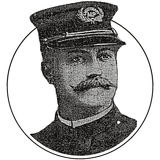

Howard University
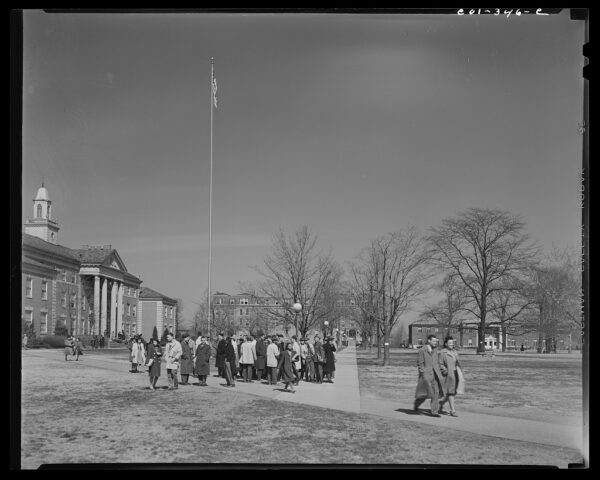
On December 28, 1938, in a small alley off 6th Street NW, a 31-year-old woman named Ruth McDonald accepted a drink from a young chemistry student and was dead within the hour.

LeDroit Park began as a segregated suburb behind a fence. Its later residents helped make it an center of Black life in Washington.

How did Columbia Heights get its street names? This history goes back to the early 1900s when street names came into alignment with the rest of the District.
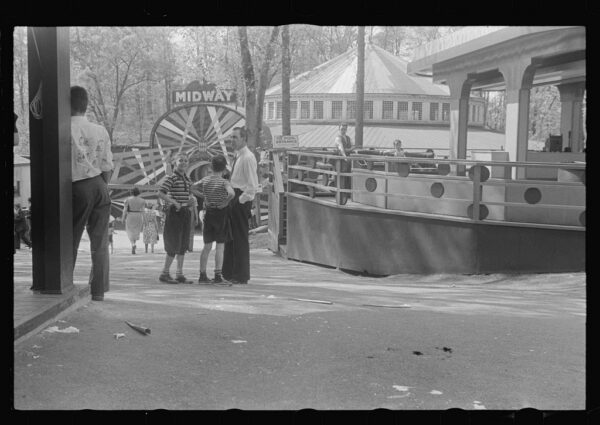
It started as a one-summer Chautauqua on the Potomac, built by twin brothers who had cashed in on an egg beater patent. By 1933 it was a streetcar amusement park with a Spanish ballroom and a Dentzel carousel. By 1960 that carousel was the flashpoint of a Howard University sit-in.
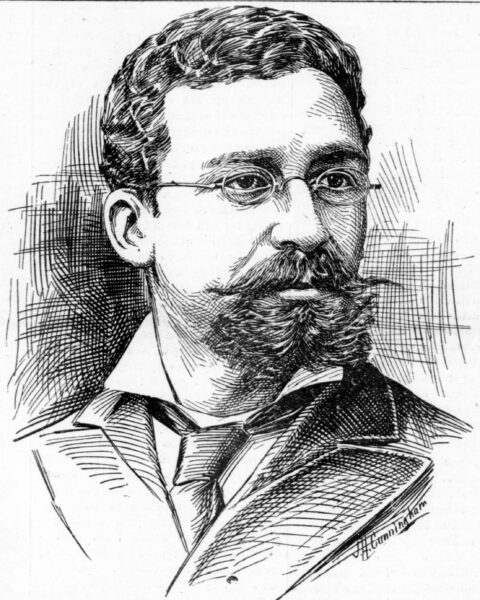
James Madison Wyatt Stone went to the DC gallows on April 2, 1880, after two respites from President Hayes. His lawyer was Richard T. Greener, the first Black graduate of Harvard. The hanging made headlines for what the rope did to him.
Lost Washington stories, in your inbox.
The newest story, plus a few from the archive.

Griffith Stadium stood where Howard University Hospital is today. Full history: from the 1911 fire to Walter Johnson to the 1965 wrecking ball.
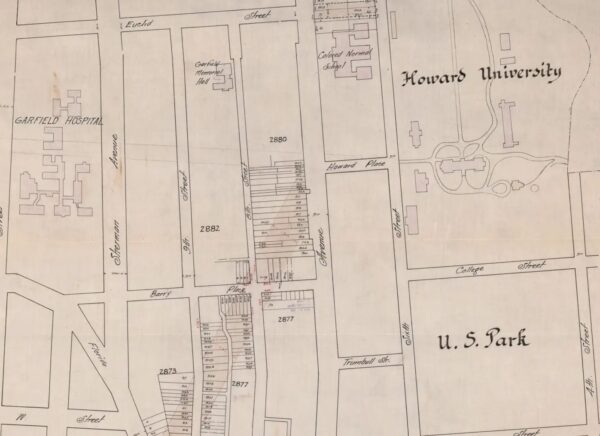
Howard University’s trustees wanted Vermont Avenue extended from Florida to Georgia Avenue. The District’s commissioners rejected the plan in 1922.

Two team photographs show Howard University’s football players in 1904 and St. John’s College players in 1906.
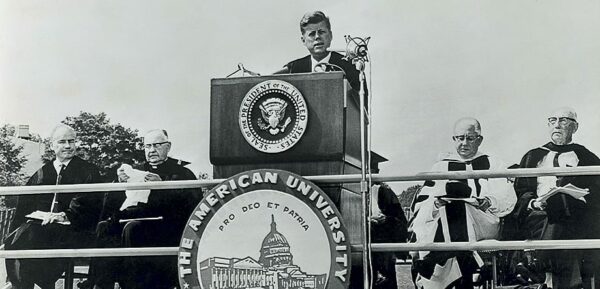
The selections include Kennedy at American University, Ken Burns at Georgetown and speeches at Catholic, GW and Gallaudet.

A 1919 newspaper advertisement from Howard University in Washington, DC.

A November 1949 photograph records Women’s Athletic Day at Howard University.

In 1946 this Gothic brick church had stood at 10th and G Streets NW for 78 years. Abolitionists founded it, Henry Robinson Searle designed it, and Howard University grew out of it.

Two old photos of Old Main, the Main Building at Howard University in Washington, DC. A short photo post from the Ghosts of DC archive.

A guest writer considers an unconfirmed account of Douglass speaking with a Black newspaper boy on Pennsylvania Avenue.
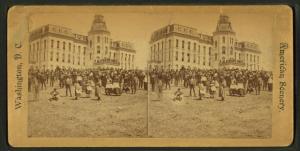
Douglass supported Howard University with fundraising and advocacy, and a newspaper account records his speech there in 1878.

Frederick Douglass was a self-made man and advocate for equal education in Washington. He served on the Board of Trustees for Howard University for 25 years, giving speeches and raising money to help the students. Read about his impact and legacy.

An 1890 photograph shows Riggs beside his carriage. A later newspaper account describes a lawsuit over a child’s injured arm.

The baseball star and civil rights leader received honorary degrees at Howard University’s 1957 commencement.