The thing about Griffith Stadium is that it almost didn’t happen.
On March 17, 1911, a plumber’s blowtorch set fire to the old wooden ballpark at Georgia Avenue and Florida Avenue NW. The whole structure burned. Spring training had already started. Opening day was 26 days out. The Washington Senators had no stadium.
They built one anyway.
Thomas C. Noyes, the team’s president, pushed through board approval to construct a new steel-and-concrete grandstand on the same site. Crews worked through March and into early April. On April 12th, with sections of the upper deck still unfinished, President William Taft walked in with 16,000 fans and the new National Park opened. We’ve written about that fire and the mad four-week scramble to replace it. Construction continued while the Senators played their home games. By July 24th, the park was complete.
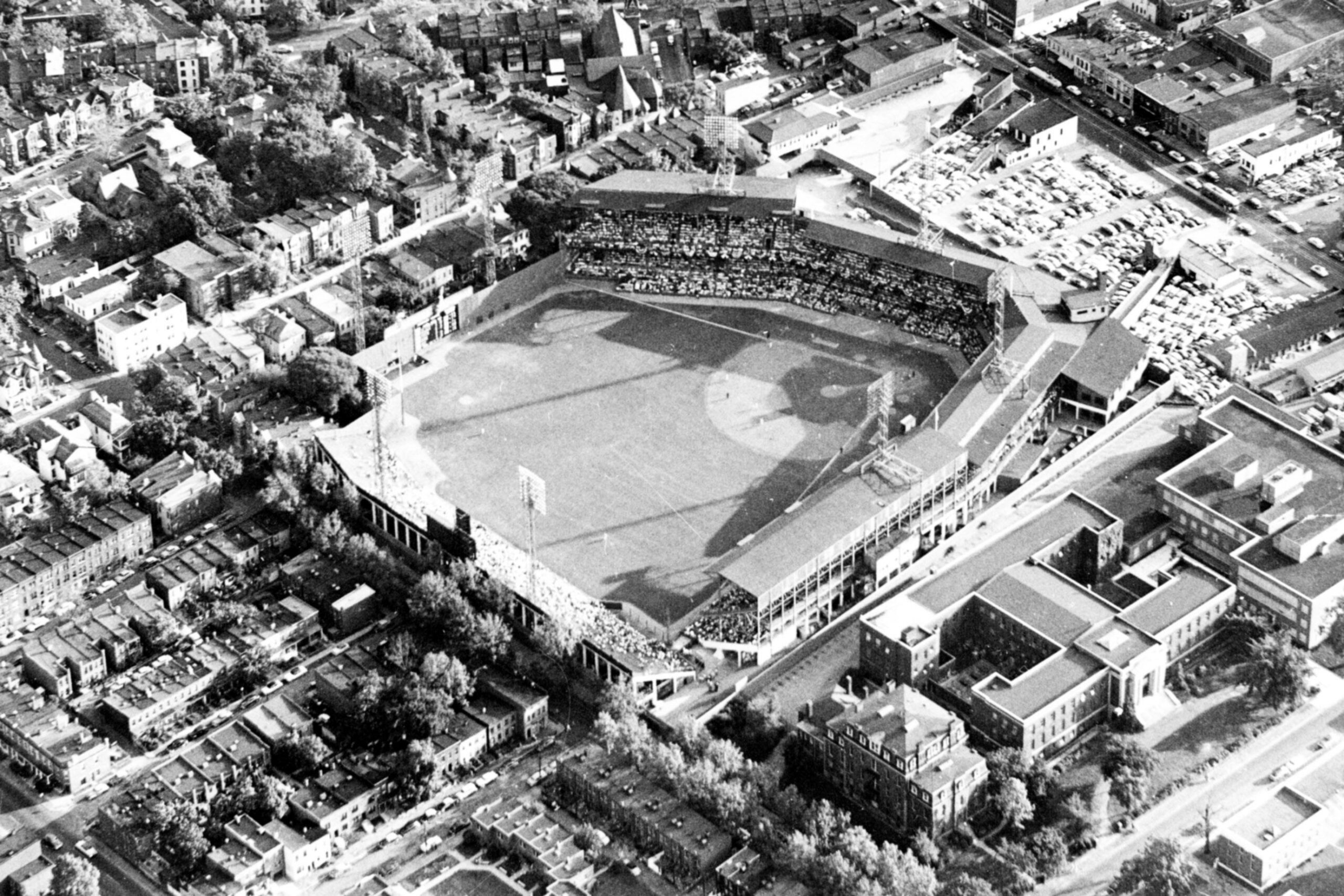
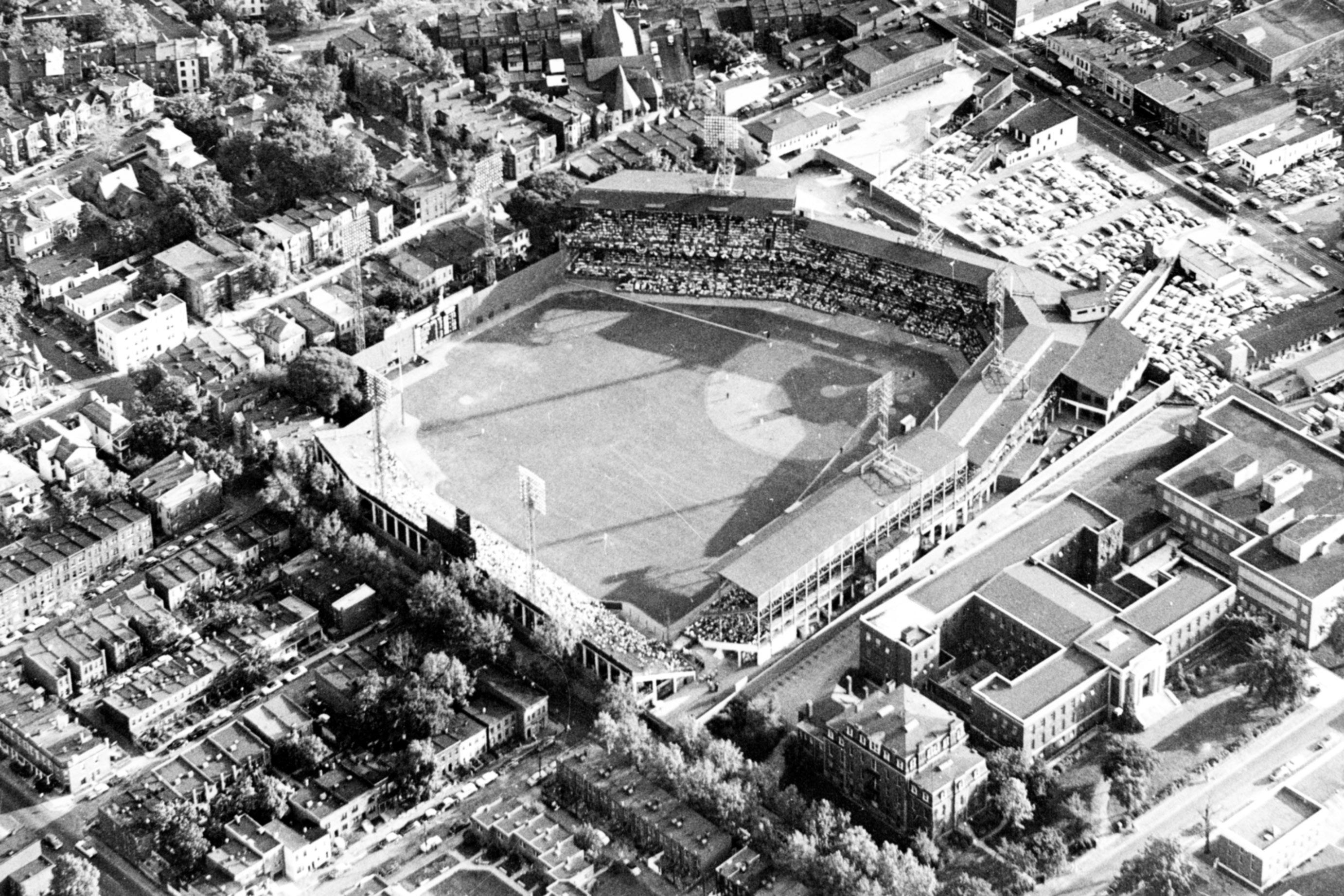
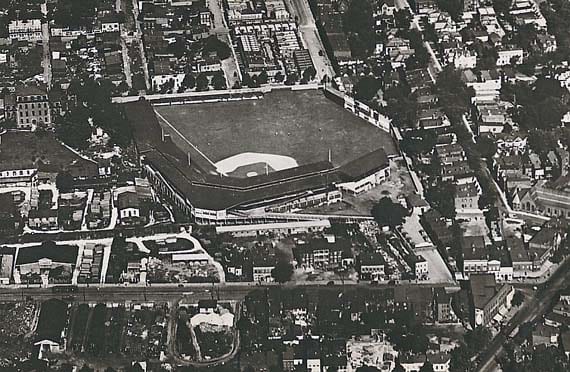
That’s where Griffith Stadium stood: between Georgia Avenue and 5th Street NW, between W Street and Florida Avenue NW. If you’ve driven up Georgia Avenue past Florida Avenue, you’ve passed the exact spot. Howard University Hospital sits there today, at 2041 Georgia Avenue NW. The ballpark and the hospital have shared that corner for most of the last 110 years. The hospital just got there second.
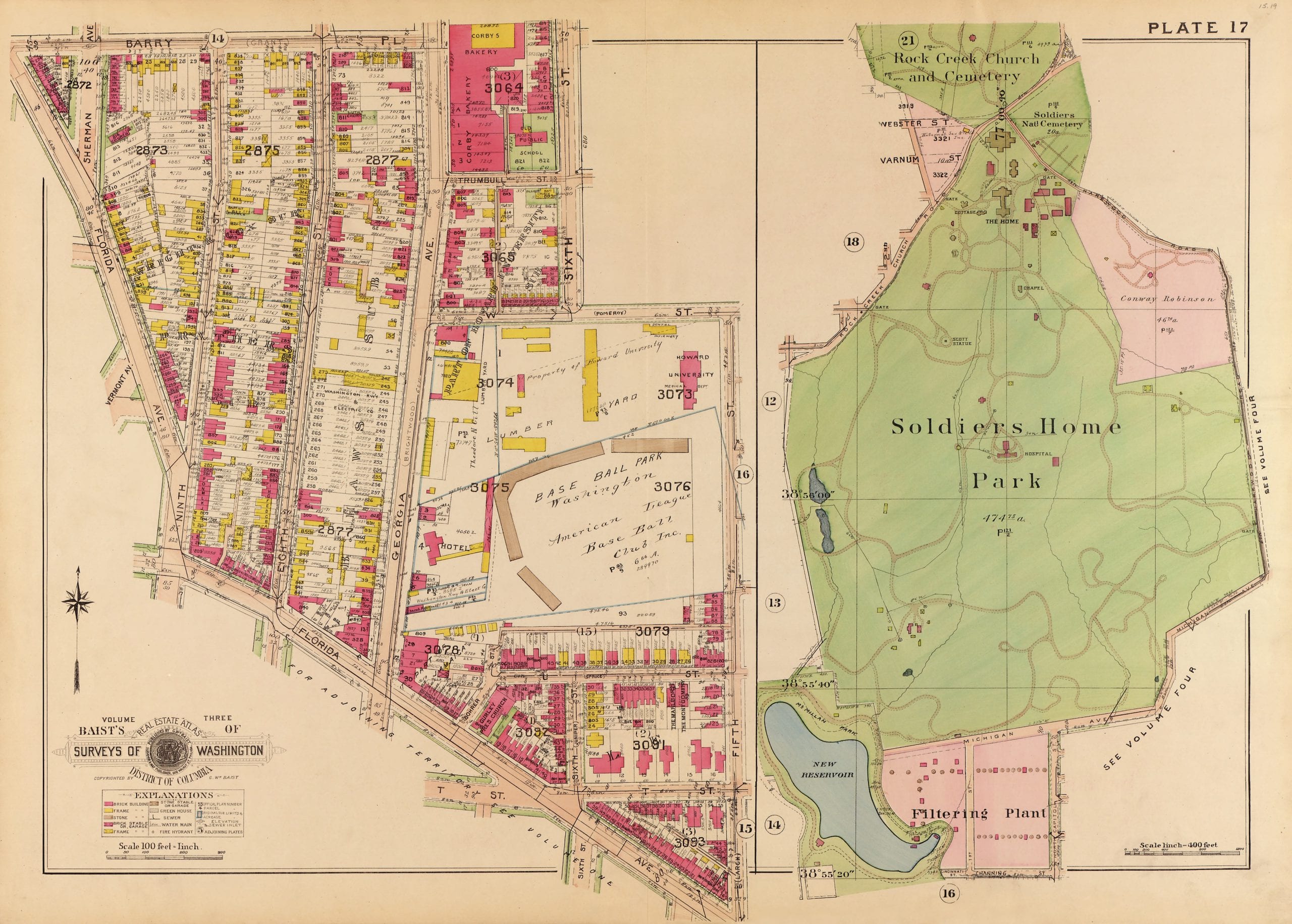
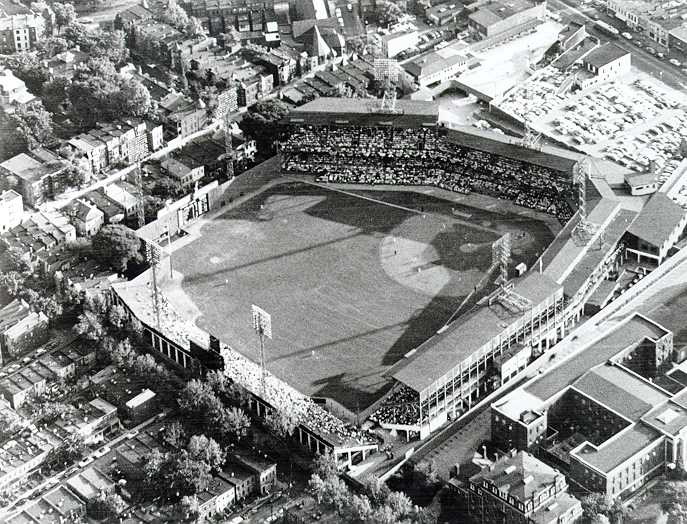
We dug up this 1921 map and it gives a great perspective on the ballpark and its surroundings. Try to match it up to the aerial photos below. The Soldiers’ Home in the upper right corner is slightly north and east of the stadium. You can make out the neighborhoods and the buildings that survived beside it.
Named for the Old Fox
The park went by “National Park” until 1923. That year it was renamed Clark Griffith Stadium for the team’s owner. Griffith had been one of the American League’s best pitchers in the 1890s and early 1900s, winning 20 or more games six times. He came on as Senators manager in 1912 and bought a partial ownership stake in 1920. By 1923, his name was on the building.
Most everyone just called it Griffith Stadium.
Griffith ran the franchise for four decades with a tight grip. He had a reputation for finding talent in Cuba during the segregation era, bringing in players like Bobby Estalella and Roberto Ortiz at a time when he couldn’t sign Black American players. He also collected rent from the Homestead Grays of the Negro Leagues when they used his ballpark. Griffith understood a dollar.
Walter Johnson Finally Gets His World Series
No player was more identified with Griffith Stadium than Walter Johnson. “The Big Train” pitched there for 21 years, from 1907 to 1927, winning 417 games and recording 110 shutouts with a fastball that batters complained was basically invisible. For 17 of those seasons, he never played in a World Series.
That changed in 1924.
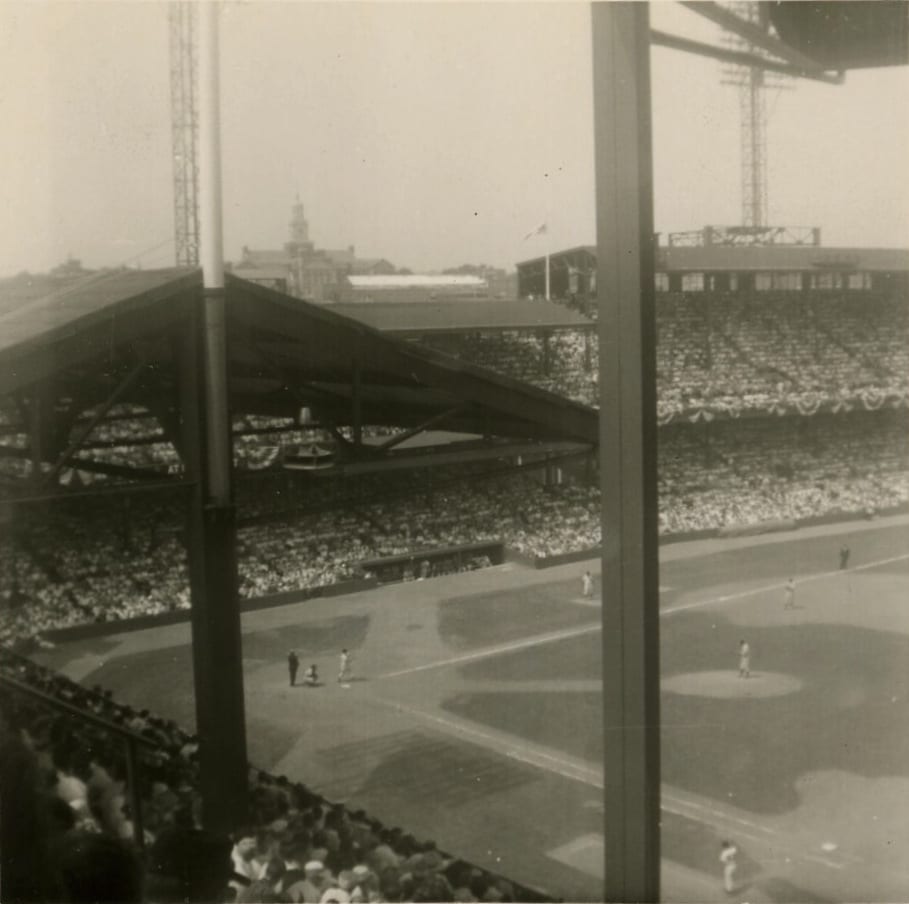
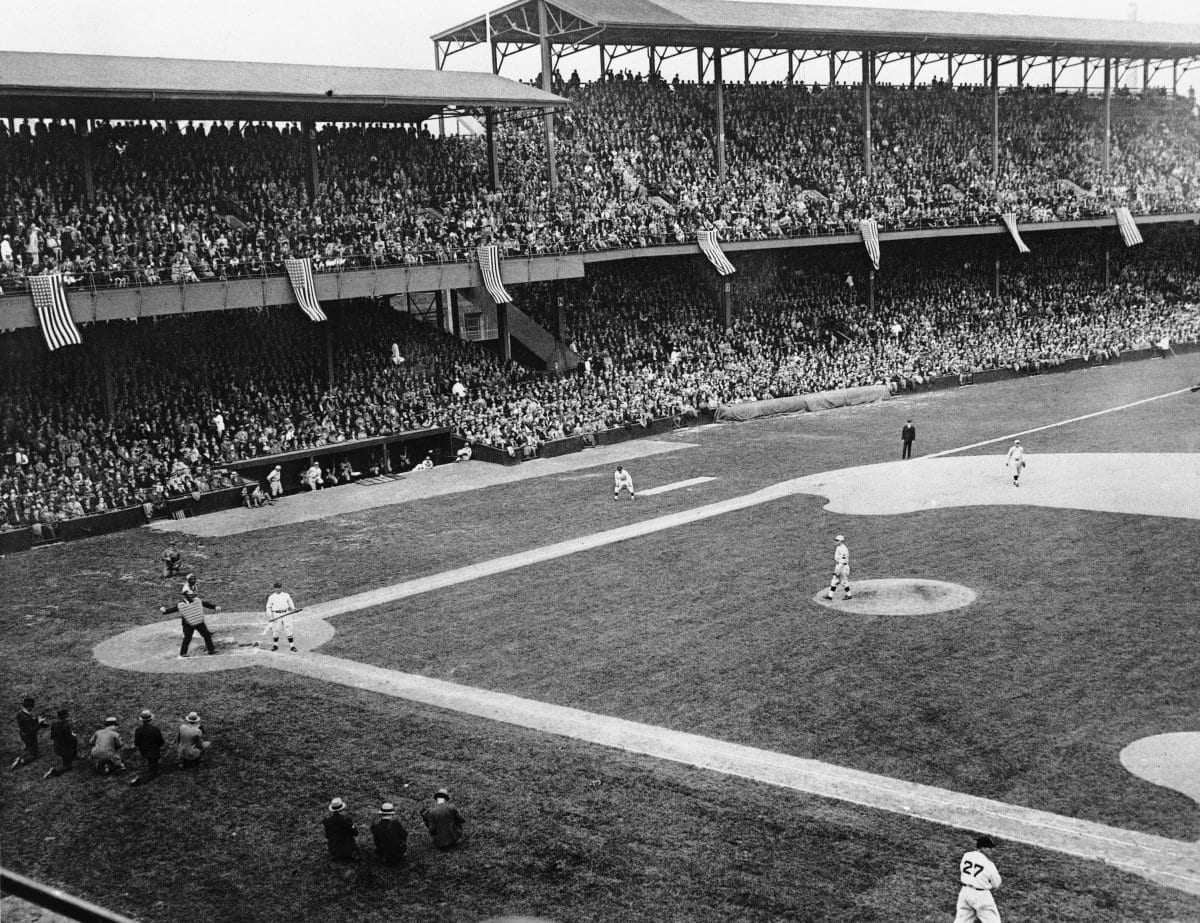
Washington won the American League pennant for the first time in franchise history. The World Series against the New York Giants went to a seventh game at Griffith Stadium on October 10th. The place held 31,667 fans. Johnson, 36 years old, came on in relief in the 9th inning with the game tied 3-3. He pitched four scoreless innings. In the 12th, a routine grounder took a wild bounce over the Giants third baseman’s shoulder and scored the winning run. Johnson got the win. President Calvin Coolidge was in the stands.
We’ve written about the 1924 World Series in detail if you want the full game-by-game story. The Senators went back in 1925 and again in 1933. Griffith Stadium hosted all three. Check out the 1925 Series too.
The Homestead Grays
During the 1940s, Major League Baseball was still segregated. The Negro League’s Homestead Grays used Griffith Stadium as their home park. Clark Griffith collected rent. In some seasons, the Grays outdrew the Senators.
The Grays had Josh Gibson. Gibson is widely regarded as the greatest catcher in baseball history, a power hitter whose numbers in the Negro Leagues put most Major Leaguers to shame. He played home games at Griffith throughout the 1940s, and there are eyewitness accounts of him clearing the left field wall on the fly. No player in an officially credited Major League game ever did that at Griffith. The records weren’t kept the same way. The accounts are disputed. But Gibson was there, and the crowds knew what they were watching.
The Grays won the Negro World Series at Griffith Stadium in 1943 and 1944.
Mantle’s 565-Foot Blast
On April 17, 1953, Mickey Mantle stepped in against Senators lefty Chuck Stobbs and hit a baseball over the left-field bleachers, over a football scoreboard, and into the backyard of a house on Oakdale Street NW.
Yankees PR man Red Patterson went to find the ball and measured the distance at 565 feet. That number ended up in the Guinness Book of Records as the longest documented home run in Major League history. Physicists have since done the math and put the actual distance closer to 506-510 feet. This argument has been going for 70 years and neither side is backing down.
Either way, nobody hit one farther in a documented game.
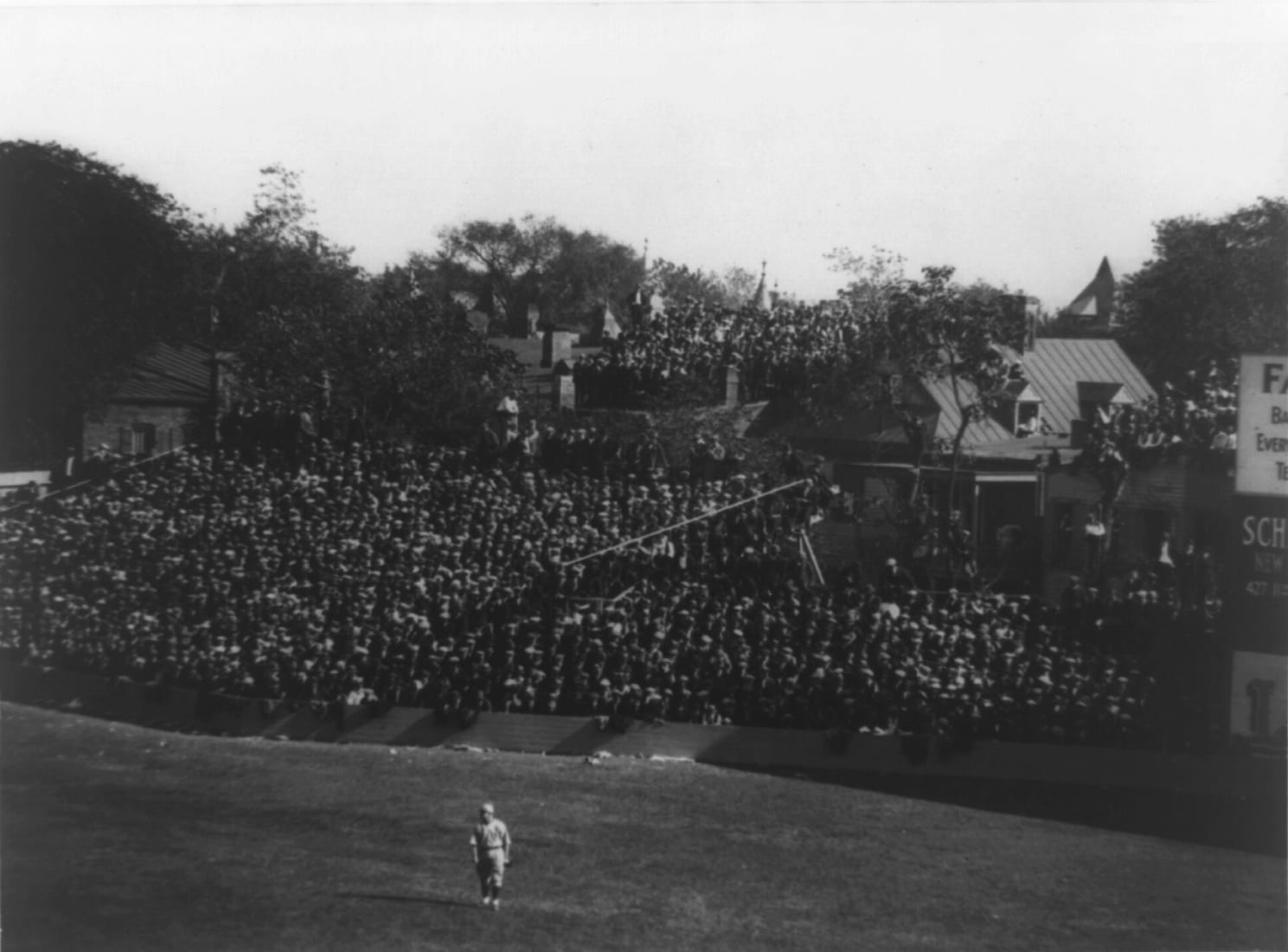
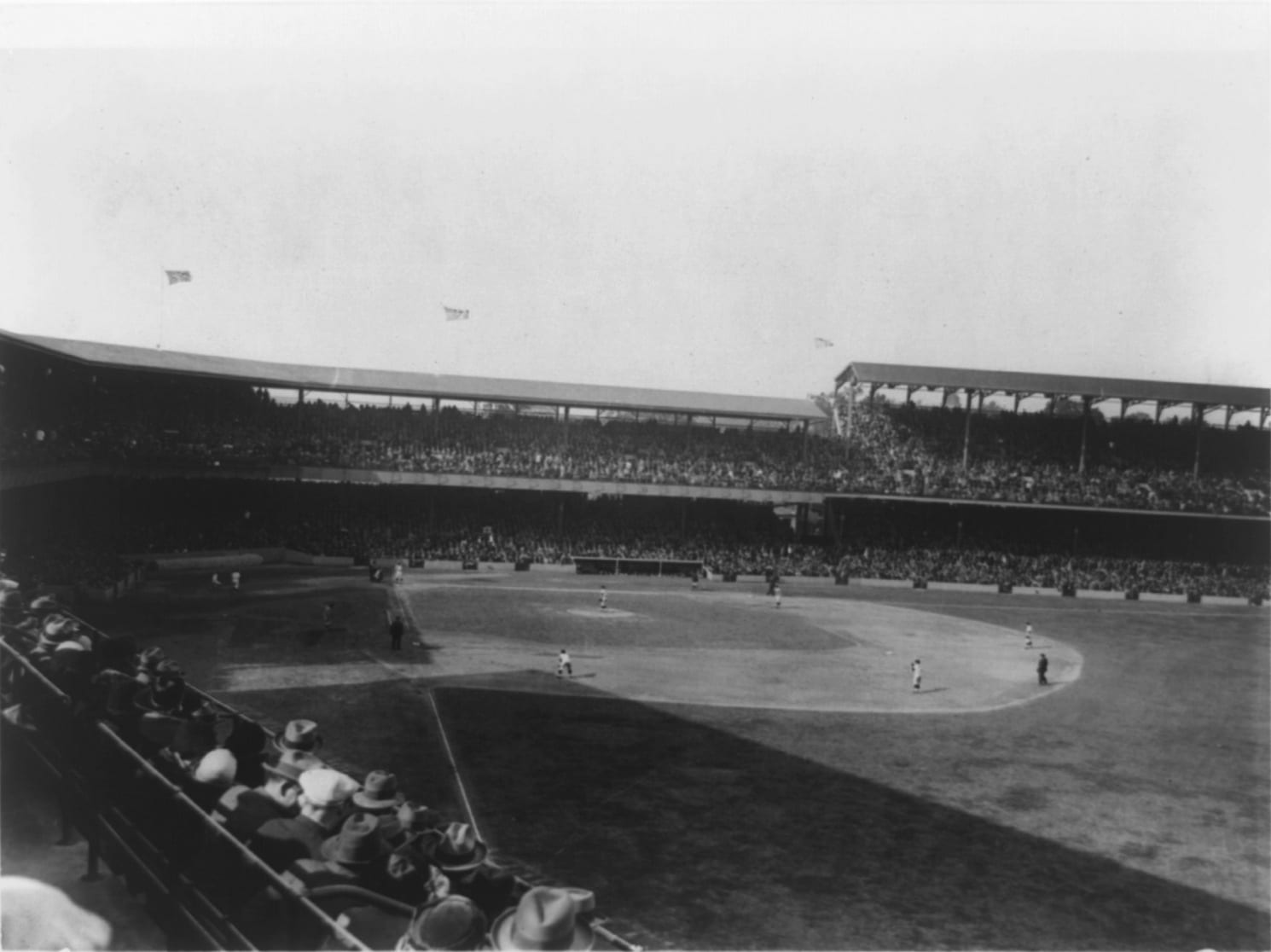
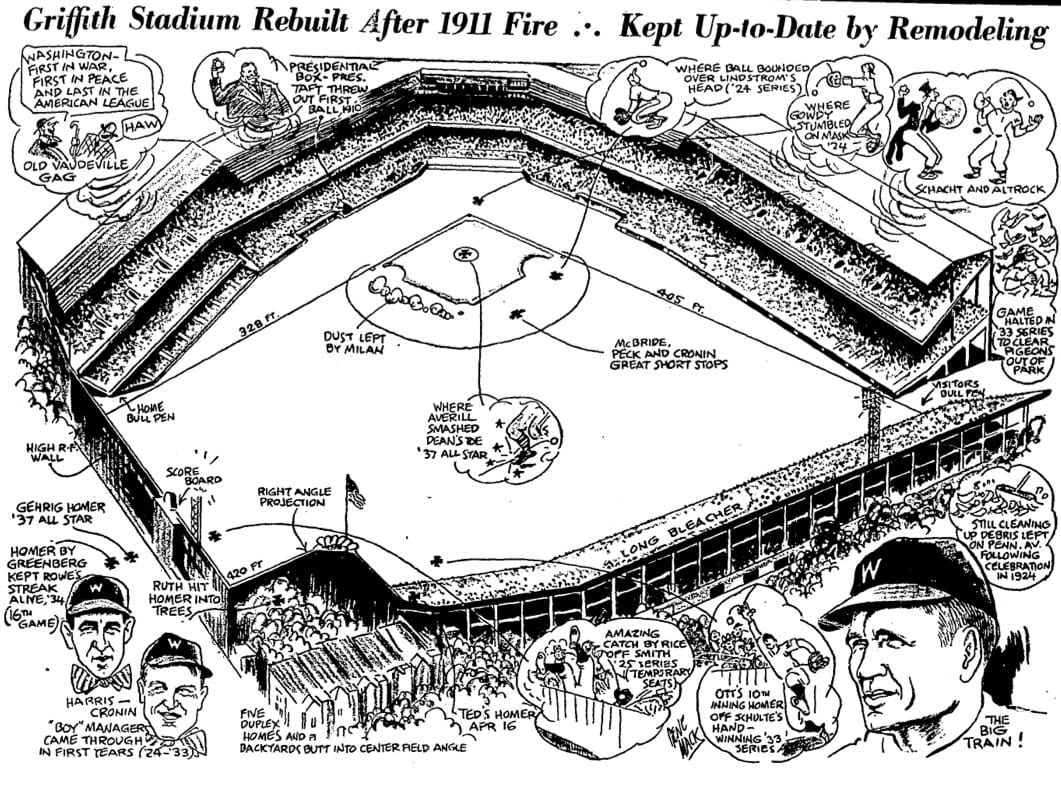
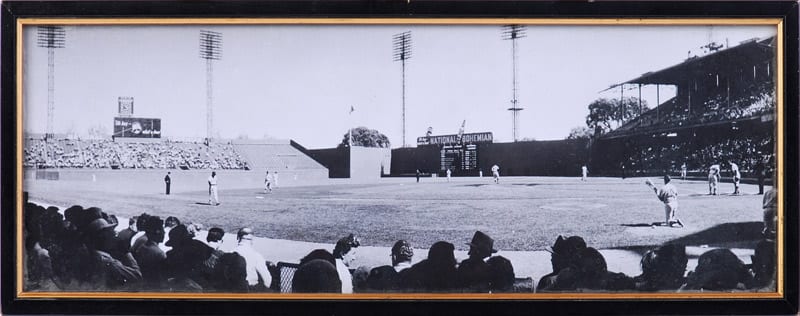
Redskins, All-Stars, and Eight Presidents
Baseball wasn’t the only game at Griffith. The Washington Redskins moved from Boston in 1937 and used the stadium as their NFL home for 24 seasons through 1960. They won the championship in their very first year in DC. The All-Star Game came twice, in 1937 and 1956. Eight U.S. Presidents attended games there over the years.
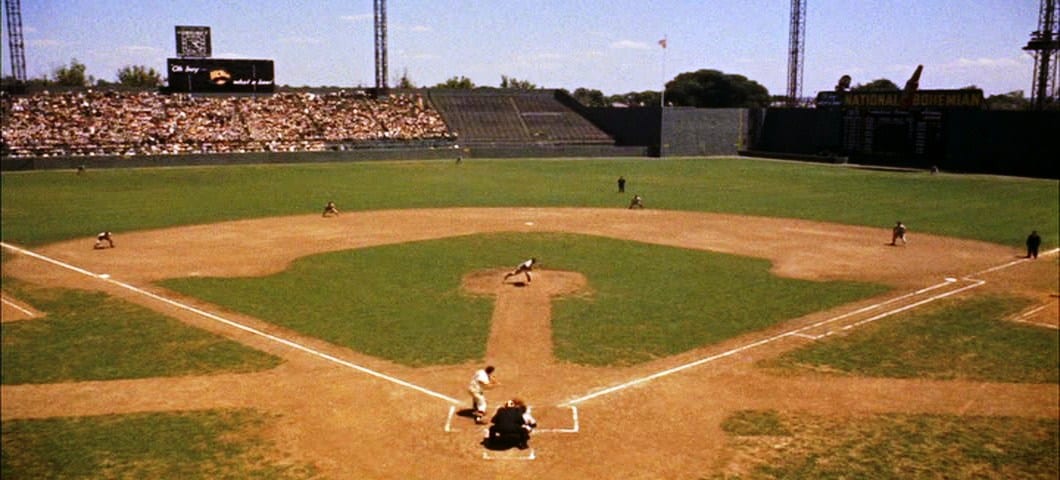
For baseball, the park held about 27,550. Temporary bleachers in right field pushed the football capacity to around 35,000. The dimensions were notoriously quirky: 388 feet to left field, 408 to dead center, 320 to right.
The Senators Pack Up
The original Washington Senators moved to Minnesota after the 1960 season and became the Twins. An expansion team took the Washington Senators name and played one season at Griffith in 1961 before DC Stadium opened in 1962. The long saga of attempts to move the Senators before that finally happened is its own story.
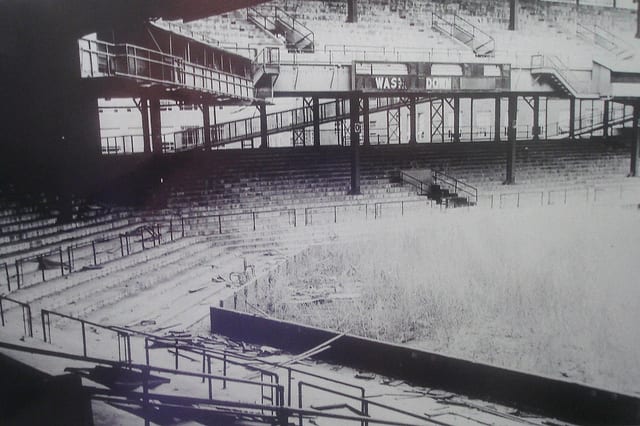
After 1961, the old park sat empty. No games. No crowds. Just the light towers and shoulder-high weeds growing in the infield.
Howard University had been looking to expand. They bought the 8.5-acre site in 1964 for $1.5 million, earmarked for a new hospital.
The Wrecking Ball
The Washington Post covered the first day of demolition on February 12th, 1965.
They started knocking the last legs out from under Griffith Stadium yesterday.
Workmen began toppling the eight 150-foot light towers which surround the abandoned ball park and after they’re cut down to size the wreckers’ ball will eat into the bleachers and grandstand.
…
It was a “ticklish business,” said foreman Roscoe Springer of the General Wrecking Company, as his giant crane maneuvered for elbow room behind the bleachers on narrow 5th St. yesterday.
The crane jockeyed for position most of the morning. Finally, a 20-foot jib was added to the 160-foot boom and work on the first tower progressed quickly after that.
One of the second-story men was forced from the stanchion because its gentle swaying made him dizzy, Springer said.
Another worker, armed with an acetylene torch, sliced the tower in half and the crane delicately lifted the 6-ton top section, which support the lights, free of its legs. Treating it like a giant egg, the boom deposited its load atop the bleachers.
The metal towers will be sold as scrap metal.
Stripped of its seats and with shoulder-high weeds, the interior of the stadium looked like a disaster area.
Three World Series. Two All-Star Games. An NFL championship. Eight presidents. One 565-foot home run. Sold for scrap.
Howard University Hospital opened on the site in 1975. It’s still there today.
Great pictures. When I think of Griffith Stadium, I also think of the Georgia Ave ( 7th St.) street trolley car line. Directly in front of the stadium entrance all of the street cars stopped to change the electric connection from underground to overhead (or vice versa).