
It is the last Sunday of January 2008, and the totem pole outside 2000 Wilson Boulevard is still standing. Inside, a 75-year-old man named Bill Stewart is perched on a bar stool watching the Patriots and the Packers on a movie-screen-sized TV. Around him, 26 nights of “Dr. Dremo’s Huge Ass Farewell Party” have packed the place wall to wall.
Greg Kitsock, a beer columnist who has been coming here for fifteen years, is nursing a Redneck Ale and telling a Washingtonian reporter, “It’s kind of the end of an era.” At 2 a.m. on January 27, 2008, the doors close for good. The next night, the pool tables, the 200-gallon stainless steel brew tanks, and that totem pole all get auctioned to the highest bidder.
Rewind fifteen years. Same address. Different building, mostly. There is a sign on the showroom wall that reads OLMSTEAD OLDSMOBILE in green neon script, and a fleet of brassy new Oldsmobiles lined up under flagstrings. By the early 1990s the showroom is shutting down for good. An out-of-work architect named Bill Stewart is about to convert one of Arlington’s longest-running car dealerships into one of the strangest brewpubs the East Coast will ever see.
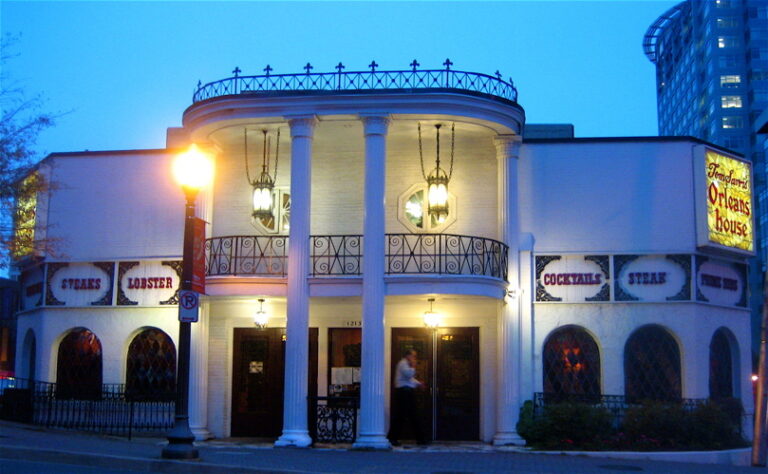
Here is how 2000 Wilson Boulevard became Bardo Rodeo, then Dr. Dremo’s, then the brown-brick condo tower that sits there today. It went the way of a lot of the area’s old gathering spots, among them Rosslyn’s Tom Sarris’ Orleans House.
Auto Row at the Court House
Wilson Boulevard was Arlington’s car corridor for most of the twentieth century. The arterial linked Rosslyn and Clarendon, and from the postwar boom onward it was lined with dealerships, garages, body shops, used-car lots, and a Bob Peck Chevrolet pylon that was visible for blocks. Olmstead Oldsmobile sat on a corner parcel at 2000 Wilson Blvd., a block north of the Arlington County Court House complex.
You could buy a new car within walking distance of half a dozen other dealerships. Service bays opened onto Wilson Blvd. all the way down to Rosslyn. Olmstead was one of those landmarks the locals navigated by, the kind of name people gave directions with.
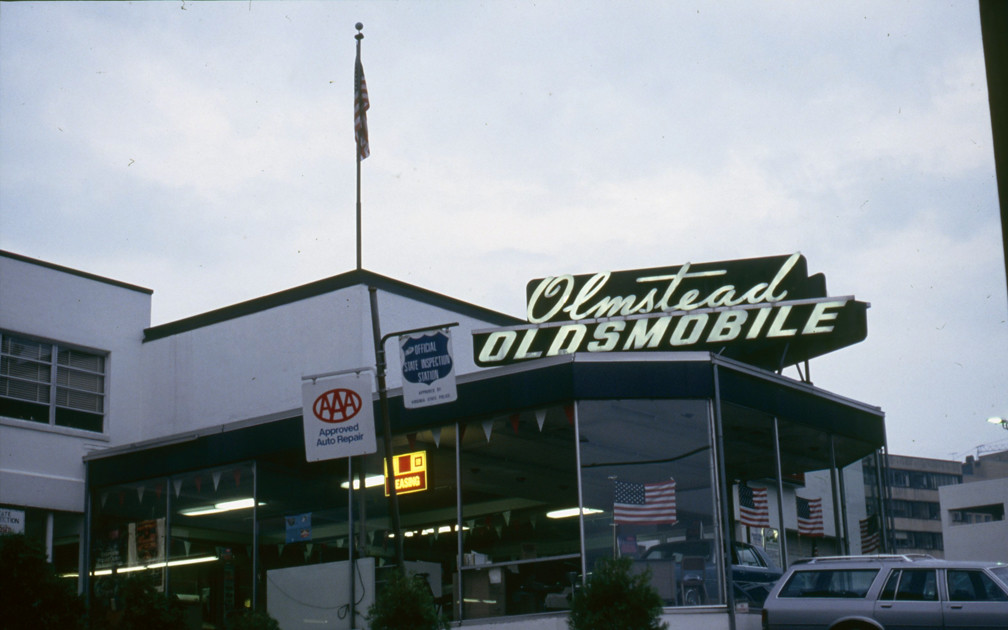
Olmstead was a fixture. When Halls Hill icon Birdie Alston died in 2020 at the age of 100, his obituary noted that he had spent 40 years working at Olmstead Oldsmobile in a variety of jobs and had become “renowned among family members for the big, brassy new Oldsmobiles he had access to.” The dealership was an AAA Approved Auto Repair station. The showroom carried the state safety inspection contract. American flags hung along the canopy on Independence Day.
The building grew over the decades. By the time it closed in the early 1990s, the corner parcel held an older masonry showroom on Wilson Blvd. and a newer wing that ran back toward Clarendon Blvd., with service bays in between. Arlington would later condemn the older section, which gives a hint about how patchwork the structure had become.
Then GM started killing off Oldsmobile dealerships, the suburbs pulled new-car shopping out toward the Beltway, and the corner lot at 2000 Wilson Blvd. went dark for the first time since before World War II.
Enter Bill Stewart, Architect-Turned-Brewer
Bill Stewart was an architect by training and a homebrewer by hobby. He had been brewing beer in his Logan Circle apartment, where, as he later told Washington City Paper, “everybody kept coming over and drinking it, so I started charging money. And after that I was making more money doing that than having a real job.”
By the late 1980s he had quit the day job. He co-opened BBQ Iguana at 14th and P streets NW. He opened Roratonga Rodeo in Clarendon, which would eventually become Galaxy Hut. He opened Amdo Rodeo, which would eventually become Iota. He was running through Tibetan words and Australian place names as bar concepts. He had spent time in both, and the Dalai Lama had captivated him on a 1985 visit to Tibet.
In 1993 he found the old Olmstead Oldsmobile building. He signed a lease. He took out a sign by his Amdo Rodeo soliciting investors who could each loan a minimum of $5,000 toward brewing equipment. About 20 people came forward. He named the new place Bardo Rodeo. “Bardo” is Tibetan for purgatory, or the land of the in-between. It was, given what the building was becoming, the right word.
The Plymouth Through the Wall
Bardo Rodeo opened in 1993 and immediately became the wackiest brewpub on the Eastern Seaboard. Bill Stewart’s T-shirts said BARDO RODEO, LARGEST BREWPUB ON THE CONTINENT. The 900-seat operation took over the entire dealership, showroom and service bays alike.
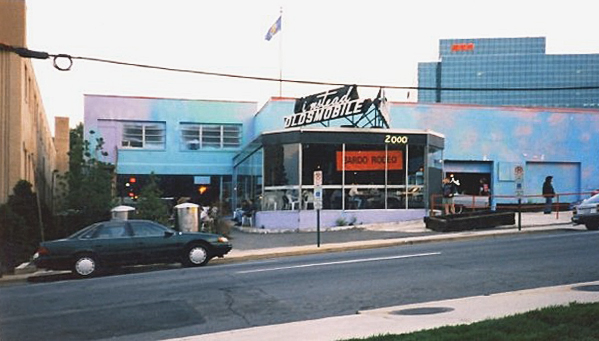
The signature touch sat right out front. A 1966 Plymouth jutted through the showroom window at an angle, as if it had crashed through from Wilson Boulevard and gotten stuck there. Inside the wreck was a jukebox. The Plymouth-in-the-wall became the bar’s calling card and one of the most photographed storefronts in Arlington for the next fifteen years.
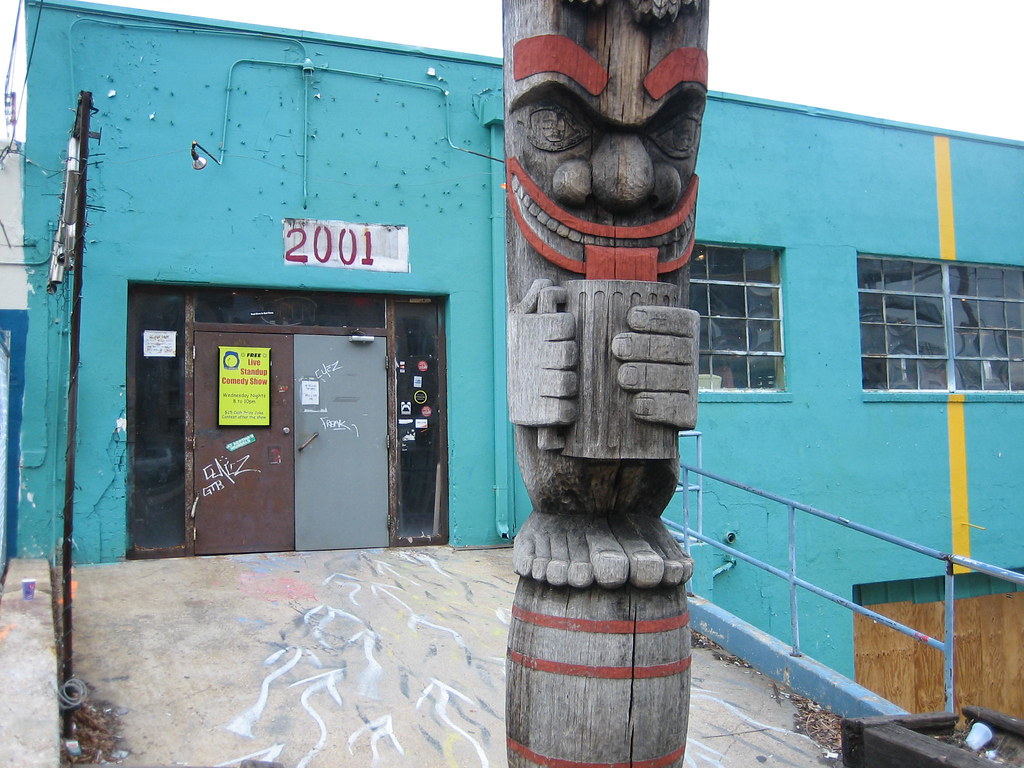
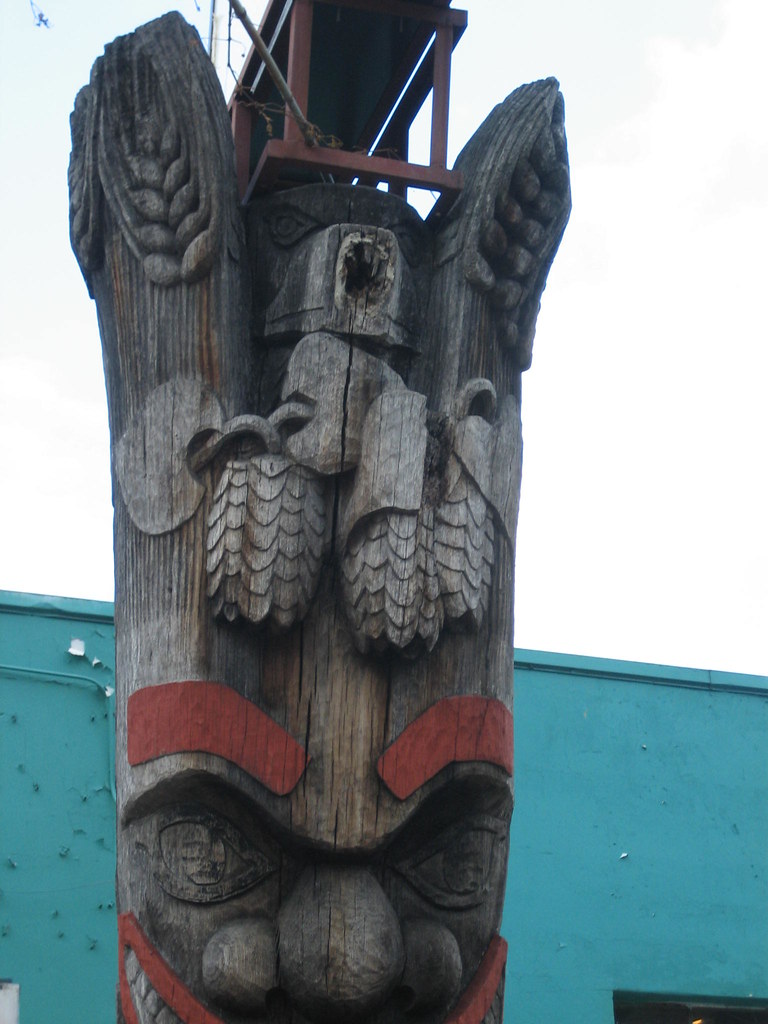
The exterior was painted in pastel blues and pinks. A totem pole stood by the door. Graffiti and political cartoons covered the concrete walls in what one Tilting Suds reviewer called “the work of a bunch of mind-altered hippies.” Around back, behind the service bays, sat a literal sandbox stocked with Tonka toys near the bathrooms. Inside, customers could play 18 pool tables, watch obscure films on a movie-theater-size screen, and, on the Fourth of July, gawk at one of the best unobstructed views of fireworks over the National Mall anywhere in Arlington County.
The bar had at least 100 taps. The kitchen put political-satire names on the menu items. The beer was the point.
Bardo Brewing School
This is the part that gets understated. Bardo Rodeo was a serious brewery hiding inside a stoned circus.
Bardo’s brewers won a Silver medal at the 1994 Great American Beer Festival for a barleywine called White Lightnin’. They took Gold at the 1996 GABF for a beer called Bundaberg Ginger Beer, named after the Australian sugar town, in the Herb and Spice category. In 1997 they took Bronze in Other Strong Ales for Dremo Tibetan Sasquatch, which would later lend its name to the bar’s second incarnation. “Dremo” is the Tibetan word for sasquatch.
The recipes ran deep. Saturnus Winter Ale was brewed with pine needles. Buffalo Stout, Vincent’s Black Shadow porter, Marion Berry Lambic, Jame Brown Ale, Beat my Wheat, Graceland Imperial Stout. A 2010 Tilting Suds remembrance called the Graceland the first beer he ever saw labeled “Imperial” in the modern American craft sense.
The brewhouse was a teaching kitchen for the next generation of D.C. area brewers. Port City Brewing Company head brewer Jonathan Reeves passed through. Lost Rhino Brewing Company co-founder Favio Garcia worked there. Alan Beal, head brewer at the now-defunct Virginia Beverage Company, learned the ropes at Bardo. DC Brau co-founders Jeff Hancock and Brandon Skall used to drink there with their then-girlfriends. Bill Stewart later called the place, only half-joking, “Bardo Brewing School.”
Bardo also had a hard policy on tap diversity. “Brewers got fired if there was less than 12,” Bill’s brother Andrew Stewart told City Paper.
The Pivot: Brewing Stops, the Building Splits
By 1998 the brewing operation at 2000 Wilson Blvd. was winding down. The brewers ceased on-site production that year. In 1999 Bill loaded the brewhouse equipment onto a truck and moved it out to his farm in Amissville, Virginia, in Rappahannock County. The bar carried on without on-premise beer, briefly hosting a sushi concept called Ningaloo, an Australian reef name from Bill’s Antipodean past, before the next rebrand.
Then in 2000 Arlington County condemned the older Wilson Blvd. wing of the building. The original showroom section had to come down or be sealed off. Rather than rebuild a brewpub on a half-shrunken footprint, Bill consolidated operations into the newer Clarendon Blvd. wing and renamed the place. Dr. Dremo’s Taphouse opened, named for that 1997 Bronze-medal Tibetan Sasquatch barleywine. The 2001 Clarendon Blvd. address replaced the 2000 Wilson Blvd. address. The Plymouth stayed in the wall. The totem stayed by the door.
Dr. Dremo’s: Dive Bar With a Conscience
Dr. Dremo’s was a dive bar of the old, irreplaceable kind. The DC Foodies writer Rob Lehman, paying his last respects in January 2008, called it “one of the last of the dinosaur dive bars.”
The main barroom held a long, hand-beaten copper bar that Bill Stewart Sr. had built himself and, by his own account, never gotten paid for. Concrete floors, high ceilings, secondhand furniture, old arcade machines, Christmas lights stapled to graffiti walls year-round. A retrofitted fermentation tank in the back served as a private eight-top dining nook.
Downstairs sat the cheapest pool tables in Arlington, plus darts, shuffleboard, and what was reliably the most raucous open-mike comedy and music night in the area. Out back, in the warmer months, a fenced sand pit ran behind the building. The regulars called it the sandbar.
Twenty-seven taps lined the back wall. PBR to Delirium Tremens, $10 to $17.50 a pitcher. House beers were brewed under contract by Shenandoah Brewing Company in Alexandria, using recipes Bill had been refining for a decade. One of those house recipes was the Chocolate Donut Beer. Rob Lehman called it “absolutely undrinkable” but appreciated the attempt.
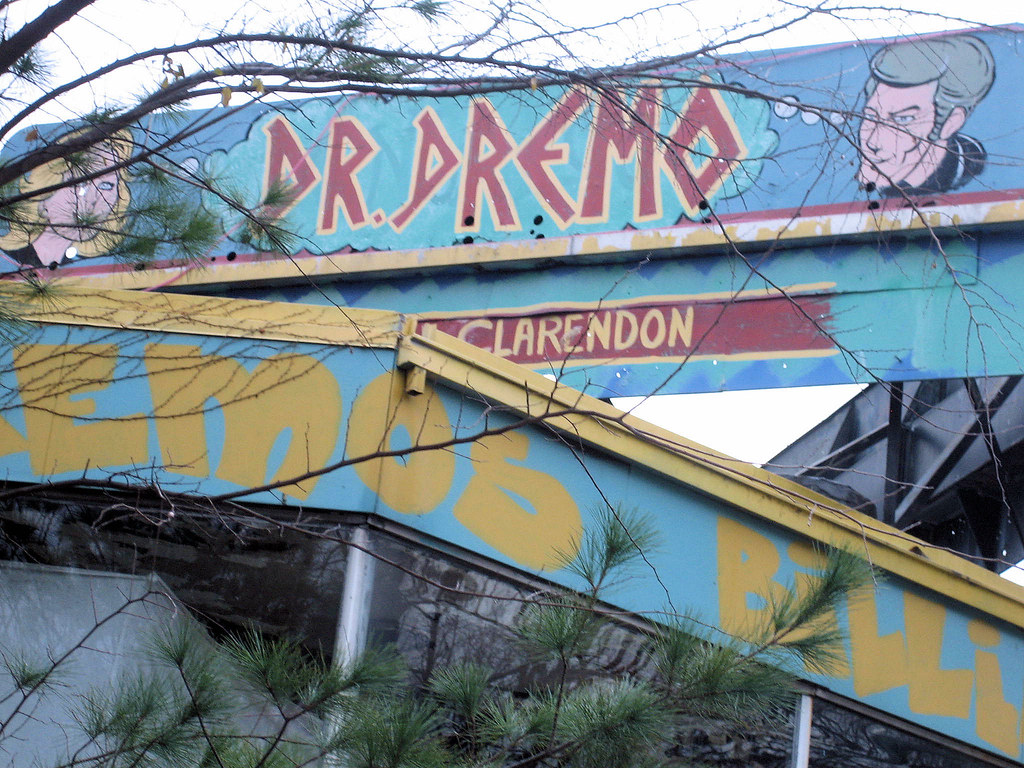
In 2000, Bill Sr. took the keys from his son. “He dumped the place on me because he got fed up with it,” the elder Stewart told Washingtonian on closing night. Bill Jr. eventually moved to Australia in 2007 and then on to Dharamsala, India, where he did audiovisual work for the Tibetan Institute of Performing Arts. The bar stayed in family hands. Younger brother Andrew Stewart, who had come up to D.C. to work for his brother right out of college, was already managing the floor.
For 15 years the corner at Wilson and N. Veitch was the place where Arlington’s tattooed-and-pierced shift drinkers shared a copper-topped table with Greg Kitsock and the GW grad students. Female friends were welcome in sweats. “I have never received rude service or attitude regardless of dress or company,” Lehman wrote.
“I’ve Been Looking Forward to Closing This Place”
The property sale was the end. Elm Street Development bought the Dr. Dremo’s parcel and the adjoining Taco Bell lot and announced a 141-unit luxury condo project. The building was, by everyone’s admission, falling apart. The air conditioning barely worked. The bathrooms leaked.
The Stewarts threw a 26-night going-away. They called it the Huge Ass Farewell Party. The Patriots-Packers game was on at the bar that final Sunday. “I’ve been looking forward to closing this place,” Bill Sr. told the Washingtonian reporter. “I’ll be getting a rest, ya know?”
Kitsock, the beer columnist, said he recognized about a dozen regulars in the room that night. He had been coming to this corner since 1993, since the Plymouth went into the wall. He had stood in the parking lot every July 4th to watch the fireworks over the Mall from one of the best free vantage points in Arlington. None of that was going to be there next summer.
At 2 a.m. on Monday, January 28, 2008, Dr. Dremo’s closed. Twenty hours later the bar reopened just long enough for the auction. The pool tables, the kitchen equipment, the 200-gallon brew tanks Bill had been hauling around since 1993, and the totem pole all went to new homes for cash bids. The copper-topped tables, which Bill Sr. had built and never been paid for, were among the few items the family kept.
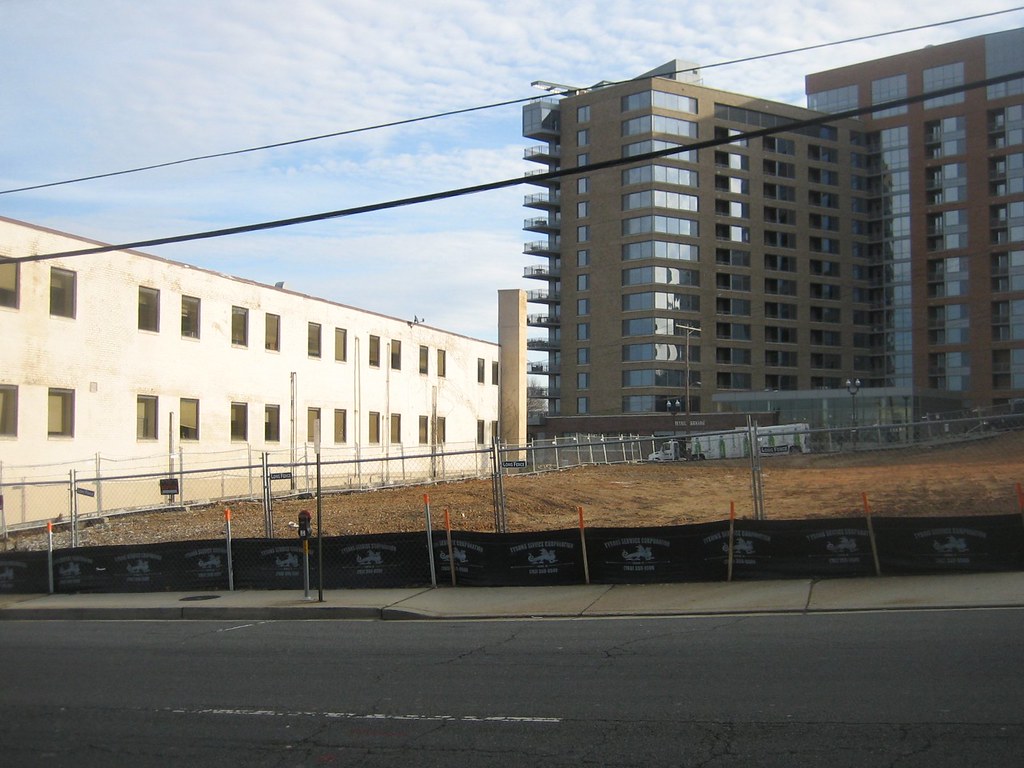
By October 2008 the demolition crew was on site. By the end of the year the Wilson Blvd. parcel was a fenced dirt lot. Brewing chronicler Andy Howder, walking past in October 2008, wrote that his heart almost broke when he saw the destruction.
What Sits There Now
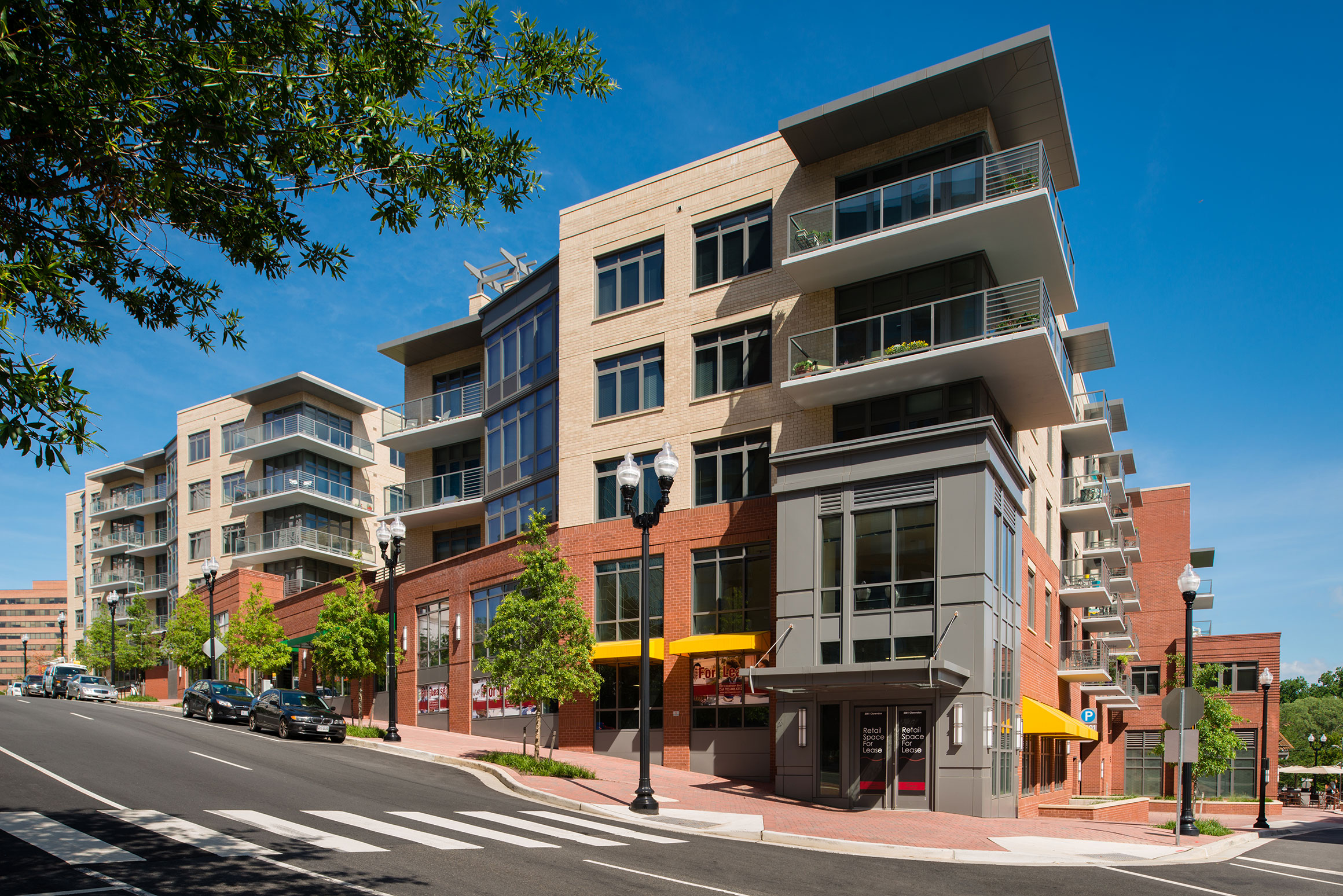
The corner of Wilson Blvd. and N. Veitch Street today is 2001 Clarendon, a six-story residential building with two underground parking levels, designed by WDG Architecture for Paradigm Companies. The brown brick high-rise opened to residents at the front end of the next decade. The Plymouth, the totem, and the sandbar are long gone. So is the Olmstead Oldsmobile neon. So is the Bob Peck Chevrolet pylon a few blocks down Wilson. So is most of Arlington’s auto row.
Bardo Rodeo did get one more shot. The Stewart brothers reassembled Bill’s mothballed brewing equipment and opened a new Bardo at 1200 Bladensburg Road NE in 2013, with shipping-container construction and roughly 10,000 square feet of outdoor seating. Same recipes, same equipment, same family. The vibe never quite caught the same lightning the Arlington version had, and the second Bardo eventually closed too.
The Tibetan word “bardo” means the in-between, the passage from one state to the next. The corner at 2000 Wilson Blvd. was a bardo, too. It held a dealership and then a brewery and then a dive bar and now a condo, and for fifteen of those years it was the strangest building in Arlington County.
It is still the last Sunday of January 2008. Bill Stewart is on his bar stool. Greg Kitsock is on his Redneck Ale. The totem is still standing by the door, listening for the auction gavel.
We dug this one up with help from AI and checked it against the original records below. Here’s how we use AI.