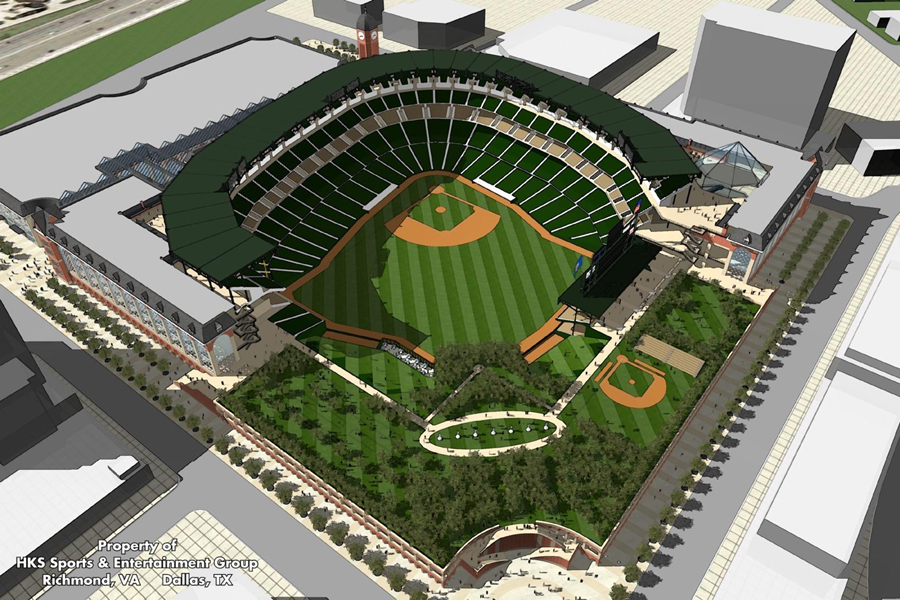
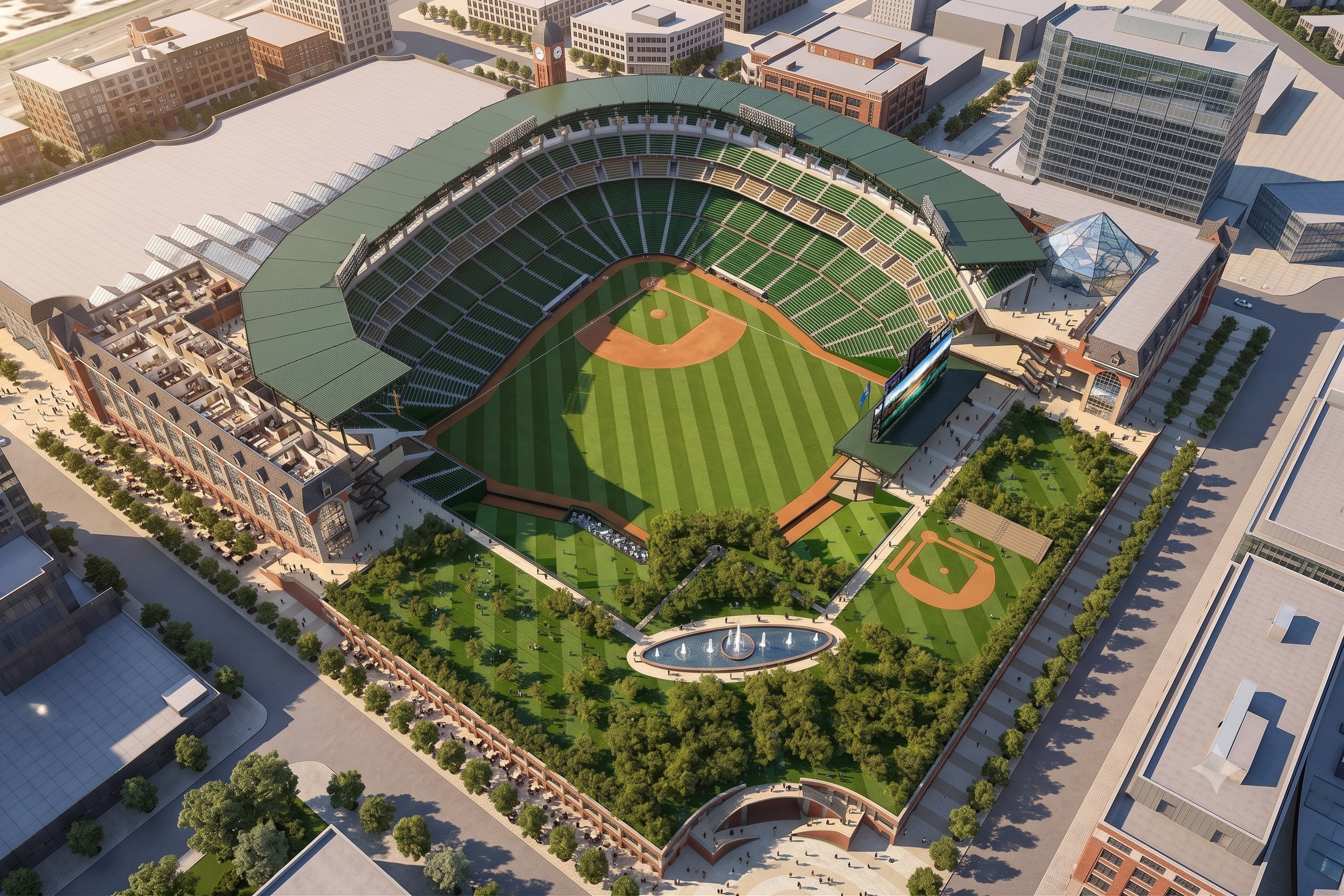
For most of the 1990s, baseball was coming to Arlington, not Washington. The Montreal Expos were on the move, Northern Virginia investors had a stadium concept right on the Potomac with a postcard view of the DC skyline, and a future Virginia governor was helping write the checks. Then, in the span of about eighteen months, the whole thing fell apart. The Pentagon City land that was supposed to anchor the deal eventually became Amazon HQ2.
How Arlington almost got the Nationals
Arlington’s pursuit of a Major League Baseball team begins in 1990, when MLB opens expansion bidding for two new franchises. Bill Collins, a telecommunications millionaire from McLean, organizes the Virginia Baseball Club to make the pitch. The investor group includes a then-local tech executive named Mark Warner, the future governor and U.S. senator. Their argument is straightforward. Northern Virginia is filling up with the kind of high-income households that buy season tickets, the proposed Pentagon City sites sit on top of Metro and within sight of major highways, and the region has no team to compete for that money.
The 1993 expansion goes to Miami and Denver. Arlington loses again in 1995 to Phoenix and Tampa Bay. In 1996 Collins lines up a backup deal to buy the Houston Astros and move them north if a Harris County stadium referendum fails. The referendum passes by about sixteen thousand votes. In 1999 he thinks he has a deal to buy the Montreal Expos outright. That one collapses when Expos president Claude Brochu parts ways with ownership. By the time MLB itself buys the Expos in 2002 with relocation in mind, Arlington is 0 for 4 and somehow still the favorite.
Where would the Arlington stadium have gone?
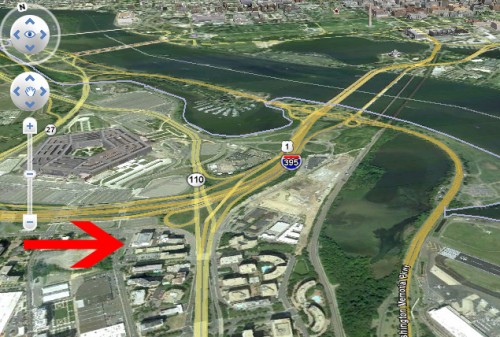
The Virginia Baseball Stadium Authority eventually fields five Northern Virginia candidate sites. Three of them sit inside Arlington County: two in Pentagon City and one in Rosslyn. The vivid one is the northwest corner of Pentagon City, wedged between I-395 and Route 110, a short walk from the Pentagon City Metro stop. If that block sounds familiar, it should. It is the parcel known today as PenPlace, the site Amazon picked for the second phase of HQ2 and its now-paused Helix tower.
The architecture firm HKS puts together the concept that still circulates as the great what-if of Washington baseball. The ballpark sits on the Potomac, oriented so that center field opens onto a clear view of the Washington Monument, the Lincoln Memorial, and the Capitol across the river. There is nothing like it in the league. Camden Yards looks at warehouses. PNC Park looks at downtown Pittsburgh. The Arlington concept frames the actual national monuments inside the outfield.
By early 2003, the political pieces line up. Mark Warner, now governor, is publicly behind the bid. The Arlington County Board, the body that has to sign off on the rezoning, is led by a newly elected chairman named Charles P. Monroe, a Black native Arlingtonian, lawyer and civic activist who had joined the Board in 2000 and was elected chairman effective January 1, 2003. Monroe is on the record in favor of bringing baseball to Pentagon City.
The day the Arlington baseball bid died
The morning of Saturday, January 11, 2003, is Charles Monroe’s first real meeting as chair. He gavels in at 9:20 a.m. A few minutes later he collapses mid-sentence on the dais. A ruptured brain aneurysm causes a massive stroke. He is pronounced dead at 12:07 p.m. that afternoon. He is 46 years old.
The political consequence is immediate. The Arlington bid loses the one Board member most willing to spend personal capital on a ballpark site that a chunk of his constituents do not want. Pentagon City residents are already organizing against the traffic, the lights, and the rezoning. Neighboring property owners are already running the math on mixed-use development versus an eighty-one-game baseball schedule. Without a chairman willing to push, the deal has no political center of gravity.
It takes six months for the Board to formalize what everyone already knows. On July 18, 2003, new chairman Paul Ferguson sends a letter to the Virginia Baseball Stadium Authority asking that all three Arlington sites be removed from consideration. The letter, signed by four of the five Board members, argues that the parcels can be more profitably developed through other projects. As Ferguson tells the Washington Post, the arrogance of Major League Baseball was unbelievable, and the county had grown tired of waiting. The CBC headline summarizes the moment in seven words. Virginia suffers setback in bid for Expos.
The Virginia bid limps along through the fall, repositioned around a site near Dulles Airport. Nobody loves a ballpark you have to fight Dulles Toll Road traffic to reach. A September 2004 Washington Post column captures the mood, noting that the prospect of a team playing near Dulles grows less appealing with each day’s rush hour reports.
Peter Angelos and “no real baseball fans in DC”
Hovering over everything is Baltimore Orioles owner Peter Angelos, who spends the entire process trying to kill any move into the Washington television market. His position on the DC fan base, voiced in a 2004 WBAL-AM radio interview, is that there are no real baseball fans in DC and that the idea is a fiction. The line gets quoted back at him for the next two decades. Angelos eventually extracts the Mid-Atlantic Sports Network deal as the price of his cooperation. The Orioles get to broadcast the Nationals games and keep most of the rights fees. It is a famously bad bargain for the new DC franchise and a famously good one for Baltimore.
On September 29, 2004, Major League Baseball announces that the Expos are headed to Washington. The team plays at RFK Stadium for the 2005, 2006 and 2007 seasons. Nationals Park opens on the South Capitol Street parcel in Southeast on March 30, 2008. Across the river, the rejected Pentagon City block sits empty for years while Arlington County argues about what to put there.
The Pentagon City baseball stadium site became Amazon HQ2
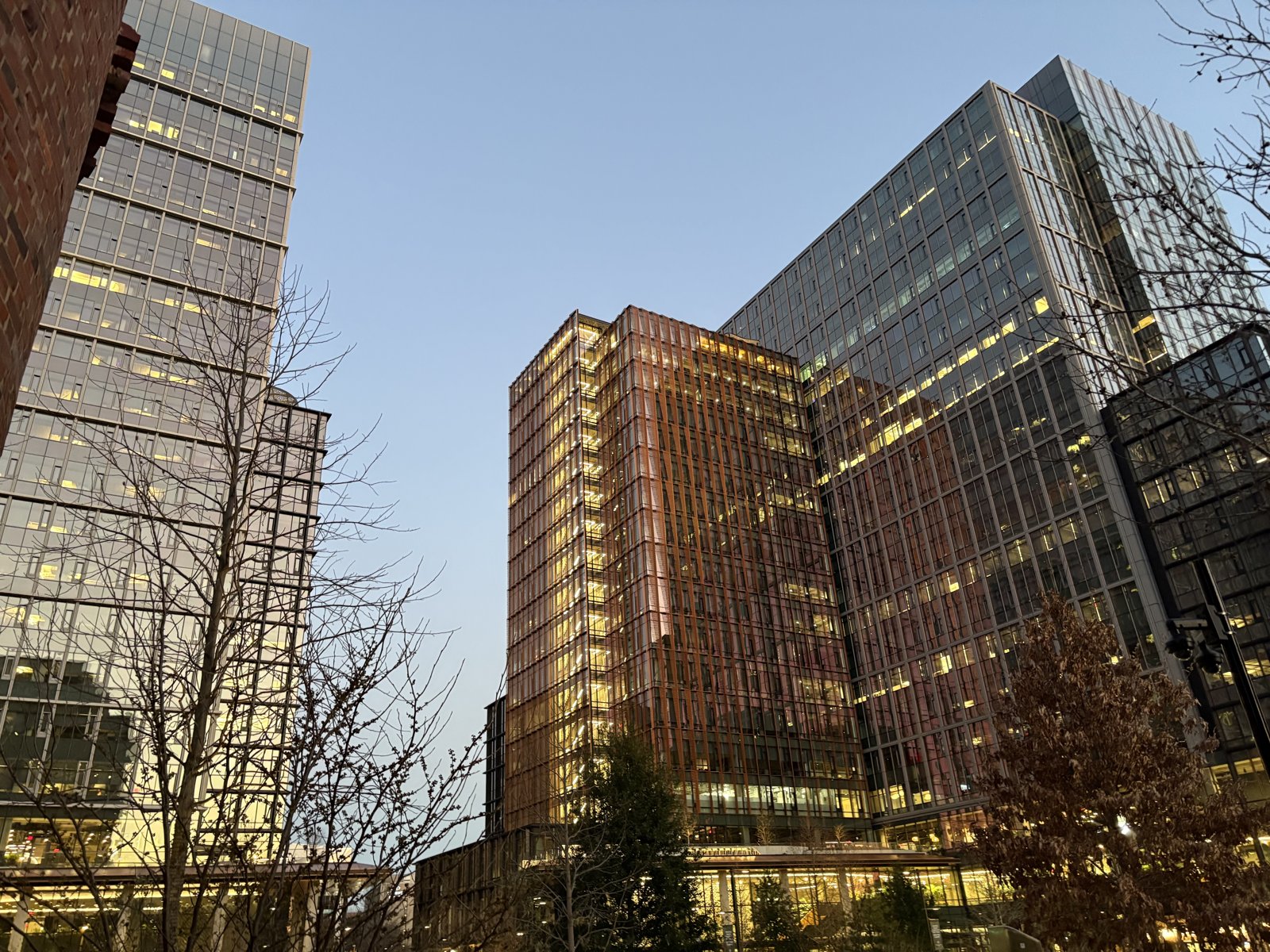
Here is the part that writes itself. In 2018, Amazon picks Arlington for the second of two new headquarters campuses. Phase 1, two twenty-two-story buildings called Merlin and Jasper, opens in June 2023 on the Metropolitan Park block just south of the proposed stadium site. Phase 2 lands on PenPlace itself, the same block bounded by South Eads Street, 12th Street South, Army Navy Drive and South Fern Street that the Virginia Baseball Club spent a decade trying to rezone for an outfield. The 2.8 million square foot Amazon plan includes three more office towers and a 350-foot spiral building called the Helix that recreates a hike in the Blue Ridge Mountains. Construction on Phase 2 is paused as of 2026, but the entitlements and the site control are Amazon’s.
By any reasonable economic measure, Arlington did better losing the Nationals than it would have done winning them. The estimated capital investment for the full HQ2 buildout is in the billions. The tax base implications dwarf an eighty-one-game ballpark. The neighbors who fought the stadium got the mixed-use development they wanted, plus a tech anchor nobody saw coming in 2003. The bidders who lost baseball got a story to tell.
Does Virginia still regret losing the Nationals?
The question keeps coming back. ARLnow ran a morning poll in March 2024 asking readers whether anyone still regretted Arlington passing on the Nationals, pegged to MLB opening day and the collapse of Alexandria’s Capitals and Wizards arena deal at Potomac Yard. The Northern Virginia pattern is becoming a genre. The region keeps almost landing a marquee professional team, then watching the deal evaporate at the last meeting before the vote. Alexandria’s arena bid died in spring 2024 when the Virginia General Assembly refused to fund the financing authority. Ted Leonsis re-upped with DC for the Capitals and Wizards. Same script.
Bill Collins, asked by Arlington Magazine in 2018 whether he attends Nationals games these days, gave the kind of answer that only makes sense if you spent fifteen years almost owning the team. He says no. He has no interest.
Walk the PenPlace block today and there is nothing to see but a construction fence and a stalled Amazon timeline. Look across the river from the right angle on the GW Parkway and you can still pick out the patch of land where, in a different version of the early 2000s, the Expos would have moved to Arlington and the team in the outfield postcard would have been the Virginia Senators or the Potomac Stars or whatever Bill Collins would have called them. The Nationals play eight miles upriver. The Helix is on hold. Charles Monroe never made it through his first meeting. Major League Baseball is in Washington because of every one of those facts.