
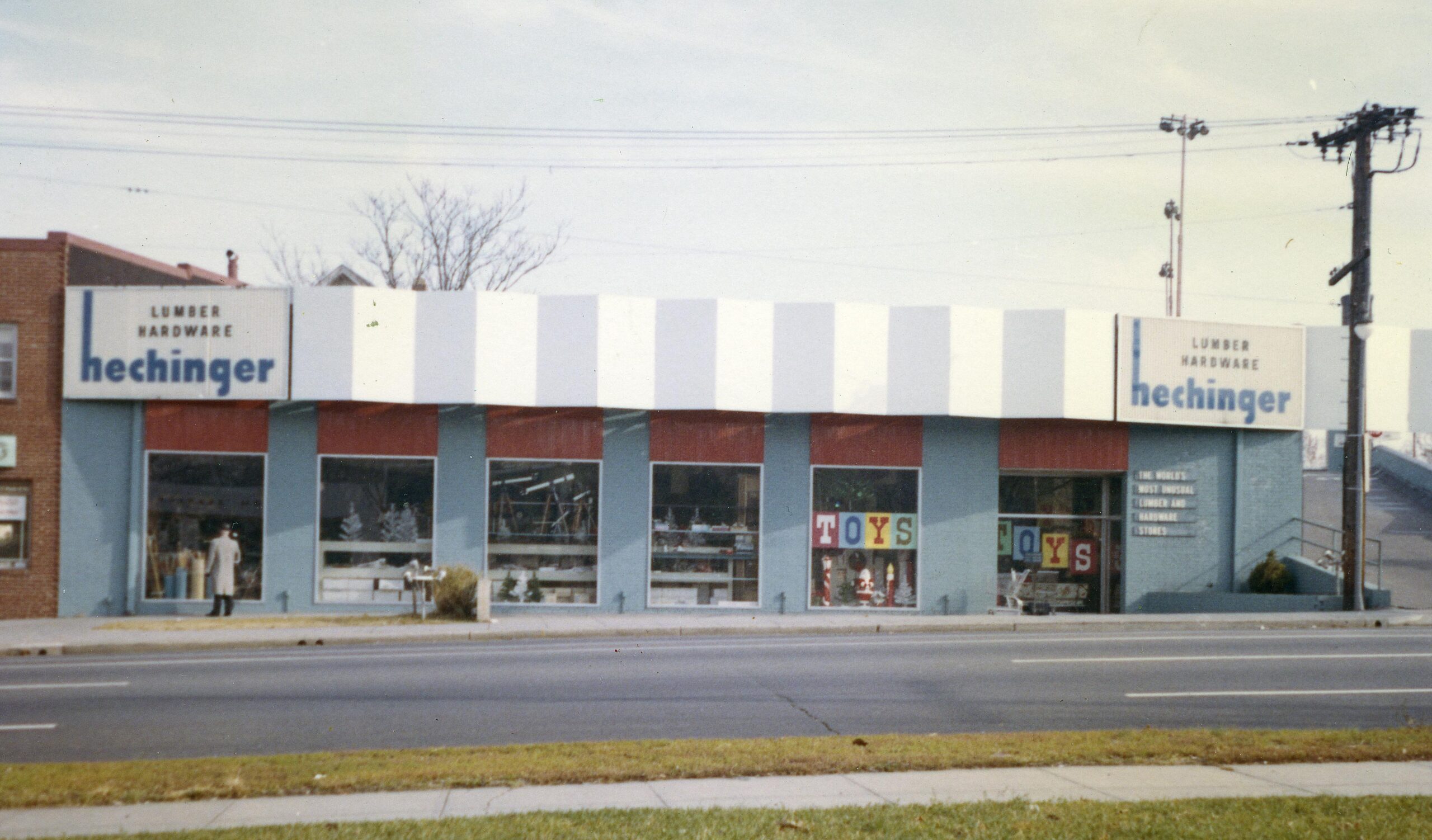
Hechinger is the hardware chain every Washingtonian over forty remembers, and almost no one remembers that it started as a wrecking crew.
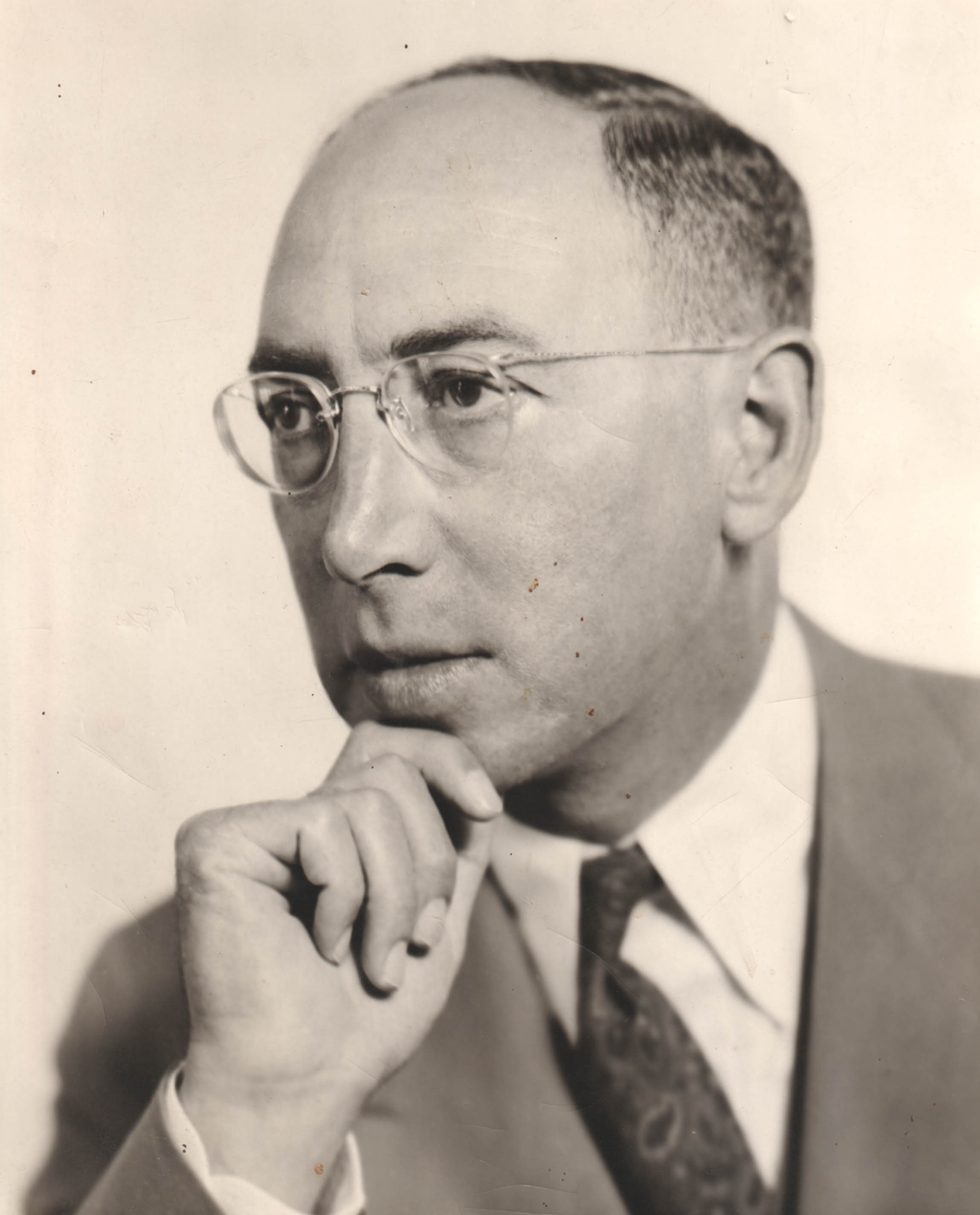
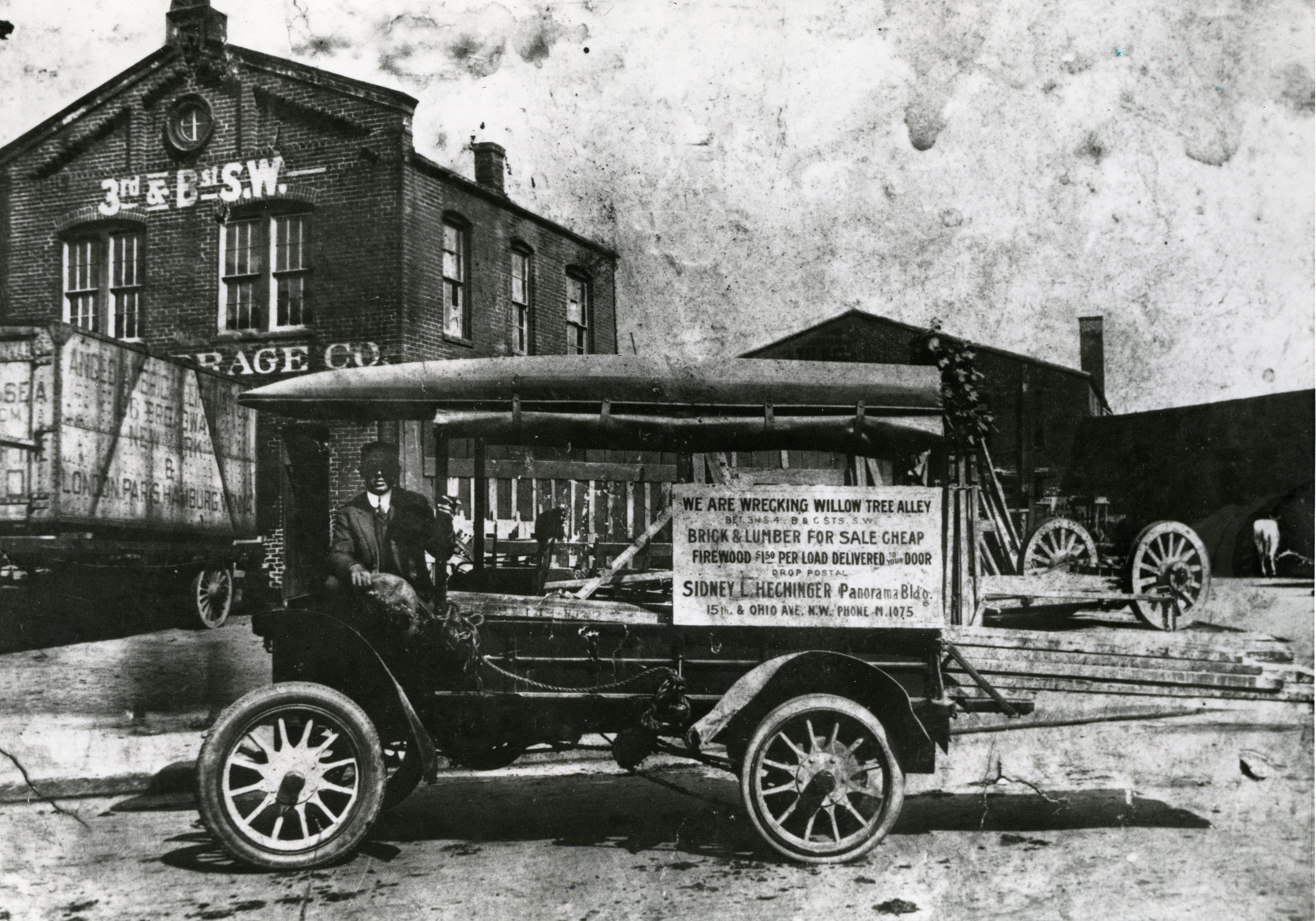
In 1911, a fifth-generation Washingtonian named Sidney Lawrence Hechinger hung out a shingle at 6th and C Streets SW for a business with a deliciously ominous name: the Sidney L. Hechinger Housewrecking Company. He was twenty-six, fresh out of a Lehigh University civil engineering degree (class of 1909), and freshly chased out of a Pennsylvania coal mine after a few months working as a demolition officer there. His father came to visit, took one look at the work, and told him to come home and do something less likely to kill him. So Sidney came back to DC and went into the demolition business anyway.
For the next eight years, the company tore down old buildings around Washington and sold off the salvage at the scrapyard in Southwest. Doors. Bathtubs. Brick. Iron fencing. Wallboard. Radiators. Anything still useful that came off the back of a flatbed in pieces.
From Housewrecker to Hardware Store
The pivot happened by accident. Sidney noticed something his peers in the wrecking trade did not: a lot of the customers picking through his salvage pile were not contractors. They were homeowners. People who needed a door, or a window sash, or a length of pipe to fix something themselves. That observation, which sounds obvious in 2026, was a small revelation in 1919. Nobody in Washington was running a store explicitly for those people yet.
In May of 1919, Hechinger ran an ad in the Evening Star announcing he was wrecking a mansion at the corner of 15th and I Streets NW. The ad listed what was for sale, in language that reads now like an inventory of an entire vanished building:
Doors, iron fence, large mirrors, lumber, sash and brick, bathtubs and lavatories, fire-escapes and radiators, wallboard and roofing paper.
Evening Star, May 17, 1919
The company tagged itself with a slogan straight out of a Hollywood title card: “Changer of the City’s Skyline.” Even then, Sidney understood that you sold the story as hard as you sold the lumber.
World War I had created a windfall for a young wrecking outfit. By the early 1920s the federal government was sitting on a glut of temporary buildings that needed to come down. Hechinger took down the cluster of so-called Government Hotels for Women on Union Station Plaza, wartime dormitories thrown up for the female federal workforce. He also took down Camp Meigs, a sprawling temporary military installation on Florida Avenue NE made up of dozens of wood-frame buildings. Then, in a move that quietly told the future, Hechinger leased the cleared Camp Meigs site and opened a branch lumberyard there, a yard stocked with materials a homeowner or a builder could walk in and buy. The B&O rail yard sat next door. Stock came in by the carload.
The 1924 Decision That Built the Empire
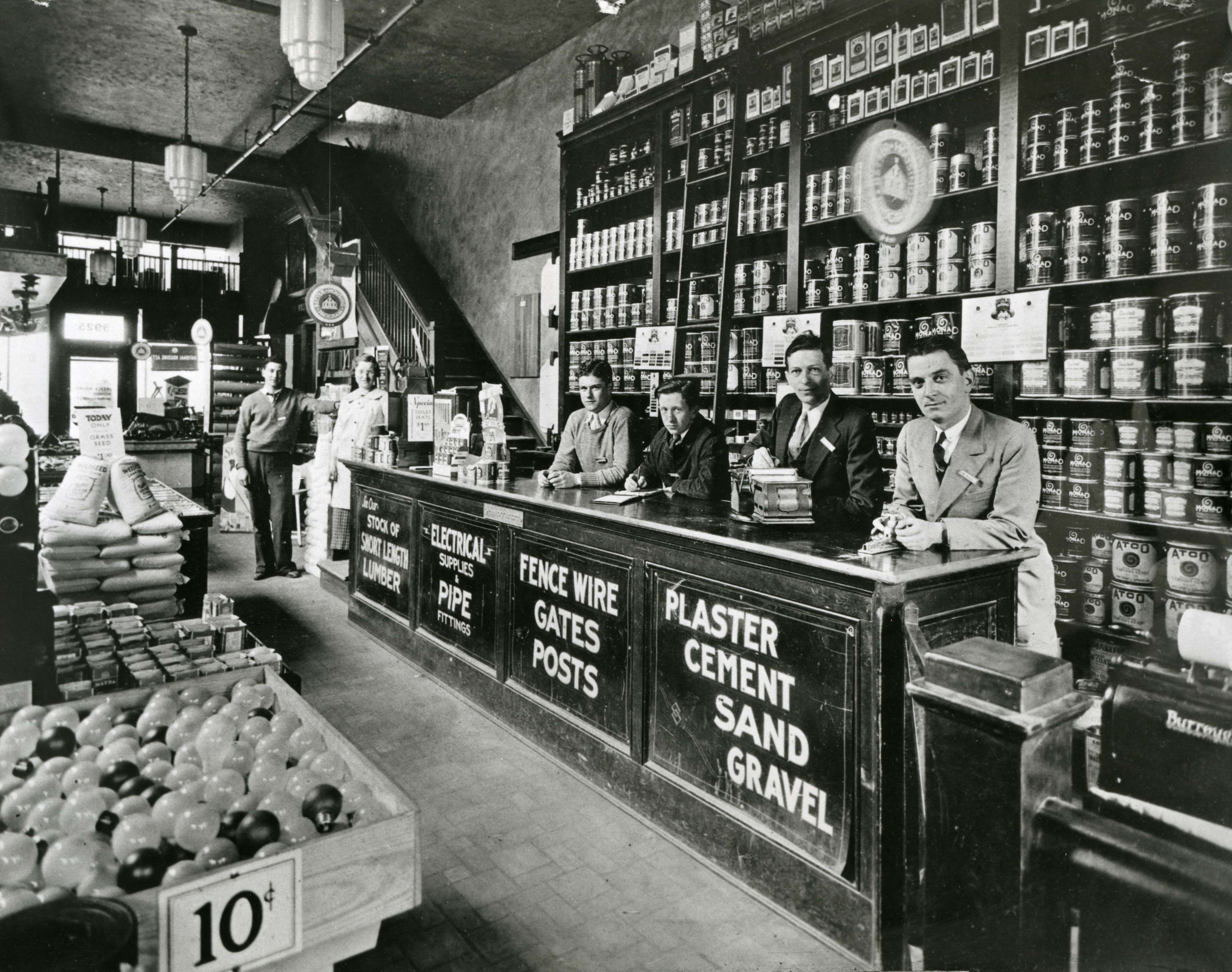
In 1924, Sidney made the call that pretty much every business-school case study about Hechinger circles back to. He decided the company would stop selling to professional contractors entirely. Retail customers only. The do-it-yourself crowd, before anyone called them that. The phrase “home improvement industry” did not yet exist. Sidney saw the customer the industry would eventually be built around, and he turned the company toward them while every other lumber and hardware operator in Washington was still chasing builder accounts.
He was also a relentless advertiser. He filled the newspapers with discount ads, and as early as the 1920s Hechinger was hammering on the price angle that big-box retail would canonize sixty years later. As one ad explained the company’s buying model:
We learned that manufacturers with large surplus stocks would gladly sell them at bargain prices if we would pay cash and buy in immense quantities.
By 1930, demolitions were a small sideline. The company needed a real headquarters. It moved out of the old Camp Meigs site (which a group of vendors from the old Center Market downtown took over as the new Union Market) and into a sprawling new complex at the starburst intersection of Maryland Avenue, Florida Avenue, and H Street NE. Offices, retail store, lumber warehouses, an open stockyard, all of it served by a B&O rail spur. The cornerstone for the new building was laid on March 15, 1930. That complex stayed the Hechinger headquarters for almost half a century, until the company moved to Landover, Maryland in the late 1970s and redeveloped the H Street site as Hechinger Mall.
The Lucky Seventh: Tenleytown, 1958
Sidney turned over operational control of the company in 1953, taking on his son John W. Hechinger and his son-in-law Richard England as partners and selling a third interest to each of them. The company had five stores at the time. John focused on real estate and development. Richard focused on merchandising. Together they turned a regional family business into a national category leader.
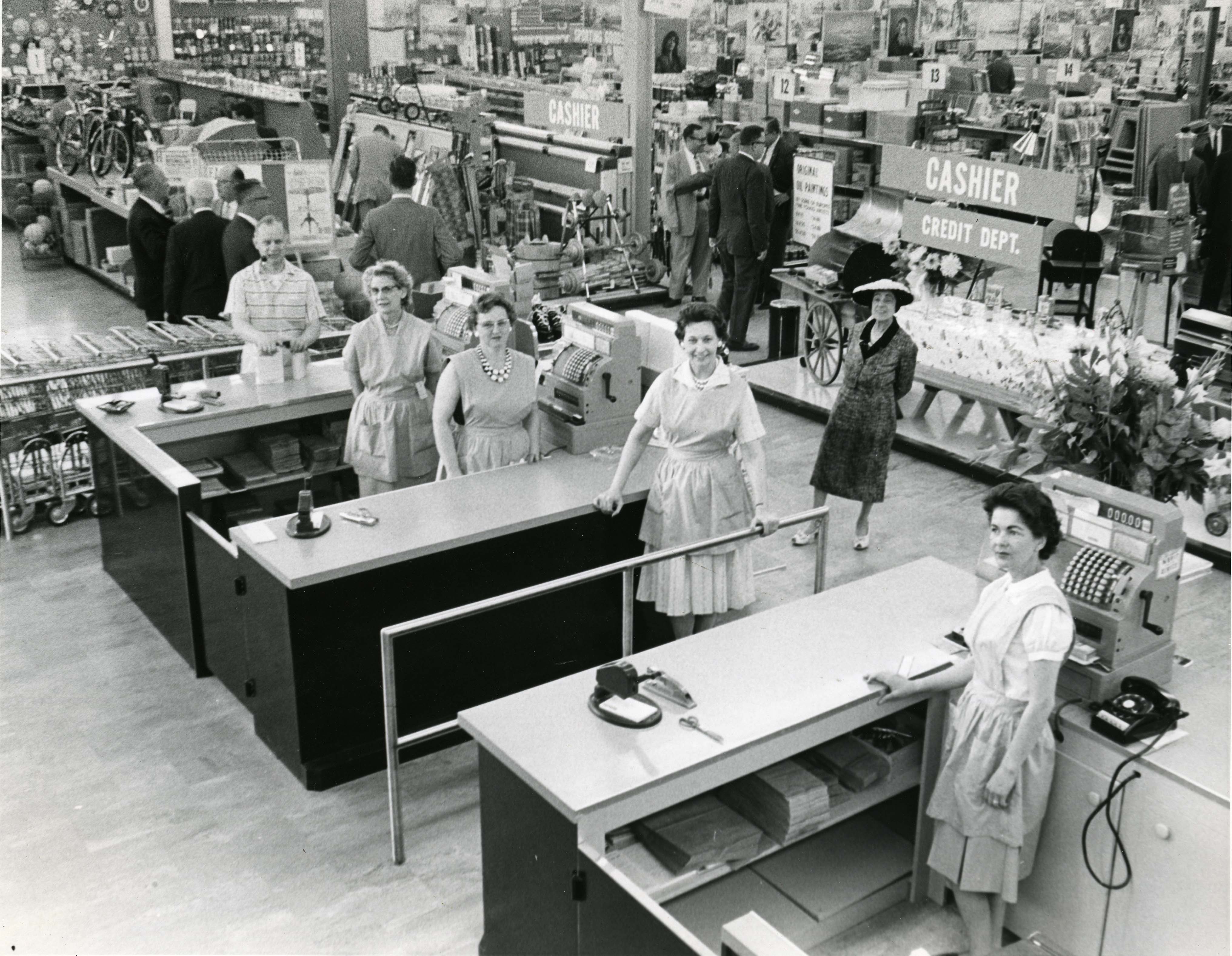
On March 24, 1958, what Sidney called the “lucky seventh” store opened at 4555 Wisconsin Avenue NW in Tenleytown, in a converted Giant Food building with rooftop parking that mirrored the Sears store across the street. Hechinger gutted the supermarket and turned it into a hardware warehouse in the modern sense: garden plants and housewares and unfinished furniture next to the lumber and hardware, with shopping carts running the aisles and a row of cash registers stationed up front like a grocery checkout. Customers picked their own goods off the shelves. Nobody else was doing that in 1958. A Hechinger family tradition replaced the conventional ribbon cutting with a lumber-cutting ceremony, and John Hechinger told the press the store would be the first of many. He meant it.
The World’s Most Unusual Lumber Yard
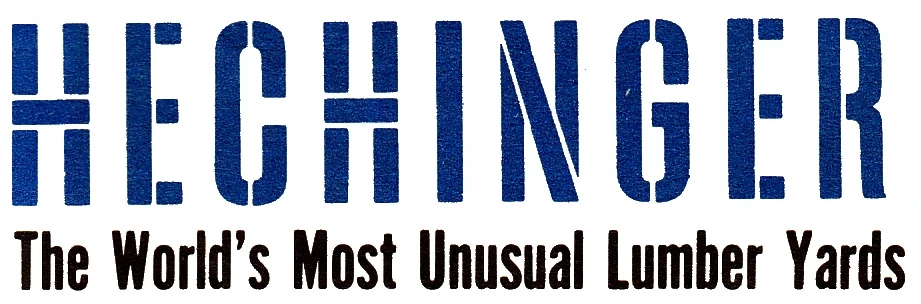
In 1959, the year after the Tenleytown opening, Hechinger commissioned a new logo. The job went to Brownjohn, Chermayeff & Geismar, a young New York studio that would within a few years redraw the corporate identities of Chase Manhattan, Mobil, and PBS. The Hechinger mark they delivered was a deep navy geometric “H” with a hardware bite to it, paired in print with the slogan the company carried for the rest of its life: The World’s Most Unusual Lumber Yard. It was branding work that, by the standards of a regional hardware chain in 1959, was wildly out of proportion to the company’s size. It also worked. Generations of Washington children grew up recognizing that H from a block away.
And the stores kept coming. Through the 1960s, 70s, and 80s the chain spread across DC, Maryland, Virginia, and into Pennsylvania. In 1972 the company went public with an offering of 400,000 shares, with John Hechinger and Richard England at the helm of what was then a ten-store operation. The cash from the offering paid for more stores, faster. By 1981 the chain ran twenty-nine stores and was pushing out of the Mid-Atlantic. Richard England gave the New York Times the line that summarized the whole strategy:
We’re catering exclusively to the do-it-yourselfer.
Richard England, New York Times, April 13, 1981
The paper noted, with a dryness particular to the Times business desk, that Hechinger had “ridden the crest of the wave of do-it-yourself home improvement.” It had. In 1984 alone the company opened seven new stores. By 1986, John Hechinger Jr. was named president of a 54-store chain. By 1989, it had 125.
What Happened to Hechinger?
The same thing that happened to Woodward & Lothrop and Garfinckel’s and Peoples Drug. A bigger, leaner, out-of-town operator showed up.
Home Depot opened its first Atlanta stores in 1979 and arrived in the Washington market in the early 1990s with a warehouse format engineered for volume on a scale Hechinger had never operated at. Lowe’s came in behind it. By 1992 Hechinger was losing money. Management tried everything. They bought the old Sears across Wisconsin Avenue from the original Tenleytown store, six times the floor space, and reopened it as a “Home Project Center” with interior designers on the floor. They acquired a separate big-box brand, Home Quarters Warehouse, and ran it as a parallel chain. In January 1995 they announced closing or reformatting 22 of 131 stores. None of it worked.
The Hechinger family sold their majority stake in September 1997, to a Los Angeles investment firm called Leonard Green & Partners, at $2.375 a share, around $100 million for the whole company. The new owners tried to merge Hechinger with Builders Square, which Leonard Green had just bought from Kmart for $10 million. That did not work either. On June 11, 1999, the combined company filed for Chapter 11 bankruptcy protection. The reorganization failed within months, and in September 1999 the assets were liquidated. The 117 remaining stores closed. Home Depot bought some of the leases and reopened the buildings under its own banner. Most stayed empty.
Who Was Sidney Hechinger, and What About His Son?
Sidney L. Hechinger died on July 11, 1958, four months after the Tenleytown store opened. He was seventy-three. The Evening Star ran his obituary the next day under the headline “Sidney L. Hechinger, Hardware Man, Dies.” His son John kept building the company for another four decades. John Hechinger Sr. is also remembered for something other than hardware. In 1967, President Lyndon Johnson named him the first appointed chairman of the DC City Council, the body that ran the District in the years before home rule. John pushed hard for an elected city government from inside that appointed body, and when home rule finally arrived in 1974 he was one of the figures it owed. He died in 2004 at age 84. The Washington Post obituary led with the council chairmanship, not the stores.
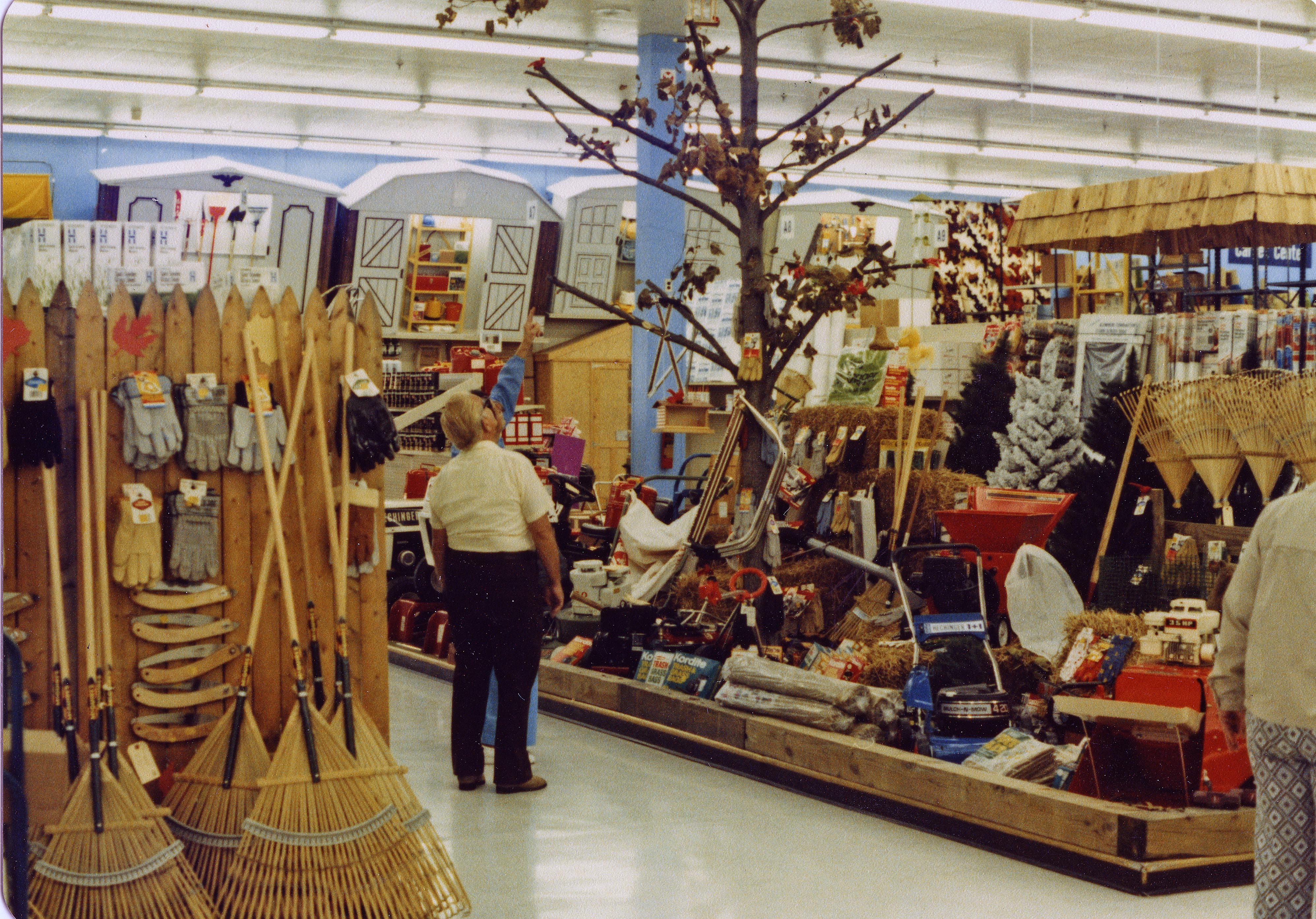
The Hechinger name still lives on a building. The 1930s headquarters complex at the Maryland-Florida-H Street starburst is now Hechinger Mall, redeveloped from the original lumberyard site. The blue H signs are gone from Wisconsin Avenue and Falls Church and Annapolis and everywhere else they used to glow. If you grew up in Washington in the seventies or eighties, you know exactly what the inside of a Hechinger smelled like, and you know there is nowhere left in the city that smells like that anymore.