
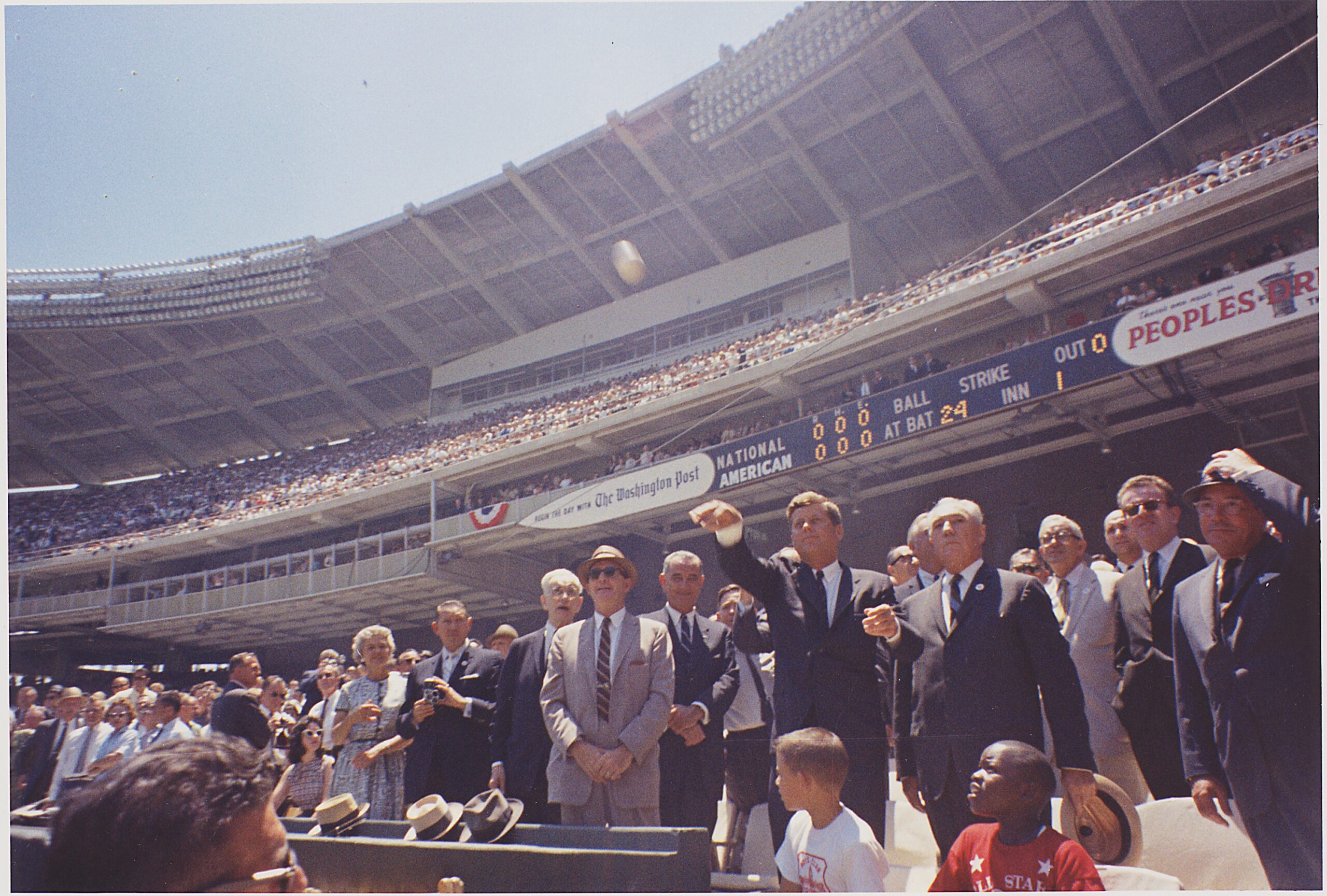
It’s July 10, 1962. A Tuesday. President Kennedy stands in his box at D.C. Stadium and throws the ceremonial first pitch of the 32nd Major League Baseball All-Star Game. Forty-five thousand four hundred and eighty people are watching.
Lyndon Johnson is in the box with him. Speaker of the House John McCormack is there. Commissioner Ford Frick is one seat over.
Kennedy has about sixteen months to live.
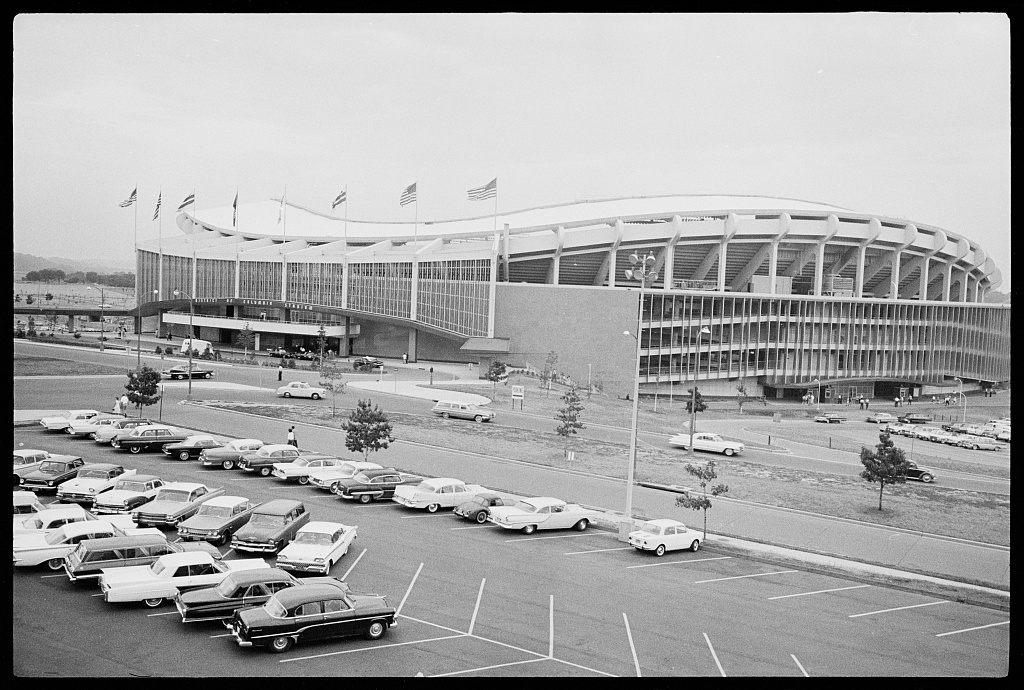
The Stadium Was Still New
D.C. Stadium had opened only nine months earlier, on October 1, 1961, when the Redskins lost to the Giants 24-21 in front of 36,767 fans. Less than a year into the stadium’s existence, Washington had the All-Star Game.
That was a real coup. The city hadn’t hosted an All-Star Game since 1956, when the last one in town was played at creaky old Griffith Stadium. You can see color photos from the 1956 game that show just how different the old ballpark felt. By 1960 Griffith was on borrowed time, and the push for a new multi-purpose stadium had finally gotten over the line.
D.C. Stadium was a prototype for what sports architects would later call the “cookie-cutter”: the same round multi-purpose bowl design that Pittsburgh, Cincinnati, and Philadelphia would copy a few years later. In 1961 and 1962, though, the design was new and it was supposed to be exciting.
A cantilevered upper deck with no view-obstructing columns. A distinctive undulating roof. Twenty-two-inch-wide seats, which was generous for the era. George Dahl was the lead architect. Construction ran about $24 million.
The first baseball game ever played there was Opening Day 1962. Kennedy threw out the first pitch at that one too.
JFK Couldn’t Stay Away from a Ballgame
Kennedy attended just four MLB games during his entire presidency, and all four were in Washington. He was a lifelong Red Sox fan who never attended a Red Sox game as president.
Only one other sitting president had ever thrown out an All-Star Game first pitch: FDR, at the 1937 All-Star Game at Griffith Stadium. Both times it was in Washington.
On April 10, 1961, he threw the first pitch at the last Opening Day ever played at Griffith Stadium, watching the expansion Senators lose 4-3 to the White Sox in their inaugural game. Jungle Jim Rivera of the White Sox caught the pitch.
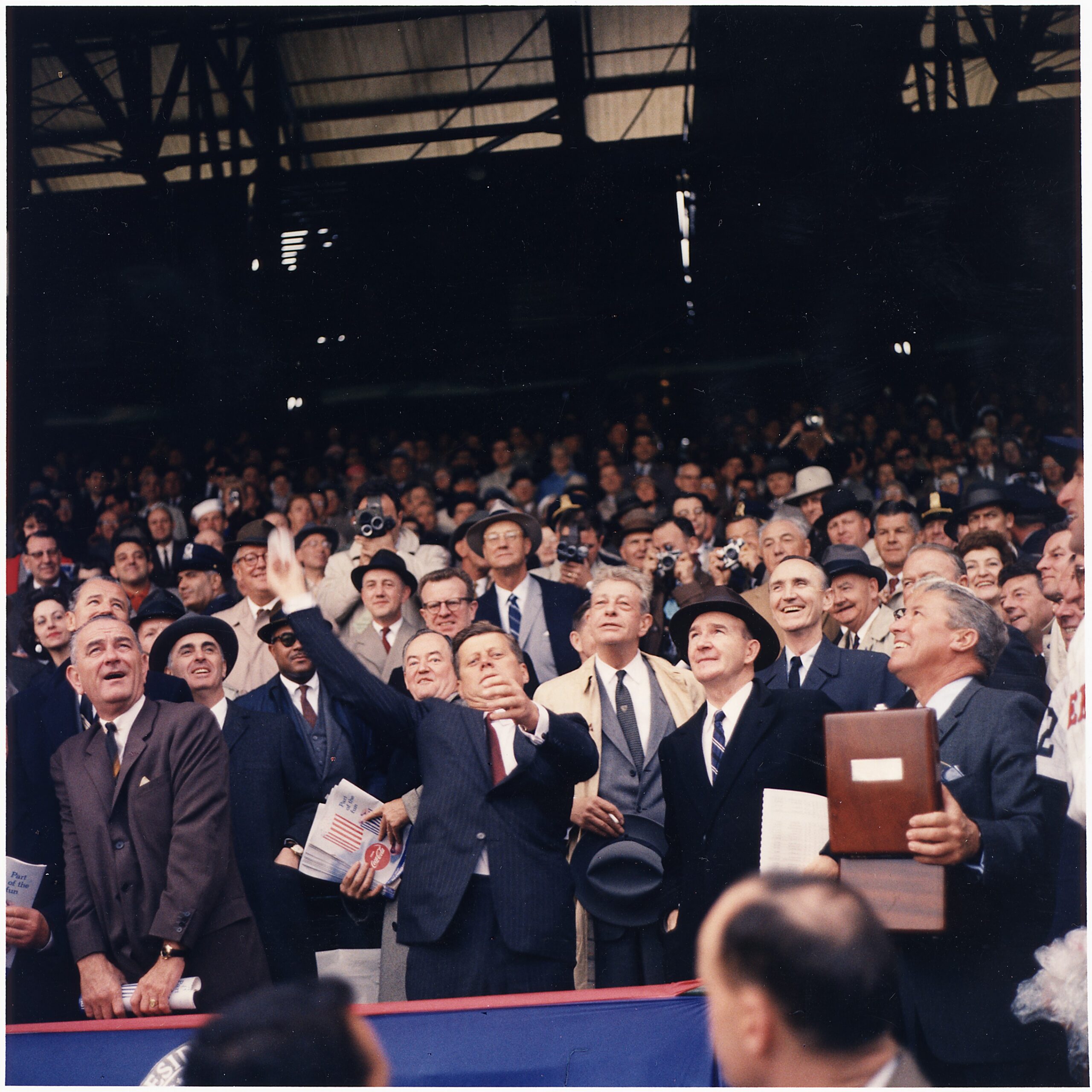
On April 9, 1962, Kennedy was back. This time it was the first MLB game ever played at brand-new D.C. Stadium. A twenty-two-minute rain delay held up play. The Senators beat Detroit 4-1 in front of 44,383, and expansion Senators shortstop Bob Johnson hit the stadium’s first home run: a two-run shot to left in the fourth inning, over Rocky Colavito’s head.
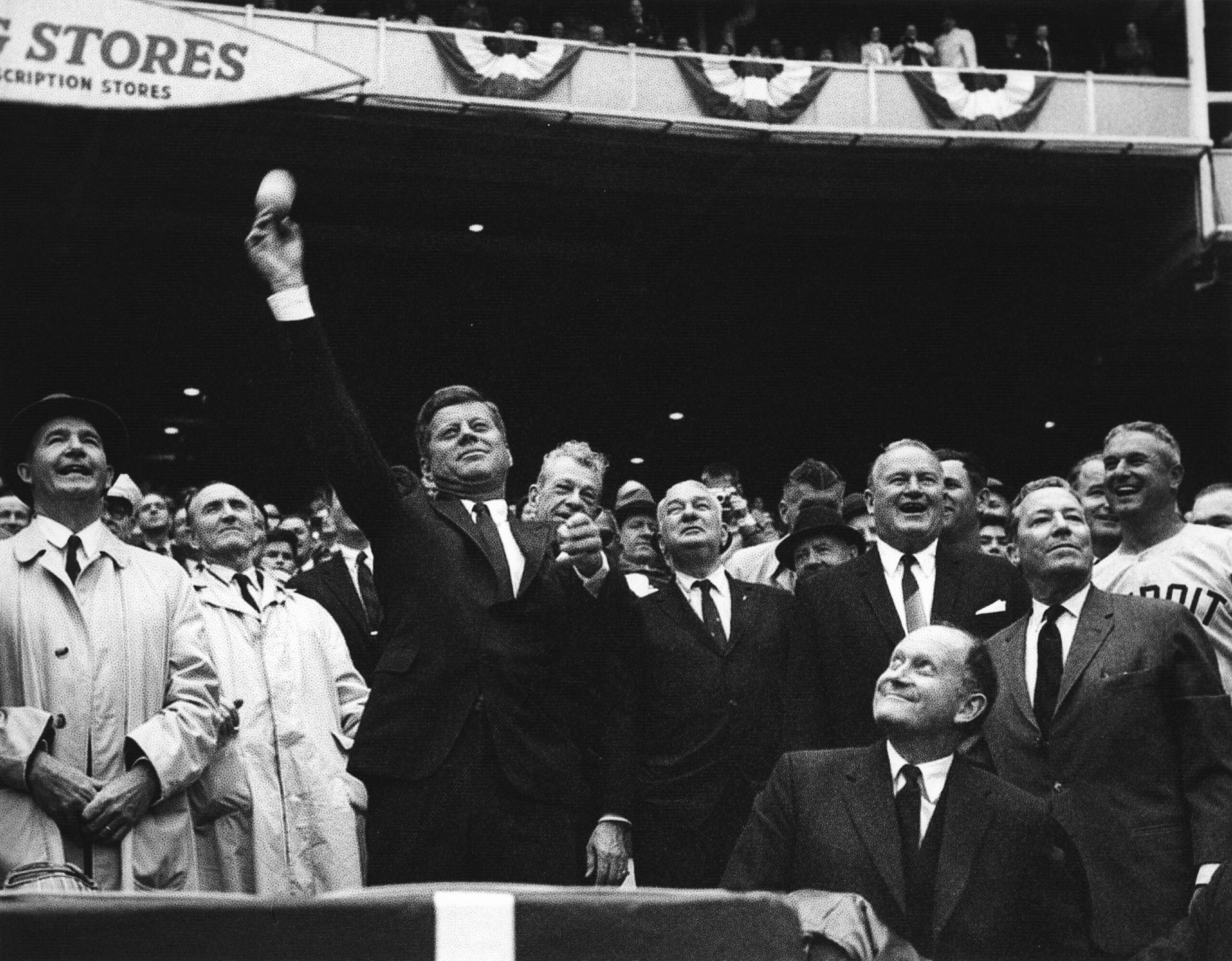
Three months later Kennedy was back again for the All-Star Game.
His longtime aide Dave Powers was at all of them. Powers was a Charlestown kid and a baseball savant, the man the Kennedy White House informally called the “Undersecretary of Baseball.”
Cecil Stoughton, the White House photographer, shot the All-Star Game. Abbie Rowe had shot the 1962 Opening Day. Robert Knudsen was there for the 1961 opener.
Eighteen Future Hall of Famers
Eighteen future Hall of Famers were in uniform that day. The National League had Willie Mays, Roberto Clemente, Stan Musial, Hank Aaron, Orlando Cepeda, Bill Mazeroski, Ernie Banks, Richie Ashburn, Don Drysdale, Juan Marichal, Bob Gibson, Sandy Koufax, and Warren Spahn. The American League countered with Mickey Mantle, Brooks Robinson, Luis Aparicio, Nellie Fox, and Jim Bunning.
This was the first of two All-Star Games that year. From 1959 through 1962, Major League Baseball played two per season. The second 1962 game was at Wrigley Field on July 30. Nobody remembers the second one. The D.C. one is the one that stuck.
The Game
Don Drysdale started for the National League. Jim Bunning started for the American League. Neither gave up a run. Drysdale went three innings, allowed one hit, struck out three. Bunning went three innings, allowed one hit, struck out two.
The game sat scoreless through five.
Camilo Pascual of the Minnesota Twins took the mound for the AL in the sixth. Stan Musial pinch-hit for Juan Marichal to lead off, and Musial was forty-one years old and in his twenty-first major-league season. He lined a single to right.
A forty-one-year-old.
Manager Fred Hutchinson sent in Maury Wills to pinch-run. Wills stole second during Dick Groat’s at-bat. Groat then singled to center and Wills scored from second.
The NL kept hitting. Clemente singled. Mays flew out deep to center and pushed Groat to third. Orlando Cepeda grounded out to third, Groat walked home, and that was 2-0. Roger Maris drove in the AL’s only run of the day with a sacrifice fly in the bottom of the sixth.
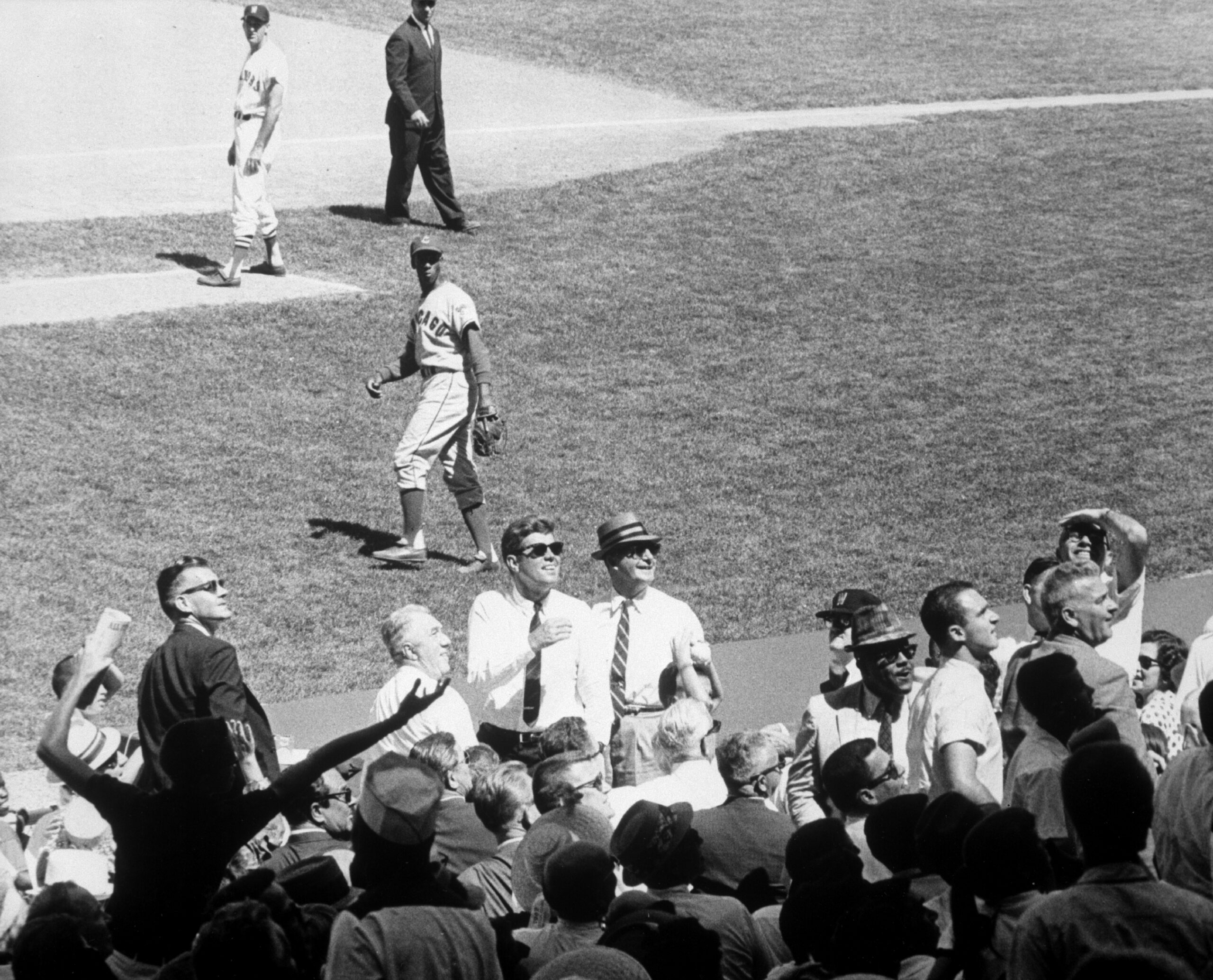
In the eighth, Wills did it again. He singled off Dick Donovan. Jim Davenport singled to left and Wills motored from first to third when the AL tried to throw him out at second. Felipe Alou lifted a sacrifice fly to foul territory in right. Wills scored.
Willie Mays made two catches the writers couldn’t stop talking about afterward. Juan Marichal got the win in relief. Bob Shaw closed the ninth with a save. Time of game: 2:23. Final score: NL 3, AL 1.
Nobody hit a home run. In an All-Star Game with Mays, Aaron, Mantle, Maris, and Musial in the batter’s box, nobody went deep.
Maury Wills took home the first-ever All-Star Game MVP award. Major League Baseball had created the Arch Ward Trophy that year, and Wills was the first name engraved on it. He was also a DC kid. He’d been born in Washington and raised in the Parkside public housing projects off Kenilworth Avenue in Northeast.
Kennedy stayed through the eighth. He had a meeting with Prince Tiao Khampan, the Laotian ambassador, scheduled for the afternoon. He moved it. The full SABR game account is worth reading if you want the inning-by-inning.
The Aftermath
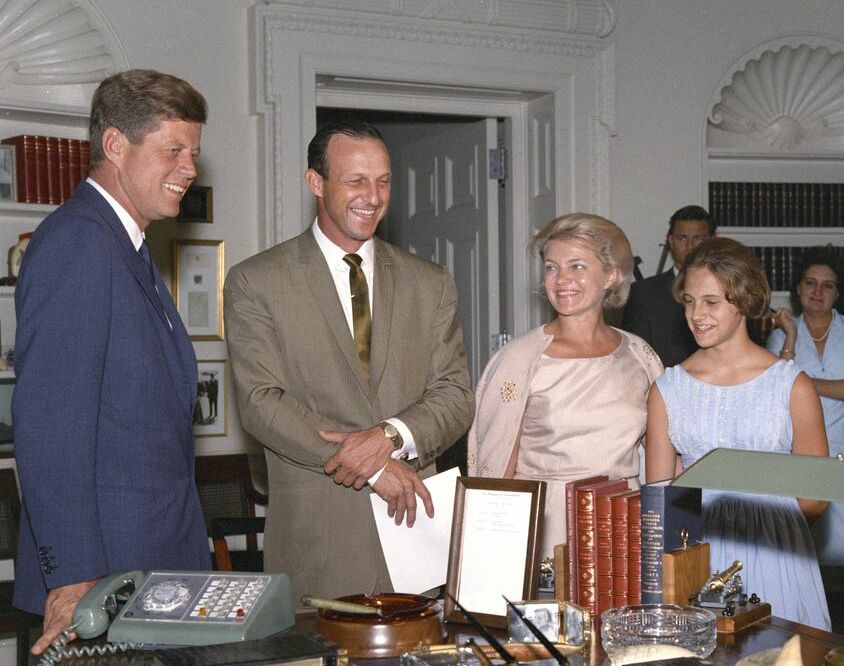
The day after the game, Kennedy hosted Stan Musial in the Oval Office along with Musial’s wife Lillian and their daughter Janet. Robert Knudsen shot the photos. Musial had played in his first All-Star Game in 1943, the year Kennedy was commanding PT-109 in the Solomon Islands.
The expansion Senators finished the 1962 season 60-101. They would never be good. Owner Bob Short moved the team to Arlington, Texas, after the 1971 season, where they became the Rangers. Baseball did not return to the stadium for sixteen years, and when it did, it was for one exhibition game.
In January 1969, Interior Secretary Stewart Udall announced that D.C. Stadium would become Robert F. Kennedy Memorial Stadium. Robert Kennedy had been assassinated seven months earlier. The formal dedication came on June 7, 1969.
The DC Council approved the Commanders’ new stadium deal in September 2025. RFK has been coming down through the last year. Demolition is nearly finished.
What’s Left
What’s left is the photograph. Kennedy at the mound. The mid-throw arm, the dark suit, LBJ in frame, McCormack in the frame, Frick watching the ball. A full house behind them.
The newest thing in town, captured on the best day of its life.