
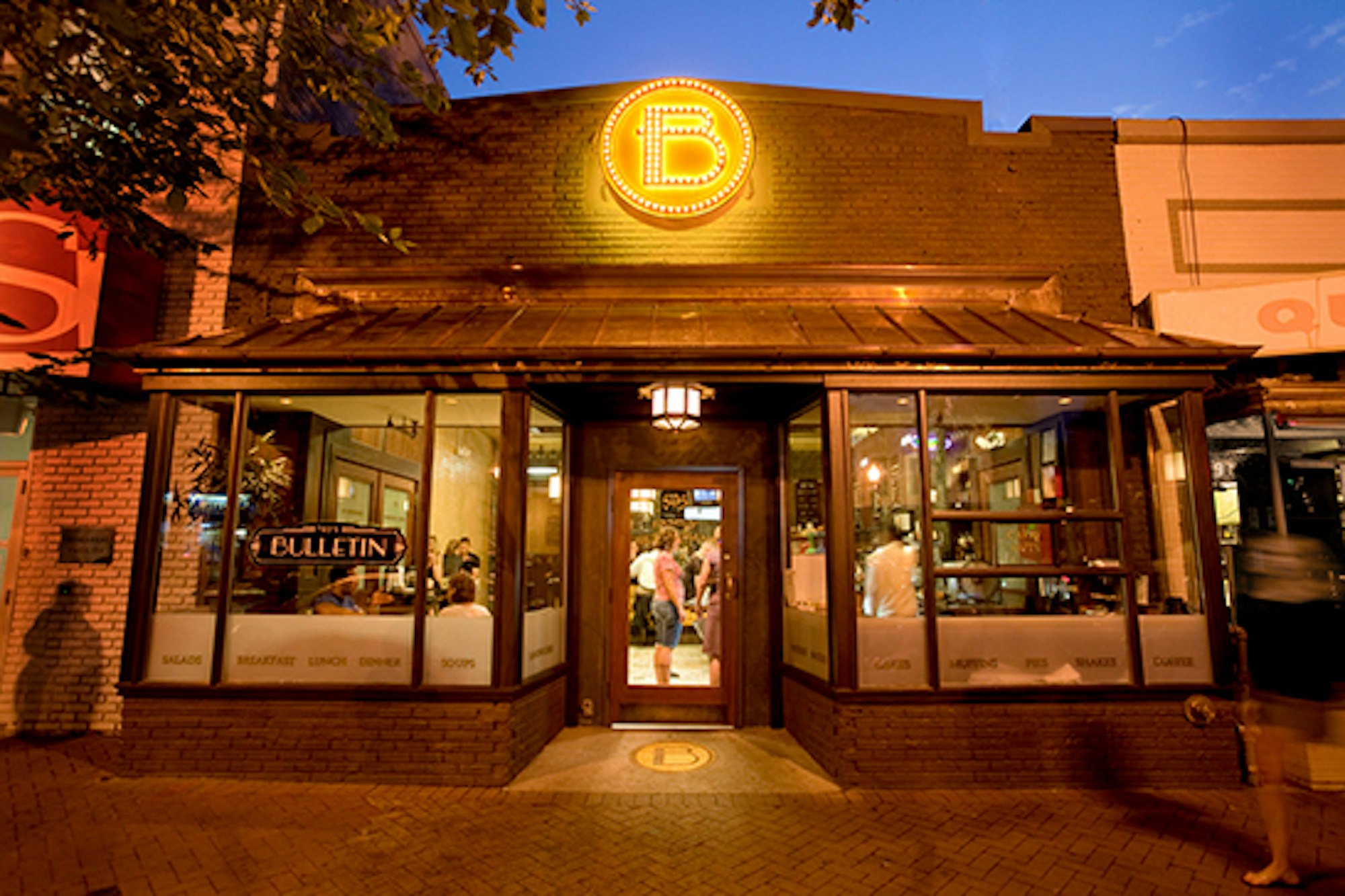
The one-story brick at 505 8th Street SE on Barracks Row was built in July 1928 for a real-estate man named Joseph Shapiro. The building permit was filed for $10,000. Nearly a century later, the same single-story shop is Ted’s Bulletin, the homemade-pop-tart diner that helped redefine Capitol Hill brunch.
This is its history, in three tenants. A 1928 builder. A locksmith who held the corner for half a century. And the all-day-breakfast operation that took over in 2010 and grew into eight locations across the DMV.
The 1928 Brick Store
A building permit for 505 8th St. SE turned up in the July 8th, 1928 edition of the Washington Post. Joseph Shapiro Co. was approved to erect a one-story brick store at an approximate cost of $10,000.
Shapiro had started his real estate company on October 24th, 1919. Seven years later, the Post ran a short anniversary item about him.
Today marks the seventh anniversary of the Joseph Shapiro Co.’s entry into the real estate field. Starting in 1919 with a small office at 914 New York avenue northwest, this company opened general real estate offices, and two years later opened tehir [sic] building department, their first operation being a group of houses on Crittenden street, between Eighth and Ninth streets northwest.
Today the company occupies the first and second floors of the Edmunds building, 919 Fifteenth street northwest, and have to their record the erection of hundreds of homes in the northeast and northwest sections of the city and a large number of apartment buildings.
Shapiro was originally from Russia. As a Jewish family under late Czarist rule, the Shapiros emigrated to America in 1914.
By 1930, the U.S. Census listed him living in a home he owned at 4411 16th St. NW, valued at $50,000. He was 60 years old, married for 25 years to his wife Mary, and very much living the American success story.

His son Jacob, then president of the family business, did not have the same clean run. In 1930 Jacob Shapiro was indicted on six counts of false pretenses and fraud in real estate transactions. He was accused of selling property with “hidden trusts” that he allegedly knew about, and he was under investigation by the Senate Committee on the District of Columbia.
The case was poorly prosecuted. Jacob was acquitted by a jury in late 1930 and continued running the firm with his brother Maurice. In 1940 the brothers shared an address at 1748 Hobart St. NW.
District Lock and Hardware (1946 to 2008)
If you lived on Capitol Hill before the late 2000s, 505 8th Street SE was a hardware store. Long-time residents will remember District Lock and Hardware, which claimed to stock the largest supply of locks, keys and security devices in the D.C. metro area. Hard to verify, harder to disprove.
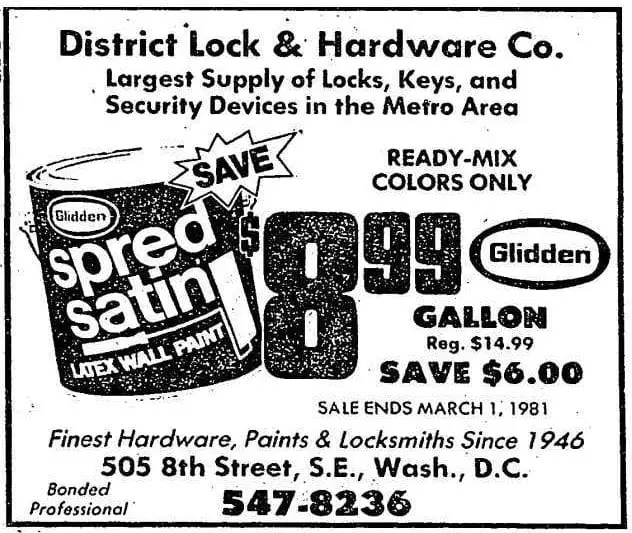
Harry J. Kroll opened the original District Lock and Hardware on the 700 block of 8th Street SE in 1946. By the mid-1950s the shop had moved one block north to 505 8th Street SE, the Shapiro building. It stayed there for over 50 years.
Kroll ran the store for 48 years before selling it to Michael Horwat in 1994. Horwat ran it with Steven Harrell. A Washington Post article on May 13th, 2003 about old-school hardware stores in the District captured the shop in its later years.
District Lock and Hardware, on Eighth Street SE, is chockablock [sic] with inventory, including windshield snow brushes, signs saying “I’m Proud to be an American,” and $40 snowmobile gloves beloved by policemen for their warmth.
Realtor Stan Bissey, waiting to have a key made, recently moved to Potomac after living on Capitol Hill since 1969. “I still do all my business here,” he said. “They have everything you need. And, they actually wait on you.”
District Lock was started in 1946 by Harry Kroll, who sold it to Horwat in 1994. “This is an old-fashioned hardware store,” said Horwat, 58, who now owns the store with Steven Harrell. “We do a lot of key-cutting, a lot of custom-made things, opening bike locks.” But the store also specializes in security systems and makes house calls to fix problems. “You’d be surprised at the number of old women that are helpless out there,” Horwat said. “They’re living alone in a house and in their eighties. We get a lot of that.”
The end of District Lock came fast. In August 2008, the D.C. Office of Tax and Revenue padlocked the door over roughly $975,000 in disputed back sales taxes. After interim negotiations fell apart, the store was auctioned in October 2008. Washington City Paper’s full account of how it unraveled is worth reading. The brief version: the business manager’s undisclosed depression, missed sales-tax filings, an IRS hold on the company bank account, and a city collections officer who would not negotiate below $50,000.
Harry Kroll outlived his old store. He passed away in 2012, having retired to Falls Church. The locksmith trade he started on 8th Street SE survives in a different form today as The New District Lock and Hardware, a mobile locksmith operation still working the same Capitol Hill blocks.
Ted’s Bulletin Opens, May 2010
505 8th Street SE sat empty for about eighteen months. In May 2010, Ted’s Bulletin opened in the old hardware shop as the second project from Matchbox Food Group, the team behind the Matchbox pizza chain.
The “Ted” is Ted Neal, a former World War II Navy sailor who returned home to Huntington, West Virginia after the war and planted a garden big enough to feed neighbors and visitors. Lore says he saw food as the way you brought people together. His sons Mark and Ty Neal, with Matchbox Food Group co-founder Drew Kim, built the diner in his honor and named the signature breakfast plate, “The Big Mark,” after one of themselves.
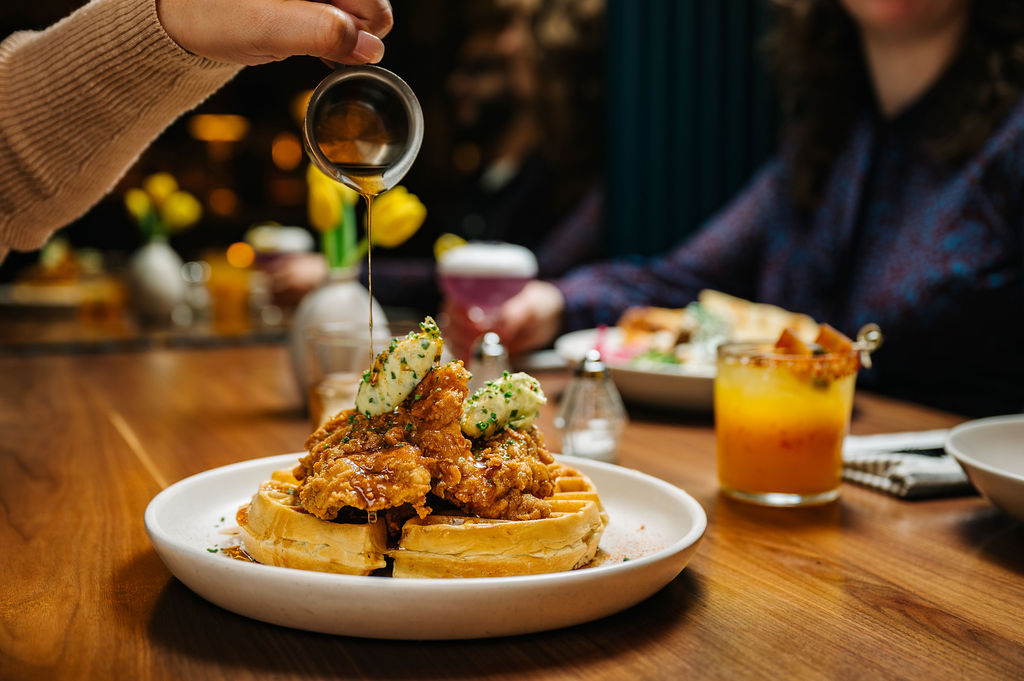
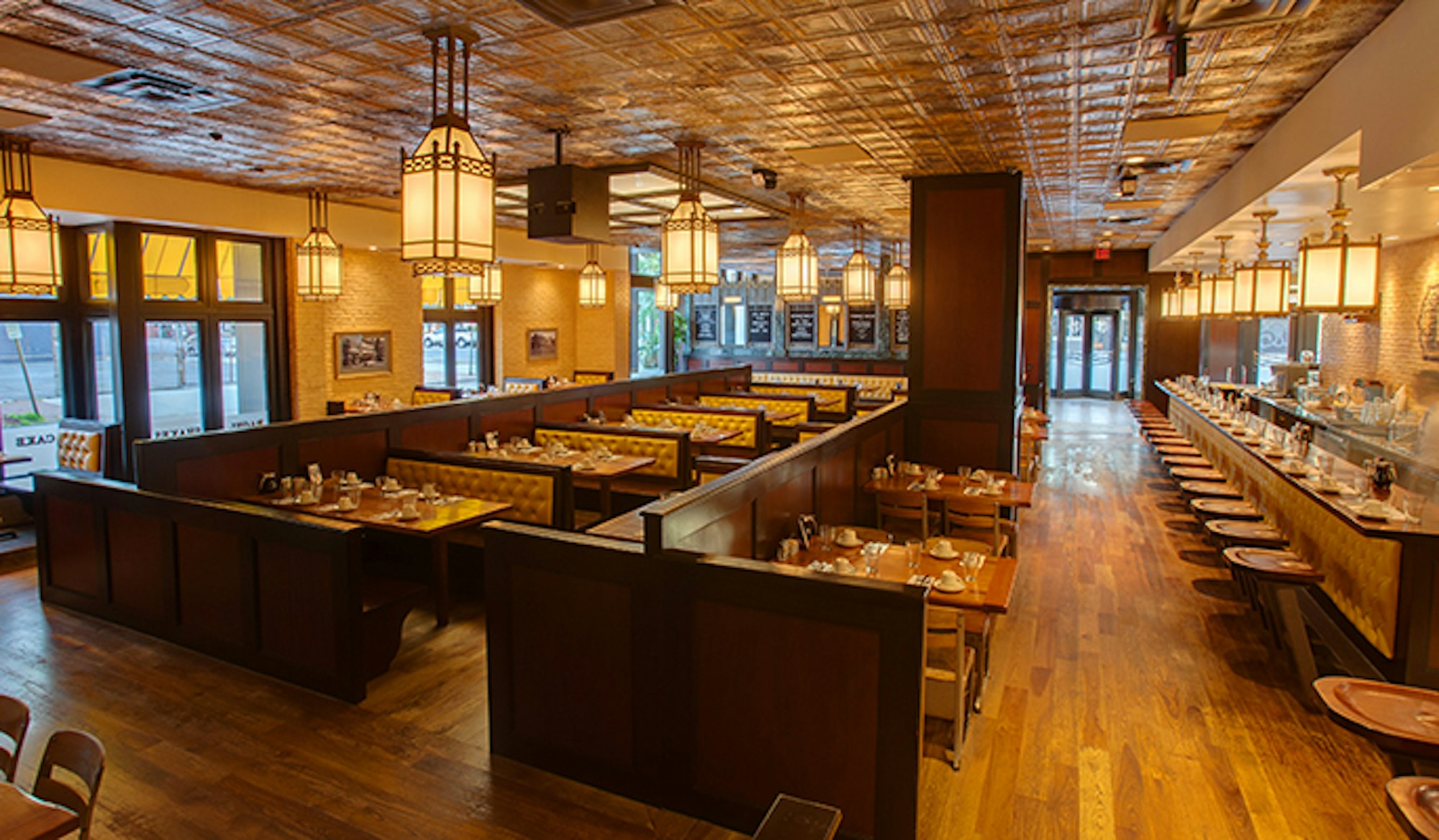
The look is intentional throwback. Distressed wood stools at a soda-and-shake bar, Art Deco fixtures, tin ceiling, wood wainscoting, “I Love Lucy” stills on the walls. The menu is upscale-diner: homemade tomato soup and grilled cheese, country-fried steak, meatloaf, crab cake Benedict, and the items the brand became famous for: Ted’s Tarts (they cannot call them Pop-Tarts because Kellogg’s owns the trademark) and the long list of grown-up Boozy Shakes.
The Capitol Hill location got famous fast. President Obama dropped in for lunch with campaign volunteers in August 2011. Nationals outfielder Bryce Harper named it one of his favorite spots in town in a 2012 Washington Post interview. The roughly 2,500-square-foot original room was small enough that you noticed when somebody famous walked in.
How Ted’s Bulletin Grew After 2012
By the time we first wrote about the Capitol Hill location in 2012, Matchbox Food Group was already planning to grow the brand. A 14th Street NW location opened at 1818 14th St NW shortly after, then Reston Town Center, Merrifield, Gaithersburg’s Downtown Crown, and Arlington’s Ballston Quarter.
Matchbox Food Group sold the brand on October 31, 2017, announced the following week. The buyer was Steve Salis, the co-founder of &pizza and then-owner of Kramerbooks & Afterwords. Salis acquired all five locations at the time through Salis Holdings, with backing from JPB Capital Partners. He told the Washingtonian that the brand had been “neglected for some period of time” and “lost some of its spirit,” and that he wanted to grow it past D.C.
As of 2026, Ted’s Bulletin operates eight locations across the DMV: Capitol Hill (the original at 505 8th St SE), 14th Street, NoMa, Ballston, Reston, Merrifield, Gaithersburg’s Downtown Crown, and One Loudoun in Ashburn. A ninth, at Carlyle Crossing in Alexandria, is announced as coming soon.
The Capitol Hill room itself has not changed much. The tin ceiling Joseph Shapiro probably never specified in 1928 is still up there. The hardware store smell is long gone. In its place are Ted’s Tarts coming out of the bakery and Boozy Shakes coming off the bar, in the same single-story brick shell that has had only three serious tenants in almost a hundred years.
Brown’s is the epitome of a great “mom and pop” local hardware store. I’ve gone there at least a half dozen times for items that they ended up telling me I didn’t need to buy and selling me something 1/10th the price instead.