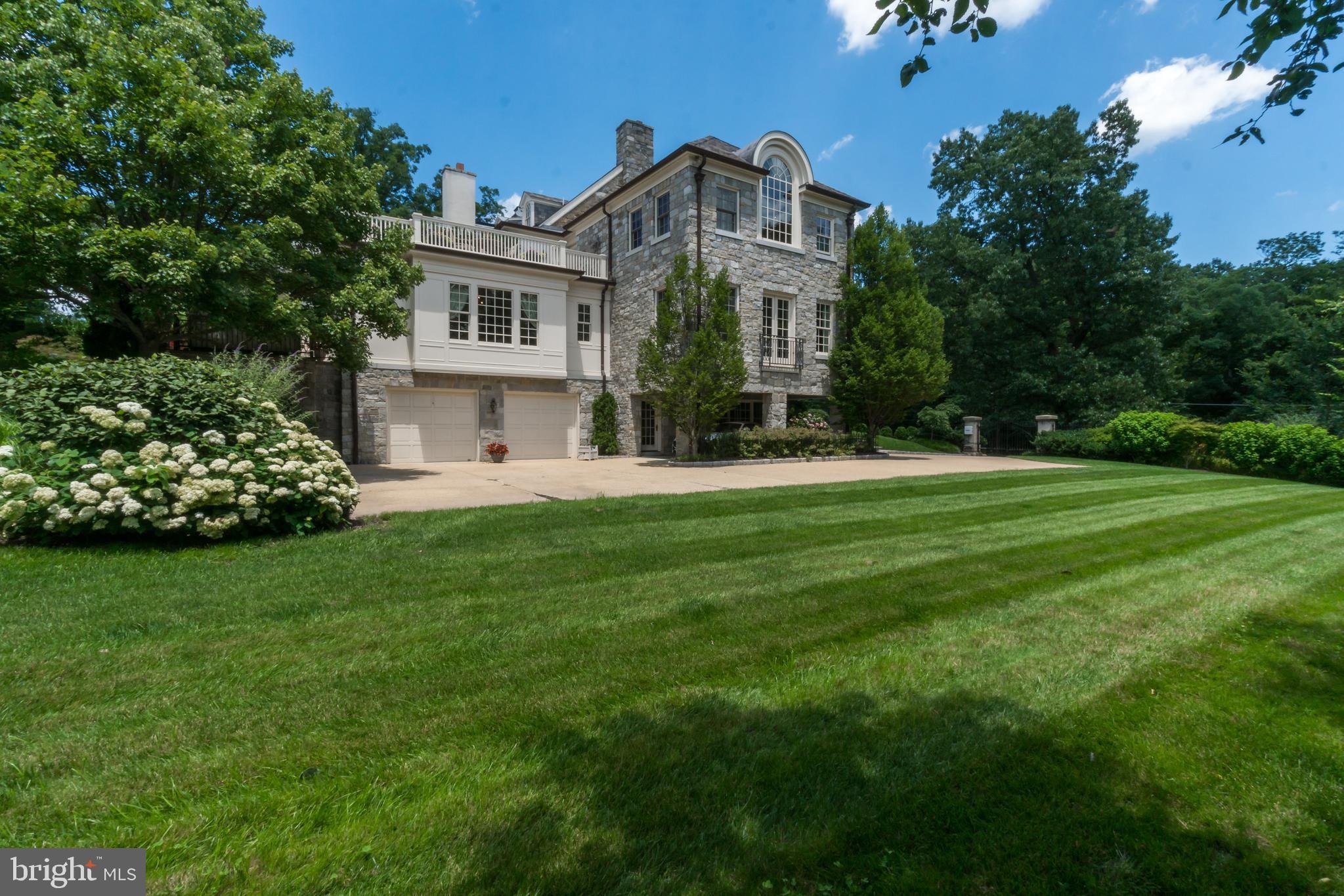
When you stand on the 5300 block of 27th Street NW in Chevy Chase DC, there is nothing that screams history at you. This is a quiet residential block at the western edge of the city, where the houses back up directly against the wooded ravines of Rock Creek Park. The neighbors have pools and tennis courts. Someone mows their lawn on Saturday mornings.
But walk to 5320, and the ground shifts. This is “Highpoint,” a 12,000-square-foot stone estate built in 1928 that locals still call the former Tydings Estate. That name should ring a bell.
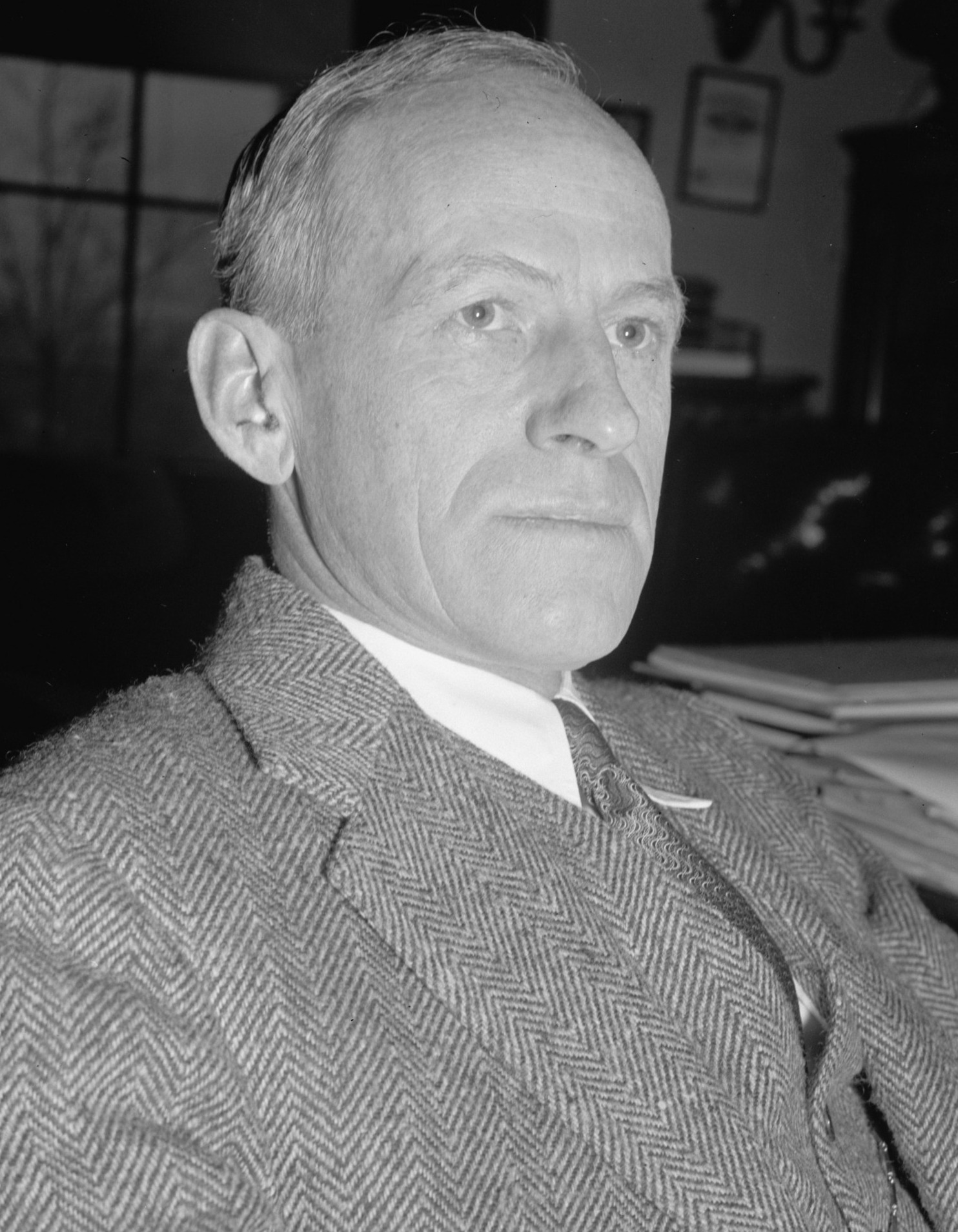
Senator Millard E. Tydings of Maryland is one of the most consequential and most tragic political figures this city ever produced. He was the first major figure in Washington to call Joseph McCarthy a fraud to his face, in public, on the record. He paid for it with his career. And this block was his home for more than two decades.
Where the Tydings money came from
Tydings did not start out rich. He was born in 1890 up the Chesapeake in Havre de Grace, in Harford County, the son of a family of modest means. He trained first as a civil engineer for the Baltimore and Ohio Railroad, then studied law and hung out his shingle back home in 1913.
The law built his first real money. In 1930 he co-founded the Baltimore firm now known simply as Tydings, which still practices today. Add nearly thirty years in the House and Senate, and he was a man of comfortable means and serious connections.
But the fortune behind a place like Highpoint came through marriage. In 1935, at forty-five, the bachelor senator wed Eleanor Davies. Her father, Joseph E. Davies, was one of Washington’s wealthiest corporate lawyers and FDR’s ambassador to Moscow. That same month, Davies himself married Marjorie Merriweather Post, the cereal heiress and the richest woman in America.
Overnight, Tydings was bound to one of the great American fortunes. The two newlywed couples honeymooned together aboard Post’s yacht. That is the kind of money that turns a stone house on 27th Street into the center of Washington social life, which is exactly what Highpoint became.

The senator who defied FDR
Millard Evelyn Tydings came to the Senate in March 1927 representing Maryland, and he would hold his seat for the next twenty-four years. He was a conservative Democrat, a decorated World War I veteran who earned the Distinguished Service Cross and the Army Distinguished Service Medal, and one of the sharpest tongues in Washington. He also had a gift for making powerful enemies.
The first came in 1937, when he broke with President Franklin Roosevelt over the court-packing plan. Roosevelt wanted to add justices to the Supreme Court to get friendlier rulings on New Deal legislation. Tydings called it out for what it was, and Roosevelt was furious.
The president came to Maryland in 1938 and campaigned against his own senator, trying to purge Tydings from the Democratic Party. It did not work. Maryland reelected Tydings with overwhelming support, and the failed purge strengthened him. For a brief moment around 1940, Tydings was even a credible candidate for the Democratic presidential nomination.
But it was his second enemy who would finish him.
The McCarthy committee and the dirty trick
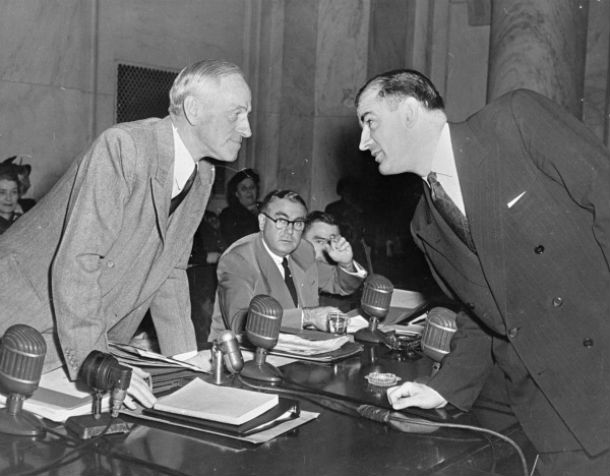
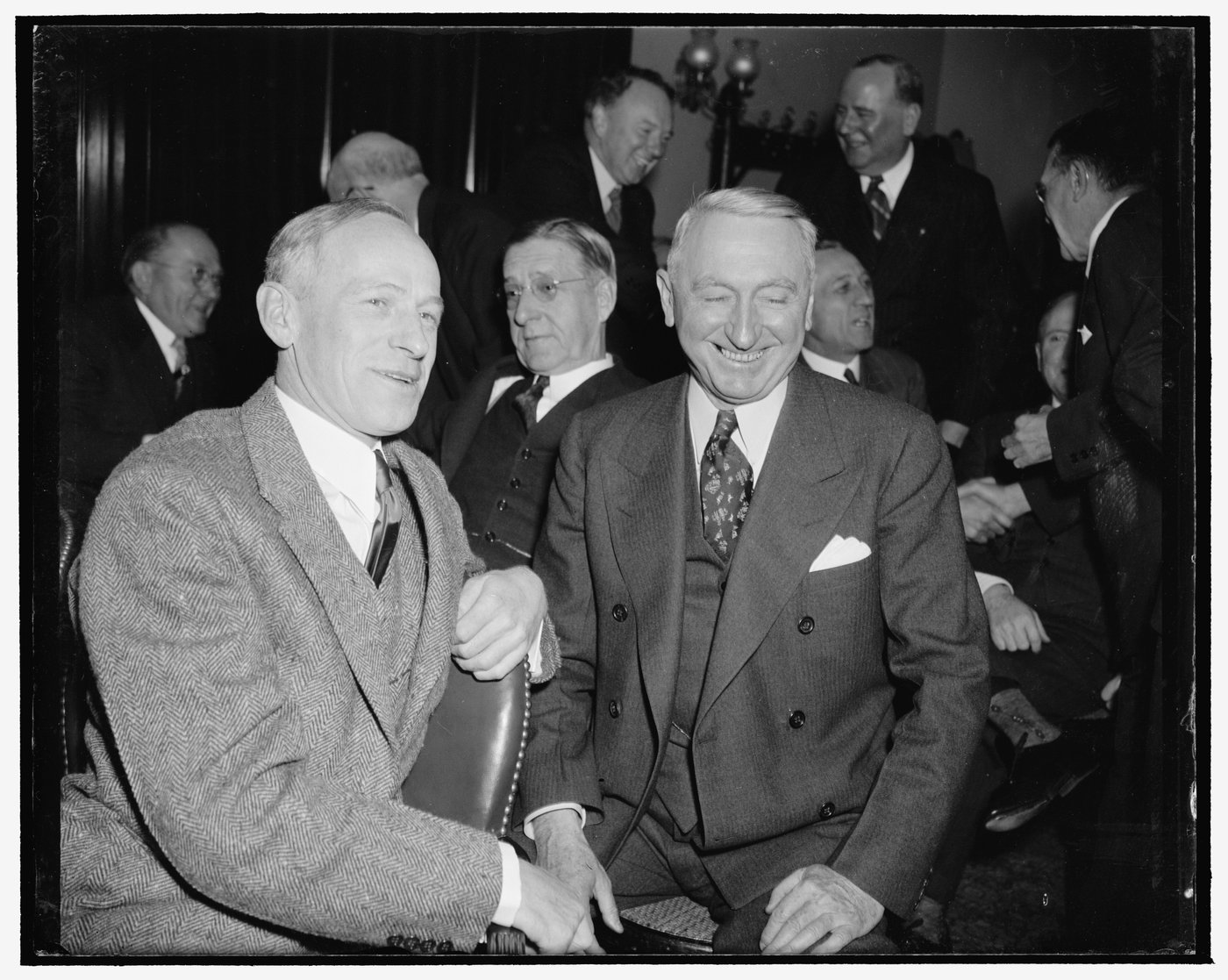
In February 1950 the Senate authorized a Foreign Relations subcommittee to investigate the explosive claims of Senator Joseph McCarthy of Wisconsin, who had just begun telling audiences that the State Department was crawling with Soviet spies. The country had lived through a Red Scare once before, in the anxious years after World War I. The job of chairing the subcommittee fell to Tydings.
Tydings took it seriously. He read all 81 loyalty cases McCarthy had presented in his February 20, 1950 Senate speech. He sat through the hearings. In McCarthy’s first 250 minutes on the stand, Tydings interrupted him 85 times demanding specificity and documentation. McCarthy, infuriated, called Tydings an “egg-sucking liberal.”
On July 20, 1950, the Tydings Committee published its majority report. The conclusion was blunt: McCarthy’s accusations were “a fraud and a hoax.” The senator from Wisconsin had manufactured a crisis out of nothing.
McCarthy did not forget.
When Tydings ran for reelection that November, McCarthy’s team got to work. They produced a composite photograph that spliced a 1938 photo of Tydings listening to the radio together with a 1940 photo of Earl Browder, head of the American Communist Party, delivering a speech. The manufactured image implied the two men had been photographed together, chatting amicably.
The doctored picture ran in a campaign tabloid called From the Record, distributed in the final days of the race under a front group calling itself “Young Democrats for Butler,” after John Marshall Butler, the Republican challenger. Three hundred thousand copies were circulated across Maryland.
Tydings had never even met Browder before Browder testified before the committee in July 1950. The two source photos were taken twelve years apart.
Butler defeated Tydings by 43,111 votes on November 7, 1950. The next year, a Senate Privileges and Elections subcommittee found that Butler had willingly permitted McCarthy to infiltrate the Maryland race with “illegal financial transactions and the use of falsehoods and smear tactics.” McCarthy’s role was explicitly criticized. Butler kept his seat anyway.
It was one of the first great political dirty tricks of the modern era, a precursor to every doctored image and fabricated story that has followed in American politics. Some historians argue it was the moment that gave McCarthy the power he would abuse for the next four years.
Eleanor: the woman who outlasted all of them
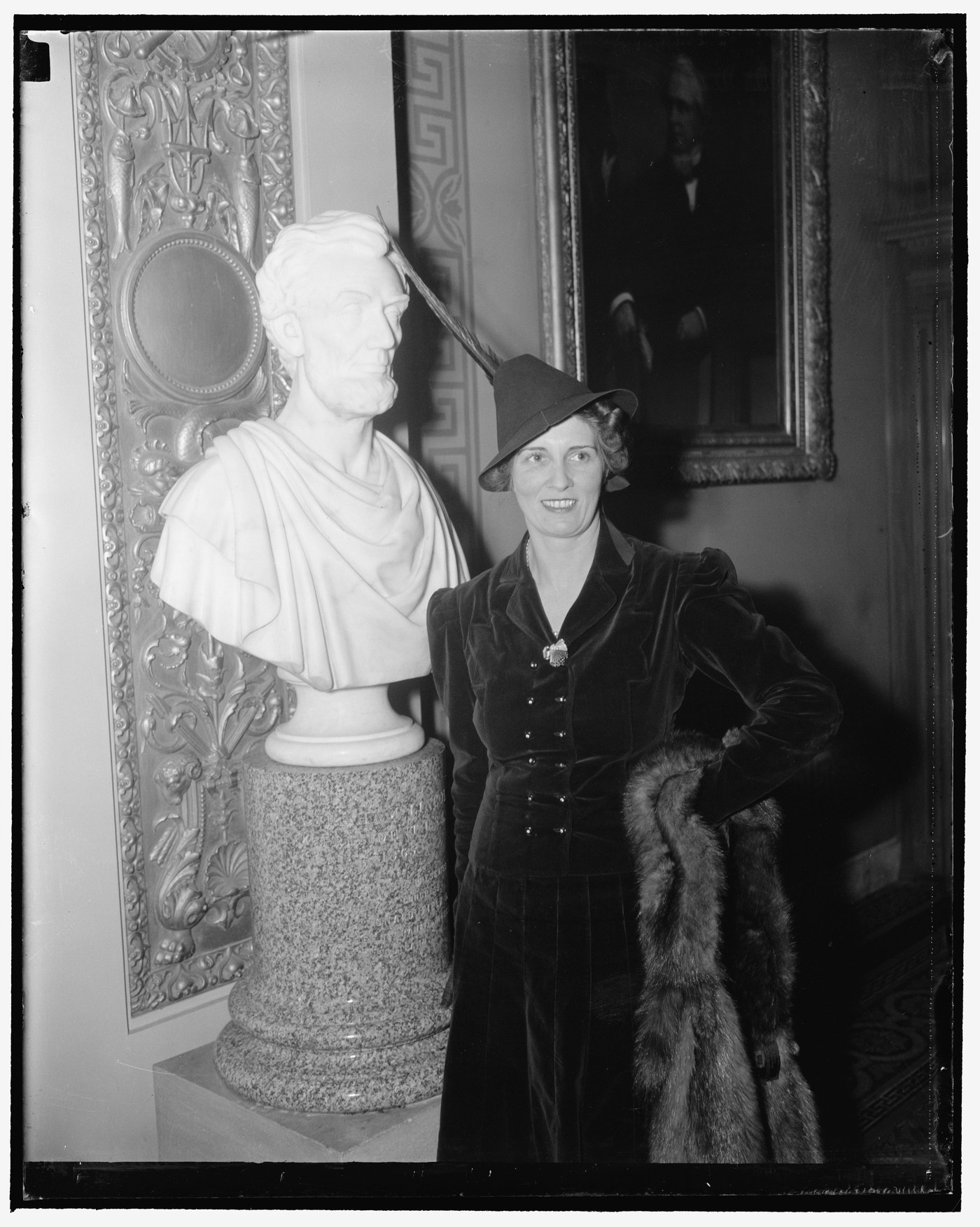
While the senator’s career unraveled in 1950, the woman who had spent fifteen years making Highpoint the center of Washington social life kept going. And going. And going.
Eleanor Davies Tydings Ditzen was, by any measure, one of the most remarkable women in Washington’s long history of remarkable women. Her father was Joseph E. Davies, who managed Woodrow Wilson’s western presidential campaign in 1912 and later served as Franklin Roosevelt’s ambassador to the Soviet Union from 1936 to 1938.
Davies later helped FDR cultivate the U.S.-Soviet alliance during World War II. His own estate at 3100 Macomb Street NW, called Tregaron, is today part of the campus of the Washington International School.
Eleanor graduated from the Holton-Arms School in Washington and from Vassar in 1925. She had been “considered one of Washington’s most beautiful and popular belles” since her debut in 1921, according to her Washington Post obituary.
She married Millard Tydings on December 27, 1935. Her son from her first marriage, Joseph Tydings, was adopted by Millard and would go on to serve his own term in the U.S. Senate representing Maryland from 1965 to 1971.
When Millard fell ill and withdrew from a Senate comeback attempt in 1956, Eleanor was drafted to run in his place, but the party chose another candidate. “I’m a howling liberal suffragette,” she told The Washington Post in 1994.
Millard Tydings died on February 9, 1961, at his farm near Havre de Grace, Maryland. Eleanor stayed on in the District. At a 1994 dinner-dance commemorating “the 70th anniversary of her 20th birthday,” she danced until midnight. On her 100th birthday at the Chevy Chase Club, she was back on her feet, dancing again.
Eleanor Davies Tydings Ditzen died at her home in the District on June 6, 2006. She was 102 years old. “I had a darn good ride on the merry-go-round,” she had said.
So this is what the 5300 block of 27th Street NW holds. The estate of a senator who twice stood up to the most powerful figures in American politics, who was cut down by one of history’s most notorious political dirty tricks, whose wife lived to 102 and danced until midnight at 90, and whose father-in-law brokered the alliance that helped save Western civilization.
Not bad for a quiet Saturday morning in Chevy Chase.