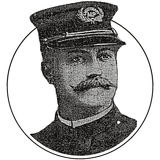


In 1908, a retired Washington policeman named William West told the Sunday Star (the Sunday edition of the Evening Star) a story that he said had only ever been printed in scattered bits. Back in 1872, he said, he had arrested the President of the United States for driving his horses too fast.
The Star spread it across the top of a page under the headline “Only Policeman Who Ever Arrested a President.” The President was Ulysses S. Grant, the charge was fast driving, and the corner was 13th and M Streets NW.

It’s a great story, and it gets retold everywhere. But when we went back to the newspapers, we found something better. The speeding arrests we can actually document for Grant happened six years earlier, when he was still a general.
Racing up 13th Street
West joined the Metropolitan Police in the summer of 1871. The Evening Star’s police notes for July 28, 1871 record that “W. H. West was appointed” to replace a patrolman, or private as the force called them, who had resigned. West was Black, and the Civil War had been over for only six years.
His lieutenant at the sixth precinct, then at 9th Street and New York Avenue, gave him a beat a few blocks north and west of the station house and pointed him straight at a problem. Here’s how West told it:
“Several of the residents of the neighborhood had complained of horsemen who speeded their horses along 13th street while driving to and from the Brightwood race track. … President Ulysses S. Grant was one of the drivers who used 13th street, and many a time he engaged in a speed contest with his friends.”
One evening, according to West, a fast team knocked down a woman and a six-year-old child and badly hurt them, and the driver got away. The neighbors were still out in the street, furious, when the next pack of racers came up 13th Street.
“Well, officer, what do you want with me?”
West held up his hand and one carriage stopped. Inside were President Grant and some friends, with Grant at the reins of “a pair of fast steppers.” Here is the exchange as the Star printed it:
“Well, officer, what do you want with me?”
“I want to inform you, Mr. President, that you are violating the law by speeding along this street. Your fast driving, sir, has set the example for a lot of other gentlemen. It is endangering the lives of the people who have to cross the street in this locality,” said Officer West, “and only this evening a lady was knocked down by one of these racing teams.”
Grant said he was sorry, promised to keep his team to the legal speed from then on and asked whether the woman was badly hurt. Then he drove away.
Arrested the next evening
The next evening, West was back on the corner of 13th and M when “a score or more of teams” came tearing up the street with Grant out in front. West held up his club, and Grant swung into M Street, but he couldn’t get his horses under control until he reached 14th Street. Then he drove back to the policeman.
West said Grant had a smile on his face and looked like “a schoolboy who had been caught in a guilty act by his teacher.” West reminded him of the promise he made the night before, and the President answered:
“Did I?” mused Grant, still with a quizzical smile on his features. “Well, I suppose I forgot it, and that I might have been going a little bit too fast this evening; but hang it, officer, these animals of mine are thoroughbreds, and there is no holding them.”
“I am very sorry, Mr. President, to have to do it, for you are the chief of the nation, and I am nothing but a policeman, but duty is duty, sir, and I will have to place you under arrest,” West replied.
“All right,” cried Grant, “where do you wish me to go with you?”
At the President’s invitation, West climbed into the carriage and rode with him to the station house. Along the way, Grant asked about his background, and West told him he had been a soldier and “had been at the evacuation of Richmond.” Grant told him he wouldn’t get in any trouble for the arrest, because he admired a man who did his duty.
At the station, the President put up $20 as collateral, money he would lose if he didn’t show up in court. Six of his friends, who had followed them to the station, were arrested there too, “despite their violent protests,” while Grant stood in the doorway enjoying the show. The next day in Police Court, nobody answered when Grant’s name was called, and his $20 was forfeited.
His friends fought their cases. West said “thirty-two ladies” came to court and testified against them, Judge Snell fined them heavily, and they lost on appeal. When Grant heard that the angry drivers might cost West his job, West said, he sent a messenger to the chief of police praising the officer and making it plain that no harm should come to him.

Did it really happen?
Here’s the catch. The arrest story above comes entirely from West himself, 36 years after the fact.
We searched the digitized text of every 1872 issue of the Evening Star at the Library of Congress, more than 300 of them, and found no report of the President being stopped, arrested or fined. The National Park Service, which runs the Grant historic site in St. Louis, says it hasn’t found one either.
We didn’t find the bitterly contested case against his six friends either. A text search isn’t perfect, and we haven’t yet checked the city’s other papers or late 1871.
A story that kept changing
The details shift with almost every telling, though almost none of these versions come from West himself. They’re other people retelling his story.
In 1901, when the Washington Post reported West’s suspension (more on that below), it said he had arrested Grant “for riding horseback on a pavement.” No carriage, and no street corner.
In 1929, the Star’s local history columnist, John Clagett Proctor, printed a clipping from a Pacific Coast paper that he said was interesting “for its accuracy and its inaccuracy.” It had Grant driving west on M Street between 11th and 12th Streets, with West grabbing the bridle and getting “dragged half a block.”
In that version, Grant told him, “Officer, do your duty,” and the horse and buggy ended up in the White House stables.
The same clipping said Franklin Pierce had been arrested as President too, by a constable after Pierce’s horse ran down a woman, and it lumped two 1866 arrests of Grant (more on those below) in with those. Proctor pointed out that Grant didn’t become President until 1869.
Proctor had heard it differently. He wrote that he had always understood West stopped Grant on Boundary Street, today’s Florida Avenue, took him to the old second precinct station on Seventh Street, and let him go once Grant said who he was.
Modern retellings don’t line up either. The Smithsonian’s version has 23 women testifying, where West said 32. BlackPast puts West at 12th and M.
The National Law Enforcement Officers Memorial Fund says West joined the force in September 1871, though the Star reported his appointment in July. Citing former D.C. police chief Cathy Lanier, it also says Grant got three speeding citations as President, but the two arrests we can document came before he took office.
None of that proves West made it up. The 1872 Police Court fined at least some fast drivers $20, the same amount Grant put up, and the Post mentioned the arrest in 1901 and the Star in 1906, years before West told the full story. But the arrest of a sitting President rests on his account, told decades later.
General Grant’s documented speeding tickets
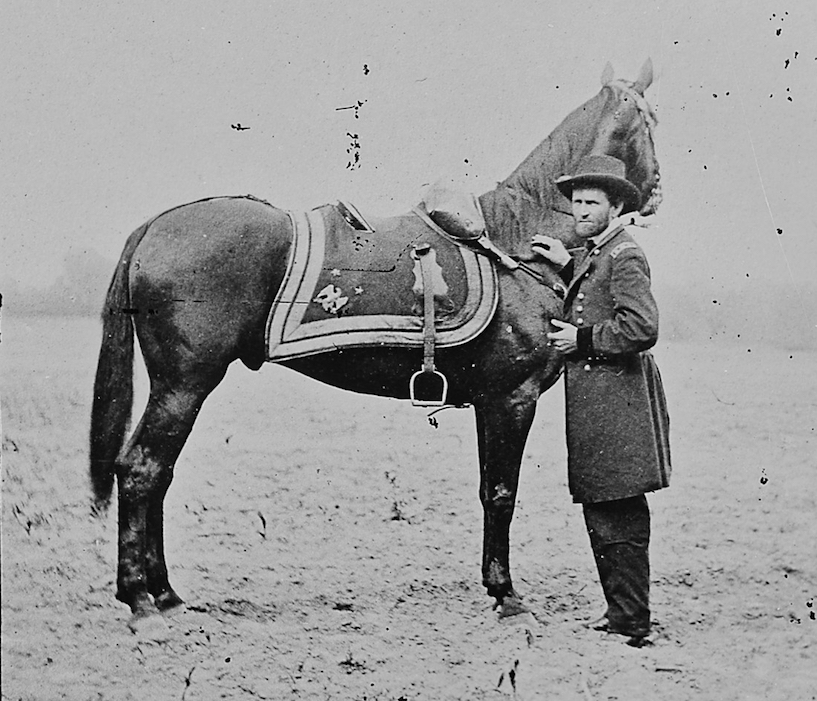
What the papers did catch was General Grant in 1866, the year after the Civil War ended.
On Friday, April 6, 1866, two officers from the second precinct set up on 14th Street to stop fast drivers. In its Monday, April 9 edition, the Evening Star reported what happened:
They stopped General Grant among others, when he offered to pay the fine on the spot, but was informed that the policemen could not take the fine, and they informed him that he should consider himself under arrest and report himself at the station. The General questioned the right of the policeman to arrest him, and immediately drove off at full speed.
In other words, Grant refused to be arrested and drove off.

On April 11, the Star reported that the case was settled. When a policeman laid the warrant on the table at Army Headquarters, Grant asked, “I suppose you take a pride in this?” The officer said he was only doing his duty. Grant joked that under martial law “the tables might be turned,” and the officer could end up in the Army’s guardhouse. The officer stood his ground, adding:
“I also did my duty under you, General, at Vicksburg, and you did not find fault with me then.”
Grant went before Justice Walter and paid the fine.
He got caught again that summer. On a Saturday in late June or early July 1866, Officer Crown, one of the two officers from April, arrested him for fast driving. This time, according to the National Intelligencer item that the Richmond Dispatch reprinted, “The General took the arrest very good-humoredly, said it was an oversight,” and paid his fine at the Second Precinct station.
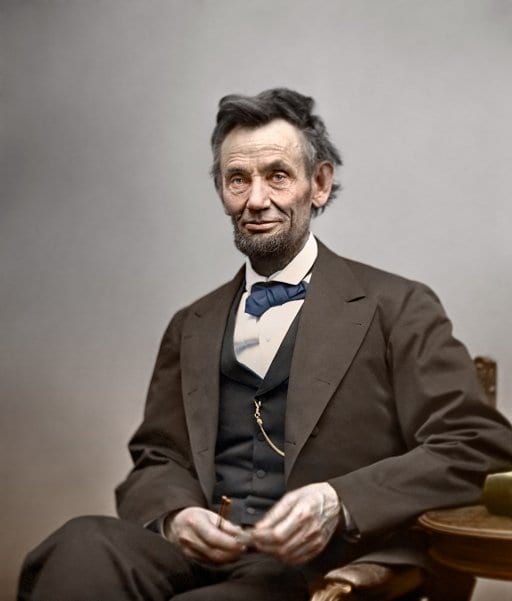
The Star’s April 9, 1866 report made one more claim, and it’s a big one: “in 1863 President Lincoln was placed under arrest by Sergeant Johnson and officer Mulloy for driving on a pavement.”
If it’s true, and the Pierce story too, Grant wasn’t the first President arrested in Washington, and West wasn’t the only policeman ever to arrest one. We haven’t found anything else to back either one up yet, so for now it goes in the pile of great stories that need more digging.
Who was William West?
West spent much of his career on horseback. A few months after the Grant arrest, he said, he was moved to the mounted force at the second precinct, then at 7th and U Streets, and while patrolling the Brightwood road he often met Grant out driving his trotters. The two of them, by West’s account, would talk horses.

The job had its rough patches. In 1884, a police trial board fined West and a fellow officer named White, and ordered them off their horses, for stopping on their beat to argue politics. In late September, the Evening Star reported that the District Commissioners had “remitted the fines and penalties.”
In 1898, the Washington Post wrote him up as “prey of money lenders”: he had borrowed $40 and already paid back $72, and the Commissioners decided he didn’t have to pay any more.
In June 1901, he was suspended after a fight in Mount Vernon Square. According to the Post, West had hired a young man named Lindsey Madre to mind his team outside a restaurant at 708 K Street NW, reportedly tipped him 5 cents, and the argument over that nickel ended with both men arrested for disorderly conduct.
By 1906, West was on a criminal court jury panel, and the Star noted that the panel included the man who “in 1872 took President Grant into custody.” By 1908 he was retired and ready to tell the whole story.
A list of deaths in the Evening Star on September 10, 1915 includes a William H. West, 70, of 915 4th Street NW. That is probably our policeman, though the notice doesn’t say so, and the age is a few years off from other records.
So the speeding President rests on one man’s memory, but the speeding General is right there in the papers.
As for Grant, he won reelection in November 1872 and was sworn in for a second term at the Capitol on March 4, 1873. No word on how fast he drove home.
Lost Washington stories, in your inbox.
The newest story, plus a few from the archive.
Free. Unsubscribe anytime.
We use AI to help research, write and edit stories across our sites. Here’s how we use AI.Suggest a correction