
Faces & Places of Yesterday
Vintage photos of Washington, DC. Ordinary people on stoops, sidewalks, and streetcars. Faces and corners of a city most of us would no longer recognize.
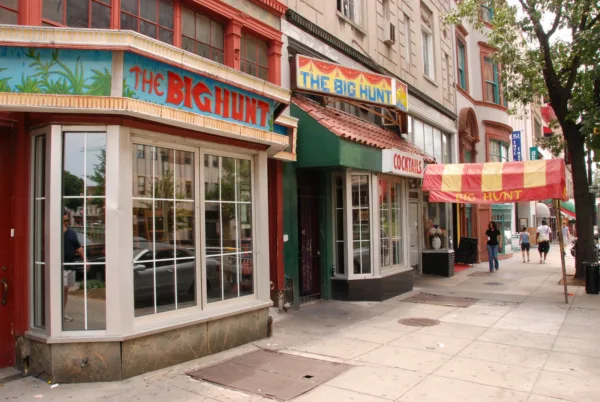
The Big Hunt filled a 1928 storefront at 1345 Connecticut Avenue NW from 1992 to 2020, with safari kitsch, a hidden patio and a comedy basement.
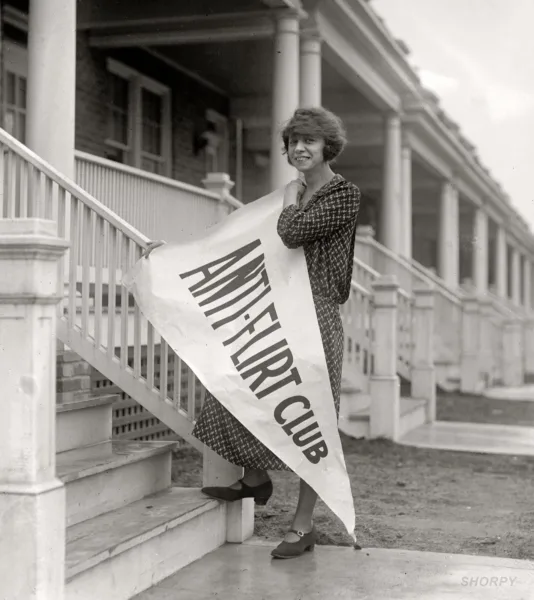
The club told women not to wink or accept rides. A contemporary report called it a movie promotion.
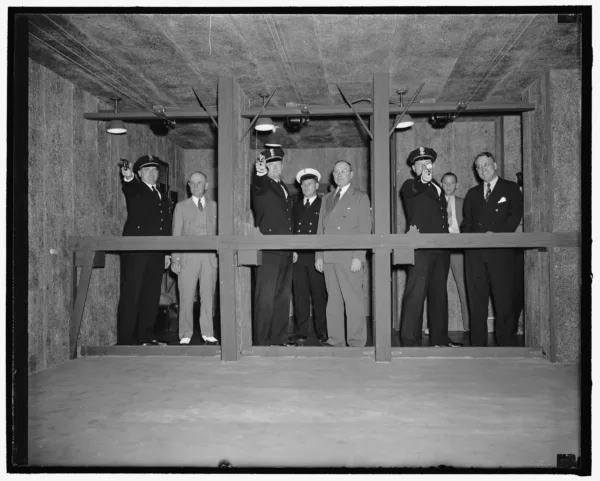
The Treasury’s basement range had electric targets and an air lock. Two men in its 1940 photograph had corresponded about the investigation of Al Capone.
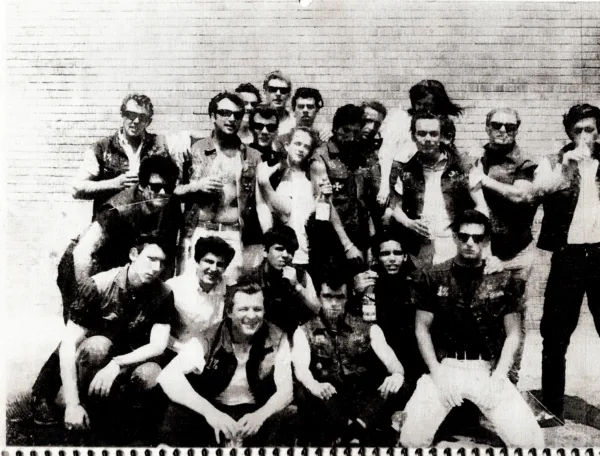
On the night of June 14, 1966, the Pagans and the Avengers turned the Safeway lot at Arlington’s Lee-Harrison Shopping Center into a gunfight. Police had been tipped off hours earlier and were watching when the first shots rang out.
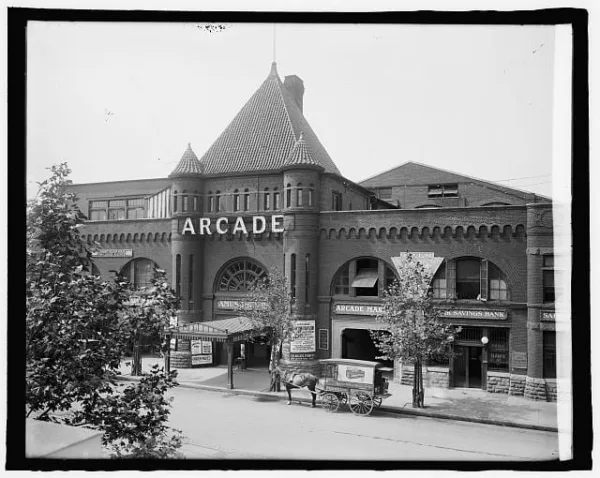
In 1927, the Arcade Market at 14th and Kenyon proposed rooftop parking for shoppers. A newspaper report explains the plan and the approvals it needed.
There’s more where these came from.
Lost Washington stories in your inbox most mornings: the newest, plus a few from the archive.
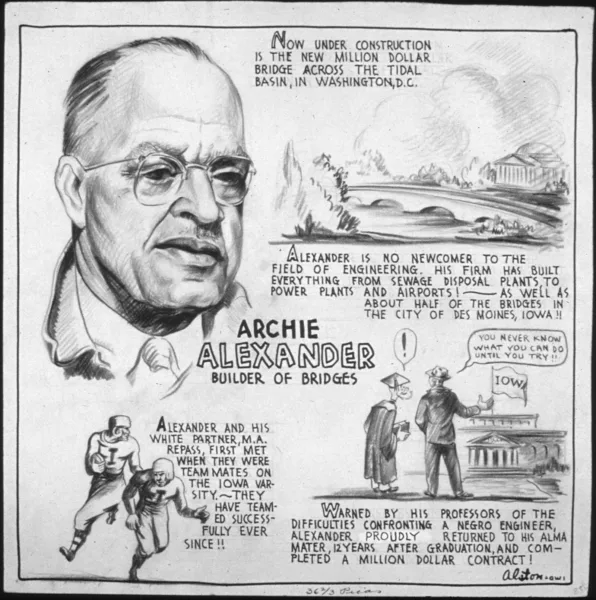
A four-year-old cut the ribbon on the Whitehurst Freeway on October 8, 1949. It was Washington’s first elevated highway.
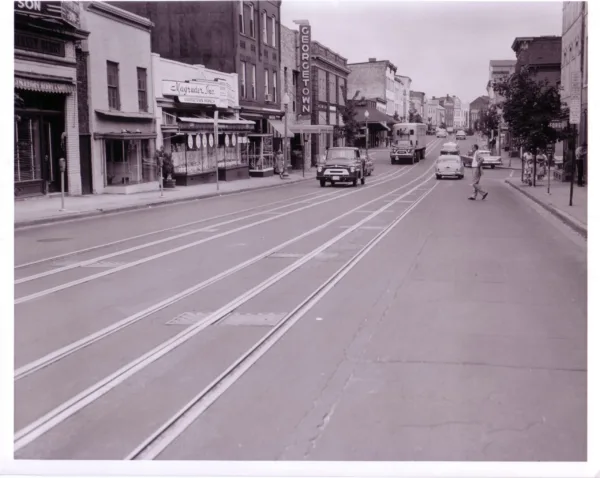
Six months after the last streetcar ran up Wisconsin Avenue, a camera caught Georgetown’s idea of rush hour on June 30, 1960.
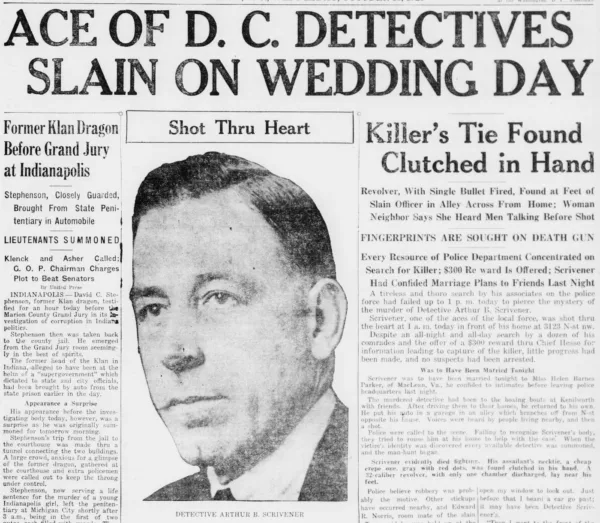
Detective Arthur Scrivener was found shot in a Georgetown alley on his wedding day in 1926. One jury said murder. Another said suicide. Here’s the evidence.
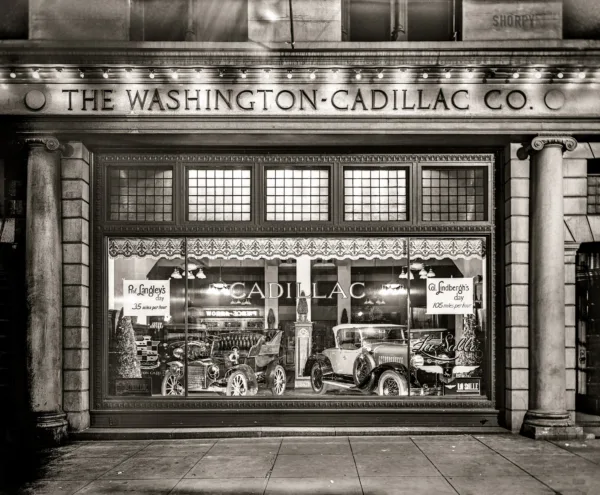
When Cook & Stoddard opened its Cadillac showroom at 1138 Connecticut Avenue NW in 1912, the Washington Post admired its granite front. By 1914, crowds packed the salesroom to see the new eight-cylinder model.
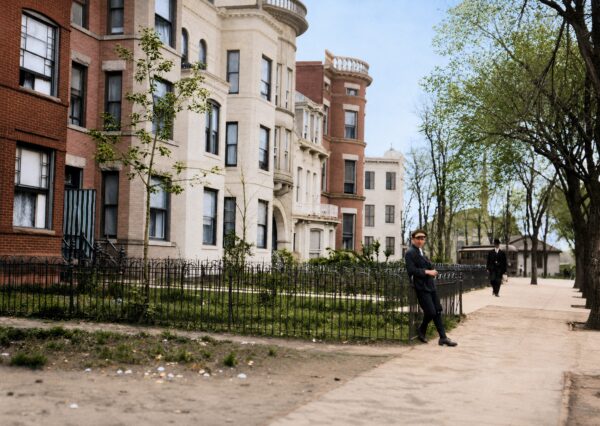
Five forgotten people, robbed, slashed, shot, or stabbed in Washington’s Murder Bay slum between 1865 and 1868. We pulled their names out of the old Evening Star: named victims, named killers, and real intersections that no longer exist.

Francis H. Robinson drove presidents from Taft to Franklin Roosevelt, navigating their different tastes for speed, open cars and closed windows.
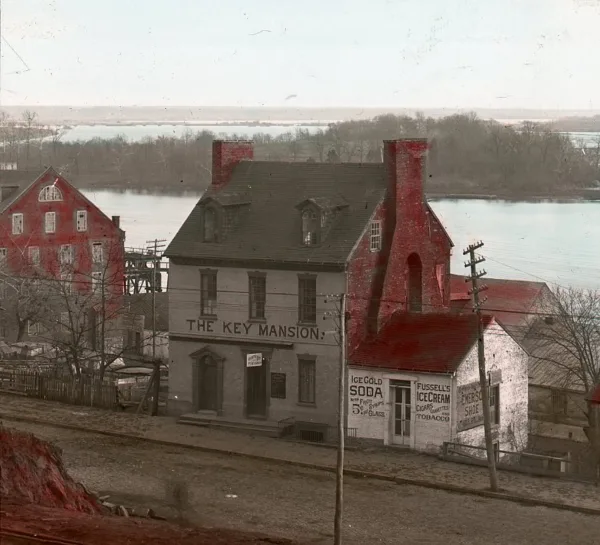
Workers took the house apart and numbered its bricks for a reconstruction that never happened. The stored pieces gradually disappeared.
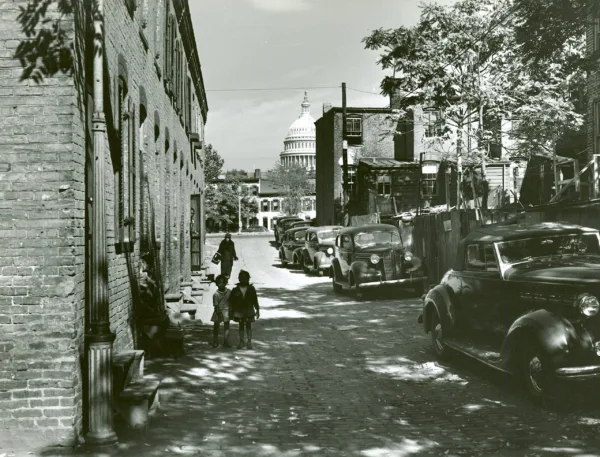
Temple Court off D Street and Delaware Avenue SW, around 1940. The area is unrecognizable now; the Rayburn House Office Building went up nearby in 1965.
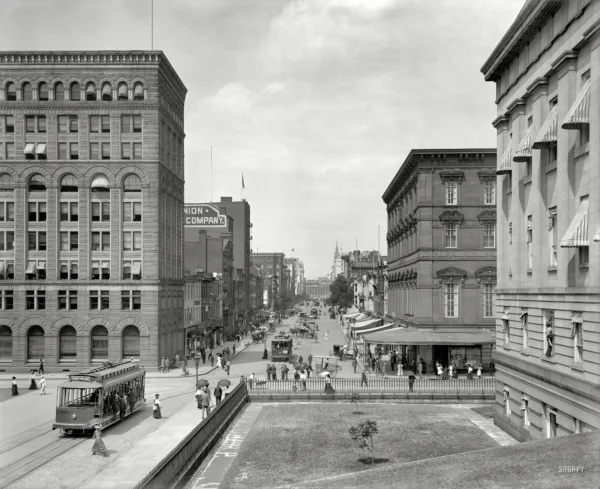
A high-resolution look down F Street NW circa 1908, toward the Treasury Building. The streetcar in the shot is hiding a detail most people miss: an ad for Glen Echo’s vanished “hydraulic dive.”
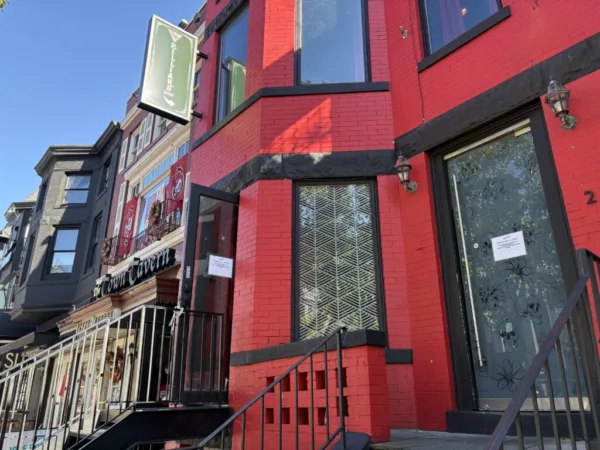
A few doors south of Heaven and Hell, 2321 18th Street NW in Adams Morgan was the Blue Room lounge, then Bill Thomas’s Bourbon whiskey bar, and now Death Punch.
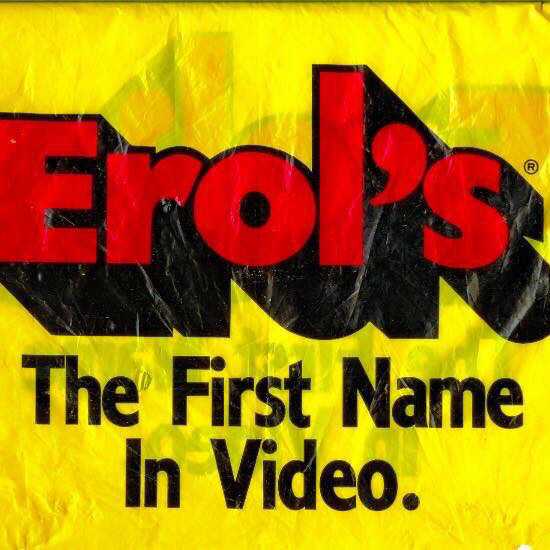
Before Blockbuster, the DC area had Erol’s Video Club. Turkish immigrant Erol Onaran arrived in 1960 with $16, opened a Georgetown TV shop in 1963, started renting tapes in 1980, and built the largest privately owned video chain in America before selling to Blockbuster for $40 million in 1990.
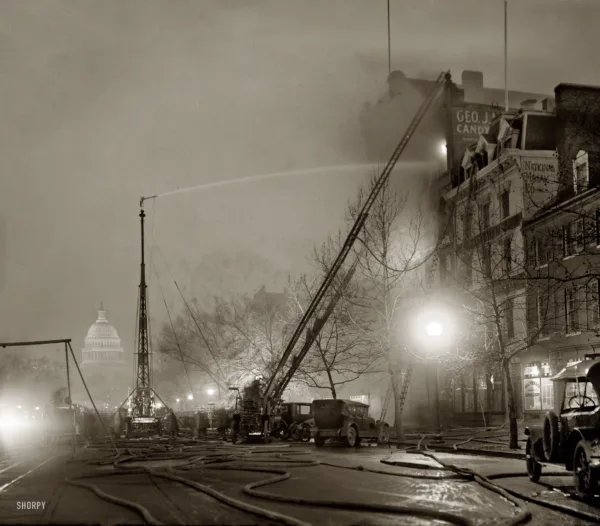
On December 28, 1925, a five-alarm fire tore through George J. Mueller’s wholesale candy plant on Pennsylvania Avenue NW, in the heart of Washington’s first Chinatown. Smoke clouded the Capitol, streetcars stalled for fifteen blocks, and a crowd packed the sidewalks to watch it burn.
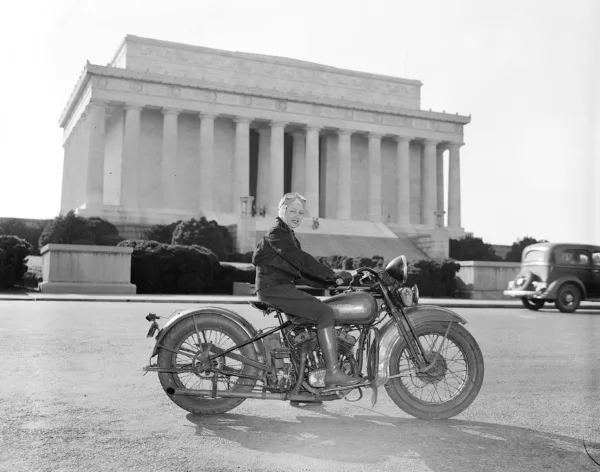
On May 12, 1937, Sally Halterman stamped her foot at a skeptical D.C. police examiner until he handed her the first motorcycle license ever granted to a woman in the District. Four months later, she eloped on it.
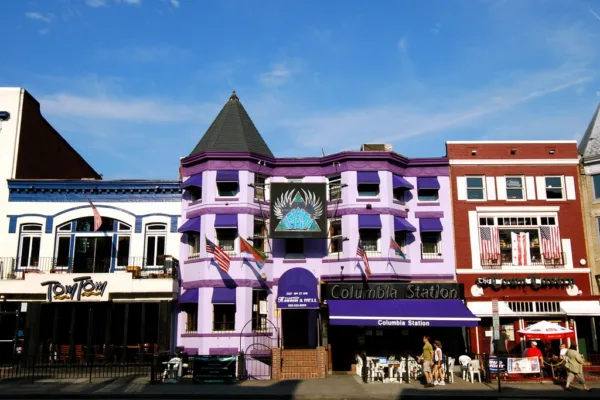
Heaven and Hell is the name people remember at 2327 18th Street NW. But the building’s first life as a political address began in December 1969 with the Black Panther Party.
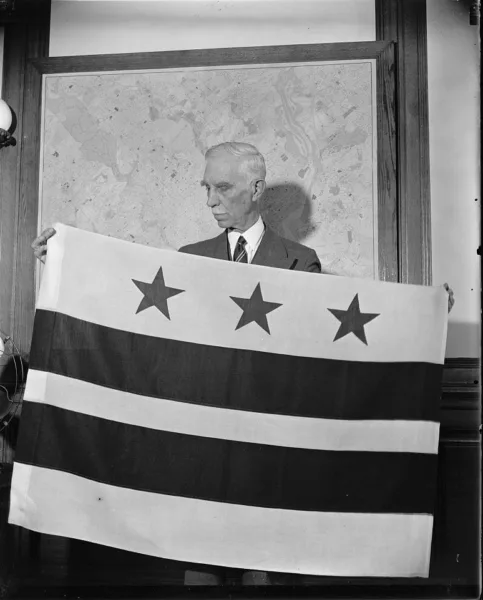
Washington, DC didn’t have an official flag until the middle of the 20th century. The white background with two red stripes and three red stars was based on George Washington’s family crest.