
At ten past one on the afternoon of April 2, 1880, in the brick yard of the United States Jail at 19th and B Streets SW, a trap door fell beneath James Madison Wyatt Stone. The rope had been set with five turns in the knot, the noose placed behind his left ear, the slack drawn carefully out. Stone dropped roughly five feet.
The drop was supposed to break his neck. It broke his neck and then it kept going. His head came off the body, struck the scaffold frame, and dropped to the planks below. Someone in the small crowd of witnesses shouted, “My God, the rope is broken!”
The rope had not broken. The rope had done its work too well.
That is the part of the story the headlines carried the next morning and that the story carries today. It is also the least interesting part of what happened in DC on that Friday after Good Friday. The interesting part is who was standing where on the scaffold and how Stone had come to be there in the first place, and that means a Black man from Westbrook, Maine, who worked for the Associated Press; a wife named Alberta who was murdered in her own house on 11th Street NW in October of 1878; a 35-year-old attorney named Richard T. Greener who was the first Black graduate of Harvard College and, by the time of this trial, the Dean of the Howard Law School; and a one-term Republican president named Rutherford B. Hayes who twice intervened to delay the hanging and then let it proceed.
A messenger from Maine
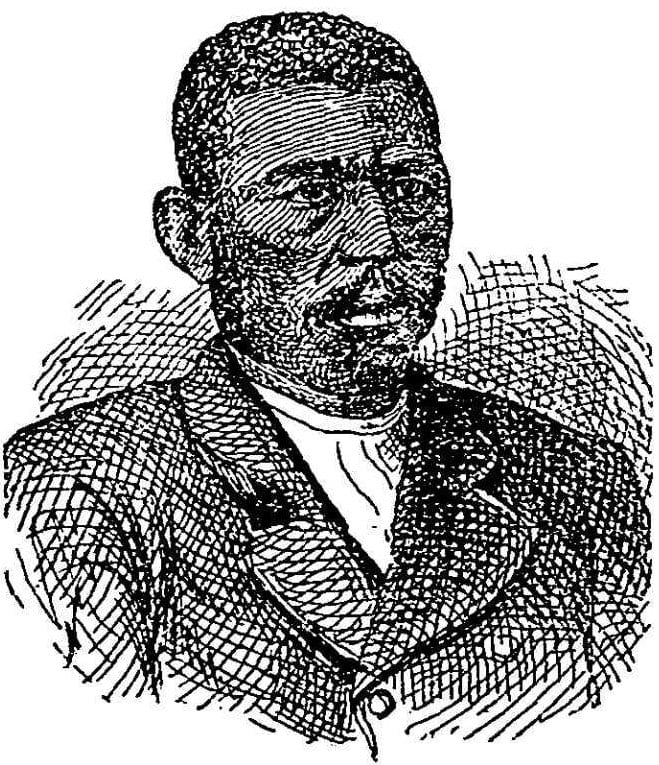
Stone was 39 in the spring of 1880. He was mixed race, born in Westbrook, Maine, and had come to Washington at some point in the years after the Civil War. By the time of the murder he was working as a messenger for Lawrence Gobright, the Associated Press bureau chief in DC.
If you do not know the name Gobright, the short version is that he had been the AP’s man in Washington since the wire was barely a thing. He had reported the surrender at Appomattox. He had been the first reporter to file the news of Lincoln’s assassination from Ford’s Theatre, having walked over from the AP office a few blocks away. By the late 1870s he was the dean of the Washington press corps, a fixture who knew every cabinet officer and every doorkeeper at the Capitol. His memoir, Recollection of Men and Things at Washington, came out in 1869.
Stone carried Gobright’s copy and Gobright’s messages. He had the kind of job that put him in newspaper offices and government anterooms and was almost certainly the reason the AP picked up the murder story before the Star did.
What we know about his marriage to Alberta Pitcher Stone comes mostly from his own letters in the days before the execution and from witnesses at the trial. Alberta was Black. They lived together in a house on 11th Street NW. They had been married for some years. He said, repeatedly, that he had loved her.
October 1878 on 11th Street NW
The murder happened in early October 1878. The papers were not specific about the exact night until the indictment came down, and even then the language was clipped and procedural. What is on the record is that Alberta was killed inside their own house and that the cause of death was a head wound. Stone was arrested almost immediately and held at the United States Jail to await the grand jury.
On October 15, 1878, the grand jury indicted him for murder in the first degree. The case moved through the docket more slowly than it might have today, which was normal for criminal trials in DC at the time, where the General Term sat only a few weeks each year and capital cases had to wait for the right judge.
Stone’s defense from the start was that he had no memory of what had happened that night. He told the police, he told his attorneys, and he eventually told his readers in his final letter that he could not remember. He said it the same way each time. He said he had loved her and that whatever had occurred was not something he could account for.
This was not, in 1878, a usable insanity defense. The McNaghten Rule was the working standard in DC criminal courts and required the defense to show that the defendant did not know what he was doing or did not know that what he was doing was wrong. A claim of head-trauma blackout, with no diagnostic vocabulary to attach it to, sat awkwardly in that framework. The trial court would eventually decide it sat too awkwardly to be heard at all.
The trial under Hagner
The trial opened in the DC Criminal Court in September 1879, with Justice Alexander Hagner presiding. Hagner was a Maryland-born jurist appointed to the DC bench by President Grant in 1879. He had a reputation for moving cases briskly and for ruling against defense motions he considered speculative.
The prosecution’s case was straightforward. Alberta had been killed in the house she shared with Stone. Stone had been present. Stone could not explain what had happened. There were no other plausible suspects and there were physical signs that a struggle had taken place. The state asked for first-degree murder and the gallows.
The defense was Richard T. Greener, court-assigned. Stone could not afford counsel, and the DC bar had a standing practice of assigning capital cases to attorneys who would take them for the principle of the thing. Greener took it.
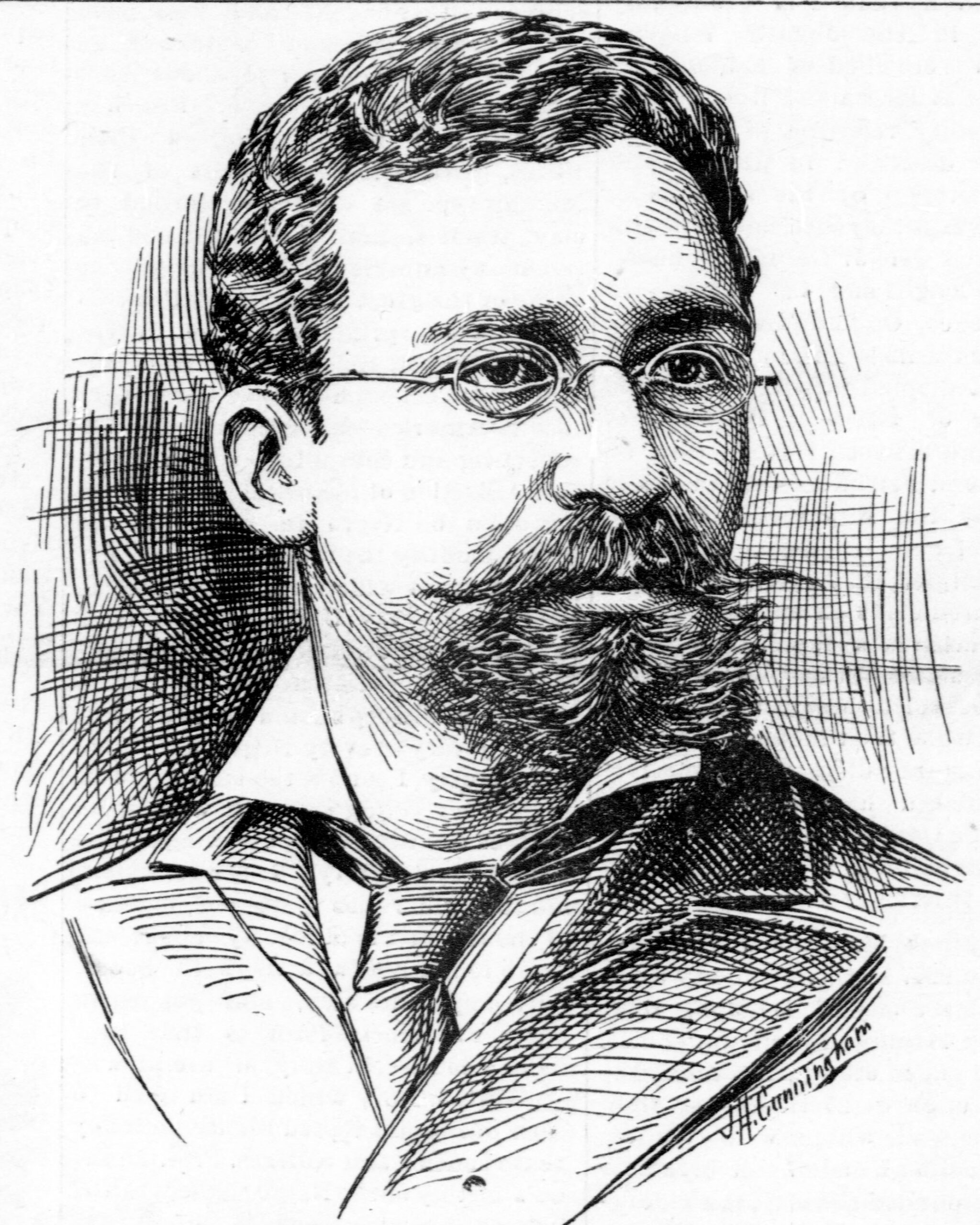
Greener’s central motion was for an instruction to the jury on insanity arising from head injury. He wanted to argue that Stone had suffered a head trauma at some earlier point in his life and that this trauma had produced episodic loss of control, including on the night of Alberta’s death. He had medical witnesses prepared to testify.
Hagner refused to allow the testimony. He ruled that the offered evidence did not meet the McNaghten threshold and that an insanity instruction would not go to the jury. The defense, stripped of its central theory, finished the case on the record it had. The jury convicted. Stone was sentenced to hang.
In a letter Stone wrote on the eve of his execution, the line that lasted was about Hagner specifically:
I think Justice Hagner did me an injustice. He ruled against me all through. But man’s injustice to man will be made right by Him who over-ruleth all.
It is a careful sentence. It blames the bench without blaming the system. The man writing it knew what was about to happen to him and chose his targets.
Richard T. Greener takes the case
The lawyer the court assigned to Stone was 35 years old in 1879 and was, by almost any measure available, the most credentialed Black attorney in Washington.
Richard Theodore Greener had been born in Philadelphia in 1844, raised in Cambridge, Massachusetts, and admitted to Harvard College in 1865 after preparation at Oberlin and Phillips Academy Andover. He graduated from Harvard in 1870, the first Black student to do so, and went on to teach at the University of South Carolina during Reconstruction, where he was the first Black faculty member at any Southern white university. When Reconstruction collapsed and the University of South Carolina expelled its Black faculty and students in 1877, Greener moved to Washington and joined the law faculty at Howard University. By 1879 he was the Dean of the Howard Law School.
Katherine Reynolds Chaddock’s biography of Greener, Uncompromising Activist: Richard Greener, First Black Graduate of Harvard College (Johns Hopkins UP, 2017), is the book to read if you want the whole arc. The shorter version is that Greener spent his career trying to occupy rooms that did not want him, and the Stone case was one of those rooms.
He took the case on court assignment, with no fee, and pursued the most ambitious defense the facts would bear. When that defense was refused, he carried the case to the DC Supreme Court General Term on appeal. He spent, by any honest count, dozens of unpaid hours on a client whose conviction was nearly certain. He was the Dean of a law school and he was also showing up for an indigent Black man whom the city had already decided about.
The Howard Law School Greener was running in 1879 had been founded in 1869 and had graduated its first class of Black lawyers a few years later. (We have written before about Howard’s outsized footprint on Washington and the streets it has occupied.) Greener’s deanship was short. He left in 1880, the same year Stone hanged, and the reasons were not unrelated.
The appeal and the General Term
Greener’s appeal went to the DC Supreme Court General Term, which in 1880 was the District’s intermediate appellate body. Justice Walter S. Cox wrote the opinion for the panel. The court affirmed the conviction on January 26, 1880, ruling that Hagner had not erred in excluding the insanity testimony.
This is the moment that gets confused in some retellings. The General Term affirmance has sometimes been described as a third “extension” of Stone’s life, alongside two later presidential interventions. It was not an extension. It was an appellate ruling that left the original sentence in place. The hanging date had been continued during the pendency of the appeal as a matter of court procedure, but the affirmance did not buy Stone any additional time on humanitarian grounds. It cleared the procedural decks for the execution to be scheduled.
The execution was set for late February. The defense had no further appeals available in the regular course. The only remaining intervention would have to come from the White House.
Two respites from Hayes
Rutherford B. Hayes was in the last full year of his single term as president. He was a Republican from Ohio, a Union general during the Civil War, and a moderate on the issues of Reconstruction that were collapsing around him. He was also, by the standards of late 19th century executive practice, an active user of the pardon power, particularly in capital cases.
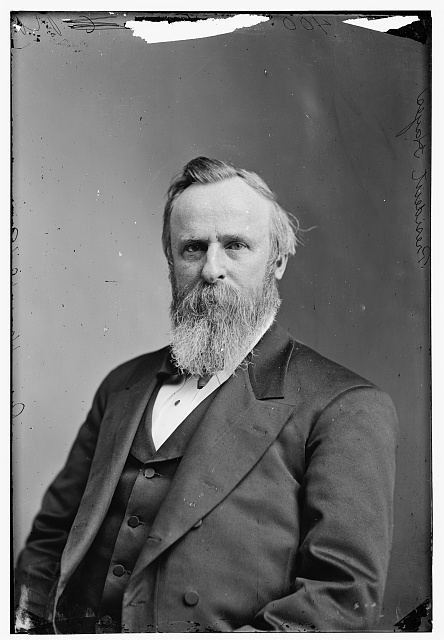
On February 24, 1880, the morning the hanging was set to occur, Hayes issued a 30-day respite. The papers reported it without much editorializing. The respite was not a commutation and not a pardon. It moved the date out by a month and asked, implicitly, for someone to use that month to bring forward whatever new evidence or argument might justify a commutation.
The new date was late March. As that date approached, no commutation petition had developed traction. The Attorney General had not been moved by the file. The respite was about to expire.
On approximately March 25, 1880, Hayes issued a second respite, this one for one week. The reason was calendrical: the original date fell during Holy Week, and hanging a man on Good Friday was not something the Hayes White House was going to do. The week-long respite pushed the execution to the Friday after Easter.
That is the count: two presidential respites, both from Hayes, neither a commutation. The first was 30 days and substantive. The second was a week and was about the calendar. The third “extension” that sometimes appears in summary accounts was the January 26 appellate affirmance, which was not an extension at all.
When Easter passed, the warden printed his tickets. The ticket read:
The pleasure of your company is requested at the execution of James Madison Wyatt Stone, in the yard of the United States Jail, Friday, the 2d of April, 1880.
It was, in the period idiom, an invitation.
The morning of April 2

The jail at 19th and B Streets SW was a heavy brick building set on the south side of what is now Independence Avenue SW. It had been built in the 1830s to replace an earlier federal jail and would itself be demolished in 1916. In 1880 it was the only federal jail in the District and the place where every federal capital sentence in DC was carried out. (The Garfield assassin Charles Guiteau would hang in the same yard two years later under almost identical procedures.)
The chaplain attending Stone that morning was Francis J. Grimké, then 29 years old and in his second year as pastor of the Fifteenth Street Presbyterian Church. Grimké would later be one of the most prominent Black ministers in the country and a founder of the NAACP. On April 2, 1880, he was walking a condemned man to the gallows.

The reporter for the Evening Star described the scene in the third column on page one of that afternoon’s paper, under a banner reading A GALLOWS HORROR! The witnesses were the usual mix: jail officers, US deputy marshals, a small number of physicians, a few invited members of the press. Stone walked from his cell, accompanied by Grimké, with what the Star described as a calm bearing.
The black cap was then drawn over his face, the last look of which on the world was a smile. The noose, tied with five turns in the knot, was then adjusted with unusual care, the knot being placed immediately behind the left ear, all slack gently drawn out, and the rope placed close under his chin and on the line of hair at the back.
The trap was sprung at 1:10. The body fell roughly five feet.
The trap at ten past one
What happened next was the kind of mechanical failure that haunts every hanging crew that has ever pulled a lever. The combination of Stone’s weight, the drop distance, and the knot placement produced a force at the neck that exceeded the tensile capacity of the tissue. The head separated from the body. It struck the scaffold frame on the way down and came to rest on the planks beneath the trap, roughly four to five feet from where the body now hung.
A witness shouted “My God, the rope is broken!” but the rope had not broken. The rope held. The body held to the rope. The head was simply no longer part of either.
The Star reporter did not flinch. The paper printed the full account that afternoon under the gallows-horror banner. A staff illustrator at the Washington Post prepared the engraving that ran in the Post the next morning. The story went out on the AP wire, the same wire Stone himself had once carried copy for, and it ran in papers as far as Knoxville and Richmond within 24 hours.
What remained
The jail physicians attended to the body. Dr. McWilliams, with two assistants named Morgan and Crook, sewed the head onto the corpse so that Stone could be presented to his relatives in some semblance of recovery. The Post reported, in the language of the day, that “the face bearing at the time it was picked up a calm and peaceful expression.”
Alberta Pitcher Stone, by this point, had been dead for 18 months. The papers in 1878 had reported her death in a few short lines. No photograph of her survives in any collection I have been able to find. The Star did not run her obituary. The grand jury indictment named her once. The trial named her as the victim. The appellate opinion described the crime in clinical terms. By April 1880, in the coverage of the gallows itself, she had become “his wife,” a fact about Stone rather than a person of her own. That is its own kind of injustice.
Stone’s final letter, written from his cell on April 1, the day before the execution, is short and reads like a man trying to leave something on the record:
As this is the last writing I ever expect to do in this world, I write to say that all I have said about my not knowing what occurred on that fatal night is true. No man could love his wife more than I did. I wish to say this to all the world.
JAMES MADISON WYATT STONE
Richard T. Greener left the deanship of the Howard Law School later in 1880. He moved into a series of federal appointments, eventually serving as US Consul at Vladivostok at the turn of the century. He died in Chicago in 1922 at the age of 78. The 2017 Chaddock biography is the standard account.
Lawrence Gobright remained at the AP bureau for another year, then handed off to a younger reporter and went into a long retirement. He died in 1881. His memoir is the closest thing to a contemporary description we have of how a wire-service messenger’s job in 1870s Washington actually worked, and Stone is not named in it. The job Stone held was, by design, invisible.
The United States Jail at 19th and B was torn down in 1916 to make room for federal construction along the south side of the Mall. The site is part of the Department of Agriculture footprint today. There is no marker. The yard where Stone died is now lawn and street.
What lasted from April 2, 1880 was the headline. The hanging itself made the wires because of what the rope did to the body, and that has been the story ever since: a curiosity, a “from the crazy vault” item, a piece of Victorian gore. The other story is the one I came back to write. A mixed-race messenger, a Black wife murdered in her own house, a Black Dean of the Howard Law School court-assigned to defend him, a head-injury defense the trial court refused to hear, an appellate court that affirmed, a President who delayed it twice and then let it happen, and a chaplain who walked him to the scaffold.
Decapitation made the headline. Representation, refusal, and the limits of intervention in 1880 are what the story is actually about.
We dug this one up with help from AI and checked it against the original records below. Here’s how we use AI.