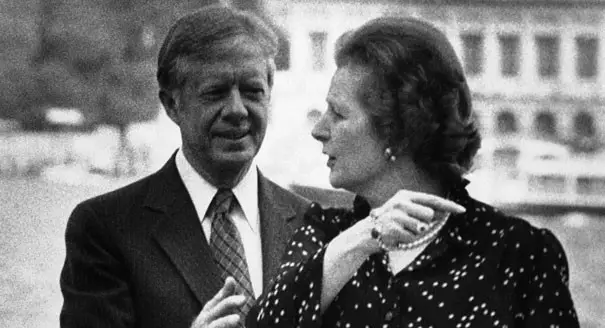
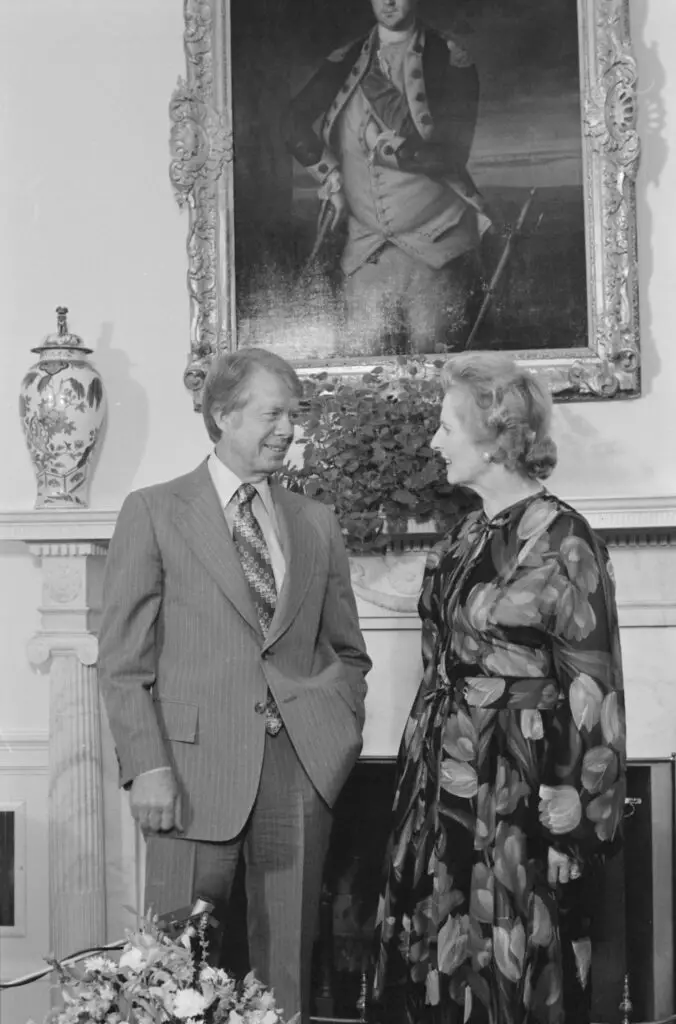
In the winter of 1979, the United States was grappling with a series of challenges, including a sluggish economy, an oil crisis, and the ongoing hostage crisis in Iran. During this tumultuous time, Margaret Thatcher, the newly elected Prime Minister of Great Britain, visited Washington for the first time to meet with President Jimmy Carter.
Jimmy Carter with Margaret Thatcher taken on 13 September 1977
Thatcher and Carter had a complex relationship. On the one hand, they shared similar views on many issues, such as the need for increased defense spending and the importance of promoting democracy and free markets. On the other hand, they had significant disagreements over foreign policy, particularly in regard to the Soviet Union and its role in global affairs.
Despite their differences, Thatcher’s visit to the White House was a significant moment in US-UK relations. In her speech, Thatcher emphasized the importance of the “special relationship” between the two countries, which she described as “a relationship of friendship and mutual support that has served us both well.” She also highlighted the shared values and historical ties that bind the two nations together.
Thatcher’s visit to the US in 1979 marked the beginning of a close and productive working relationship between the two leaders. Over the years, they would collaborate on a range of issues, including the promotion of economic and political freedom around the world. While their relationship was not without its challenges, Thatcher and Carter were able to find common ground on many issues and to work together to advance their shared goals.
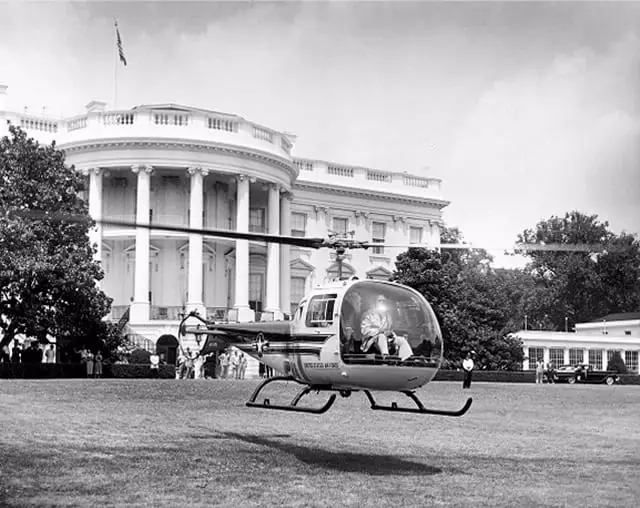
President Eisenhower needed a quick and effective way to travel from Washington to his summer home in Rhode Island. Air Force One was too large for the trip and a motorcade would take too long, causing major traffic jams.
Helicopters were relatively new in aviation and the military began conducting tests to see if one would meet the needs of the president.
Check out the video of the landing tests they performed on the White House South Lawn in 1957.
You may not know this, but there was a very public assassination attempt on a President very near the White House and it wasn’t that long ago. President Harry Truman was in the middle of his second term and his home was having under major renovations, forcing him to live in Blair House for several years.
It also might shock you to think about this, but he obviously commuted to work on a daily basis by walking across Pennsylvania Avenue, then a bustling main roadway through the heart of the city, surrounded by Secret Service and stopped for red lights.
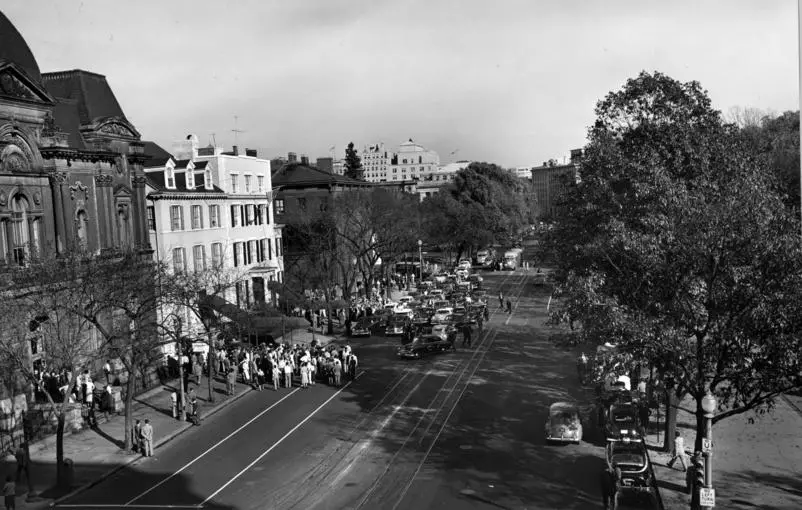
Crowds gather outside Blair House
An extremely brazen and violent assassination attempt occurred in front of Truman’s temporary residence on November 1st, 1950 in the middle of the afternoon with thousands of witnesses. The Washington Post wrote the following report the next day.
Hundreds of office and store employes, shoppers and pedestrians, cab and streetcar riders–perhaps as many as 2000–witnessed the gunfire battle yesterday between the Puerto Rican assassins and the White House police on Pennsylvania ave,. in front of Blair House.
Scores found themselves in the line of fire between the blazing pistols of Blair House guards and the attackers.
Two bullets hit shopper-crowded Whelan’s drug store, on the southwest corner of 17th st. and Pennsylvania ave., half a block away from the site of the shooting.
One bullet smashed through a plate glass window, a second flew through the open door of Whelan’s and landed on the floor, it was reported.
Hayward Simmons, 22, of 600 Columbia rd., a porter at the store, was outside sweeping up when he heard shots. He looked up and “felt a bullet pass by my head” and smashed into the window. A splinter of glass plunged into his arm as Simmons plunged into the store.
Twenty to thirty persons, strolling across the busy 17th and Pennsylvania corner, or waiting on the platform for a streetcar, ran pell-mell for the comparative safety of Whelan’s, the Mills Building which houses the drugstore, and other buildings nearby. One woman was seen racing wildly from the east side of 17th st., stumble and fall, get up and keep on running, leaving a black pocketbook and sweater behind her in the middle of the street.
…
Pvt. Donna Jean Cole, 18, Wac driver attached to the Pentagon motor center, was transporting Lieut. Col. Clifford P. Hannum, 904 Potomac ave., Alexandria to old State Department Building. She was just turning the corner at 17th into Pennsylvania ave. when they hear the shooting. She said: “When I heard this shooting, I saw a man lying in the street looking wounded and another looking dead. ‘Get down!’ the colonel yelled at me and I stopped the car, and he pulled me down behind the dashboard. We stayed there a few minutes and then the colonel got out. I was very nervous. I just knew they were trying to assassinate the President, and oh, I was nervous.”
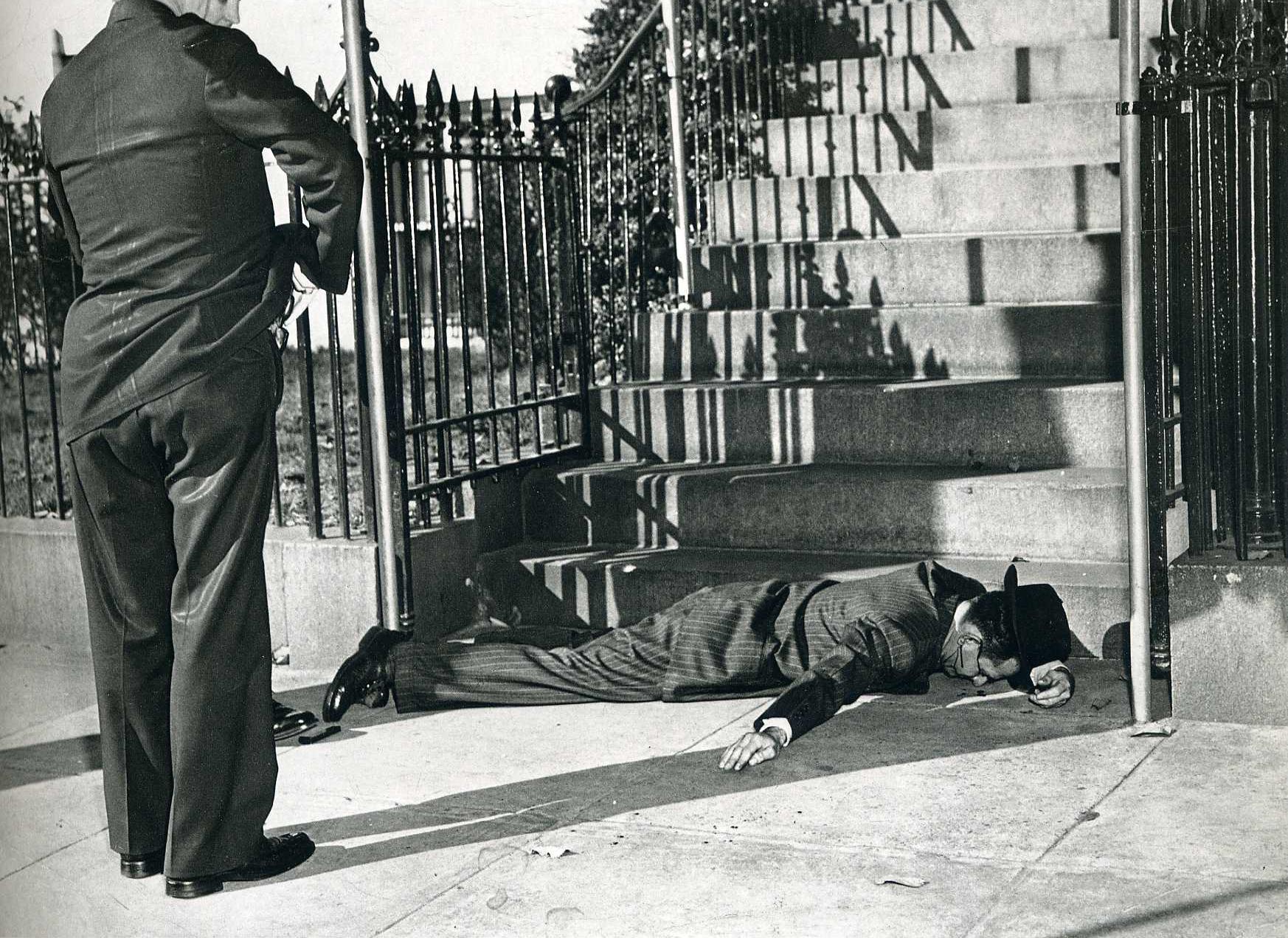
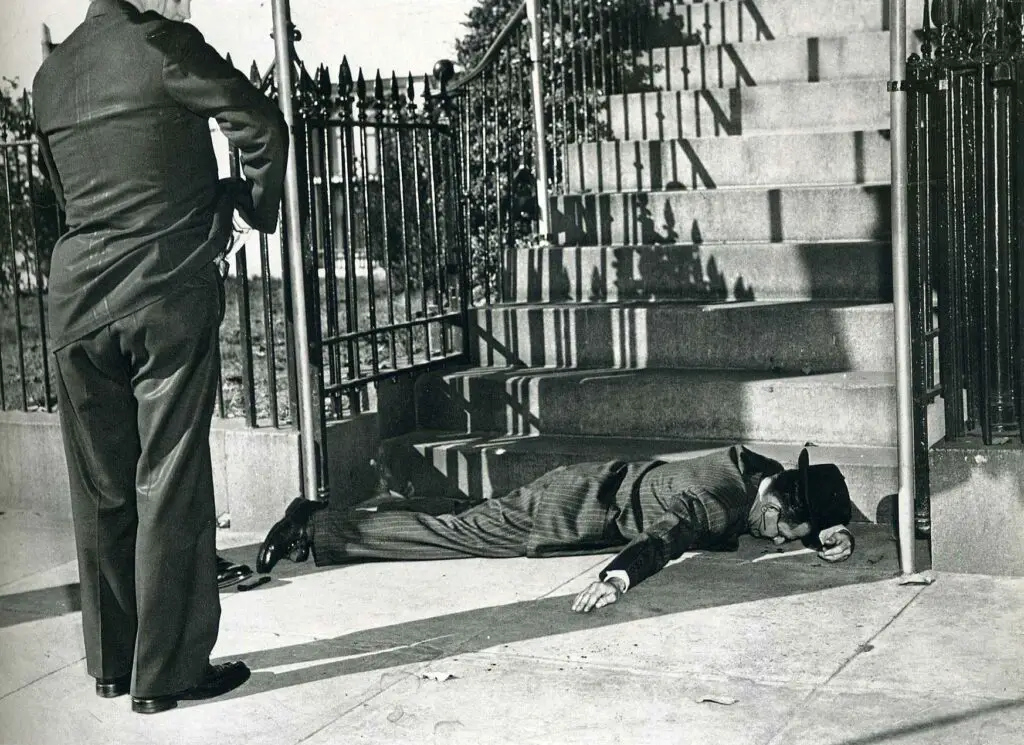
This took place at 2:20 p.m., while Truman was taking a nap in the front bedroom. In the assassination attempt, two Puerto Rican nationalists, down from New York — Oscar Collazo and Griselio Torresola — had attempted to shoot their way into Blair House, assassinate the president and kick off a revolution in the United States. Standing in the way of this plot were three of the White House Police Force’s finest officers: Joseph Downs, Donald Birdzell and Leslie Coffelt.
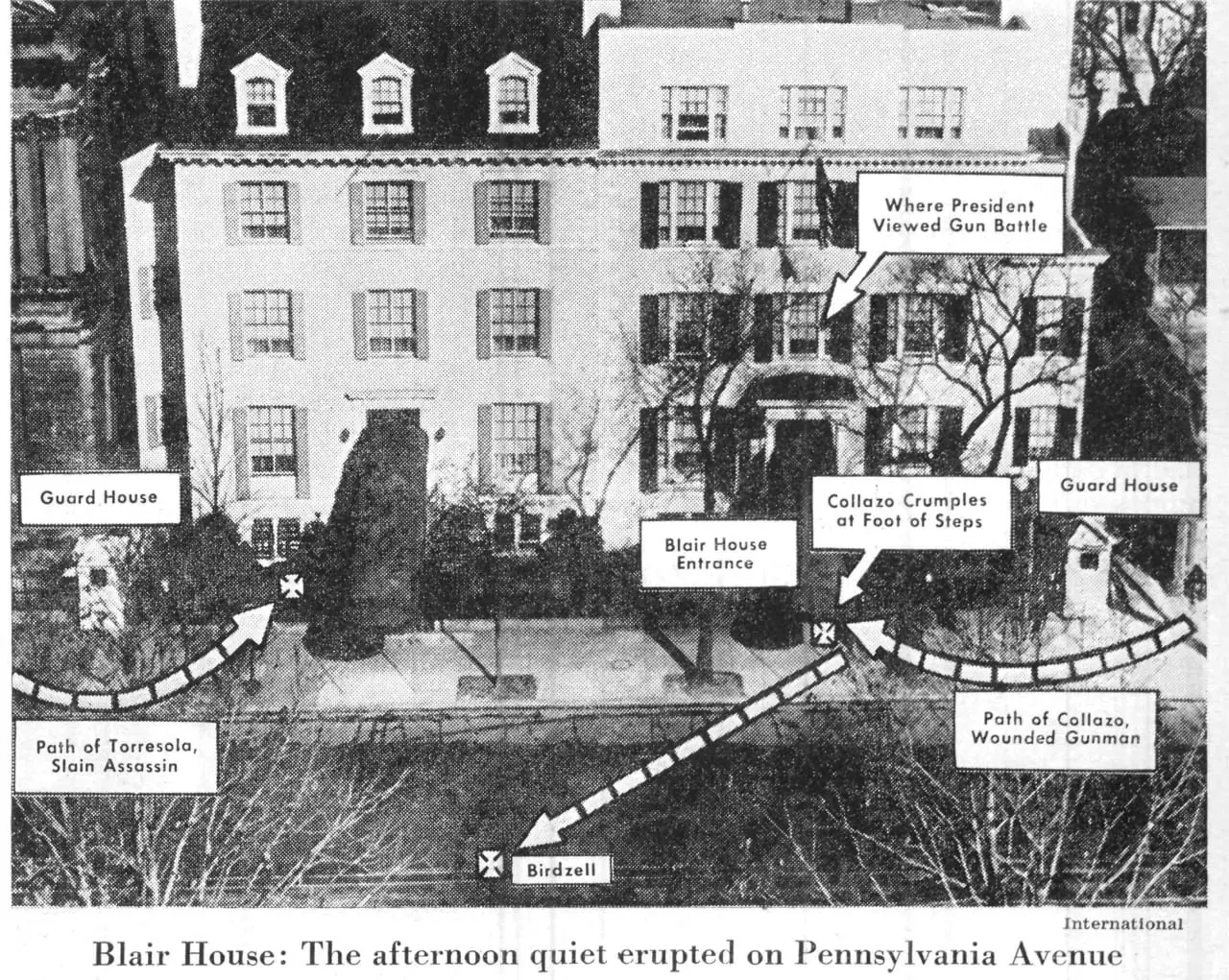
Coffelt was stationed in the police guard house, positioned one building to the west of Blair House. Torresola walked up to the guard house, took aim and unloaded four bullets into the officer. Leslie was fatally wounded and bleeding to death in the booth.
With a gun battle blazing on Pennsylvania Avenue, Torresola headed east, just steps away from Blair House to reload his pistol. At the same moment, President Truman, startled by the sounds of gunfire opened, and looked out the window, in the line of sight of the would-be assassin. A nearby officer frantically waved and shouted for the president to get back.
As if on cue, Leslie Coffelt emerges from the guard booth, staggers to the side and leans up against it as he takes aim for Torresola. He fires one bullet, hitting him just above the ear, killing him instantly. Many speculate that Coffelt’s heroism and sharpshooting save the president’s life.
Blair House assassination diagram 1950
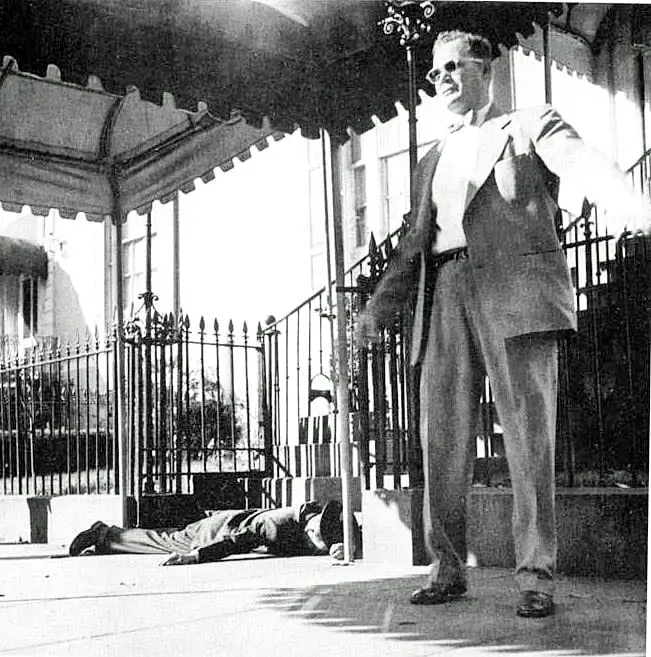
Secret Service agent Floyd Boring at Blair House steps with wounded would-be assassin Collazo
If you pass by Blair House, you will not notice a plaque on the right, commemorating the bravery of the fallen White House police officer, Leslie Coffelt, who died protecting President Truman. He remains the only officer to die defending the president in the line of duty.
IN HONOR OF LESLIE COFFELT
WHITE HOUSE POLCEMAN WHO GAVE HIS LIFE IN DEFENSE OF THE PRESIDENT OF THE UNITED STATES HERE AT BLAIR HOUSE, NOVEMBER 1, 1950.
“FOR LOYALTY, BRAVERY AND HEROISM BEYOND THE CALL OF DUTY”
Plaque commemerating Leslie Coffelt killed at the Blair House
Next time you walk by the house, take a minute to read the sign and pay tribute to Coffelt.
Here is some more news coverage of the assassination attempt on Truman.
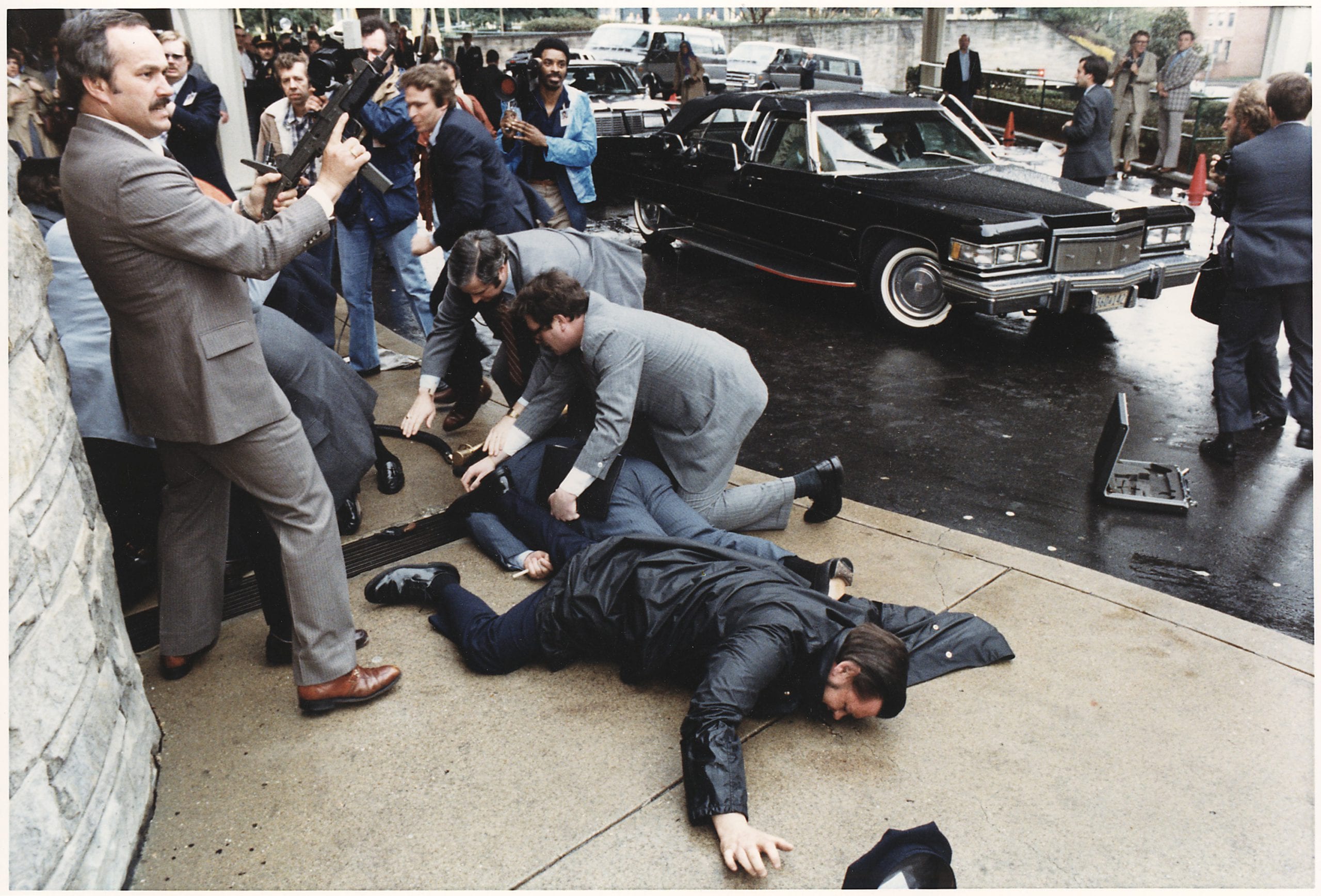
Hinckley was arrested and found not guilty of his charges by reason of insanity. He was sent to St. Elizabeth’s Hospital in Washington, DC, less than ten minutes from the place he attempted to assassinate Reagan.
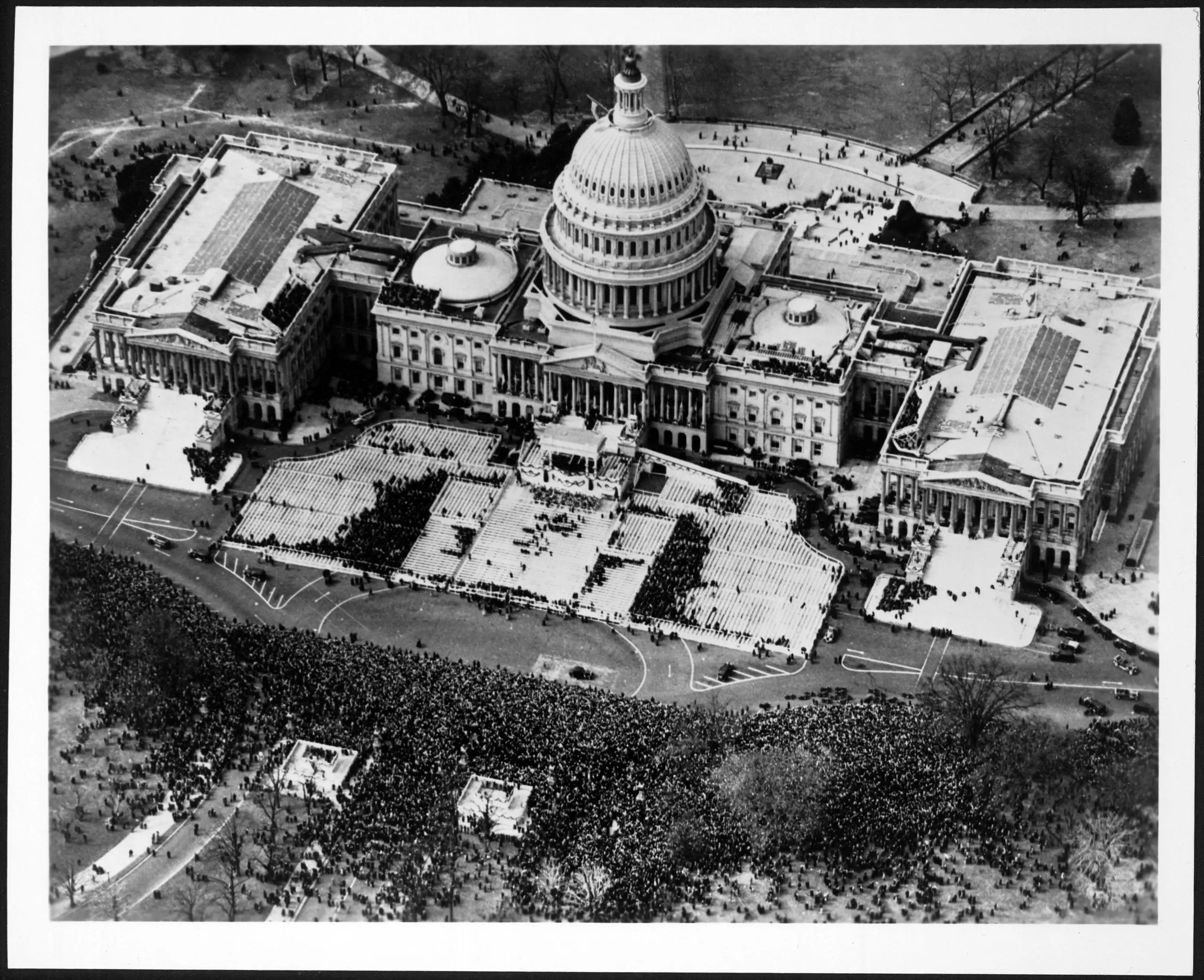
Take a look back at history with photos of historic inaugurations of Franklin Delano Roosevelt, Dwight Eisenhower, and Barack Obama. See how the ceremonies have changed over the years!
What a cool video! This was a find on the Library of Congress website. Below is the description from the site.
“This most excellent picture was secured at the junction of Pennsylvania Avenue and Fifteenth Street. The parade is headed by a platoon of mounted police; next comes the Grand Marshal, Major- General Francis V. Green, and staff, as follows: A. Noel Blakeman, Lieut. Col. John S. Johnson, Major-General N.E. Thompson, U.S.A., Brigadier-General U.S.W. Day, U.S.V., Lieut. Winfield S. Overton, U.S.A., all mounted on splendid horses. Next come the famous Troop A, of Cleveland, Ohio, who act as the personal escort of the President. They present a most striking appearance as they go down the incline on Fifteenth Street, Washington. Next comes President McKinley in his carriage drawn by four of his own horses, the pair of blacks in the lead and the favorite bays on the wheel. The President is seated in the right of the carriage with Senator Hanna on the left beside him, and facing them, with their backs to the driver, are seated Representatives Cannon and McRae. Owing to special permits granted us by the United States Government, we were able to have our camera within twenty feet of the President’s carriage when it passed, and an absolutely perfect photograph was secured. The President’s carriage is followed by Secretaries Hay and Gage. The third carriage contains Secretary Root, Attorney-General Griggs and the President’s Private Secretary Cortelyou. The fourth carriage contains Secretaries Long, Wilson, Hitchcock and Postmaster-General Smith. The fifth carriage contains Lieutenant-General Miles and Admiral Dewey. We also present excellent pictures of the Admiral of the Navy and the General commanding the United States Army as they pass. This picture closes up by showing a detachment of Veterans of the Twenty-third Ohio Volunteers, followed closely by the West Point Cadets, who present a remarkable spectacle as they execute left wheel turning from Fifteenth Street into Pennsylvania Avenue. Length 125 feet. $18.75”–Edison films catalog, July, 1901, p. 8.
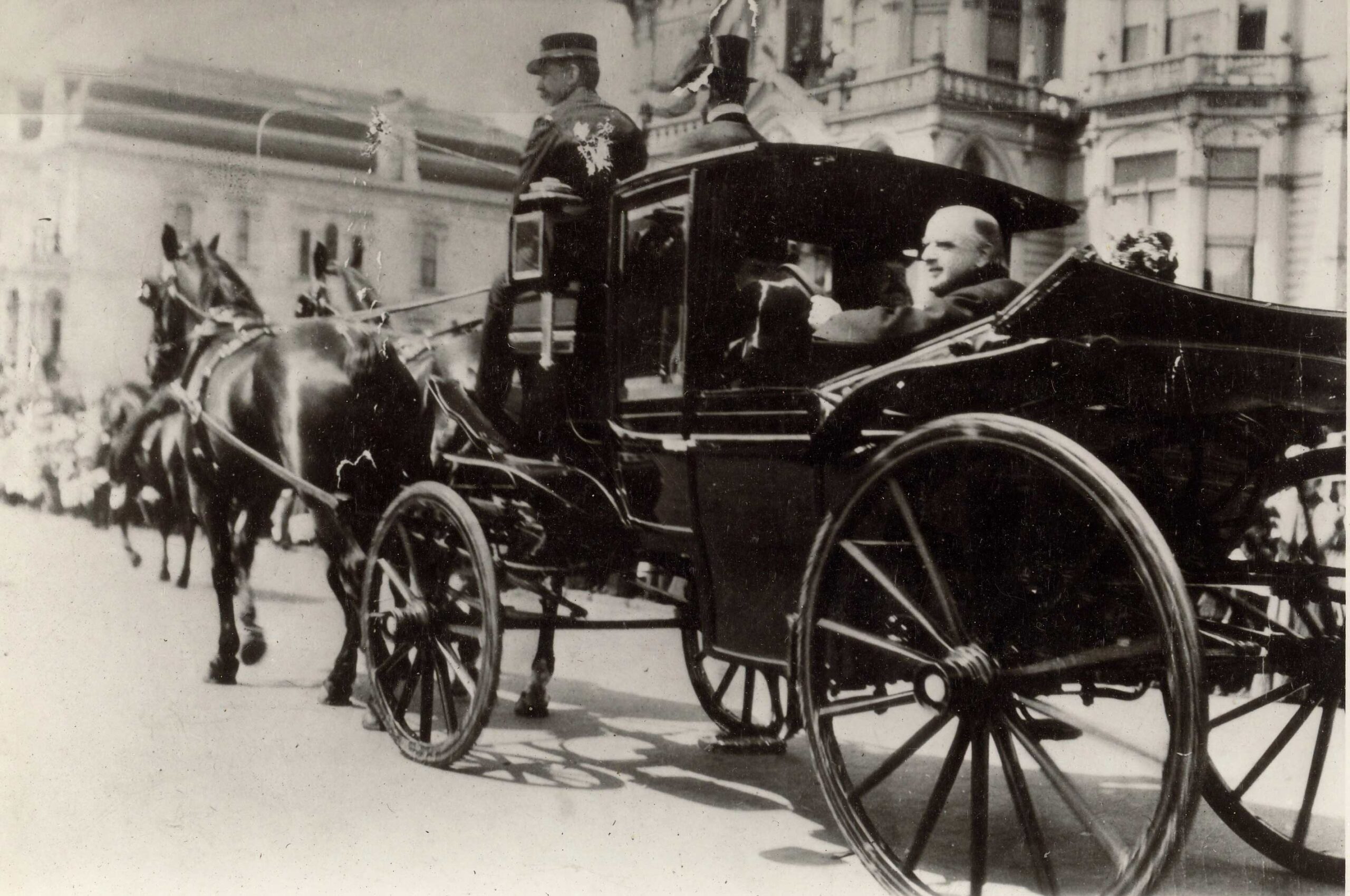
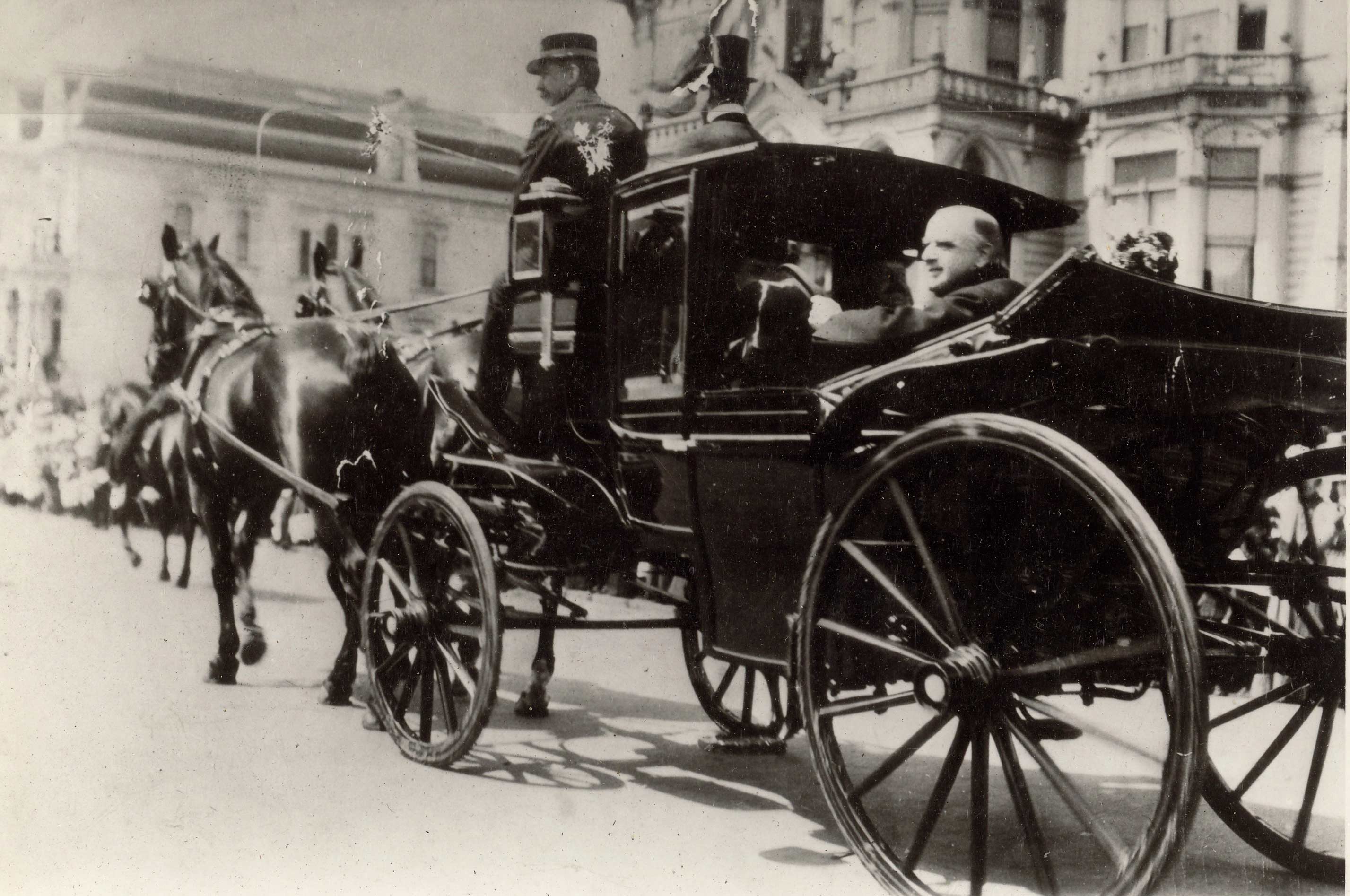
Below is a photo we found of McKinley in a carriage, riding through the streets of Oakland, also in 1901.
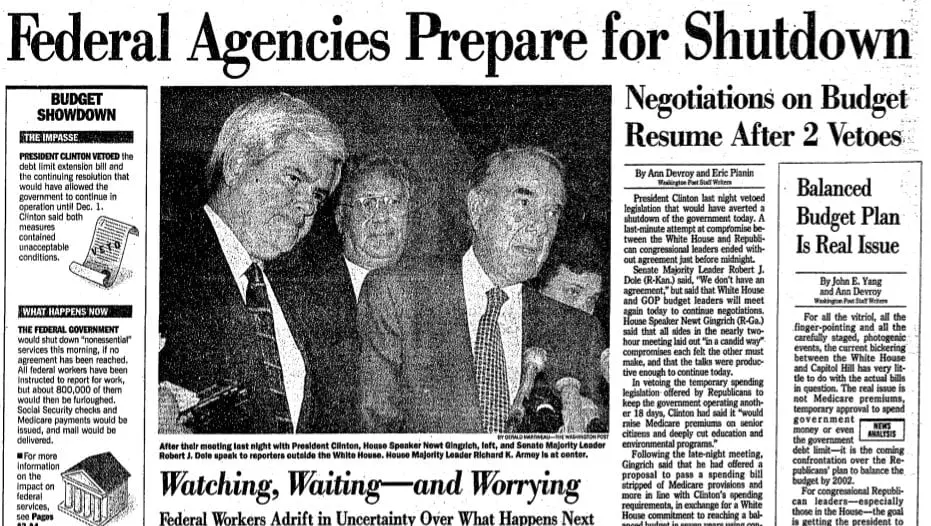
Welcome to Groundhog Day! We revisit the 1995 Federal Government Shutdown and the West Wing episode it inspired. Plus, who plays Ted Cruz in the movie adaptation? Read more to find out!
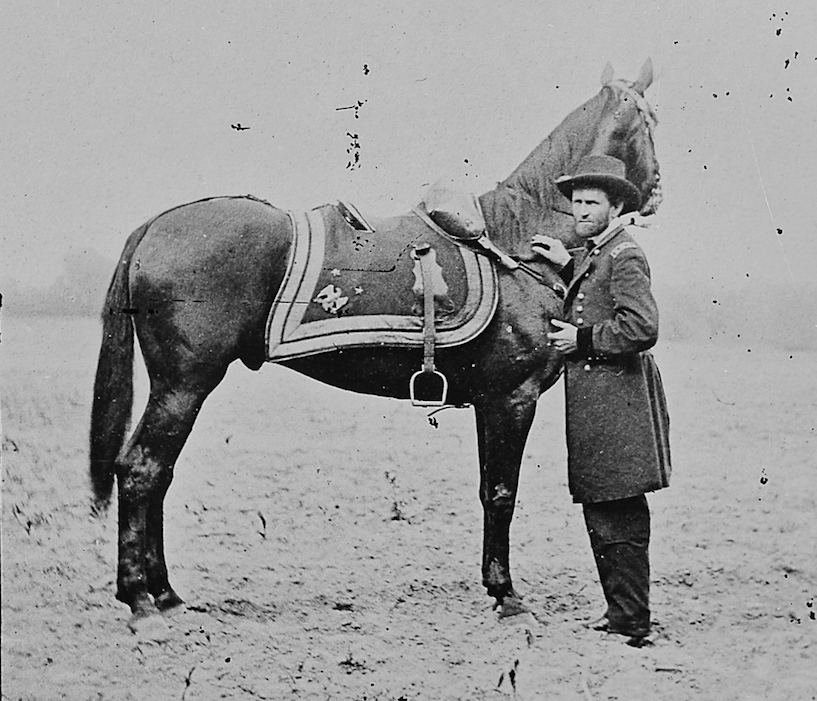
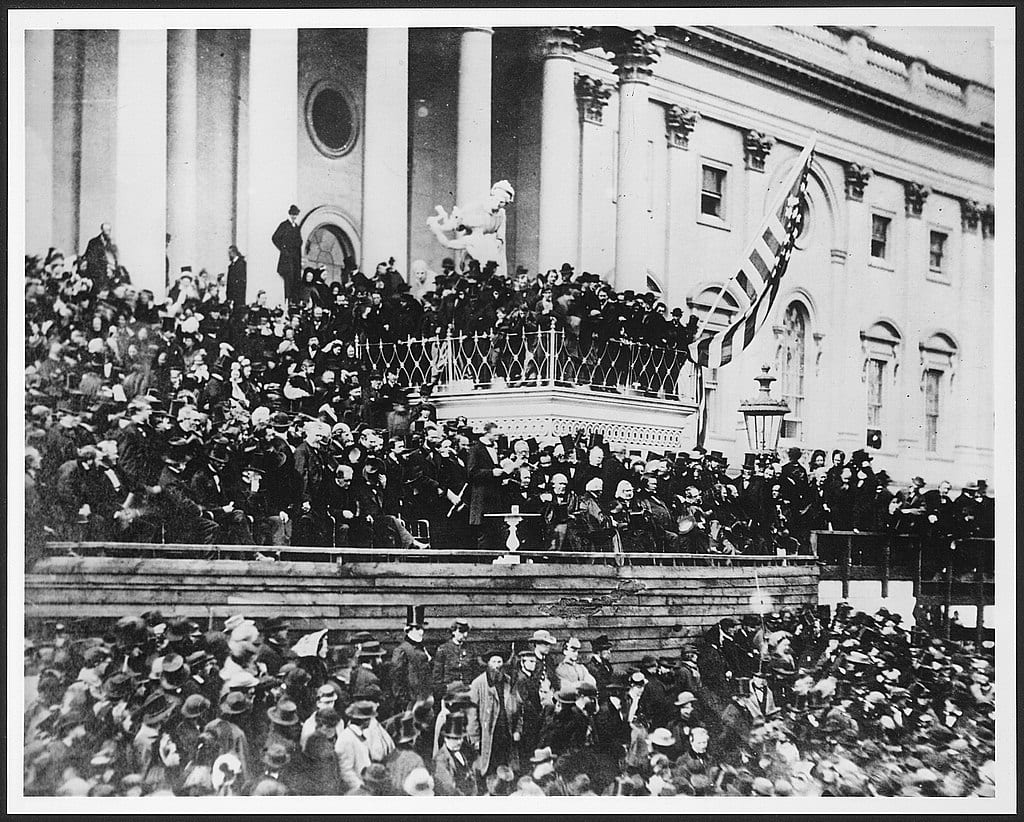
Explore the photo of Abraham Lincoln delivering his second inaugural address and the original document. Learn about the confrontation between Lincoln and John Wilkes Booth that may have saved Lincoln’s life.
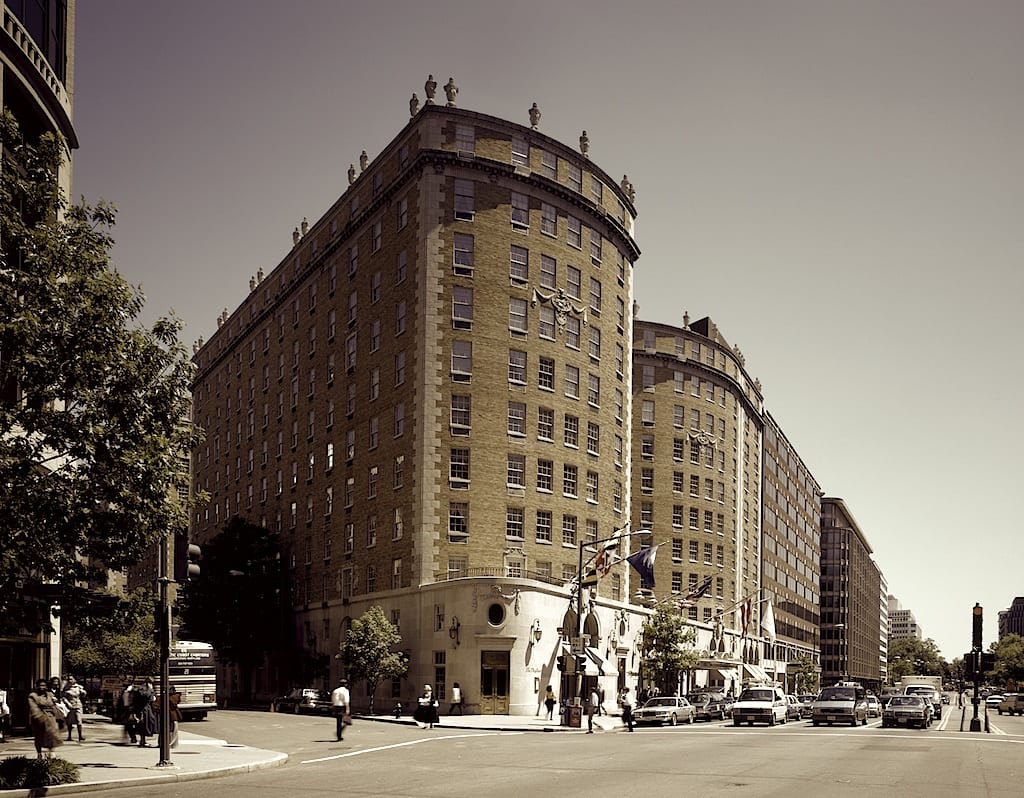
The Mayflower Hotel has seen a lot of history, from FDR’s famous “Nothing to Fear” speech to Monica Lewinsky’s blue dress. Learn more about the “Grande Dame of Washington” and the Walker Hotel and Apartments.