
Imagine hijacking a jet, demanding $100 million in ransom, and insisting the payment come straight from the U.S. Supreme Court. All because you believed the IRS shorted you $471.78 on your 1964 taxes. That is exactly what an unemployed bread truck driver from Phoenix did on June 4th, 1970, in one of the strangest hijackings in American aviation history. It ended at Dulles Airport in a four-shot shootout with the FBI.
Arthur Gates Barkley was 49 years old, a World War II veteran, and unemployed since 1963, when he lost his bakery truck job in Phoenix. He had spent the years since tangled up in lawsuits against his former employer, the Teamsters Union, and the IRS. He was convinced the government owed him $471.78 in a 1964 tax calculation. The Supreme Court had just refused to hear his appeal. That morning, Barkley told his wife Sue, “I’m going to settle the tax case today,” and walked onto TWA Flight 486 out of Phoenix.
About thirty minutes into the flight, Barkley stood up and walked to the cockpit. In his carry-on bag: a .22 caliber pistol, a straight razor, and a steel can full of gasoline. He told the crew he was taking the plane, and the ransom was to be paid by the Supreme Court, which he held responsible for refusing to hear his case.
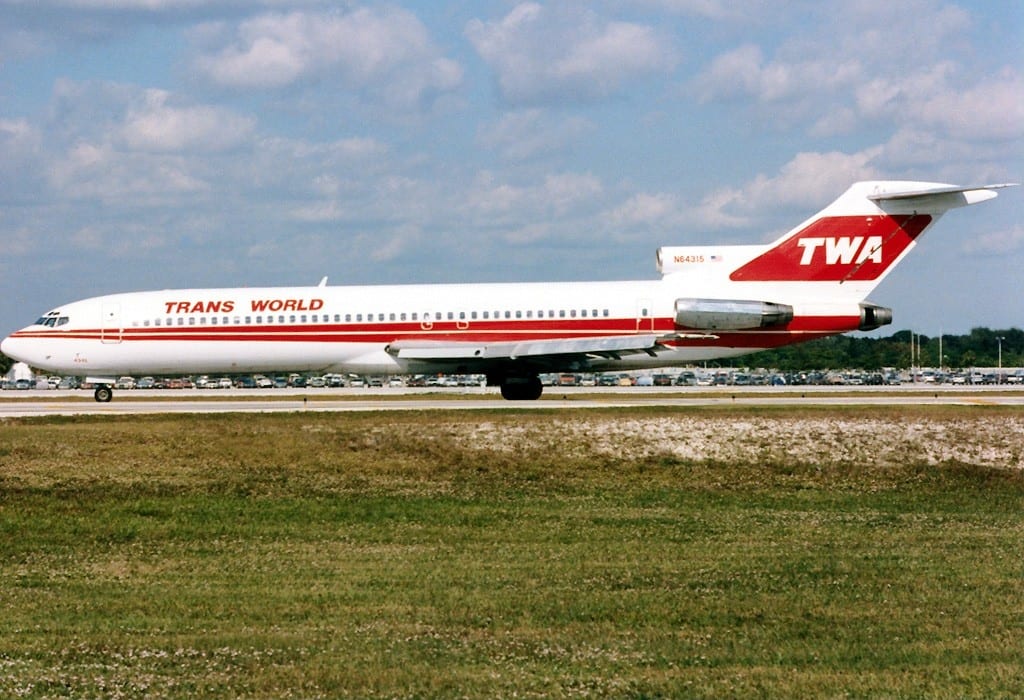
The flight was scheduled for a layover in St. Louis before continuing on to National Airport. St. Louis was skipped. The 727 was rerouted to Dulles, landing at 3:40 pm. On the ground, the plane took on fuel and sat for 54 minutes as Captain Billy Neal Williams, a veteran TWA pilot, volunteered to board and take over the cockpit.
This was not Williams’s first hijacking. A year earlier, he had volunteered for the same job on a hijacked TWA Boeing 707 out of JFK, where the hijacker demanded to be flown to Rome. At Dulles, Williams climbed the rear emergency stairs carrying a sack stuffed with $100,750 in cash. Two DC banks had scrambled to assemble the money on short notice. It was nowhere close to the $100 million Barkley was demanding.
Barkley was furious at the shortfall. Shortly after the plane lifted off again, he ordered a message radioed to President Nixon:
You don’t know how to count money, and you don’t even know the rules of law.
Shortly after 6:15 pm, Captain Williams radioed that the plane was returning to Dulles. Barkley’s new demand was the full $100 million in $100 bills, waiting for him on the runway when they touched down.
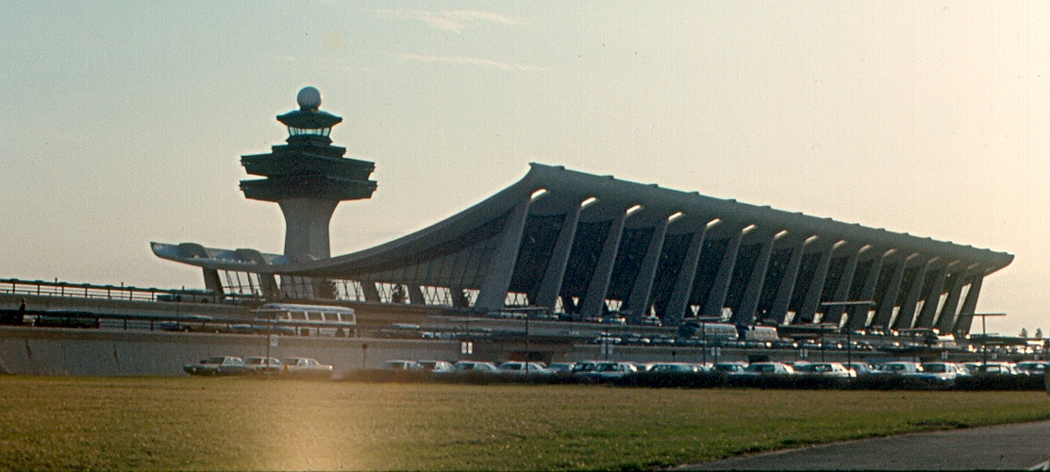
.jpg)
The FBI made a show of it. Roughly 100 mail sacks, supposedly stuffed with $1 million each but actually filled with shredded newspaper, were lined up on the tarmac as decoys. The moment the 727 touched down, FAA officers shot out the rear tires. A panicked passenger kicked open an emergency exit and ran. Others followed. Captain Williams slipped out of the cockpit, hustled the remaining passengers toward the back of the plane, and was handed a revolver by law enforcement on the ground. He crouched behind a seat, took aim at Barkley, and, with his hands shaking, talked himself into pulling the trigger.
FBI agents boarded through the rear. One agent tried to push through the cockpit door and was violently shoved back. Then four shots rang out. A crew member was hit in the stomach. Barkley was shot in the hand. Williams never had to fire.
Barkley was led off the plane in handcuffs, screaming the entire way. All 51 passengers made it out alive.
What Happened to Arthur Barkley
In November 1971, a court found Barkley not guilty by reason of insanity on charges of robbery, abduction, and maiming. He was committed to a psychiatric facility and eventually transferred to Southwestern Virginia Mental Health Institute in Marion, Virginia. He never left.
As the Washington Post reported on the 25th anniversary of the hijacking, annual hearings in Fairfax County consistently concluded that Barkley remained mentally ill. Dr. Colin Barrom testified that Barkley kept an “elaborate system of delusion” intact well into his 80s. In 1998, he had attempted to attack a staff psychiatrist with a ceramic mug stuffed inside a sock. As late as 2006, Judge Marcus D. Williams in Fairfax County was still renewing his commitment. By then, Barkley had been behind locked doors for 35 years over $471.78.
Why This Hijacking Mattered
Barkley’s was one of 134 U.S. hijackings between 1968 and 1972, the stretch aviation historians call the Golden Age of Skyjacking. What made his case a turning point was not the drama on the tarmac. It was his motive. He was the first hijacker to treat an American airliner as an extortion vehicle for cash ransom, setting the template that D.B. Cooper would make famous a year and a half later.
By the end of 1972, the public and the FAA had had enough. Mandatory passenger and carry-on screening with metal detectors rolled out in January 1973, and the hijacking wave collapsed almost overnight. Every time you pull your laptop out of your bag at Dulles, you are feeling the long echo of a bread truck driver and his $471.78 grievance.
Anything else you have been wondering about Dulles or the early days of DC-area aviation? Leave a note in the comments.