
If you’re a fan of D.C. history, you’ll know that MacArthur Blvd. used to be called Conduit Rd. You probably also know that it was named for General Douglas MacArthur, the famous World War II general. But the full story behind it is a lot more interesting than just renaming a street after a prominent American. It starts nearly a century before the war, under the road itself.
The name “Conduit Road” wasn’t poetic or historical. It was purely practical. In 1852, Congress authorized the Washington Aqueduct to pipe fresh water into the city from the Potomac River at Great Falls. Construction began the following year under Lieutenant Montgomery C. Meigs of the U.S. Army Corps of Engineers, the same man who would later oversee construction of the U.S. Capitol dome.
Meigs engineered a 12-mile underground conduit, nine feet in diameter, made of brick, stone, and mortar, running from Great Falls down to the Dalecarlia Reservoir on the DC-Maryland border. The workforce numbered around 700 laborers, and they built on a precise nine-inch-per-mile downgrade so water would flow entirely by gravity. Fresh water first reached the District on January 3rd, 1859.
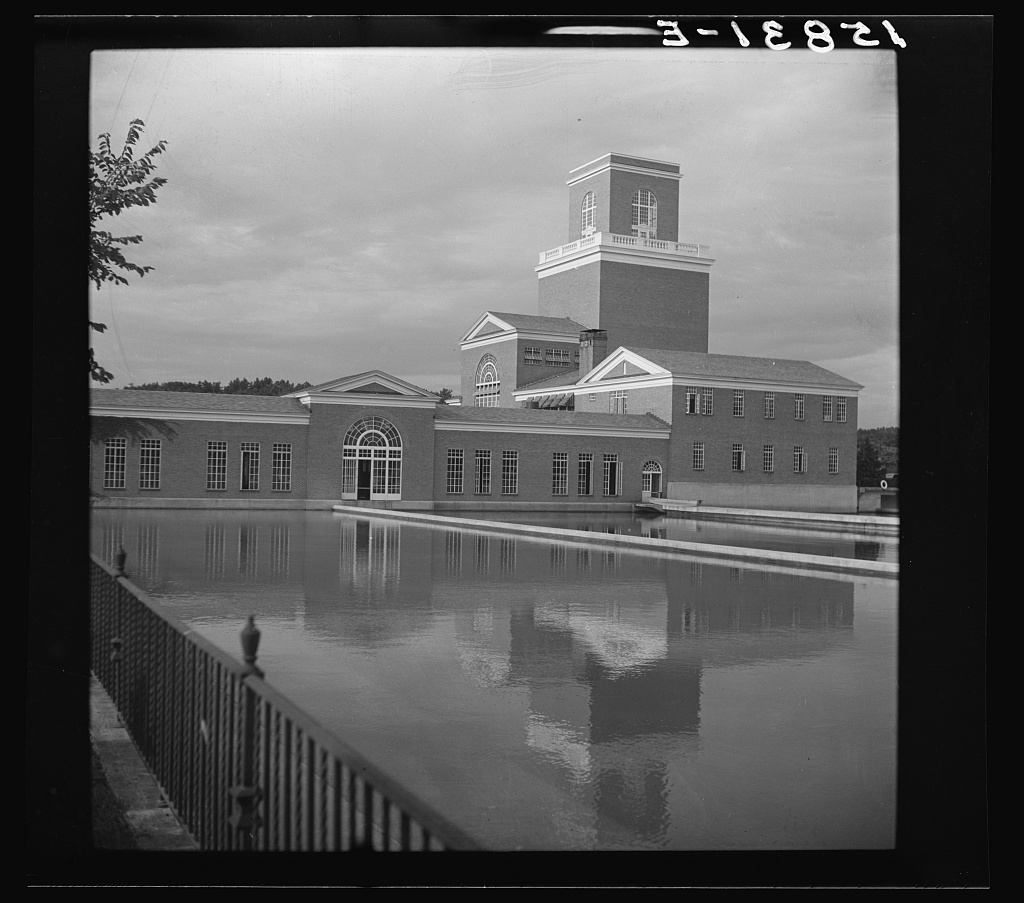
The road above the conduit was built as a service and inspection path so crews could access and maintain the pipe beneath. Conduit Road. Literally. For nearly a century, that’s exactly what it was.
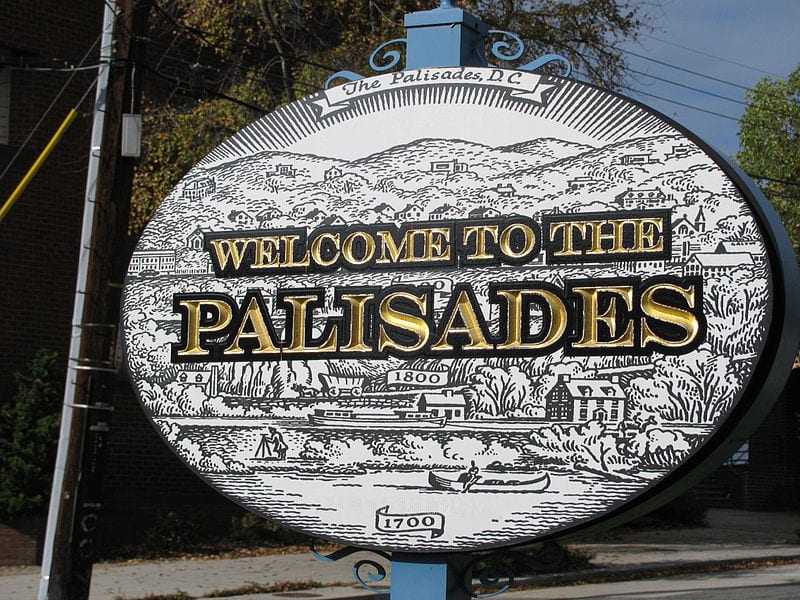
By the 1930s, the Palisades community along Conduit Road was transforming from rural farmland into a proper suburb. A 1909 map of the neighborhood shows how much open land there was just a generation earlier. The streetcar had arrived in 1895, linking the area directly to Georgetown, and Colonial Revival homes were gradually filling in the old farm parcels.
Residents had organized their own civic association in 1916, pushing for sewers, gas lines, schools, and better roads. And increasingly, they felt that “Conduit Road” was an embarrassing name for what was becoming a desirable address. It sounded like a utility easement, not a neighborhood.
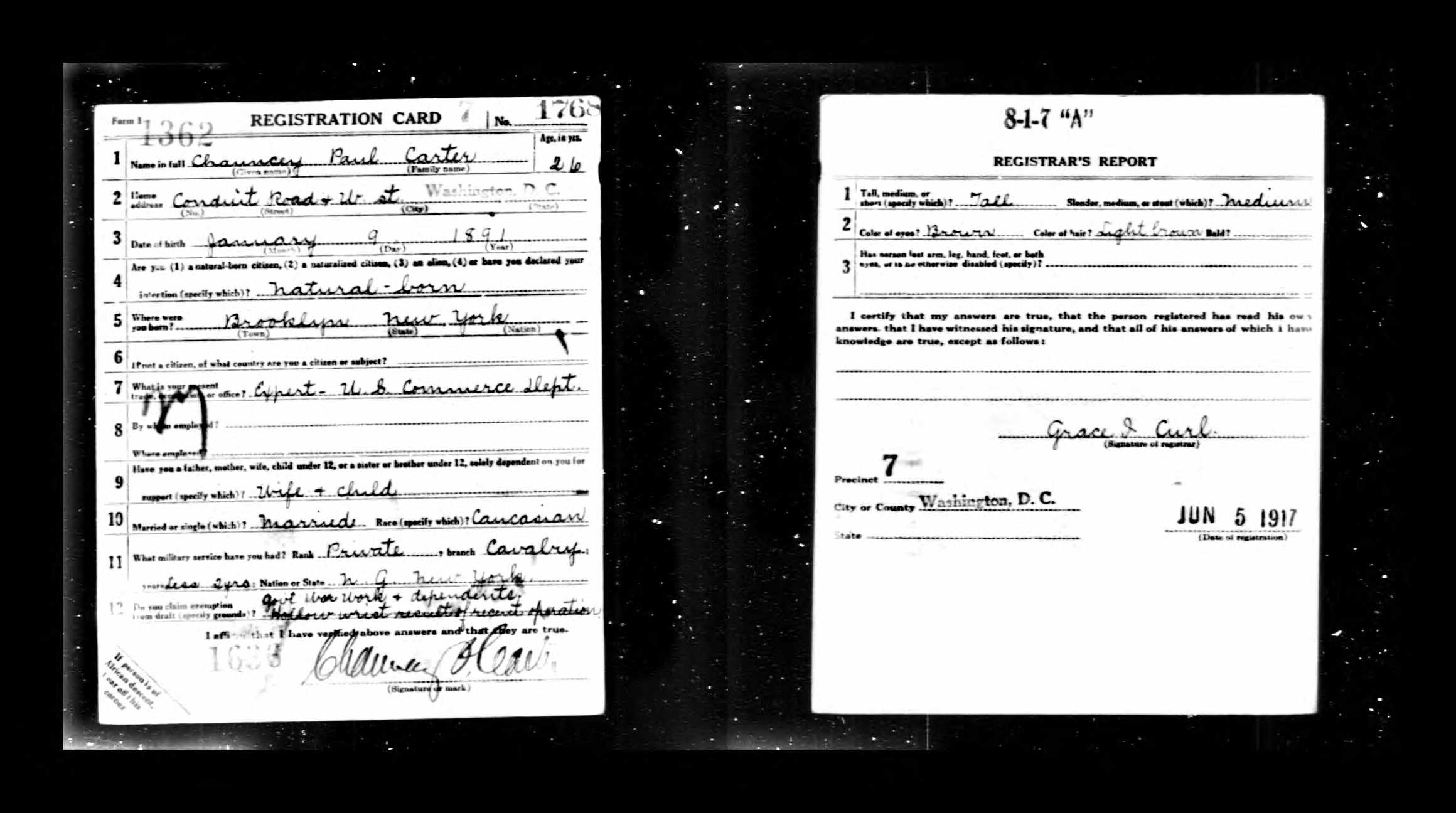
We did a little digging and found that the street name was signed into law by President Franklin Roosevelt on March 5th, 1942. A former Palisades resident named Chauncey Carter drafted the renaming bill and brought it to his friend in Congress, Representative Luther Alexander Johnson, a Democrat from Texas. Johnson introduced the legislation, and it worked its way through Congress in the early months of the war, riding a wave of wartime patriotism.
Below is Chauncey Carter’s draft registration for World War I. It wasn’t entirely clear whether the Chauncey pushing the renaming was the father or the son, since there was a junior. Our assumption is the elder, given that the younger was born in 1918 and would have been only 24 at the time. The community’s dissatisfaction with the Conduit Road name had been building for years before the war handed Carter a perfect opportunity.
Now, it seems a little odd that a street would be renamed for a general not only in the middle of a global war, but only about four months in for the U.S. But here’s the thing: that timing is exactly what makes this story so striking.
When the U.S. entered World War II, General Douglas MacArthur commanded the defense of the Philippines. Hours after the attack on Pearl Harbor on December 7th, 1941, Japan struck MacArthur’s air bases. Eighteen B-17 bombers and 53 fighters were destroyed on the ground at Clark Field, near Manila, eliminating most of his air support before a single sortie could be flown.
Japanese ground forces invaded northern Luzon on December 22nd, then southern Luzon on December 24th. MacArthur ordered a fighting retreat to the Bataan Peninsula and withdrew his command headquarters to the island fortress of Corregidor in Manila Bay.
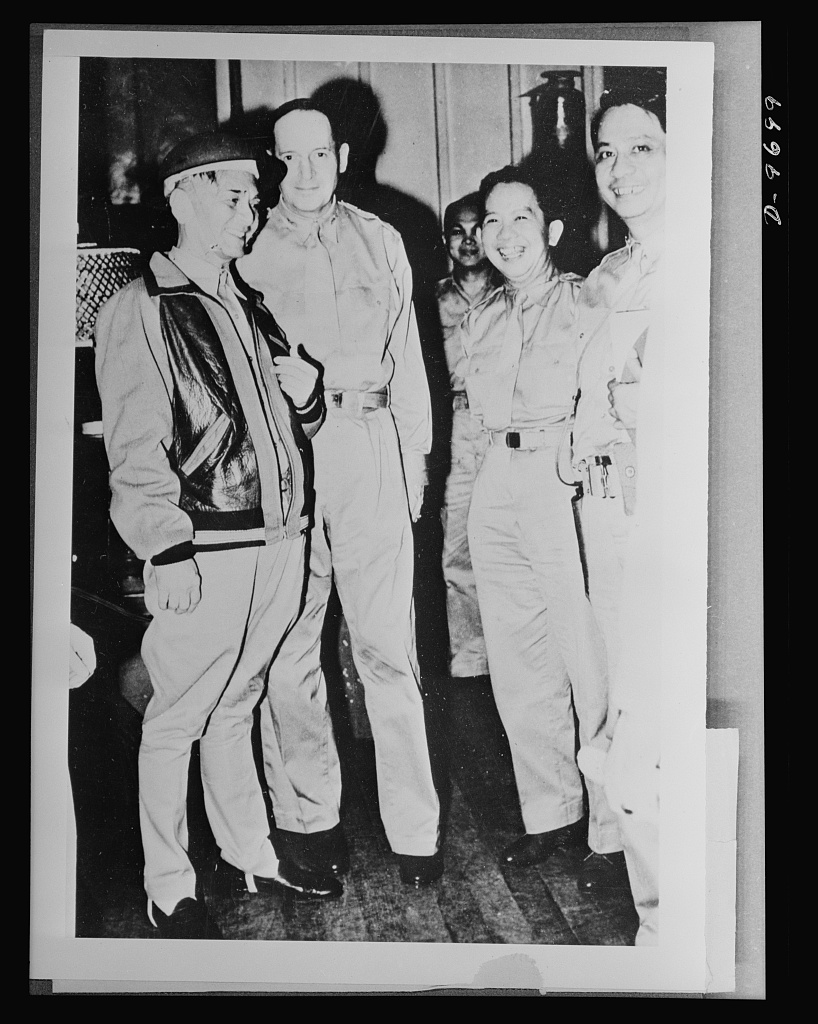
What followed was one of the most grueling defensive stands in American military history. The Battle of Bataan lasted 99 days, from January 6th to April 9th, 1942. Roughly 78,000 troops, including 12,000 Americans and 66,000 Filipinos, held out against a superior, better-supplied Japanese force. They were cut off, undersupplied, and broken down by disease and malnutrition. MacArthur was celebrated at home simply for fighting back when everything else in the Pacific had collapsed so quickly after Pearl Harbor.
Which brings us back to the road in the Palisades. When President Roosevelt signed the renaming bill on March 5th, 1942, General MacArthur was still on Corregidor, still commanding the defense.
Six days later, on March 11th, Roosevelt ordered MacArthur to evacuate by PT boat through 560 miles of enemy-controlled waters to Australia. He left 90,000 troops behind. By the time he reached Darwin on March 17th, the quiet service road running above the old aqueduct in Northwest D.C. already had his name on it.
At a railway stop in Terowie, Australia on March 20th, MacArthur addressed the press. He had written a brief statement on the back of an envelope. “I came through,” he said, “and I shall return.” Those five words became the most repeated phrase of the Pacific War.
Back in the Philippines, the men he’d left behind held out for another three weeks. Bataan fell on April 9th, 1942, when Major General Edward P. King Jr. surrendered to the Japanese in the largest capitulation of American forces in history. The Bataan Death March followed: tens of thousands of Filipino and American prisoners of war were force-marched roughly 66 miles to Camp O’Donnell under brutal conditions, with thousands dying from starvation, beatings, and disease.
Corregidor fell on May 6th, 1942. Roosevelt awarded MacArthur the Medal of Honor. His name, already on a street in the Palisades, stayed there.
There is a certain irony in that permanence. MacArthur was a national hero in 1942, and the road renaming captured that moment exactly. Nine years later, in April 1951, President Harry Truman relieved MacArthur of all commands during the Korean War. MacArthur had publicly defied administration policy, issued unauthorized ultimatums to China, and written letters to Republican congressional leaders criticizing the administration’s war strategy.
The public reaction was enormous. MacArthur gave a farewell address to Congress, “Old soldiers never die, they just fade away,” and receded from public life. The street he’d given his name to outlasted the hero, the controversy, and the Cold War.
MacArthur Boulevard still runs today from Georgetown through the Palisades to the Maryland line, above the same nine-foot brick conduit that Meigs’ workers laid in the 1850s. Take a look at the Palisades in 1890 to see what this stretch looked like before the suburb arrived. If you’re curious how other D.C. streets got their names changed, or nearly got renamed, those stories are worth reading. And not far from MacArthur Boulevard, Chain Bridge has its own history that’s easy to miss.