Around 1 a.m. on July 1, 1973, an Israeli Air Force colonel was shot five times in his Chevy Chase driveway. His wife saw a light-colored car drive away. No one was ever charged, the FBI quietly destroyed the physical evidence a few years later, and more than fifty years on, Yosef Alon’s killing remains the only serving foreign military attaché ever assassinated in the United States, and one of the most consequential unsolved political murders in Washington area history.
The case has nagged at investigators, journalists, and Alon’s daughters for half a century. The FBI quietly destroyed the evidence in 1977. A former State Department counterterrorism agent named Fred Burton, who lived around the corner from the Alons as a teenager, spent decades trying to crack it and thinks he finally did. Carlos the Jackal claims to know exactly how it happened. And Alon’s widow went to her grave convinced her husband was killed not by Black September but by someone much closer to home.
This one is wild. Let’s get into it.
Who Yosef Alon Actually Was
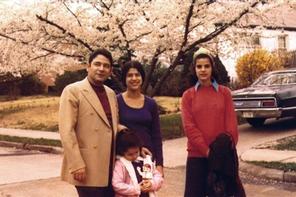
Alon’s life reads like a Cold War novel before it ever gets to the murder.
He was born Josef Plaček in 1929 on Kibbutz Ein Harod in what was then Mandatory Palestine. When he was two, his Czech-Jewish parents moved the family back to Teplice in the Sudetenland. After the 1938 Munich Agreement handed the Sudetenland to Nazi Germany, the Plačeks fled to Prague. On the eve of the war, his father put ten-year-old Josef and his older brother David on the Kindertransport to England, where a childless Christian couple, George and Jenny Davidson, adopted them. His parents were murdered at Auschwitz.
After the war he went back to Czechoslovakia, briefly tried to be a jeweler, then enlisted in the Czechoslovak Air Force and learned to fly. In 1947 he volunteered for the first pilots’ course of the Sherut Avir, the Haganah’s nascent air corps. He moved back to Mandate Palestine, changed his name to Yosef Alon, and in 1948 became one of the founding members of the Israeli Air Force.
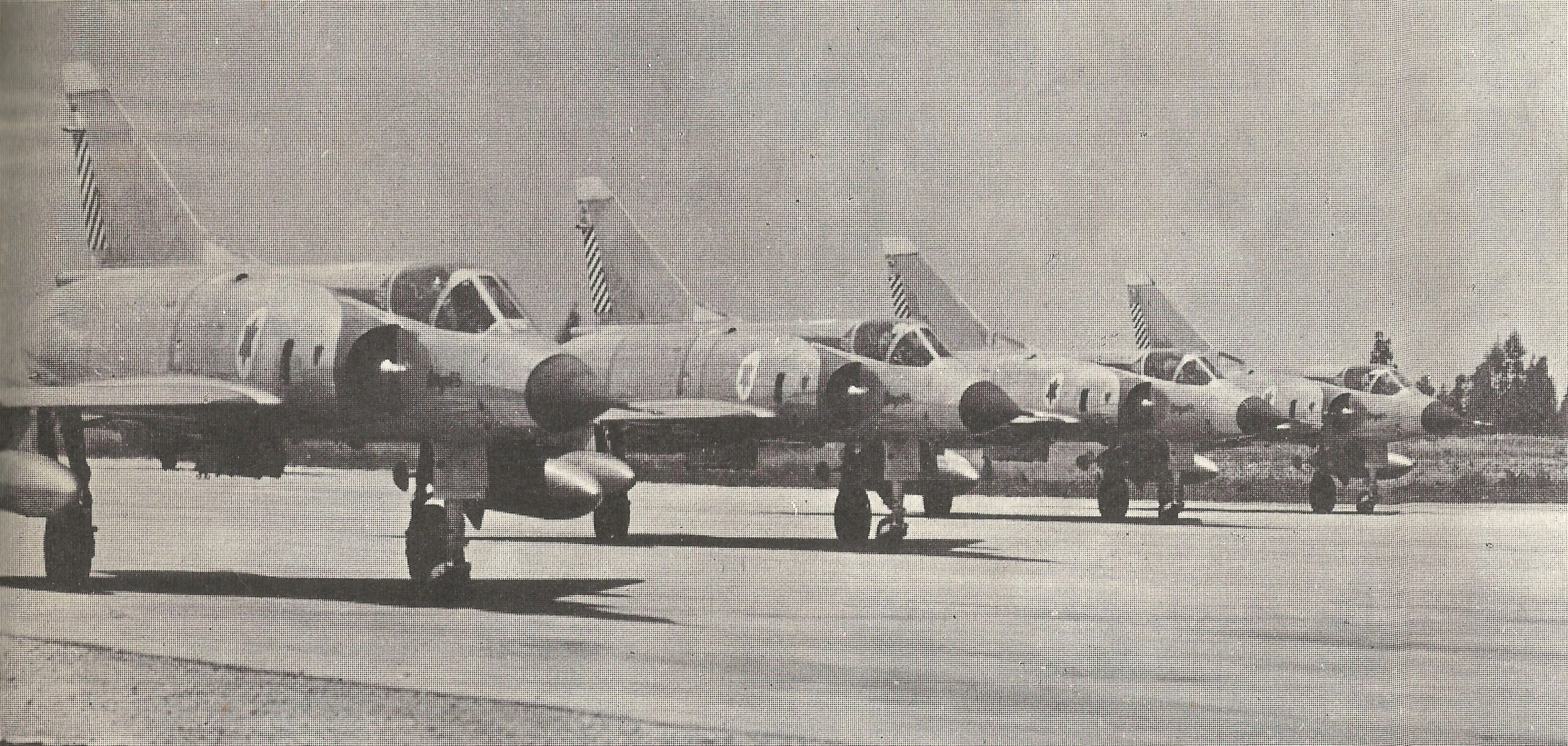
He flew 75 missions in the 1948 war. In 1953 he became one of Israel’s first jet pilots. In 1961 he was given command of 101 Squadron, the IAF’s “First Fighter” unit, when it was being re-equipped with the Mirage III, France’s brand new delta-wing supersonic fighter. He founded and commanded the Hatzerim Airbase from 1966 to 1970, the same period when 101 Squadron and the Mirage were establishing the air superiority that would decide the Six-Day War.
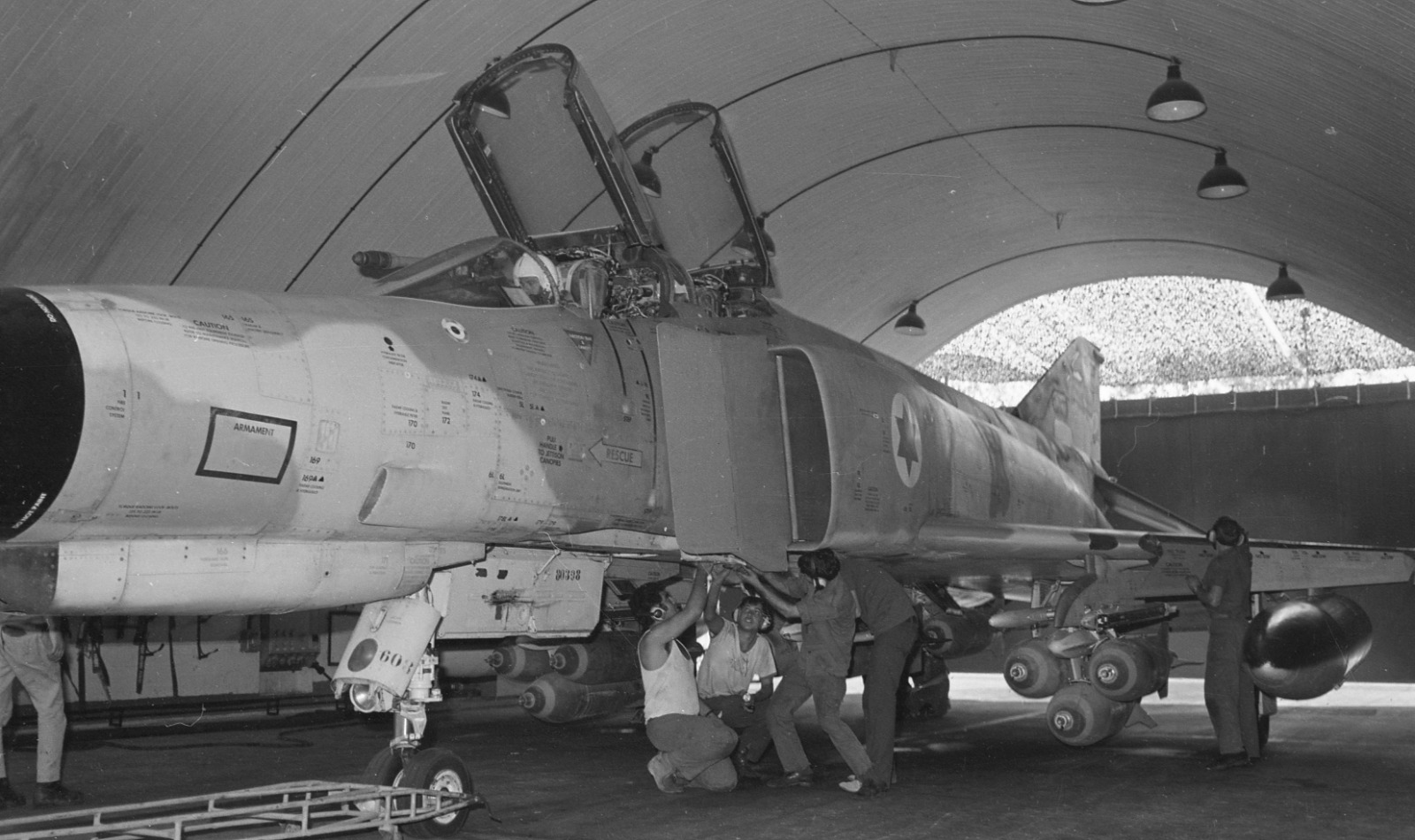
In 1970 he was sent to Washington as the assistant air and naval attaché at the Israeli Embassy. The job was nominally about procurement, specifically the F-4 Phantom, which the U.S. had agreed to sell Israel in 1968 and which became the backbone of the IAF for the next decade. By every account Alon was unusually good at the social side of the role too. The Washington Times later described him as “a gregarious regular on the military and political cocktail circuits, well liked by his Pentagon counterparts.” He lectured American Jewish audiences for the United Jewish Appeal. He had a wife, Dvora, and three daughters: Dalia, Yael, and Rachel.
The family lived at 5519 Trent Street, technically in Chevy Chase but everyone calls that stretch Bethesda. The Bethesda of 1973 was the same kind of leafy, prosperous suburb you’d recognize today, the kind of place where the most dramatic thing on the block was usually somebody’s kid backing into a mailbox.
The Night of the Murder
The evening of June 30, 1973, Alon and Dvora drove into D.C. for a dinner party in honor of a colleague who was rotating out of the embassy. They left around midnight in their green Ford Galaxie and drove home to Trent Street. They pulled in at roughly 1:00 a.m.
Dvora got out and started walking the twenty or thirty feet to the front porch. Alon stayed in the driver’s seat for a beat to grab his sports jacket from the back. A gunman standing about six feet from the car opened fire with a German-made .38 caliber Arminius revolver (or possibly its U.S.-imported clone, the F.I.E. Titan Tiger, which was the same gun under a Florida importer’s label), loaded with copper-jacketed military rounds. Five shots hit Alon. One pierced his heart.
Dvora ran back outside and saw only a light-colored sedan driving away. She and 18-year-old Dalia tried to stop the bleeding with bathroom towels. The Bethesda-Chevy Chase Rescue Squad got him to Suburban Hospital. He was pronounced dead at 1:27 a.m.
Within 48 hours, on what was reported at the time to be the personal order of Richard Nixon and Henry Kissinger, Alon’s body and family were flown back to Israel aboard a USAF C-137 Stratoliner out of Andrews. He was buried with full military honors at Kiryat Shaul Military Cemetery in Tel Aviv. Moshe Dayan, then defense minister, blamed Arab terrorists at the memorial service.
Later that same day, Cairo-based Voice of Palestine claimed responsibility on behalf of Black September. The broadcast tied the killing to the Mossad’s June 28 assassination of Mohammed Boudia, a Black September operations chief, in Paris. Here’s the relevant excerpt:
After the assassination of martyr Mohammed Boudia at the hands of the Zionist intelligence elements in Paris, Colonel Yosef Alon… was executed… His is the first execution operation carried out against a Zionist official in the U.S.
The same day the broadcast aired, the Washington field office of the FBI activated, for the first time anywhere in the country, a brand new federal program designed for exactly this scenario. The Washington Post reported it like this:
Within an hour after a gunman’s bullets cut down Israeli Col. Yosef Alon in his darkened driveway early Sunday, federal agencies began putting into effect for the first time a nationwide surveillance procedure worked out last year to determine the whereabouts of potential Arab terrorists or terrorist sympathizers.
The procedure was one of two plans formulated late last year by a Cabinet Committee on Terrorism headed by Secretary of State William P. Rogers. It was designed, according to sources familiar with the plans, as a response to terrorist acts of international stature committed in the U.S.
That second paragraph is the kind of detail that gets glossed over but is actually a big deal. The Cabinet Committee on Terrorism had been quietly spun up in late 1972 by Secretary of State William P. Rogers in the aftermath of the Munich massacre. The Alon murder was the first time anyone pulled that procedure off the shelf. A lot of younger readers won’t remember this, but the early 1970s were a relentless run of high-profile terrorism inside the United States: commercial airline hijackings, embassy bombings, hostage takings in D.C. and New York. Three months before Alon was killed, Black September had tried to set off three car bombs in Manhattan timed to coincide with Golda Meir’s visit. The infrastructure being built quietly to respond to all of this got its first real-world test on Trent Street in Bethesda.
An Investigation That Went Nowhere
The FBI opened a case called MURDA, short for “Murder of Assistant Air Attache Col. Joseph Alon,” and worked it with all the focus a Bureau distracted by Watergate could muster. According to Burton, the original case agent had never investigated a murder before. The Washington field office was simultaneously juggling Watergate leads and J. Edgar Hoover’s old surveillance ledgers (Hoover had died the previous year). Crucially, in 1973 the FBI had no real model for what an “international terrorism” murder investigation should even look like. There was no DNA, no cell tower data, no real interagency framework for talking to Mossad or the CIA.
Agents ran down a 90-person list of known or suspected Arab terrorists in the country, interviewed Arab faculty and students at D.C.-area universities, chased Mossad-fed leads, and ruled out the obvious alternatives like a botched robbery or a jealous-husband scenario. They never found the weapon. They never developed a suspect. In March 1976 the case was officially closed.
Then, in 1977, the Baltimore field office of the FBI destroyed all the physical evidence in the case. The murder weapon was never recovered, but the copper-jacketed bullet pulled from Alon’s body, the spent casings, the crime-scene photos, all of it went into the shredder. Burton, who later worked political assassinations for the State Department’s Diplomatic Security Service, calls this his single biggest tell that something was off:
This was a political assassination, the kind of case that I would have extensive files about. But we later discovered that the FBI destroyed all the evidence in the case… How does evidence of a political assassination get destroyed three years after the event, after all, the FBI keeps evidence back from the days of Al Capone.
The destruction came right after the CIA had finally received a usable tip. According to a “Fedayeen senior official” the agency was running, Black September had sent two students with Lebanese or Cypriot passports across the Canadian border, helped by a “local professor” in Washington who arranged a rental car and the weapons. After the shooting they swapped cars, drove to Dulles, and flew via the West Coast to East Asia and back to the Middle East. The CIA passed the tip to the FBI in February 1977. The Bureau couldn’t move on it. The evidence was destroyed not long after.
Fred Burton’s Decades-Long Hunt
This is where the case stops being just an unsolved Bethesda murder and turns into one of the strangest cold-case investigations of the last few decades.
Fred Burton was 16 when Alon was killed. He lived around the corner from the family on the same Bethesda block and went to B-CC High School with Alon’s daughter Dalia. The murder, he later wrote, “ruptured my sense of security” and pushed him into public service. He joined the Bethesda-Chevy Chase Rescue Squad, the same outfit that had transported Alon to Suburban Hospital. He became a Montgomery County police detective. In the mid-1980s he joined the State Department’s Diplomatic Security Service and ran counterterrorism cases against the same kind of operatives who’d killed Alon. After leaving government he became a vice president at Stratfor, the private intelligence firm in Austin.
Every night for years, driving home from his Montgomery County shifts, he’d loop past the old Alon house on Trent Street. “I must have drove by the house a hundred times,” he told the Washington Times in 2011, “just thinking about what happened, tracing how I thought the bad guys got away.”
In 2006 he started working the case in earnest, paired up with Ed Golian, a Montgomery County cold-case detective who’d come up reading the original Alon file as a young patrol cop. They had Burton’s rolodex of three decades of intelligence contacts and Golian’s police authority. Over five years they pulled together everything that had survived the FBI’s 1977 evidence purge.
The result was Chasing Shadows: A Special Agent’s Lifelong Hunt to Bring a Cold War Assassin to Justice, published by Palgrave Macmillan in 2011 with co-author John Bruning. The book argues a few things.
First, that Alon was Black September’s target. Burton lines up the modus operandi: long pre-attack surveillance (Dvora later remembered “ruse calls” from people speaking Hebrew, a “phone company technician” who wanted unusual access to the basement, a man lurking in the yard), foreign-made revolver, two-man team, swift exit through a major airport. It fits the playbook used in the Munich-era European campaign. The CIA’s 1977 brief said the same thing, and a confidential informant who’d participated in the March 1973 Manhattan car-bomb plot independently identified Alon from a photograph as someone Khalid Al-Jawary, a convicted Black September operative, had met with at least once. Burton names Abu Iyad, the deputy commander of Fatah and the man widely understood to be Black September’s operational chief, as the person who ordered the hit.
Second, and this is the part that gets people heated, Burton argues that Alon was running a Mossad sideline alongside his attaché job. He thinks Alon was trying to develop a mole inside Black September, which is why he was meeting with Al-Jawary. He thinks an “odd piece of equipment” the family remembered in their Bethesda house was a Mossad agent-to-agent communications device. He thinks the late General Mordechai Gur, then Israel’s senior military attaché in Washington, made a startling on-the-record admission to a Montgomery County detective the night of the murder, an admission that “never found its way into the official police report.” If Burton is right, Alon was discovered, and the Israelis later declined to push the case publicly because doing so would have exposed the operation.
“Hassan Ali” and a December 2009 Text Message
The closing chapters of Chasing Shadows are where Burton names the gunman. Sort of.
For legal reasons he calls the suspected shooter “Hassan Ali,” a pseudonym. He describes him as a Palestinian “foot soldier” who fled the U.S. after the killing, lived for years in the Palestinian community in Brazil, and eventually made his way to Lebanon under Hezbollah’s protection. In December 2009, Burton says he passed the real name to his contacts in Israeli intelligence. In February 2010 his BlackBerry buzzed with a one-line reply:
The matter has been resolved.
Whether you believe this depends on how much you trust Burton’s sourcing, all of which is redacted in the book. The Wikipedia summary now flatly identifies the killer as a Black September agent named Hassan Ali killed by Mossad in 2011, citing Burton. Other reporters who’ve worked the case, including AP correspondent Adam Goldman, treat it as one plausible answer rather than the answer.
Carlos the Jackal Writes a Letter
And then the case got weirder.
In 2007 the AP’s Adam Goldman and Randy Herschaft ran a long investigative piece on the case that included some newly declassified CIA and FBI material. The article got read in some unusual places, including a French prison cell occupied by Ilich Ramírez Sánchez, better known as Carlos the Jackal, who is currently serving a life sentence for a 1975 attack in Paris. The Jackal wrote to the AP. He said he knew exactly how Alon was killed, that the plan had a code name (he called it “Operation Alon”), and that the operatives weren’t who anyone had assumed.
Years later, after Goldman had moved to The New York Times, he opened the correspondence back up. The Jackal wanted to be paid for an interview. Goldman declined and walked away. But the FBI agent in the bureau’s Paris office, Eugene Casey, had read Goldman’s earlier reporting and decided to follow up. Starting in February 2014, Casey spent 15 hours interviewing the Jackal across a year and a half.
The Jackal’s version, as reported by Goldman in The Times in January 2017: sometime in the early 1970s, three American Vietnam veterans sympathetic to the Palestinian cause, one of them described as “a prominent former Black Panther,” walked into a small Arabic bookshop on the Rue Saint Victor in the Latin Quarter of Paris. The bookshop was managed by Mahmoud Ould Saleh, a Mauritania-born militant of the Palestinian “rejection front.” Saleh introduced the Americans to Kamal Kheir Beik, a Syrian Black September operative (Beik later helped manage the 1975 OPEC siege in Vienna). When the Americans asked how they could help the Palestinian cause, Beik told them to kill Joe Alon.
When Alon was killed, we all wondered who had done it. We were obviously all very happy, but contact with the volunteers who executed the operation in Washington was lost long ago.
The bookshop turned out to be real. Two of the three named American veterans were still alive when the FBI tracked them down and both denied involvement. The third was dead. The case was reopened in January 2017. So far no one has been charged.
The “He Knew Too Much” Theory
Burton’s Black September answer never satisfied Dvora Alon, and it doesn’t satisfy her daughters today.
Their version, laid out in the 2011 Israeli documentary Who Shot My Father? The Story of Joe Alon, directed by Liora Amir Barmatz, goes like this. The Yom Kippur War broke out on October 6, 1973, exactly three months after Alon was killed. Egypt and Syria caught Israel almost catastrophically by surprise, despite indications that the Israeli intelligence establishment should have read more clearly. One persistent theory inside Israel, advanced over the years by historian Uri Milstein, Colonel Yakov Agassi, and others, holds that Israeli and American leaders (specifically including Kissinger) had a quiet understanding that the Arabs would be allowed to strike first to set up the diplomatic conditions for an American-brokered peace. Alon, the theory goes, found out about it, and was killed to keep him quiet.
This sounds wild, and Burton dismisses it. But the daughters point to a few things that aren’t easy to explain away. Henry Kissinger personally requested daily updates on the FBI investigation, which Burton himself concedes is unusual for a homicide. The Air Force plane that brought Alon’s body home is sometimes described as the vice president’s plane, an extraordinary courtesy for a foreign officer. And then there are the stories Dvora collected over twenty years of asking. Rachel Alon-Margalit recounts in the documentary that when her mother finally cornered Ezer Weizman, the former president of Israel and a founder of the IAF, he said:
Dvora, I can’t tell you anything. If I open my mouth there will be an earthquake. Go home and take care of your daughters.
General Shmuel Gonen, the IDF Southern Command head during the Yom Kippur War, told journalist Adam Baruch (whose book recounted it later) that Alon was killed “by one of our own.” The Israeli historian Uri Bar-Joseph has publicly rejected the entire “knew too much” theory, but the family points out that nobody in the Israeli establishment has ever offered an alternative answer either. As Yael Alon-Rosenschein told Haaretz when the FBI reopened the case in 2017:
Our mother, Dvora, believed over the years until she died that the person who pulled the trigger was acting on behalf of the Americans, because of information that our dad was exposed to in his job in Washington and that he was not supposed to have access to.
Where the Case Stands in 2026
Dvora Alon died of cancer in 1995, still not knowing. The Baltimore FBI office’s 1978 evidence destruction is, as Burton says, the single fact that pretty much guarantees we’ll never have DNA or ballistics to settle it. The case file has been periodically dusted off, in 2007, in 2011, again in 2017, but each round produces more theories and not a single arrest.
What you’re left with is three possible answers and no way to choose among them with certainty. Either a Black September two-man team flew in via Canada, did the job, and flew out (Burton). Or a small cell of American Vietnam veterans recruited through a Paris bookshop pulled the trigger on Black September’s behalf (the Jackal). Or Alon found out something he wasn’t supposed to know about the coming Yom Kippur War and was killed for it (Dvora and her daughters).
Some of these can both be true. None of them have been proven.
If you’ve spent any time in this part of Montgomery County, the strange thing now is that there is no marker on Trent Street. No plaque. The house has changed hands several times. Drivers go past it on the way to the Whole Foods at Wisconsin and Bradley with no idea what happened there in 1973. Here’s the house at 5519 Trent Street on the map, just east of the Bethesda line.
Open 5519 Trent Street in Google Maps to switch to Street View.
For more on 1970s Washington political violence, we wrote about the night Senator John Stennis was shot in front of his Cleveland Park home in January 1973, five months before the Alon killing, and the 1976 Embassy Row car-bomb assassination of Orlando Letelier at Sheridan Circle, the next foreign-diplomat killing in metropolitan D.C. after Alon. For broader context on Washington as a target for political attacks, see our piece on the 1915 Capitol bombing and the shooting of J.P. Morgan, or the abandoned Iranian embassy on Massachusetts Avenue. And for what Nixon-era Washington looked like while the FBI was running this case in the background, the Watergate sequence is its own kind of unsolved mystery.
Fred Burton, former deputy chief of the counterterrorism division of the U.S. State Department’s Diplomatic Security Service, concludes (In his book Chasing Shadows (Palgrave Macmillan),) after a lengthy investigation that Alon’s killer was an agent from Black September. In the final pages of Burton’s book, he writes that according to sources in the Mossad, the killer was “brought to justice.” The implication is that the Mossad killed Alon’s murderer in February 2011.