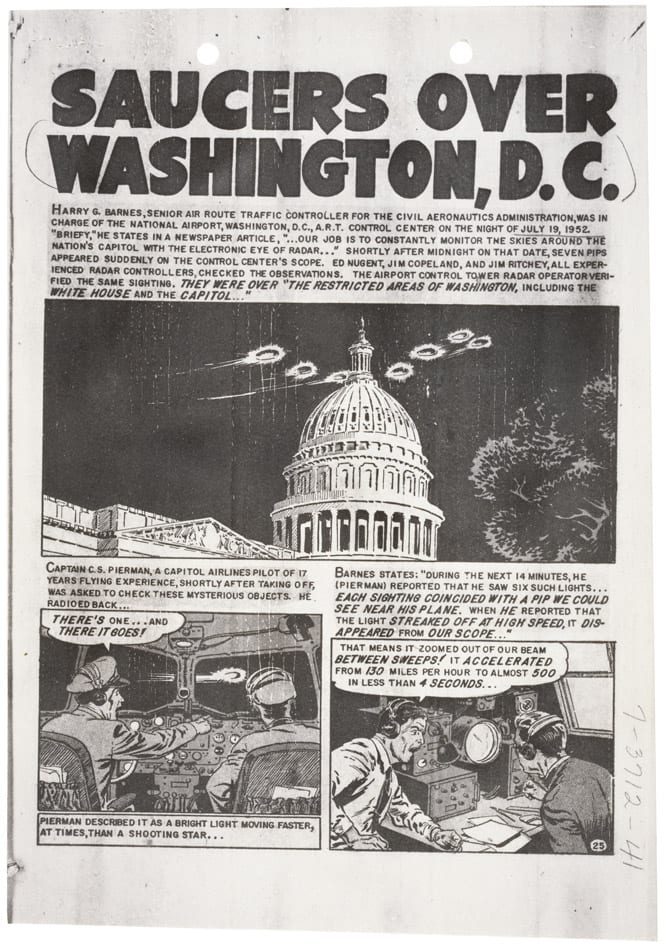
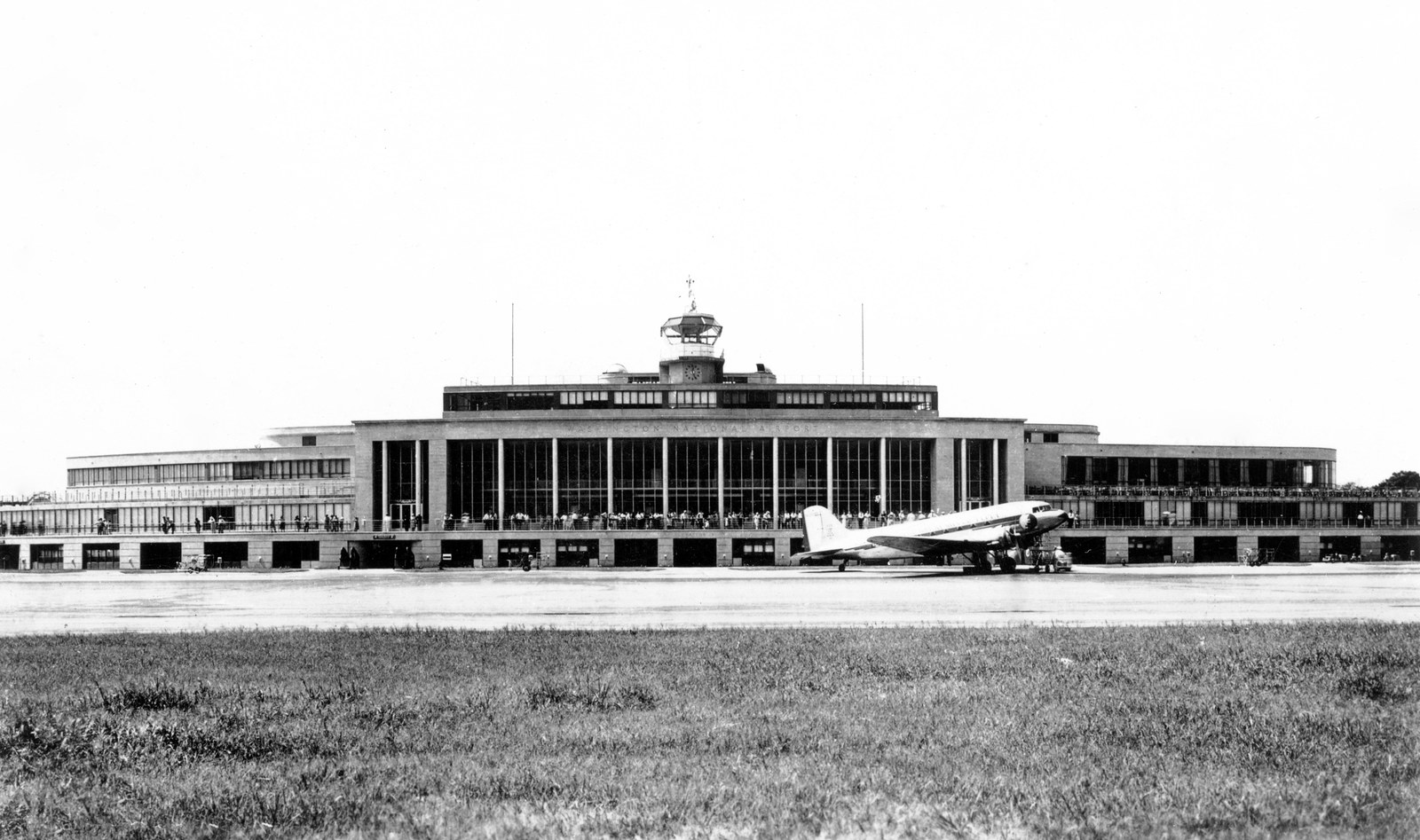
At 11:40 p.m. on Saturday, July 19, 1952, an air traffic controller named Edward Nugent was watching his radar scope at Washington National Airport when seven objects appeared, fifteen miles south-southwest of the city. No flight plans accounted for them. They weren’t moving like aircraft.
For the next two weekends, the night sky over Washington stopped behaving. Radar at National lit up. Radar at Andrews lit up.
A Capital Airlines pilot waiting on a runway watched white lights streak overhead and matched them, one by one, to the blips controllers were calling out on the radio. Jet fighters scrambled from New Castle Air Force Base in Delaware. The objects, whatever they were, vanished when the jets arrived and came back when the jets left.
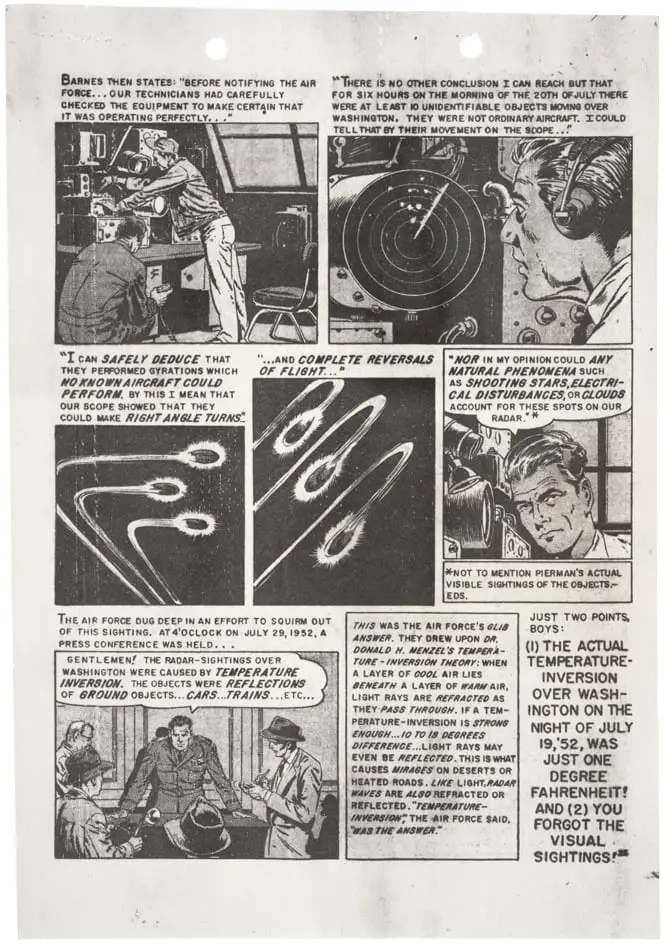
By the end of the month, the Air Force was holding the largest Pentagon press conference since the end of World War II to tell the country that what radar had seen was a temperature inversion bending the signal.
Plenty of the people who were actually in the room that night never believed a word of it.
Seven blips, fifteen miles south-southwest
Nugent called over Harry Barnes, the senior controller at the airport’s CAA radar room. Barnes had two controllers check Nugent’s scope to rule out a malfunction. The scope was fine.
Barnes wrote later about what he saw on Nugent’s screen:
We knew immediately that a very strange situation existed. Their movements were completely radical compared to those of ordinary aircraft.
Barnes called National’s radar-equipped control tower across the field. The tower controllers, Howard Cocklin and Joe Zacko, told him they had the same unidentified blips on their own screen. They also said they could see a bright light hovering outside the tower window, which then took off at an impossible speed. Cocklin turned to Zacko and asked, “Did you see that? What the hell was that?”
The blips drifted across the radarscope toward the White House and the Capitol. Barnes called Andrews Air Force Base, ten miles to the southeast. Andrews said its own radar was clean. A minute later an airman at Andrews phoned the base’s tower to report something strange in the sky over the Maryland side of the river.
The airman in the Andrews tower, William Brady, looked up and saw it himself:
An object which appeared to be like an orange ball of fire, trailing a tail. It was unlike anything I had ever seen before.
Brady tried to alert the other men in the tower. By the time anyone else turned to look, the thing had taken off at what he described as an unbelievable speed.
The Capital Airlines pilot on the runway
On one of National’s runways, a Capital Airlines pilot named S.C. Pierman was sitting in the cockpit of his DC-4 waiting for clearance. He saw a streak overhead and assumed it was a meteor. Then the tower called and told him the radar room had unknown objects closing on his position.
Pierman watched the sky for the next fourteen minutes and counted six objects. He described them as white, tailless, fast-moving lights. He stayed on the radio with Barnes the whole time. Barnes later told reporters what was happening on his end:
Each sighting coincided with a pip we could see near his plane. When he reported that the light streaked off at a high speed, it disappeared on our scope.
Over at Andrews, Staff Sgt. Charles Davenport stepped outside the radar shack and looked south. He saw an orange-red light that, in his words, would appear to stand still, then make an abrupt change in direction and altitude. He watched it happen several times.
At one point, both National Airport’s radar centers and Andrews’ radar were tracking the same object hovering over a radio beacon. The object disappeared from all three scopes at the same instant.
Jets from New Castle
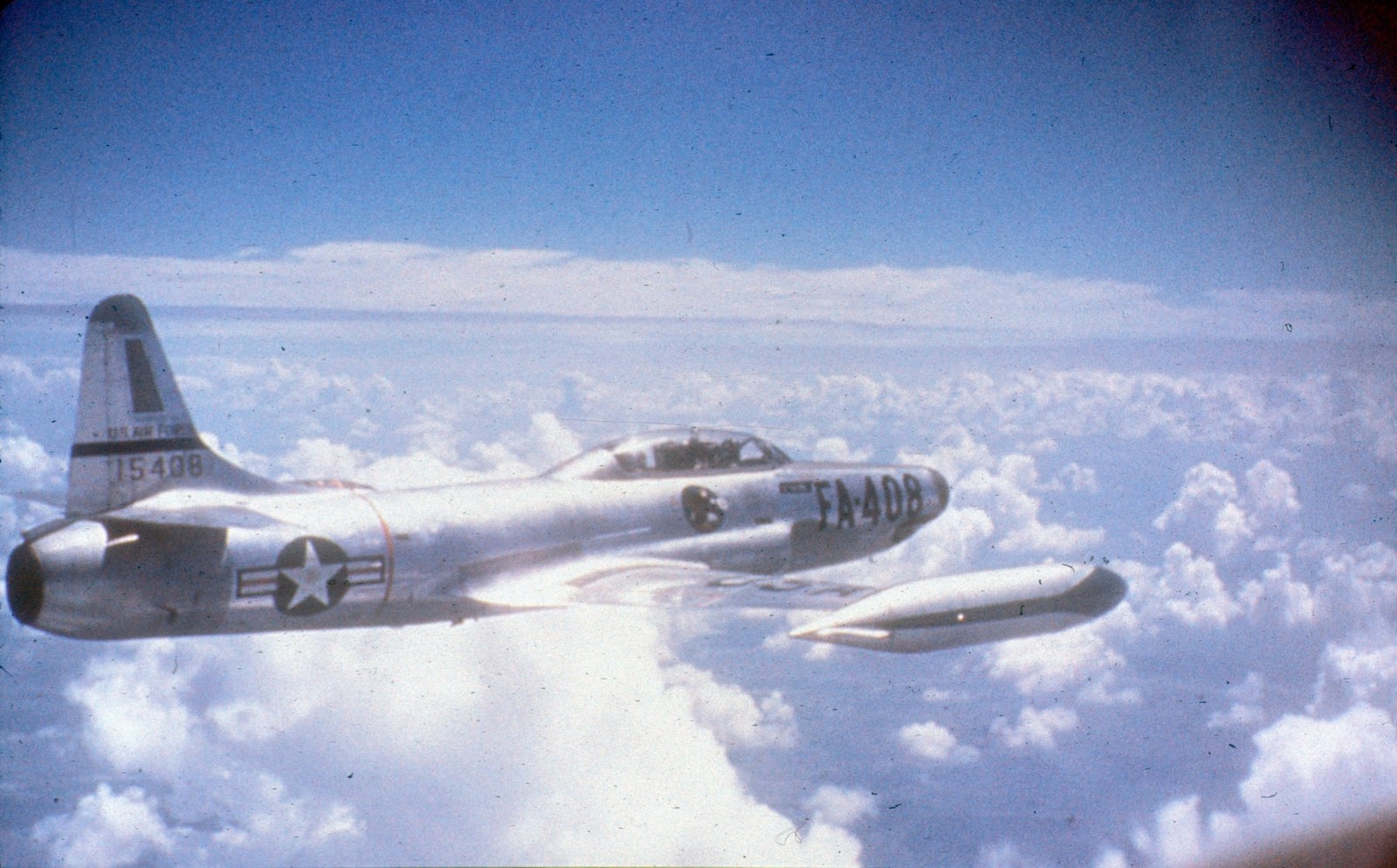
Around 3 a.m. on Sunday, July 20, two F-94 Starfires from the 142nd Fighter-Interceptor Squadron at New Castle Air Force Base in Delaware showed up over Washington. The instant the jets arrived in airspace, every unknown object on National’s radar vanished.
The pilots saw nothing. They ran low on fuel and headed back to Delaware.
The blips came back the moment the jets left. Barnes drew his own conclusion from that pattern, and was blunt about it:
The UFOs were monitoring radio traffic and behaving accordingly.
The last unknown was off the scope by 5:30 a.m. By Monday morning, the story was on front pages everywhere. The Cedar Rapids Gazette in Iowa ran “SAUCERS SWARM OVER CAPITAL” across the top of page one in black block type.
Edward Ruppelt can’t get a staff car
By a strange coincidence, the man whose entire job was investigating UFO reports for the Air Force was already in Washington that weekend. Captain Edward J. Ruppelt ran Project Blue Book out of the Air Technical Intelligence Center at Wright-Patterson AFB in Dayton, Ohio. He happened to be in town Saturday night.
He didn’t find out about the sightings until Monday, July 21, when he read the headlines in a local paper. He went to the Pentagon to talk to intelligence officers, then tried to get a staff car so he could drive around and interview controllers and witnesses while the trail was hot.
He was told that staff cars were reserved for generals and senior colonels. He was welcome to take a taxi, on his own dime. Ruppelt, by his own account, gave up and flew back to Dayton. The man in charge of Project Blue Book never personally interviewed the controllers who had watched the city light up.
Back at Wright-Patterson, he ran the case past an Air Force radar specialist named Capt. Roy James. James told him unusual weather, specifically a temperature inversion, could bend a radar signal and create false returns. That phrase, “temperature inversion,” was about to become the official Air Force position on what had happened in the sky over Washington.
The second weekend
The next Saturday, July 26, the pattern repeated almost exactly.
At 8:15 p.m., a National Airlines pilot and stewardess on approach to Washington saw lights above their plane. Within minutes, both National’s CAA radar centers and Andrews’ radar were tracking unknown objects again.
Master Sgt. Charles E. Cummings stepped outside at Andrews and watched the objects with his own eyes. He had no patience for the meteor theory:
These lights did not have the characteristics of shooting stars. There was no trails. They traveled faster than any shooting star I have ever seen.
By 9:30 p.m. the National radar room was painting unknown returns in every sector. Some sat almost still. Others reversed direction and crossed the screen at speeds Ruppelt’s investigators later calculated at up to 7,000 miles per hour.
Two F-94 Starfires were scrambled again from New Castle. The flight leader, Capt. John McHugo, was vectored toward the radar returns and saw nothing. His wingman, Lt. William Patterson, did. He saw four white “glows” and tried to close on them. Albert Chop, the civilian press spokesman for Project Blue Book, was in the National radar room that night and recounted the exchange between Patterson and the ground:
“I see them now and they’re all around me. What should I do?” And nobody answered, because we didn’t know what to tell him.
After midnight, Maj. Dewey Fournet, Project Blue Book’s Pentagon liaison, and Lt. John Holcomb, a Navy radar specialist, arrived at the National radar room. Holcomb got a call from the Washington National Weather Station confirming there was a slight temperature inversion over the city that night. He didn’t think it was anywhere near strong enough to explain the returns he was watching, which he called good and solid.
The unknowns faded with sunrise, exactly like the weekend before.
President Truman picks up the phone
Sunday morning, July 27, headlines around the country went into orbit again. By later that morning, President Truman’s air force aide was on the phone to Ruppelt at Wright-Patterson, asking what was going on. Truman himself listened in on a second line. He didn’t ask any questions.
Ruppelt, working off the conversation he’d had with Capt. James earlier that week, told the aide the sightings might be caused by a temperature inversion bending the radar beam. He had not yet interviewed a single witness from either night.
Room 3E-869, the Pentagon, 4:00 p.m.
Tuesday, July 29, 1952, the Air Force called the largest Pentagon press conference since the end of World War II.
The lectern was set up in Room 3E-869. Maj. Gen. John A. Samford, Director of Intelligence for the Air Force, took the front of the room. Beside him: Maj. Gen. Roger M. Ramey, Director of Operations, and four officers and analysts from the Air Technical Intelligence Center at Wright-Patterson, including Capt. Ruppelt and Capt. James.
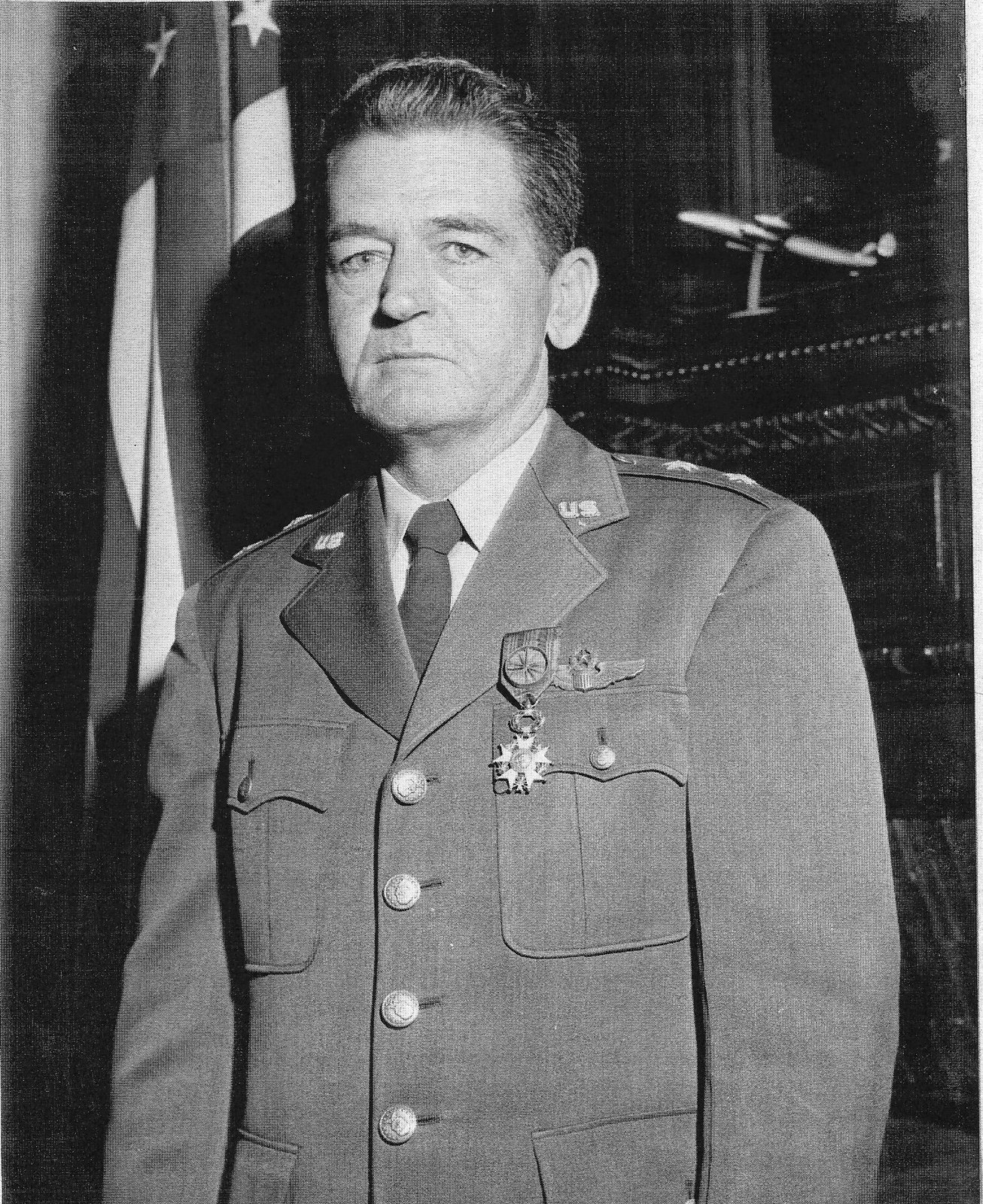
Samford opened by trying to set the scale of the Air Force’s UFO problem. Since 1947, his analysts had worked through somewhere between a thousand and two thousand reports. Most had turned out to be misidentified aircraft, hoaxes, balloons, meteors, or weather. Then he conceded the part that would make headlines:
There have remained a percentage of this total, in the order of twenty per cent of the reports, that have come from credible observers of relatively incredible things.
Then he laid out the explanation for what had happened over Washington on the two Saturday nights. Hot, humid weather had stacked a layer of warm air over cooler air across the region. Radar beams traveling through that boundary bend. A ground object, in the right conditions, can throw a return that an experienced operator sees as a target in the air.
A reporter asked Samford directly whether the Air Force was committing to that theory. His answer, on the official record, was hardly definitive:
The gamble as to whether that is the cause or not is about a fifty-fifty proposition. It’s appealing. It does satisfy certain concerns.
Reporters pressed on the Pierman vectoring, the case where the Capital Airlines pilot had visually confirmed every blip the radar room called out. Samford had no theory for it:
I can’t explain that. I can’t explain it at all.
On Lt. Patterson, the F-94 pilot who’d chased four white lights through the second Saturday’s sky, Samford was no more illuminating:
He has no measurement that you can put in scientific hands.
What Samford was prepared to commit to was the bottom line the Air Force needed the country to hear:
I think that the highest probability is that these are phenomena associated with the intellectual and scientific interests that we are on the road to learn more about, but that there is nothing in them that is associated with material or vehicles or missiles that are directed against the United States.
Asked outright whether the lights could be a secret American weapon, Samford got a laugh from the room with the cleanest line of the day:
We have nothing that has no mass and unlimited power!
What the people in the room actually thought
The Civil Aeronautics Administration’s Technical Development and Evaluation Center later did its own pass on the radar plots and reported back to the Air Force that a temperature inversion had been indicated in almost every instance of an unidentified target. That became the line. Project Blue Book closed the Washington file with the radar returns labeled inversion artifacts and the visual sightings filed as misidentified stars, meteors, and city lights.
Ruppelt himself was uneasy with the verdict. In his 1956 book, he noted that during a typical Washington summer the city sat under a mild temperature inversion almost every night, and Washington’s radar rooms did not routinely paint UFOs.
Lt. Holcomb, the Navy radar specialist who actually sat in the National radar room during the second weekend, had told Fournet the inversion he was watching that night was not strong enough to explain the good, solid returns on the scope.
Howard Cocklin, who saw the first bright light from National’s tower window, told the Washington Post fifty years later that he had not changed his mind:
I saw it on the [radar] screen and out the window.
The CIA’s quieter response
The press conference reassured the public, more or less. Inside the government it had the opposite effect. By late September 1952, the CIA’s Office of Scientific Intelligence had sent its director Walter B. Smith a memo arguing the saucer wave had genuine national security implications, not because UFOs were Soviet weapons but because the volume of reporting created a hysteria attack surface a hostile nation could exploit.
That memo led the agency to convene the Robertson Panel in January 1953, a closed-door group of scientists chaired by physicist Howard P. Robertson. The panel went through Project Blue Book’s best cases over four days and recommended the Air Force spend less time analyzing UFO reports and more time publicly debunking them.
Project Blue Book got the message. For the rest of its existence, the program almost never publicized a case it could not label “solved.”
What it left behind
The radar at Washington National was upgraded over the next decade. Digital filters arrived in the 1970s and, according to skeptics like Aviation Week’s Philip Klass, UFO radar reports dropped sharply once that filtering was in place. Klass argued the 1952 case was just a primitive radar system being overwhelmed by atmospheric effects two CAA operators didn’t recognize.
The controllers themselves never agreed with that read. The Air Force never reopened the case. Project Blue Book was shut down in 1969, with the Washington flap still officially logged as a meteorological event.
Seventy-four years later, on hot July nights when the inversions stack over the river the way they did in 1952, the radar at the airport does what radar always does. Nothing else has come back.
Frequently asked questions
What were the 1952 Washington UFO sightings?
A series of unexplained radar returns and visual sightings over Washington, D.C. on two consecutive Saturday nights, July 19 and July 26, 1952. Air traffic controllers at Washington National Airport and Andrews Air Force Base tracked unknown objects while pilots and military personnel reported seeing white and orange lights move across the sky in ways no aircraft of the era could.
Did jets really chase UFOs over Washington?
Yes. F-94 Starfire interceptors were scrambled from New Castle Air Force Base in Delaware on both nights. On July 26, Lt. William Patterson reported flying into a cluster of four white lights and radioing the ground for instructions. The objects vanished from National Airport’s radar when the jets arrived and reappeared after they left.
What did the Air Force say happened?
The Air Force’s official explanation was a temperature inversion, a layer of warm air sitting over a layer of cooler air, which can bend radar beams and create false returns from ground objects. Maj. Gen. John Samford laid out the theory at a Pentagon press conference on July 29, 1952. Visual sightings were attributed to misidentified meteors, stars, and city lights.
What was the Pentagon press conference about?
It was the largest Pentagon press conference since World War II. Held in Room 3E-869 at 4:00 p.m. on July 29, 1952, it was called specifically to address the Washington sightings. Samford acknowledged that roughly twenty percent of all UFO reports came from “credible observers of relatively incredible things” but said the unknowns posed no threat to national security.
Did Truman address the sightings?
Not publicly. After the second weekend of sightings, Truman’s air force aide called Capt. Edward Ruppelt of Project Blue Book and asked for an explanation. Truman listened on a second line but didn’t speak. Ruppelt offered the temperature-inversion theory before he had interviewed a single witness.
For more Cold War Washington under unusual circumstances, see our look at why the Pentagon ended up with five sides and our story on Hoover Field, the airport that sat where the Pentagon now stands.