
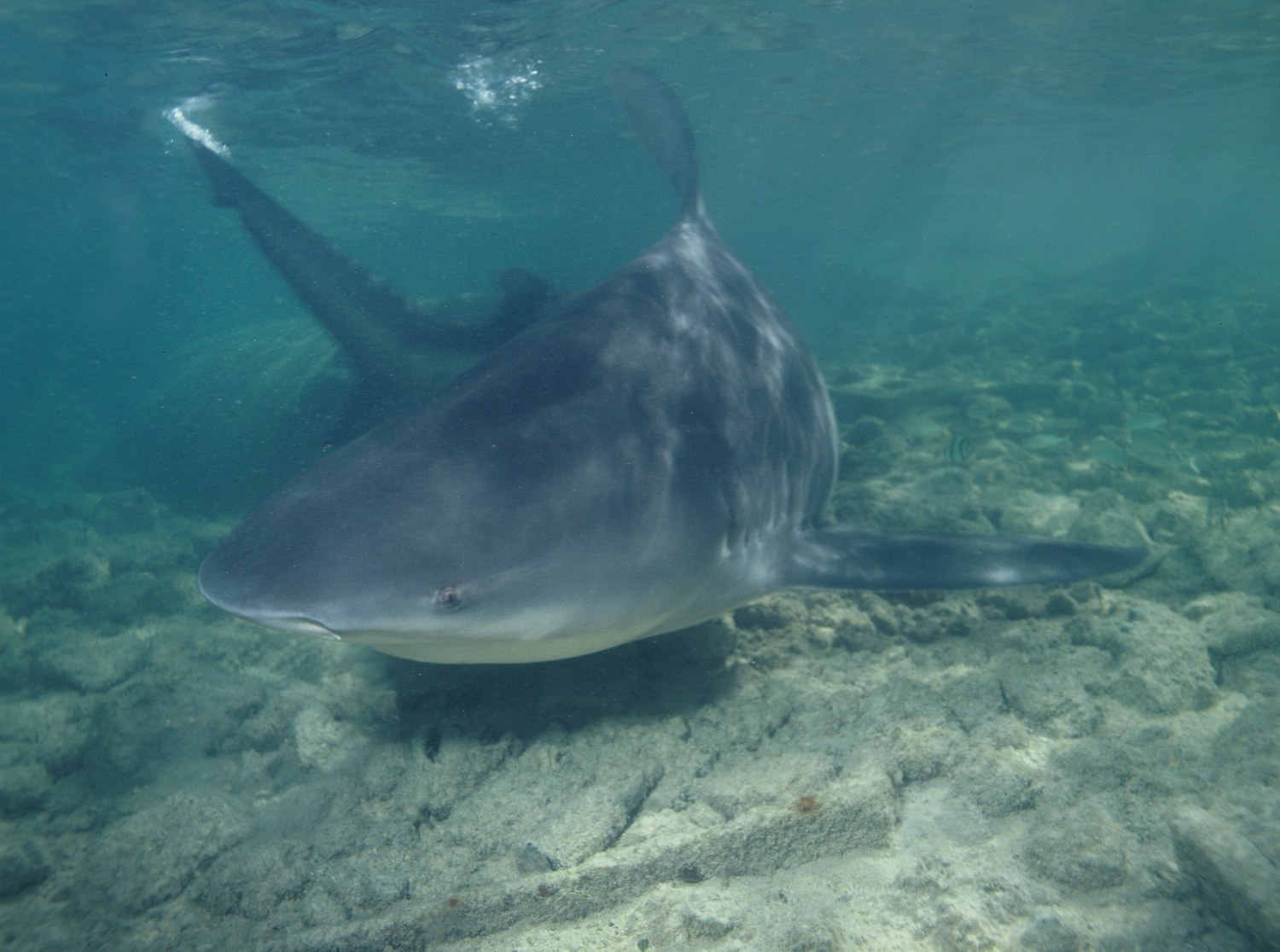
Here is a sentence I never expected to write about the Potomac River. In the summer of 1911, the fishermen of Alexandria were so rattled by sharks that they founded the Society for the Suppression of Man-Eating Fish.
I dug up the whole thing in the Washington Post from July 26th, 1911. The dispatch is datelined Alexandria, July 22, and it is a beauty.
A society to suppress man-eating fish
Alexandria, Va., July 22.–Savage sharks, which have attempted to climb on board small boats and drag occupants into the water, have created widespread excitement among the rivermen of this city, and are responsible for the organization of the “society for the suppression of man-eating fish,” of which Capt. Henry Simmons is president.
According to Capt. Simmons, who had an encounter with one of the fish, the sharks are desperate, hardened, and totally without fear of human beings. They are not even scared of motorboats, he declares.
“Something must be done,” said Capt. Simmons last night, “before it is too late. Positive measures must be resorted to if these sharks are to be shown where they get off. We cannot afford to have our leading citizens attacked. As soon as I learn the best way of killing a shark, I shall lead a party that will exterminate them; yes, suh, exterminate them.”
I would wear a “Society for the Suppression of Man-Eating Fish” t-shirt to the office tomorrow.
Notice what the article actually claims, though. Not a city shut down, not a closed waterfront. Just “widespread excitement among the rivermen.” That is the honest ceiling on the 1911 story, no matter how the headline writers have dressed it up since.
Then comes Capt. Simmons’ own account of the encounter that started it all.
Capt. Simmons’ adventure occurred about 30 miles below here, last Wednesday. He was moving along in his gasoline boat, when, in the distance beheld a man in a batteau [sic], who seemed to be earnestly punching something. As Capt. Simmons drew nearer, his horrified eyes discerned a giant shark–a creature between 15 and 20 feet long–which was determinedly trying to climb into the small craft.
While he hurried to the batteau man’s assistance, the fish made a vicious leap, and almost got over the gunwale. The man punched the shark on the nose, and it fell into the water.
A creature between 15 and 20 feet, climbing into a rowboat. Treat that the way you would treat any story told at a dock after a long day. No shark that size has any business in the Potomac, and a fish punched on the nose into retreat is folklore, not a field report.
The man behind the society was real enough. According to the 1911 Alexandria city directory, Capt. Simmons lived at 707 South Lee St.
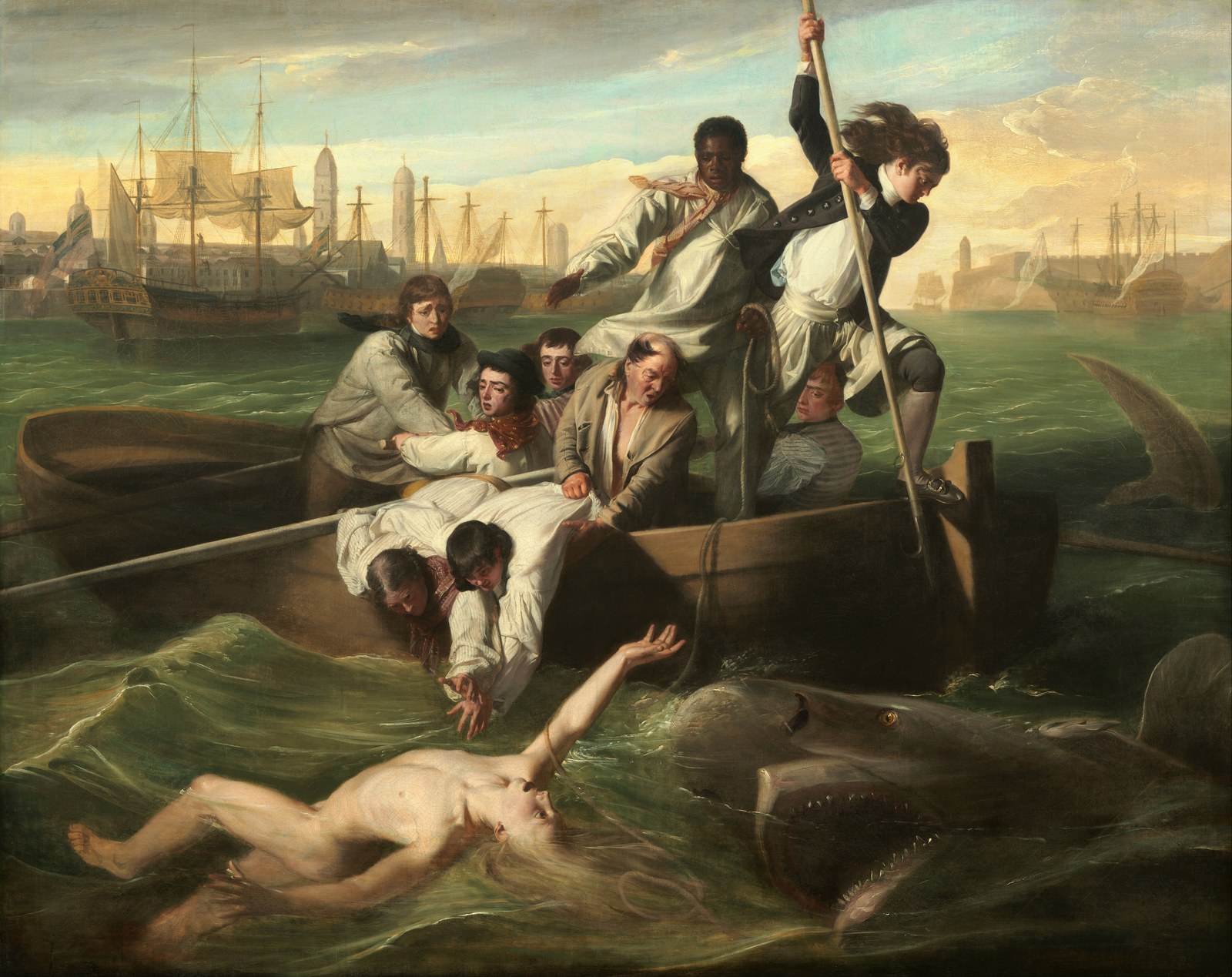
Could a shark really swim up the Potomac?
Here is the part that turns a fish tale into something worth your time. Strip away the exaggeration and the answer is yes. A shark can absolutely be off Alexandria, and we even know which one.
It is the bull shark, Carcharhinus leucas, and it cheats. Most sharks die in fresh water. The bull shark does not. It is euryhaline, which means it can move between salt and fresh by adjusting how much salt its kidneys, gills, and rectal gland hold and dump.
That trick takes the species places no shark should be. Bull sharks have turned up as far up the Mississippi as Illinois and they live in Nicaragua’s freshwater Lake Nicaragua. The Potomac is a gentle commute by comparison.
The Smithsonian Environmental Research Center, based on the Bay at Edgewater, tracks five shark species in the Chesapeake: bull, blacktip, dusky, spinner, and smooth dogfish. Bull sharks are the ones with a taste for the rivers.
The state agency that counts them is not impressed by the drama either. Carrie Kennedy, who manages the coastal fisheries program at the Maryland Department of Natural Resources, says roughly 10 bull sharks turn up in Chesapeake waters in a typical year. As the salinity climbs in late summer, they nose into the Potomac and other rivers after food.
“I don’t really find this to be particularly unusual,” Kennedy said in 2013, after a pair of them came out of a net near the river’s mouth.
One more thing about size. A grown bull shark runs about 7 to 11.5 feet and 200 to 500 pounds. Big enough to ruin your afternoon. Nowhere near Capt. Simmons’ 20-foot leviathan.
A death on the St. Mary’s in 1640
The real surprise is that the Potomac’s shark story does not start in 1911. It starts almost three centuries earlier, with a death, and it is one of the better-documented historical shark attacks anywhere in North America.
In the summer of 1640, a laborer in the young Maryland colony waded into the St. Mary’s River to cool off. The St. Mary’s is a Potomac tributary, a few miles upstream from where the river meets the Chesapeake. He did not get far.
The man who wrote it down was Father Thomas Copley, a Jesuit priest stationed at the St. Mary’s settlement, in his annual report to Rome. In Copley’s telling the swimmer was a lapsed Catholic who had taken to grinding his rosary beads into powder and smoking them, and the priest clearly read what happened next as a verdict from above.
Scarcely had he touched the water when a huge fish having suddenly seized the wicked man, before he could retreat to the bank, tore away at a bite, a large portion of his thigh, by the pain of which most merited laceration, the unhappy wretch was in a short time hurried away from the living.
Two researchers pulled that account back out of the archives. Kent Mountford, a retired senior estuarine scientist with the EPA and an early architect of the Chesapeake Bay Program, found it while writing a history column for the Bay Journal. Richard Fernicola, a physician and the author of Twelve Days of Terror, the definitive book on the 1916 Jersey Shore attacks, ran it down with him.
Their claim is bold. They argue the 1640 St. Mary’s death is the earliest documented fatal shark attack in North America, predating by two years a 1642 attack off what is now New York City that was probably invented by Washington Irving in 1809.
They are confident about the culprit, too. “We’re almost guaranteeing that this is the shark that killed this man,” Mountford said, naming the bull shark. Charles Bangley, a marine biologist who consulted on the work, found that “the lower Potomac River in the general St. Mary’s area was a bit of a hot spot for sightings.”
Mountford and Fernicola did not stop at one death. They combed the historical record and counted 181 shark encounters in the Chesapeake region over the centuries, as many as seven of them fatal.
The panic that came five years later
If you know one American shark story, it is probably 1916. Between July 1 and 12 of that year, sharks killed four people along the New Jersey shore and badly injured a fifth, a 14-year-old boy who survived. The attacks ran from Beach Haven up to a creek in Matawan, miles from the open ocean, and they lit a national panic that later helped inspire Peter Benchley’s Jaws.
Here is the part the old Ghosts of DC headline got backwards. The 1916 panic could not have caused the 1911 Alexandria scare, because Alexandria’s rivermen were already founding their man-eating-fish society five years before New Jersey’s beaches emptied.
The little Potomac scare came first. It was a local rehearsal for the hysteria the whole country would feel later.
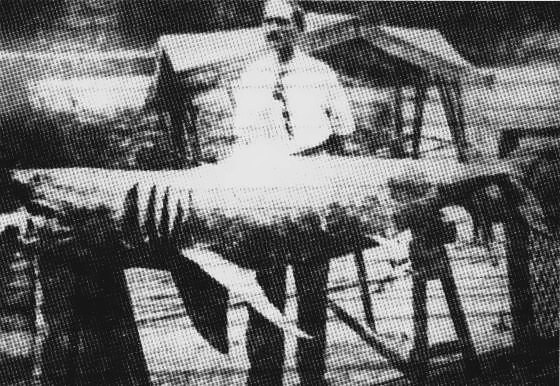
Sharks in the Potomac today
The proof keeps showing up in fishermen’s nets. In August 2013, a St. Mary’s County waterman named John “Willy” Dean pulled two bull sharks out of his pound net near Point Lookout, right where the Potomac empties into the Bay. Each one ran about 8 feet and 220 pounds, and they came up roughly 200 yards from a popular swimming spot.
Two years later it happened again. In September 2015, Robert T. Brown, president of the Maryland Watermen’s Association, found an 8-foot bull shark dead in a pound net near Breton Bay, off Medley’s Neck below Leonardtown. By then watermen had taken five bull sharks out of the Potomac in five years.
And yet, for all of that, the modern record holds not a single shark attack in the Chesapeake Bay or the Potomac. Not one. Generations of Washingtonians swam in the region’s tidal waters without losing so much as a toe. When the Potomac has turned genuinely deadly, it has been the current and the cold, not the teeth.
So the rivermen of 1911 were not crazy. They met a real animal and reached for the wrong size and the wrong name. The Potomac has had its shark all along. It just answers to bull, not great white.
Bull sharks can still be found in the lower river. Here’s an article about catching them off Point Lookout. http://www.washingtonpost.com/wp-dyn/content/article/2010/09/02/AR2010090203794.html
Bull sharks are well known to move up from bays into rivers into freshwater. The can be up to 11 or so feet long.
For the last few years I’ve seen something similar to what Captain Simmons experienced, savage Republicans and smaller yet more vicious tea Partiers attacking good citizens. I too don’t know what they want but also believe something must be done.
Reblogged this on Drayton's Gazette and commented:
For the last few years I’ve seen something similar to what Captain Simmons experienced, savage Republicans and smaller yet more vicious tea Partiers attacking good citizens. I too don’t know what they want but also believe something must be done.
While it’s not quite Alexandria, fishermen caught two dangerous bull sharks in the lower Potomac River in 2010 — in the same week.
http://www.washingtonpost.com/wp-dyn/content/article/2010/09/02/AR2010090203794.html
This is the best thing ever. I want a t-shirt.
Haha @V. Lyn you need to use a “chunk of iron” and hit them “fairly behind the ears”. That’ll teach them 😀
i want that tshirt too!
(perhaps we also need one that’s society for the suppression of shark-eating men… in honor of the shark fin soup shark hunting crisis?!)
Bull sharks are known to be aggressive… though I can’t say my undergrad in marine biology ever taught me they had ears or growled. But hey… things can change in 100 years.
I gotta remember that – hit ’em behind the ears!
Please make that shirt.