
This is the White House from the south, sometime between 1880 and 1897. The Library of Congress can’t pin the date down any closer than that. What we can pin down is everything happening on that south lawn and on that portico in the years the camera was set up.
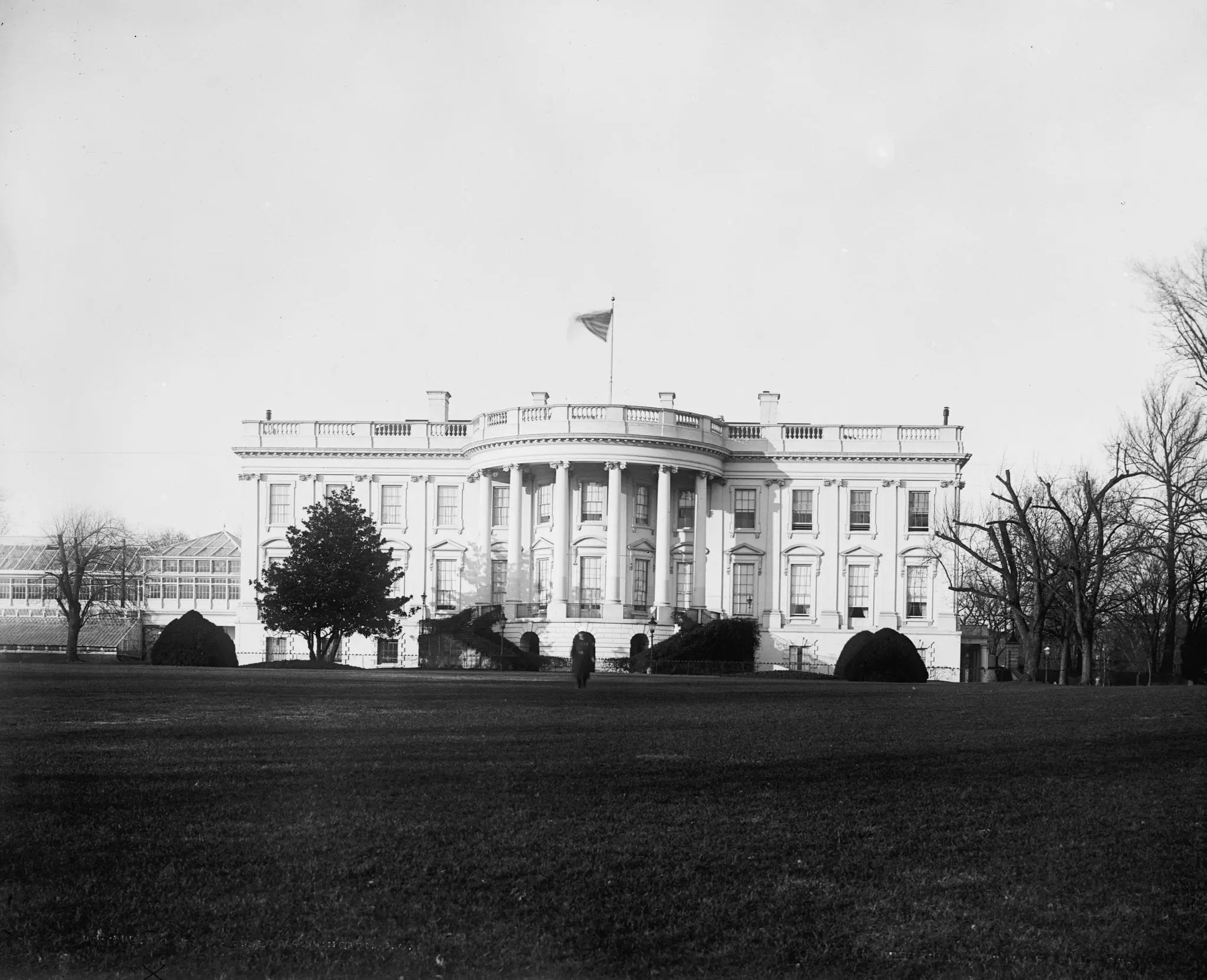
What you would not see in this photo, but what was there at the time, was a long band of glass greenhouses running along the south wall of the executive mansion. The conservatories.
The Conservatories on the South Side
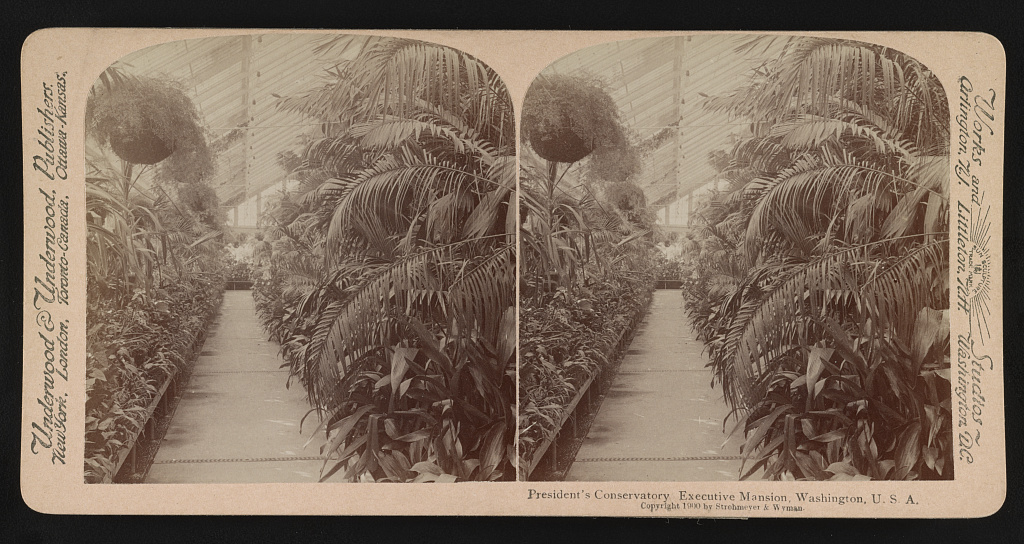
The greenhouses were a Buchanan-era construction that successive administrations expanded into a sprawl. By the Cleveland and Harrison years they ran along the south wall of the residence and stretched west: orchids, roses, palms, grapevines, ferns. The public could visit them. The first lady walked through them with friends.
An 1887 wire piece syndicated through a Washington correspondent and picked up by the Wood County Reporter in Wisconsin described Frances Cleveland’s habit:
Among the favorite pastimes of the young wife of the president during her hours of leisure from the demands of her social duties is a visit to the conservatories of the executive mansion, sometimes alone and again with some calling lady friend, to enjoy the selected beauties of the plant life of the luxurious and more genial climes of the warmer zones.
The South Portico Was the Public Face
The portico in the center of the photo, with its rounded columns, was where the president was required to appear once a year. The Easter Monday Egg Roll was a thirty-year tradition by the 1880s. Children gathered on the south lawn and the president had to come out and bow.
The Omaha Daily Bee spelled it out on April 9, 1887:
It is required of every president that besides giving up his private grounds on that day he shall come out at least once during the afternoon and show himself on the south portico. President Arthur always did it and President Cleveland did last year and every child who goes knows that the president is due on the south portico and would be highly indignant if he failed to put in an appearance.
Ten years later, the Washington Times caught the same scene under William McKinley, in a front-page piece headlined “The Egg-Rolling Festival”:
Shortly after 2 o’clock President McKinley came out on the south portico of the White House and bowed very profoundly to the little people. A little girl less than three years old was among the first to see him, and she cried, “Mamma, there’s Tuley,” and waved her handkerchief.
A Burglar on the Portico, 1891
On a March evening in 1891, the same portico became a crime scene. The Sunday Herald ran the story under the headline “A White House Scare”:
About 8 o’clock big John Kenny, the officer on duty, was startled by hearing a crash in the Red Parlor, and on entering the room he saw a figure crouching on the portico, outside the window. At the same time Officer Dubois was attracted to the spot by the noise. As the officers reached the window they discovered a man hiding in the shadows of the columns on the portico.
The watchman in the south grounds came running. They dragged the intruder off the portico and into “the little lodge-house that is near the central gate.” It turned out to be Senator Zebulon Vance’s stepson, hatless and coatless, having a mental break. He was lashed with heavy rope.
A watchman in the south grounds. A lodge house near the central gate. That was the world this photograph belongs to.
What Roosevelt Tore Down
Five years after this photo was the latest it could have been taken, Theodore Roosevelt hired McKim, Mead & White to fix the executive mansion. The 1902 renovation gave the country the modern White House.
The West Wing went up where there had been nothing, giving the president an office complex separate from the residence. The conservatories were demolished. Edith Roosevelt had wanted them out for years.
Frances Cleveland’s tropical promenade was gone. The footprint we know today is Roosevelt’s footprint.
The south portico stayed. Presidents still walk out to bow to crowds from those same rounded columns. We’ve written about the East Wing’s century-long arc from Theodore Roosevelt’s east colonnade to the present, and that whole story starts in the same 1902 moment that erased what you see in the foreground of this picture.
What are the buildings to the left? They look sort of like greenhouses.
I think you may be right!