
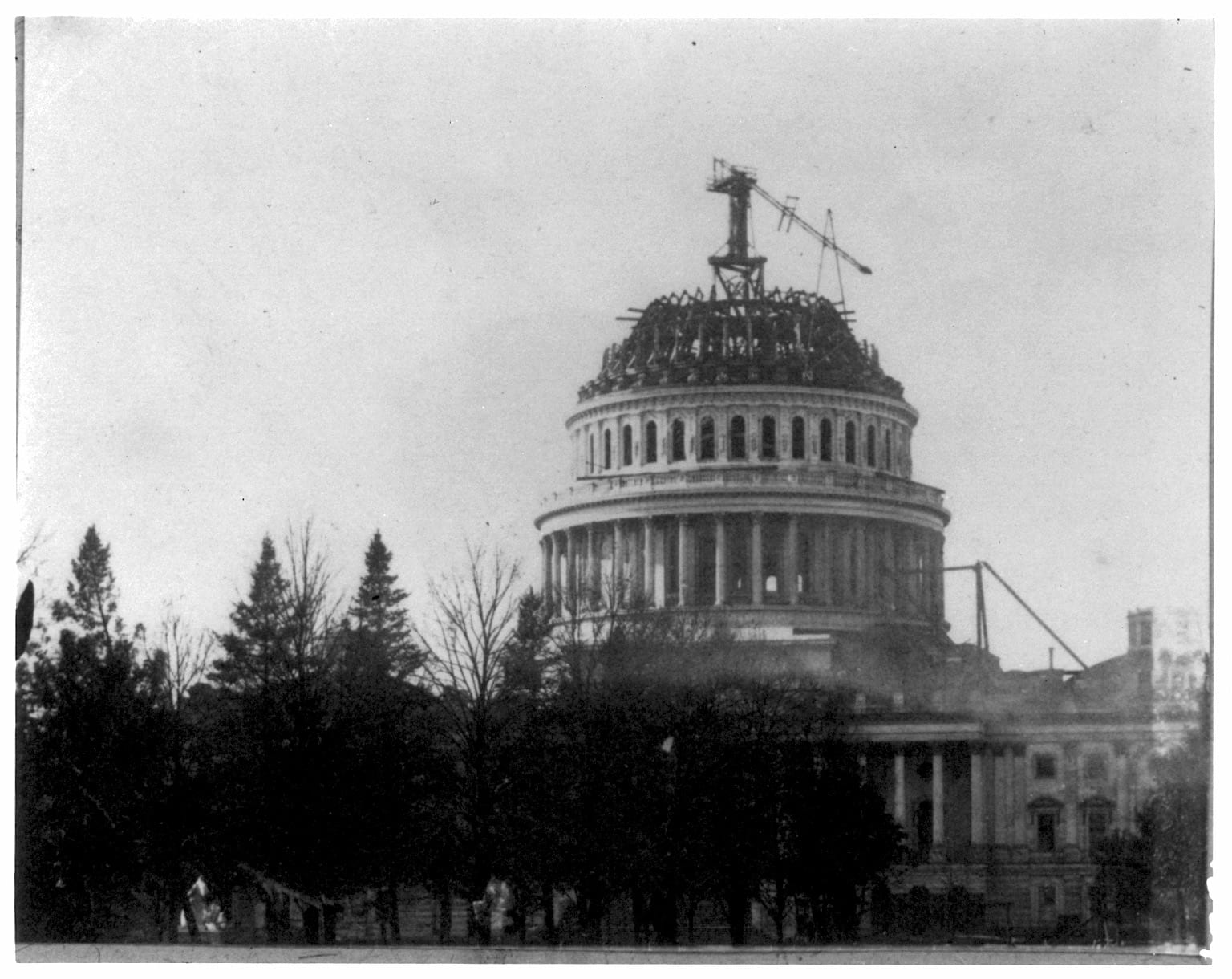
When the first Union troops reached Washington in April 1861, they did not march to a fort. They marched into the Capitol.
Soldiers stacked their muskets in the Senate chamber, spread blankets across the marble floors, and climbed onto the Speaker’s desk to make speeches for fun. Within months the basement was a working bakery and the Rotunda was filling up with hospital cots.
And the whole time, high above the noise, an unfinished cast-iron dome kept rising. One section at a time, straight through the war.
For four years the United States Capitol was a barracks, a bakery, and a hospital while it was still a construction site. This is how that happened.
A half-finished dome when the war began
For most of its early life the Capitol wore a low dome of wood sheathed in copper, finished back in 1824.
By the 1850s it looked wrong. The country had grown, new states kept sending senators and representatives, and Congress had bolted two large marble wings onto the building. The squat old dome suddenly looked tiny sitting on top of it.
So in 1854 the Capitol’s architect, Thomas U. Walter, designed a soaring replacement out of fireproof cast iron, inspired by the great cathedrals of Europe. Work began in 1856.
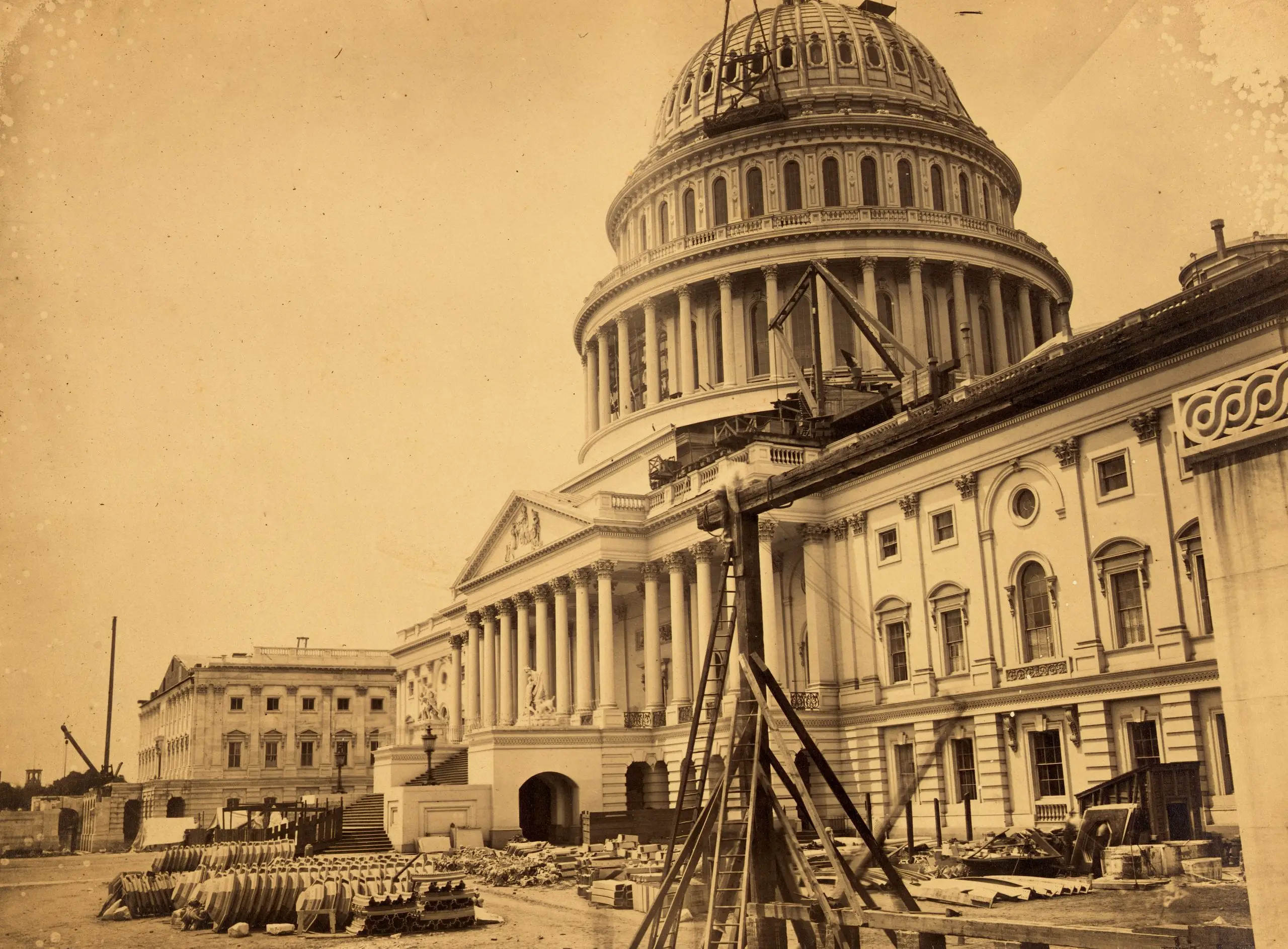
When Abraham Lincoln took the oath of office on March 4, 1861, a half-finished dome loomed over him, wrapped in scaffolding and a tangle of derricks. Three weeks later the country was at war.
The photographer Mathew Brady, whose studio sat just up Pennsylvania Avenue, turned his camera on the unfinished building more than once during the war.
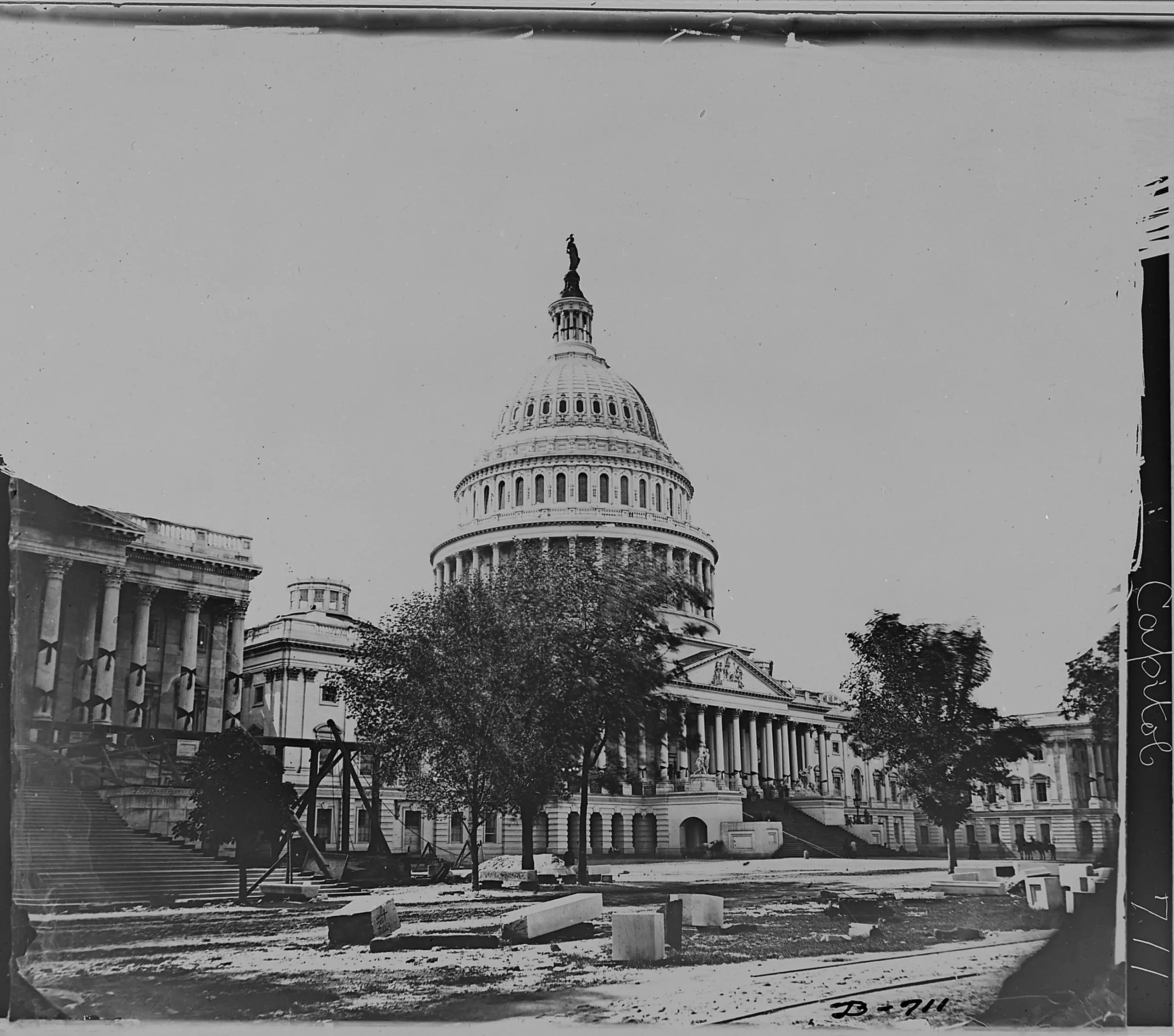
Soldiers move in
The shots at Fort Sumter on April 12, 1861, turned Washington into an armed camp almost overnight. Lincoln called for 75,000 troops, and they had to sleep somewhere.
The first to arrive, a company of Pennsylvania volunteers, were quartered in the empty House wing. The next day the Sixth Massachusetts came in, bloodied from a riot in Baltimore on their way south.
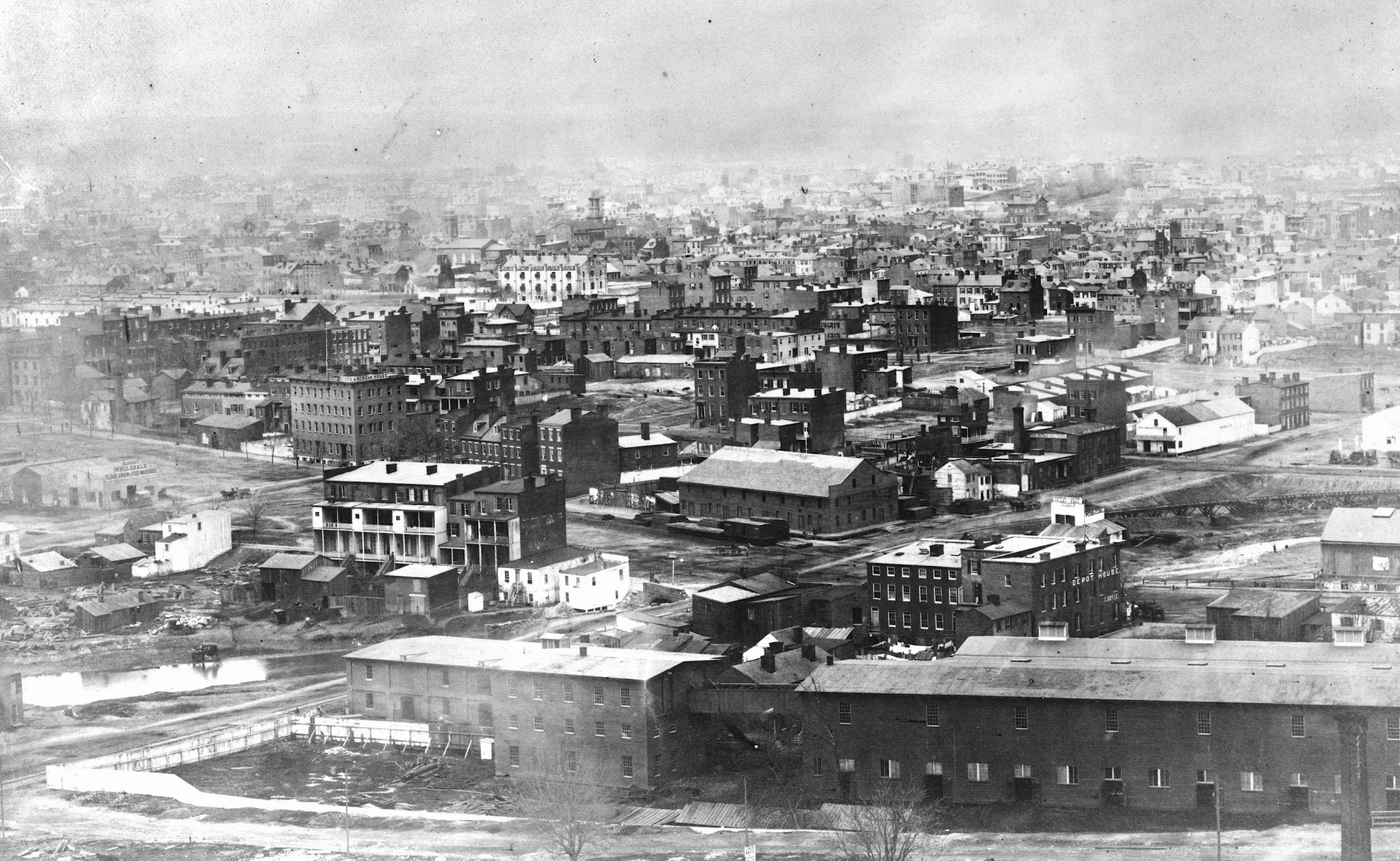
On arriving here these were marched into the Capitol and immediately occupied the Senate Chamber. The colonel made the Vice President’s Room his headquarters. They looked tired. I saw blood running down their faces. Their clothes were full of dust.
Isaac Bassett, Senate doorkeeper
A clerk from the nearby Patent Office named Clara Barton rushed over to nurse the wounded men. It was the unofficial start of her career as a battlefield nurse.
For the young soldiers, bunking down in the seat of government was a thrill.
Our life in the Capitol was most dramatic and sensational. We joked, we shouted, we sang, we mounted the Speaker’s desk and made speeches.
Theodore Winthrop, Seventh New York Regiment
Thomas Walter, the architect still trying to finish his dome, was less charmed. By his count, four thousand troops were living in the building.
There are 4000 in the Capitol with all their provision, ammunition and baggage, and the smell is awful. The building is like one grand water closet, every hole and corner is defiled. The stench is so terrible I have refused to take my office into the building.
Thomas U. Walter, Architect of the Capitol
One grand water closet. Not the phrase you expect from the man who designed the dome.
Bread in the basement
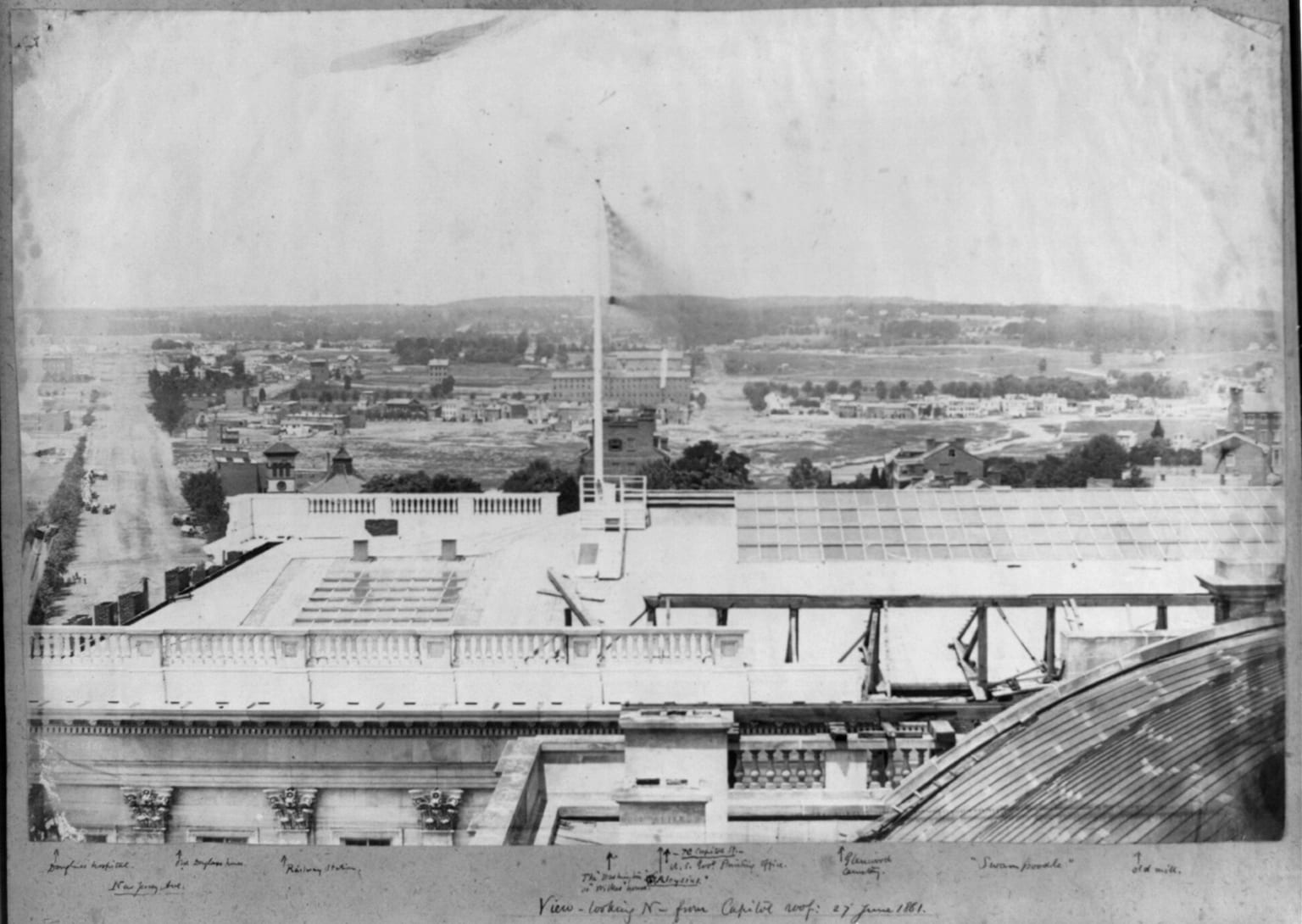
The army had thousands of mouths to feed, so it built a bakery inside the Capitol. Crews put up huge brick ovens in the basement, under the great steps of the west terrace.
When members of Congress returned for a special session in July 1861, the smell of fresh bread met them at the door. The ovens turned out thousands of loaves a day.
Not everyone loved the aroma. The Librarian of Congress, John G. Stephenson, watched the smoke drift toward his collection and worried.
The treasure entrusted to my care is receiving great damage from the smoke and soot that penetrated everywhere through the part of the Capitol which is under my charge, without any means at my command to prevent it.
John G. Stephenson, Librarian of Congress
The bakery stayed anyway. Bread beat books, at least for the moment.
A hospital in the Rotunda
The grimmest use was still coming. After the Second Battle of Bull Run in late August 1862 flooded the city with wounded men, the army issued Special Order 177 and requisitioned the Capitol as a hospital.
The Evening Star reported that it could hold a thousand patients. Cots went up in the old Hall of the House, in the corridors, and in the Rotunda itself, directly beneath Walter’s rising dome.
They have taken the Capitol as a hospital, and the beds are now up in the rotunda, the old Hall of Rep’s, and the passages. One thousand beds have been put up. It does not interfere with our work in the least, and I think the move is a good one.
Thomas U. Walter
By October 1862 the soldiers were gone, the bakery was torn out, and the cleaners moved in. Construction picked back up where it had left off.
The dome that refused to stop
Here is the part that still feels improbable. While all of that was going on, the dome kept climbing.
When the war began, the officer in charge of construction, Captain Montgomery C. Meigs, ordered the work stopped. Cast iron already cut for the dome was hauled off to fortify the building, and the government, he said, had no money to spend except in self defense.
The contractors ignored him. The iron firm of Janes, Fowler and Kirtland kept their men on the dome, unpaid, because they feared the costly ironwork would be lost or wrecked if it sat idle. As Walter remembered it, the sound of the hammer never stopped during all of the civil troubles.
A reporter for the New York Times caught the strange scene.
The click of the chisel, the stroke of the hammer, blending with the tramp of the battalions drilling in the corridors.
New York Times correspondent
In 1862 Congress debated whether to keep paying for any of it. Senator Solomon Foot of Vermont made the case to finish.
Every consideration of economy, every consideration of protection to this building, every consideration of expediency requires that it should be completed, and that it should be done now. We are strong enough yet, thank God, to put down this rebellion and to put up this our Capitol at the same time.
Senator Solomon Foot of Vermont
Congress restored the money in the spring of 1862, and the dome rose section by section through the worst years of the war. People noticed. Lincoln noticed.
If people see the Capitol going on, it is a sign we intend the Union shall go on.
President Abraham Lincoln, 1863
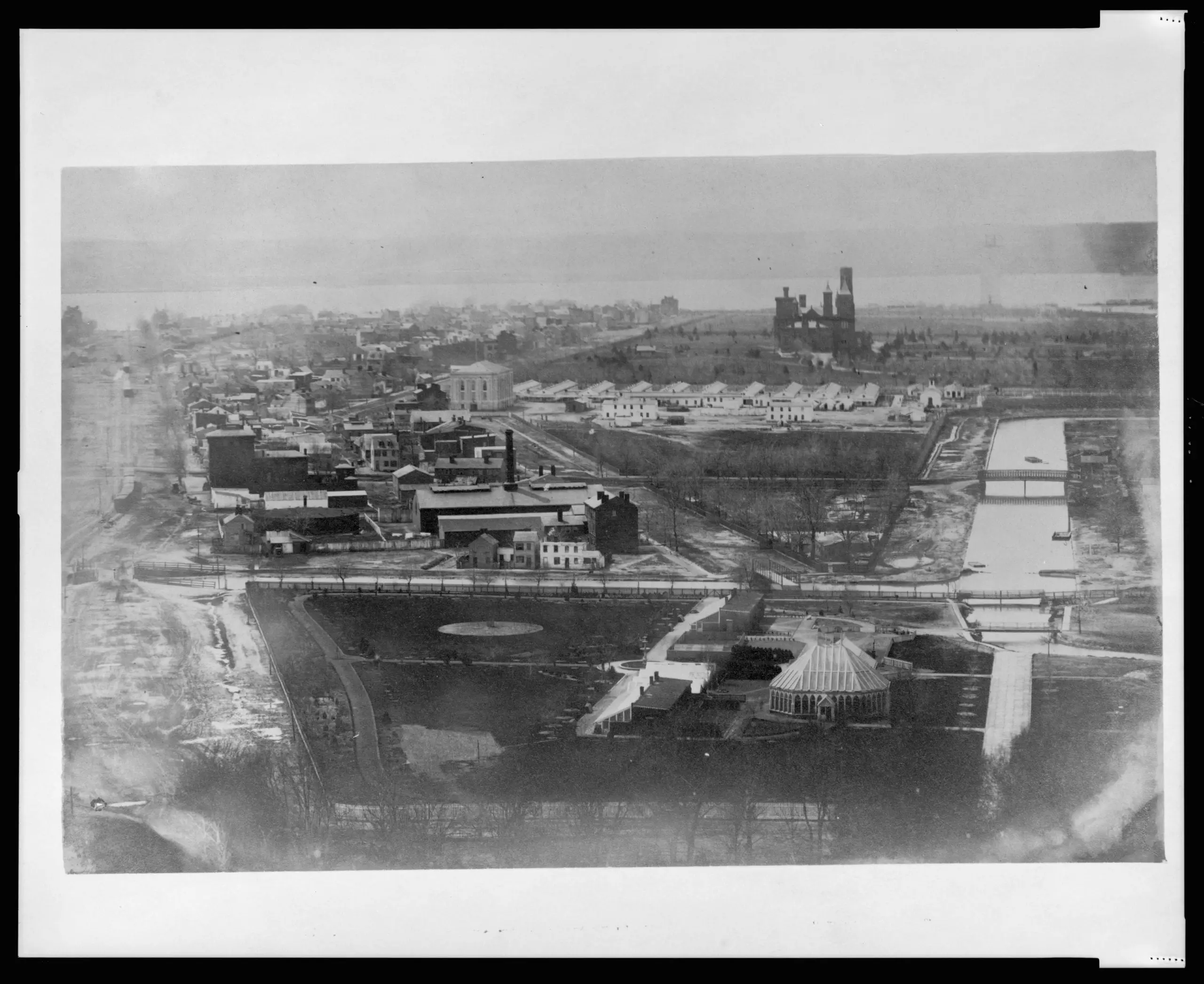
The Chicago Tribune said it in six words: war or no war, the work goes steadily on. You can watch the progress for yourself in this photo of the Capitol under construction in 1858, still just a drum of iron waiting for its dome.
Freedom, cast by a man who was not free
Every dome in Walter’s drawings was crowned by a statue, and that statue has the most remarkable backstory in the whole building.
The sculptor Thomas Crawford designed her from his studio in Rome. He called her Freedom triumphant in War and Peace, a classical woman with a sword in one hand and a wreath and shield in the other.
His first version wore a liberty cap, the old Roman symbol of a freed slave. That detail enraged the man then overseeing the Capitol’s construction, Secretary of War Jefferson Davis, a slaveholder who would soon become president of the Confederacy.
Its history renders it inappropriate to a people who were born free and would not be enslaved.
Jefferson Davis, Secretary of War
Davis ordered the cap removed. Crawford replaced it with a helmet ringed by an eagle’s head and a crest of feathers, which is why so many people today mistake Freedom for a Native American figure.
Crawford died in 1857. His plaster model, packed into crates, sprang a leak at sea, sheltered in Bermuda, and did not all reach Washington until 1859. A local foundry owner named Clark Mills was then hired to cast her in bronze.
When it came time to take the plaster model apart for casting, the Italian craftsman who had assembled it demanded a raise, claiming that he alone knew how to separate the pieces. Mills refused. He turned instead to one of the enslaved men working in his foundry, Philip Reid.
Reid figured it out. He devised a way to lift the model by an iron ring at the top until the seams pulled open, and the great statue came apart cleanly into its five sections.
He then worked the casting seven days a week. Government records show he was the only worker paid to tend the furnaces on Sundays, at a rate of $1.25 a day, though as an enslaved man he was likely allowed to keep only those Sunday wages.
Here is the part that gives the whole story its weight. Freedom was finished in 1862. On April 16 of that year, the District of Columbia Compensated Emancipation Act freed Philip Reid. By the time his statue was hoisted to the top of the Capitol, the man who had cast her was a free man.
The black master-builder lifted the ponderous uncouth masses, and bolted them together, joint by joint, piece by piece, till they blended into the majestic Freedom. Was there a prophecy in that moment when the slave became the artist, and with rare poetic justice, reconstructed the beautiful symbol of freedom for America?
New York Tribune correspondent, 1863
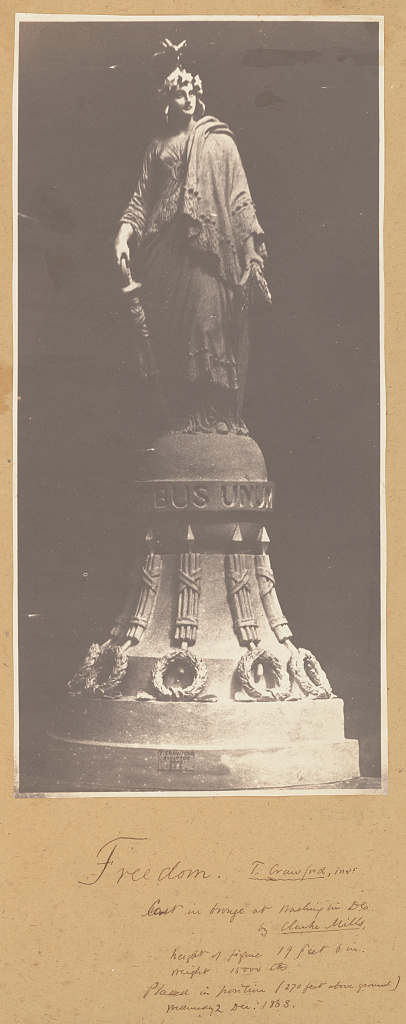
December 2, 1863
At noon on December 2, 1863, the last piece of Freedom, her head and shoulders, was bolted into place 288 feet above the east plaza.
A flag ran up beside her and a gun fired. Then the forts ringing Washington answered, a 35-gun salute, one shot for every state in the Union, including the eleven that had tried to leave it.
Benjamin Brown French, the commissioner of public buildings, wrote down what he hoped it all meant.
Freedom now stands on the Dome of the Capitol of the United States. May she stand there forever, not only in form, but in spirit.
Benjamin Brown French, Commissioner of Public Buildings
Walt Whitman, living in the city and tending wounded soldiers, never got over the sight of the white dome.
I shall always identify Washington with that huge, swelling, towering bulge of pure white. A vast eggshell, built of iron and glass, a beauty and a genuine success.
Walt Whitman
Fifteen months later, on March 4, 1865, Lincoln stood beneath the finished dome to deliver his second inaugural address. The half-built shell from his first oath was now whole. A few weeks after that he was dead, and the Union he had bet on had held.
A war monument hiding in plain sight
We see that dome on the news every night and read it as a symbol of government, of gridlock, of whatever the day’s argument happens to be.
It started as something simpler and stranger. It was a bet, cast in nearly nine million pounds of iron during the country’s worst year, that there would still be a country left to put it on.
If you want to keep digging, here is the much later, much stranger story of the time the dome appeared to turn red.
Thank you for bringing to life a view President Abraham Lincoln commented on in his diary, seen through the window of his bedroom on the second floor of the country home he escaped to frequently during half the year throughout his presidency. Lincoln wrote that seeing the ongoing construction of the dome during the Civil War gave him hope that the nation would endure. This view today is threatened by construction of 13-story office buildings as part of the proposed development at McMillan Park. The National Capital Planning Commission, charged with protecting Federal sites and sights of the Nation’s Capital, chose to believe testimony of developer VMP’s architect, who claimed that the view was already blocked, over testimony of the director of Lincoln’s Cottage, who seeks to protect the view for the tens of thousands of visitors who make pilgrimages to the Cottage every year. It is a mystery to me why the members of the NCPC couldn’t resolve the conflict by simply crossing town to see for themselves.