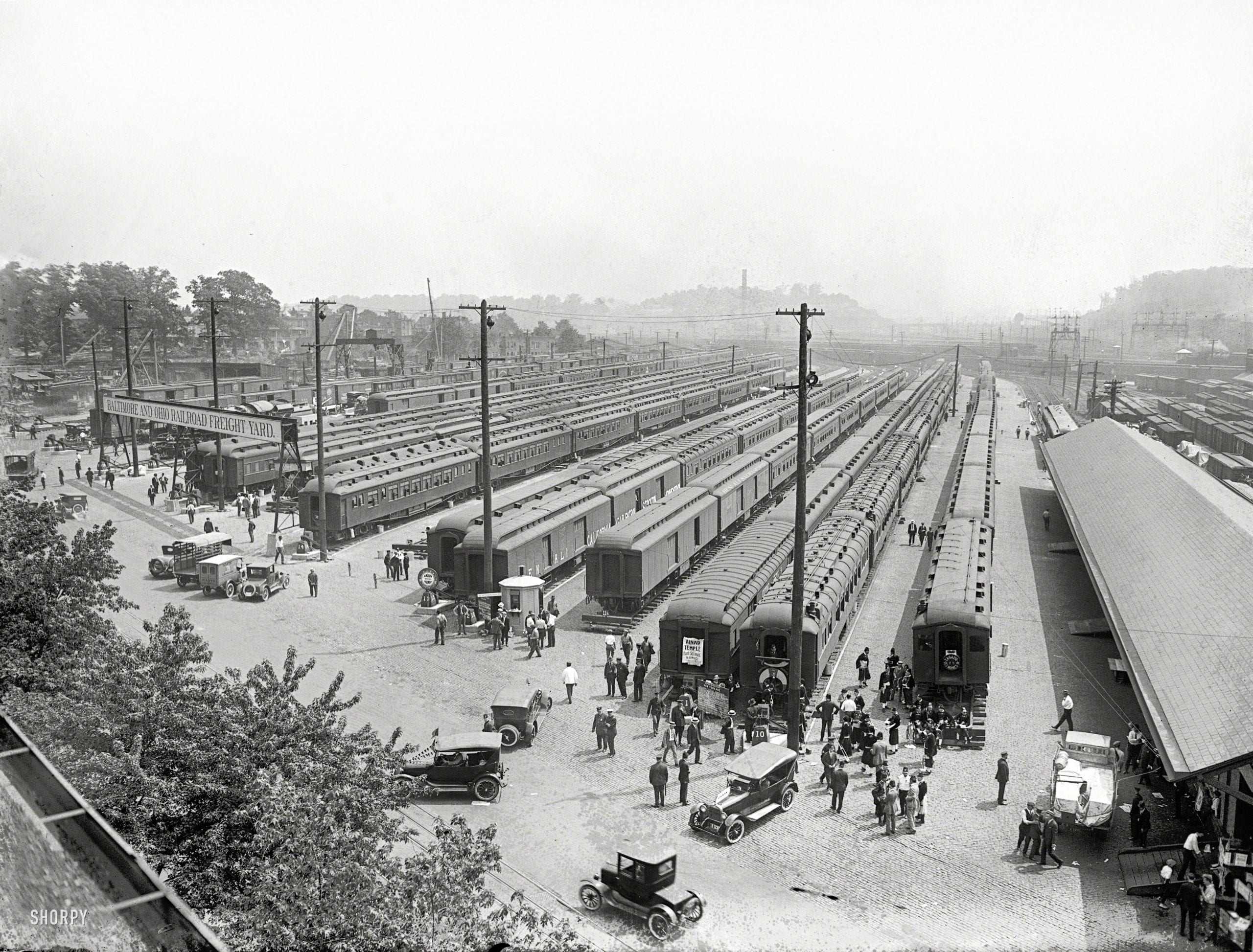
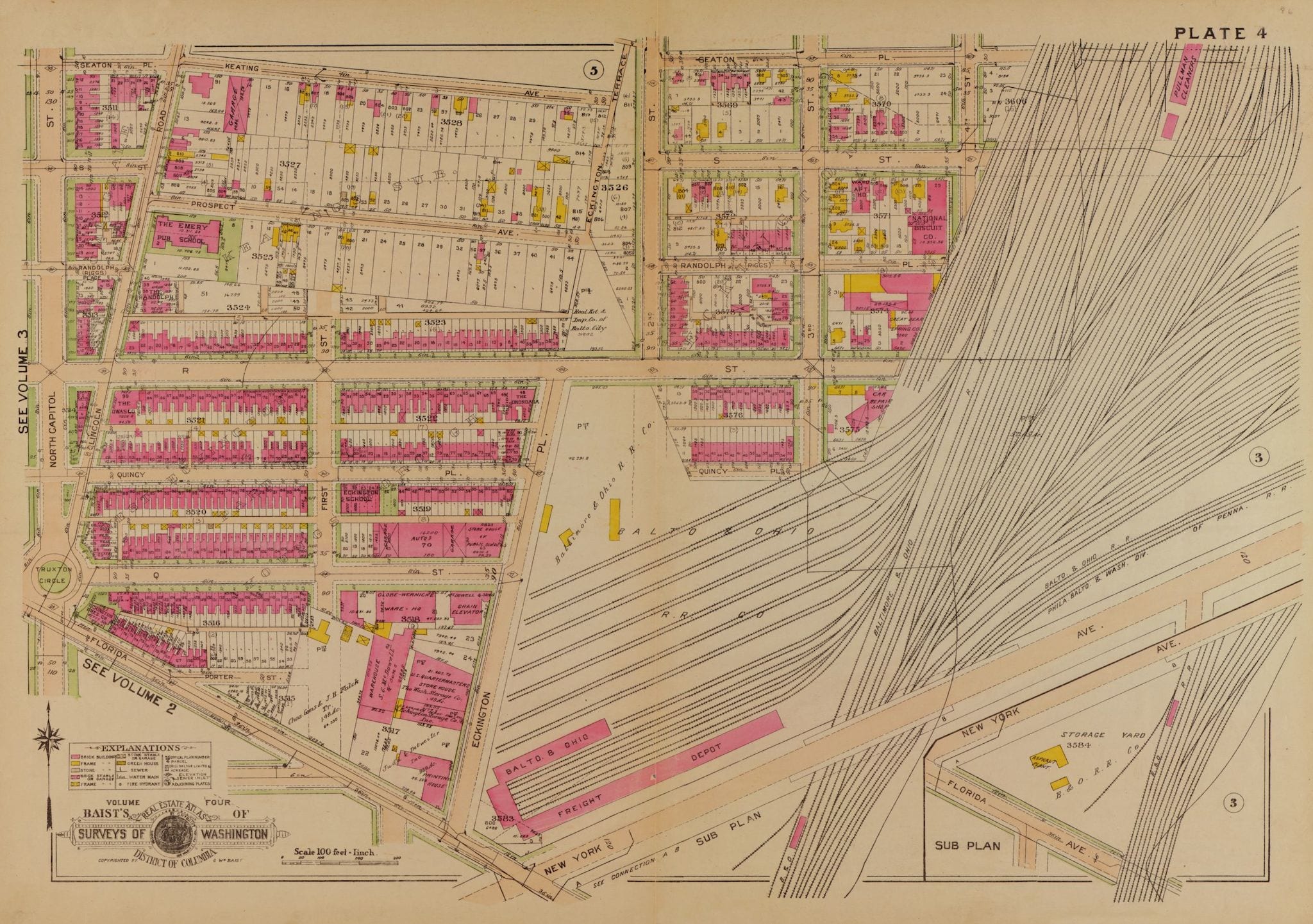
We came across a great photo via Shorpy’s Twitter handle this weekend. It shows the old Eckington rail yard back in the 1920s.
“Eckington Yards, June 4, 1923.” A rare and unusually detailed look at the Baltimore & Ohio rail yard in Washington, D.C., during that year’s big gathering of Masonic lodges. National Photo Company glass negative.
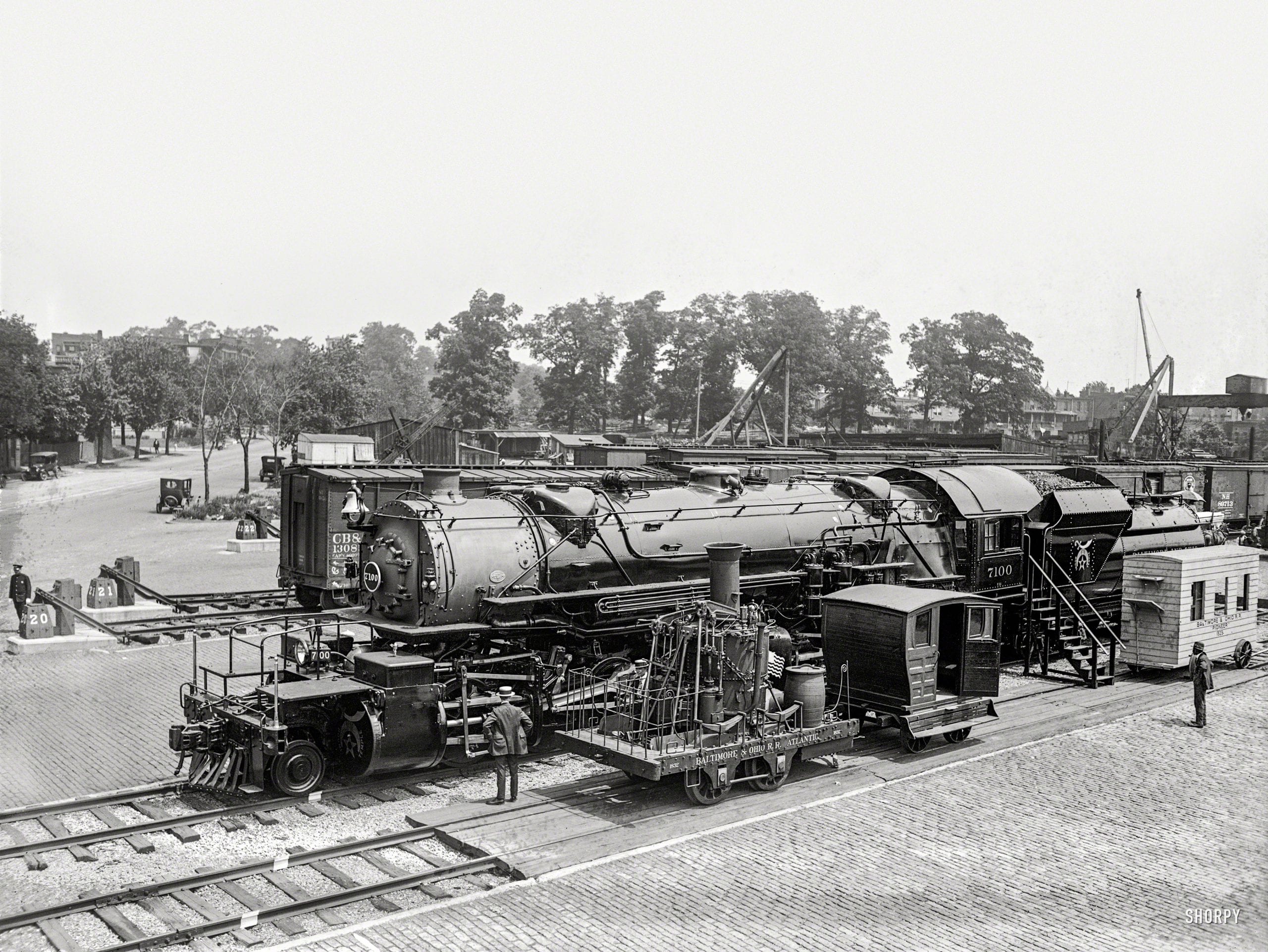
“Past and present in locomotives. Eckington Yards, June 4, 1923.” A closeup of the locomotive in the Baltimore & Ohio rail yard during the Masonic convention in Washington, D.C. The big engine wears the livery of “Boumi Temple,” a Baltimore Shrine lodge. 5×7 glass negative.
Today, this area is occupied by the FedEx shipping center at the intersection of New York Ave. and Florida Ave.
2 thoughts on “Exploring the History of Washington D.C.’s Eckington Rail Yard”
The B&O is the same line with the terrible wreck in 1906 on the Metropolitan Branch at the Terra Cotta station (Brookland). Very close to the same spot from the Metro red line crash.
The locomotives in the photo are (foreground) the Tom Thumb (http://en.wikipedia.org/wiki/Tom_Thumb_(locomotive)) and mid-1830s railroad cars which were based on horse-drawn stagecoaches of the same era. You can see a replica of this tiny locomotive in the Baltimore & Ohio Railroad Museum in Baltimore.
The larger locomotive appears to be a Class EL-3 articulated Mallet with the wheel arrangement 2-8-8-0, at the time, one of the most powerful locomotives ever built.
The B&O is the same line with the terrible wreck in 1906 on the Metropolitan Branch at the Terra Cotta station (Brookland). Very close to the same spot from the Metro red line crash.
http://www.loc.gov/rr/news/topics/trainwreck.html
The locomotives in the photo are (foreground) the Tom Thumb (http://en.wikipedia.org/wiki/Tom_Thumb_(locomotive)) and mid-1830s railroad cars which were based on horse-drawn stagecoaches of the same era. You can see a replica of this tiny locomotive in the Baltimore & Ohio Railroad Museum in Baltimore.
The larger locomotive appears to be a Class EL-3 articulated Mallet with the wheel arrangement 2-8-8-0, at the time, one of the most powerful locomotives ever built.