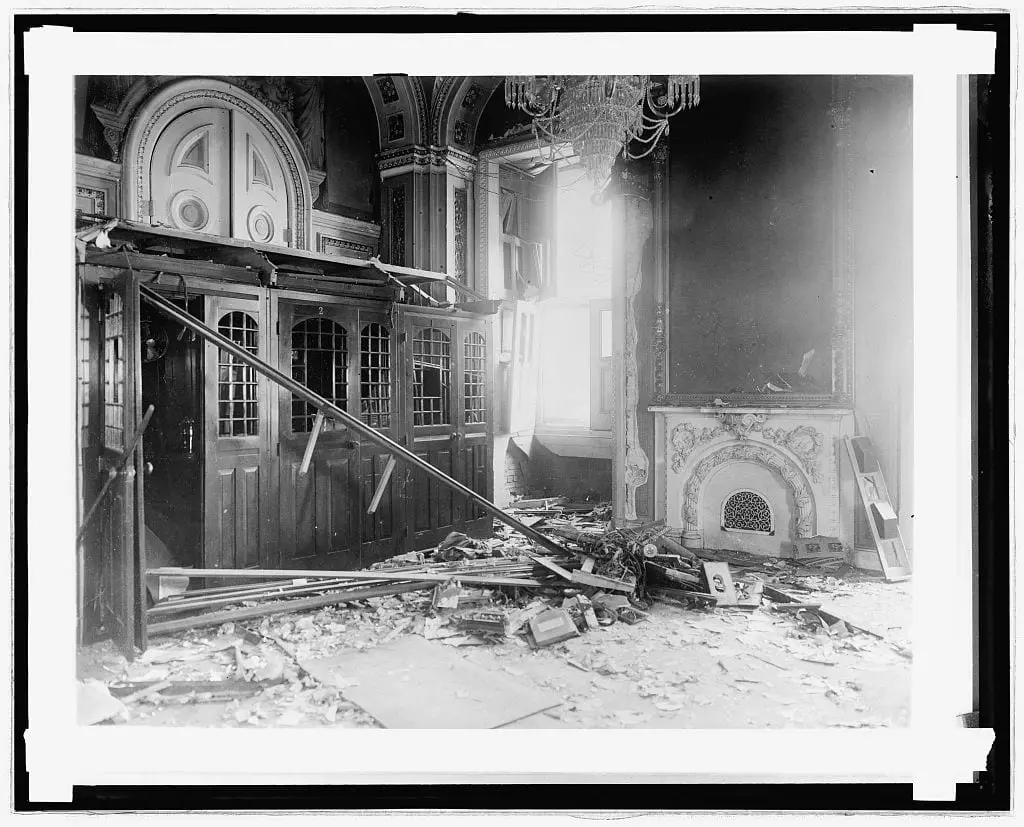
It was about 11:40 at night on July 2, 1915, when a bomb went off inside the United States Capitol.
It tore apart the Senate Reception Room, a few feet from the Senate Chamber. Mirrors shattered, windows blew out, chandeliers came down, and chunks of the frescoed ceiling rained onto the floor.
The man who set it was already a mile away at Union Station, holding a ticket for the midnight train to New York.
By nine the next morning he was on Long Island, firing two bullets into J.P. Morgan Jr. And the professor who did all of it was not who he claimed to be.
A Bomb Under the Senate Switchboard
He slipped into the Capitol that Friday afternoon, on the edge of the Fourth of July weekend. Congress had been out of session since March, and the building was nearly empty.
He headed for the Senate Chamber and found the doors locked. So he settled on the room next door, the Senate Reception Room, and tucked his package under the telephone switchboard. The operator had already left for the holiday.
Inside were three sticks of dynamite and a timer set for just before midnight, when no one would be hurt. Then he walked to Union Station and bought his ticket to New York.
The blast nearly knocked Capitol Police officer Frank Jones out of his chair at the Senate wing’s east entrance. Ten minutes earlier, he had closed a window right next to the switchboard. That small bit of luck probably saved him.
Jones was a thirty-year veteran with one private fear: that the great dome would someday fall into the rotunda. For a few seconds in the dark, he was sure it finally had.
An Exclamation Point for Peace
The next evening, Washingtonians opened the Evening Star to a strange letter. The headline read, “Letter Received by the Star Thought to Have Bearing on the Explosion.”
It had been postmarked less than two hours before the bomb went off. The writer raged against American companies selling weapons to the warring nations of Europe, then made a claim that is hard to read straight.
“Sorry I had to use explosives. (Never again.) It is the export kind and ought to make enough noise to be heard above the voices that clamour for bloodmoney. This explosion is the exclamation point to my appeal for Peace!”
A bomb in the Capitol, signed as a plea for peace. The letter was signed “R. Pearce.”
The Next Morning, Long Island
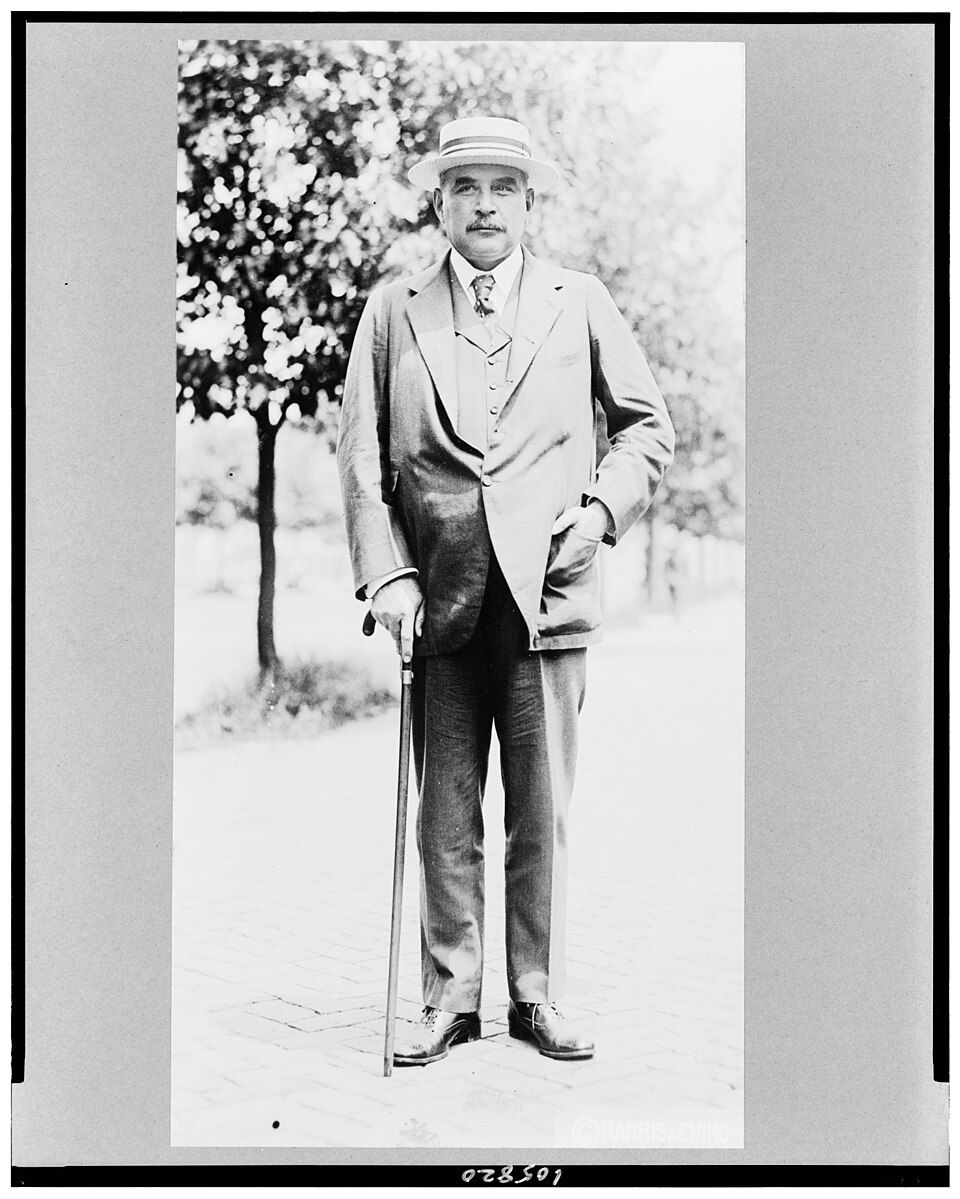

While Washington police picked through the wreckage, the bomber was already on a train. His target was J.P. Morgan Jr., known as Jack, the most powerful banker in America.
Morgan’s firm was the main purchasing agent in the United States for Britain and France, buying their munitions and arranging their war loans. To a furious German nationalist, that made Morgan the money behind the killing.
Around nine in the morning he reached Matinecock Point, the Morgan estate at Glen Cove on Long Island. He carried two revolvers, a stick of dynamite, and a suitcase stuffed with anti-war clippings and more explosives.
When the butler answered the door, the visitor handed over a card and demanded to see Morgan. When the butler hesitated, he drew both revolvers and ran into the house.
He ran into two of the Morgan children and herded them up the stairs ahead of him. “Now, Mr. Morgan, I have you!” he shouted. Mrs. Morgan threw herself in the way, but Morgan shoved past her and charged.
The banker took two bullets, in the groin and the thigh, as he tackled his attacker to the floor. He and his wife wrestled the revolvers out of the man’s hands.
“Kill me! Kill me now!” the gunman cried. “I have been in a perfect hell for the last six months on account of the European war.” The butler ended the fight by knocking him out with a lump of coal.
There was an audience for all of it. The British ambassador, Sir Cecil Spring Rice, had been at the breakfast table when the shooting started.
Morgan’s wounds turned out to be minor, and he was back at his desk by the middle of August. His father, the original J.P. Morgan, had strolled in front of the U.S. Capitol just a few years earlier, in a very different Washington.
Two Letters, One Man
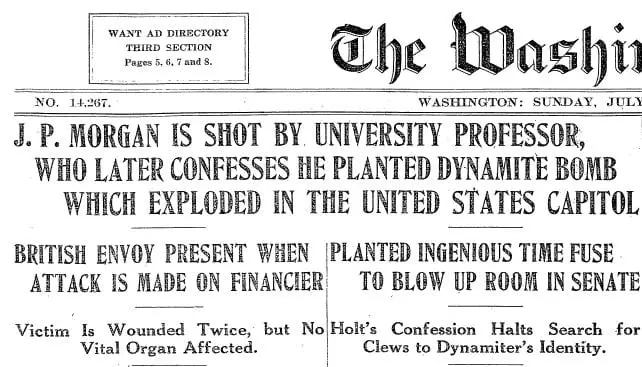
Back in Washington, detectives were stuck. They had a bombed-out room and a rambling letter from a man called R. Pearce, and no idea who he was or where he had gone.
Chief Detective Robert Boardman read the Pearce letter over and over. Then he set it beside the statement the Glen Cove gunman had given after shooting Morgan.
The two men used almost the same words about munitions, prosperity, and refusing to sell to Germany. It was the same argument in the same voice.
Boardman fired off a cable to his chief, who had rushed up to New York:
“Ascertain from F. Holt, in custody at Glen Cove, N.Y., for shooting of J.P. Morgan, his whereabouts Thursday and Friday, as he may have placed the bomb in the Capitol here Friday night.”
He was right. The man who bombed the Capitol and the man who shot J.P. Morgan were the same person.
He confessed the rest. He had reached Washington on the afternoon of July 2 and taken a room at a boarding house at Delaware Avenue and C Street NE. He built the bomb in a suitcase, walked into the Capitol, and wandered the halls for half an hour without a single guard stopping him.
After planting it, he killed time in the streets until the blast, then caught the 12:10 train to New York. By coincidence, the city’s police chief was riding the very same train. Washington had been following the war through those front pages for a year already.
The Professor Was a Ghost
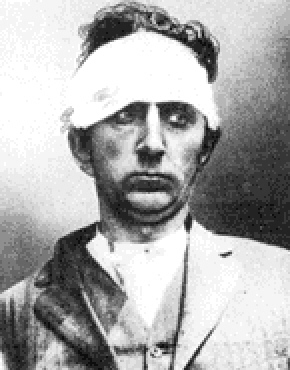

“Frank Holt” was a lie too. The prisoner’s real name was Erich Muenter, and the police in Cambridge, Massachusetts had wanted him for nine years.
In 1906, Muenter was an instructor of German at Harvard and a doctoral student. That April, his pregnant wife Leone died. The cause was arsenic poisoning.
He tried to ship her body to her family in Chicago before anyone looked too closely. A doctor performed a quiet autopsy and found the poison. By the time a warrant was issued, Muenter had vanished.
He left his newborn daughter behind and mailed his wife’s family a pamphlet he titled “Protest,” vowing to “annihilate” Chicago and Cambridge. Then he disappeared into a new life.
As Frank Holt, he worked a gold mine in Mexico, graduated from Texas A&M in 1909, and married again. He climbed back up the academic ladder one school at a time, teaching German at Oklahoma, Vanderbilt, and Emory and Henry College in Virginia.
By 1913 he was at Cornell, where he earned a PhD in 1914. The poisoner had become a respectable professor again, with a new wife, a new degree, and a new name.
What undid him was a face. A Harvard official named Charles Apted, who had lived near Muenter back in Cambridge, was sent to New York and recognized the man in the cell.
The Greatest Equipment for Bomb Making
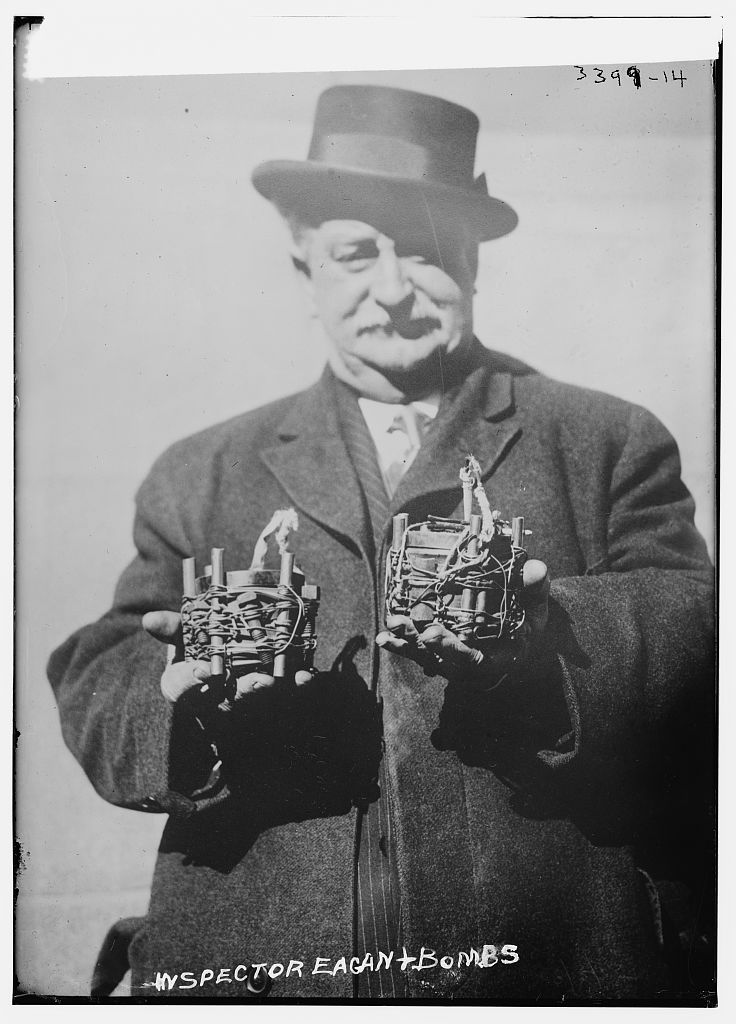
New York’s police had their own reason to want him. Their bomb squad was chasing a string of fires on ships leaving the harbor with arms for the Allies.
Captain Thomas Tunney, the squad’s head, coaxed Muenter into explaining how he had built the timer for the Capitol bomb. Then police found a trunk he had stashed in storage in the city.
Inspector Owen Egan called it the greatest equipment for bomb making ever brought to New York. Inside were 134 sticks of dynamite, blasting caps, coils of fuse, nitric acid, mercury fulminate, smokeless powder, and three finished bombs.
This was not the work of a lone crank with a grudge. Muenter had ties to Abteilung IIIb, the German intelligence network that was slipping time bombs into the cargo of Allied munitions ships.
He had planted one of those devices, a pencil bomb, aboard the steamship Minnehaha as it left for Britain. From his cell, he taunted police with a prediction that the next ship would burn on July 7. The Minnehaha caught fire in the Atlantic that very day.
Death in the Mineola Jail
Muenter never went to trial. On the night of July 5, he slashed his wrist in his cell. It did not kill him.
The next day, while his guard was busy with another prisoner, he climbed to the top of his cell and dove head first onto the concrete floor about twenty feet below.
The sound was so loud that guards first thought he had smuggled in a dynamite cap and set it off with his teeth. He died of a crushed skull on July 6, 1915.
Not everyone believed it was suicide. In his book Dark Invasion, Howard Blum notes that some New York investigators first suspected an assassin had been sent to silence him. The official ruling was that Muenter took his own life, and his secrets went with him.
The press made the most of it. Muenter’s spree, along with other German plots uncovered on American soil, was held up as proof of “Hun barbarity,” and anti-German feeling hardened in the two years before the United States entered the war.
The Senate Reception Room was patched up and put back in service. Senators and staff pass through it today, most of them with no idea that a German professor once left three sticks of dynamite under the switchboard.
The Capitol has seen violence before and since, including bombings in 1971 and 1983. But none were quite like this one: the work of a poisoner with a doctorate who shot a banker the morning after, and called all of it a plea for peace.
If you want another story of violence inside those marble halls, read about the Taulbee-Kincaid shooting, the day a former congressman was gunned down on a Capitol staircase.
the same professor murdered his first wife via slow poison. abandoned their baby, changed his name, got another PhD, remarried, and went back to teaching.