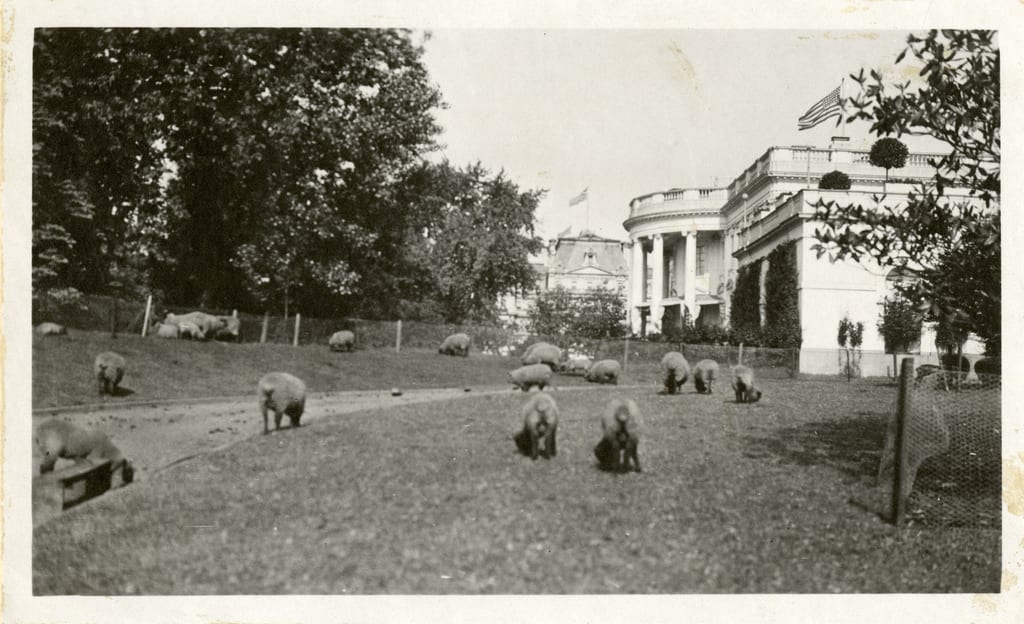
Discover the story behind a Nation’s Attic photograph of sheep grazing at the White House in 1919. Woodrow and Edith Wilson had the sheep roam the grounds to save money and also to raise money for the Red Cross.
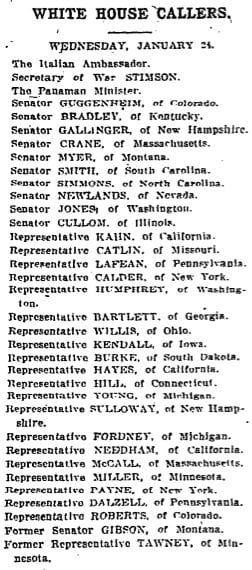
For the next “This Day in History” post, I came across this list of White House visitors for January 24th, 1912. A long list of prominent individuals visited President Taft that day, from the Italian Ambassador, to the Secretary of War and many Members of Congress.
White House callers on January 24th, 2012
This is the early 20th century version of open government and transparency and it’s really interesting to see this printed in the newspaper.
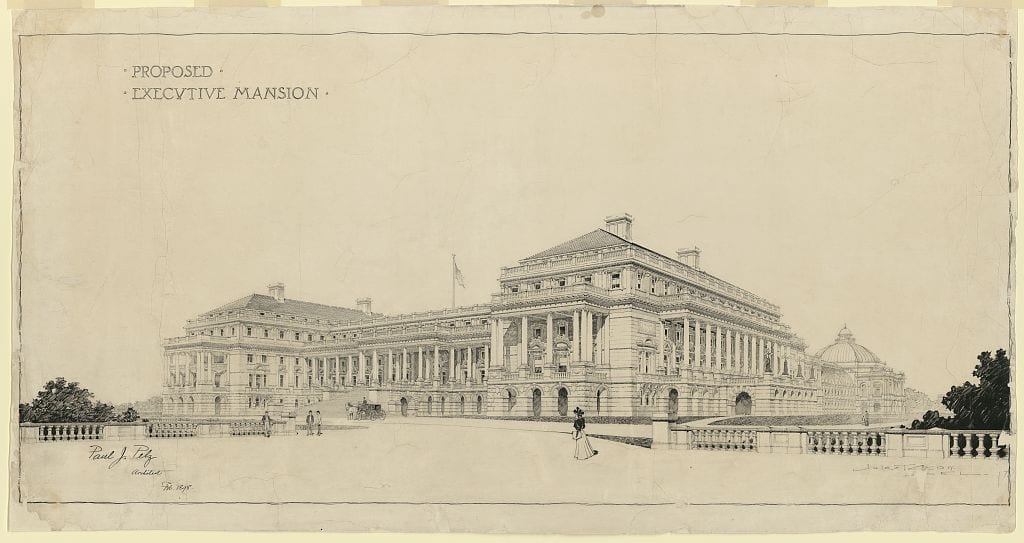
Here’s a good one from the Library of Congress archives. It’s a drawing of the proposed new Executive Mansion, to be built on Meridian Hill (where the park is today). It looks quite ostentatious for American tastes and, in my opinion, resembles Il Vittoriano in Piazza Venezia, Rome (look here … thanks Andrea, great photo blog!).
The drive for a new White House on the hill was really championed by Mary Foote Henderson, who happened to live across 16th St. from the hill. I’m sure she and her husband stood to see a mighty profit from an increase in land prices, because they had purchased enormous tracts of land up and down 16th St. Her hopes were to have a grand boulevard of embassies and fine mansions going up the street.
These plans date back to 1900, right around the time when Teddy Roosevelt was looking to expand and built the West Wing due to overcrowding the White House. Luckily (in my mind), this never came to fruition. A great park was eventually built with the backing of Mrs. Henderson on Meridian Hill, topped off with a statue of Joan of Arc, a gift from France.
View from the south of the proposed Executive Mansion
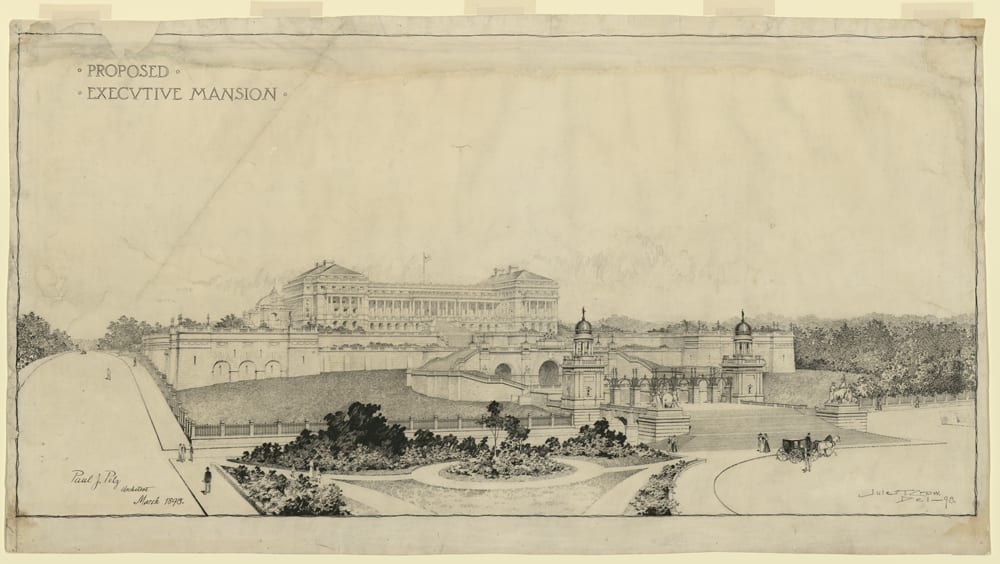
Check out a closer view o the proposed giant mansion below. It’s quite an amazing structure, far greater than the White House of today.
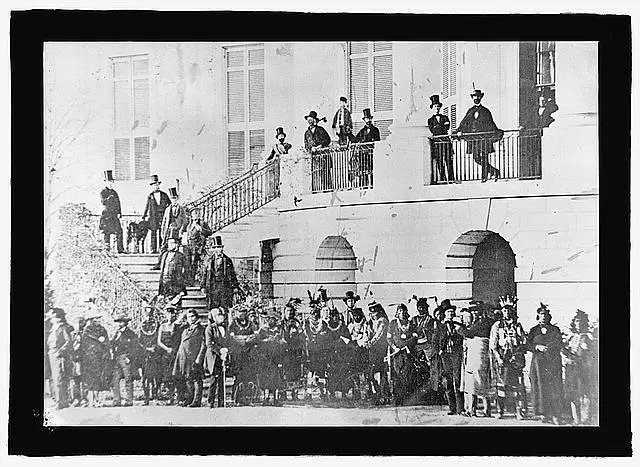
Explore a fascinating old photo from the Library of Congress, gifted to the Library in 1947 by Herbert French. It was created somewhere between 1909 and 1940 and features Native Americans at the White House.
The description below is cut straight from YouTube. This is a home movie from Lady Bird Johnson during the 1960s. The LBJ Library has an entire YouTube channel dedicated to these, so check them out. They’re also on Twitter and Facebook.
The footage is outside and the film is silent. The film starts with Lady Bird Johnson and others posing in front of a house somewhere in Virginia? There are views of the house and unidentified women and a man posing and then unidentified people sitting/eating at tables.
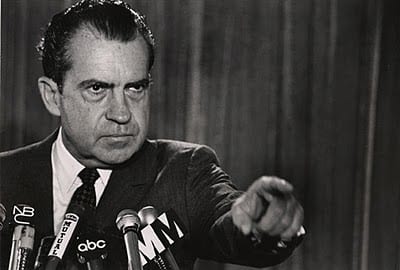
I really wanted to start by skewing these posts towards more anonymous D.C. residents, but I keep coming across gold on YouTube like this. I promise to return to more posts on hidden and lost Washington, but you have to watch this. Look how defensive President Nixon is at the end as he folds his arms. Wow. I’m sure many of you reading this remember these dark days, which really redefined the American Presidency.
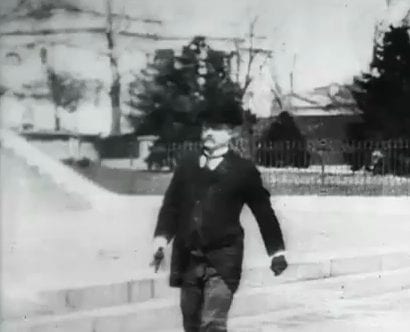
Mark this down as something you’ll never see today. The President is just walking out of the White House grounds … alone. Let’s be honest, any guy that takes a bullet in his chest and STILL gives a speech can kick anyone’s ass. He casually strolls south onto what appears to be E St.
Buy this book and then read it (I bought the Kindle version). It is an excellent window into life in Washington City in the days after the fall of Fort Sumter.
It chronicles life in the District starting April 14th, 1861. Word had spread to Washington that the Union flag was lowered over Fort Sumter. Lincoln and his cabinet feel it is imminent that Beauregard is going to invade the city. Fear and panic grip the city as Lincoln issues an emergency order to call on 75,000 Union volunteers. Jefferson Davis’ public response to this proclamation quite harsh.
Fort Sumter is ours, and nobody is hurt. With mortar, Paixhan, and petard, we tender ‘Old Abe’ our Beau-regard.
An advertisement ran in the Mobile paper that day asking for proposals to supply the Confederacy with 75,000 black coffins — and no proposals would be accepted from north of the Mason-Dixon Line (of course).
The Siege of Washington by John and Charles Lockwood

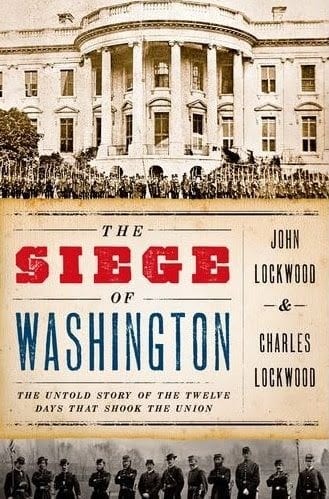
 book and then read it (I bought the
  version). It is an excellent window into life in Washington City in the days after the fall of Fort Sumter.