
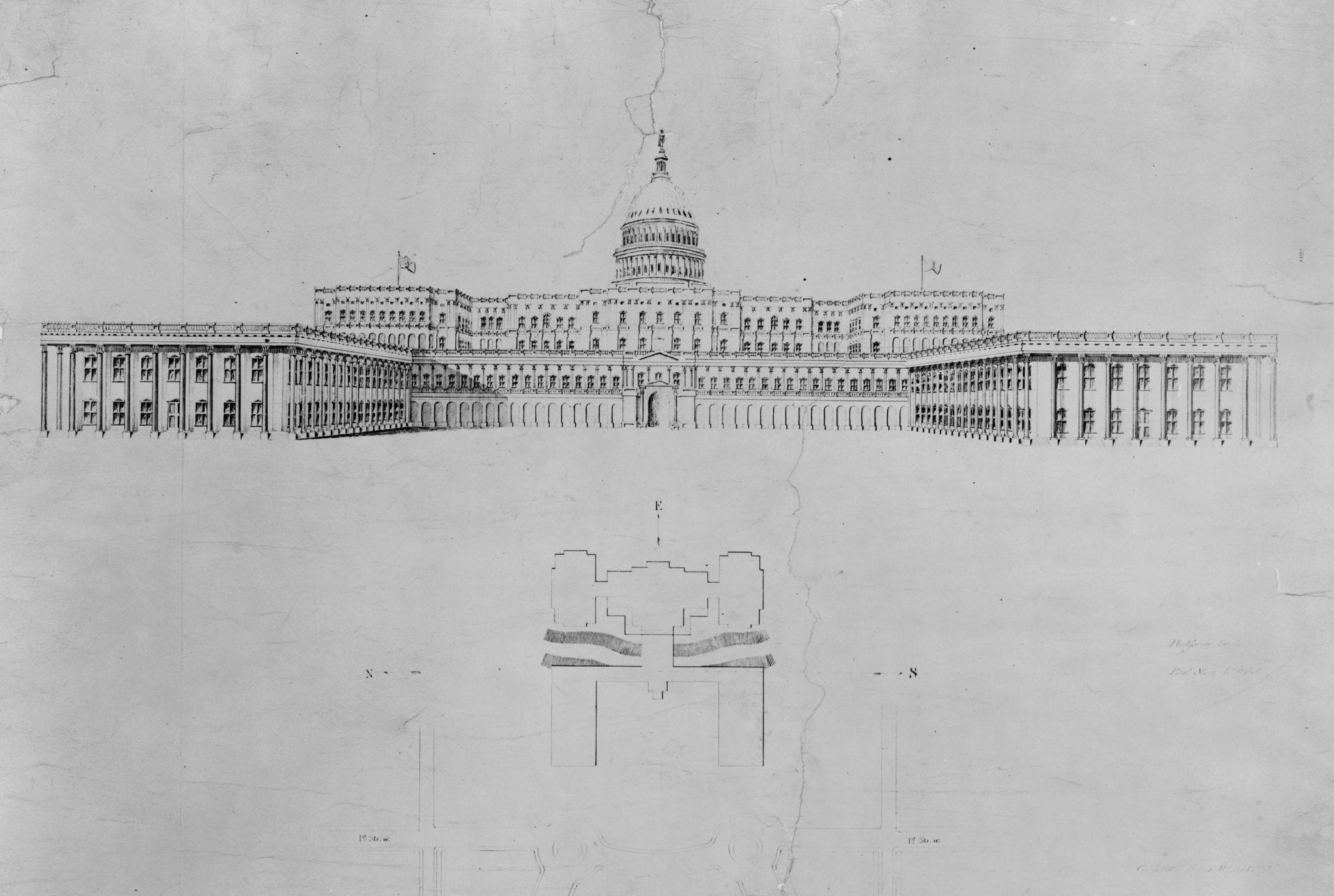
The drawing shows the U.S. Capitol from the west, with its dome and Walter wings. Then it keeps going. Long colonnaded galleries run north and south, well past where the actual building ends, fronting two new pavilions that would nearly double the footprint of the west front. Below the elevation sits a ground plan, marked N, E, S, W. In the bottom right, a signature. The Library of Congress catalog reads it as R. H. E. Siebert.
It was filed at the Copyright Office in 1877 and never built.
Nobody seems to have asked for it.
Richard Hermann Emanuel Siebert
He was twenty-three years old and lived at 124 Maryland Avenue SW.
His father Selmar Siebert was a copper engraver who had come from Germany by 1840 and taken work with the United States Coast Survey. Selmar and his wife Emma Gildemeister Siebert had seven children. Richard was born April 15, 1854. His younger brother Edward would become a painter. Their siblings carried long Germanic names: Selma Emma, Marie Wilhelmine Henriette, John Selmar.
Boyd’s Directory of the District of Columbia for 1877 lists Richard’s occupation in the abbreviated directory style: “eng and draughtsman.” His workplace was the Federal Buildings, a commercial office at 529 Seventh Street NW, one block south of the Old Patent Office. Boyd’s lists the address repeatedly as the base for patent solicitors. Draftsmen at 529 Seventh NW likely made their living drawing patent illustrations for attorneys who practiced a short walk away.
That was the day job. At some point in 1877, Richard also took a sheet of paper and drafted an alternative U.S. Capitol.
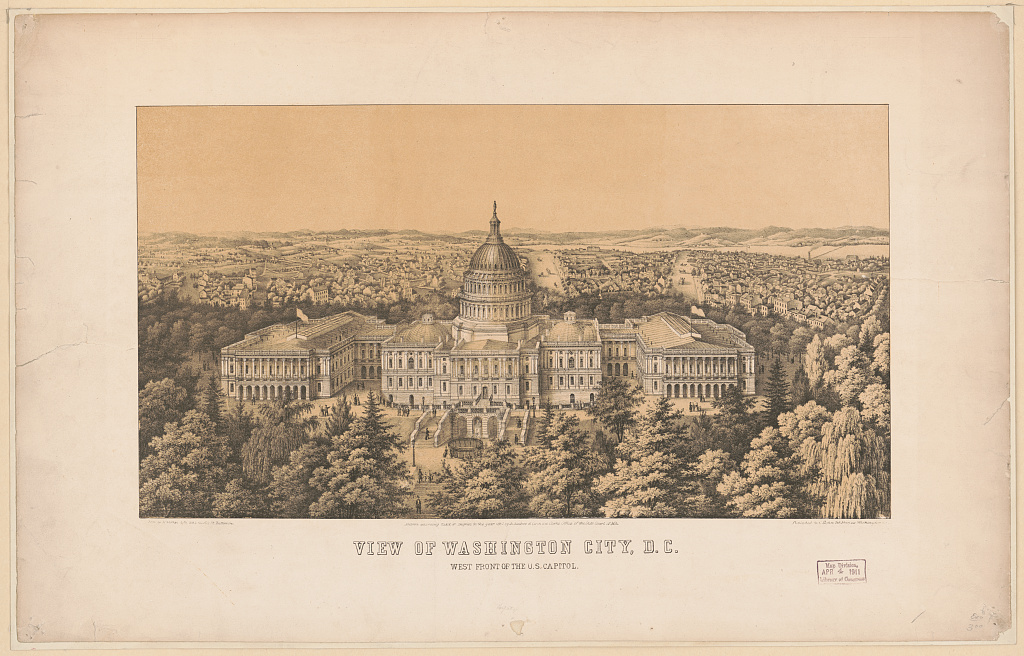
The Capitol in 1877
The Capitol Richard drew on was under active reinvention.
Frederick Law Olmsted had been retained by Congress in 1874 to redesign the Capitol grounds. By 1875 he had submitted a plan for marble terraces wrapping the north, west, and south sides of the building. The existing west-front slope, observers said, made the Capitol appear to be “slipping down the hill.”
In February 1877, Congress appropriated another $25,000 for the work. Over the course of the year Olmsted’s crews set out 7,837 trees and plants on the Capitol grounds. Rutherford B. Hayes was inaugurated at the East Portico on March 5, ending the long electoral deadlock with Samuel Tilden. A new administration, a new budget, a Capitol whose grounds were being rebuilt around its visitors week by week. Just fourteen years earlier the Statue of Freedom had finally been placed on top of the dome; the building was still settling into its completed form.
The west front itself, the side Richard drew, was the Capitol’s most publicly contested face in 1877.
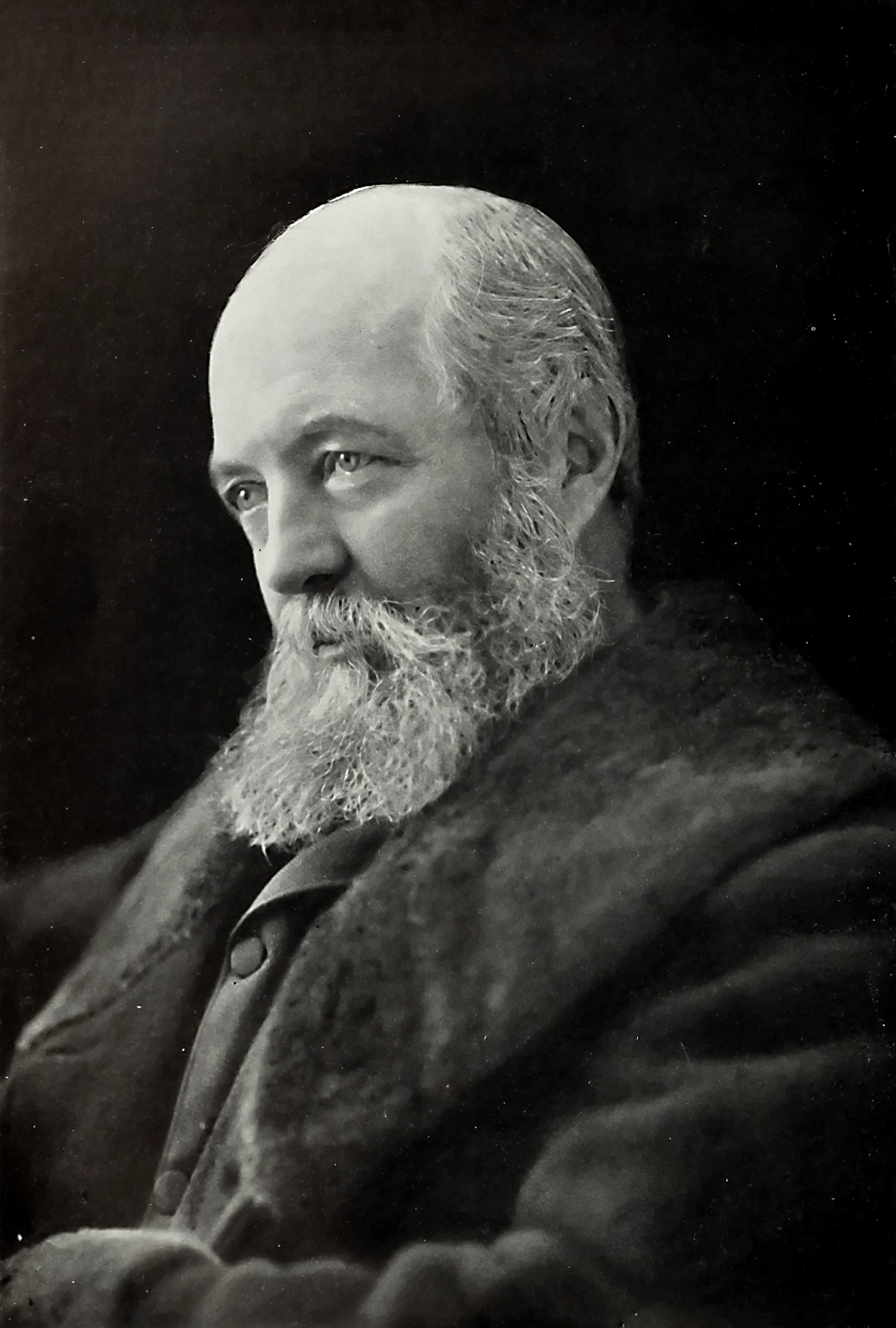
Architect Clark, and His Bad Summer
In August 1877, newspapers ran charges of corruption against Edward Clark, the fifth Architect of the Capitol, and the man who would have had final say over anything actually done to the building. A disappointed contractor accused Clark of drawing two federal salaries (Architect and manager of the Soldiers’ Home), using a government stagecoach for personal errands, and diverting a $200,000 grounds appropriation to Olmsted. The House Committee on Public Buildings and Grounds opened an investigation.
On August 17, Olmsted wrote a long letter to Secretary of the Interior Carl Schurz defending Clark. He explained his own salary arrangement in full. He had been asked in 1874 to take on the Capitol grounds and had replied he could not relocate to Washington but would organize an office of his own assistants at $4,000 a year, later reduced at his own request to half that. He closed with:
“may be permitted to bear grateful testimony to the admirable spirit and assiduity with which Mr Clark has guarded certain interests of the government under my administration, and to testify of my high appreciation of the value of his services.”
Three days later, on August 20, the National Republican printed Clark’s own response:
“ARCHITECT CLARK RESPONDS. DENYING THAT HE RECEIVES TWO SALARIES UNDER THE GOVERNMENT. HIS EXPLANATIONS ON THE SUBJECT AS SUBMITTED TO THE INTERIOR DEPARTMENT YESTERDAY.”
Clark said he had not been employed at the Soldiers’ Home for a year. In earlier years he had received small sums for expenses, never more than $900 in any one year, which he did not consider a second salary within the meaning of the law.
The campaign petered out. Clark stayed in office until his death in 1902. But in the year Richard Siebert’s Capitol drawing was filed, the sitting Architect of the Capitol was spending his mornings answering charges. The Capitol had a way of producing its own drama in that era. Thirteen years later, on a staircase inside the building Clark ran, a reporter would shoot a former congressman.
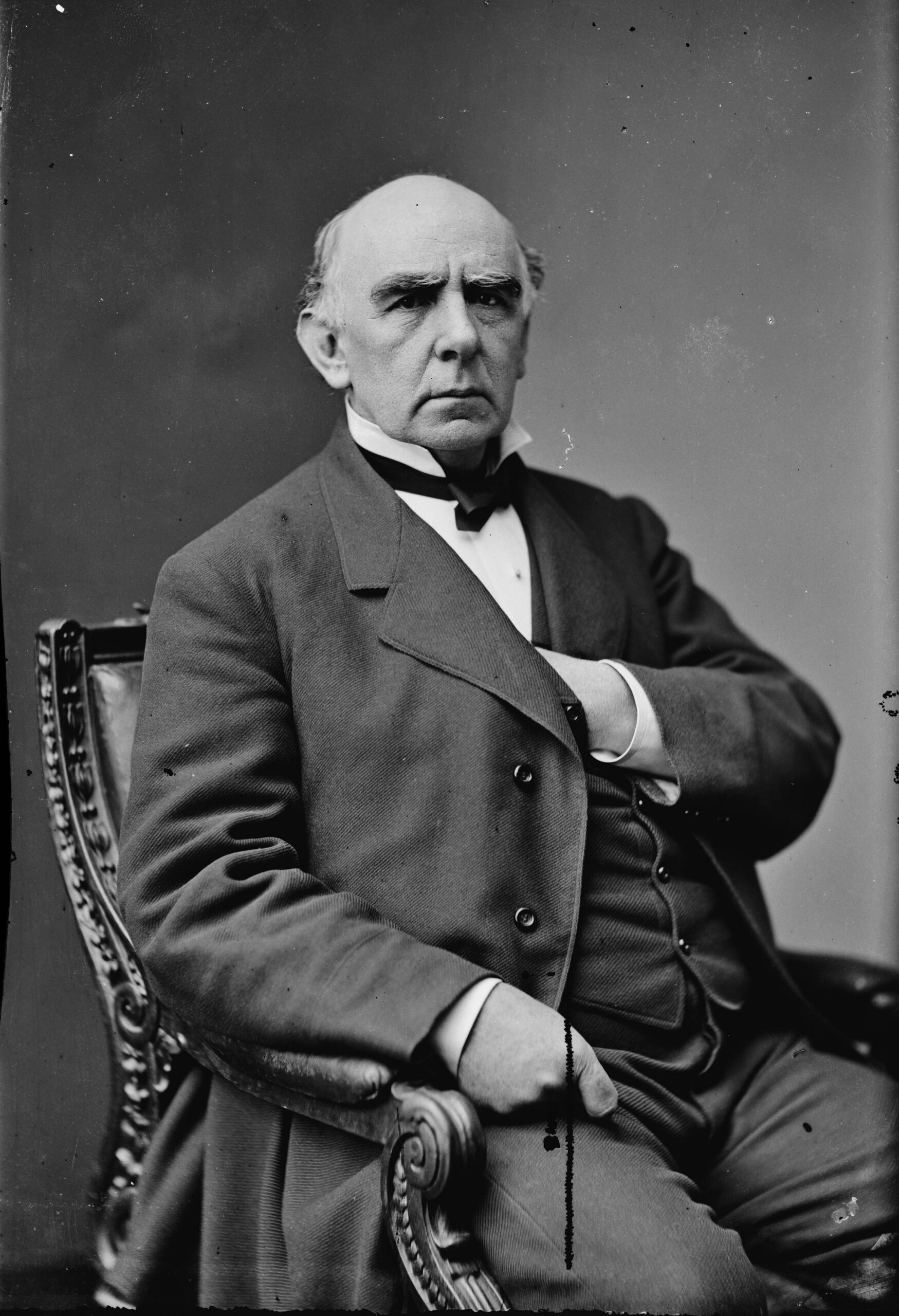
“Awkward and Mean in Appearance”
On September 6, 1877, Olmsted drafted the west-front language that Clark would publish in his annual report. The draft survives in the Olmsted Papers at the Library of Congress:
“Attention should be called to the great defects of the present arrangement for entering the Capitol from the West. The present stairway was designed with reference to the original small central building and was architecturally inadequate even for that. It now serves as the only direct means of access to the Capitol from all the western part of the city and is not only awkward and mean in appearance but exceedingly inconvenient and rapidly approaching a dangerous condition. The obliteration of the entrance to the approach from Pennsylvania Avenue, which is designed on a scale corresponding to that of the enlarged Capitol, will make its defect more conspicuous. The immediate construction of the new stairways upon the plan favorably reported by the Committees of Public Buildings and Grounds in 1875 is much to be desired.”
Two months later, on November 13, the Evening Star printed a summary of Clark’s published annual report. The west-front passage carried Olmsted’s phrasing almost intact, only lightly edited for print. On December 4, Secretary Schurz’s own annual report endorsed “the recommendations of Prof. Olmsted with respect to terrace walls and new stairways at the west front.”
Three official voices. One Olmsted draft underneath them.
That was the establishment position on the Capitol’s western face in 1877: the existing approach was dangerous, the terraces were coming, and the grown-ups were in charge of what to do about it. And into that settled consensus, from an office at 529 Seventh Street NW, a twenty-three-year-old draftsman submitted his unsolicited vision.
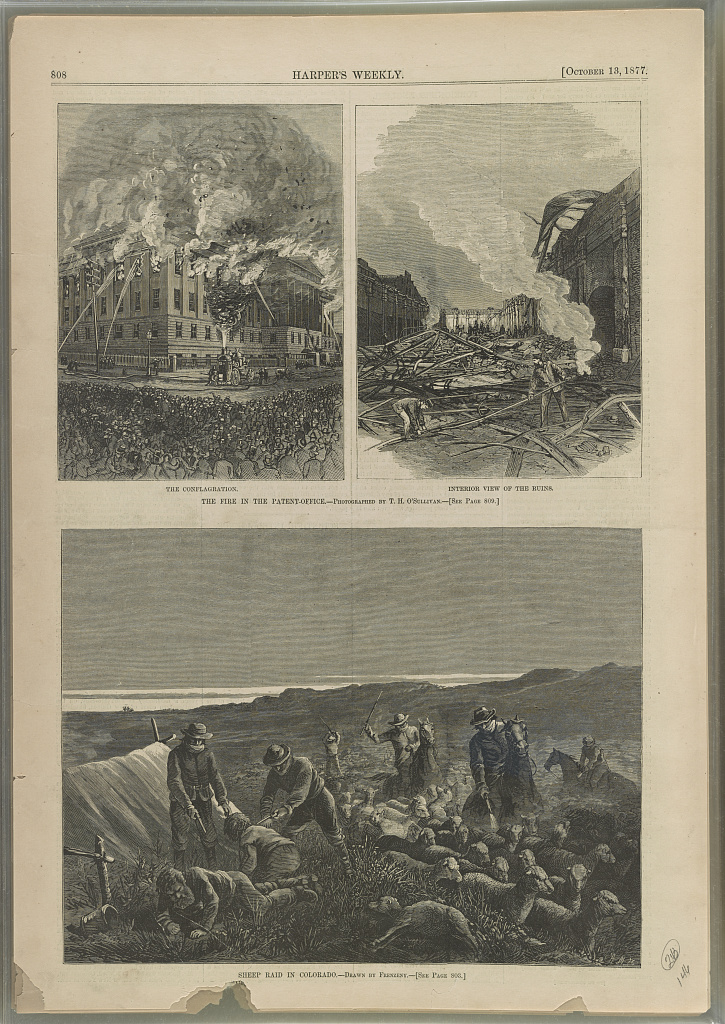
Eighteen days after Olmsted finished his memo, the Old Patent Office Building burned.
The Candlestick, and the Grave
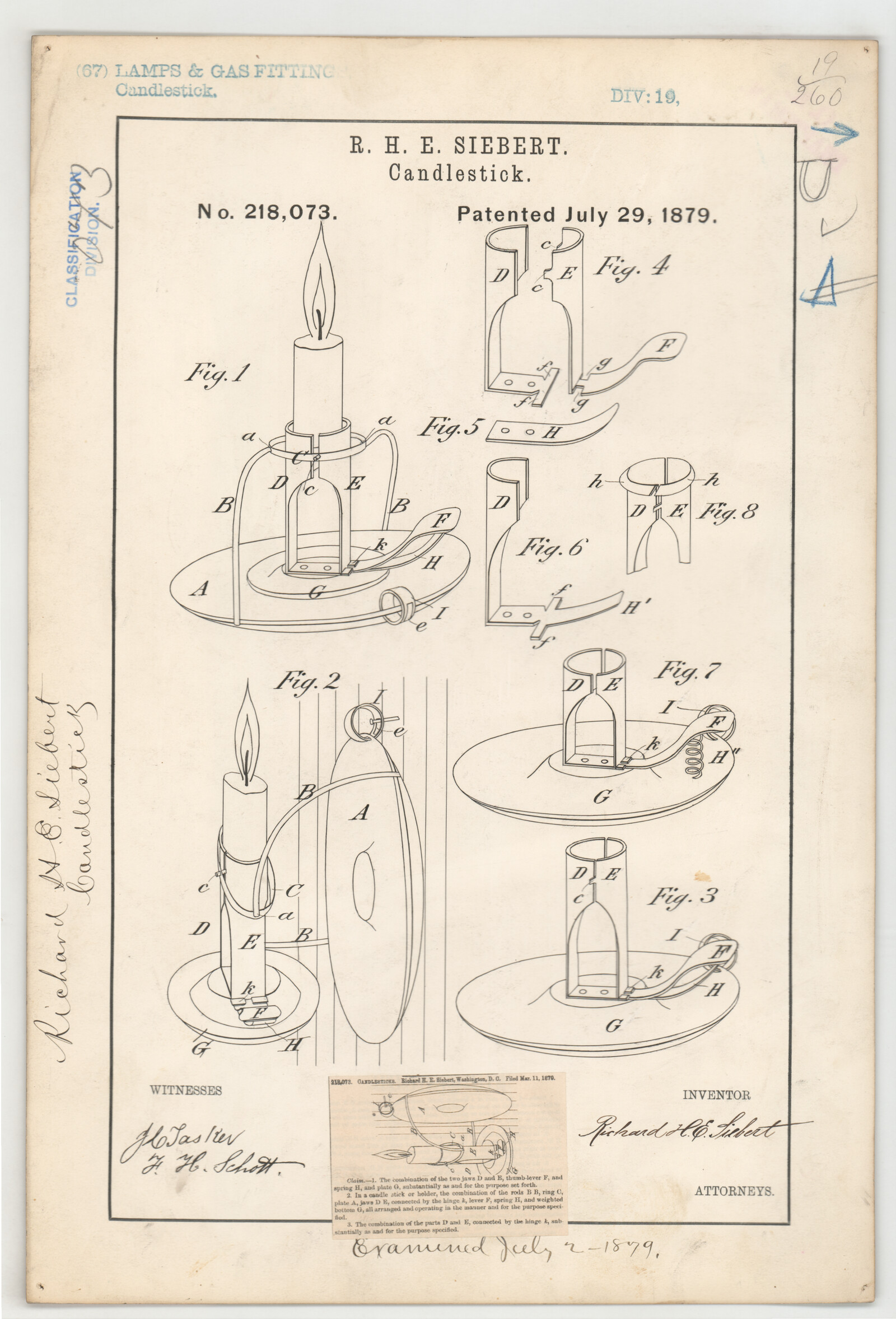
Two years after the Capitol drawing, on March 11, 1879, Richard filed a patent application at the Patent Office a block up the street. His invention, U.S. Patent No. 218,073, was granted on July 29: a self-righting candlestick. A swinging elliptical ring suspended on curved wires kept the candle perpendicular no matter how the holder was tilted. Useful, the specification noted, “in mines, shops, or homes.”
The candlestick patent gives his full name for the first time in a government record. Richard Hermann Emanuel Siebert. The drawing carries his signature in the bottom right, “Richard H.E. Siebert.” The back of the sheet bears a Patent Office stamp: “O.K. DRAFTSMAN.”
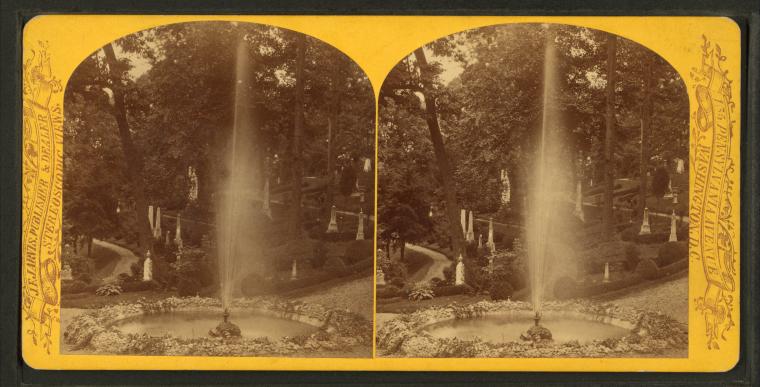
On May 13, 1881, Richard Hermann Emanuel Siebert died, aged 27. He was buried at Oak Hill Cemetery in Georgetown, about three miles from the Capitol he had drawn.
The marble terraces Olmsted had argued for were built between 1884 and 1891. Other pieces of the Capitol’s surroundings kept shifting too; in 1881, a proposal briefly considered moving the Bartholdi Fountain to Dupont Circle, another Washington idea that almost was.
But the deeper question about the west front, whether to extend the building or restore it, stayed open. Between 1958 and 1962, Architect of the Capitol J. George Stewart pushed the east front out by 32.5 feet. In the decades that followed, serious proposals came forward to do the same to the west. Architect George M. White, who took office in 1971, refused. Between 1983 and 1987 his office reinforced the old Aquia sandstone with about 1,000 stainless steel rods set into the masonry and replaced roughly 40 percent of the most damaged stone with matched limestone. The west front was stabilized in place, not extended.
One hundred and ten years after Richard filed his proposal, the question he was trying to answer was settled by doing nothing he had imagined.
The sheet survives at the Library of Congress. The candlestick, so far as anyone has found, does not. He lies at Oak Hill.
增达网:
——————————
终生只需99元,让百万人每天浏览你的广告,每次浏览十秒时间。
终生只需99元,免费下载群发软件,无使用限制,全部是破解版。
终生只需99元,让你什么不干躺着就赚钱,上线替下线发展会员。
——————————
群发软件免费下,无限广告免费发,
百万流量免费享,十级提成免费拿。
——————————
注册网址:
http://www.wo.zengda.xin/
——————————
You could get lost in there!
I am interested in vintage photographs of Tyson Corner VA. Are yours for sale and if so, I need size and a ballpark price.