
Fires

A fire at the Willard in 1922 caught Calvin Coolidge and other guests in a scramble involving luggage, a bath and missing teeth.
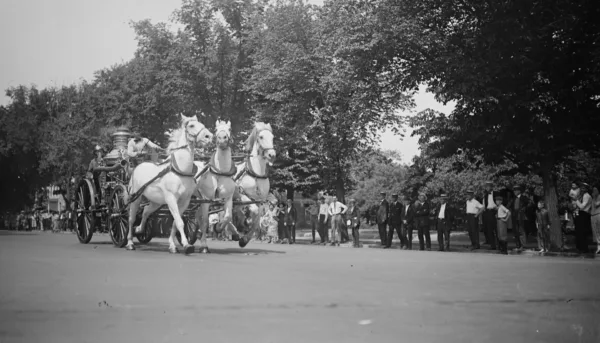
When Washington’s last fire horses retired in 1925, officials gave Barney, Gene and Tom bouquets. The horses ate the flowers.

In 1912 a boys’ Robin Hood Club shack behind 3314 Newark Street in Cleveland Park caught fire, and three engine companies came. Here’s the house’s story.

A fire just after midnight on April 24, 1922 wrecked the Forest Glen Trading Company. The rebuild gave 10 Post Office Road the granite turrets and battlements still standing today.

Three blocks from the Capitol dome sits a dive bar the Nardelli family has run since 1955, deer butt over the men’s room door and all.
There’s more where these came from.
Lost Washington stories in your inbox most mornings: the newest, plus a few from the archive.
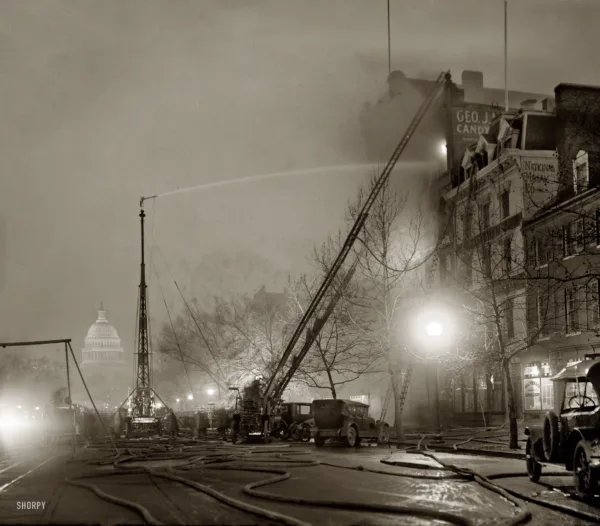
On December 28, 1925, a five-alarm fire tore through George J. Mueller’s wholesale candy plant on Pennsylvania Avenue NW, in the heart of Washington’s first Chinatown. Smoke clouded the Capitol, streetcars stalled for fifteen blocks, and a crowd packed the sidewalks to watch it burn.
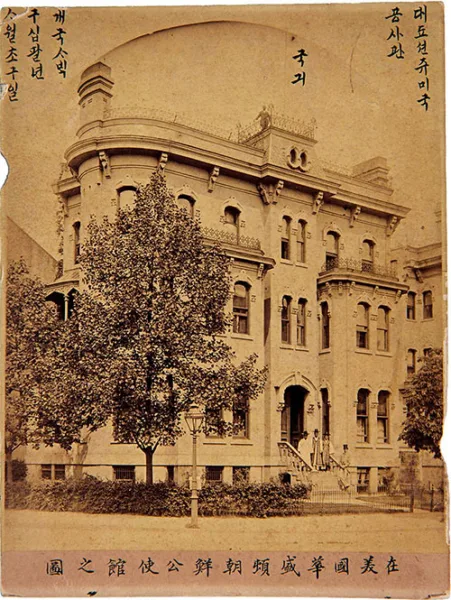
In 1891, King Gojong paid $25,000 for a Victorian townhouse on Iowa Circle to house Joseon’s first mission to the United States. Nineteen years later, after Japan forced the protectorate, the empire sold the building for five dollars. Korea bought it back in 2012 for $3.5 million. The museum opened in 2018.
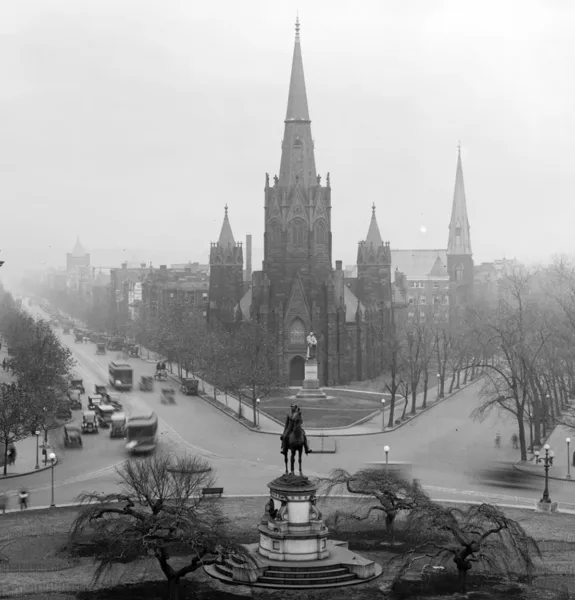
Two of Luther Place’s original pews were dedicated to Grant and Lee, both in the same sanctuary on Thomas Circle.

The Southern Railway Building stood at 13th and Pennsylvania for 50 years. Then it burned. Then the federal government paid $2.68 million to clear it for Federal Triangle.
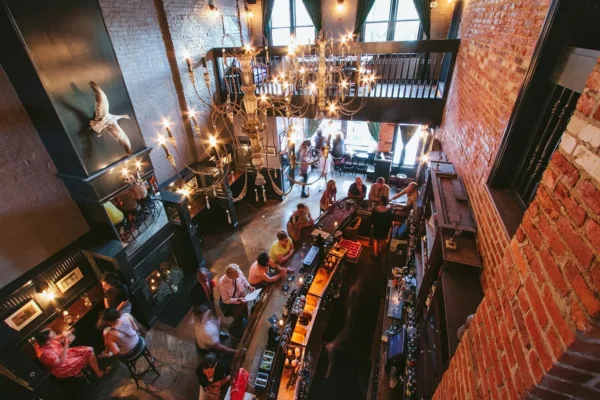
3815 Georgia Avenue NW has been a restaurant since 1929. In the 1960s it was Billy Simpson’s, Washington’s Black political forum.

An 1863 view east up B Street, now Independence Ave, shows the Smithsonian Castle before a January 1865 fire destroyed its central roof and tower caps.

William Strickland’s engravings record the damaged Capitol and President’s House after British forces burned Washington in August 1814.

On March 17, 1911, fire leveled Boundary Field in under 30 minutes, less than four weeks before Opening Day. Then 700 men built a new park in time for the opener, and it later became Griffith Stadium.
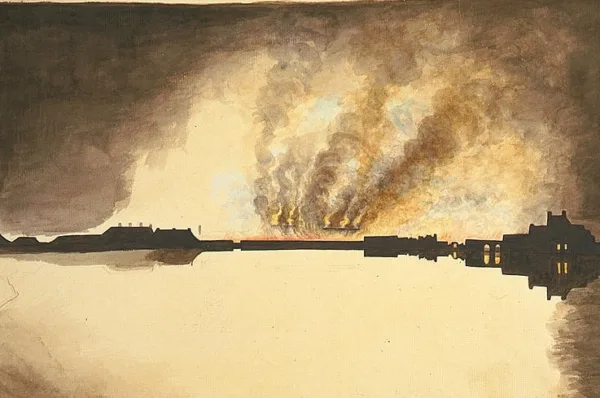
The Federal Republican and The Columbian reported the capital’s destruction and called citizens to arms in August 1814.
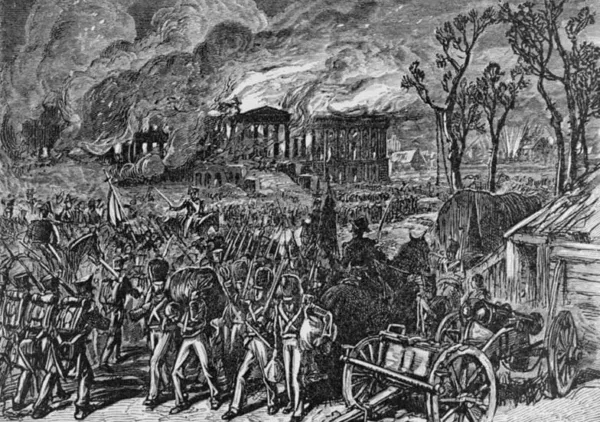
Read The Washington Times’ 1914 article on the 100th anniversary of the Burning of Washington, including major players’ reactions, rumors leading up to it, and President Madison’s disbelief.

The history of Blodgett’s Hotel in Washington, D.C., from its construction in 1793 through its destruction by fire in 1836.
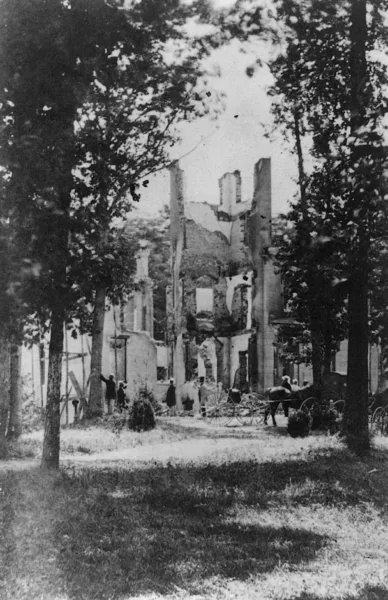
A photograph shows Montgomery Blair’s Falkland mansion, which burned on July 12, 1864.
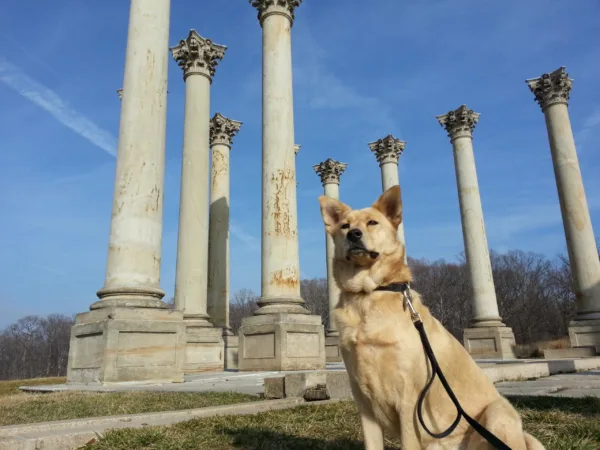
Newspaper reports trace plans for the National Arboretum, a police pistol competition and a brush fire that burned five acres.

Dorchester House at 2480 16th St NW opened in 1941 as one of DC’s grandest apartments. JFK moved in three months later. Here’s what happened next.

A bookstore and a tinsmith were among the earlier occupants of Sonoma’s Capitol Hill address. Old newspapers fill in the history.