
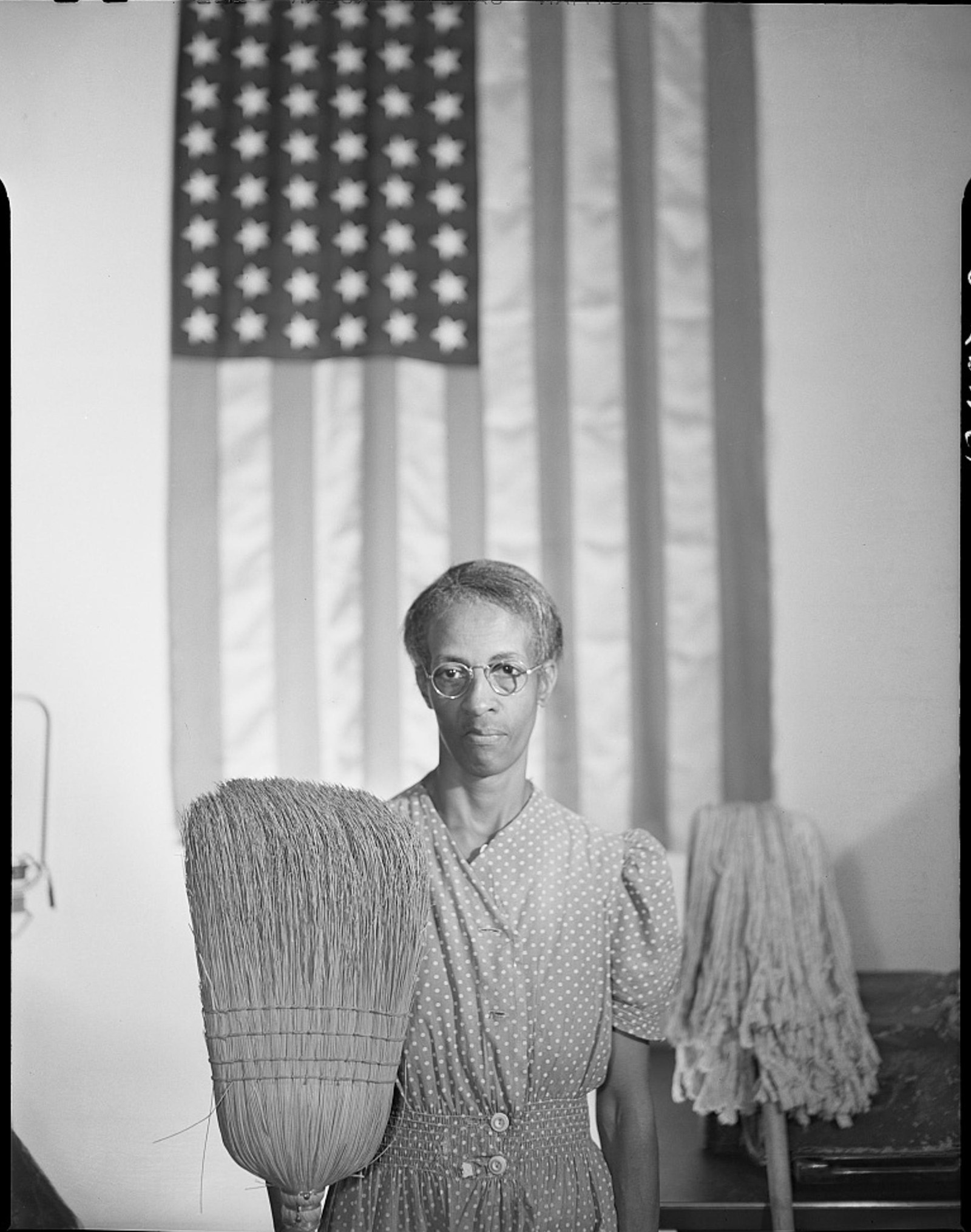
You have almost certainly seen Ella Watson. In August 1942, Gordon Parks posed her in front of an American flag, a broom in one hand and a mop at her side, and made one of the most famous photographs of the century.
Far fewer people know where she went home at night. It was 1433 11th Street NW, a narrow brick rowhouse two blocks east of Logan Circle.
We went looking for that house in the census, the deeds and the old newspapers. What turned up is a portrait of Ella’s block: her landlords, her neighbors, the laundry downstairs and the agency up the street that placed maids.
The Woman Behind the Mop
Parks was the Farm Security Administration’s first Black photographer. According to the Gordon Parks Foundation, Ella Watson worked as a cleaning woman in the agency’s headquarters. In 1942 Parks spent a month photographing her at work, at church and at home.
His notes, now at the Library of Congress, read like a case file. She had been a government charwoman for 26 years. She supported three grandchildren and an adopted daughter on a salary of $1,080 a year, “minus war bond and other deductions.”
She went to work at 5:30 in the evening, cleaned “offices, halls, toilets,” and got home around 2:30 in the morning.
What the 1940 Census Found
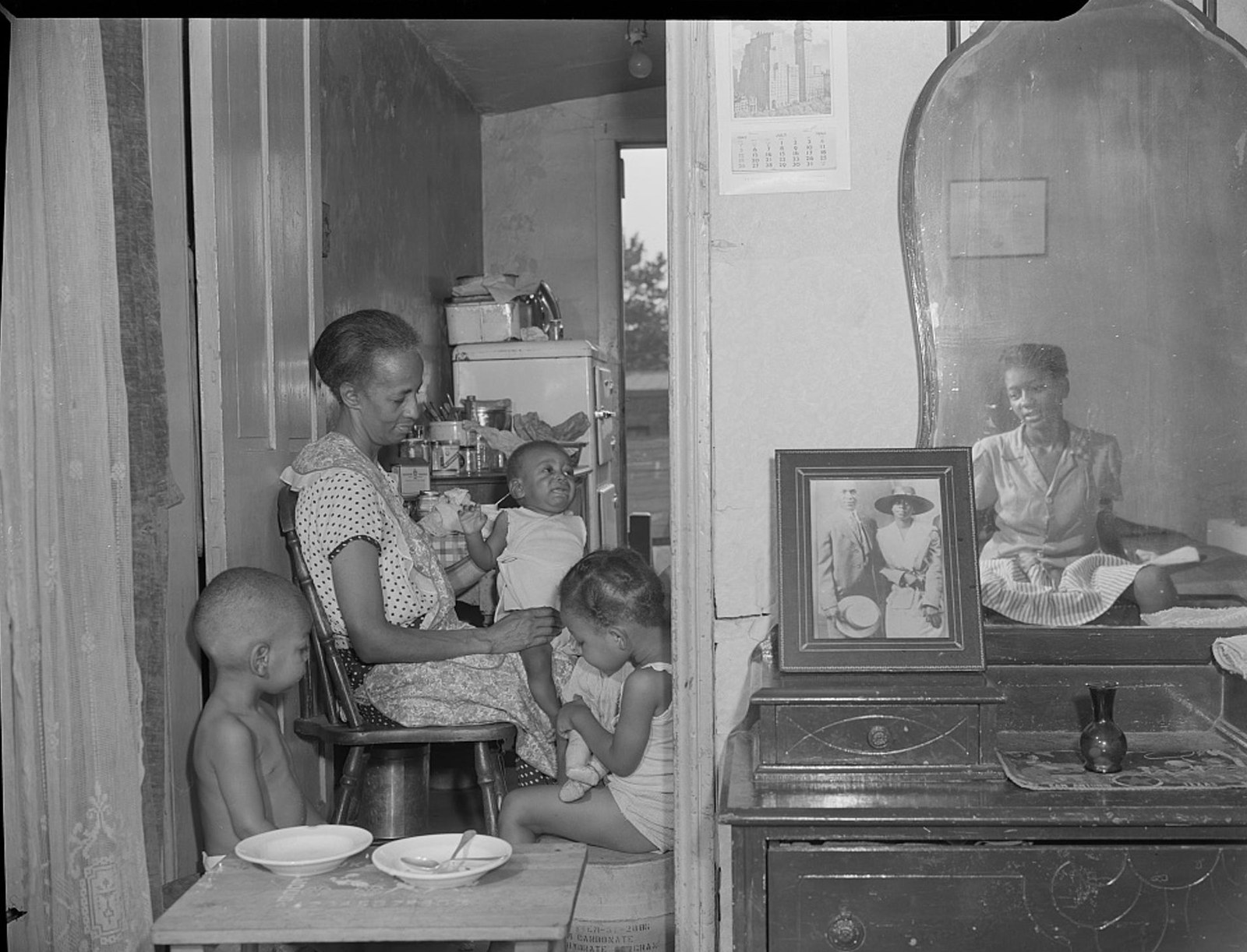
Two years before Parks arrived, a census taker knocked at 1433 11th Street. The date was April 19, 1940.
Ella Watson was listed as head of the household. She was 57, widowed and born in the District. She had lived at the same address since at least 1935, and she paid $25 a month in rent.
Her job was recorded as “unskilled laborer, Treasury Bldg.” She had earned $1,050 the year before. That lines up almost exactly with the $1,080 Parks would note two years later.
One other person lived with her. Lauretta Burgess was 14, born in Maryland and still in school. The census taker wrote her down as a lodger.
She was more than that. Lauretta was born in Baltimore in 1925 to Joseph Burgess and Laura Smooth, and the 1930 census still found her there with her parents. When Ella died in 1980, her obituary in the Washington Star listed Lauretta as her daughter.
There were no grandchildren in the apartment yet. By the time Parks came in 1942, there were three.
A Narrow Brick House on Square 338
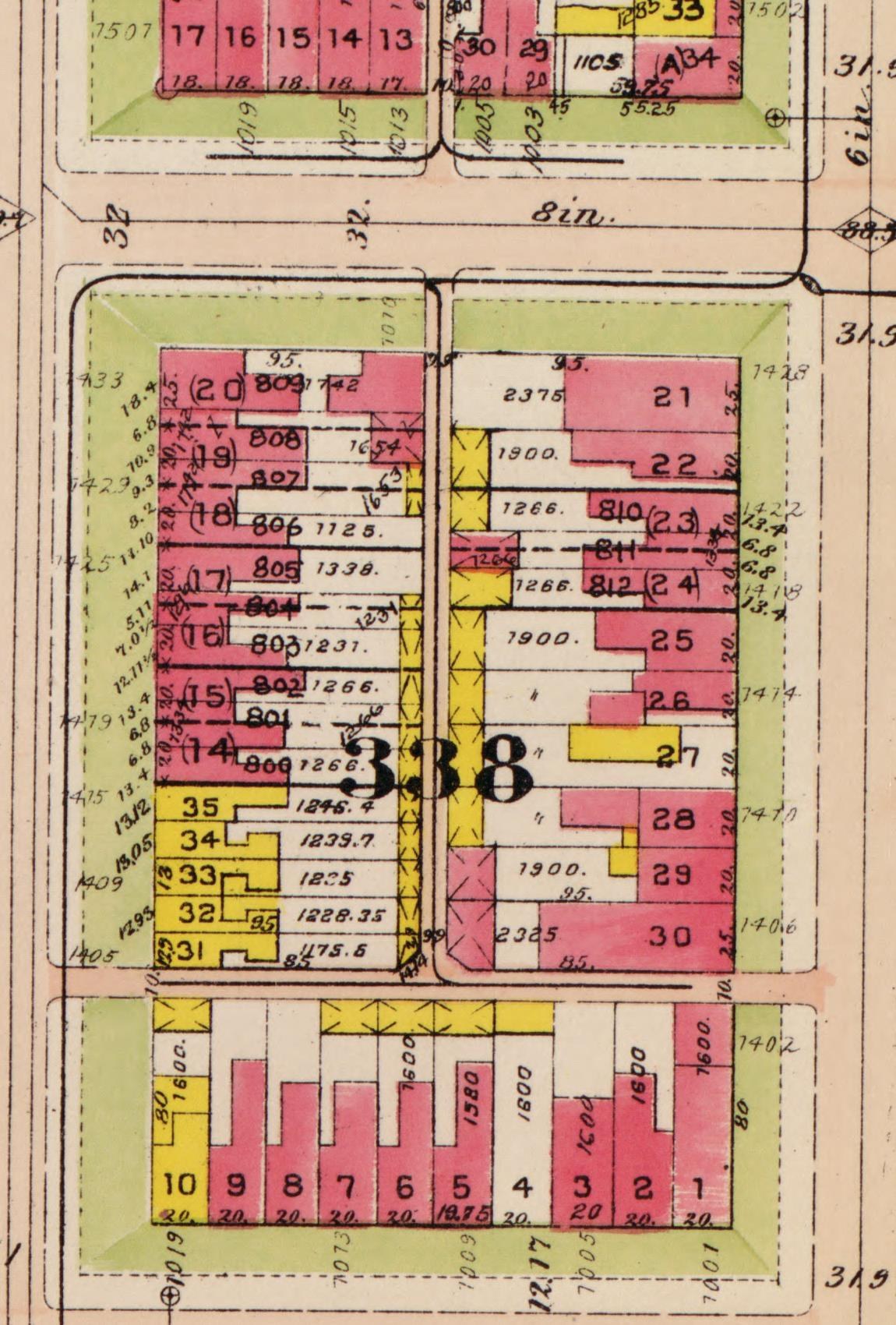
The 1919 Baist real estate atlas shows 1433 as a narrow brick house on lot 20 of Samuel Redfern’s subdivision of Square 338. The deeds describe it as “the North Eighteen (18) feet four (4) inches front on Eleventh Street” of that lot.
In October 1922, Gertie Handleman sold the house to Benjamin Dekelbaum. By 1925 it was being advertised in the Evening Star under the heading “COLORED OPPORTUNITY,” with “new plumbing fixtures” and the note that it was “newly renovated; vacant.”
The block was changing. Washington’s real estate ads of the period sorted housing by race, and 1433 was now offered to Black buyers and renters.
The same sorting ran the other way across town, where new subdivisions like Barnaby Woods sold buyers on deed language they called “social restrictions”.
In 1926 and 1927, the agents Caywood Bros. & Garrett listed it under “COLORED” for $50 a month. By April 1927 the rent was down to $45, then $42.50.
In October 1933, the funeral of Raymond A. Waddy was held “from the residence of his father, 1433 11th st. n.w.” He was buried at Arlington National Cemetery.
Foreclosure, 1932
The Depression caught up with the house. In September 1931, Benjamin and Sadie Dekelbaum borrowed against it again, on top of two existing mortgages. They defaulted.
The trustees advertised the sale for ten days in the Washington Herald and auctioned the house on July 6, 1932. The trustees’ deed records what the winning bidder, Saul E. Spector, paid:
Thirty-four hundred twenty-five dollars over and above a first trust of $5500.00 and a second trust of $2,000.00.
Two days later, Spector and his wife, Lucia, deeded the house to the Penn Realty Corporation for ten dollars. Penn Realty was a Delaware company run by the Himmelfarb family, and it held the house for four years.
The Landlords Up the Street
On June 24, 1936, Penn Realty sold 1433 to Milton and Sylvia Werber. They were Ella’s landlords for the years Gordon Parks would document.
The Werbers lived elsewhere in the city, but they worked just up the street. Milton ran a grocery at 1439 11th Street. A 1929 ad offered “GROCERIES, provisions, fresh meats. Delivery.”
When Prohibition ended, Werber went into liquor. The Evening Star listed him among the city’s new liquor licensees in March 1934.
In December 1937, the Washington Times ran a roundup of holdups across the city. One line read:
Liquor store at 1439 Eleventh St. N. W., Milton Werber, proprietor, robbed of $165.
The 1940 census found the Werbers in a house they owned, valued at $12,000. Milton, 36, was born in Poland. Sylvia, 32, was born in Russia. Both were naturalized American citizens.
Sylvia worked the counter of the family’s liquor and grocery store, 60 hours a week. She earned $1,040 in 1939. Ella earned $1,050 at the Treasury Building.
The difference was the deed. By 1948 Milton Werber had bought at least four lots on Ella’s square, and Werber’s Liquor Store was still listed at 1439 in 1951.
The Laundry Downstairs
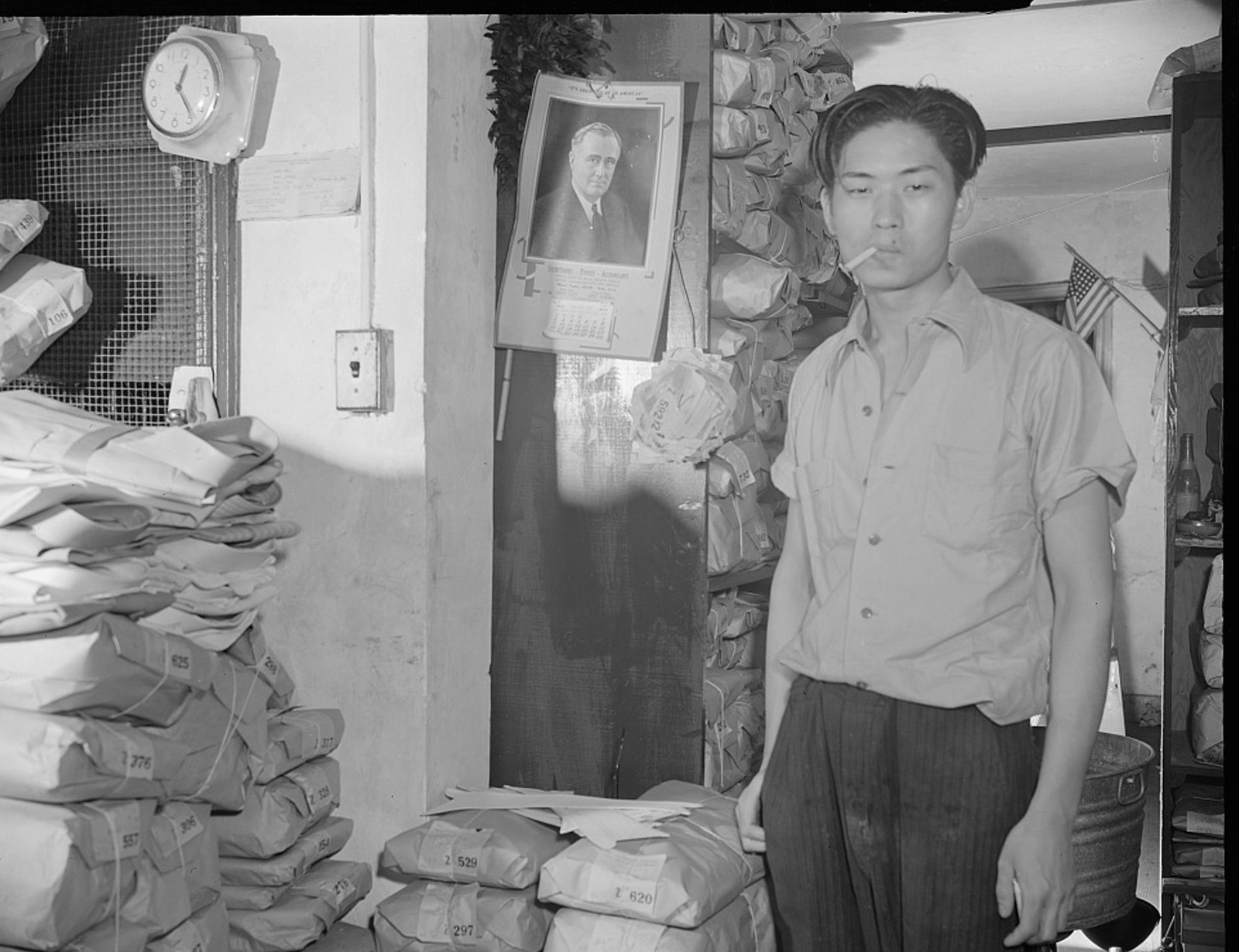
Ella’s apartment sat above a Chinese laundry. Parks photographed its owner and captioned him “Johnnie Lew, owner of the laundry under the apartment of Mrs. Ella Watson.”
Two years later the laundry made the Evening Star. On September 10, 1944, the paper reported:
Buck Foy Lee, operator of a laundry at 1433 Eleventh street N.W., was fined $120 in Municipal Court yesterday on charges of violating the eight-hour-day law. According to the District Minimum Wage Board, Mr. Lee employed Mrs. Helen M. Clayton, colored, 1236 Irving street N.W., and failed to keep a record of the wages she received or the hours she worked.
Whether Johnnie Lew and Buck Foy Lee were the same man, the records we found do not say.
Chinese laundries turn up in other FSA pictures of wartime Washington, too. Louise Rosskam caught the sign of the Chung Wah laundry in a Kodachrome street scene from the winter of 1941-42.
The laundry kept hiring. In February 1945 the Washington Daily News ran the same want ad all week: “YOUNG colored woman, exp., to work in Chinese laundry. Good salary hours; steady job. Apply 1433 11th St. N.W.”
Ella was not the only tenant upstairs. Two days after the 1940 census taker came through, the Evening Star advertised another apartment at 1433: “2 ROOMS, KIT., bath; heat, gas, light furn.; $39.50.”
Out the Bedroom Window
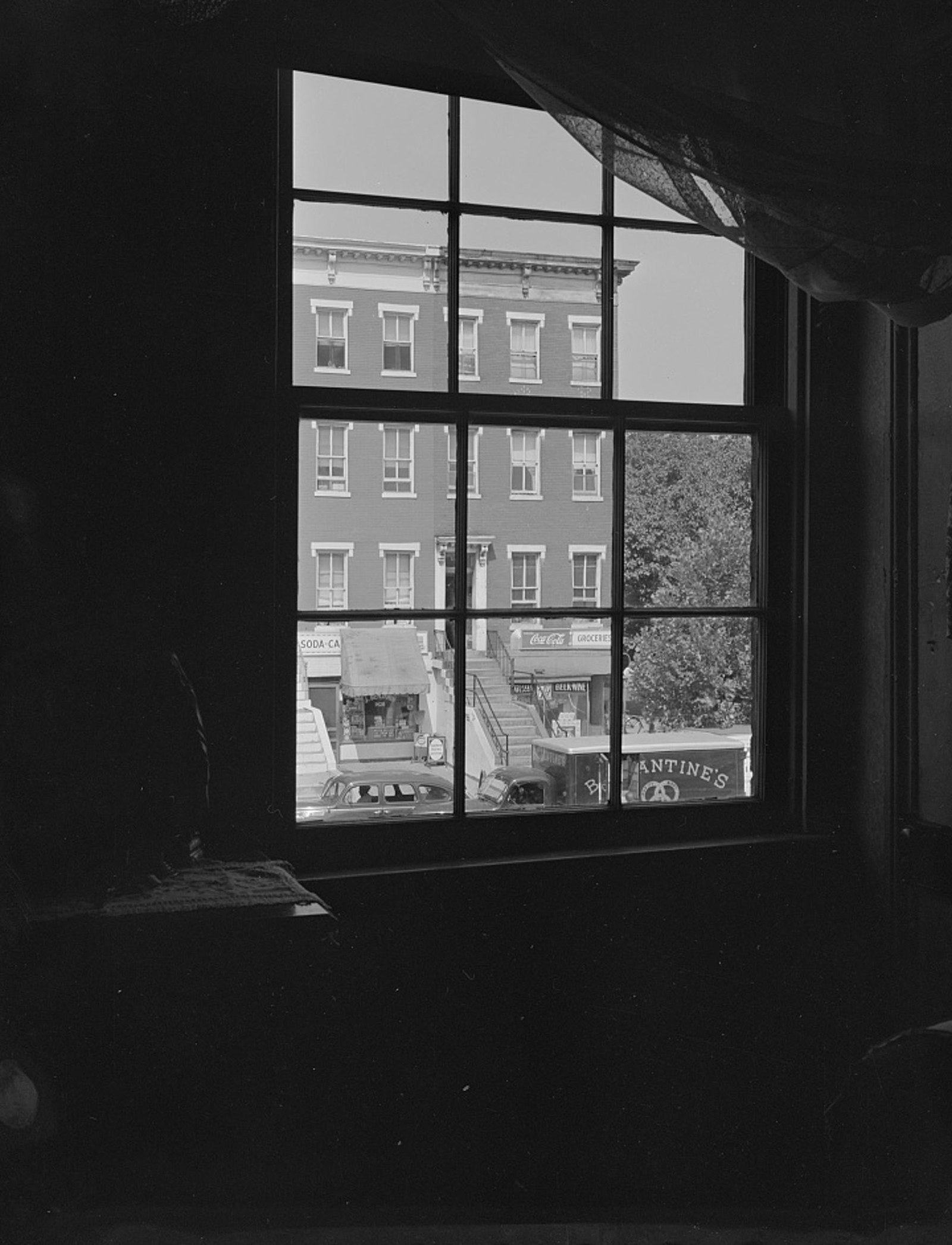
Parks also turned his camera on the street outside. One frame looks out Ella’s bedroom window.
Another, taken from the sidewalk, shows the corner stores she shopped at. A note on the print’s mount gives their addresses: 1426 and 1428 11th Street NW.
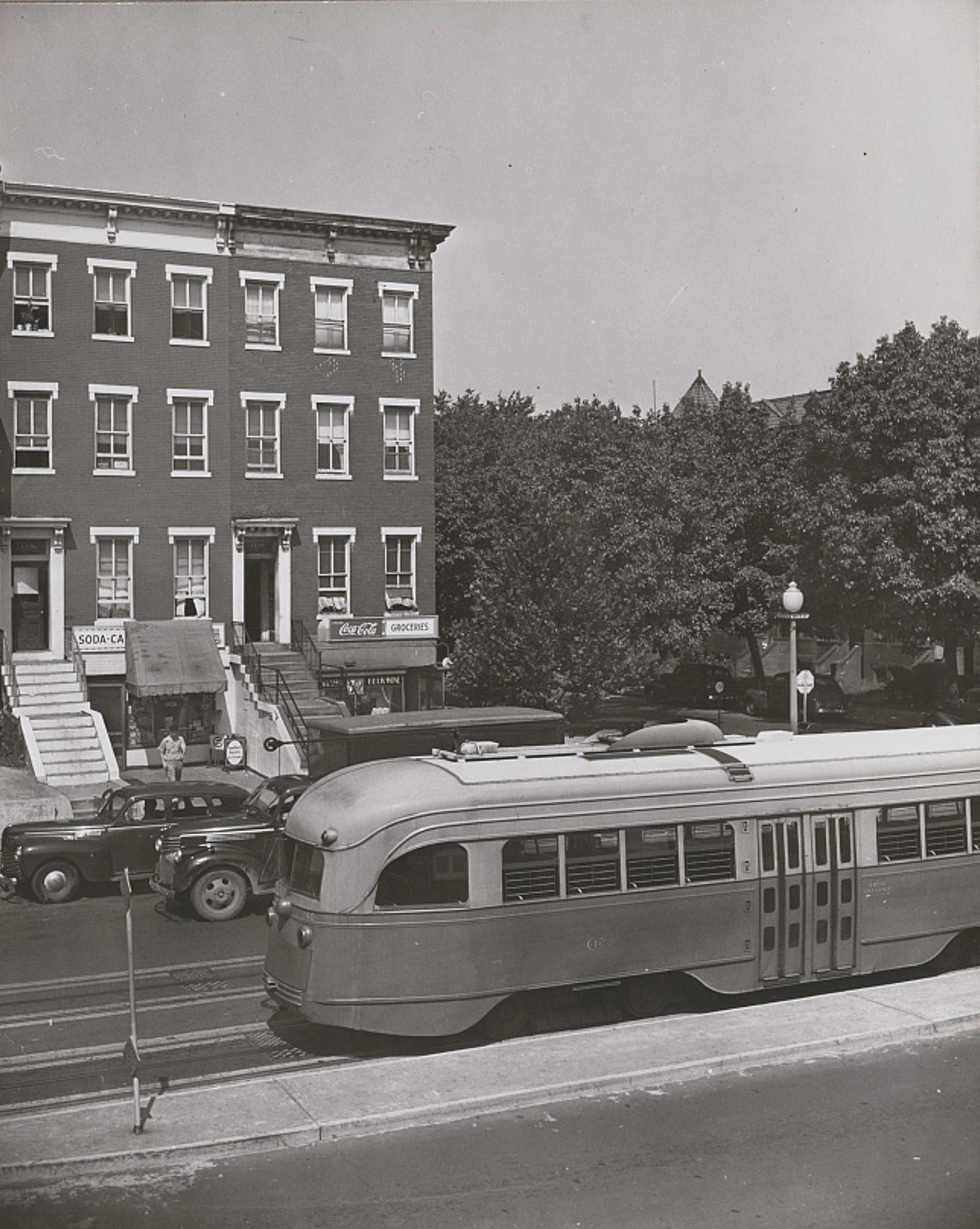
The newspapers fill in those buildings too. In 1940, someone at 1426 was advertising a room for a “refined employed couple.” By 1949 a grocer named J. Paregal was listed at the address.
Just up the street, at 1437, a 1937 classified ad promised that “RUPHER’S Employment Agency furnishes cooks, houseworkers, laundresses, maids, cleaners.”
Ella’s own street had an agency for the kind of work she did.
At 1429, two doors south, a real estate firm advertised the six-room brick house “TO COLORED” through the early 1930s. The rent fell from $37.50 in 1930 to $27.50 by 1934.
A little farther down, at 1425, the 1940 census found Elizabeth Clinton, 27 and widowed, raising three children with a lodger, Mabel Weathers, who worked as a servant.
Home at 2 a.m.
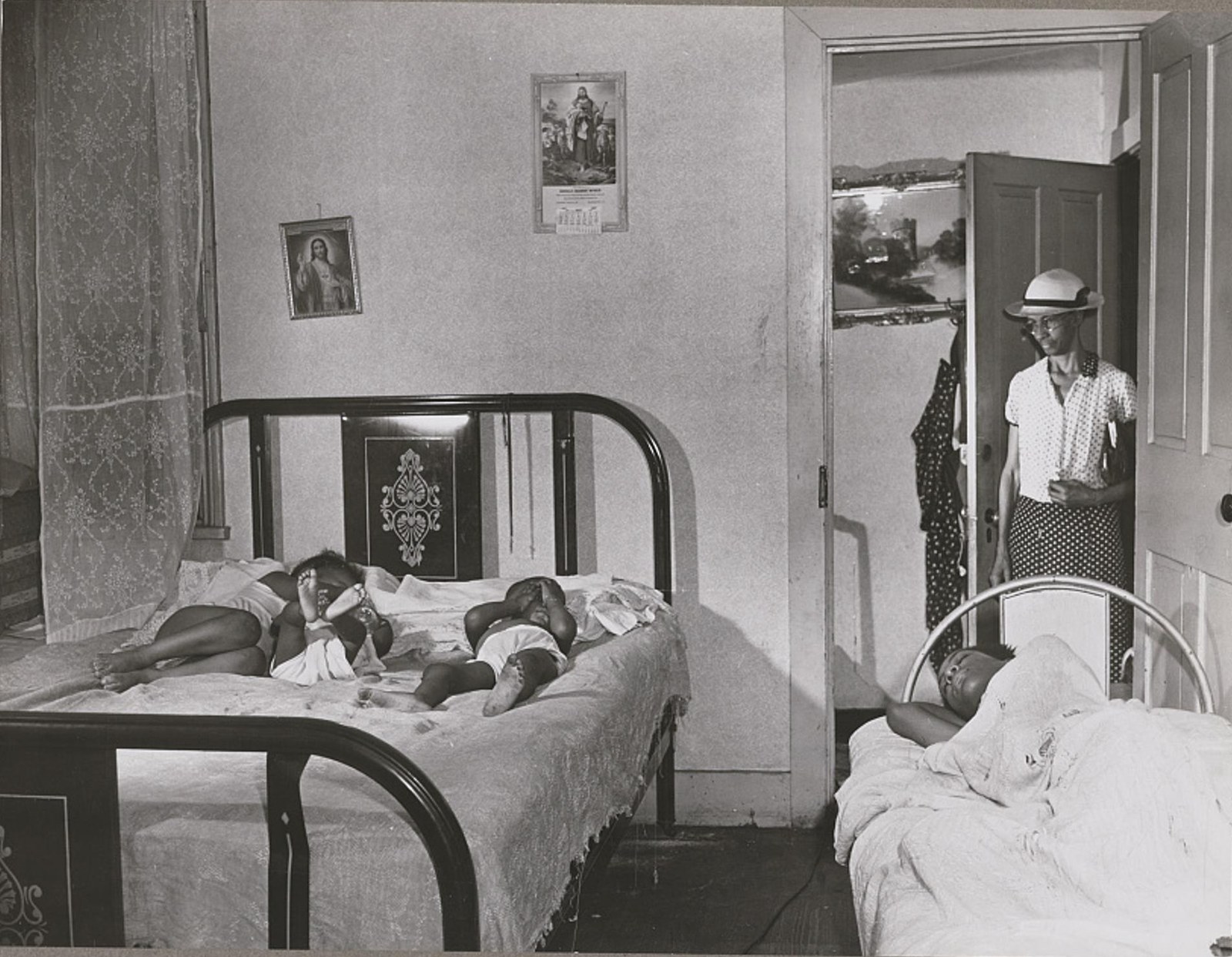
The most intimate frame in the series shows Ella coming home “from work at 2 a.m.” She stands in the bedroom doorway, still in her hat, while the children sleep.
Within a few years she had moved on. The 1950 census found new tenants at 1433: Alma J. Martin in one apartment and the family of Charles Peterson in the other.
Ella Watson died on April 3, 1980.
1433 11th Street Today
The house had a hard end. In 2003, the District filed “wrongful housing” liens against its owner. In 2009 it was sold at a foreclosure.
By then the lot had been combined with 1431 next door. In November 2015 the new owner, Triad Builders, recorded the declaration for a condominium called The Rook.
The District’s address registry no longer lists 1433 11th Street at all. A sign on the Logan Circle Heritage Trail honors Ella Watson on the block.
The photograph is called American Gothic. The address was 1433 11th Street.
Parks photographed far more of Washington that year. See his picture of two boys in Southwest in November 1942, the men of Engine Company 4, DC’s first Black firehouse, and the city’s wartime gas rationing in 1942.
For more on the neighborhood, read about the Old Korean Legation on Logan Circle, the Whitelaw Hotel on 13th Street, and how 1980s developers remade 14th Street.
We dug this one up with help from AI and checked it against the original records below. Here’s how we use AI.