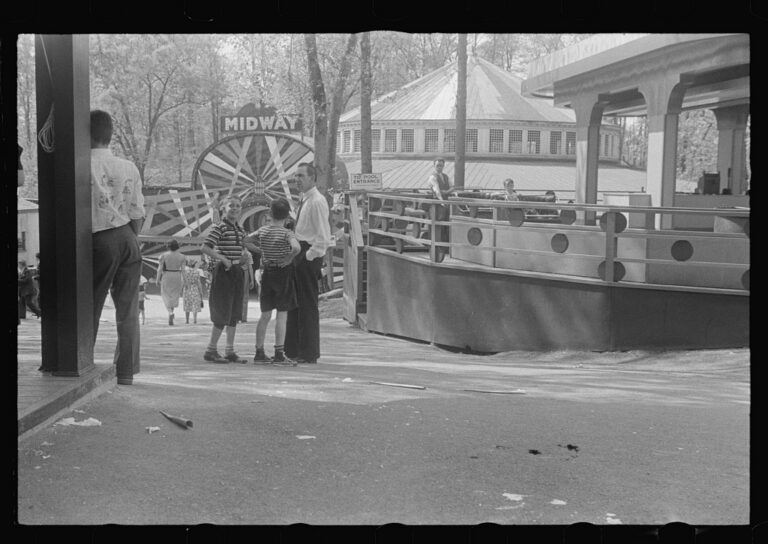

In the summer of 1906, Washington had a problem it had pushed just over the line into Maryland. Gambling houses, speakeasies and Sunday amusements lined Conduit Road, the road out to Glen Echo and Cabin John. They started right past the District line, in dry Montgomery County.
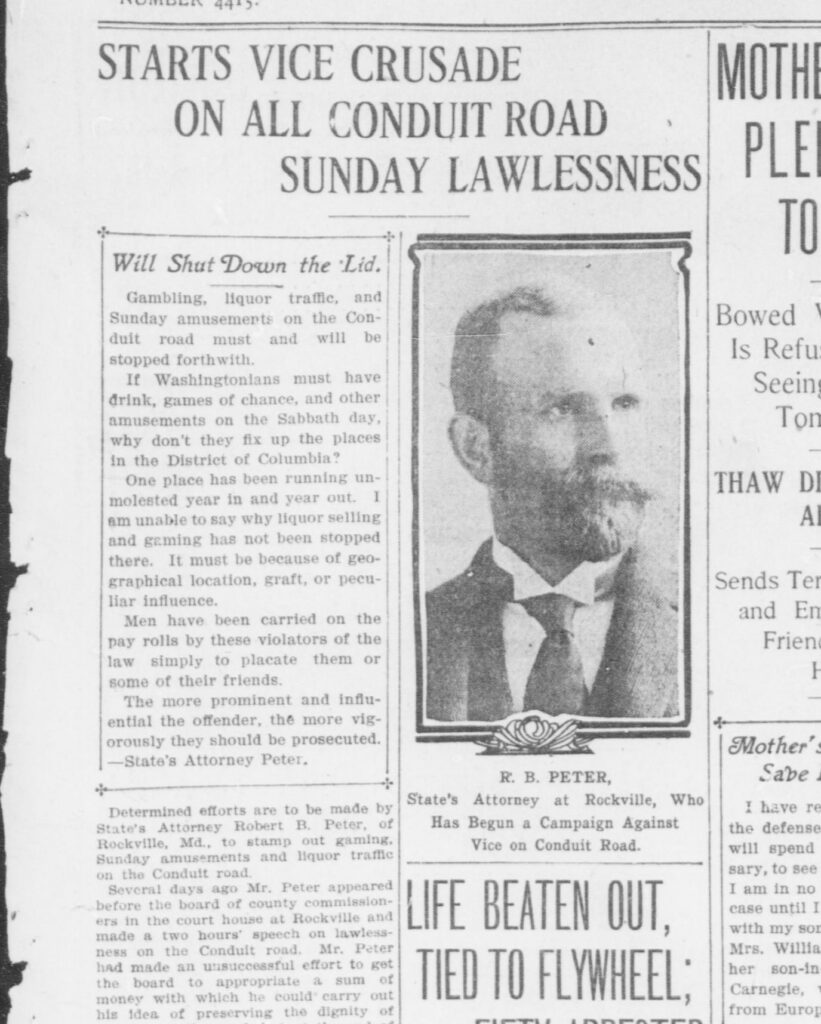
On Sunday, July 15, 1906, the Washington Times put the county’s answer on its front page. State’s Attorney Robert B. Peter of Rockville was going to war with the road.
Gambling, liquor traffic, and Sunday amusements on the Conduit road must and will be stopped forthwith.
If Washingtonians must have drink, games of chance, and other amusements on the Sabbath day, why don’t they fix up the places in the District of Columbia?
One place has been running unmolested year in and year out. I am unable to say why liquor selling and gaming has not been stopped there. It must be because of geographical location, graft, or peculiar influence.
He didn’t name the place.
Peter didn’t exactly win, either. The roadhouses along Conduit Road outlasted his crusade, outlasted Prohibition, and kept Montgomery County prosecutors busy for more than thirty years. This is the story of Washington’s vice strip over the line, and what’s left of it on MacArthur Boulevard today.
Why the Vice Gathered Past the Line
Montgomery County was dry. Under Maryland’s local option law, selling liquor in the county had been a crime for about twenty years by 1902. Judge James B. Henderson reminded a Rockville courtroom of that in the fall. Gambling and Sunday amusements were illegal too.
Washington was another jurisdiction entirely. The District’s police stopped at the line. On the Maryland side, the county kept no officers on the road at all, which was exactly Peter’s complaint.
And the road delivered the customers. Streetcars and, soon, automobiles ran out Conduit Road from Georgetown to Glen Echo and Cabin John. Peter made his pitch to the county commissioners, and the Montgomery County Sentinel printed it on July 13, 1906. On Sundays, he said, “more than ten thousand persons are there.”
The road itself added a twist. Conduit Road followed the Washington Aqueduct, the conduit that carried the city’s water down from Great Falls and gave the road its name. In October 1906, the Washington Herald noted that the road was “a United States government reservation.” Who could police it stayed an open question for years.
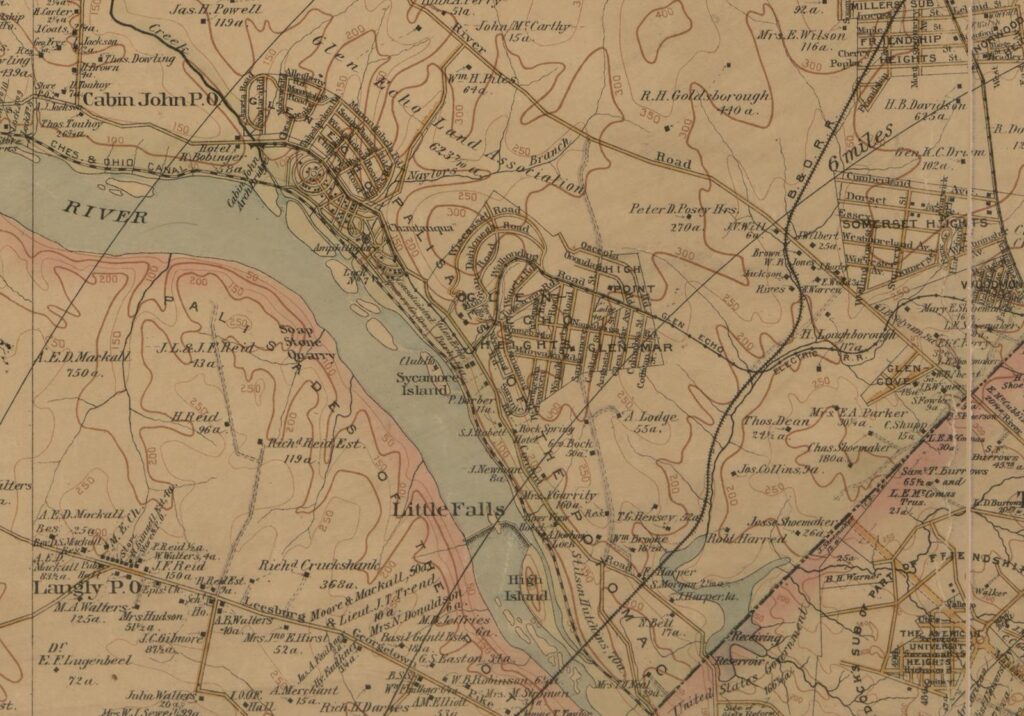
How many places are we talking about? Arthur J. Houghton of Glen Echo wrote to the Evening Star in June 1914 that he used to count them on his bicycle commute. Around 1899, he said, there were fourteen to sixteen clubs and speakeasies between the District line and Glen Echo.
The Places on the Road
The anchor at the far end of the strip was the Cabin John Bridge Hotel, run by the Bobinger family beside the stone arch of Cabin John Bridge. The historical marker on the site says Joseph and Rosa Bobinger built it in 1870, and their sons George and William later took over. The 1894 Hopkins map labels it simply “Hotel R. Bobinger.”
It was a real resort, with forty guest rooms and forty acres of lawns, according to the marker. The Sentinel later remembered it as a gathering place for Cabinet members, Congressmen and diplomats.
It also kept a bar in a dry county. Peter went out to Cabin John Bridge in 1906 to see for himself. He found “persons being served at many tables with intoxicating liquors,” while the merry-go-round and shooting galleries ran on a Sunday.
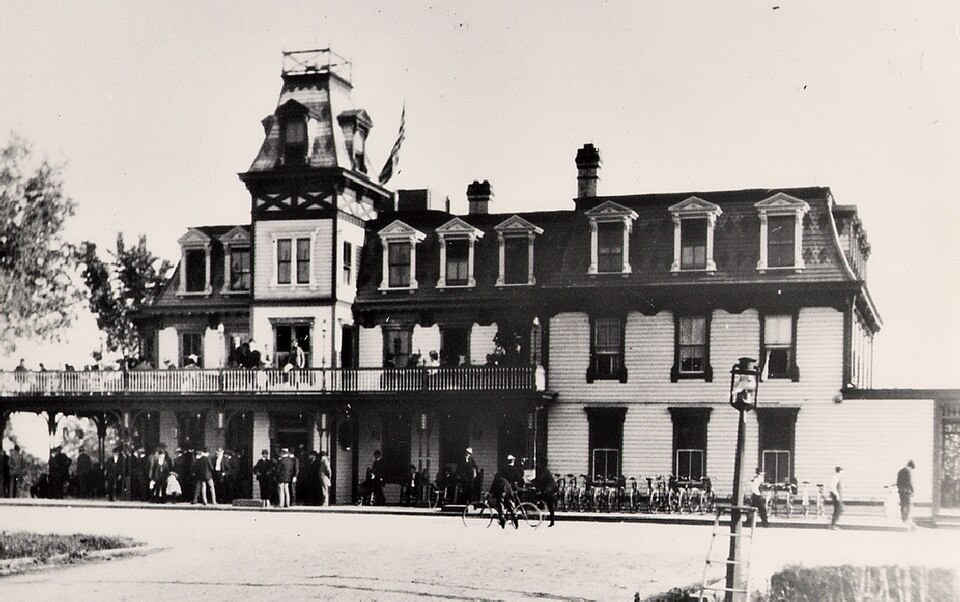
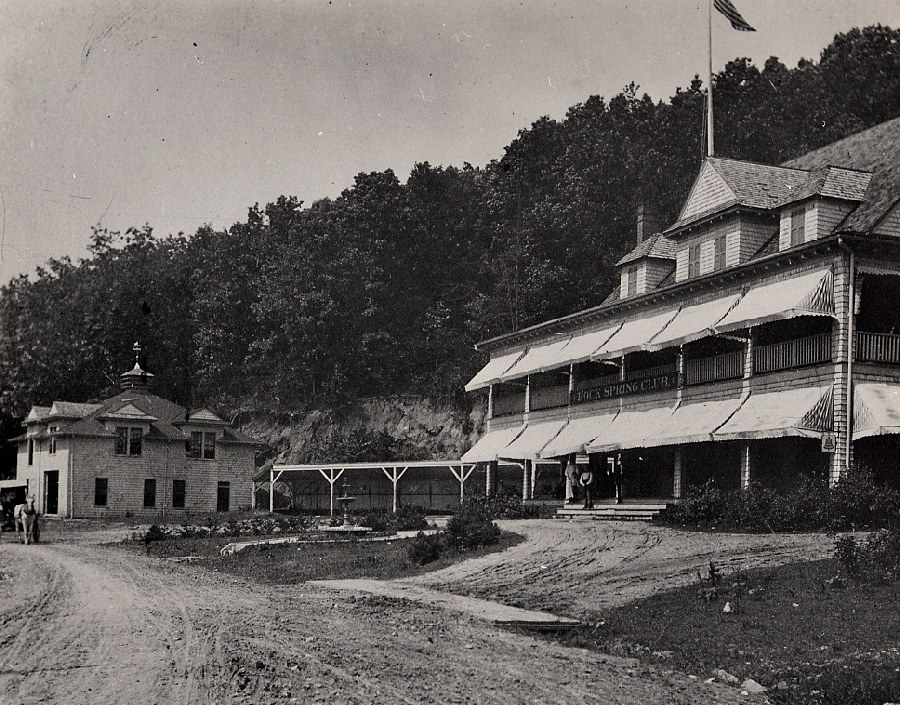
Closer to town stood the Rock Spring Hotel, also called the Rock Spring Club, on Conduit Road below Glen Echo Heights. A National Park Service study dates it to about 1884. In December 1906 it was advertised for sale in the Times as a 30-room hotel for $8,500. Its managers kept turning up in court.
There were others. The River View Turf Club ran a poolroom for betting on horse races “on the Conduit Road, near Cabin John Hotel.” That’s how the Times described it in 1903, in a story about a lawsuit. John Curtin ran the Curtin Club near the District line. Later came the Mohican Club near Glen Echo, which a former state’s attorney said drew a wealthier crowd.
Peter’s Crusade
Peter wasn’t the first to try. In June 1902, the county’s Anti-Saloon League hired a Baltimore detective, Louis Wien, to gather evidence. Sheriff J. W. Collier raided the River View Turf Club and arrested eight men.
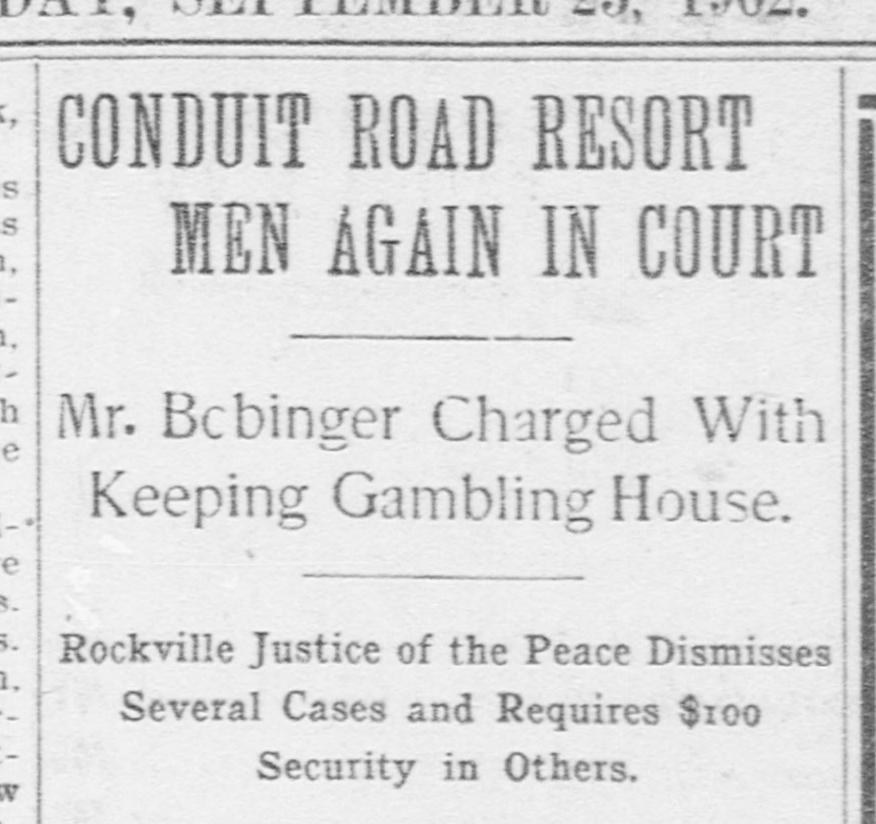
That September, a neighbor near Cabin John Bridge named Frank Boswell swore out twenty warrants. According to the Evening Times, they named William H. Bobinger and three other men “said to be interested in various gambling houses” along the road. Several cases were thrown out over sloppy warrants.
That November, Judge Henderson fined the River View proprietor, George W. Sullivan, $300 in each of three cases. From the bench, he called Sullivan an anarchist.
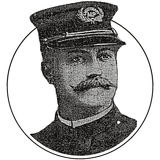
Peter was elected state’s attorney in 1903. By the summer of 1906, he had county money for detectives and $5 a Sunday to keep an officer at Cabin John Bridge. He told the Times his fight would look like Crandal Mackey’s cleanup of the gambling dens across the river in Rosslyn and Alexandria County.
The pressure worked, for a while. On the night of September 2, 1906, Sheriff James P. Gott raided John Curtin’s house on Conduit Road near the District line. He arrested Curtin and a crowd of men the officers said were playing cards. Curtin skipped his hearing, forfeited $200 bail, and cut a deal with Peter: close the club and leave the county, and he would not be prosecuted.
Then came the grand jury. In November 1906, it returned sixteen indictments, carrying nearly fifty counts, against William H. and George Bobinger for violating the local option law, the Star reported. Walter Loveless of the Rock Spring Hotel was indicted too. So was the Chevy Chase Club.
Some of the proprietors simply left. The Herald reported that several indicted men had fled to Washington and other cities. The Bobingers forfeited their bonds in December.
Rock Spring kept going. In May 1907, Loveless sat in the Rockville jail and turned down Peter’s offer of a guilty plea and three months in the house of correction.
In June, Glen Echo’s town marshal, Charles P. Collins, arrested the hotel’s new proprietors, John L. Schmitz and his wife, Ottilia, for selling liquor. Collins was the same marshal who had been making Washington motorists miserable with Glen Echo’s six-mile-an-hour speed limit.
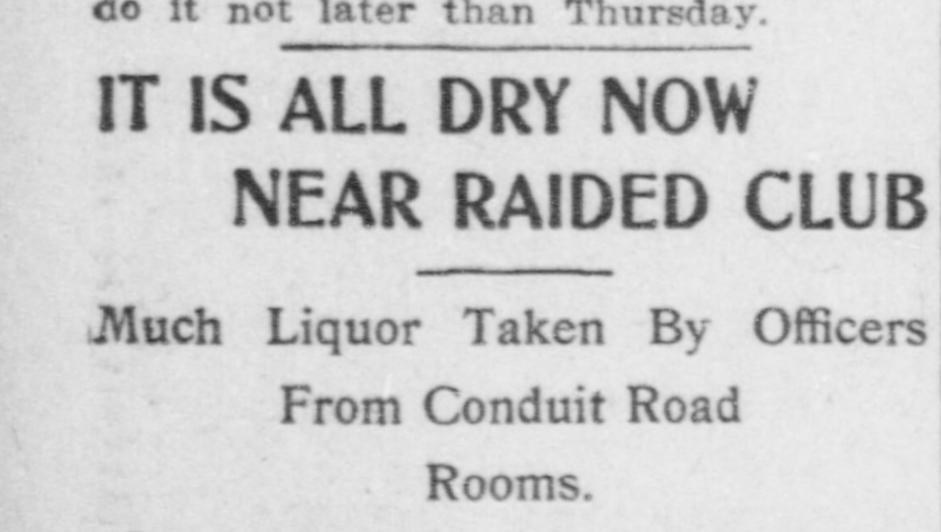
On the evening of April 17, 1909, Deputy Sheriff Peyton Whalen raided the Rock Spring Club. He hauled forty jugs of whisky and a load of champagne back to Rockville. The Times counted twenty or thirty Washingtonians in the building when the officers walked in.
Whose Road Was It?
Every crusade ran into the same question. Conduit Road sat on federal land bought for the aqueduct. Did Maryland’s officers even have authority on it?
In May 1907, Glen Echo’s marshal fired at a German diplomat’s car, and the embassy complained. Suddenly nobody wanted to claim the road. Maryland’s governor, Edwin Warfield, told the State Department the road was a federal reservation and not Maryland’s to police. The War Department said it had no police power there either, and that Maryland’s local officers did.
According to his 1936 obituary in the Sentinel, Peter went straight to the Secretary of War and got the road placed under state control for a time.
In October 1907, a Montgomery deputy arrested a driver named John A. Lutz for speeding on the west side of Cabin John Bridge, and Lutz became a test case. Lutz wanted the courts to decide whether Maryland had criminal jurisdiction on the road at all.
Sixteen years later, the question was still open. On February 3, 1923, State’s Attorney Thomas L. Dawson wrote to Lt. Col. C. O. Sherrill of the War Department asking for a court ruling. He argued that Maryland had kept criminal jurisdiction over the aqueduct land under an 1853 state law. And he was blunt about why it mattered.
The places of that character heretofore operated along this roadway have been open to those residents of the city of Washington who indulge in such pastimes and are operated mostly by former residents of the city of Washington whose establishments and businesses in that jurisdiction have been broken up. In other words, this county often finds itself the dumping ground of undesirables from Washington city.
Washington’s gamblers, in other words, were Washington’s problem, parked just over the line.
Prohibition Didn’t Close the Road
By 1914, Houghton thought the fight was mostly won. “We have almost obliterated the speak easies and gambling,” he wrote. He moved on to complaining about the wheel of fortune at Glen Echo Park.
National Prohibition arrived in 1920, and the clubs came back anyway. On July 2, 1921, about twenty-five state and county officers raided the Mohican Club on Conduit Road near Glen Echo. Sheriff George E. Nicholson and State’s Attorney Dawson led them. They seized nearly everything used in bookmaking, the Star reported.
The next summer, the Herald ran an exposé on the gambling houses ringing the city, on Suitland Road, Bladensburg Road and Conduit Road. A new “club” had just opened a short distance out Conduit Road from the District line, the paper said, with two dealers brought in from East St. Louis.
In November 1922, Judge Edward C. Peter told a Montgomery County grand jury that gambling along Conduit Road was common knowledge. He charged that a county police officer was tipping off owners and customers before raids, including regulars who rode out from Georgetown.
The name that kept coming up was Edward V. Killeen, a Washington gambler known as Big Eddie. In 1921 he was tried in Rockville for the death of Bessie Harris, and he was acquitted. The Star later said she was shot trying to break up a fight between Killeen and another man at a party at the Cabin John Hotel.
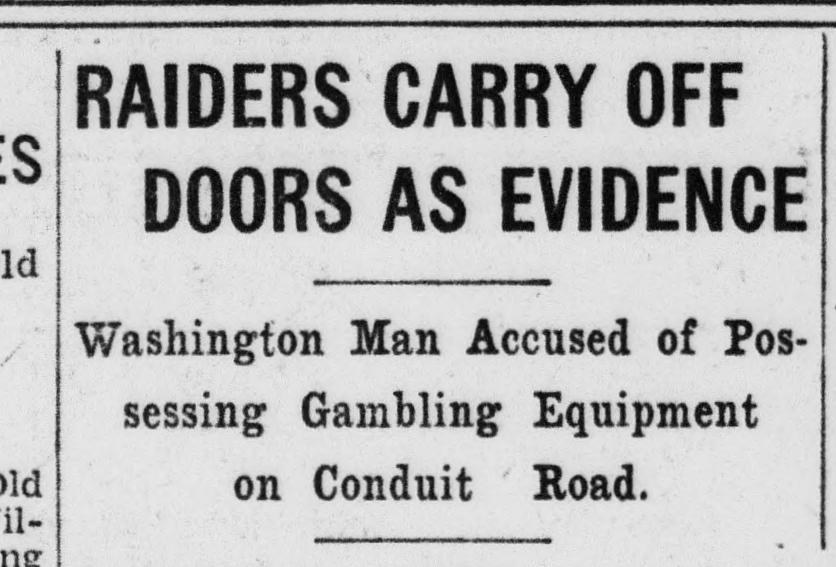
On March 7, 1929, county police under Chief Alvie A. Moxley raided a house Killeen owned on Conduit Road, half a mile from the District line. They forced an iron basement door with crowbars. Inside were a roulette wheel, dice, cards and five working telephones.
The officers carried the heavy front doors, peepholes and all, back to Rockville as evidence. It didn’t stick. In April, a Rockville police court judge acquitted Killeen after he said the equipment had come from a Washington club and was only in storage, the Times reported.
The Last Chapter: Killeen, 1935
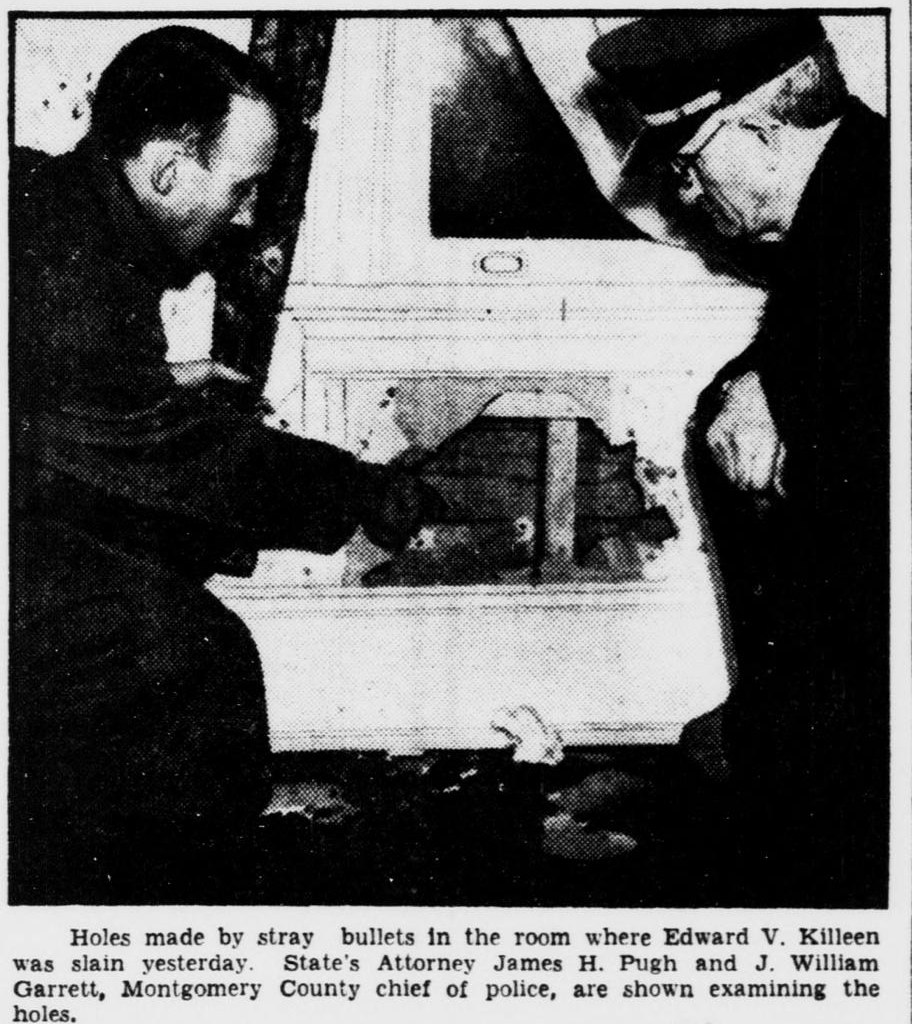
Killeen’s run on the road ended on Saturday, November 23, 1935. It happened in a two-story yellow stucco house near Brookmont, “just across the District line on Conduit road,” as the Star put it.
He was shot there by Lillian Maddox, who had been living with him. The papers spelled her name both Maddox and Maddock.
She called the police herself. She told them Killeen had beaten her and threatened her with his revolver, and that she shot him. She showed police her bruises, and she later said it was her fourth black eye at his hands.
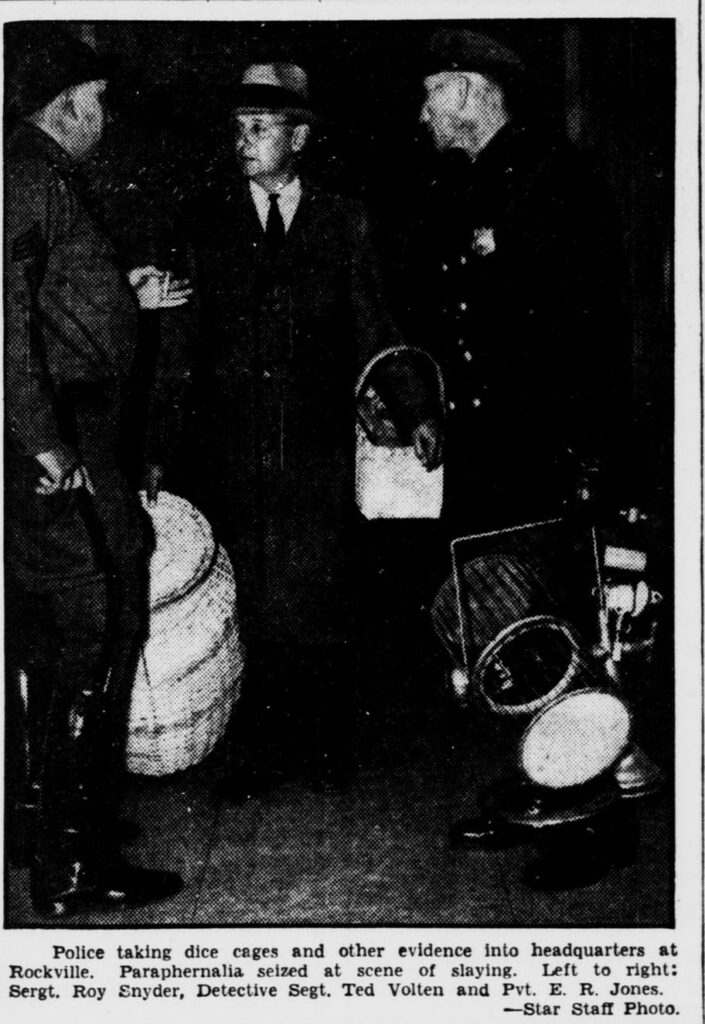
Police had been watching the house for weeks on a tip that Killeen planned to open a new gambling house there. In the basement they found about $3,000 worth of new gambling equipment, including a dice table, a roulette wheel and two chuck-a-luck dice cages.
Dawson was Maryland’s secretary of state by then. He told the Star that Killeen had run a gambling house on Conduit Road for ten years and had been raided a dozen times without a conviction.
The case against her shrank fast. On December 12, 1935, a Rockville police court judge reduced the charge from murder to manslaughter and released her on bond.
On April 8, 1936, a few hours into her trial, Pugh dropped the case. He told the court he could not “conscientiously ask the jury to convict this woman of manslaughter,” the Washington Daily News reported. He believed she had acted in self-defense.
What’s There Now
The Cabin John Bridge Hotel outlasted the crusades but not the 1920s. The marker at the site says it closed in 1926. It sat empty until fire destroyed it early on the morning of April 6, 1931. W. H. Bobinger put the loss at about $75,000, the Times reported.
One building survived. The small brick gas house that made acetylene for the hotel’s lights still stands near 7400 MacArthur Boulevard in Cabin John. It’s by the tennis courts, next to the historical marker.
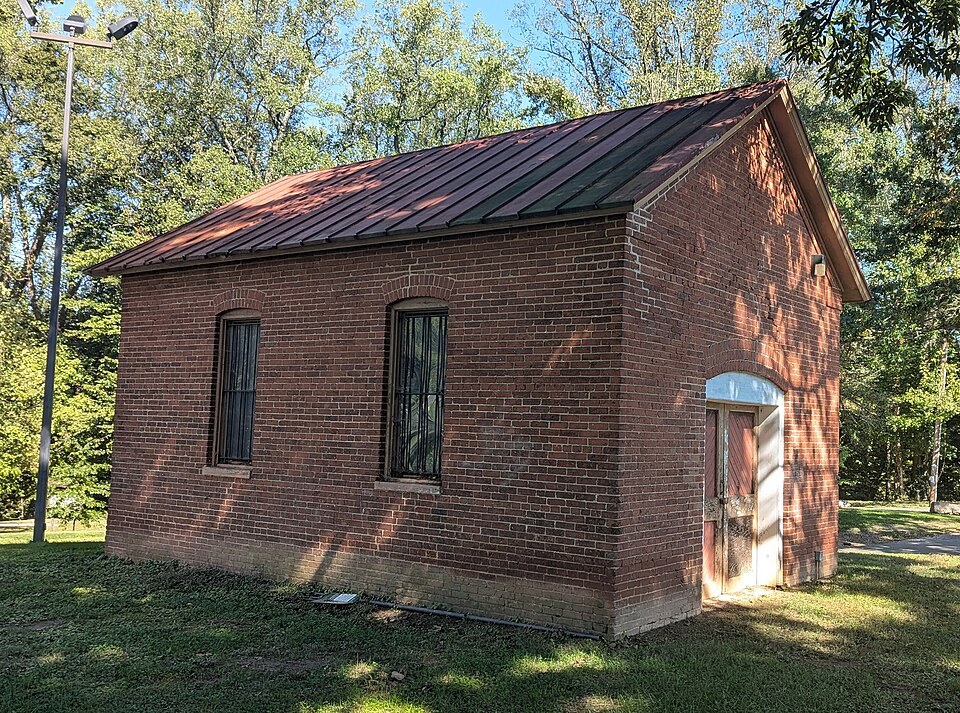
The Rock Spring community around the old hotel didn’t last either, according to the Park Service study of the canal’s African American communities.
And Conduit Road lost its name. In 1942 it became MacArthur Boulevard.
The warning from the courthouse lasted longer. In April 1941, a Montgomery County delegate fighting a gambling bill remembered what Robert Peter used to tell every grand jury as a judge: “Keep gambling off Conduit road.”
Drive it today, past the joggers and the old aqueduct, and you’d never guess the road ever needed the warning.
We dug this one up with help from AI and checked it against the original records below. Here’s how we use AI.