Walk into Rock Creek Park along Colorado Avenue, follow the trail past 16th Street, and you come to a strange, silent bowl carved into the hillside. Concrete steps step down toward a covered stage. Empty seats face an empty proscenium. The whole thing feels like a Roman ruin that grew up wrong, in the wrong forest, and got forgotten.
It was not always like this. For a generation, the Carter Barron Amphitheater was where Washington went in the summer. Nat King Cole. Ella Fitzgerald. Louis Armstrong. Harry Belafonte. Ray Charles. Diana Ross and the Supremes. The Temptations. Smokey Robinson. B.B. King. Stevie Wonder. Bruce Springsteen. Richard Pryor. On any given July night in the 1950s and 1960s, some of the biggest names in American entertainment were performing under the stars, three miles from the White House, on a hillside in Rock Creek Park.
The stage has been dark since a 2017 inspection found the substructure structurally unsound. Now the National Park Service and the Rock Creek Conservancy are trying to bring it back. Before the reopening, it is worth remembering what it was.
A Sesquicentennial gift
The amphitheater was born of a birthday. In 1950, Washington marked its 150th anniversary as the national capital, and the Sesquicentennial Commission wanted something permanent to leave behind.
A hillside site in Brightwood had already been sketched by Frederick Law Olmsted Jr. in 1943 as a modest 1,500-seat outdoor theater with a movie screen. The commission’s vice chairman, a burly, red-headed Georgian named Carter T. Barron, pushed the idea into something grander: a 4,200-seat outdoor performing arts venue open, in his words, to “all persons of every race, color and creed.”
The National Capital Parks architect William M. Haussmann designed it. The original cost estimate came in at $200,000; the finished bowl cost $563,676.90. It opened on August 4, 1950, with President Truman on the platform. Paul Green, the Pulitzer-winning playwright behind the Roanoke drama “The Lost Colony,” was commissioned to write the opening season’s show, a George Washington tribute called “Faith of Our Fathers.”
The play got mixed reviews. The building did not. Critics called it the best outdoor theater they had ever seen. The way the hillside cupped sound, people said, meant there was not a bad seat in the house.
Who was Carter Barron?
Barron did not live to see the second season. He died of cancer on November 16, 1950, three months after the opening. He was 45.
He had been born in Clarkesville, Georgia in 1905. He played football at Georgia Tech until a knee injury ended his career, and moved to Washington in 1932 to run Loew’s Eastern Division of Theaters, MGM’s man in the capital. From that seat he built one of the most improbable second careers in mid-century Washington. He organized twelve birthday balls for President Roosevelt. He ran the entertainment for both Roosevelt’s and Truman’s inaugurations. He knew everyone.
The Evening Star‘s Jay Carmody wrote the eulogy that Monday. From Dolly Madison through Evelyn Walsh McLean to Perle Mesta, Carmody wrote, “Washington has had a score of famous party-givers. Yet the greatest of all its entertainers was none of these. It was Carter Barron.” He was, Carmody said, “the man behind the gigantic public parties, the chairman of the entertainment committee, the man who never minded having a hard time so long as everyone else had a good time.”
Truman rededicated the Sesquicentennial Amphitheater in Barron’s name on May 25, 1951. Everyone in Washington already called it Carter Barron.
The Feld Brothers and the good years
The first two seasons stayed close to the Sesquicentennial script. “Faith of Our Fathers” ran twice. In 1952 the venue booked military bands and the Ballet Russe de Monte-Carlo. In 1953 a company run by the actress Constance Bennett Coulter mounted “Show Boat,” “Annie Get Your Gun,” and “Carousel,” and lost $200,000 in a single season. The amphitheater needed a savior.
It got two: brothers Irvin and Israel Feld, a pair of DC promoters whose company Super Attractions won the 1954 contract. The Felds already knew how to fill seats, and they knew Washington. Irvin would later buy the Ringling Bros. and Barnum & Bailey Circus. Under their booking, Carter Barron became one of the most reliably good bills on the East Coast.
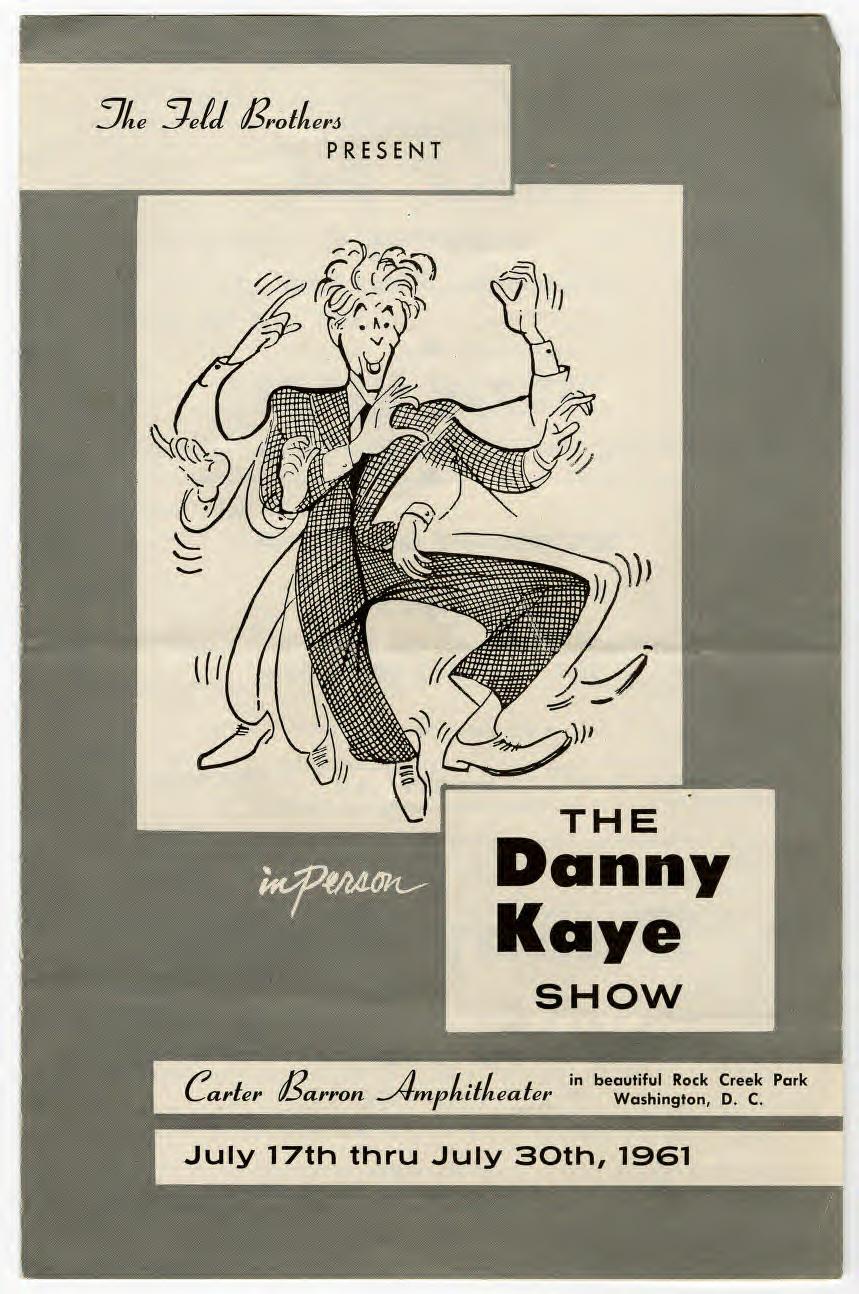
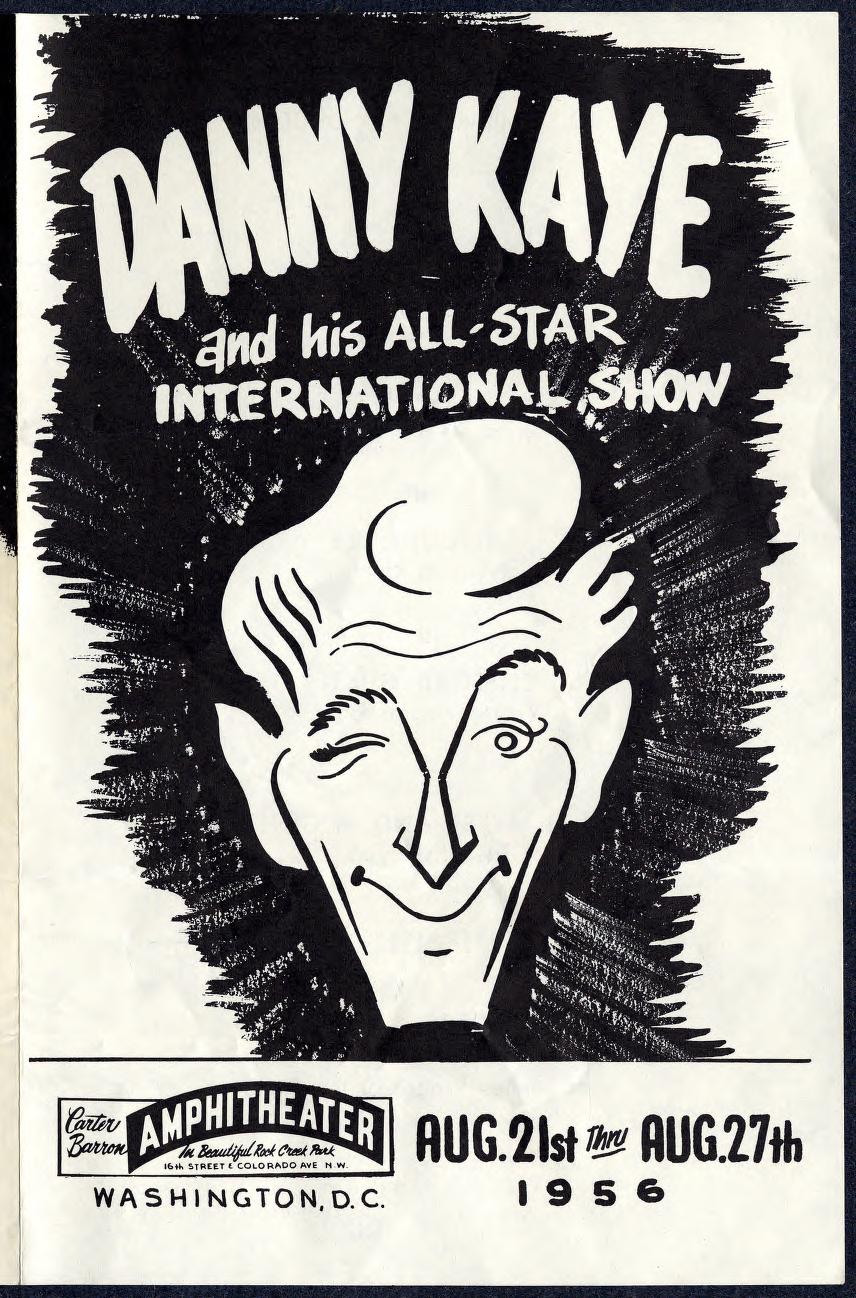
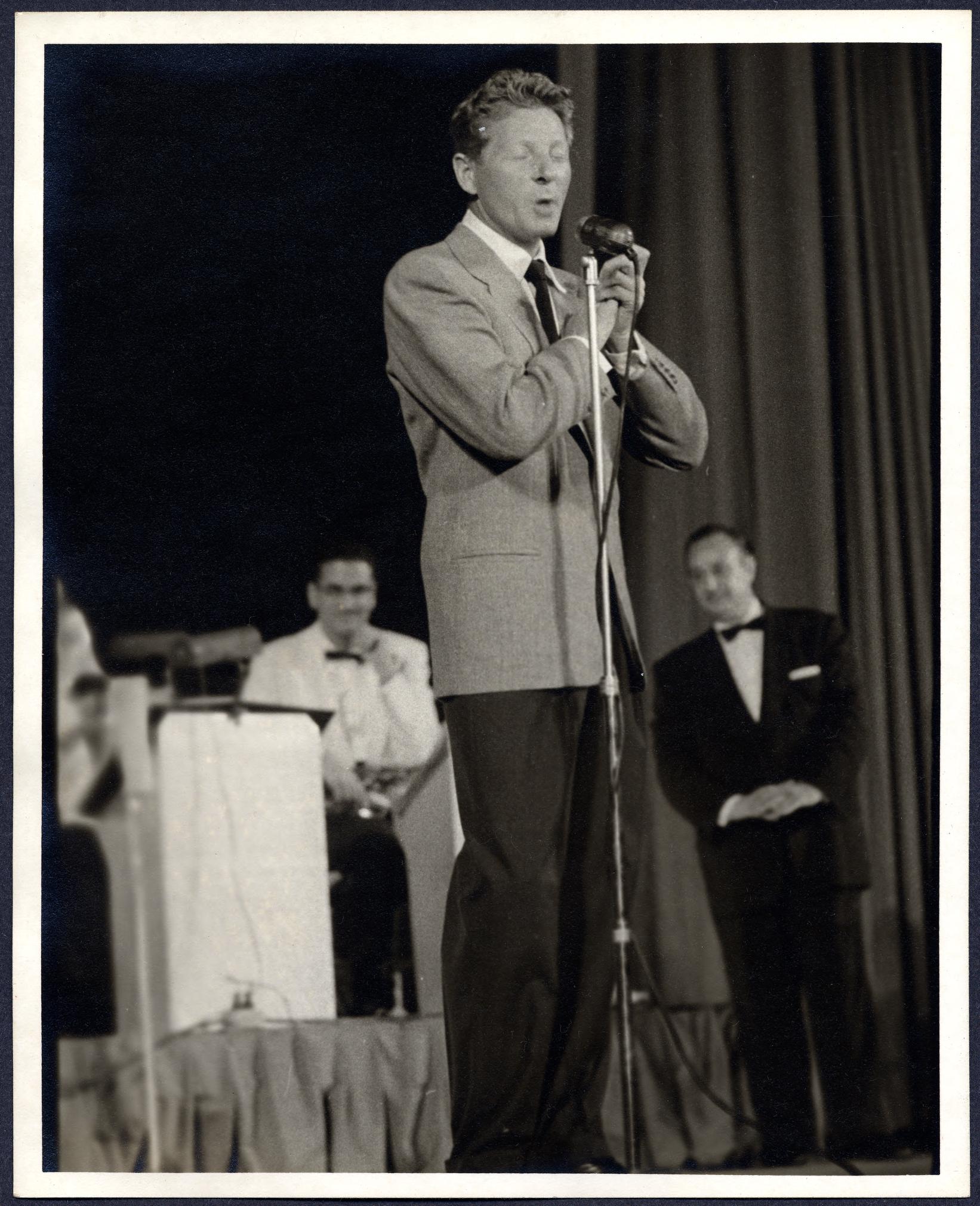
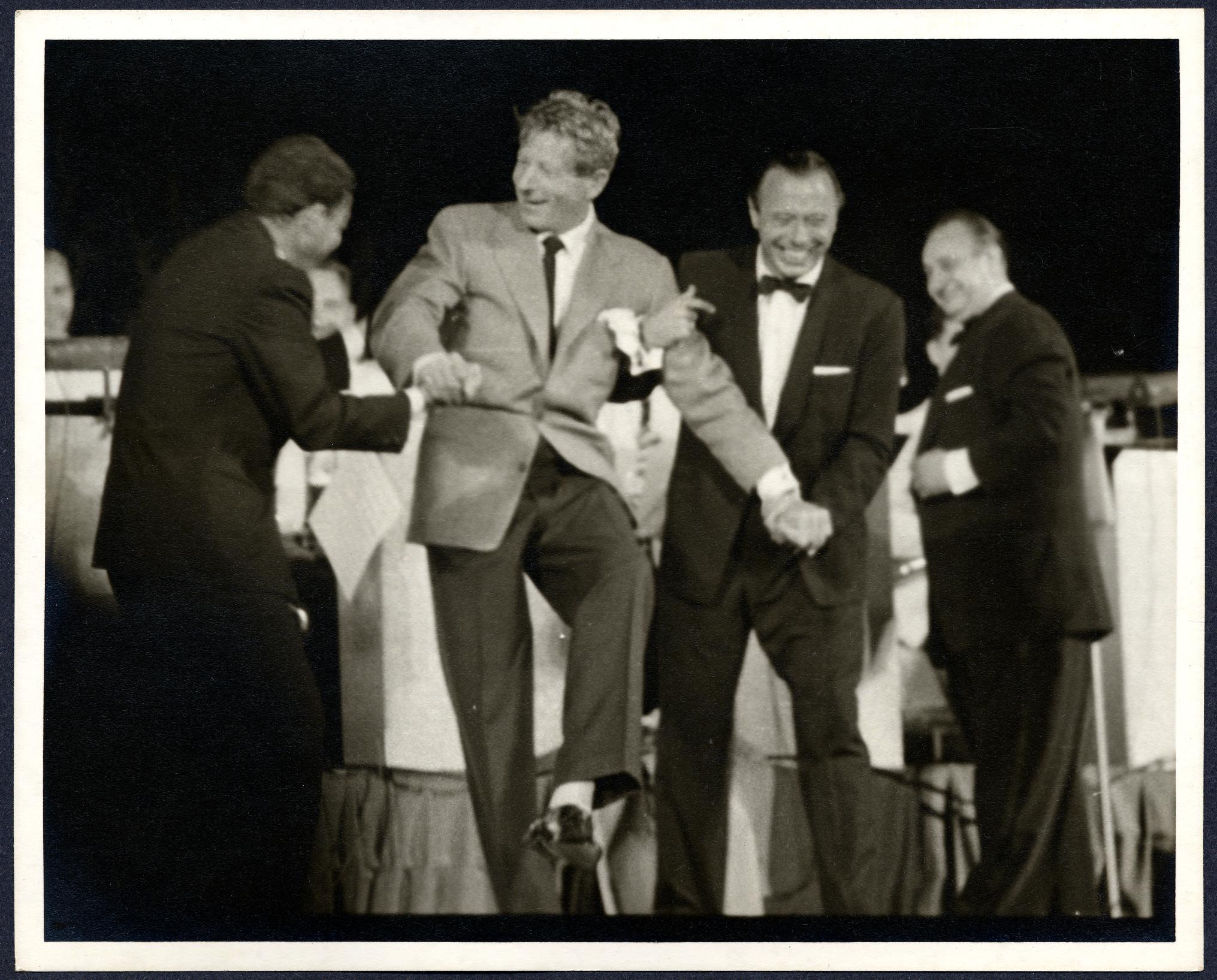
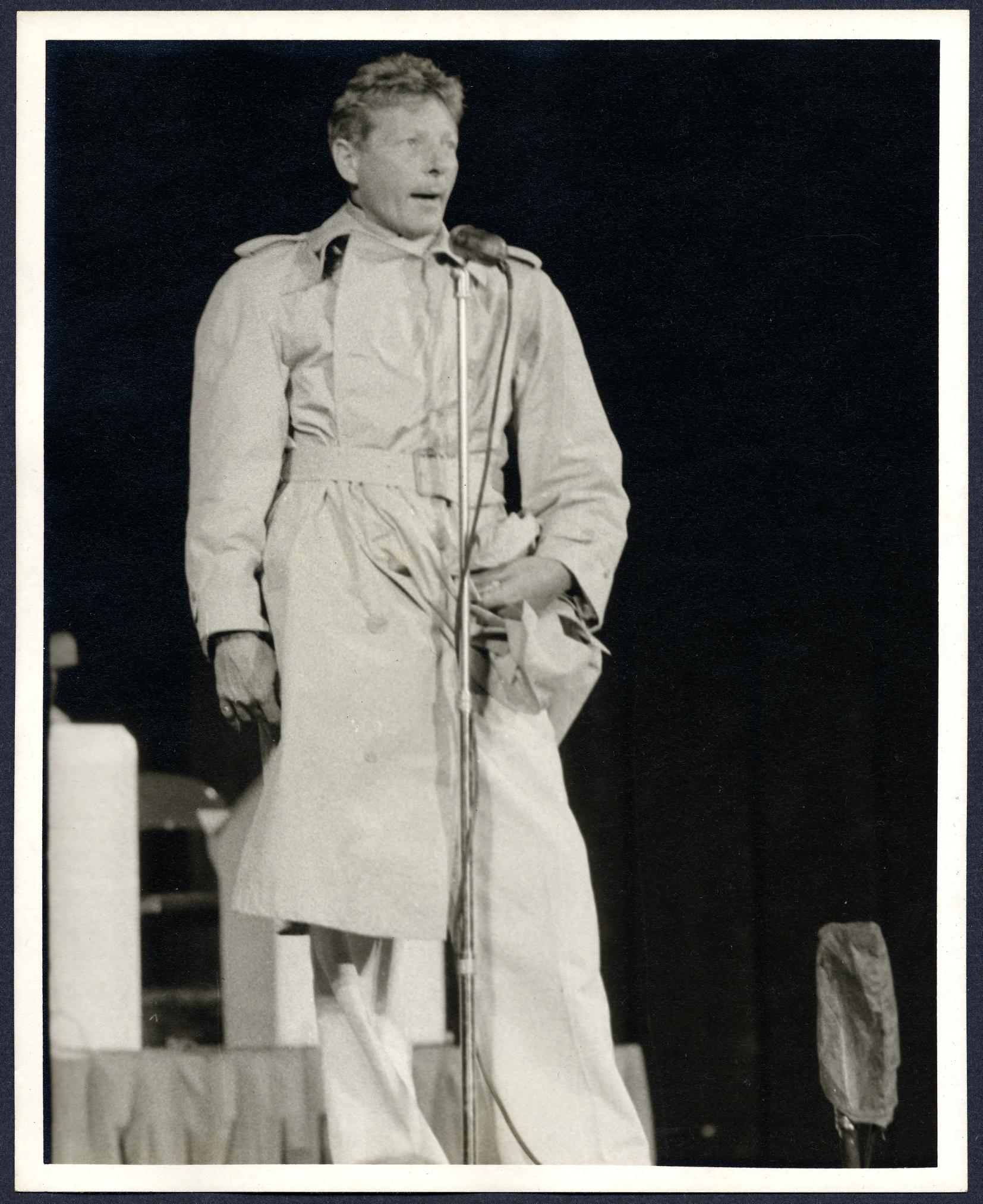
The Felds built the summer around music. The National Symphony Orchestra provided orchestral accompaniment through the full season under conductor Howard Mitchell. The rest of the calendar filled with variety and Broadway. Gilbert and Sullivan runs in June. Ice Capades in August. Danny Kaye headlining for a week at a time, then two.
The reviewers loved it. When Ice Capades opened its 1955 run, Jay Carmody wrote in the Evening Star that “a smooth, shimmering ice floe took over Carter Barron Amphitheater stage last night and a standee audience gathered to see what would happen on its surface.” What happened, he added, was “one that left little doubt that the huge Rock Creek bowl is at its best with a spectacular.”
Prices stayed startling. In 1955, the Felds sold a “Carter Barron Amphitheater Value Book” for $3.50: one free admission, three two-for-ones, ten fifty-cent coupons, plus season access to the Olney Theatre. Reserved seats went for $1.25, $1.75, and $2.50. Board of Trade president Harry L. Merrick, quoted in the ads, called the season “a great asset to our community.” The value-book box office was Super Music at 1350 F Street N.W.
The names on the bill
By the mid-1960s the Feld booking sheet read like an American entertainment hall of fame. Nat King Cole. Louis Armstrong. Ella Fitzgerald. Harry Belafonte. Benny Goodman. Victor Borge. Henry Mancini. The Kingston Trio. Andy Williams. Ethel Merman. Peter, Paul and Mary. Danny Kaye came back through the sixties. The Temptations played the bowl.
Israel Feld died in December 1972. His widow Shirley took over management and pushed the booking hard into soul and rock. Under her the amphitheater booked Stevie Wonder, Ray Charles, Diana Ross and the Supremes, B.B. King, Smokey Robinson and the Miracles, The O’Jays, the Four Tops. When Cellar Door replaced Super Attractions as promoter in 1976, the roster added Bruce Springsteen, Richard Pryor, Chick Corea, Kool and the Gang, and the D.C. Black Repertory Company.
Jacqueline Trescott, reviewing a mid-70s Cellar Door bill in the Washington Post, described the crowd this way: “The hordes of teenagers were back, but scattered among the visors and t-shirts were family groups, black and white couples in their 20s and 30s and a large number of women dressed in the latest fashions.”
That, in one sentence, was Carter Barron. The venue Barron imagined for “all persons of every race, color and creed,” delivering on the promise, twenty-six years later.
The long silence
The National Park Service took over direct operation of the amphitheater at the end of the 1976 season and ran it as a mostly free public venue for another four decades. Shakespeare Theatre Company’s “Free For All.” NSO summer concerts. The Washington Post‘s weekend series. Reggae bills, gospel bills, Latin bills. Ticket prices stayed the best entertainment bargain in Washington.
Then, in February 2017, an NPS inspection found that the stage substructure could not carry the required 150 pounds per square foot. Dressing rooms sat directly below the stage. The venue closed for what everyone assumed would be a season, maybe two.
It has been closed for nine.
Coming back
The Rock Creek Conservancy launched the Carter Barron Alliance in 2022 to pull the amphitheater out of the dark. Schematic designs for a rebuilt stage and backstage are complete. In summer 2025 the Alliance premiered a documentary, “DC’s Heartbeat: A Carter Barron Amphitheater Story,” to mark the venue’s 75th anniversary. The National Park Service is working through the compliance and design phase for a full rehabilitation. Live music returned to the site for a limited run in August 2026, with a full reopening still ahead.
For anyone who ever sat on the concrete steps and watched Ella Fitzgerald under the tree line, or Danny Kaye in his shirtsleeves working an August crowd for two hours straight, the closure has been a long silence in the wrong place. The forest, unfortunately, is doing what forests do around abandoned buildings. But the bones of the bowl are still there. The hillside still cups the sound.
Carter Barron built it to be a home town in spirit as much as a national capital. That was always the point.