At six o’clock on the evening of Tuesday, September 3, 1872, nearly 200 laborers were waiting on the open square just west of the Northern Liberty Market on Mount Vernon Square, at 7th Street and Massachusetts Avenue NW. More than 50 police officers were on hand too.
They had orders from Alexander “Boss” Shepherd’s Board of Public Works to tear the old market down. Tonight.
By about 11 o’clock the roof was gone. By half-past one the next afternoon, a butcher and a 14-year-old boy were dead under a falling wall, and Washington had started a fight over the Northern Liberty Market that was still in front of Congress in 1909.
“Coup de etat”
The Evening Star laid out the board’s thinking the next day. The market people had been gathering signatures on Saturday and Monday for an injunction to stop the move, and their lawyers, Messrs. Riddle and Merrick, planned to take it to court that day.
The board didn’t wait.
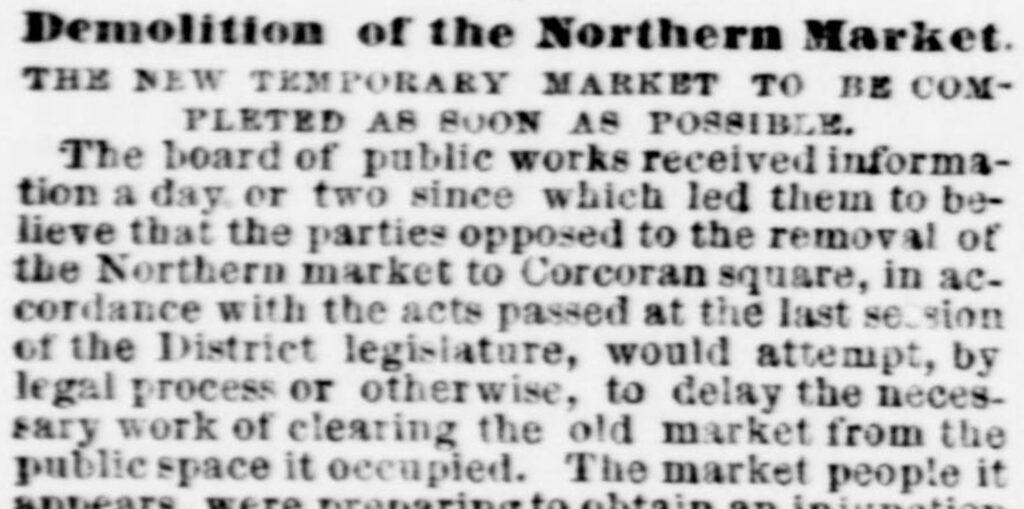
The board being apprised of this intention determined on a coup de etat, and yesterday an order, signed by the vice president of the board, was sent to Mr. Thomas M. Plowmam [sic], architect and superintendent of the new market buildings on Corcoran square, directing him to “remove all buildings and sheds belonging to the Northern market, situated in public reservation between 7th and 8th streets at their intersection with K street and Massachusetts avenue, to-night, storing all private property in the reservation west of the one now occupied by the market, and removing the fixtures to the sheds in course of erection on Corcoran square …”
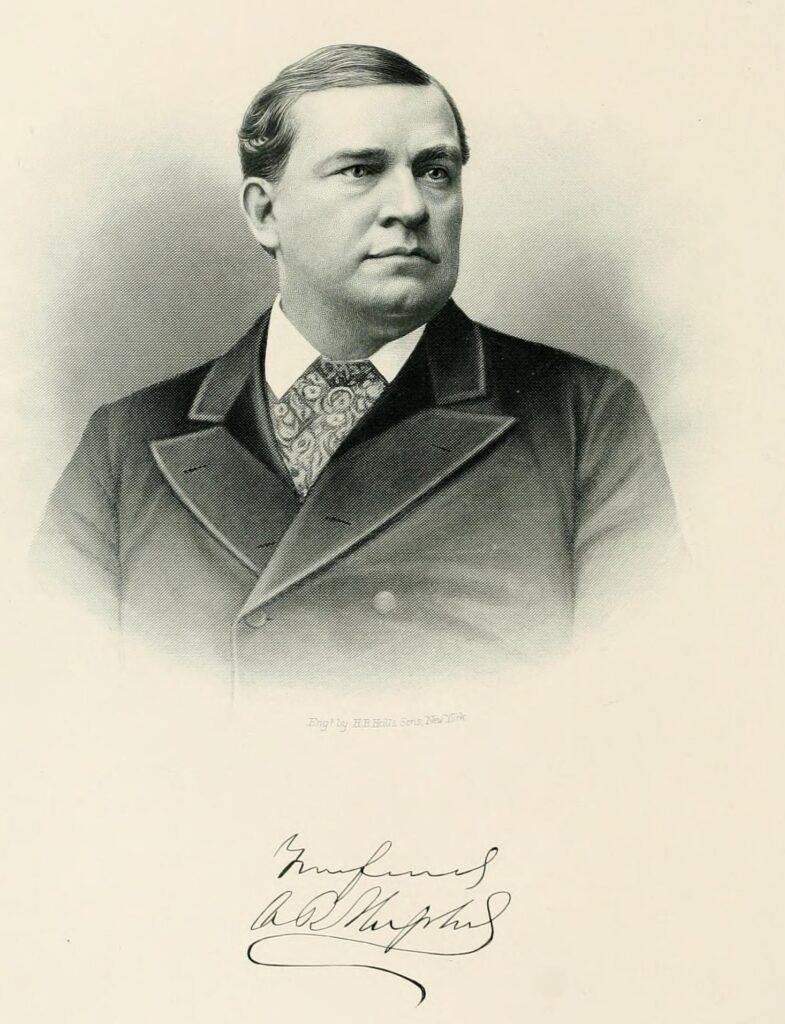
The vice president who signed it was Shepherd. In September 1872 he wasn’t governor yet.
Henry D. Cooke held that job, and Shepherd ran the Board of Public Works as its vice president and executive officer. He became governor a year later, on September 13, 1873.
The plan to remove the market was no secret. Since August 29 the board had been running an ad in the Star, over Shepherd’s name, taking bids to buy and haul away the market buildings. Bids were due at noon on Wednesday, September 4.
The crews showed up the night before.
Twenty-five years on Mount Vernon Square
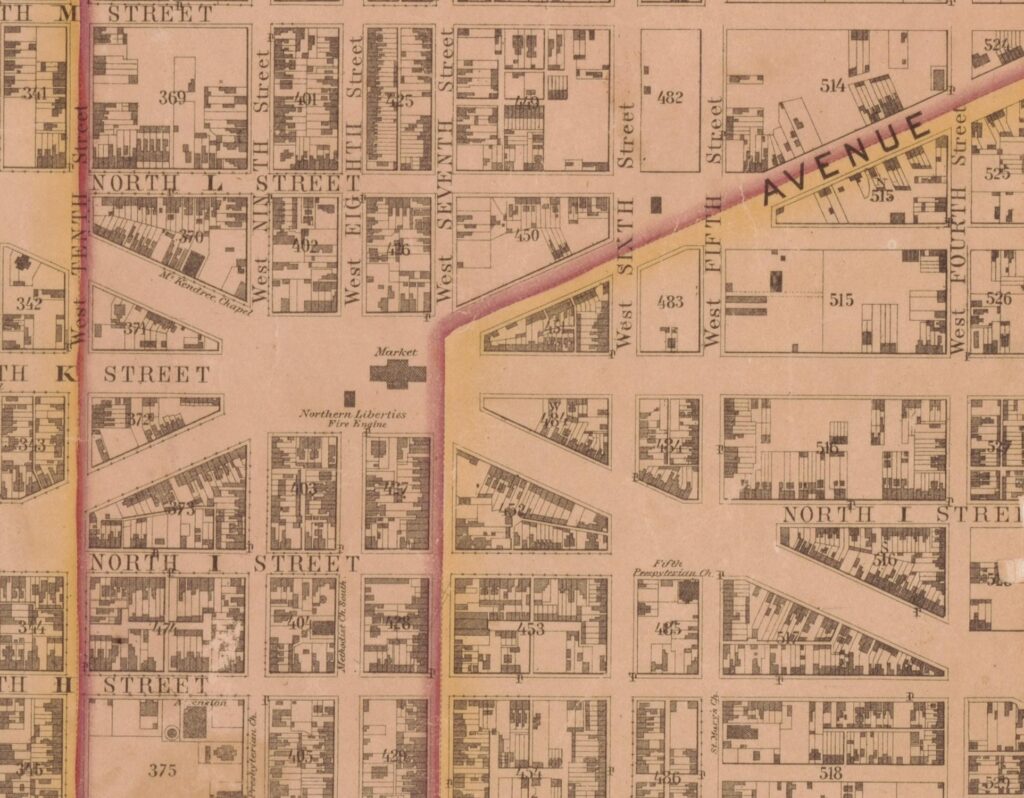
The market had stood on that public reservation, where New York and Massachusetts Avenues cross K Street at 7th, since 1846. It was North Washington’s market house.
It wasn’t pretty. Looking back in 1901, the Washington Post called it “a group of the most dilapidated sheds in Washington. Yet it was one of the busiest sections in town”
To Shepherd’s board, it was in the way. Under acts passed by the District’s legislature that year, the dealers were to move up the road to Corcoran Square, on 7th Street between O and P, where new sheds were already going up.
Picks, axes and rats
Plowman put the crew under a contractor named John Collins, and the work started at once. The Star was there:
Some of the butchers and bacon dealers had meat in their stalls which they refused to move, saying that they might as well sue for a whole loaf as a half loaf, and that they intended to make the board pay for any damage or loss. … The work of razeeing this old land-mark naturally attracted a large crowd to the scene of operations, but good order was observed. Most of the dealers were on the ground when the operations were commenced, and some country people had taken positions with their truck wagons for this morning’s market.
Think about those country people. They’d already parked their truck wagons for Wednesday’s market.
A boy named Washington Topham was in that crowd with his brother. Almost fifty years later he told the Columbia Historical Society what he saw:
On September 3, 1872, at about eight o’clock in the evening a large force of workmen in the employ of the Board of Public Works, suddenly appeared at the Northern Liberty Market at Seventh and Massachusetts Avenue, with picks and axes and rapidly tore down the buildings and sheds and cleared the square.
The Star had the laborers mustering at 6. The Senate’s 1896 report says about 7, and a dealer at the inquest remembered moving his goods out about 8.
Topham said his cousin, Millard Fillmore Bates, was there too with a terrier, “catching the rats and mice, as hundreds of them ran back and forth in quest of new shelter.”
The Star reported that about 11 o’clock the roof came off. The roll was called, the laborers went home, and the police stayed behind to guard the wreck. At daylight the crew came back to finish the sheds.
Half-past one the next afternoon
The dealers showed up Wednesday morning and stood on the sidewalks around the ruins. Some said that with a few hours’ notice they would have moved. Now they said they’d sue.
Then, at about half-past one, the southern gable end of the main building fell. The Star ran it that afternoon under “SHOCKING ACCIDENT. A Man and Boy Killed.”
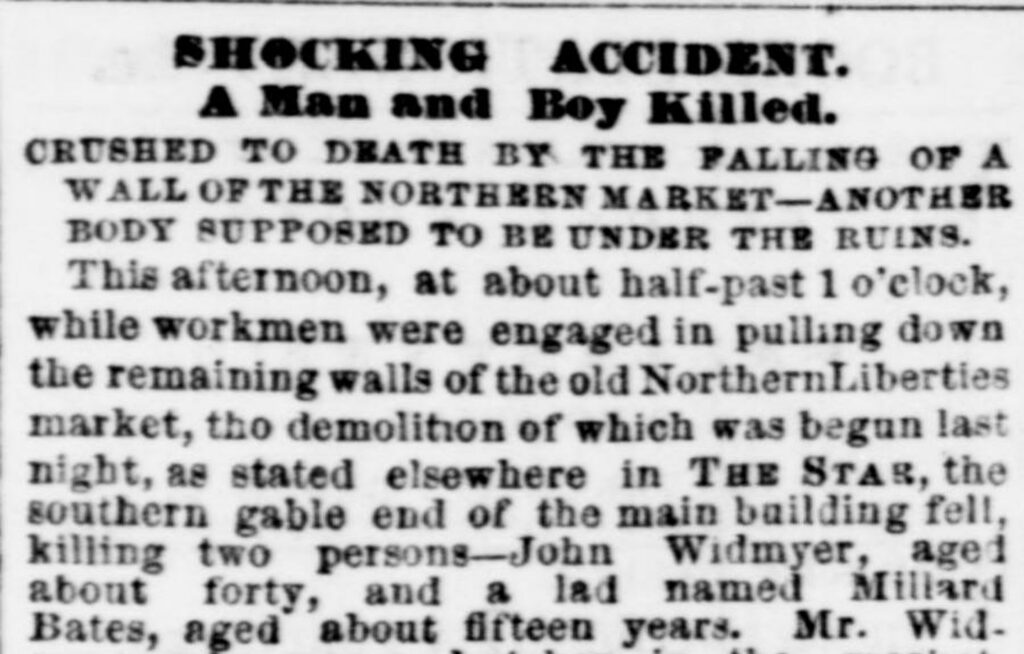
This afternoon, at about half-past 1 o’clock, while workmen were engaged in pulling down the remaining walls of the old NorthernLiberties [sic] market, tho [sic] demolition of which was begun last night, as stated elsewhere in THE STAR, the southern gable end of the main building fell, killing two persons—John Widmyer, aged about forty, and a lad named Millard Bates, aged about fifteen years. Mr. Widmyer, who was a butcher in the market, was engaged in removing some hooks and other fixtures from his stall, south of the wall, at the time it fell, and the lad Bates was near him, employed with a dog in hunting rats among the debris.
Millard’s father, E. H. Bates, had been a justice of the peace in the city for years. The paper said he arrived at the station house “nearly frantic.”
John Widmayer was a German butcher who lived out the Seventh Street road beyond the Boundary. He left a widow and “six or seven children.”
A policeman said he’d chased Bates and other rat-hunting boys out of the ruins seconds before the wall fell.
Topham remembered it differently. In his account his cousin died that same evening, under a falling roof, and Widmayer under a falling sign.
The Star at the time, the coroner’s jury and a 1907 Court of Claims finding all put the deaths the next afternoon, under a falling wall. The court gave the boy’s age as 14 and Widmayer’s as 42.
The jury blames the board
Coroner Patterson held an inquest that same afternoon. A dealer named Charles F. E. Richardson testified that he’d had no notice to move, and that he’d heard the board knew “the market men were going to get out an injunction, hence their haste to tear it down.” A bacon dealer said he had paid a full year’s rent, July 1872 to June 1873.
Officer W. H. West didn’t think anyone had been negligent. But “if the man had had notice to remove his stand this accident might not have occurred.”
The jury, residents of North Washington including several market dealers, agreed with that part:
That the said John Widmayer and Willard Bates came to their death between the hours of one and two o’clock on the 4th day of September, 1872, in the city of Washington and county aforesaid, by reason of wounds received by the falling walls of the Northern Liberty market; the said Widmayer while removing his property from it and the said Willard Bates at the same time, while hunting rats; and they further find that the board of public works, by neglecting to give notice of the removal of said market, merit the censure of this jury.
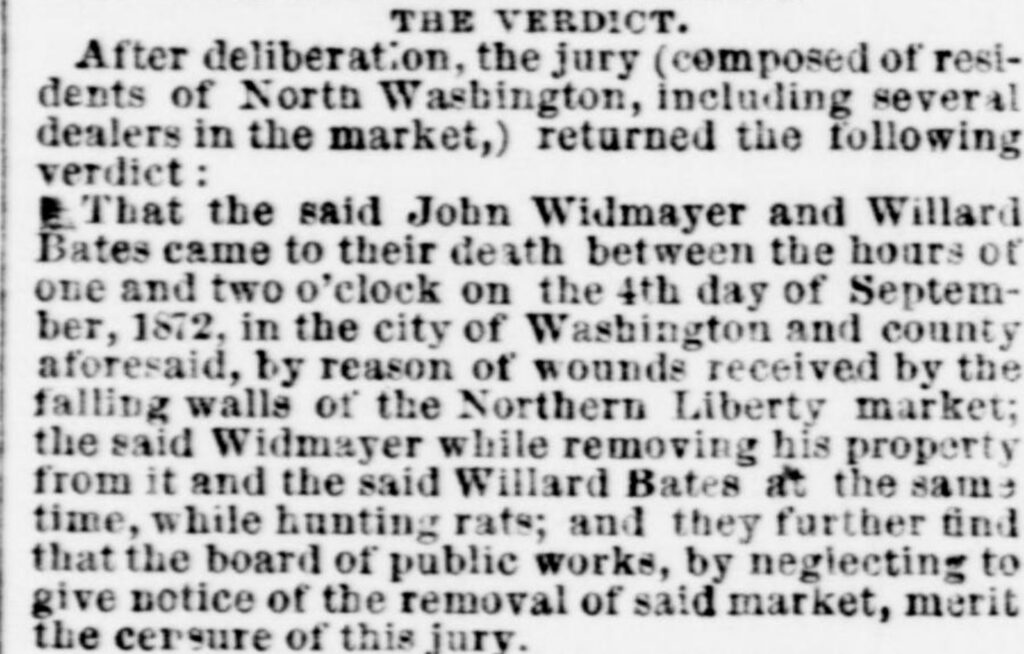
(Yes, the verdict says Willard. The same paper called him Millard in its first story.)
Topham, writing in 1922, said the authorities had given the market men notice to move “several weeks before.” The jury, the dealers and the Court of Claims all said there was none.
The judge, the supper and the torches
Here’s where the story turns into a legend.
By 1901 the Post was telling a juicier version. Shepherd “engaged one of his influential friends to decoy the judge in the case into a little convivial supper or two, and then had him driven some distance out of the city.” Then Shepherd himself, “at the head of two or three hundred men, appeared upon the scene at midnight and by the light of torches” razed the sheds.
Topham had his own version: Shepherd “had invited the Judges of the District courts to partake of his hospitality that evening at his country home, Bleak House, five miles north of the city.” The Senate’s 1896 report says the board managed to have “all the judges beyond the District limits, or at least beyond reach of any of the parties in interest who might have applied for an injunction.”
Maybe some of that happened. The Star‘s account written the next day doesn’t mention a judge, torches or midnight. Its laborers reported at 6 p.m. and had the roof off by 11.
Shepherd’s own letter, written years later, didn’t apologize for the raid. It backed the market men’s claims, and Congress printed it:
[I]t became necessary, in order to save delay in the execution of these extensive public improvements, and to avoid the long litigation which would have grown out of putting this matter into court, for the board of public works to take sudden and heroic measures for the removal of this market house. This was done by tearing down and removing said building, by a large force of laborers, as the lesser of two evils … I have always felt that as the property and business of these stall holders were necessarily sacrificed to the public good they were entitled to compensation.
“Sudden and heroic measures.” That’s one way to put it.
Suing the Boss
The lawsuits started within days, and they named Shepherd personally. Hucksters S. K. Andrews and George T. Wade said that on September 4 they “were peaceably possessed” of eight stalls, and that Shepherd had them “violently taken possession of by persons unknown.” They wanted $4,000.
Joseph Prather sued for $4,160. W. S. Crown sued for $1,900. More followed.
The board ran a notice in the Star telling dealers to file their claims “immediately.” “Prompt action will taken [sic] on them,” it said, over Shepherd’s name.
It wasn’t prompt. When Congress investigated Shepherd’s government in 1874, the District’s lawyer told the committee, “We will admit that it was taken down by the order of the board of public works, if that will save you any trouble.” Another District lawyer told the committee the matter was “in litigation in the courts.”
The suits against Shepherd never produced a judgment. Shepherd went broke and moved to Mexico, and the dealers’ claims sat for decades. Congress finally passed an act on January 26, 1897, telling the auditor of the District’s supreme court to examine every claim from the destruction of the market.
The dealers and their heirs filed claims totaling $592,215. Auditor James G. Payne allowed $128,578.50 on the claims still open. Congress appropriated the money on March 3, 1899, to come out of the District’s own revenues.
The Post announced it on April 9, 1899, under the headline “GET CHECKS NEXT WEEK”:
The settlement of the Northern Liberty Market claims will bring to a close one of the historic controversies in the District. For twenty-eight years the struggle has been going on, and in the meanwhile many of the parties to the contest have passed away, leaving the claims and their final adjustment to their survivors.
It wasn’t quite the close. In 1909 Congress passed one more act covering a handful of late claimants.
The two families who lost people had a harder time. A 1904 bill would have paid $5,000 each to Anna R. Widmayer and to Edgar H. Bates, Millard’s father.
In 1907 the Court of Claims found that “no notice was given to the stall holders,” that no police or barriers were there when the wall fell, and that nothing had ever been paid. It also found no legal claim, and found that both had gone in knowing the wall stood unsupported. If Congress wanted to pay, the court said, it would be “an act of charity if at all.”
The Star in 1872 had told it a little differently on one point: it reported nine policemen detailed to keep people out of the ruins that day.
Where the dealers went
Many of the dealers ended up in the District’s sheds on Corcoran Square, which were ready for business on Friday morning, September 6. They stood on the east side of 7th Street between O and P, near today’s O Street Market.
Plowman, the man who knocked the old market down, was also the architect of the District’s new sheds on Corcoran Square.
Some went downtown. In the Star of September 6, a dealer named A. Holsten advertised that his stand had moved “from Northern Liberty Market to STALL No. 665 CENTER MARKET.” That was Center Market on Pennsylvania Avenue, Adolf Cluss’s huge new hall.
And some of them did something else.
The new Northern Liberty Market
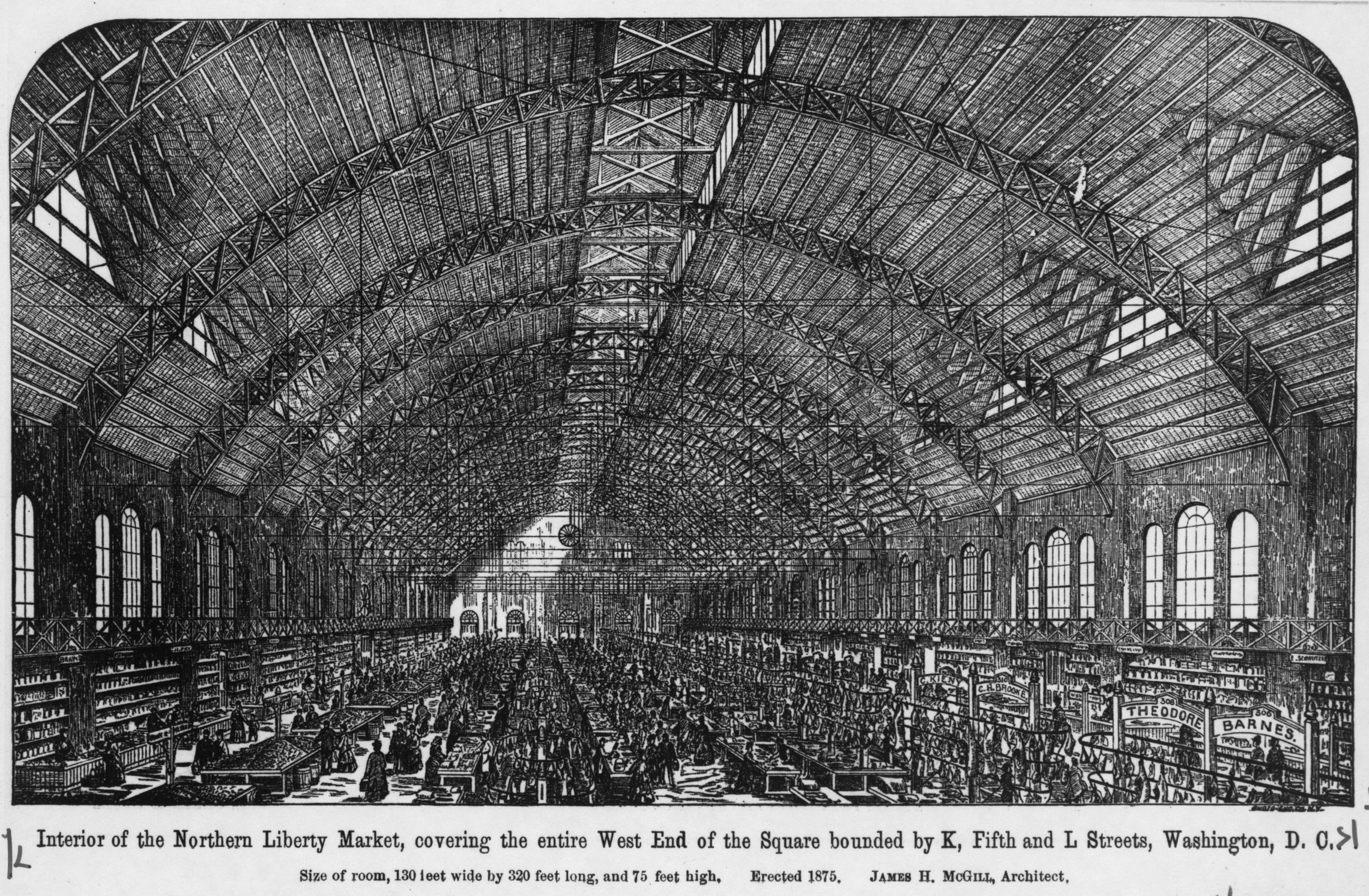
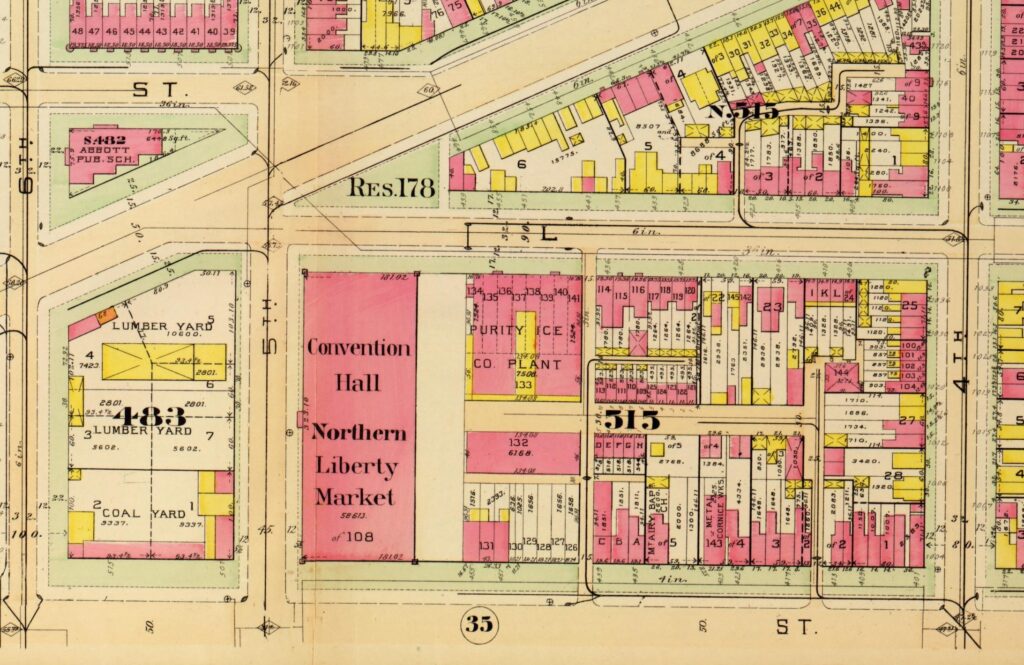
A private company, the Northern Liberty Market Company, bought the west half of Square 515, known as Savage Square, on 5th Street between K and L. Topham gives the price as $110,000. Their architect was James H. McGill.
On January 4, 1875, auctioneer Thomas Dowling sold the stalls in the nearly finished building. The first choice of butcher stalls opened at $1,000 and went to John R. Kelly for $3,350.
A Joseph Prather, the same name as the dealer who had sued Shepherd for $4,160 in 1872, paid $2,550 each for stalls 326 and 328, in the center of the building.
Theodore Barnes paid $2,550 for stalls 306 and 308. Look closely at the engraving of about 1875 at the top of this post and you can find his name, lettered over those two stalls.
The buyers Topham lists also include a Rudolph Eichhorn, nearly the same name as Rudolf Eichorn, the bacon dealer who told the coroner’s jury he’d had no notice.
The Star description Topham reprinted is a building lover’s dream. One room, “324 feet long, 126 feet wide, 35 feet high on the sides, and 85 feet in the center, without a single interior column or obstruction.” The ground was so marshy the stone foundations started 12 feet down.
The roof was wrought iron, “about 209 tons of iron being used,” on 14 arched trusses that each spanned the full 126 feet. Remember that number.
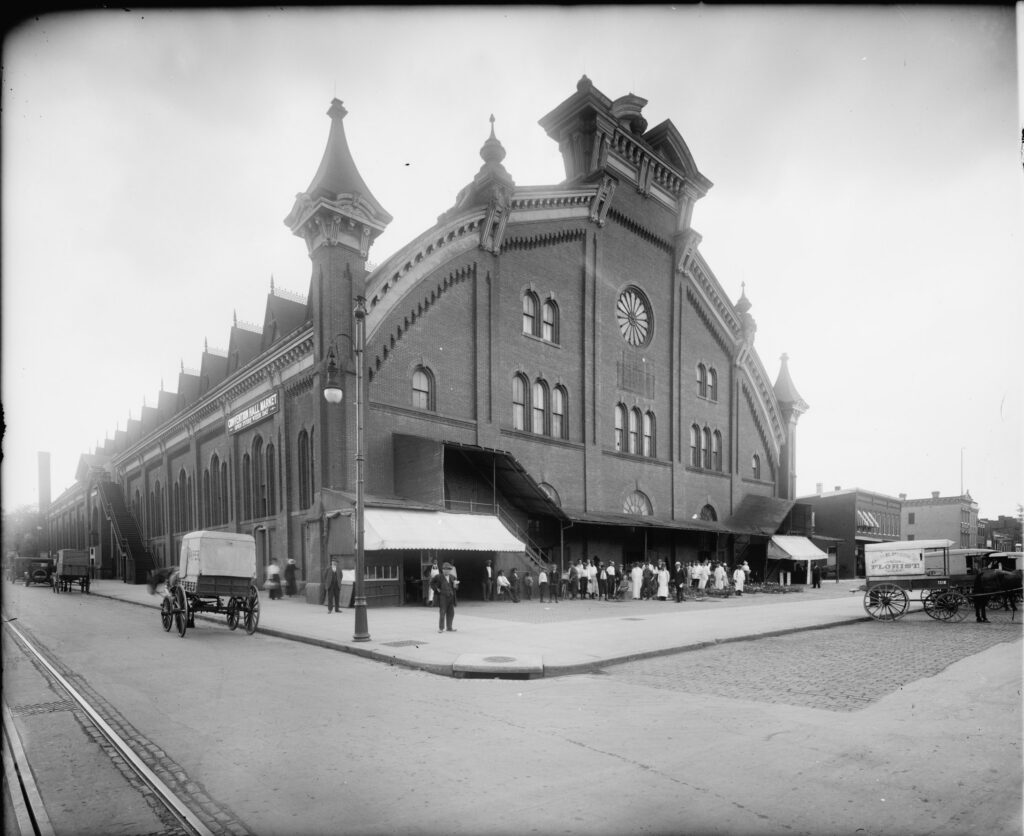
The market opened with a benefit promenade concert on the night of January 14, 1875. The Marine Band played. The proceeds went to three charities and to “the family of the late Jos. Metz, who was unfortunately killed at this building some time since.”
Washington’s first convention hall
In the early 1890s the owners turned the cavernous upper half of the market into an auditorium. On the night of May 6, 1893, they opened it to the public, and the Post was thrilled:
Washington is no longer a convention city without a convention hall. The standing want of years has been satisfied by the Northern Liberty Market Association. Last night the great hall, which covers an acre of space, was opened to the inspection of the public.
Seats for 6,000. Standing room for 10,000. A floor “larger than that of the famous Madison Square Garden in New York, and is unbroken by pillars.”
And then the line that should have come with a warning label: “One of its first virtues is that it is as nearly fire-proof as a building can be.”
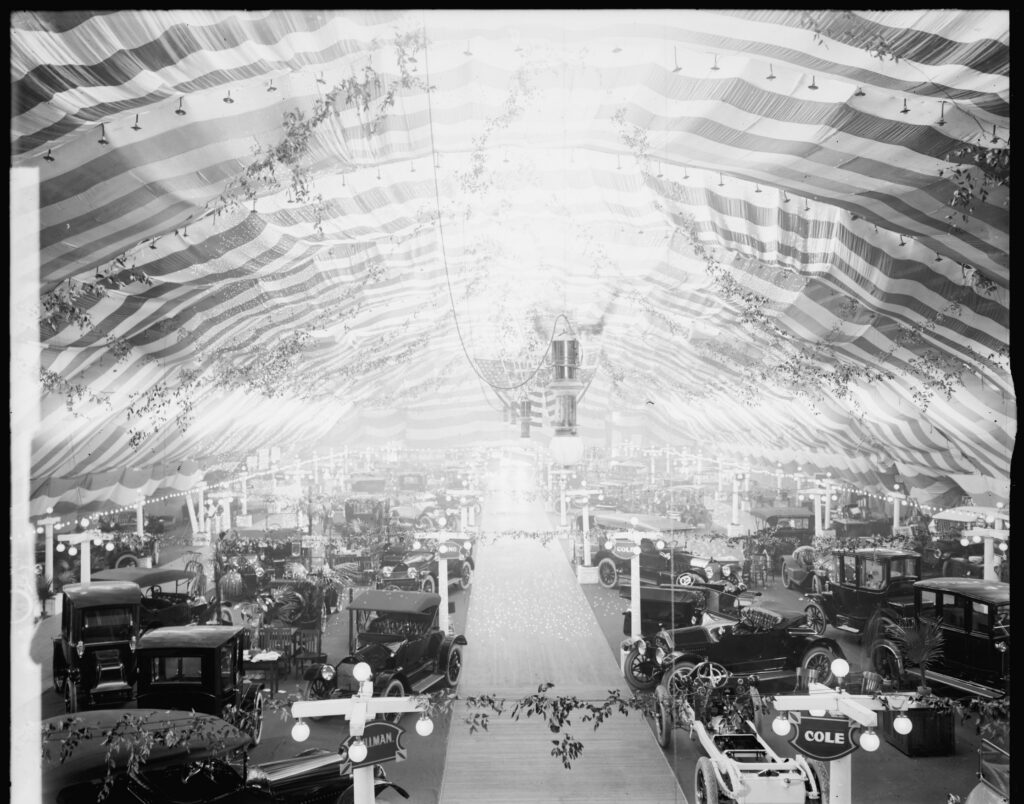
For half a century Convention Hall was where Washington went for the big crowds. When old Center Market came down in 1931 for the Federal Triangle, many of its dealers moved here, and the building became the New Center Market.
March 1, 1946
By the 1940s the upper floor was a bowling center, “one of the largest in the world,” according to the Post, with 50 alleys on the hall floor and 5 more in the balcony. The alleys had closed at midnight.
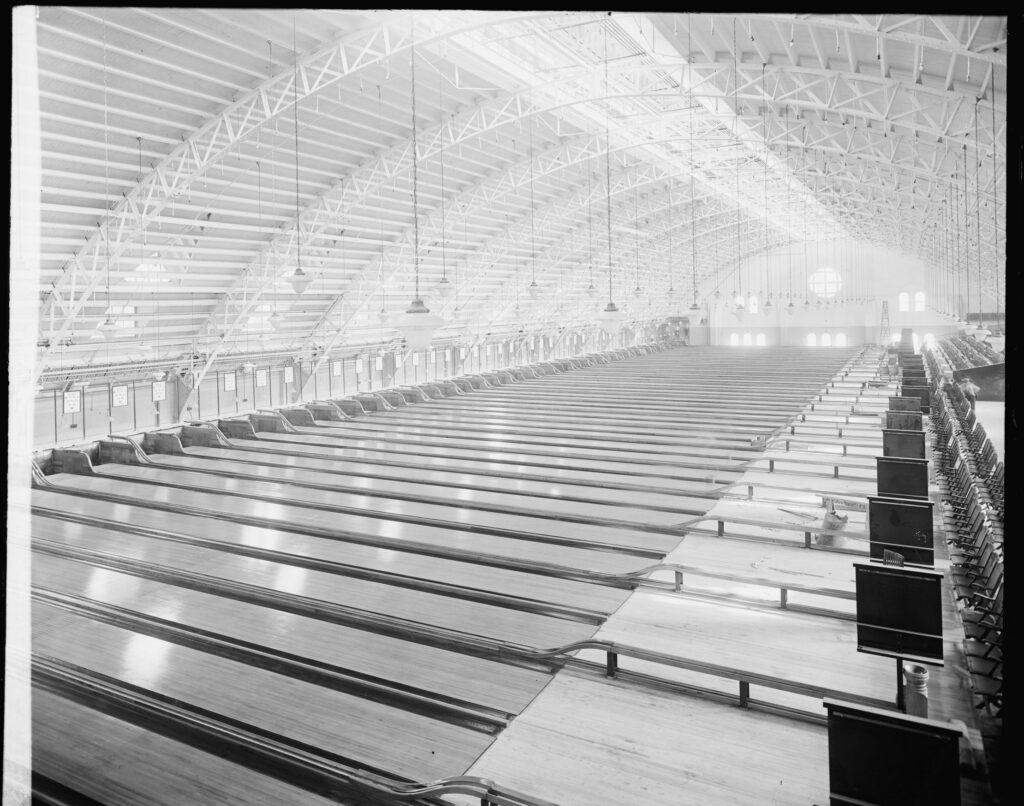
At 1:51 a.m., police from the Second Precinct turned in the first of five alarms. The Star quoted Patrolman A. M. Arney: “The fire walked across the roof from one end of the hall to the other.”
At 2:40 a.m. the roof came down. The Post put it at 209 tons of wrought iron, the same figure the Star had printed in 1875. More than 5,000 people watched.
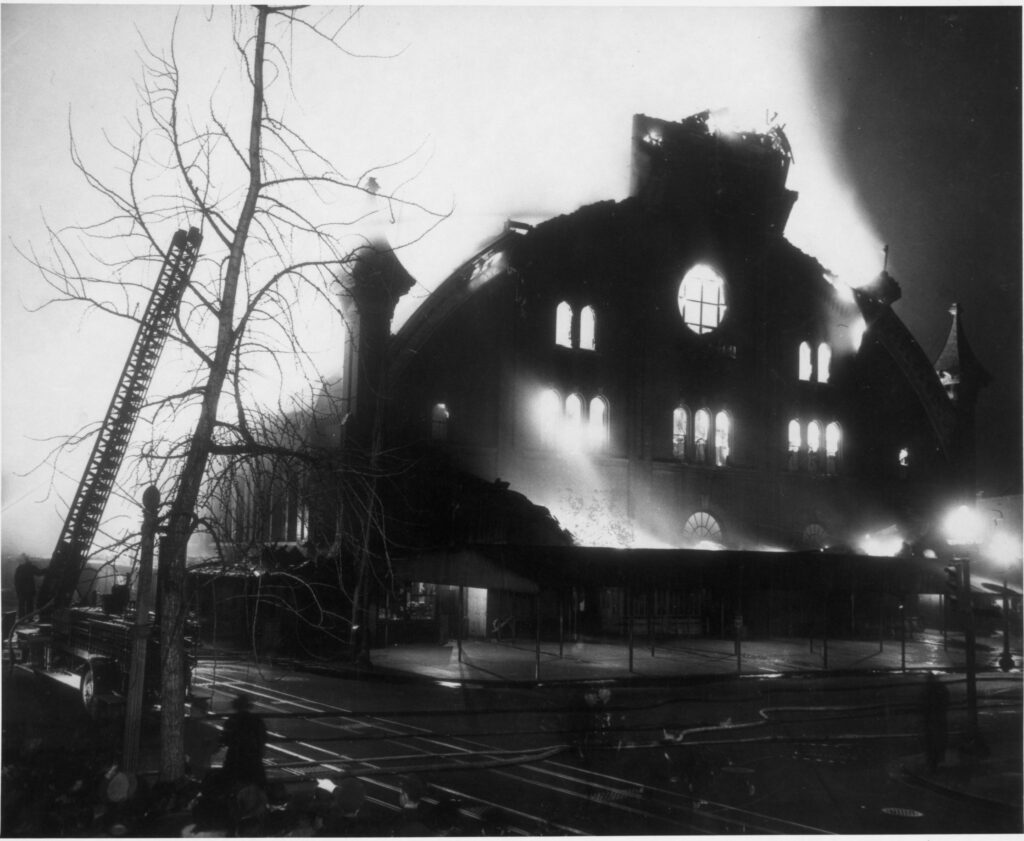
The 1893 promise half held. “A reinforced cement ceiling protected the lower floor from falling iron girders,” the Post reported.
The market stalls downstairs were soaked, but standing. One smoked-meat dealer, Charles Carrington, wasn’t so lucky. A girder fell through an opening in the ceiling and crushed his stall.
F. W. Knudsen of the Washington Convention Hall Company, which owned the building, put the damage to the building alone at $500,000 and said he hoped to rebuild it as a one-story building.
Wax figures and a wrecking ball
According to the DC Preservation League’s DC Historic Sites website, the market reopened that April and held on until 1963, when the supermarkets finally won. In February 1965, the Post reported, the building was set to reopen as the home of the expanded National Wax Museum. The paper noted that the old market had “first opened on Jan. 14, 1875, with a benefit promenade concert among the food stalls.”
By 1977 it stood empty. The DC Historic Sites website dates its demolition to 1985.
What’s there now
The new market stood on the east side of 5th Street between K and L. That ground is now CityVista, the apartment and retail complex at 5th and K.
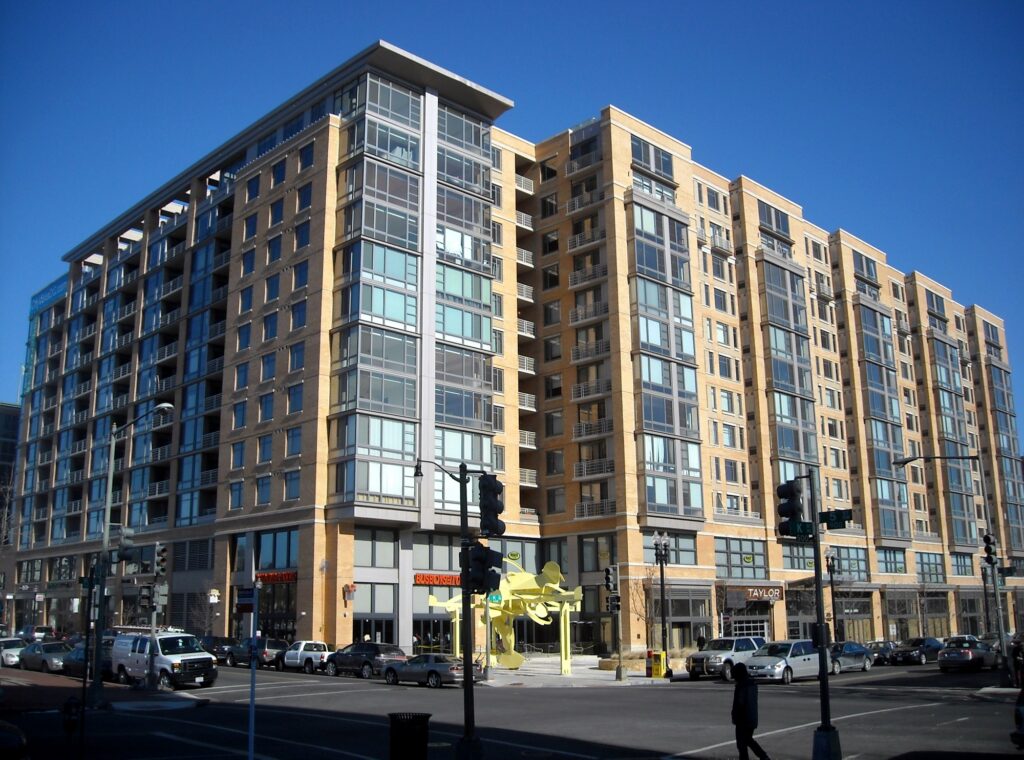
The old market’s ground is Mount Vernon Square, which had seen trouble before: during the 1857 Election Day riot, the gangs went after voters at the polls by the market.
After the sheds came down, the square became a park, and in 1903 the Carnegie Library opened on it. Since 2019 the building has housed an Apple store and the DC History Center, run by the Historical Society of Washington, D.C.
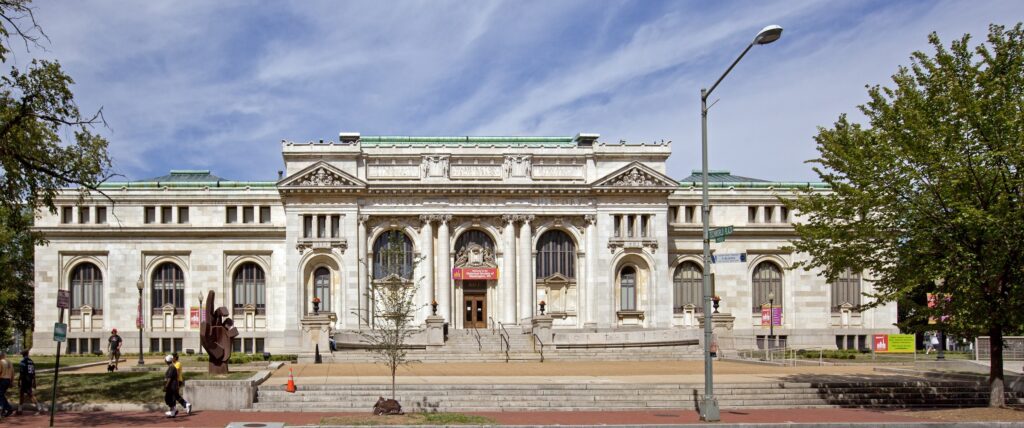
That’s the same society, under its old name, that Washington Topham addressed in 1920 about the night they tore down the Northern Liberty Market. It now has its home on the very ground where his cousin chased the rats.
I went to the wax museum when I was little. I only have vague memories of the displays, and remember more a set of coin operated devices they had. One, you put your coin in and a panel slid up. A chicken came to the front, pecks at piano keys to “play” the piano, then food feel into a bowl for the chicken. Funny the things you remember. lol
I vaguely remember going to the Wax Museum in the 70’s in elementary school. This is the coolest looking building! It’s just gorgeous.
You can find out more about its history, and more historic photos, at the following Post http://dckaleidoscope.wordpress.com/2009/04/14/lost-washington-northern-liberty-market/