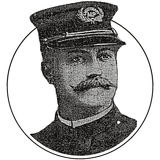

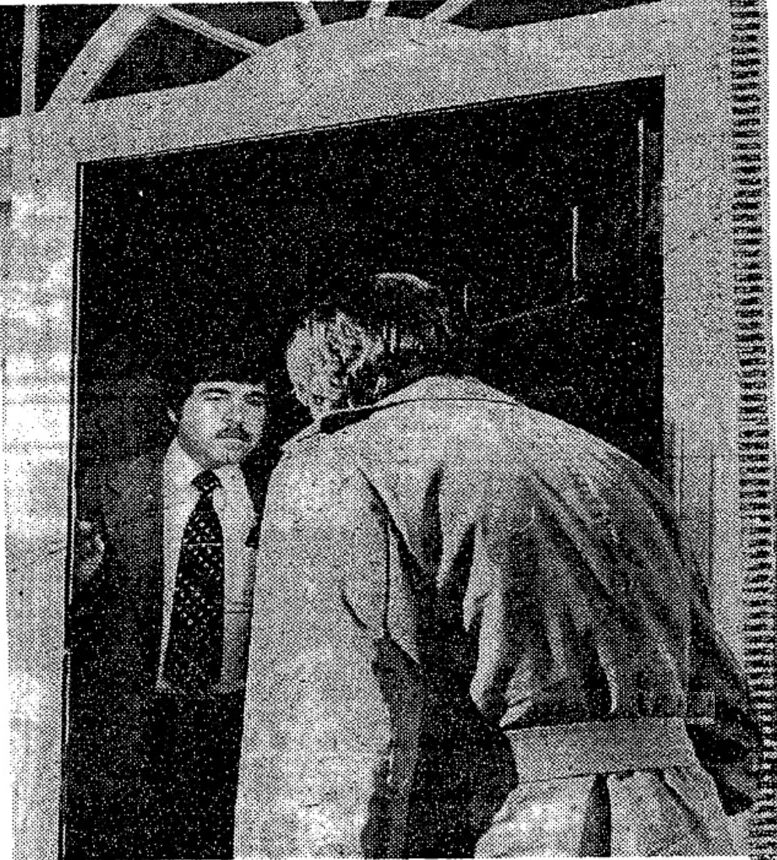
On Sept. 19, 1978, Washington Post reporter Lee Lescaze rented out his house at 4407 W Street NW. The new tenant paid on time and liked to make improvements.
The tenant was the FBI.
Over the next 16 months the FBI wired this brick house off Foxhall Road and made it the Washington set for Abscam. That was the fake-sheik sting that led to the convictions of a U.S. senator and six members of the House, and Lescaze had no idea who his tenant really was.
The landlord didn’t know
In 1978 Lescaze wasn’t even living in Washington. The Post had sent him to New York as a correspondent in July 1977, and a rental firm, Burdette C. Nicholls, handled the house.
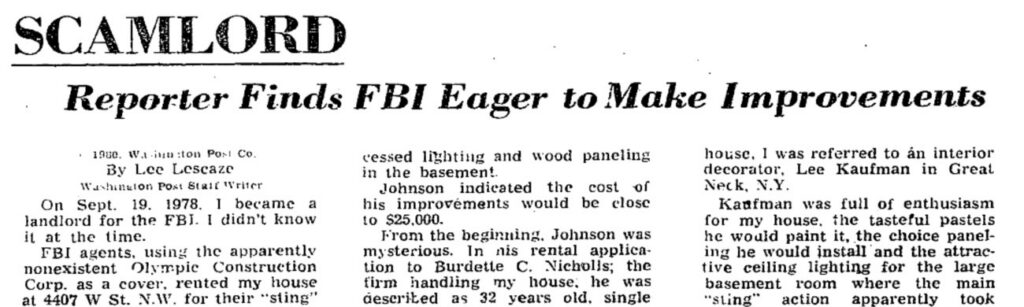
Two days after NBC News broke the Abscam story on Feb. 2, 1980, he wrote about it on the front page of his own paper. The headline opened with one word: SCAMLORD.
On Sept. 19, 1978, I became a landlord for the FBI. I didn’t know it at the time.
Lee Lescaze, Washington Post, Feb. 4, 1980
The man who signed the lease called himself L. Robert Johnson, secretary-treasurer of an Arlington company called Olympic Construction Corp. His rental application said he was 32, single and earning $75,000 a year.
He gave his last address as “the posh Olympic Towers on New York’s Fifth Avenue.” The Nicholls office checked. The building had no record of him as an owner or a renter.
The company, though, was real. Three days after Lescaze’s story, the Post reported that Olympic Construction was a real Arlington contractor that the FBI also used as a front for other undercover operations. Those operations, which started in October 1978, were investigations into “rigging of bids on federal contracts.”
Johnson insisted on a three-year lease at $1,200 a month with no way out early. Lescaze was eager for a tenant, expected to stay in New York through 1981, and agreed.
The FBI liked to remodel
Johnson had one more request. He wanted to install an intricate burglar alarm, recessed lighting and wood paneling in the basement, at a cost he put close to $25,000.
Lescaze was put in touch with an interior decorator, Lee Kaufman of Great Neck, N.Y., who was full of enthusiasm for the house. Lescaze put it this way:
He didn’t mention installing hidden cameras and microphones. I approved the remodeling by telephone.
Lee Lescaze, Washington Post, Feb. 4, 1980
Check out this letter. Three months in, Johnson wrote the rental agent on Olympic Construction letterhead and enclosed the $1,200 rent check. He also noted that the landlord had agreed to pay half the cost of paneling the back basement room.
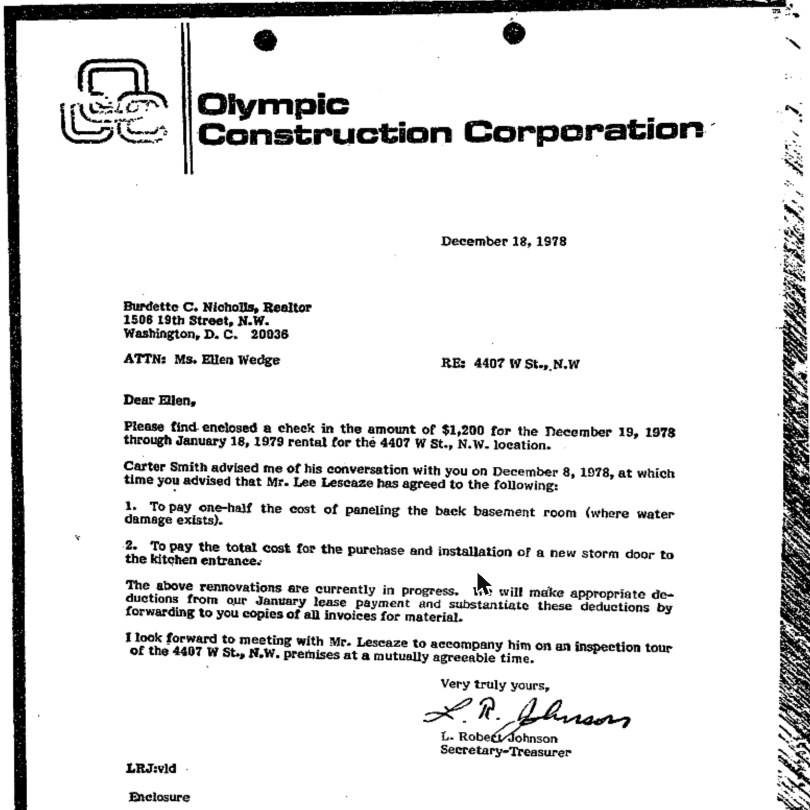
The back room had water damage, but still, the landlord agreed to split the cost of the FBI’s basement paneling. You can’t make this stuff up.
Who walked through the door
The basement recreation room was where the main action apparently happened. Lescaze figured the hidden cameras and microphones were behind the new paneling or up in the ceiling where the recessed lights went in.
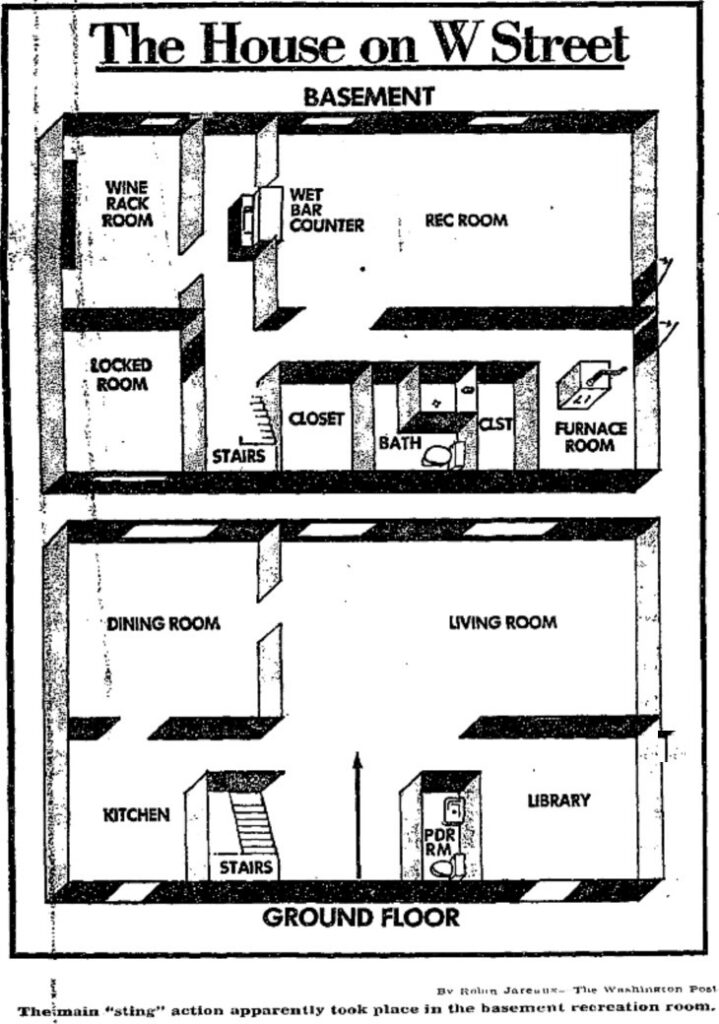
The agents posed as representatives of rich Arabs looking for favors. Here’s who the court records and contemporary accounts put inside 4407 W Street.
On Oct. 9, 1979, Rep. Frank Thompson Jr. of New Jersey met the undercover team there twice. That evening a briefcase holding $50,000 was in the room, and Howard Criden, the Philadelphia lawyer who had brought him, carried it out.
By his own account, Sen. Larry Pressler of South Dakota climbed into a Mercedes at the Capitol that November. At the wheel was Marilyn Bell, a Georgetown woman whose invitation had reached him through one of his fundraisers. They stopped on M Street in front of Clyde’s to pick up a man Pressler remembered as “big, burly.”
They then drove to the nearby Foxhall area and stopped at a large brick home on W Street NW. The senator and the burly man entered the house, while Mrs. Bell waited in the car. Inside, they walked into the library, sat on a sofa, and waited.
Martin Schram, Washington Post, Feb. 4, 1980
Pressler told the “Arabs” no. “I kept mentioning the word ‘illegal,'” he told the Post. Back in the car, he said, the burly man summed it up: “Well Pressler blew that one.”
On Dec. 4, 1979, Rep. John Jenrette of South Carolina sat down with agent Anthony Amoroso and FBI informant Mel Weinberg. Amoroso put it plainly: “We’re talking about fifty thousand dollars now and fifty thousand dollars when this thing is introduced.” Two days later Jenrette arranged for his friend John Stowe to pick up the money.
In January 1980, according to later accounts of the tapes, Rep. John Murtha of Pennsylvania turned down $50,000 at the house. “I’m not interested,” he said on the tape. Then he added, “At this point.” He was never charged.
On Jan. 8, 1980, just after 10 p.m., Rep. Richard Kelly of Florida arrived with three associates, then met Amoroso alone and accepted $25,000. In the words of the federal appeals court that later heard his case, “Kelly stuffed the money into the pockets of his suit.”
Two days later, on Jan. 10, Rep. John Murphy of New York came by with Criden and an associate, Laurence Buser. No money changed hands at W Street that day.
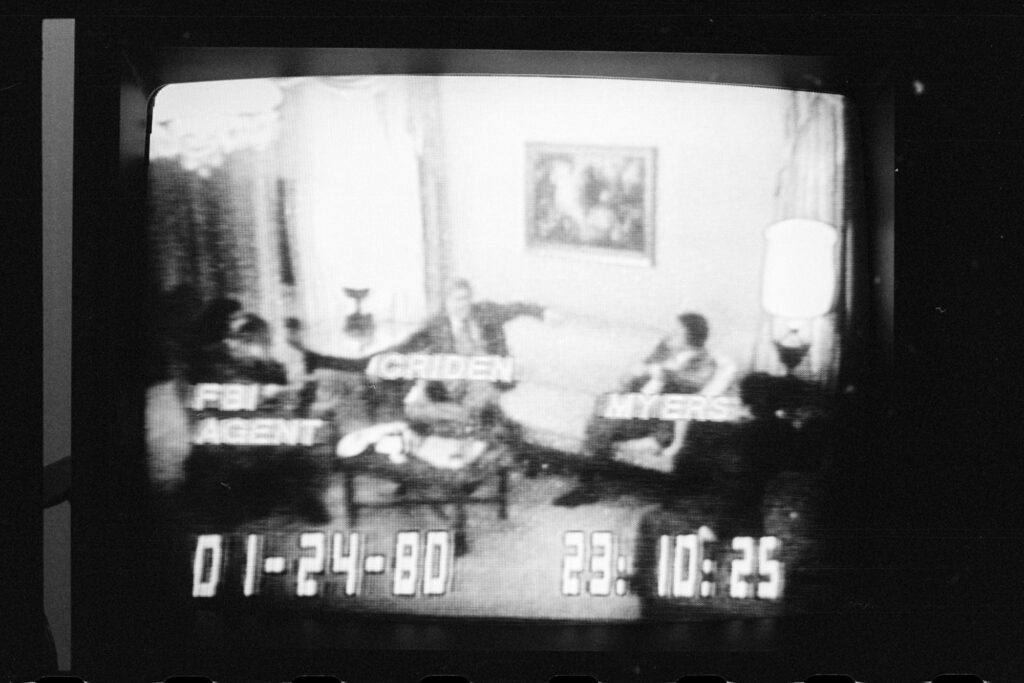
Not every Abscam meeting happened here. Rep. Michael “Ozzie” Myers took his $50,000 at a hotel near Kennedy Airport, and Sen. Harrison Williams was courted on a yacht in Florida, in New York hotels and at an airport restaurant. But W Street was the sting’s house in Washington.
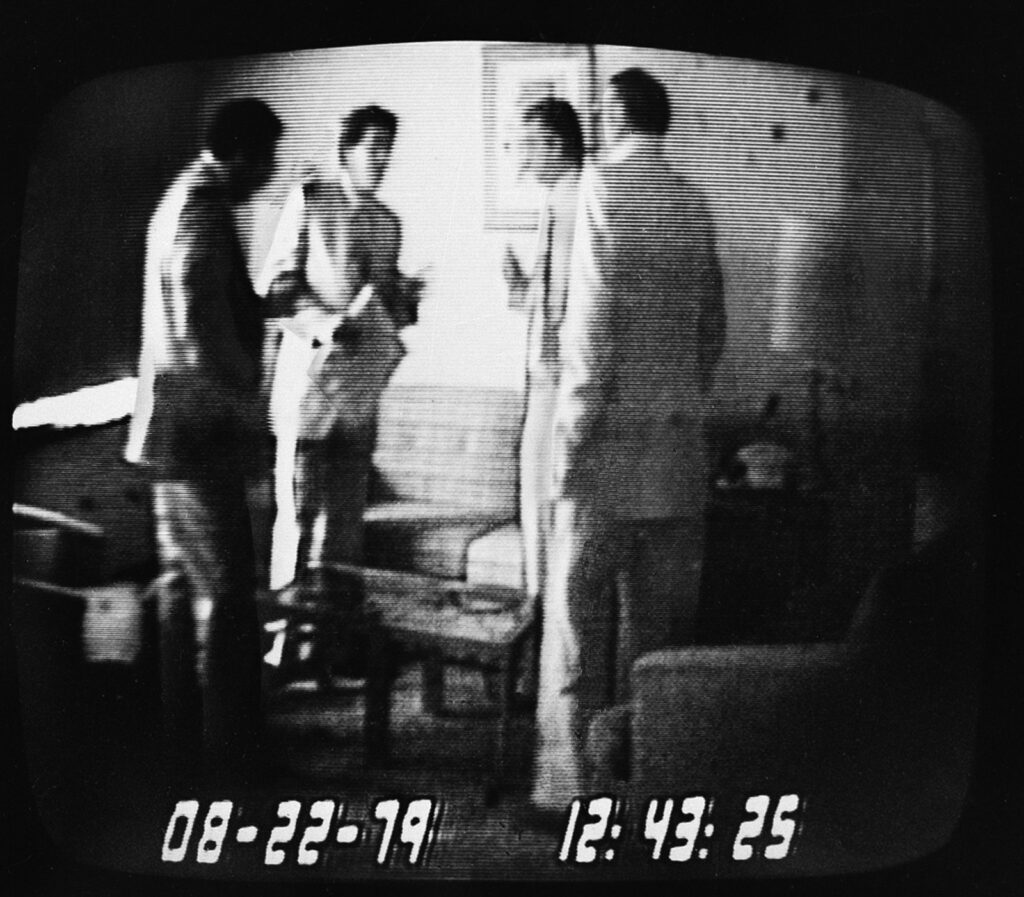
The neighbors had questions
The neighbors noticed that this bachelor renting a six-bedroom house for $1,200 a month rarely spent the night. He did, however, have “numerous well-dressed, briefcase-carrying visitors, all male.”
The FBI’s “maid” gave one neighbor a tour. She saw a teletype machine, a large supply of liquor and nothing else unusual.
Margaret Osmer, another neighbor who Lescaze said was working as a correspondent for ABC-TV at the time, had the strongest suspicions. Lescaze himself had guessed wrong, and he admitted it:
When I did think about the house, I wondered if the Central Intelligence Agency was using it as a safe house. Osmer was much closer. She guessed it was either the FBI or the Mafia and, it turns out, she was half-right.
Lee Lescaze, Washington Post, Feb. 4, 1980
The landlord gets a tour
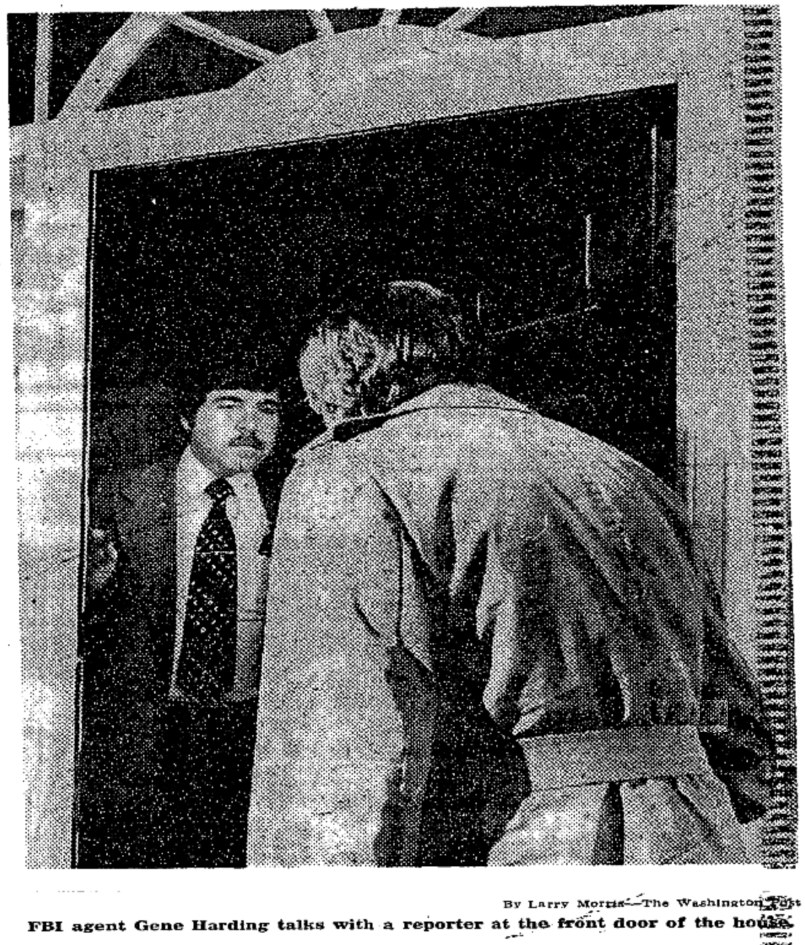
But plans changed, and the Post now wanted Lescaze back in Washington by the summer of 1980, a full year before the lease ran out. On Jan. 23, 1980, he finally saw his remodeled house and met his tenant for the first time.
Johnson greeted Lescaze, his wife and their two daughters at the front door at 8:30 a.m. According to informed sources, Lescaze wrote, the FBI had entertained one of its congressional visitors there only three days earlier.
The TV set was on in the library. Coffee was brewing in the kitchen. Johnson, a man of medium build with a small mustache, was reserved and hospitable.
Lee Lescaze, Washington Post, Feb. 4, 1980
The front basement room was locked. Johnson said he didn’t have the key. It was at his office, he said, because the room was full of Olympic Construction Corp. records.
“It now appears the room was full of videotape equipment and videotapes that a number of visitors to my house wish didn’t exist,” Lescaze wrote.
He didn’t love the decor, either. The new basement paneling, with its large, well-stocked wine rack, was “a disagreeably dark, cheap-looking imitation barn wood.” On the ground floor, NBC reported, the elegant antiques had been borrowed from the Smithsonian for the sting.
Lescaze asked whether Johnson would give up the house a year before the lease ran out. Johnson said he would leave that summer, but he wanted Lescaze to pay him $7,000 to $8,000 for the trouble.
NBC parks on W Street
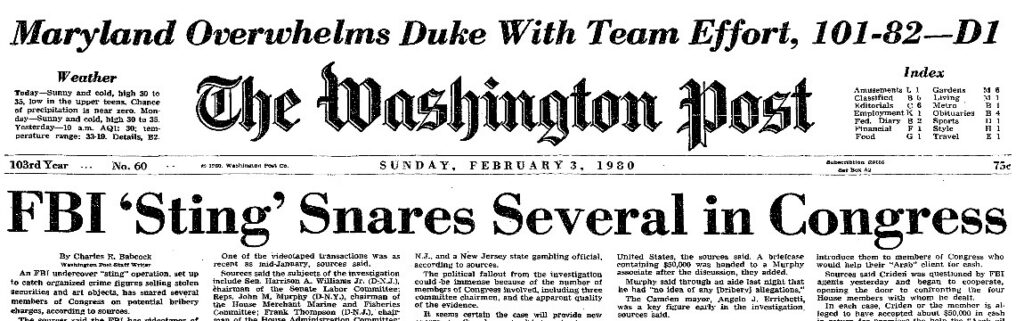
NBC News broke the story on Saturday, Feb. 2, 1980. Its newsmen Brian Ross and Ira Silverman had known about the operation for at least two months, and the network had found the house.
NBC rented two large Winnebago vans with large tinted windows . . . special night-vision lenses capable of amplifying available light 30,000 times were dispatched from New York, and round-the-clock surveillance of the home at 4407 W Street NW, used as a base for the sting operation began . . . A van was parked at each end of the short street located off Foxhall Road . . . and staffed with cameramen . . . .
John Carmody, Washington Post, Feb. 5, 1980
The day before his story ran, Lescaze phoned his own house. An agent from the FBI’s Washington Field Office answered. Could the owner come see it? Not today.
“It’s pretty busy out here,” the agent said. “We’re still chasing people down.”
The agent did have some good news. A letter was in the mail: Lescaze could have his house back that summer without paying the $7,000 to $8,000.
Lescaze asked to speak with his tenant.
“He’s totally unavailable,” the agent told him. “I doubt you’ll ever see him again.”
Lescaze was left with a question for himself. “Would I have written a story that would have revealed ABSCAM or would I have continued as a witting scamlord?”
Before the FBI: Whitehaven and FDR’s cousin
So how did a quiet street off Foxhall Road end up hosting congressmen and briefcases? Let’s back up.
In 1919 there were no side streets here yet off Foxhall Road, only big parcels. The Baist real estate atlas shows the ground north of a planned W Street as a 4.08-acre parcel belonging to Jessie F. Magee, between Walter Brown’s land and Charles C. Glover’s big tract.
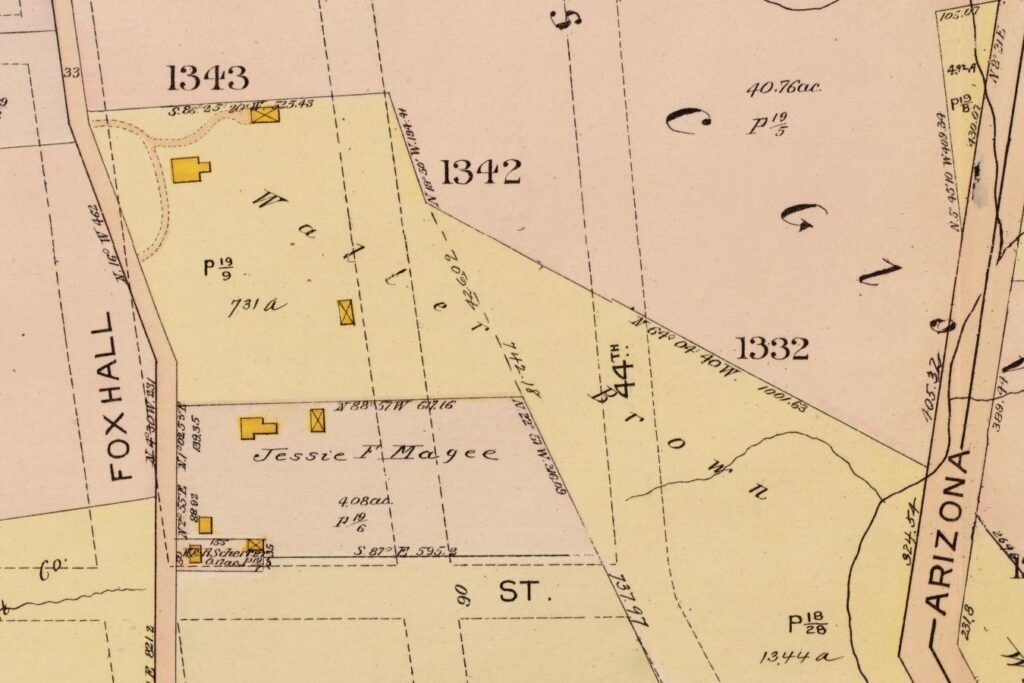
W Street west of 44th didn’t exist yet. In 1925 the Browns and Charles C. Glover Jr. handed the land over “as public highway,” and the District Commissioners approved it on March 3, 1925.
The later deeds describe the lot as “Part of a tract of land called ‘Whitehaven,'” the same name you’ll see on Whitehaven Parkway just to the south.
The house went up in 1962, according to DC tax records. Andes Investment Corp. owned the lot while the house went up, and it sold the place, house and all, in February 1963.
The buyer, on Feb. 4, 1963, was Laura Delano Houghteling. Back then the federal government taxed a sale by its price, 55 cents for every $500, and the stamps on her deed add up to $104.50, which points to a price of roughly $95,000.
Here’s the twist. Laura Delano Houghteling was a cousin of Franklin D. Roosevelt, and she carried the same Delano family name as FDR’s uncle, Frederic A. Delano. He chaired the National Capital Park and Planning Commission and joined the chorus of those objecting to the Pentagon’s first proposed site.
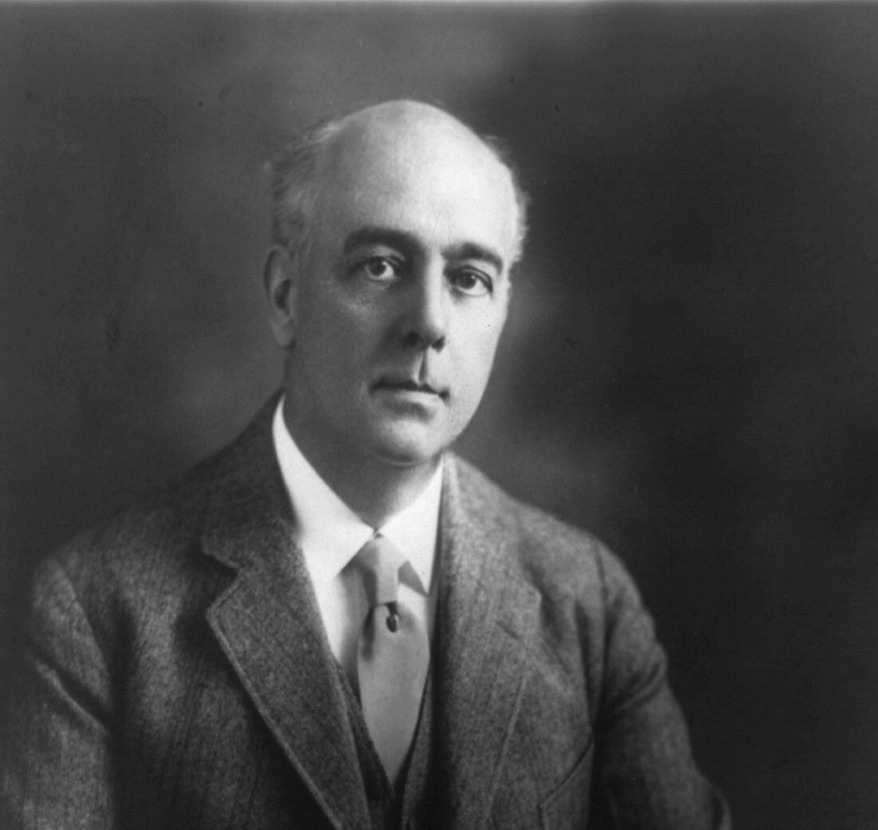
In March 1973 the trustees of her real estate trust sold 4407 W Street to Lee Lescaze and his wife.
What’s there now
The Lescaze family kept the house for three decades after the FBI moved out. It sold in June 2011 for $1.4 million.

Lee Lescaze went on to the Wall Street Journal, where he became foreign editor and later weekend editor, and he died of cancer at his home in New York on July 27, 1996.
The house is still there, a two-story brick colonial with a slate roof and a garage at the end of the drive.
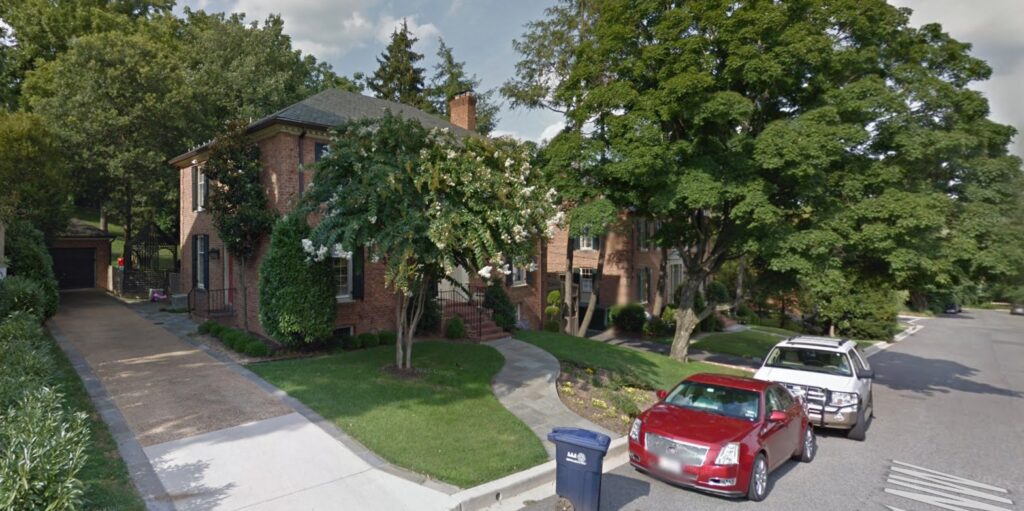
One more thing. A federal appeals court called it “the Arabs’ townhouse on W Street in Georgetown.” It isn’t a townhouse, and it isn’t in Georgetown. It’s a detached house west of Georgetown, off Foxhall Road, in the small neighborhood real estate listings call Berkley.
Abscam later got the Hollywood treatment in 2013’s American Hustle.
Lost Washington stories, in your inbox.
The newest story, plus a few from the archive.
Free. Unsubscribe anytime.
We use AI to help research, write and edit stories across our sites. Here’s how we use AI.Suggest a correction