
This is exactly the kind of message we love to get. A reader emailed us with a hazy childhood memory and a hunch, and it sent us straight into the archives.
When I was a kid in Palisades back in the 60s, there was a mysterious reform school type of operation up behind Sibley Hospital. Might be worth a looksee!
He was onto something real. For sixty years, the hill now crowned by Sibley Memorial Hospital held one of Washington’s bleakest institutions. It was called the Reform School for Girls, and later the National Training School for Girls.
It ran from 1893 until 1953, on the same ground off Loughboro Road where the hospital stands today. Then it vanished so completely that a kid growing up a few blocks away could only half-remember it as a rumor.
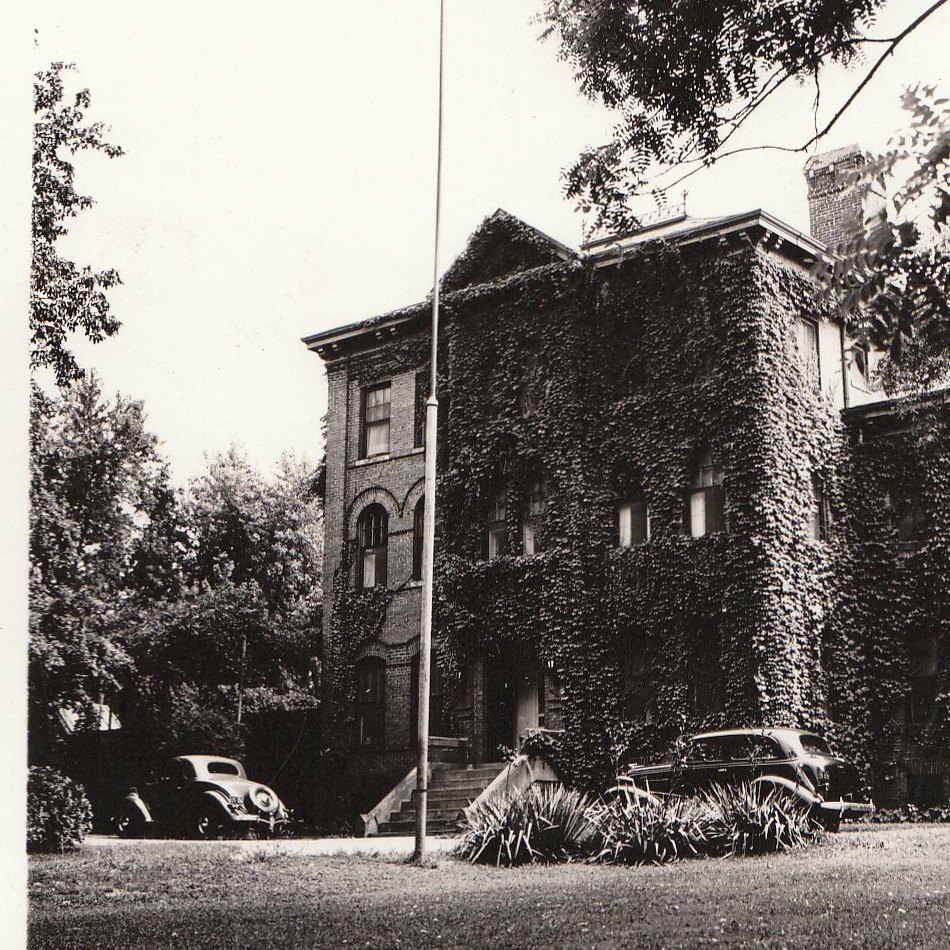
A blue beaver coat and the first inmate
The story starts on November 1, 1893, with a 15-year-old named Louise “Lula” Harrison. She walked out of the Wallach school in Southeast wearing a stolen blue beaver coat trimmed in mink, with a second stolen coat draped over her arm.
Two months earlier she had sold a stolen baby carriage for two dollars. When police caught up with her, jail seemed too harsh for a girl her age. Something else had to be done.
Luckily for the city, a brand-new facility was almost finished at Loughboro and Conduit roads. This was the Reform School for Girls, and Lula Harrison became its very first inmate.
The District had wanted a secular option for years. Girls deemed wayward were usually shipped to religious institutions like the Catholic House of the Good Shepherd or the Episcopal House of Mercy. A government-run school was meant to be the modern answer.
The federal government handed over about 18 acres near the Dalecarlia Reservoir for the purpose. The land had once held Battery Vermont, a Civil War gun battery that helped guard the approaches to the capital. Now it would hold Washington’s “incorrigible” girls.
The thinking of the era was blunt. As one local journalist framed it back in 1882:
There are in Washington, as in other large cities, a number of young girls whose moral tendencies are bad. There are others who, through some cause, have made an erring step and are on the downward road.
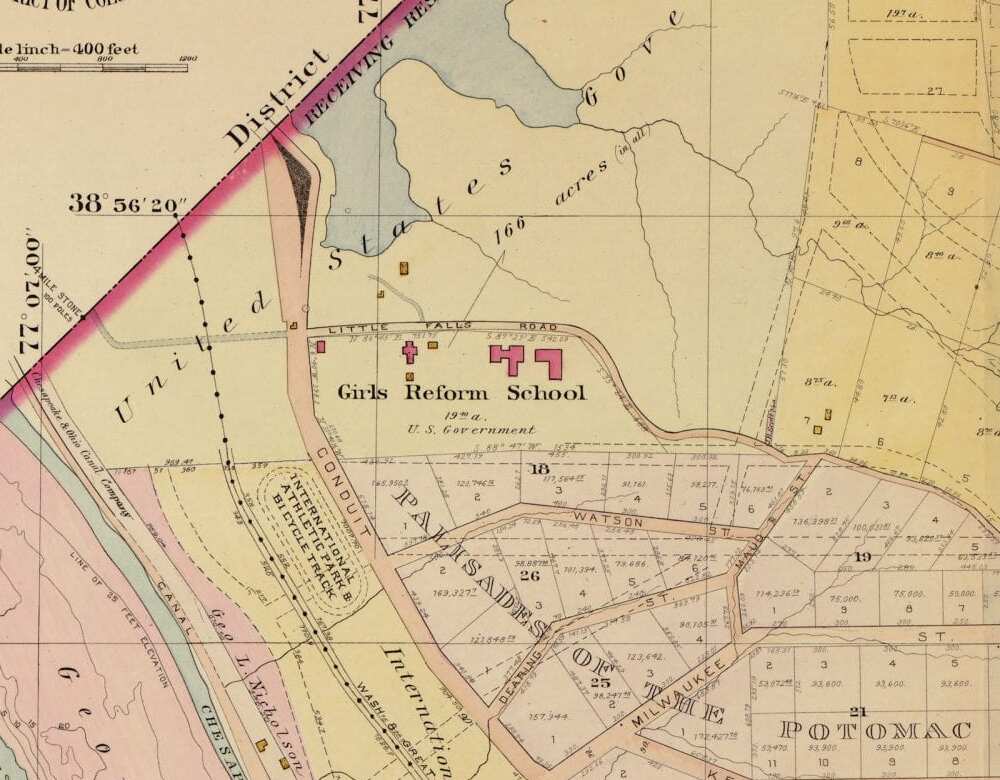
If you want to place it yourself, we shared this same 1903 Baist atlas of the Palisades a while back. The little cluster of red buildings labeled “Girls Reform School” sits right about where Sibley stands today.
Mutinies, arson, and a superintendent’s revolver
Reforming girls hardened by poverty and abuse proved just as difficult then as it would be now. The school’s early decades read like a running list of emergencies.
There was a “mutiny” in 1896 and an arson the next year. In 1904 the acting superintendent, a Mrs. O’Brien, pulled her revolver to face down an uprising. The Washington Post described what happened next:
There was a sullen wavering as the leaders quailed before the weapon.
Girls escaped regularly, and who could blame them. There was supposed to be training in sewing and laundering, but the equipment was usually broken. There was not much to do but plot the next way out.
In 1912, Congress changed the name to the National Training School for Girls. It should not be confused with Nannie Helen Burroughs’ similarly named school for Black women in Lincoln Heights, a very different and far prouder institution across town.
Rats by the dozen
By the 1930s the place was a scandal. When Eleanor Roosevelt toured it in 1936, she came away appalled, calling the buildings “unfit for habitation, badly heated, rat-infested, with inadequate sanitary facilities.”
Staff killed rats by the dozen every day. Girls were so poorly clothed they could not go outside in winter. Senator Royal S. Copeland of New York told reporters he would “send a girl to hell before I send her to the National Training School for Girls.”
Race ran through all of it. The school had been technically integrated at its founding, but in practice it became the place Washington sent its Black girls. In 1941 the few remaining white inmates were transferred out, and from then on it was for Black girls only.
The irony was not lost on Black observers. The Courier, a leading Black newspaper, noted that an exclusive white suburb had grown up around the very land where the city warehoused the children it had given up on.
Carrie Weaver Smith and a different idea
In February 1936, a 51-year-old social worker named Carrie Weaver Smith arrived as superintendent with a radically different philosophy. She had run training schools in Texas and Maryland and believed in the Progressive gospel of the “child savers.”
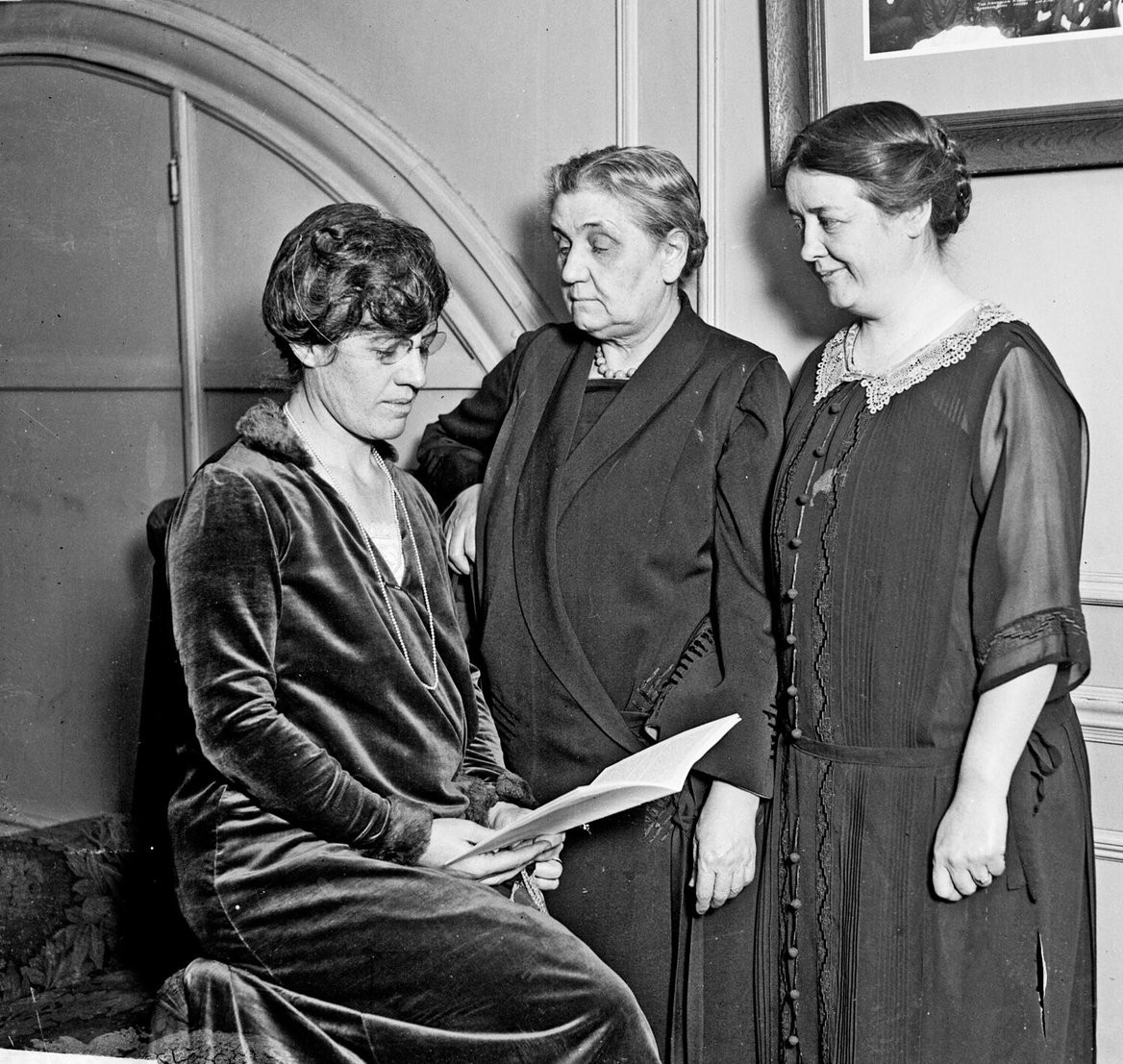
Smith thought most delinquent girls suffered from “an unsatisfied need for tenderness and love in their childhood.” So she stopped locking them in their rooms at night. She rewarded good behavior instead of only punishing the bad.
She was no simple heroine, though. Like many Progressive “child savers,” Smith was steeped in the era’s eugenics, the junk science that blamed crime on “defective” heredity. In Texas she had brought in the state’s first eugenics field worker and called the delinquent girl “a terrible misfit.” Her compassion and her prejudices ran side by side.
She improved the food and required staff to eat the same meals as the girls. She set up a token economy where girls earned brass discs for chores and spent them at a small store. Critics groused that it cost as much to keep a girl there as to send one to Vassar.
With about $100,000 in New Deal money, Smith gutted and rebuilt the plant. WPA crews tore out partitions, enlarged windows, installed a central kitchen and laundry, and painted the dark walls white.
In the old walled courtyard, closed off “for no reason at all,” they built a flower garden with a swimming pool. There was a new beauty shop, a commercial department, a nature museum, and a library. A basement storeroom became a venereal disease clinic.
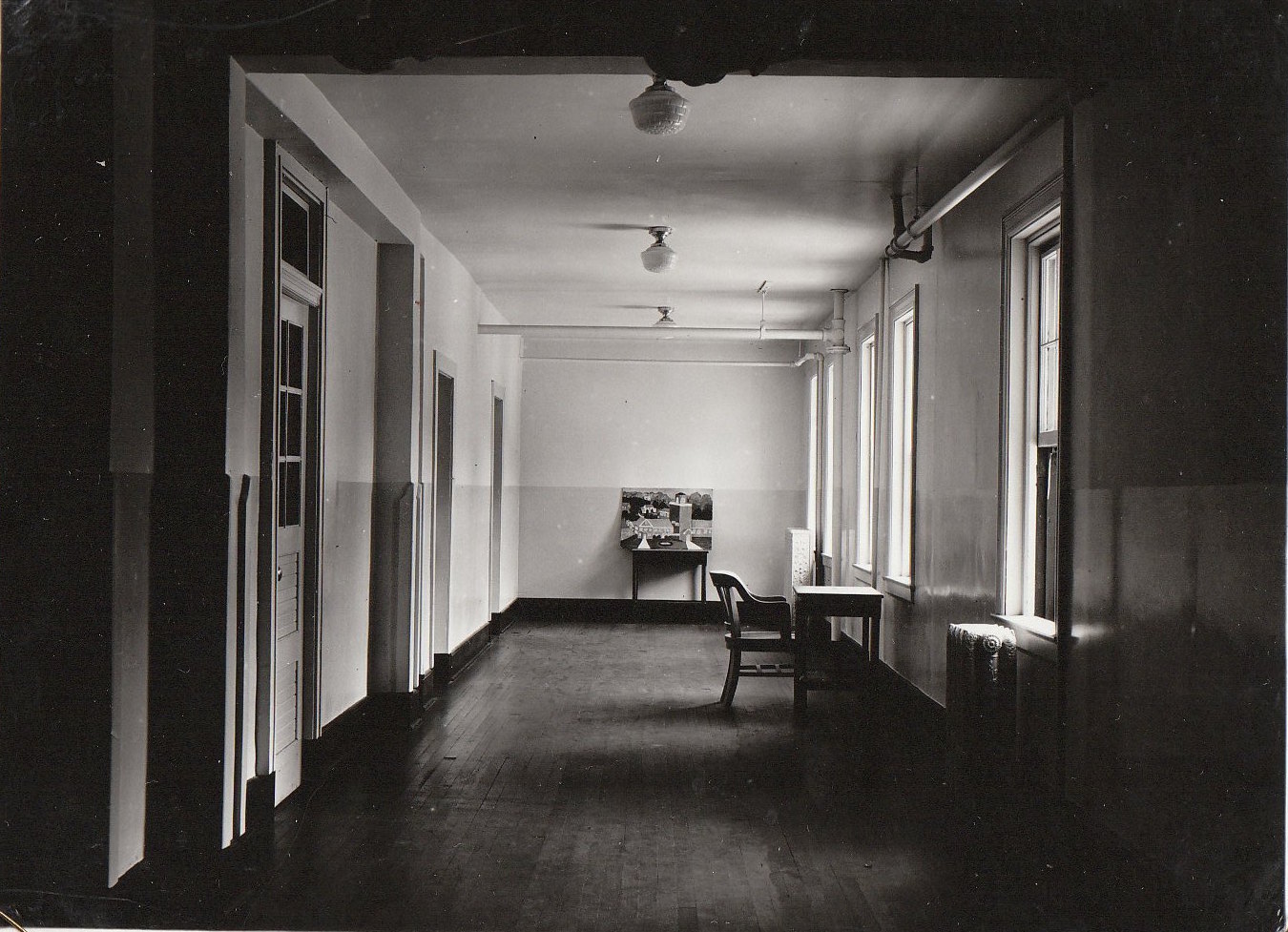
When Eleanor Roosevelt returned in February 1937, she barely recognized the place. “There’s light and air, and there are no bars on the windows,” she told the Evening Star. “I would not have known it to be the same place.”
The backlash
It did not last. In June 1937, after Joe Louis beat James Braddock for the heavyweight title, an argument over the fight between a white girl and a Black girl exploded into a riot that police had to break up.
In September, the girls rioted again when a Black sewing teacher was replaced by a white woman. The Board of Public Welfare had seen enough and fired Smith. She had lasted less than two years.
The timing was almost cruel. Smith was let go on a Friday. The following Monday the girls rioted over being served hash for breakfast while the staff got bacon and eggs, a perk that had ended under her watch.
Smith refused to go quietly. With backing from Eleanor Roosevelt, she forced a public hearing into her dismissal, which opened in May 1939 and dragged on for weeks.
Witnesses accused her of coddling the girls, ignoring discipline, and tolerating “immorality.” The Washington Post lost patience and ran an editorial titled “Futile Hearing,” grumbling that “only in the impotent District of Columbia is a fiasco of this sort likely to be found.”
The commissioners confirmed her firing “with prejudice.” Smith left social work for good, opened a small bookstore on 17th Street, and slept on a cot behind the stacks. She died in 1942.
In an obituary, the Evening Star quoted a biography she had written for herself. Her profession, she said, was “physician and completely discredited social worker in the field of juvenile delinquency. Dubbed an impractical dreamer and theorist.”
Tear gas and the end
After Smith, the school slid back into its old punitive habits, and the riots kept coming. The worst of the final years came on January 13, 1953.
That night a disturbance “flared to riot proportions,” and police rushed to 5201 Loughboro Road “with a full arsenal of tear gas.” The gas went unused, but a lieutenant was hurt when the girls heaved a table onto him.
It was nearly the end. Later that year the National Training School for Girls closed for good and moved to Blue Plains. Sixty years of mutinies, escapes, and reform experiments were over.
What the tip got right
So back to our reader and his memory of a mysterious reform school behind Sibley in the 1960s. Here is the wrinkle. By the time he was poking around the Palisades, the school was already gone.
The reformatory closed in 1953. Sibley Memorial Hospital, relocating from its old home on North Capitol Street, opened on the cleared site in 1961. The hospital did not sit beside the reform school. It replaced it.
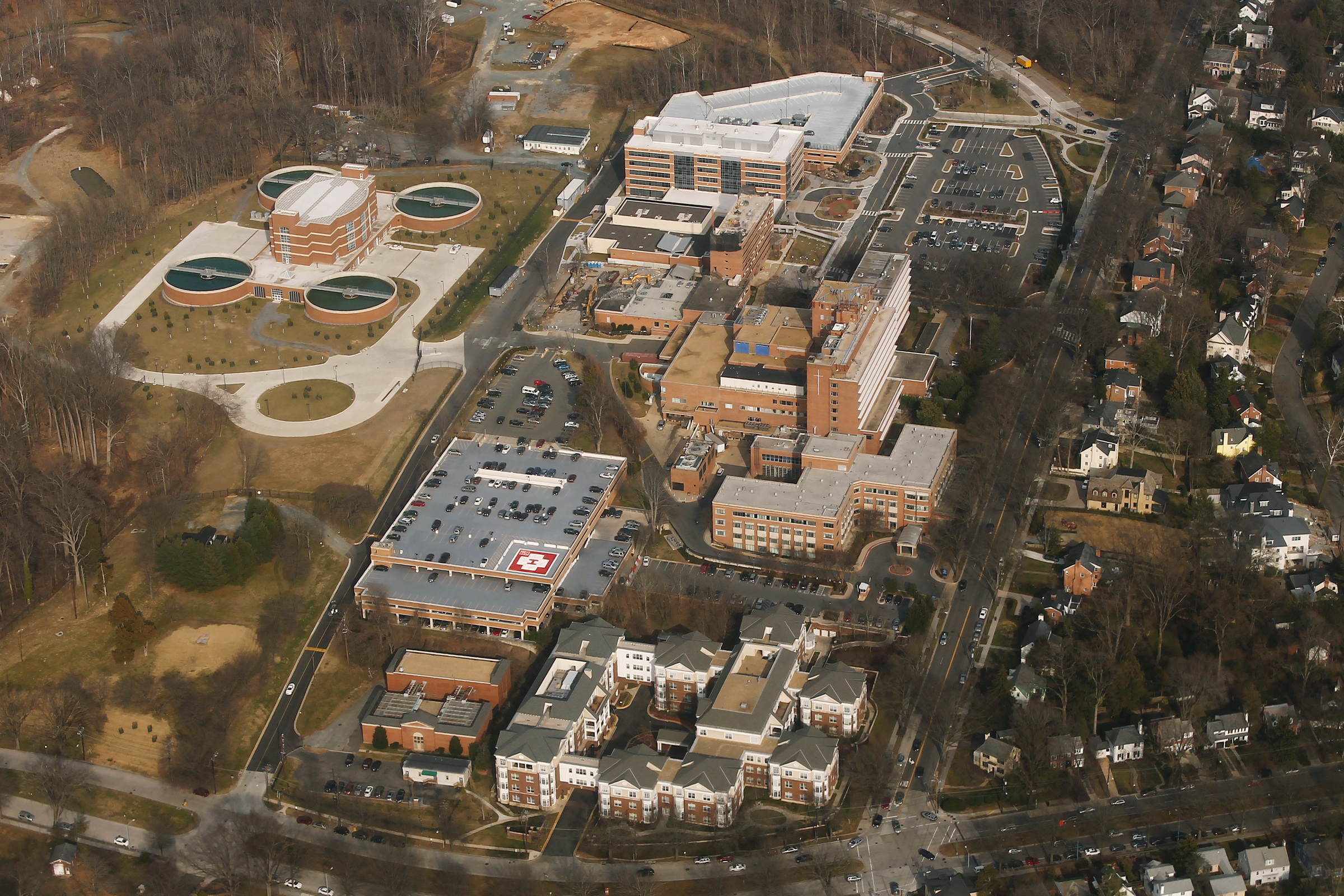
But the memory was real, and that is the haunting part. A tear-gas riot on that hill in 1953 was recent enough that older neighbors would have remembered it well. The institution was gone, yet its reputation lingered over the ground like a ghost.
That is how a 15-year-old in a stolen beaver coat, a reformer who slept behind her own bookstore, and a hospital all came to share one patch of Palisades hillside. The reader was right. It was worth a looksee.
We dug this one up with help from AI and checked it against the original records below. Here’s how we use AI.