
Capitol Building
The United States Capitol has stood at the center of Washington since the 1790s, and GoDC has spent years digging into its history. These posts cover everything from the Capitol’s construction and the British burning of 1814 to the dome’s completion during the Civil War and the debates, ceremonies, and controversies that have played out inside ever since.

On July 19 and 26, 1952, radar at National Airport and Andrews tracked unknown targets over Washington. Jets were scrambled, and the Pentagon blamed the weather.
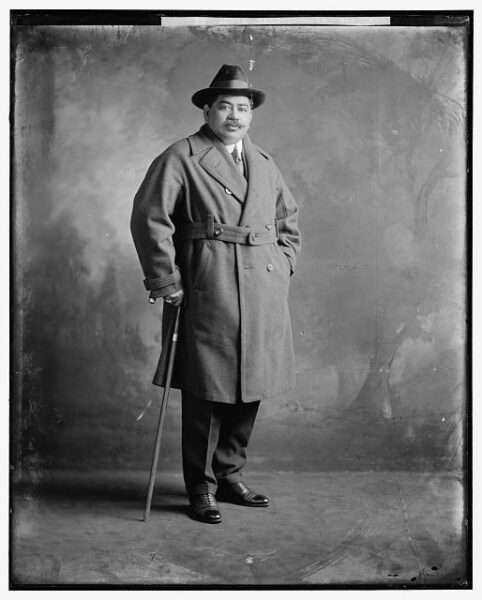
The Prince of Hawaiʻi kept a house on Mass Ave, sat with the Republican baseball team, and pushed a homestead act for his people.
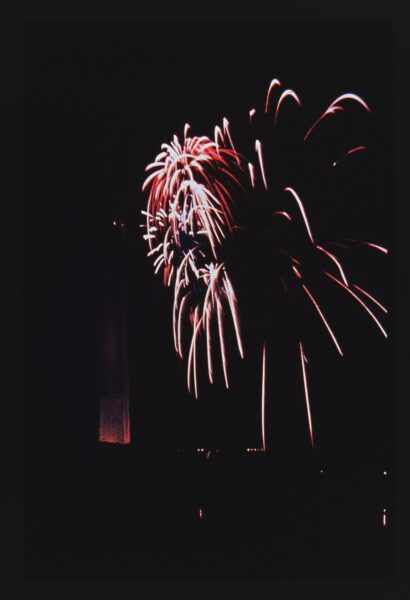
A cast of 1,000 on the Capitol steps, 50,000 at the Monument fireworks, and a plea for DC voting rights. How Washington celebrated America’s 150th birthday in 1926.

A photograph from the Smithsonian Institution Archives, taken from the Castle around 1900, shows the National Mall as a working industrial yard: the old Botanic Garden greenhouses in the foreground, Baltimore and Potomac Railroad tracks cutting across the grass, the Capitol on the horizon. Within a few years the McMillan Plan would erase all of it.

A bomb exploded beside the Senate chamber on July 2, 1915. The next morning, the man responsible shot banker J.P. Morgan Jr. on Long Island.
There’s more where these came from.
Lost Washington stories in your inbox most mornings: the newest, plus a few from the archive.

A rare photograph captures the Capitol’s cast-iron dome still half-built during the early days of the Civil War, scaffolding climbing into the sky.

Before the Capitol’s famous white dome was fully restored in 1959, it had taken on a reddish hue from decades of weathering.
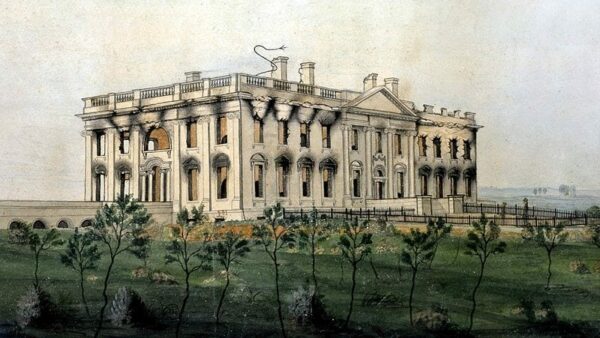
In October 1814, the U.S. House came within nine votes of moving the capital out of Washington. The bill failed 83 to 74. The Washington we live in exists because nine House members didn’t want to put the government on wheels.

On February 28, 1890, former Kentucky Congressman William Taulbee was shot on the Capitol’s marble staircase by a journalist.
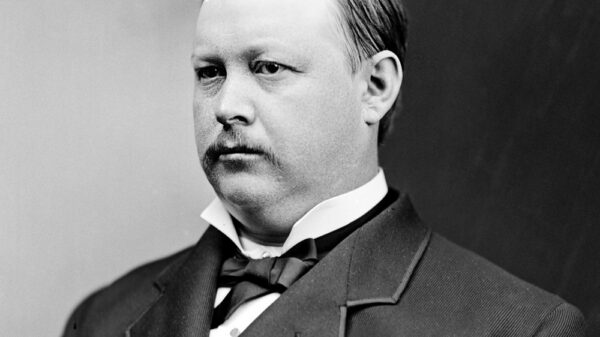
Thomas Brackett Reed rewrote the rules of Congress, crushed the filibuster, and walked away from power on principle. He died at the Arlington Hotel while a party raged downstairs.

In 1877 a 23-year-old draftsman named Richard Siebert filed a sweeping redesign of the U.S. Capitol with the Copyright Office. Then he vanished.

Cows in the streets and woods all around. Traveler John Davis saw Washington in March 1801, when Thomas Jefferson was sworn in at the half-built Capitol.

Two aerial photos of Washington, DC in 1922, one of them centered on the U.S. Capitol. Both are from the Boston Public Library.

A 1960s photograph shows work on the Capitol dome and rows of cars parked in front of the building.

An 1872 bird’s-eye view of the Capitol and Washington, D.C.

A Harris & Ewing photograph looks down over the Capitol’s West Front from the dome in 1935.
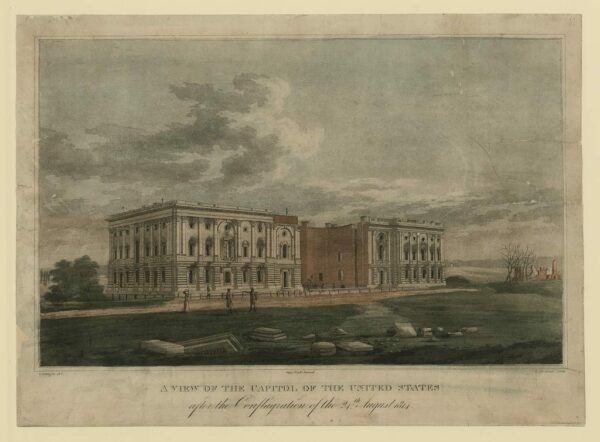
William Strickland’s engravings record the damaged Capitol and President’s House after British forces burned Washington in August 1814.

A nighttime photograph shows the U.S. Capitol between 1918 and 1920.

This is an old photo of J.P. Morgan walking in front of the Capitol Building in 1912. He was in town to testify before the Pujo Committee

Crowds fill the Capitol’s East Front and rooftop in a photograph of James Buchanan’s March 4, 1857, inauguration.