
Below is a fascinating old broadside that we came across in the Library of Congress archives.

Here is the description …
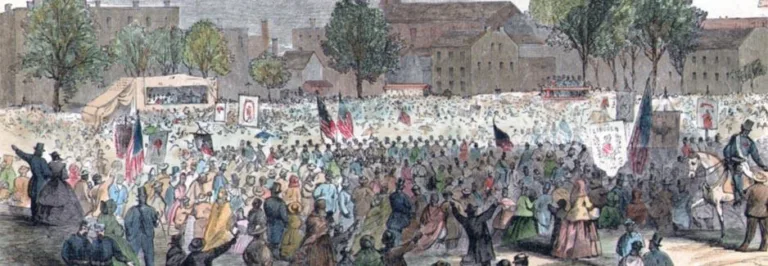
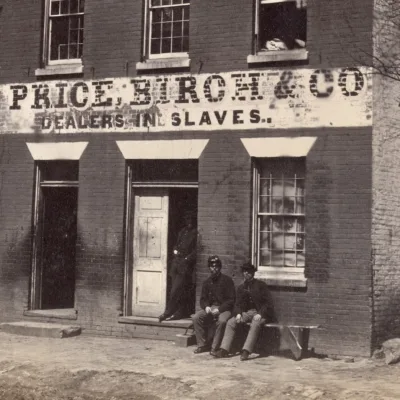
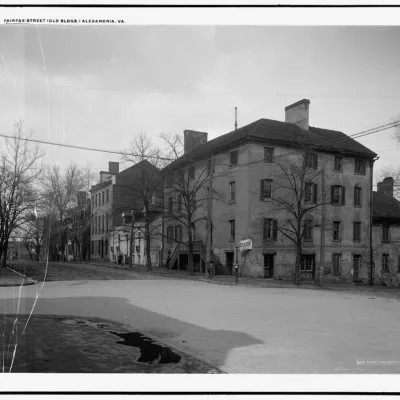
A broadside condemning the sale and keeping of slaves in the District of Columbia. The work was issued during the 1835-36 petition campaign, waged by moderate abolitionists led by Theodore Dwight Weld and buttressed by Quaker organizations, to have Congress abolish slavery in the capital. The text contains arguments for abolition and an accounting of atrocities of the system. At the top are two contrasting scenes: a view of the reading of the Declaration of Independence, captioned “The Land of the Free,” with a scene of slaves being led past the capitol by an overseer, entitled “The Home of the Oppressed.” Between them is a plan of Washington with insets of a suppliant slave (see “Am I Not a Man and a Brother?” no. 1837- ) and a fleeing slave with the legend “$200 Reward” and implements of slavery. On the next line are views of the jail in Alexandria, the jail in Washington with the “sale of a free citizen to pay his jail fees,” and an interior of the Washington jail with imprisoned slave mother Fanny Jackson and her children. On the bottom level are an illustration of slaves in chains emerging from the slave house of J.W. Neal & Co. (left), a view of the Alexandria waterfront with a ship loading slaves (center), and a view of the slave establishment of Franklin & Armfield in Alexandria.
Liked this one? Get more tomorrow.
Lost Washington stories in your inbox most mornings: the newest, plus a few from the archive.
 This storyAn 1835 Broadside Condemning the Sale and Keeping of Slaves in Washington, D.C.
 How Washington’s Trinidad Neighborhood Got Its Name
 The Senator Who Escaped a Gunman on the Capitol Subway
Free. Unsubscribe anytime.
We use AI to help research, write and edit stories across our sites. Here’s how we use AI.Suggest a correction