
Walter Perry Johnson won 417 games for the Washington Senators. Nobody before or since has won more for any DC team. He pitched 110 shutouts, a number that has stood as the major league record for almost a century and looks like it will stand forever. He was a Hall of Famer the first day there was a Hall of Fame to be in.
He also got married in an apartment in Columbia Heights a few hours after beating the world-champion Philadelphia Athletics, buried his 36-year-old wife on a hot day in August 1930, and broadcast Senators home games from Griffith Stadium twelve years after retiring as a pitcher.
This is the long version, because the short version keeps leaving things out.
Discovered in Idaho
In the summer of 1907, the Washington Senators were terrible. By the end of July they sat 25 and a half games out of first place. Manager Joe Cantillon needed pitching and started believing the telegrams coming back from Idaho about a teenager hurling no-hitters in the dust.
Cantillon sent his injured catcher, Cliff Blankenship, west to look. Blankenship found Walter Perry Johnson pitching for a semi-pro team in Weiser, Idaho, sponsored by a local mining outfit.
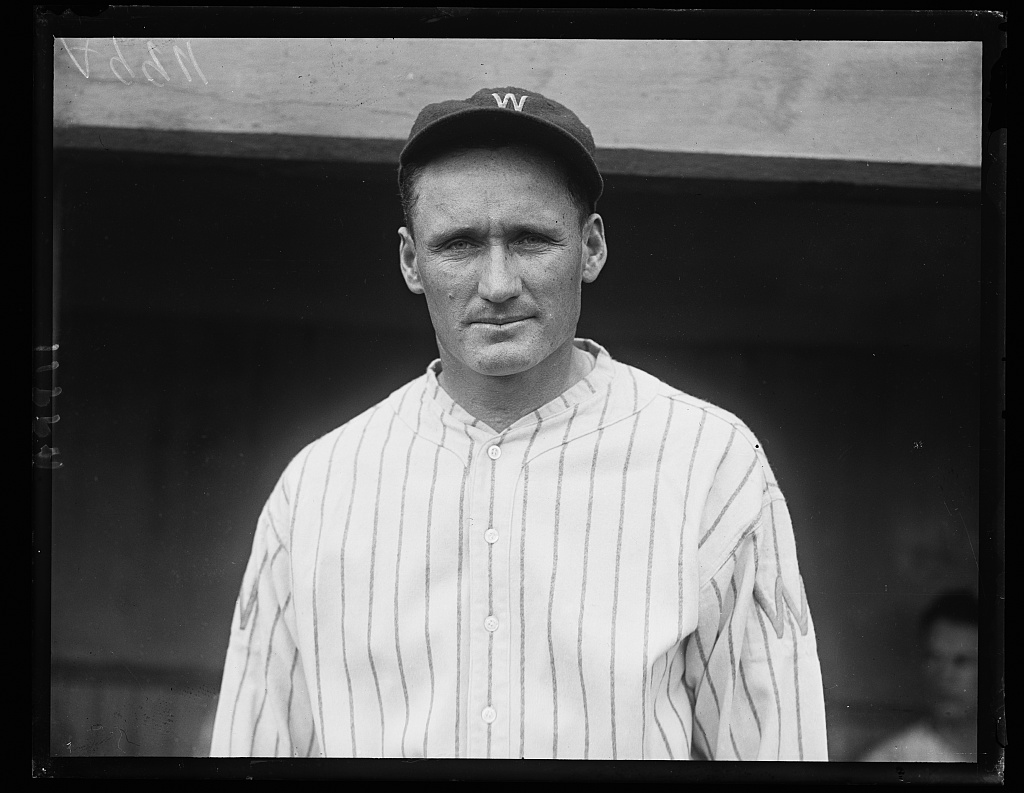
Walter was 19, six-foot-one, worked for the telephone company on the side, and threw a fastball nobody in the Idaho State League could touch. In his second season at Weiser he was 14-2 with a 0.55 ERA and had struck out 214 men in 146 innings. He had pitched 75 straight scoreless innings.
A Washington Post special report on June 30, 1907 introduced him to DC readers under the subhead “Johnson his name and he hails from the woolly west,” with Cantillon at his most quotable:
Cantillon received word from Blankenship to-day telling of his capture. Johnson has pitched seventy-five innings without allowing a run. He has a wonderful strike-out record, having struck out 166 men in the eleven games he has pitched. Blankenship is very enthusiastic about Johnson, but fails to state whether he is a right or a left handed pitcher. Cantillon says that Johnson will not join the Nationals until after July 14, when the Idaho State season closes. “If this fellow is what they say he is we won’t have to use but only two men in a game, a catcher and Johnson. He strikes out most of the men, so why have an infield and an outfield. I shall give all the boys but the catchers days off when Johnson pitches,” is the way Cantillon commented on his new find.
Then a different reporter asked Walter what he thought of it all, and the boy from the farm answered like he’d already decided.
“Do you expect to make good in the big league?” he was asked to-day. “Why, certainly,” was the reply. “If I did not think so, I would not go there. They may have better batters in the big leagues, but they also have better fields, and that gives the pitcher who is going up from a small league an even break. I will pitch up there just as I did here. Blankenship told me that he knew I would make good, and he ought to know, for he has had experience and he saw me work in several games. That has given me confidence.”
He signed a contract that included a return train ticket to Olinda, California in case it didn’t work. He kept that ticket.
The Debut, August 2, 1907
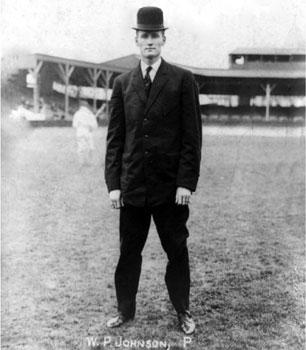
Walter was supposed to ease into the Major Leagues. Cantillon planned to let him get used to the city, the team, the catchers. Then his pitching staff fell apart and he ran out of time. The day-of Washington Post report was matter-of-fact about the change in plans.
With Graham and Hughes unable to work because of sore arms, Cantillon was forced to spring his youthful wonder on the local fans much sooner than he expected. He did intend to allow the young man to get much better acquainted before shoving on the rubber. But with his pitching staff shot to pieces he was forced to decide to work Johnson to-day. The first game will be called at 2 o’clock and the second ten minutes after the completion of the first.
Ten minutes between games of a doubleheader. That happened. So did a young Walter Johnson facing a Detroit Tigers team with Ty Cobb in the lineup that would go to the World Series. Cantillon put Walter on the rubber for the opener.
He lost 3-2 in eight innings. He struck out three.
In the bottom of the second, Cobb bunted his way on and then went first-to-third on a second bunt while second baseman Bob Nill held the ball waiting for someone to be on the bag. The Tigers added the deciding run later when Sam Crawford homered. Cobb being Cobb, even rookie nerves on a teammate were enough to keep him moving.
The Post wrote it up the next day like a man trying to keep a secret.
Walter Johnson is a real phenom. His work yesterday proves beyond question that he is the pitching find of the season. His wonderful speed, perfect control, and deceptive curve, not to speak of his spitball, was nothing short of astonishing, for no one expected a green hand from the bushes to be able to hold down a fast team like Detroit as did Johnson. For a nineteen-year-old boy, who pitched only every Sunday, and that with a rather green lot behind and in front of him, Johnson’s work yesterday exceeded all expectations. With good support and better judgement on the bases, Johnson would have won his game in a walk. The run which the visitors scored in the second inning on two bunts, Cobb going from first to third while Nill held the ball, really caused the young man’s undoing. Johnson, of course, has many things to learn. He realizes this, and, being of at least average intelligence, he will learn without much trouble. He has some rough edges, but he has more natural ability than any pitcher seen in these parts in many a moon, and it really seems that Cantillon has picked up a real live phenom.
He had many things to learn. He learned them fast.
The Big Train
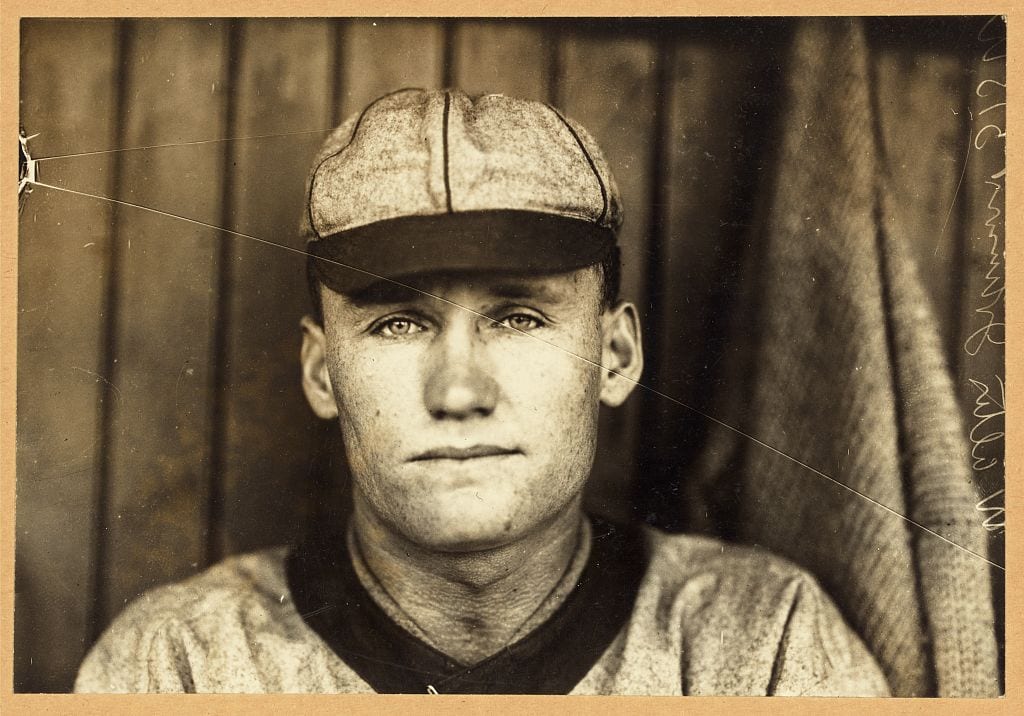
By 1911, the sporting press had given him the nickname that stuck. “The Big Train.” An express locomotive was the fastest thing most Americans could put their eyes on, and Walter’s fastball arrived like one.
He threw with a long, low, sweeping right-handed sidearm motion that looked deceptively easy until you tried to hit it. Cobb had a habit of crowding the plate, and most pitchers backed him off. He did not crowd the plate against Walter.
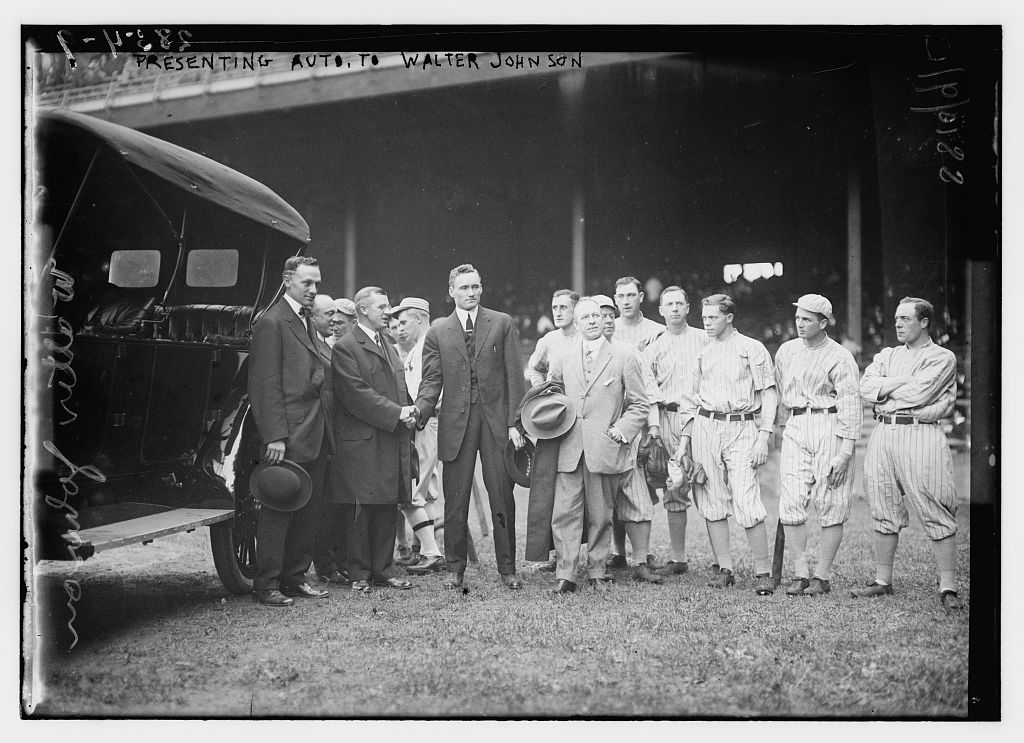
In 1913 he had the season nobody has had since. 36 wins, 7 losses. 1.14 earned run average. 243 strikeouts. 11 shutouts. He won the Chalmers Award, the era’s version of the MVP, sponsored by a car company that gave the winner a brand-new Chalmers automobile.
He’d win the AL MVP again in 1924, when the trophy became the BBWAA’s. Only two other pitchers have won league MVP twice. Carl Hubbell did it for the Giants in the 1930s. Hal Newhouser did it for Detroit during the war.
A Wedding on Monroe Street
Walter spent more of his life in DC than anywhere else. He kept an apartment in Mount Pleasant at 1843 Irving Street NW. He took his meals at the Hotel Dewey downtown, where the team made its headquarters when in town. That is where he met Hazel Lee Roberts.
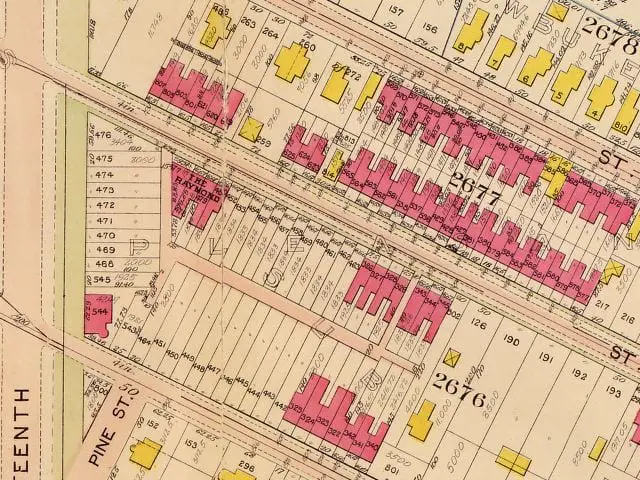
Hazel’s father was Edwin E. Roberts, At-Large Representative from Nevada and the former Mayor of Reno. The Roberts family kept an apartment at the Raymond, a brick building at 1498 Monroe Street NW on the border between Mount Pleasant and Columbia Heights. Hazel had been the captain of her high-school basketball team back in Nevada. By 1913 she and Walter were a thing.
They were married Wednesday, June 24, 1914, in her parents’ parlor at the Raymond. The Washington Post reported the news on Thursday morning, and the lede is one of the better ones the paper ever wrote.
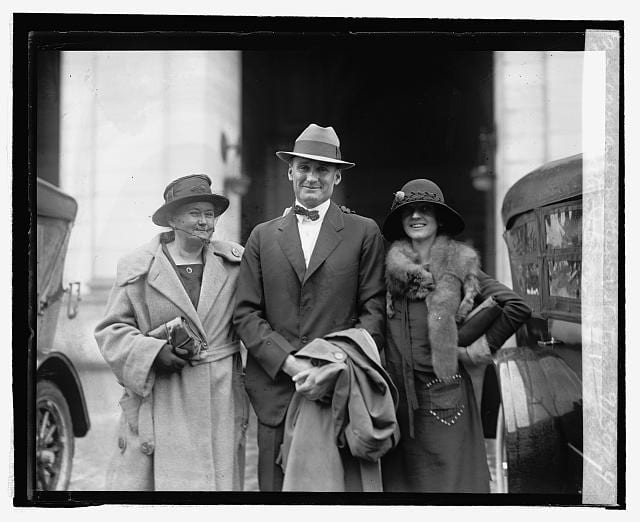
The world’s greatest pitcher, before whose resistless arm all other rivals have gone down to defeat, met his master in the Love God, and gracefully surrendered when Walter Johnson, of the Washington American League team, was quietly married last night to Miss Hazell Lee Roberts, daughter of Representative E. E. Roberts, of Nevada, at the home of the bride’s parents, the Raymond apartment house, 1498 Monroe street northwest.
The triumph of Cupid over this famous champion of the diamond was the immediate sequel of the finest exhibition of his prowess he has ever shown, but few of those who saw the masterly skill with which he won victory from the world’s champion Athletics were aware of the romantic event to follow a few hours later. From a special box at the baseball park a pair of bright eyes watched him in the culminating achievement of his career on the mound, just as they had followed his success so often since the evening, about a year ago, when he met his future bride at the Hotel Dewey were the Nationals at that time made their headquarters and the member of Congress from Nevada, with his charming family, made his home.
The tumult and the shouting which greeted his wizardlike prowess at the baseball park were in striking contrast with the exclusive and simple ceremony at the home of the bride, where the Rev. Dr. Prettyman, chaplain of the Senate, officiated. There were no bridesmaids and no best man, only members of the bride’s family witnessing the ceremony.
So earlier that same Wednesday afternoon, Walter beat the reigning world-champion Philadelphia Athletics in front of his future in-laws. Then he went home, changed clothes, walked over to his fiancée’s apartment, and stood in the parlor with the Chaplain of the Senate while the family watched. No bridesmaids. No best man. Walter’s mother and Hazel’s family were the witnesses.
The building still stands. The address 1498 Monroe doesn’t anymore. The block was renumbered when the empty lots filled in, and what was once 1498 is now 1538 Monroe Street NW. The corner of 16th and Monroe.
18 Innings on a Wednesday in May
The single best afternoon Walter Johnson ever pitched was at Griffith Stadium on Wednesday, May 15, 1918, against the defending world-champion Chicago White Sox. Lefty Williams was on the mound for Chicago. The Senators were 10-12 and would scratch all afternoon to score a run. So would Chicago.
The two pitchers traded zeroes for 17 innings. The Washington Herald the next morning opened its game story with a line a copy editor probably enjoyed writing.
Florida avenue stadium became the “land of the midnight sun” yesterday afternoon.
Stadiums in 1918 had no artificial lights. A 4:30 start time in mid-May meant a long shadow on the infield by the late innings. The article complained later that 4:30 starts are “all good and proper” until a pitcher’s duel runs into the evening and the fans go home hungry.
But nobody went home. In the bottom of the 18th, Eddie Foster popped out. Then Eddie Ainsmith singled to center.
Then Walter came up, and Walter banged one into center field too. Ainsmith took third when the Chicago center fielder, John “Shano” Collins, took a beat too long getting it back. Then Lefty Williams uncorked a wild pitch and Ainsmith scored, and the Senators had won 1-0 in 18 innings.
Walter Johnson and Eddie Ainsmith are credited with timely clouts which put the Nationals in the running. It happened in the eighteenth after Foster had popped out. Ainsmith singled to center and moved all the way to the far corner when Johnny Collins delayed a few seconds in recovering Johnson’s clout in the same territory.
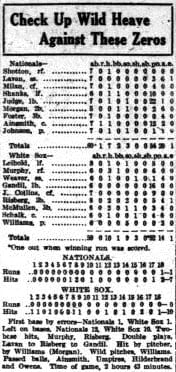
Walter’s line that afternoon: 18 innings, 10 hits, 1 walk, 9 strikeouts, 0 runs. He went 1 for 7 at the plate, and the one hit was the one in the 18th. His ERA after the game stood at 0.98. The whole thing took two hours and forty-three minutes, which is faster than most modern nine-inning games.
He pitched four of the five longest outings of his career that one season. He finished 1918 at 23-13. The Senators went 72-56 and finished four games behind the Red Sox, who would not win another World Series until 2004.
The 1924 World Series
For seventeen years Walter pitched for a team that could not get him to October. Washington had finished third in 1912 and 1913 and was a wreck most years after that. He kept winning. The team kept losing earlier than the World Series.
In 1924, at 36, he had his last great season. 23 wins, 6 losses, a 2.72 ERA, and the Senators won the American League pennant.
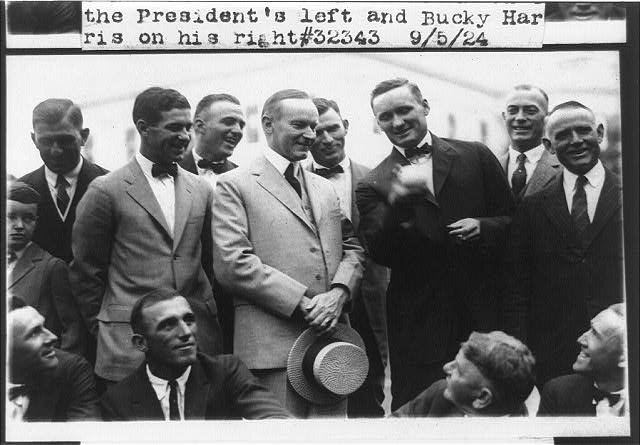
Their manager was a 27-year-old second baseman named Bucky Harris, playing and managing at the same time. The “Boy Wonder” Senators were going to the World Series for the first time in franchise history. Their opponent was the New York Giants of John McGraw and Frankie Frisch and an 18-year-old third baseman named Freddie Lindstrom.
Walter started Game 1. He lost. He started Game 5. He lost. He’d waited his whole career for this and through five games it was happening on schedule for everyone but him.
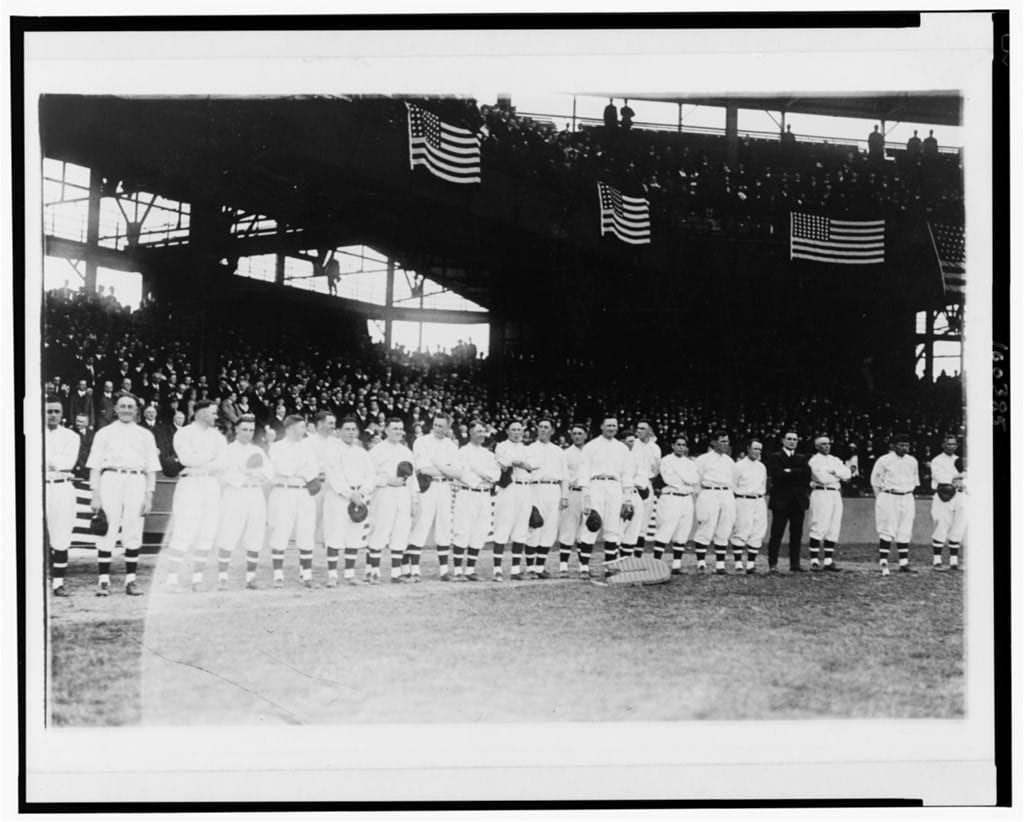
Game 7 was at Griffith Stadium, October 10, 1924. Senators down 3-1 in the bottom of the eighth. Two on for Bucky Harris. Harris hits a routine grounder to third. The ball hits a pebble in the infield dirt and bounces over Lindstrom’s head. Two runs score. Tie game.
Walter came in to pitch the ninth at age 36, after pitching nine innings two days before. He pitched four scoreless innings of relief. He gave up three hits and three walks. He struck out five. Twice McGraw chose to walk hitters intentionally just to get to somebody not named Walter Johnson.
In the bottom of the 12th, one out, runners on first and second. Earl McNeely hit a ground ball to third, just like Harris had four innings earlier. The ball hit the same pebble, or its cousin. It bounced over Lindstrom’s head. Muddy Ruel scored from second. Washington won, 4-3. The only World Series ever won by a Washington baseball team.
The Farm
Walter bought a house on eight and a half acres at 9100 Old Georgetown Road in 1925, in what was then called Alta Vista and is now central Bethesda. It had chicken coops, an orchard, a windmill, a tenant house, and his own baseball diamond. He lived there with Hazel and the kids.
He pitched two more years and quit. October 15, 1927, his unconditional release was granted at his own request. Twenty-one seasons, all of them in Washington. Nobody had done that before in DC and nobody has done it since.
In 1929 the Senators hired him to manage. He managed them through 1932 and won more than 90 games each of his last three seasons. The pennant did not come. They let him go and Cleveland hired him for 1933 through 1935. The Indians never finished higher than third. He never managed again.
Hazel
Hazel Lee Johnson, née Hazel Lee Roberts, died on Friday, August 1, 1930. She was 36 years old. The cause was heatstroke.
Their oldest son, Walter Jr., was in the hospital with two broken legs. Hazel had been sitting up by his bed and had just made a long, hot car trip back from the Johnson family’s house in Coffeyville, Kansas, where Walter’s mother lived. She came home exhausted and got sick. Two days later she was dead.
Walter had been at Griffith Stadium preparing to manage the second-place Nationals against the league-leading Philadelphia Athletics. The doctors called him from the hospital. He left the ballpark and never made it back that night. She died in the same hospital where his son lay in traction.
The Baltimore Sun ran the story on Saturday, August 2, 1930.
Washington, Aug. 1 (AP).— Mrs. Walter Johnson died today after a brief illness. Weakened by a long vigil at the bedside of a son, the wife of the veteran Washington baseball player fell ill two days ago after a heat-ridden motor trip from her husband’s former home at Coffeyville, Kan.
At first it was thought that a long rest would enable her to recover, but her condition became serious yesterday while her husband was at the baseball park preparing to lead his second-place Nationals against the league-leading Philadelphia Athletics. He was called by physicians, and remained at the hospital until the end early today.
A growing mass of flowers at the Johnson home gave evidence tonight of the wide sympathy with the man who, as “the Big Train,” became known from one end of the country to the other. Among them was a wreath from President and Mrs. Hoover. The game of the Washington team with the New York Yankees on Monday has been postponed to permit his teammates to attend the funeral.
They were married when he was at the pinnacle of his fame, 16 years ago. Mrs. Johnson was 36 years old and a daughter of former Representative E. E. Roberts, of Nevada.
She became acquainted with Walter Johnson while living at the same hotel at which the Washington baseball team stayed, and, being an athlete herself, they soon became fast friends. In her high school days she was captain of the basket-ball team which held the Navada [sic] championship two years.
Surviving are her husband and five children. Only the eldest child, Walter, Jr., who is 14, was told of her death, which occurred in the same hospital in which he was confined with two broken legs recently.
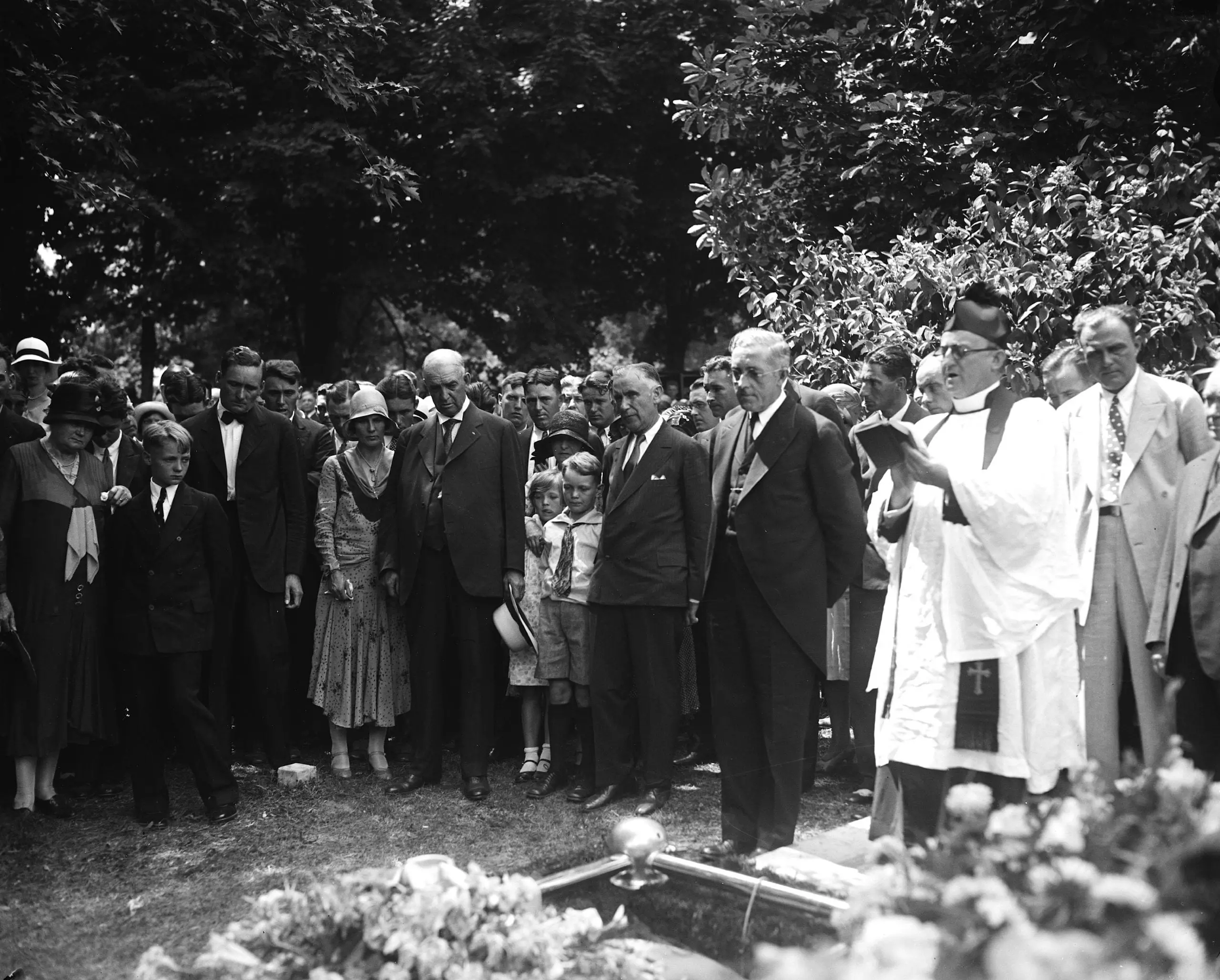
The funeral was at the Bethesda Episcopal Church. President Hoover and the First Lady sent the wreath. The Yankees-Senators game on Monday was postponed so Walter’s teammates could attend.
The funeral photograph, taken by a wire-service photographer and now in the Library of Congress, shows Walter’s mother on the left in Coffeyville mourning clothes, Walter beside her, then four of the children, and at the right Rev. Joseph E. Williams, the family’s Bethesda priest. Walter is looking at the ground.
She was 36. They had been married 16 years.
The Voice on the Radio
After his managerial career ended in 1935, Walter went home. In 1936 he sold the Bethesda farm and bought 552 acres in Germantown, 15 miles up the road. He raised dogs, hunted, hosted bird-dog field trials, and went to Senators games at Griffith Stadium when he felt like it.
In 1939 the team put him in the broadcast booth.
On Thursday, September 21, 1939, the DC radio station WJSV recorded its entire 19-hour broadcast day. The recording survives, and it is one of the most complete documents of pre-war American radio anywhere.
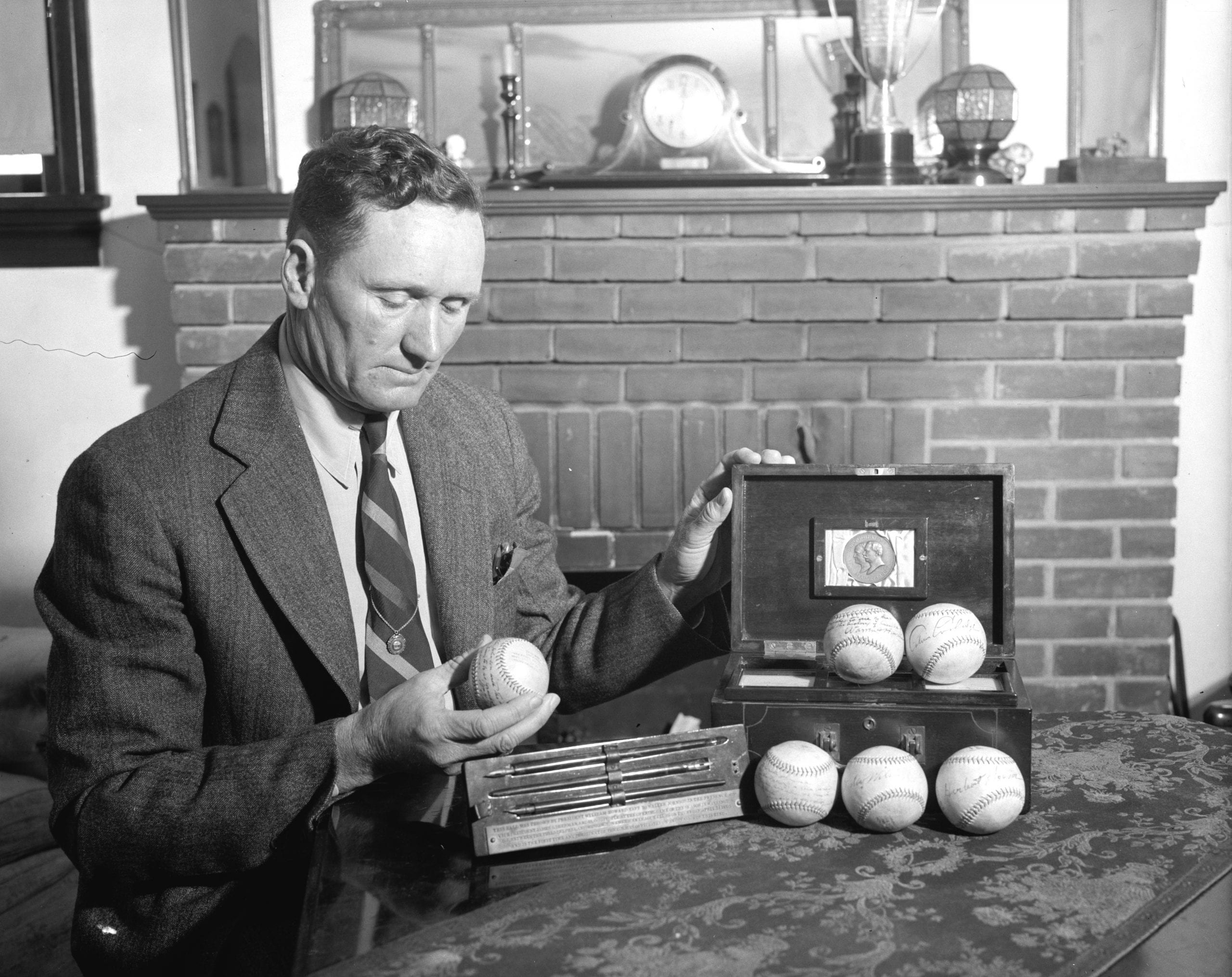
Between 4:00 PM and 5:17 PM that day, WJSV carried the Senators home game against the Cleveland Indians. Walter is in the booth. His voice picks up in the middle of the fourth inning, a slow, midwestern, slightly nasal baritone with the rhythm of someone who would rather be on the mound.
September 1939 was three weeks into the European war. Germany had invaded Poland on the first of the month. France and Britain had declared war on the third. None of that comes up. It is a baseball game on a fall afternoon in Washington. The Senators lost, 6-3. The full audio is in the Internet Archive.
The Hall of Fame and the End
In January 1936 the Baseball Writers’ Association held the first Hall of Fame election. Five players cleared the 75 percent bar. Ty Cobb led with 222 votes. Behind him: Babe Ruth at 215, Honus Wagner at 215, Christy Mathewson at 205, and Walter Johnson at 189.
The Five Immortals. Three position players from the National League, one position player from the American, and Walter from Washington. They were inducted at Cooperstown on June 12, 1939.
Walter farmed in Germantown for ten more years. In April 1946 he went to Georgetown University Hospital complaining of severe headaches. The diagnosis was a brain tumor.
The Washington Post ran updates on his condition for the next seven and a half months as he lay there. He died at 11:40 PM on Tuesday, December 10, 1946. He was 59 years old. They buried him at the Rockville Union Cemetery on Baltimore Road, next to Hazel.
His shutouts record, 110 of them, has now stood for almost a hundred years. Nobody is coming for it. Nolan Ryan finally passed his strikeout total in 1983. Only Cy Young has more wins.
The Big Train statue at Dogwood Park in Rockville is two miles from the cemetery. The high school named for him in Bethesda has been graduating students since the 1950s. The collegiate summer-league team that plays at Shirley Povich Field calls itself the Big Train.
Ryan Zimmerman is in the Nationals’ Ring of Honor. Stephen Strasburg pitched the team to the 2019 World Series. Bryce Harper hit some balls a long way before he left for Philadelphia. They were all great. None of them won 417 games.
Reblogged this on Natstradamus and commented:
A look back at the original teen baseball sensation in DC–Walter “The Big Train” Johnson.
Nice work, Ghosts!
That photo on the top of the post is awesome. I’d never seen it before.