This is a guest post by Angela Harrison Eng, expanded and updated by the GoDC editors in May 2026.
March 3, 1913, was an important day in women’s history, yet it went virtually unnoticed in the public eye. Before women gained the right to vote nationwide in 1920, the efforts of suffragettes in the United States were brazen, courageous moves that were designed to gain the attention of the public, and the president of the United States. One of these bold moves was the Women’s Suffrage March, which took place on March 3, 1913.
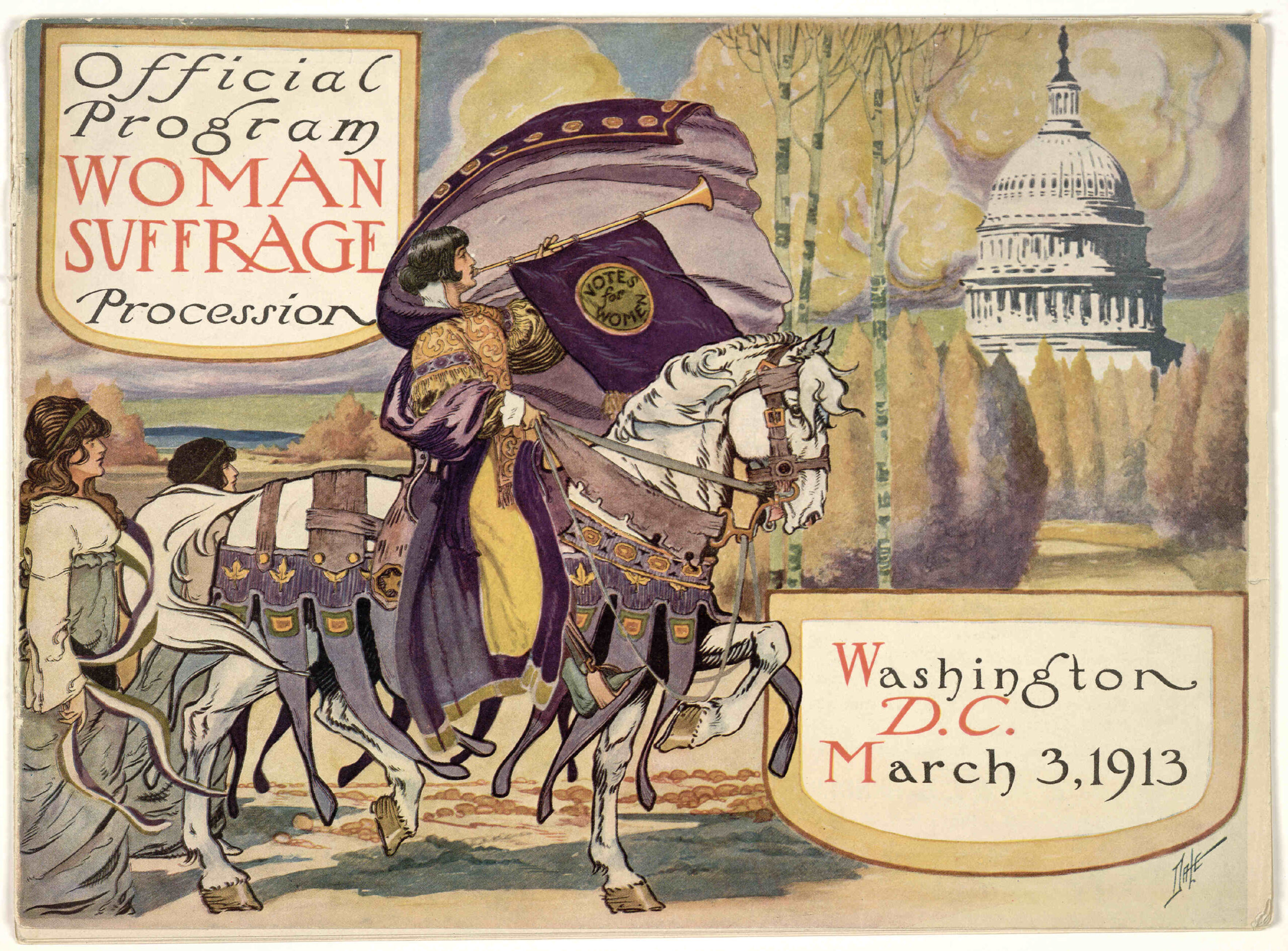
According to an article in Smithsonian Magazine, a smattering of states had given women the right to vote by spring of 1913. However, the women’s suffrage movement was stalled. A woman named Alice Paul, a leader of the National American Woman Suffrage Association, would change that. She organized a spectacular parade that would “make Washington take notice.” The date chosen for the event was March 3, 1913.
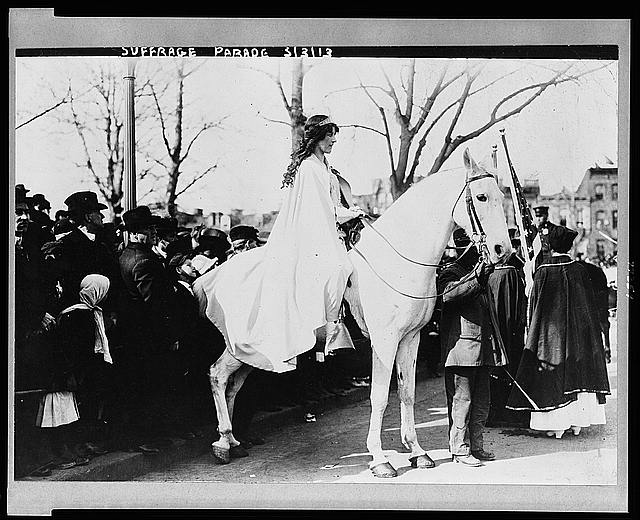
The New York Times noted it was to be a grand affair, with over 20 floats, a number of bands, cavalry squads, and chariots. Inez Milholland, a lawyer and prominent suffragist, was to be the herald of the parade and lead on horseback.
The Washington Post outlined the parade procession, noting “the route will be along Pennsylvania Avenue to 15th Street, the south of the Treasury steps to the White House ellipse and directly across the ellipse to Memorial Continental Hall.” On the Treasury steps was to be a tableau featuring German actress Hedwig Reicher as Columbia. The final rally was to take place at the Continental Hall, with Helen Keller as the principal speaker.
Paul deliberately chose the date of March 3rd because the next day was Woodrow Wilson’s inauguration. The goal, as stated in a January 1913 edition of The Atlanta Constitution, was to ensure “no man would be safe from suffragettes” and that “not a single man who attends the inauguration will be allowed to depart without having heard at least one suffrage argument.”
The city filled up before the parade
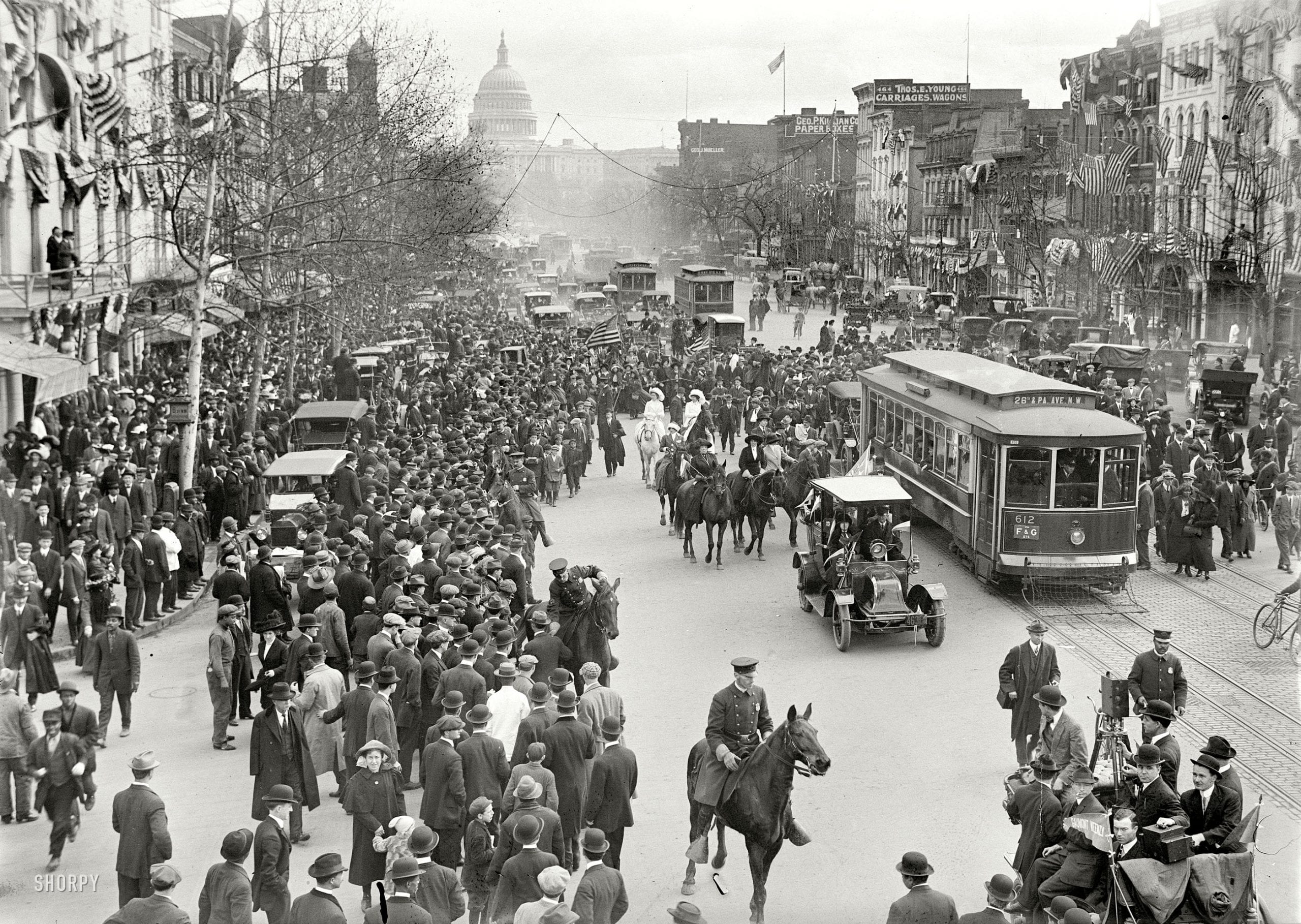
In the weeks beforehand, suffragists poured into Washington. One band of “hikers” walked the whole way from New York, arriving on Pennsylvania Avenue in late February (the scene at the top of this post).
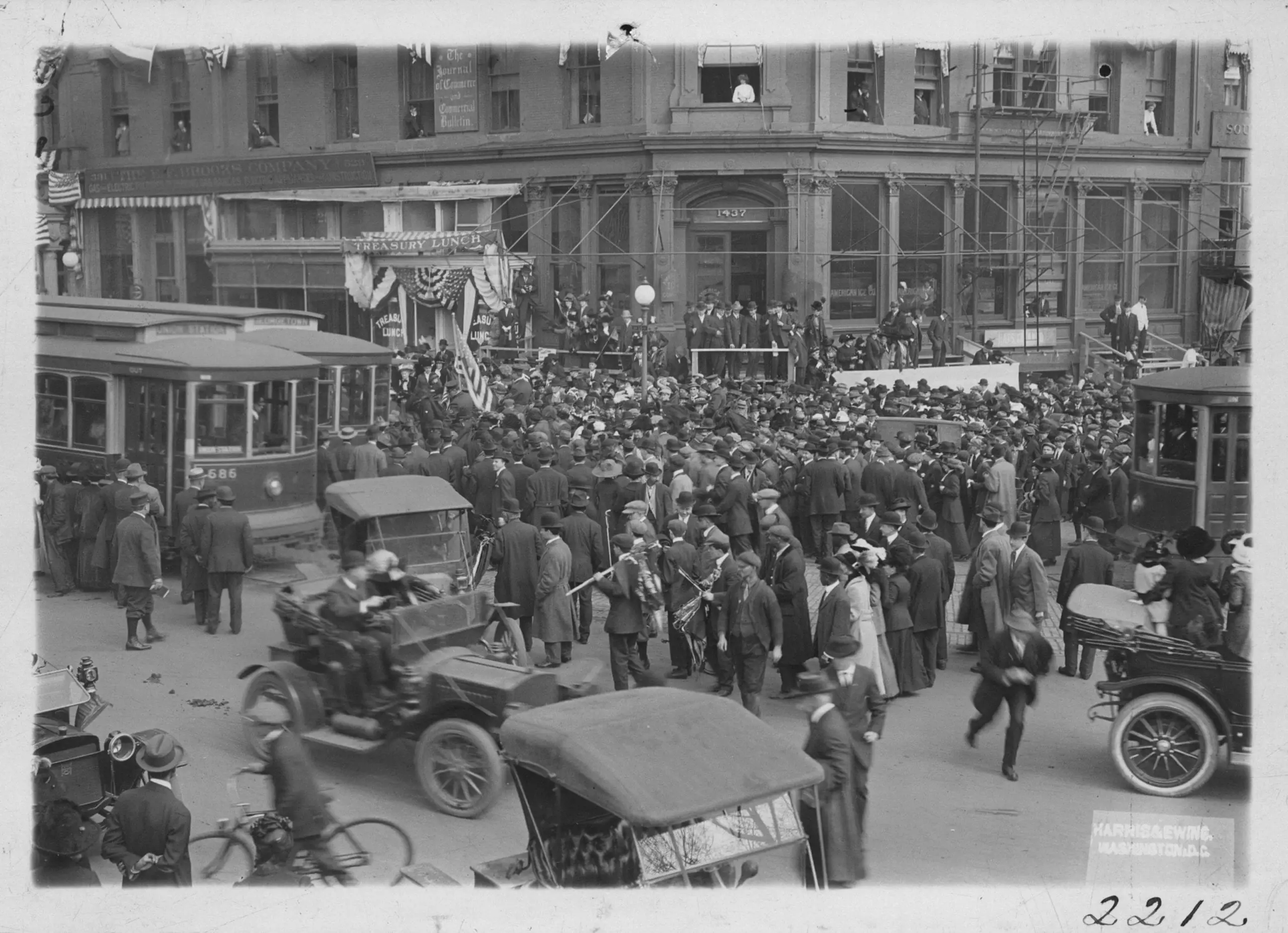
They held open-air meetings demanding that Congress pass a federal amendment, including one at the corner of Pennsylvania Avenue and 15th Street, where the Washington Hotel then stood.
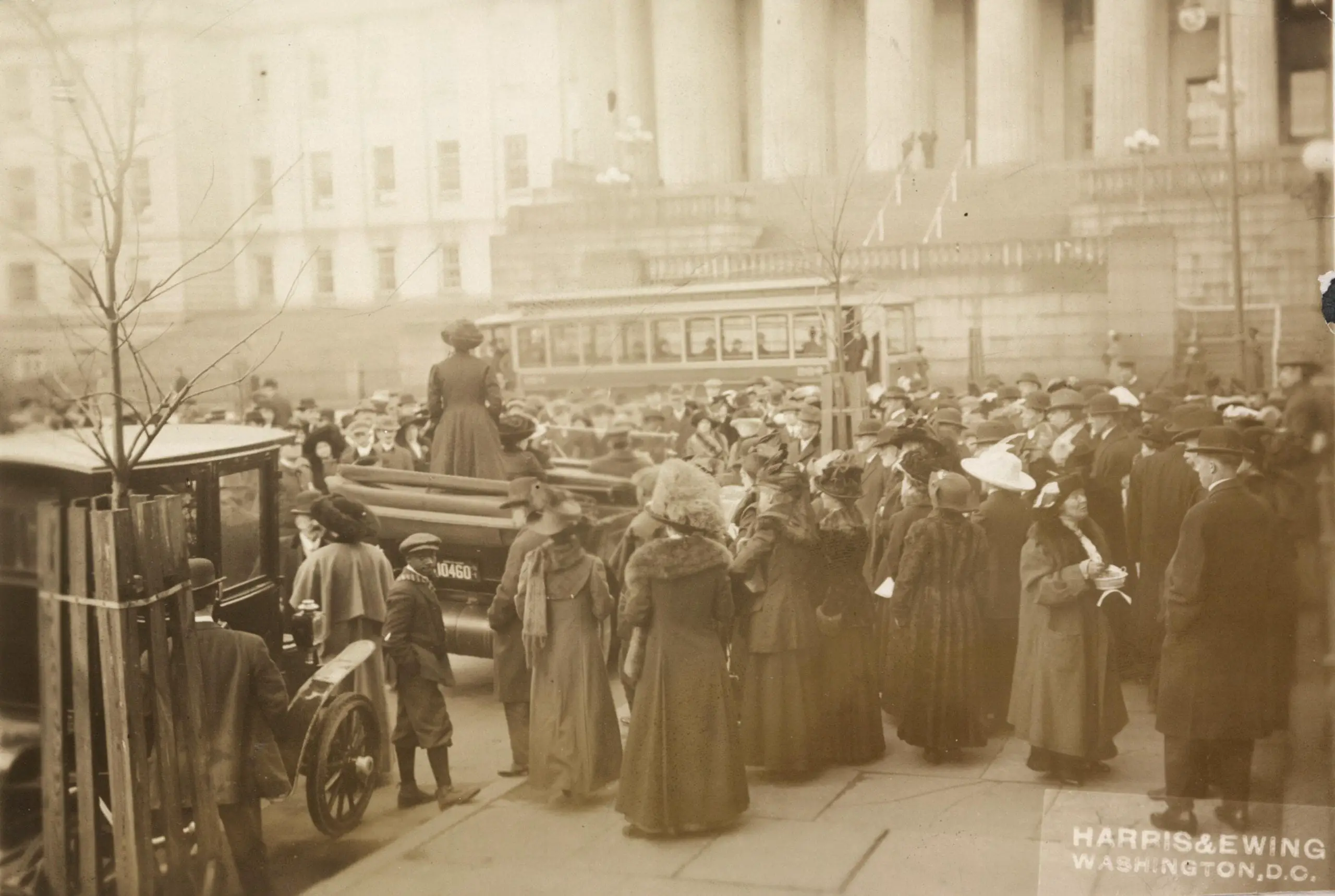
March 3, 1913: marching into a mob
Interesting sidenote: A Washington Post article from late February noted some rumors, among them that “Pretty girls are being offered $3 to march in the suffrage procession March 3.” The reason was because “suffragists want to give the impression that many pretty girls are in favor of suffrage.” The article went on to say antisuffragists were offering girls $3 to not march in the parade. Both suffragists and antisuffragists, however, called these rumors unfounded and total hearsay.
This article is not the first instance in which women’s looks were mentioned. One article from the Post refers to Inez Milholland as “the beautiful society girl of New York,” who “gave complete support to the claim of suffragists that some of the most beautiful women in the country are active in the equal rights cause.”
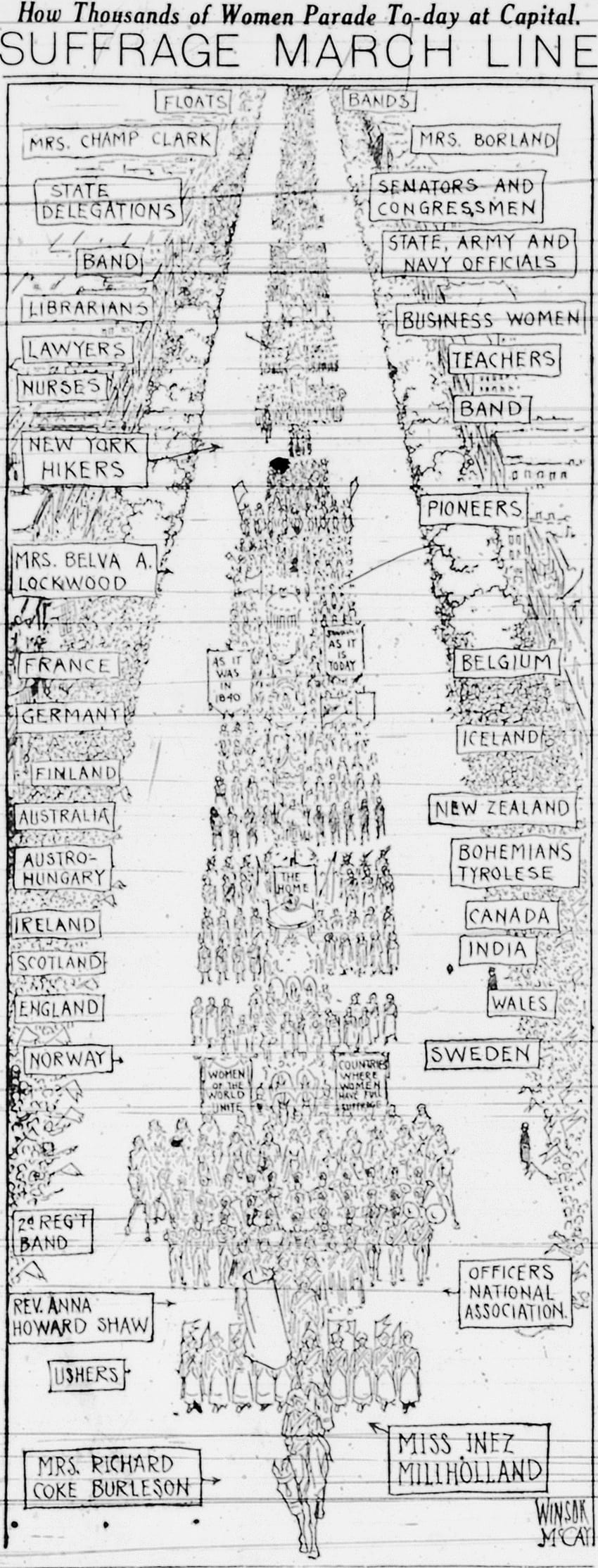
Newspapers printed diagrams of the line of march, organized by country, state, occupation, and organization, with Milholland at the front.
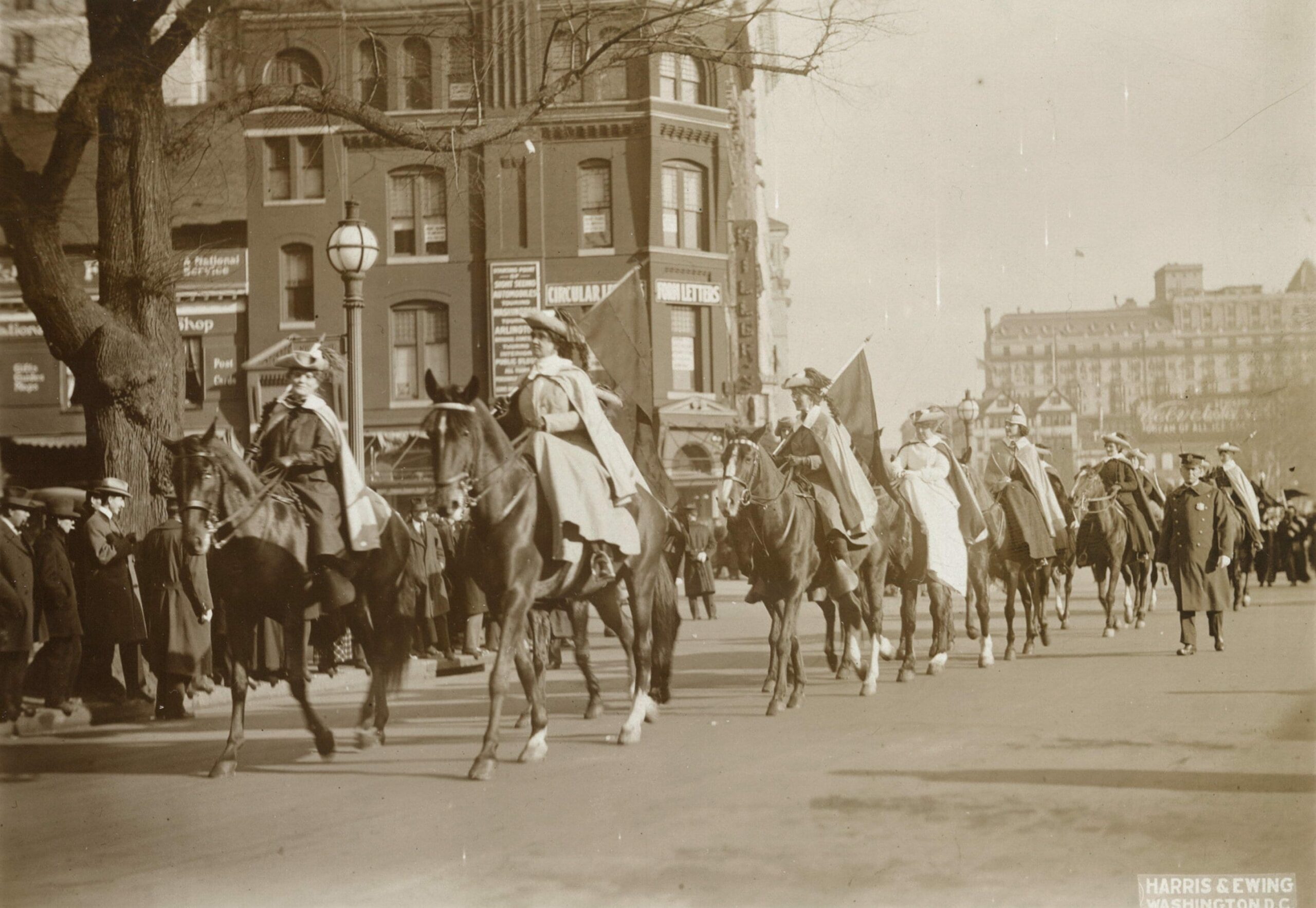
The day of the parade showed many women, pretty or not, believed in the cause. Most sources put the total of marchers around 5,000. However, the procession was fraught with troubles from the start. Many protesters showed up and attempted to disrupt the parade. The result, according to the Atlanta Constitution, was that these 5,000 or more women “practically fought their way foot by foot up Pennsylvania Avenue, through a surging mob that completely defied the Washington police, swamped the marchers, and broke their procession into little companies” and “they could only finish when Calvary troops from Ft. Meyer were called in to control the crowds.”
Apparently, it took an hour to move 10 blocks, and the marchers had to endure a number of insults from the crowds along the way. Inez Milholland was reported to have ridden down a mob blocking the parade route on her horse, demanding the marchers be allowed to continue.
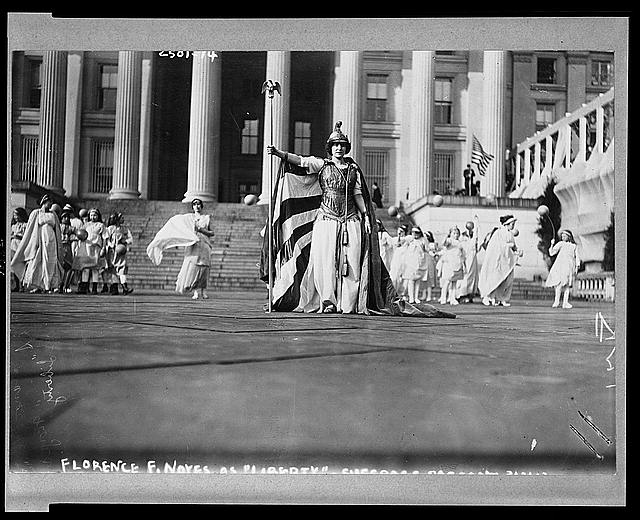
The tableau went on as planned, and the rally at the end of the day ended up more of a complaint session than a rally. Helen Keller was said to be “so exhausted and unnerved by the experience that she did not speak as planned.” Nevertheless, Alice Paul still considered the march a success.
After the parade: hearings and headlines
An inquiry was launched and congressional hearings were held over the treatment of the women in the parade. The District’s police superintendent was called before the Senate and blamed for the breakdown. He was not removed at the time, but the episode dogged him until he left the force in 1915. The hearings thrust women’s suffrage into the national spotlight, but it would take another seven years and many more protests before women’s right to vote became the law of the land.
An unlikely convert: Walter Johnson
The cause won converts in unlikely places. In July 1914, the Washington Post caught up with Walter Johnson, the Senators’ great pitcher, who had a confession to make.
“My wife is a suffragette and she has converted me,” said Walter Johnson, the Washington pitcher, with the quarter of a million dollar arm, today as the Nationals departed.
“Mrs. Johnson is Nevada girl and has all the open-minded spirit of the West. She marched in the suffrage parade in Washington not too long ago, and I was proud of her, too. I believe firmly in the ballot for women.”
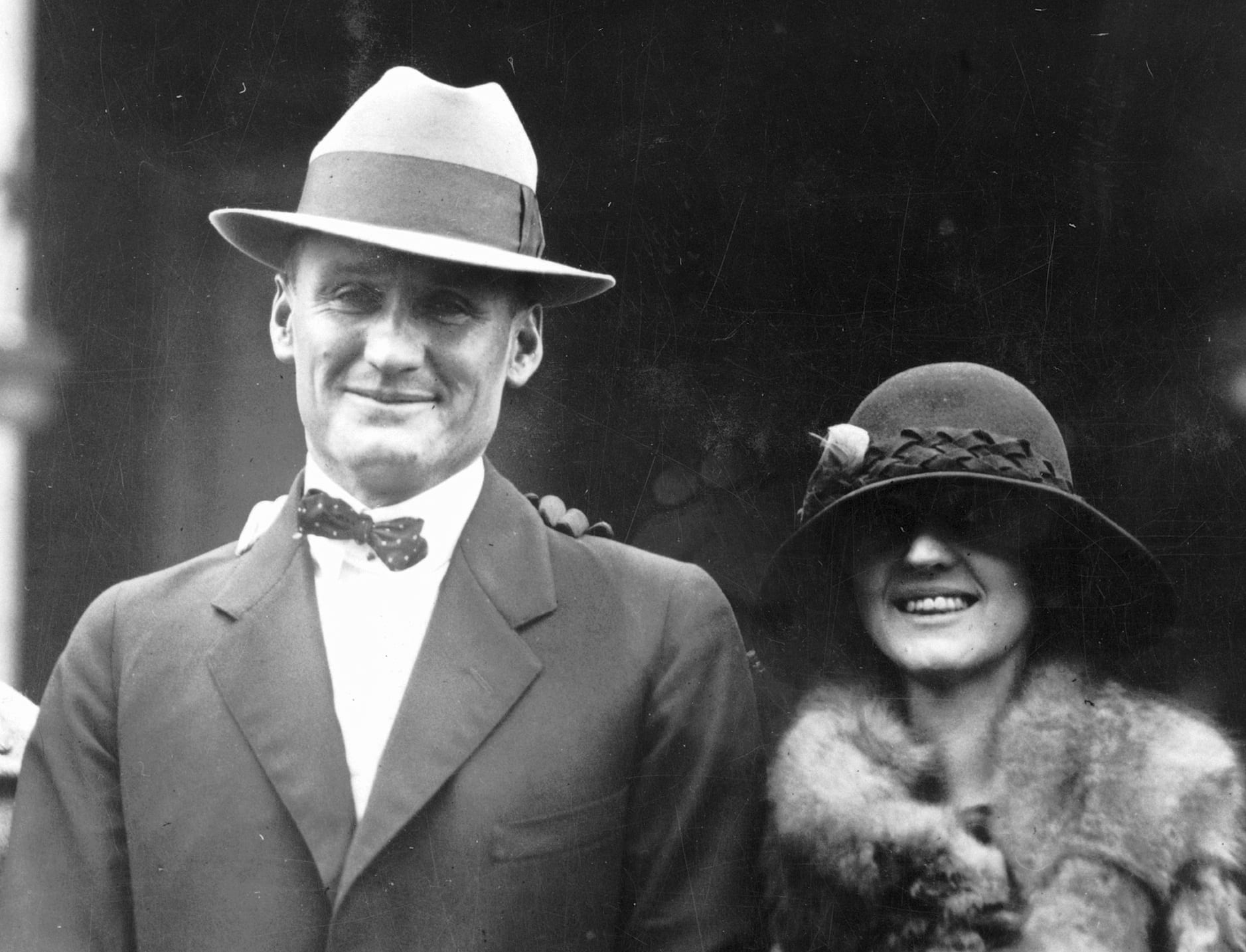
His wife, Hazel, had marched for the vote in Washington. We’ve written separately about Walter and Hazel’s wedding in a Columbia Heights apartment.
The marching didn’t stop
Those “many more protests” came fast. Suffragists paraded in Washington again in 1914.
The Silent Sentinels at the White House
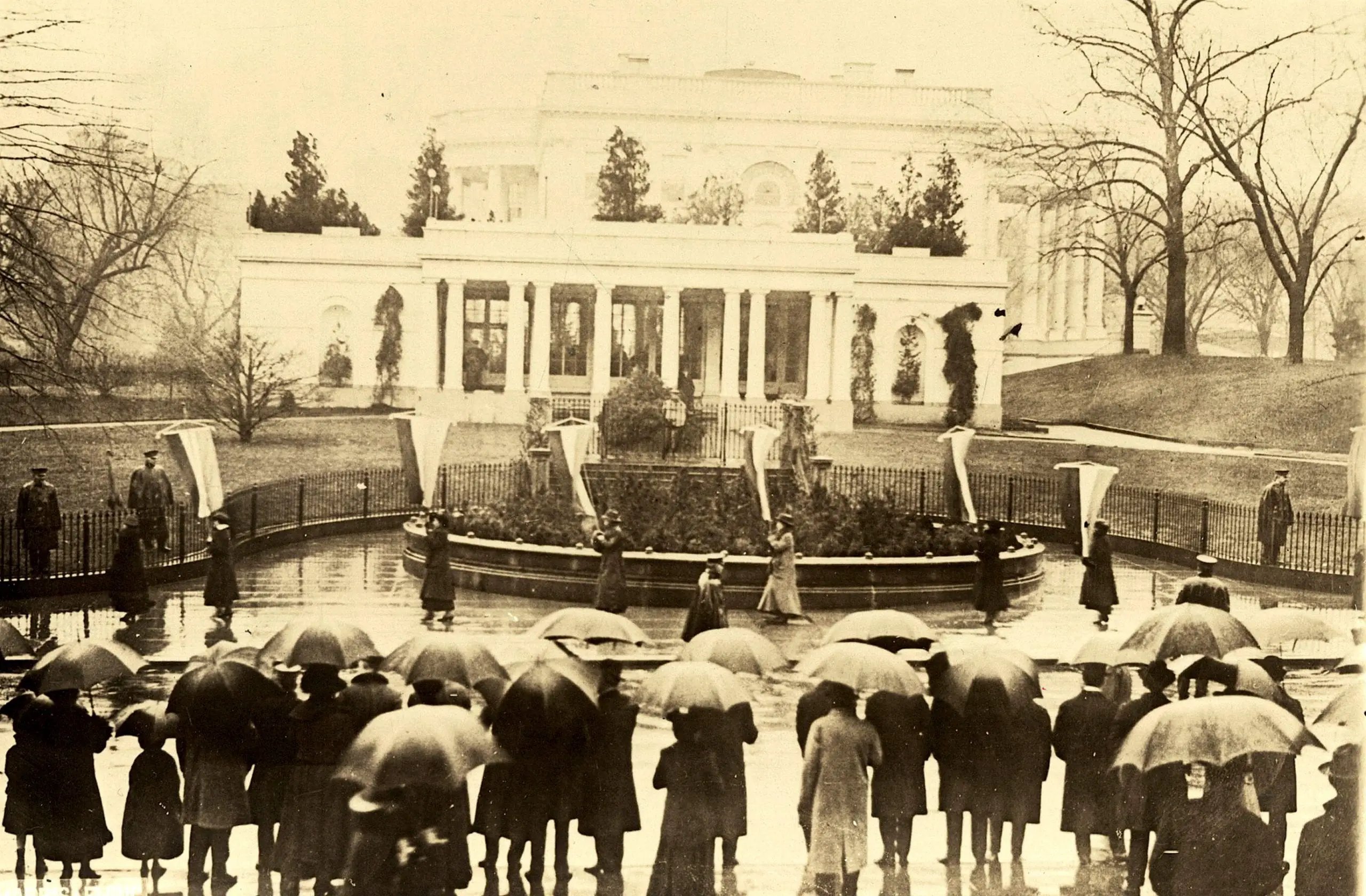
By 1917 the fight had moved to Woodrow Wilson’s own gates. On January 10, 1917, the National Woman’s Party began stationing “Silent Sentinels” outside the White House, the first group ever to picket the building.
Their largest demonstration came on March 4, 1917, the day of Wilson’s second inauguration, when about a thousand women circled the White House in the rain.
The cost: Occoquan
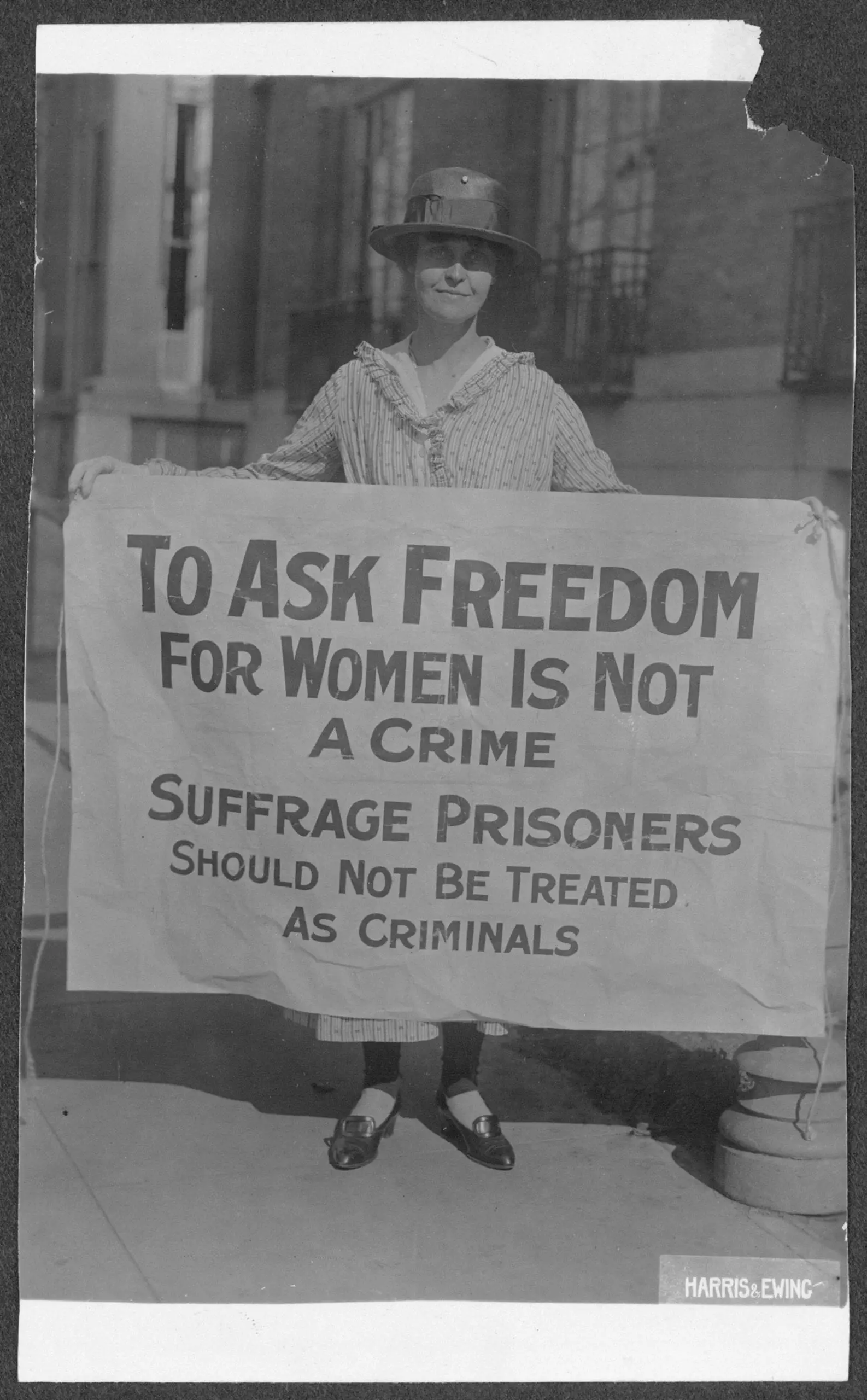
The picketing carried a price. Mary Winsor of Pennsylvania, president of the Pennsylvania Limited Suffrage League, was arrested in September 1917 and sentenced to 60 days at the Occoquan Workhouse in Virginia, part of it in solitary confinement.
The vote, and the house that still stands
The 19th Amendment was finally ratified in August 1920, seven years after the marchers fought their way up Pennsylvania Avenue.
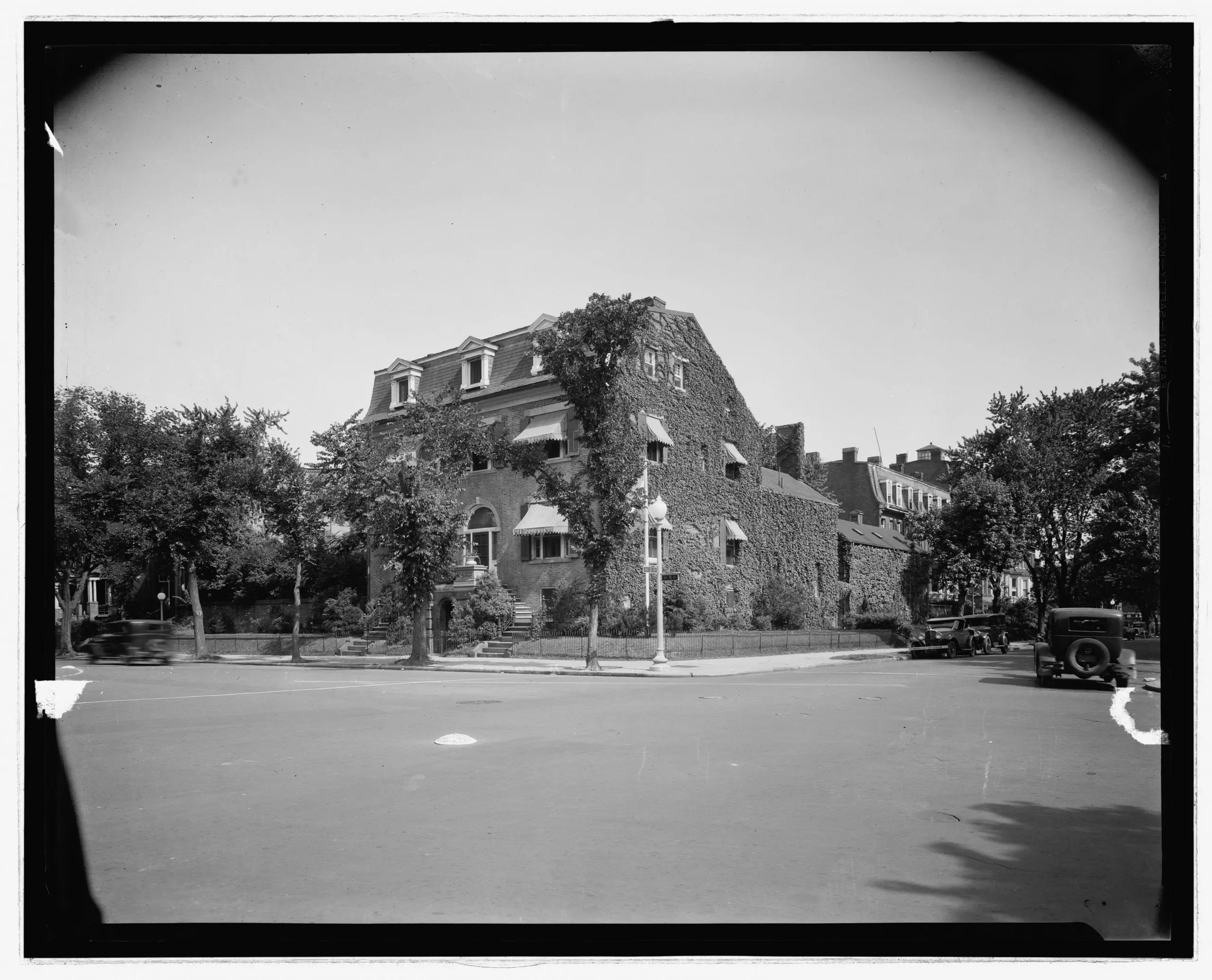
The National Woman’s Party kept at it. In 1929 it bought a brick house on Capitol Hill at 144 Constitution Avenue NE, the old Sewall-Belmont House, and made it the party’s headquarters. From there Alice Paul ran the next fight, the decades-long push for an Equal Rights Amendment.
The house is still there. In 2016 it became the Belmont-Paul Women’s Equality National Monument, run by the National Park Service. You can walk through it today.