On the morning of February 11, 1964, the Congressman, a Pennsylvania Railroad express, pulled out of New York’s Penn Station with a private sleeper carriage hitched to the back. Inside were John Lennon, Paul McCartney, George Harrison, and Ringo Starr. An East Coast snowstorm had grounded every flight south, and Brian Epstein had arranged the train at the last minute so the Beatles could make their first American concert that night.
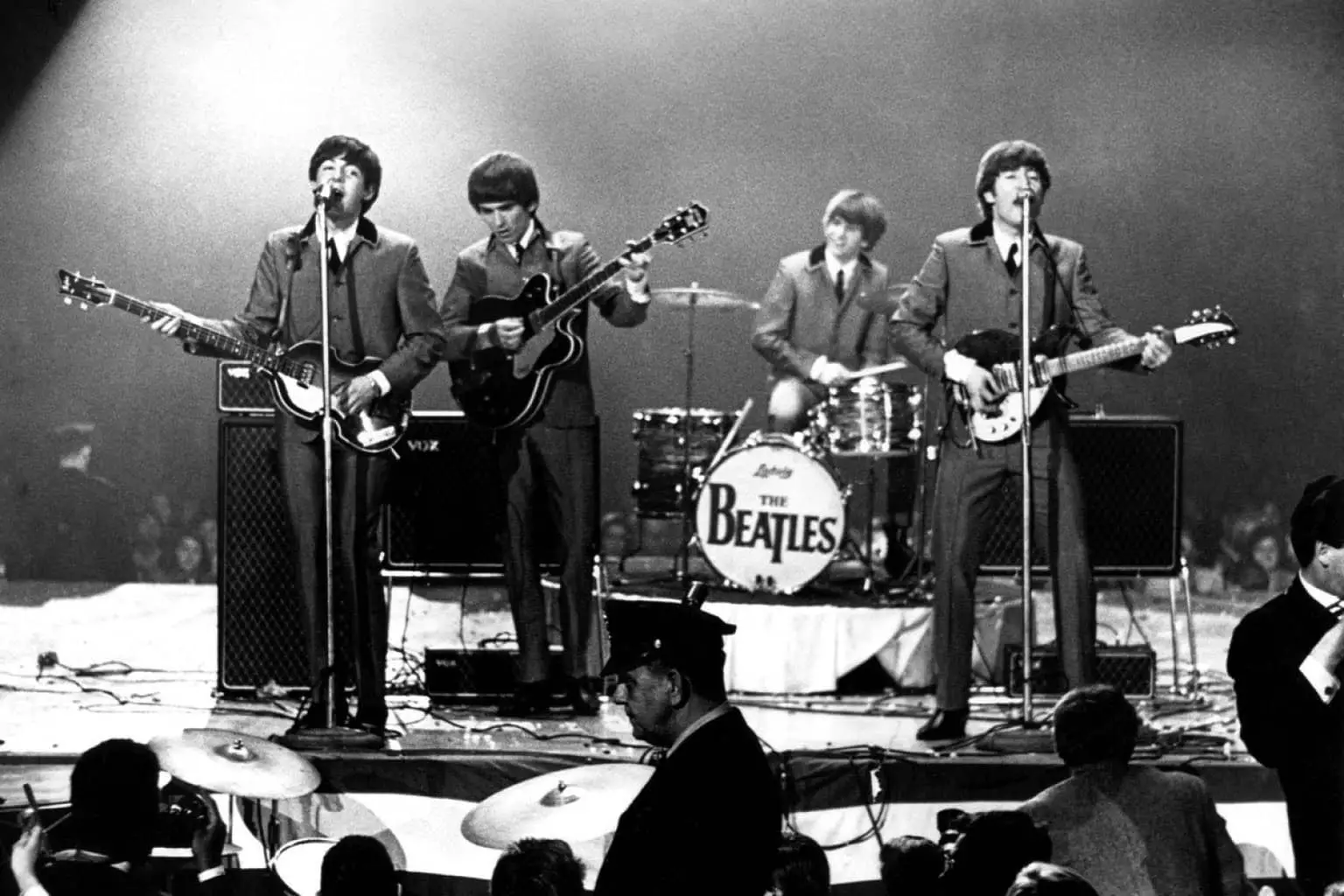
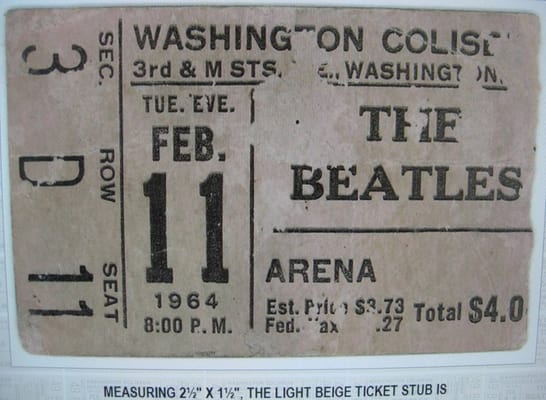
The venue was Washington Coliseum, a barrel-roofed concrete arena at 3rd and M Streets NE. About 8,092 people crammed inside to watch. It was the first ticketed live show the Beatles ever played in the United States.
Why DC got the first show
The Beatles had landed at JFK four days earlier, on February 7, to a mob of about 3,000 screaming fans. On Sunday the 9th they played the Ed Sullivan Show in front of a studio audience of 728 and a broadcast audience later estimated at 73 million, still one of the largest live TV audiences in American history.
Sullivan was television. The Coliseum was the first time they went face to face with an American crowd.
Washington got the honor for a straightforward reason. In December 1963, WWDC disc jockey Carroll James had aired “I Want to Hold Your Hand” from an import copy his flight attendant friend had brought back from England, weeks before Capitol Records officially released the song in the US. Requests exploded, other stations picked it up, and by January the record was already climbing the American charts. When Epstein was picking a first American concert city, DC was already primed.
Union Station, eight inches of snow
The train pulled into Union Station in the afternoon. Roughly 2,000 fans were waiting, most of them teenage girls who had ducked school. Eight inches of snow were on the ground. The Beatles were hustled through the concourse and into cars, then run over to WWDC for a quick studio visit to thank Carroll James in person.
Their base for the trip was the Shoreham Hotel on Calvert Street, where the band took over the entire seventh floor to keep fans away. One family already booked on the floor refused to move. Hotel staff shut off the hot water, heat, and electricity to their room, told them it was a “power failure,” and finally got them relocated.
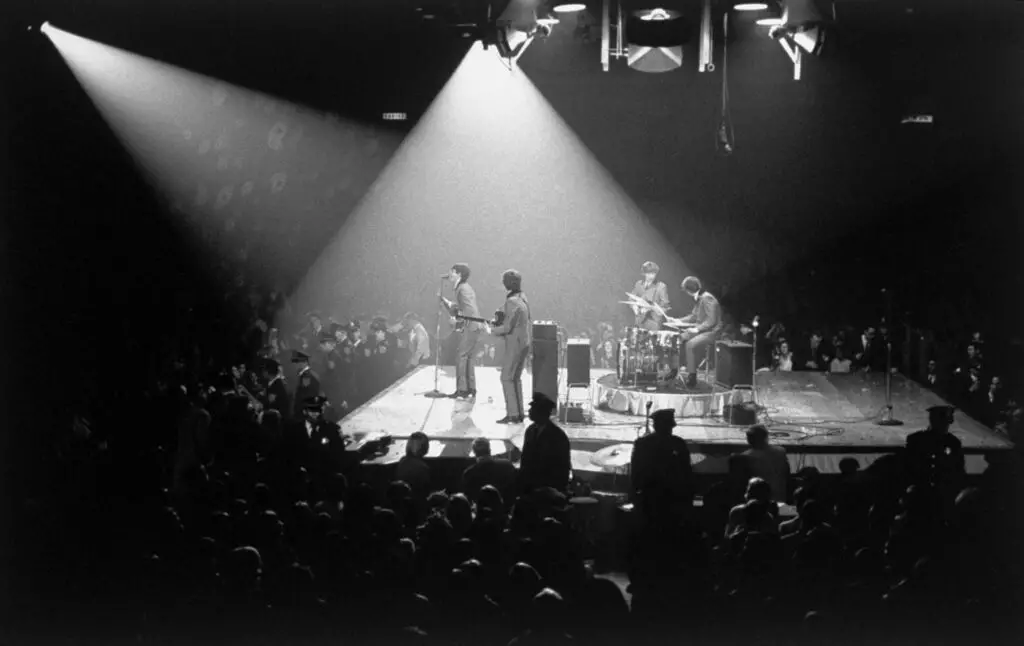
The Coliseum was set up as a boxing arena, which is what it usually was. The stage was in the middle of the floor. Tickets ran from $2 to $4. Also on the original bill were Tommy Roe, The Chiffons, and The Caravelles. The snowstorm the day before stranded some of them, and Jay and the Americans and the Righteous Brothers were pressed into service as fill-in openers.
Twelve songs, in the round
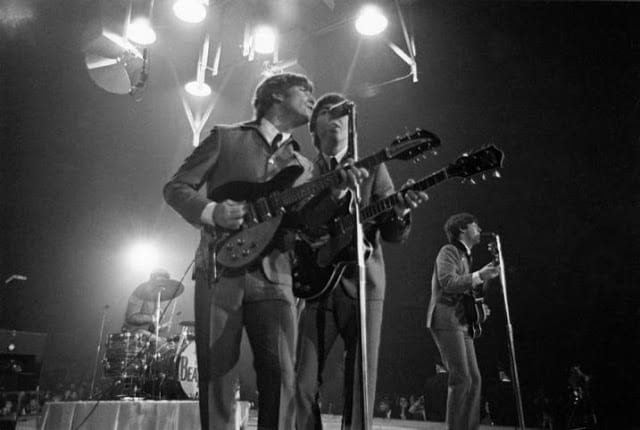
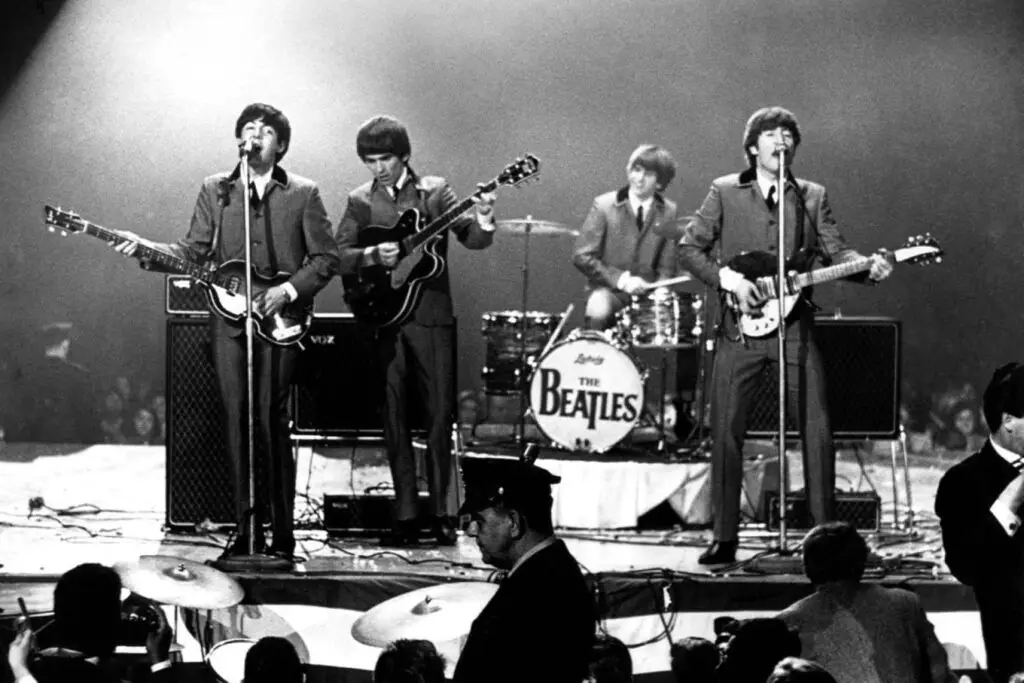
The Beatles took the stage at 8:31 PM. Because the stage was in the center of the arena, one section of the crowd was always looking at their backs. Their road manager Mal Evans had to hop up onto the drum riser between songs and spin Ringo Starr’s kit 180 degrees so the fans behind them got a turn. Then he did it again. And again.
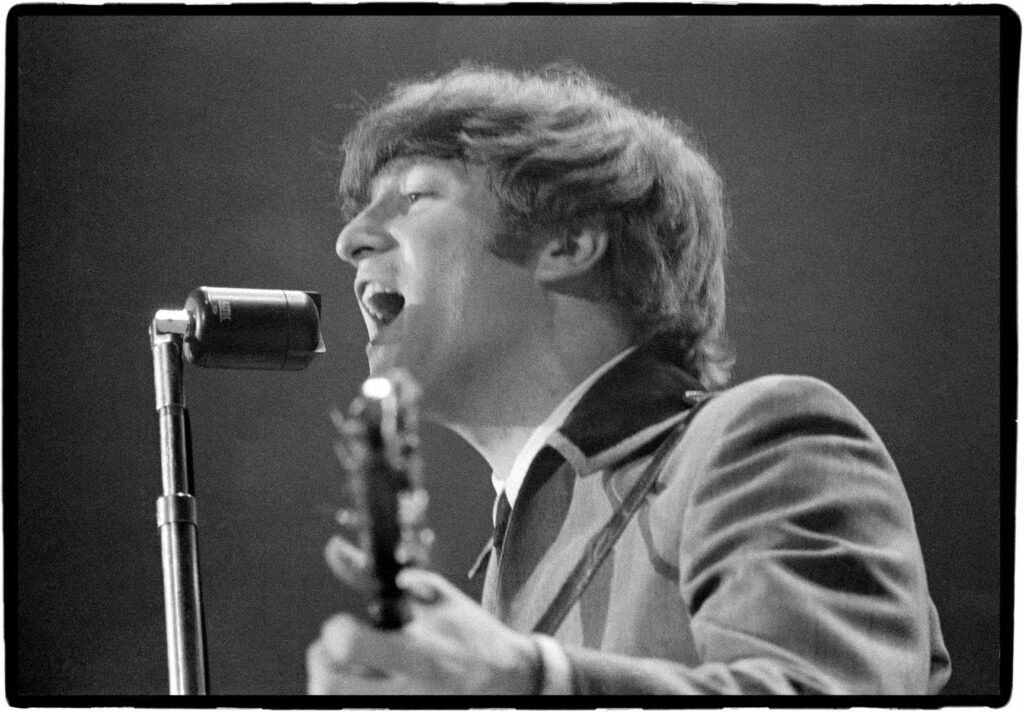
The set was 12 songs, played over about 34 minutes: “Roll Over Beethoven,” “From Me to You,” “I Saw Her Standing There,” “This Boy,” “All My Loving,” “I Wanna Be Your Man,” “Please Please Me,” “Till There Was You,” “She Loves You,” “I Want to Hold Your Hand,” “Twist and Shout,” and “Long Tall Sally.”
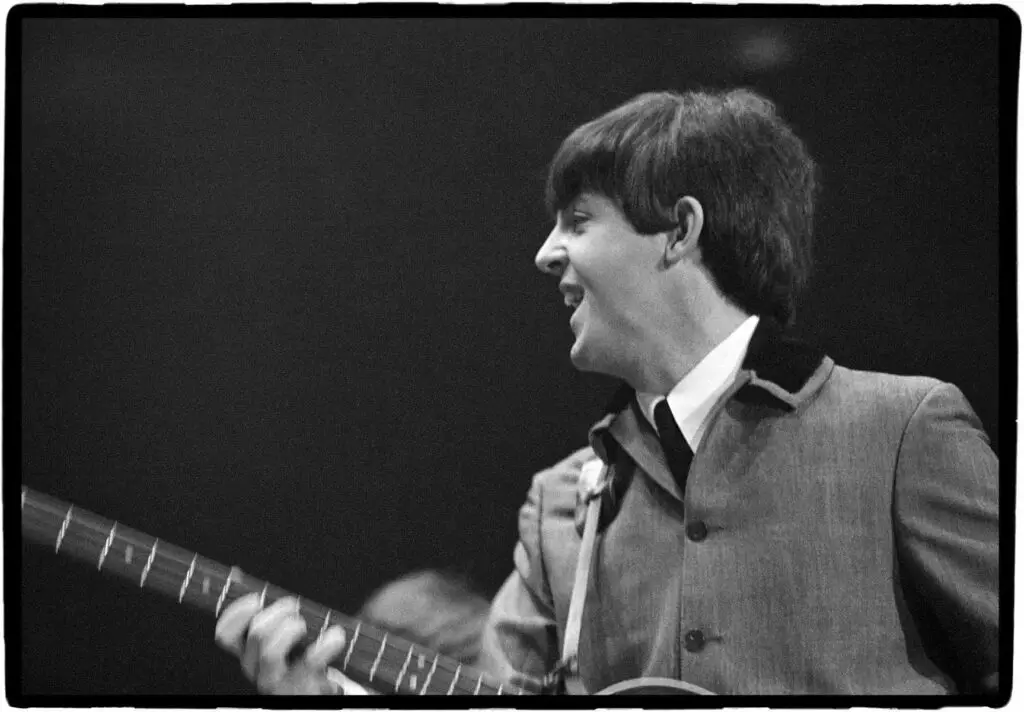
George Harrison’s microphone was dead during the opening number. The replacement they handed him was also broken. The 362 police officers assigned to the show could not do much about the noise, which is now the part everyone remembers. One officer was photographed with rifle cartridges stuffed into his ears as improvised earplugs.
And then came the jelly beans. A few weeks earlier, a British interviewer had asked George what he liked, and he’d said jelly babies, the soft English candy. American reporters translated that to jelly beans, the hard American ones. From every direction of the arena, the crowd pelted the band with the things for the whole set.
They don’t have soft jelly babies there; they have hard jelly beans. To make matters worse, we were on a circular stage, so they hit us from all sides. Imagine waves of rock-hard little bullets raining down on you from the sky.
George Harrison, quoted in Keith Badman, The Beatles Off The Record
What the Post reported the next morning
The Washington Post‘s Jerry Doolittle covered the arrival and the concert under the headline “Beatles Arrive, Teen-Agers Shriek, Police Do Their Duty, And That’s That.” The piece is doing the thing DC newspaper writers of that era did best, which is treat a national frenzy with a straight face.
And so, John Lennon, George Harrison, Paul McCartney and Ringo Starr stepped from the train… For hours, teenagers had been streaming into Union Station, many of them from National Airport, where the Beatles, before the show, had been scheduled to arrive. At the Coliseum, the Beatles handled a press conference, during which they conducted themselves with an aplomb that bordered on total relaxation. Two of the Beatles sparred with each other before the questioning started. A third snapped his fingers. What did the Beatles think of President Johnson? “What do you think of the President?” Ringo Starr asked a man adjusting the microphone. “He’s a great guy,” the man said. “He’s a great guy,” Ringo Starr said.
Jerry Doolittle, Washington Post, February 12, 1964
The British Embassy after-party they walked out of
After the show the band was driven to the British Embassy on Massachusetts Avenue for a reception hosted by Lady Ormsby-Gore. It was billed as a charity dance for the National Society for the Prevention of Cruelty to Children. The Beatles were expected to sign copies of Meet the Beatles! and mingle politely with the diplomatic corps.
One of the guests came up behind Ringo Starr and cut off a lock of his hair with a pair of scissors. Lennon lost it. The band walked out on the ambassador in the middle of the party. They told Epstein never to book them into anything like that again, and they mostly stuck to it for the rest of their touring career.
The next day they took a train back to New York and played two half-hour sets at Carnegie Hall. Their whole first US tour lasted eight days.
The tape that got seen in movie theaters a month later
Brian Epstein had granted CBS the right to film the concert. National General Corporation packaged the footage together with a Beatles set from a Miami Beach date a week later, and screened the double bill in about 700 American movie theaters on March 14 and 15, 1964. That was the closest most American teenagers ever got to seeing the Beatles live in 1964.
What happened to the Coliseum
The Coliseum kept booking rock shows for a couple more years. The Rolling Stones played there in 1965 and 1966, and one wild afternoon in June 1966 a Chevy Chase teenager stole Brian Jones’s custom electric dulcimer out of the equipment van. But once the Capital Centre opened in Landover in 1973 and the Kennedy Center took over highbrow bookings, the old barn on 3rd Street had no niche left.
By the late 1980s the building was a trash-transfer station. Then a parking lot. For most of the 2000s and early 2010s it sat neglected on the edge of what was becoming NoMa, its curved concrete roof still visible from the Red Line and easy to mistake for an abandoned warehouse.
In 2013 Douglas Development bought the site and hired Antunovich Associates to redevelop it as office and retail space. On October 21, 2016, REI opened its DC flagship inside the shell, keeping the barrel roof, the exposed trusses, and much of the raw concrete. The store is now the anchor of a walkable NoMa block a few minutes from Union Station.
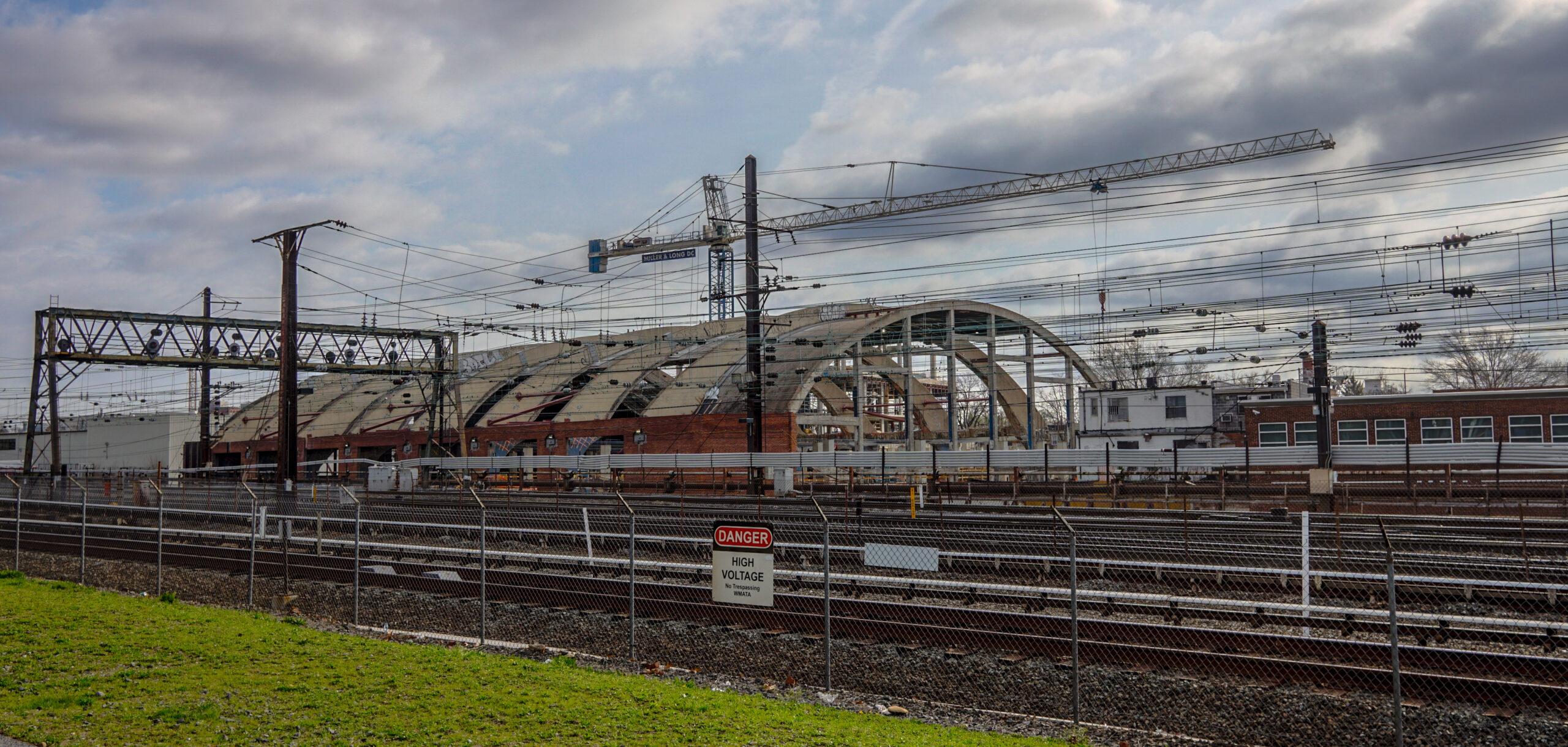
If you’re inside REI shopping for a tent, you’re standing where 8,092 people once got pelted with jelly beans while Ringo’s drum kit rotated on a plywood riser and the loudest sound in America was a room full of teenage girls.
For more photos from that night, see our follow-up gallery of Beatles-at-Uline images.
The Beatles doing a cover of a Chuck Berry song – awesome!
THANK YOU SO MUCH FOR SHARING AND TAKING THE TIME TO DO THE RESEARCH…IT BRINGS BACK MANY MEMORIES OF THE PAST THAT NEEDS TO STAY REFRESH FOR GENERATIONS TO COME….