
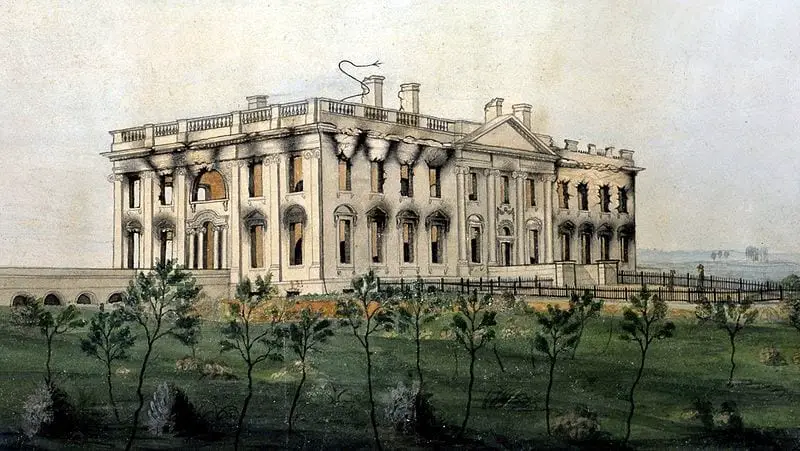
In October 1814, the U.S. House came within nine votes of moving the capital out of Washington. The British had burned the place that August. A New York congressman put a bill on the floor to relocate the seat of government, at least temporarily, and the final tally was 83 to 74 against. Nine votes. That is the version of the burning of Washington you don’t get in the eighth-grade field-trip narrative.
The fire is the trigger. The story is the vote.
What was left after August 24
On August 24, 1814, after winning at Bladensburg, British troops under Major General Robert Ross marched into Washington and torched the public buildings. The Capitol burned. The President’s House (nobody was calling it the White House yet) burned. The Treasury burned. A storm rolled through the next afternoon and quenched what was left.
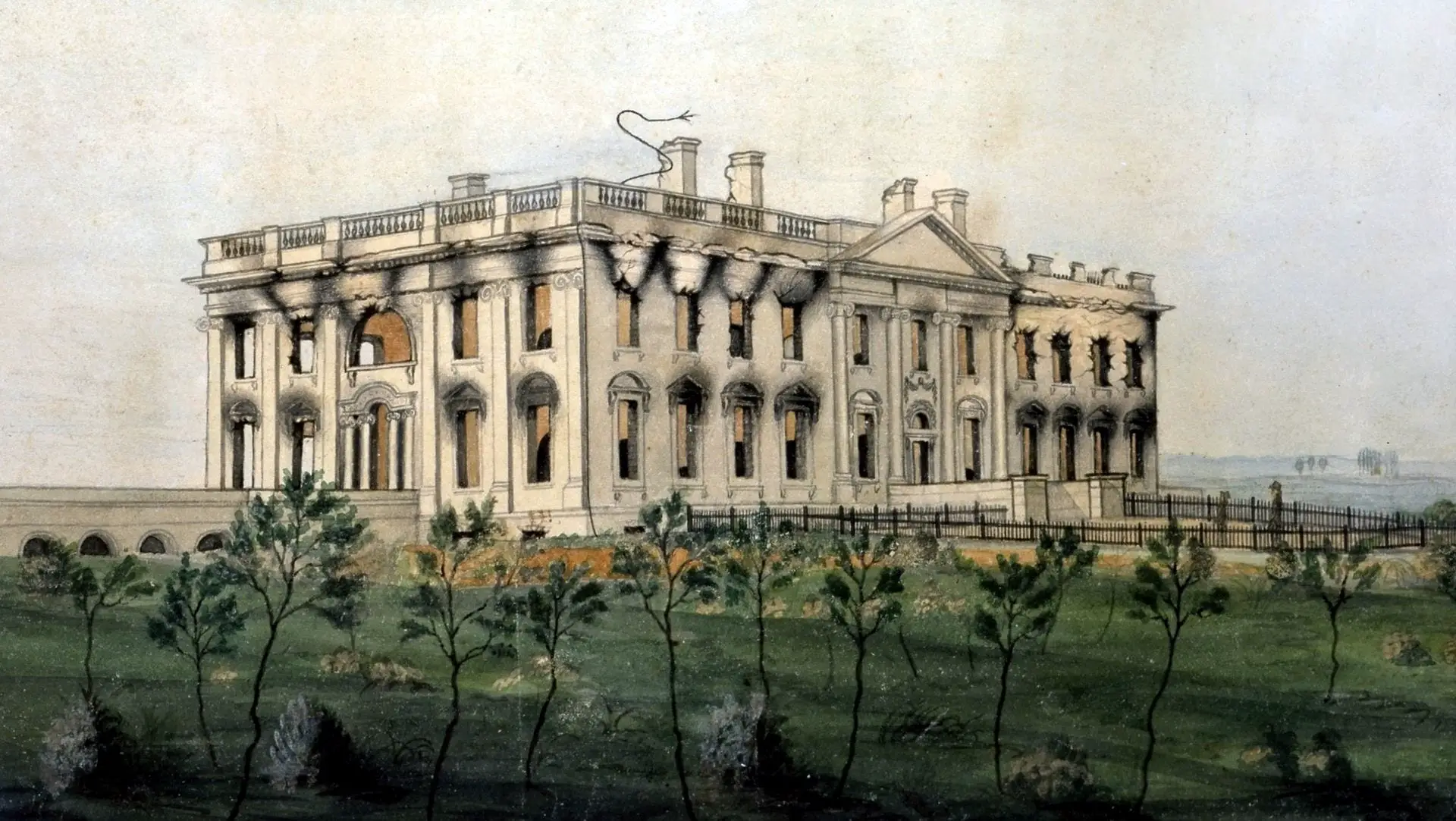
When Congress reconvened on September 19, it met in Blodgett’s Hotel, the Patent and Post Office building. The Capitol was a shell. The President’s House was four scorched walls. James Madison was running a war from rented rooms.
That is the trigger. The fight I want to tell you about starts here.
Fisk introduces the resolution
On September 26, 1814, Jonathan Fisk, a Democratic-Republican from New York, rose in the House and proposed a select committee to inquire into “the expediency of removing the Seat of Government.” That is the procedural front door. The committee deliberates, reports back, and the full House decides.
The committee reported on October 3. Their finding: removal would be “inexpedient.” A pro-removal member then moved to strike “inexpedient” and substitute “expedient.”
The first real vote was on that substitution.
Resolved, that it is
Report of the Committee appointed to inquire into the expediency of removing the Seat of Government, October 3, 1814. Records of the U.S. House of Representatives, National Archives.inexpedientexpedient to remove the seat of government at this time, from the city of Washington.
The vote on the substitution split 68 to 68. The Speaker of the House, Langdon Cheves of South Carolina, cast the tiebreaker, and he voted to strike “inexpedient.” Removal was alive.
Cheves had only become Speaker that January, when Henry Clay quit to go negotiate the Treaty of Ghent. He was a Southerner casting a procedural vote that gave the Northern relocation advocates a fighting chance. I always find that detail a little strange. A South Carolina Speaker put the future of Washington on the table.
Who wanted to leave, who wanted to stay
The split was sectional, not partisan. New Englanders, New Yorkers, and Pennsylvanians wanted out. Southerners, especially Virginians and Marylanders, wanted to stay. Several Western delegations split.
Fisk argued for “a place more connected with the moneyed interest of the nation,” and he warned (correctly, I think) that if the government left Washington, “the Government could never be induced to return.” Philadelphia formally offered itself the same day Fisk filed his motion, promising “suitable places for their accommodation, as well as that of the other departments.” Lancaster came up as a fallback. So did Baltimore. So did Georgetown, where Georgetown College offered to host both chambers, with boarding capped at ten dollars a week.
Nathaniel Macon of North Carolina gave the line that gets quoted now:
if the Seat of Government was once on wheels, there was no saying where it would stop.
Joseph Pearson of North Carolina jabbed at the Northerners for cowering:
Is it not possible that gentlemen from the North and East should be filled with apprehensions for their personal safety, while those from Southern and middle States, whose nerves may, from climate, be supposed more delicate, should remain unappalled.
Robert Wright of Maryland said relocating Congress would “suspend the people of the city by the eyelids.”
That last one is the best thing said in the whole debate. The District in 1814 was already a near-thing as cities go. Moving the capital, even “temporarily,” meant a property collapse and a population exodus and the end of the whole experiment on the Potomac.
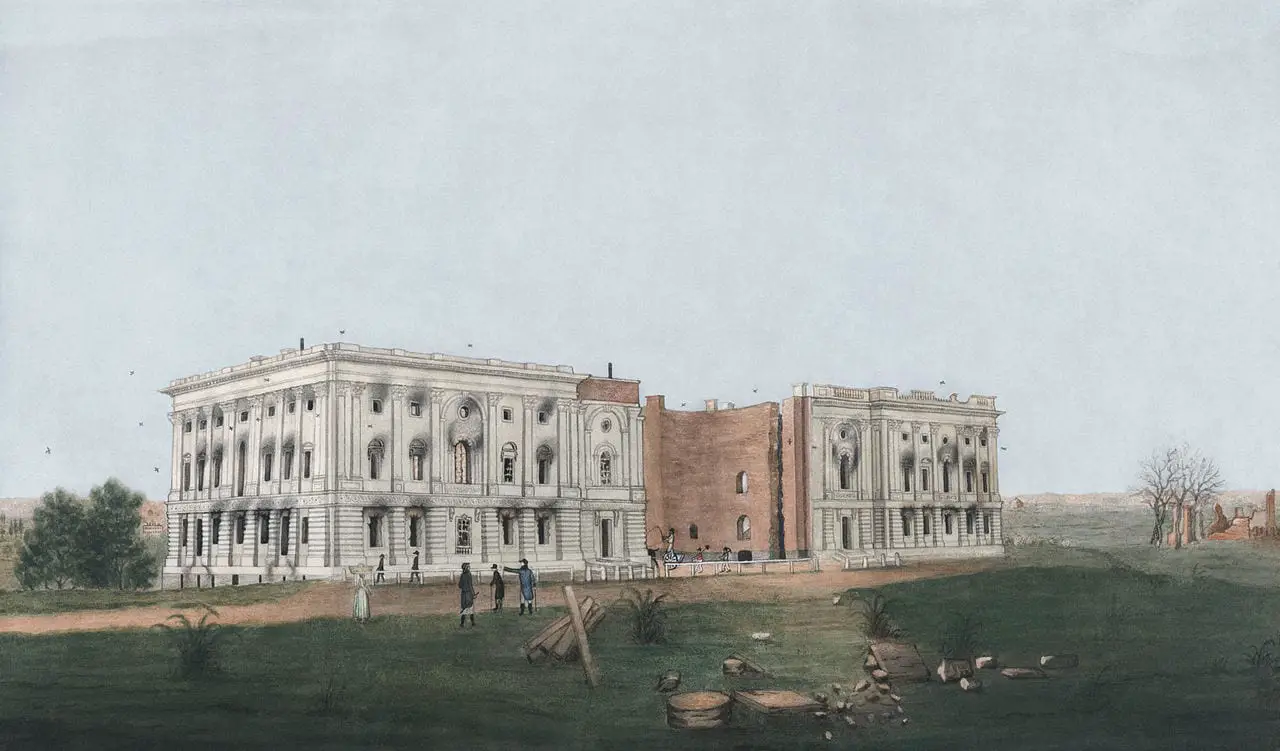
The residents fight back
This is the part I find most satisfying.
Washington’s residents did not sit there waiting for Congress to decide their fate. They organized. A group of Washington property owners, led by Daniel Carroll of Duddington, raised twenty-five thousand dollars by private subscription. They broke ground on July 4, 1815, for a temporary building on Capitol Hill big enough to house both chambers while the original Capitol was rebuilt. The building went up in five months. Congress moved in on December 8, 1815.
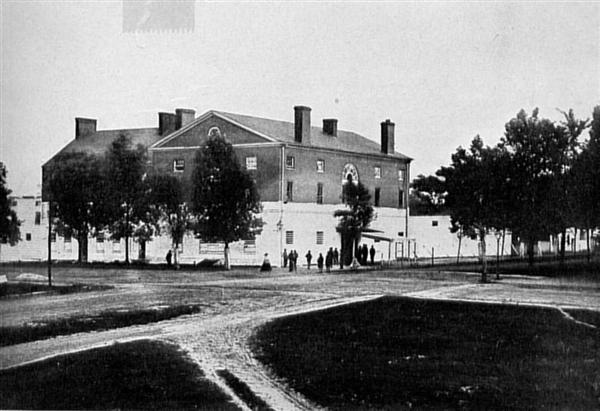
It came to be called the Old Brick Capitol.
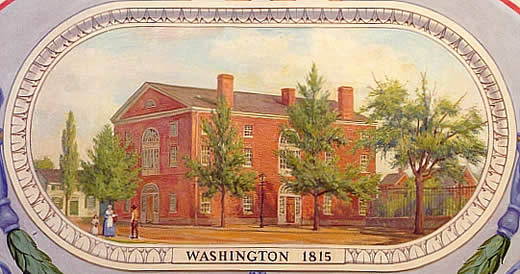
Carroll wrote to the Speaker on December 4, 1815, offering the building:
On behalf of the Gentleman concerned in erecting the new building on square 728, on the Capitol Hill, we beg leave through you, to offer the same to Congress until the Capitol may be ready for their reception.
This was not pure civic spirit. Carroll and the other investors held big real estate stakes in Washington. Robert Brent, the city’s first mayor, was in that subscription group. So were merchants up and down what would become Pennsylvania Avenue. If Congress left, their land became worthless. The Brick Capitol was a business defense as much as a patriotic one.
The District’s banks also offered Madison a five-hundred-thousand-dollar loan to rebuild the public buildings. That is what really tipped the balance in October 1814. Not flag-waving. The concrete demonstration that the capital could be made livable again, on private money, fast.
The final vote
The relocation bill, H.R. 2, “A Bill for the temporary removal of the seat of government from the City of Washington,” came to a third reading on October 15, 1814. It would have ordered every federal office out of Washington within twenty days. It did not say where they would go.
It was defeated, 83 to 74.
Nine votes.
What if it had passed
Read Fisk’s own argument and the “temporary” framing falls apart fast. He told the House that once the government moved, inertia would keep it gone. He was telling the truth about that.
Philadelphia in 1814 had everything Washington did not. Working markets, a port, banks, established government buildings, a population that already lived there. It had been the capital before. Congress could have, by simple statute, repealed the Residence Act of 1790’s permanent-seat language a year or two later and stayed in Philadelphia for good.
If the bill passes, the Brick Capitol never gets built. Pennsylvania Avenue stays a rutted dirt track. The investors take the loss. The District becomes a strange southern parenthesis in American history, a town that was almost a capital, before the war ruined it.
That is the country we were nine votes away from.
The afterlife of the Brick Capitol
Congress used the Brick Capitol from December 1815 until December 1819, when the rebuilt Capitol was ready again. James Monroe took the oath of office on a temporary portico in front of it on March 4, 1817, the first presidential inauguration held outdoors. Many sources used to say Congress sat in that building until 1825. That is the date the central Rotunda was finished. The chambers were back in operation by the end of 1819.
After Congress moved out, the building became a boarding house, then, during the Civil War, the Old Capitol Prison. Mary Surratt and the other Lincoln assassination conspirators were held there. The Supreme Court Building sits on the site now.
I keep coming back to the count. Eighty-three to seventy-four. The Washington we live in exists because nine House members in October 1814 didn’t want to be the ones who put the government on wheels.
this sucks
man i got a A on my report using this i wanted a F this sucks how do i dislike
Hey your links to the burned Capitol and White House – neither work. 404 error for both.
There is a grammar error in the first sentience. Who wrote this????