
Yes, by reputation. The Omni Shoreham in Woodley Park has been quietly trading on the same eighth-floor ghost story for the better part of a century, and the hotel still keeps Suite 870 off the regular booking system. They call it the Ghost Suite. There is a plaque on the door. You cannot reserve it directly. You can only land it on an upgrade, or because the hotel is sold out, or because the front desk decides the dignitary they are putting up for the night should be on the haunted floor.
The story has three real people in it, one verifiable death, a 50-year vacancy, and a long string of housekeepers, security guards, and at least one Omni general manager who say they have seen and heard things in that suite they cannot explain. The folklore version has gotten a little garbled over the years. Here is what actually happened.
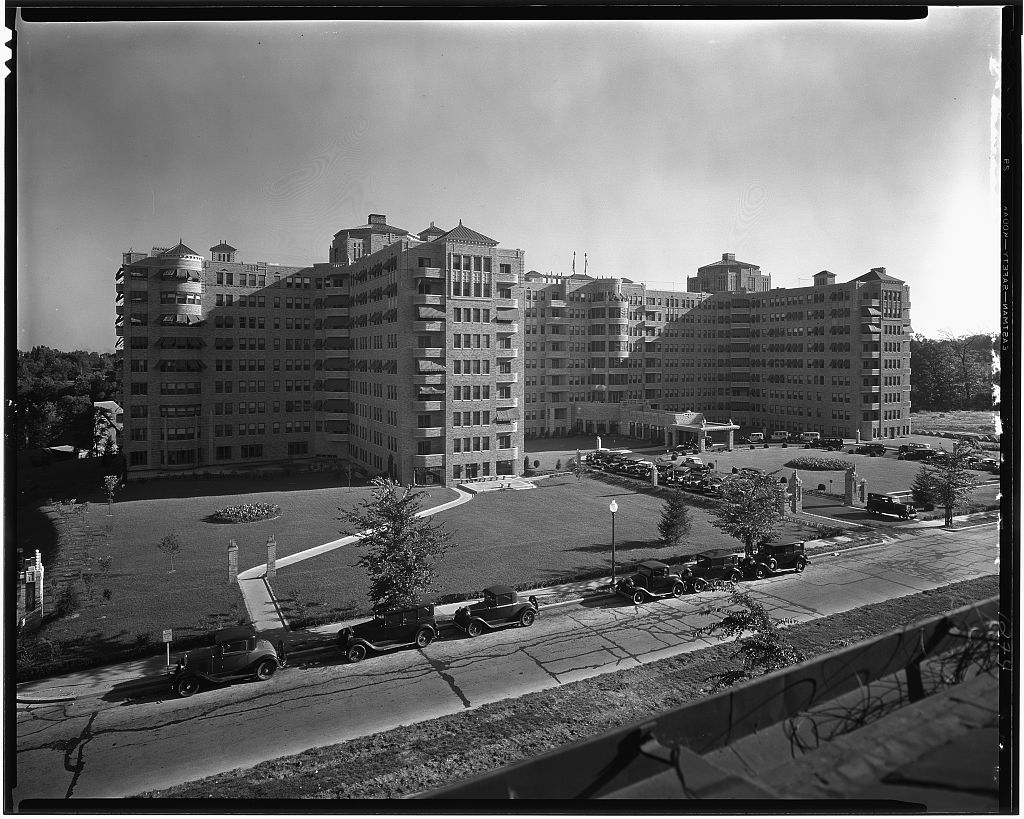
The new Shoreham, opened October 30, 1930
The Shoreham as we know it today is not the original Shoreham. Vice President Levi P. Morton built the first one at 15th and H Streets NW in 1887. That one went bankrupt in 1927 and was demolished in 1929. The name survived because developer Harry M. Bralove bought it and applied it to the new hotel he was putting up on a piece of land overlooking Rock Creek Park.
Bralove had been on a walk in Rock Creek Park when he decided to build a hotel instead of the apartment complex he originally had in mind. He hired Washington architect Joseph H. Abel to design it. Abel mixed Renaissance Revival and Art Deco, installed fireproof walls, running ice water, and high-speed Westbrook elevators, and shared the basement with a furniture factory run by master wood carver C.V. Harlan, who built much of the original interior himself. Construction began in 1929. The whole thing cost more than $4 million.
The Shoreham opened on October 30, 1930. About 5,000 ticket-holders showed up. Rudy Vallée was supposed to headline the opening, but a violent storm grounded him and his band at Camden Central Airport in New Jersey. They finally landed at Bolling Field at 3:15 a.m., made it to the Shoreham at 4:15, played for the thousand or so guests still hanging on, and were back on a train to New York by dawn for an 8 a.m. rehearsal.
That 4 a.m. arrival is a coincidence. It is also, as you will see, the time of night that turns out to matter at the Shoreham.
Who Henry L. Doherty was, and why he was living in a hotel
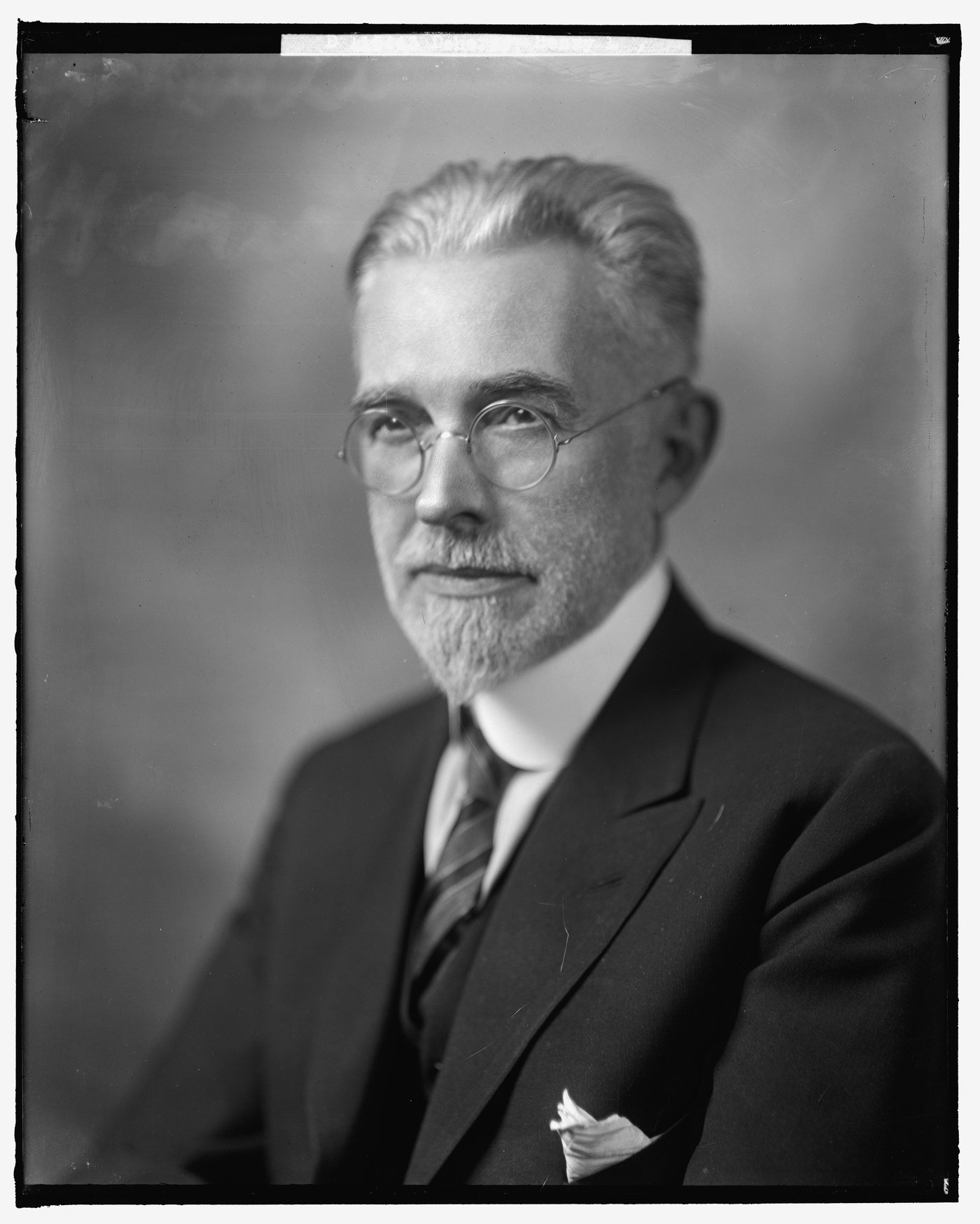
The minority financial partner who moved into the eighth-floor apartment was Henry Latham Doherty. Born May 15, 1870 in Columbus, Ohio. Started work at the Columbus Gas Company at age 12, was chief engineer there by 20, and in 1910 founded Cities Service Company, the holding company that eventually became Citgo. By the time of the Shoreham, he was controlling interests in around 150 utility and energy firms serving 9,000 cities and towns across the U.S. and Canada, with about 600,000 stockholders under him. He held nearly 140 patents in his own name.
Doherty had been a semi-invalid for years from severe arthritis. He nearly died of it in 1927. A widow named Grace Eames nursed him through the crisis, and in December 1928 they married. Grace’s daughter from her first marriage, Helen Lee Eames Doherty, came with her. Henry was Helen Lee’s stepfather.
Living in a hotel was the practical solution. Doherty traveled constantly and needed staff, and the eighth-floor apartment at the new Shoreham, with its terrace and view across Rock Creek Park to the Arlington skyline, was effectively a hotel-serviced penthouse. The family moved in along with Juliette Brown, the live-in housekeeper.
December 26, 1930: the $50,000 debut
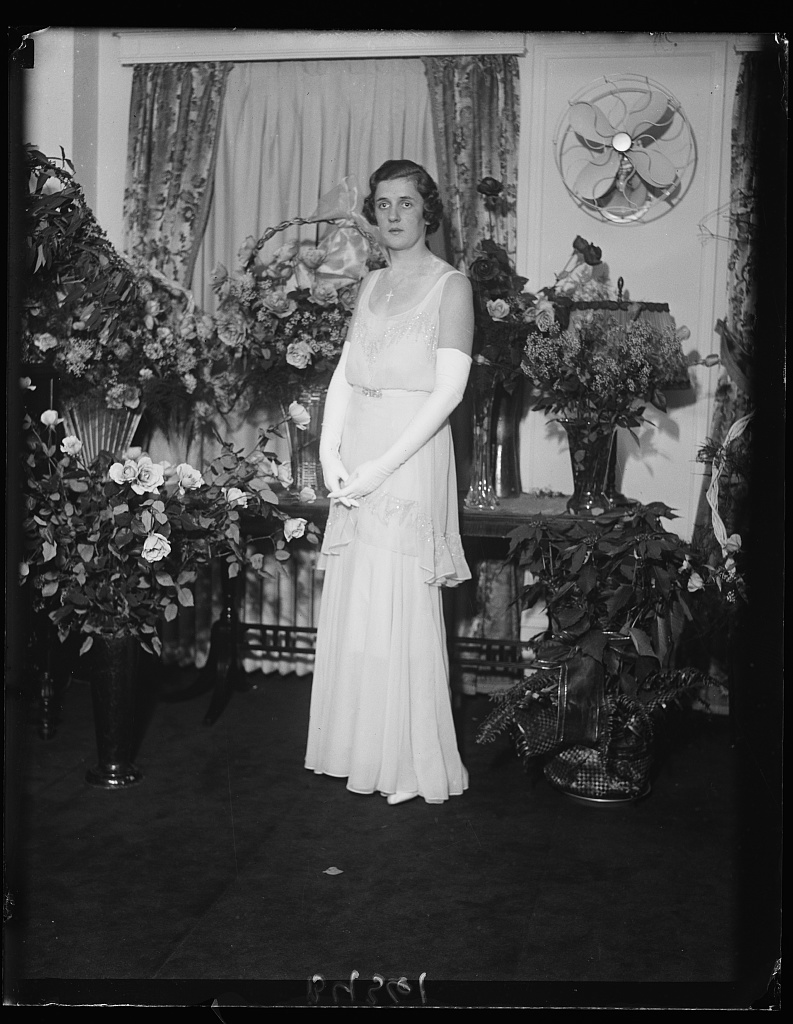
The Dohertys had been in the suite only a couple of months when they threw Helen Lee’s coming-out party at the Mayflower Hotel. December 26, 1930. The entire first floor of the Mayflower, all of its ballrooms, was booked for the night. About 1,000 guests, including a thick contingent of the diplomatic corps. Doherty chartered a special train to bring guests down from New York. A 22-piece orchestra, radio celebrities, the works.
The Washington Post put the price tag at upward of $50,000, which in 1930 dollars, and a year and change into the Depression, was a number that bothered people. The next morning’s coverage included Grace Doherty trying, somewhat after the fact, to dial it back:
In the vortex of the most stupendous holiday party of many a Washington season, Mrs. Henry L. Doherty, of New York, took time last night to do a bit of debunking on the subject of her debutante daughter, Helen Lee Eames Doherty. To be mother of one whose debut had doubled and trebled in the making, assuming the proportions of a record-smashing event, apparently had been somewhat disconcerting to Mrs. Doherty, despite an ever-evident sense of humor. She expressed surprise at the tremendous stir caused by Helen Lee’s night-after-Christmas ball in the Mayflower Hotel, at which she made her bow to society.
Harris & Ewing photographed Helen Lee for the occasion. The Library of Congress still has the negative. It is captioned, in the wire-service shorthand of the day, “Makes Capital debut at lavish ball.”
The death in Suite 870
A few months after the family moved in, Juliette Brown woke up sometime around 4 a.m. feeling sick. She got out of bed and went to the telephone to call for help. She collapsed before she could finish the call. A hotel engineer noticed the phone line was off the hook hours later and went up to check. He found Brown on the floor, the receiver hanging inches from her hand.
The coroner ruled natural causes. That is the only confirmed death in the suite.
After Brown’s death the Dohertys eventually moved out. Henry’s health, which had been bad for years, never really recovered. He spent his last three years as a semi-invalid at Temple University Hospital in Philadelphia and died there on December 26, 1939, exactly nine years to the day after Helen Lee’s debut. He was 69. The Henry L. and Grace Doherty Charitable Foundation, funded by his estate, made a contribution large enough that in 1969 Columbia University added his name to its earth sciences institute, now the Lamont-Doherty Earth Observatory.
What did NOT happen to Helen Lee
Here is where the popular version of the story has been wrong for years, including, until this update, on this blog.
Helen Lee Eames Doherty did not die in Suite 870. She did not die under mysterious circumstances. She married, became Helen Lee Doherty Lassen, lived into her fifties, and died in 1964, abroad. The Omni’s own history, the Washingtonian magazine’s 2007 long-form on the Ghost Suite, and the public genealogical record all agree on this. Eric Nuzum, who wrote the Washingtonian piece, put it bluntly: “Dohertys’ daughter lived to be over 50 years old and died in Denmark. She did not die in the suite.”
The suicide-or-overdose-in-the-suite version appears to be folklore that calcified into supposed fact somewhere between the 1973 sale of the hotel and Sarah Booth Conroy’s 1990 Washington Post column on Washington hotel ghosts. It makes the Doherty arc tidier and more tragic, but Juliette Brown is the only person who actually died there.
Locked up for almost 50 years
The Dohertys vacated the suite in 1973, after roughly four decades of family residency. The hotel was sold that same year to Chicago real estate investor Lester Meilman’s MAT Associates, which rebranded it the Shoreham Americana. The apartment was sealed off and used for storage. Antique furniture, old paintings, no guests.
Almost immediately, the neighbors started complaining.
Hotel guests on the eighth floor would call the front desk in the middle of the night about noise from 870. Loud talking, furniture being moved, occasional sounds described, more than once, as a vacuum cleaner running. Housekeeping carts left in the corridor outside the suite would be found in different positions in the morning. The suite was supposed to be empty. There was no piano on the floor, but Director of Security Ralphaello McKeython told NBC4 he had logged complaints over the years about loud piano playing from 870. A lot of the activity, by staff accounting, clustered around 4 a.m.
When Omni Hotels finally bought the property in 1985 and renovated the suite in the 1990s, the plan was to rent it out as a regular high-end three-bedroom. According to Dollie Robinson, who cleaned the suite for almost five years and spoke to NBC4 in 2016, a worker fell to his death from the balcony during the 1997 renovation.
The plan to monetize Suite 870 as a $2,000-a-night attraction did not really work. Most guests, given the choice, declined. The hotel pulled it from the regular booking system.
What staff say, on the record
The modern haunting accounts come from named, working hotel employees, which is unusual for ghost stories. The two best primary sources are Sarah Booth Conroy’s Washington Post feature on March 18, 1990, “If These Hotel Rooms Could Talk,” and Eric Nuzum’s Washingtonian feature in November 2007, “I Ain’t Afraid of No Ghost.” NBC4’s 2011 piece, which the station re-promoted in 2016, added a third round of interviews. Across all three, the same names come up.
Steven Polli, chief engineer of the hotel, told NBC4 about a moment when he unlocked Suite 870 to show some visitors around, found every dresser drawer pulled out and the cabinets open, locked up to ask the head housekeeper what was going on, returned with her, and found every drawer and cabinet closed. “All I can say is I know what happened to me that day with the people I was showing,” Polli said. “There’s not an explanation. Things happen that you can’t explain.”
Todd Scartozzi, who became the Omni’s general manager, told the Washingtonian that he had once stayed in the Ghost Suite with his family while on vacation. His daughter started yelling from the other bedroom that someone was in the closet. The closets in 870 are wired with motion sensors, so the light turns on when someone steps in. He sat with his daughter and watched the closed closet door. Neither of them moved. The closet light came on. It stayed on about a minute. Then it shut off. A few minutes later it came on again. Then off again. The next morning the hotel’s engineers checked the wiring. They could not find a fault.
Ralphaello McKeython, the security director, said guests over the years had reported a little girl running in the hallway outside the suite, and an older woman in a long, old-fashioned dress in the corridor. He had seen the older woman more than once himself. “You always think it is just a guest,” McKeython told NBC4. “You see the long dress going on to the elevator. You can actually catch the same elevator she gets on, and there’s no one there.”
Eric Nuzum, the Washingtonian writer, spent two nights in 870 in 2007. The first night, he heard five distinct creaks between 1:45 and 2:50 a.m. and ran out of the bedroom shouting. The 4 a.m. mark, the Juliette Brown hour, came and went. Nothing happened. He stayed up to watch the sky turn purple over Rock Creek Park, did one last sweep of the suite on his way out, and found the dining room lamps off when he was certain he had left them on. He flipped the switch expecting nothing. They came on.
“I was out the door and in the elevator in less than four seconds,” he wrote.
Suite 870 today
The room is officially the Ghost Suite. There is a small plaque on the door identifying it as such. It is still not on the regular booking platform. Hotel sales reps will tell you it can be requested as an upgrade, or assigned when the rest of the hotel is sold out, or sometimes used to house visiting dignitaries. It is a three-bedroom penthouse with a terrace, and the view from that terrace, across Rock Creek Park out to the Air Force Memorial and the Washington Monument peeking above the tree line, is genuinely one of the best private views in the city.
Whether the cold drafts and the closet lights and the 4 a.m. creaks have anything to do with Juliette Brown is a question we are not going to settle here. What is striking is how consistent the staff accounts are, across nearly 40 years of interviews. The names change. The shifts change. The story does not.
If ghost stories are your thing, DC has a deep bench. The Octagon House on New York Avenue and the rooms of the White House each have their own lineup of named witnesses going back generations. Suite 870 is the rare one where most of the witnesses are still on the payroll.
More local legends: the Maryland Goatman and the real 1970 story of the Bunny Man.
We dug this one up with help from AI and checked it against the original records below. Here’s how we use AI.